






SEO for News Sites: The Complete System for Publishers (Not Blogs)

SEO and news websites feel like aliens to each other.
And it's no wonder, because SEO takes time. But that's one thing that the media sites don't tolerate, and, frankly, don't have.
If you think about it, most SEO advice you find online makes sense for blogs, SaaS companies, or affiliate sites publishing two optimized articles a week and waiting patiently for search rankings to grow.
But a news portal publishes daily, often dozens of times per day:
- You constantly create new URLs, and have old articles piling up.
- Some stories are syndicated from Reuters or AP.
- Other pieces are breaking news that must be indexed within minutes, or they’ll be irrelevant one hour later.
- And of course, you also have to surface in Google News and other features in SERPs, which isn’t that easy. At all.
So, while optimization creates a lot of confusion for any media outlet, in this guide, we'll take a look at everything you need to know about the news site SEO.
How news SEO works (what you’re really optimizing for)
When people say “SEO for news,” they often imagine keyword optimization and on-page tweaks.
However, it is not like that.
What you’re really optimizing for is exposure across four completely different environments inside Google’s ecosystem. Not to mention that each behaves differently.
These are:
- The classic Google search results we all know,
- Google News,
- Top Stories (and other news-related SERP features),
- And Google Discover.
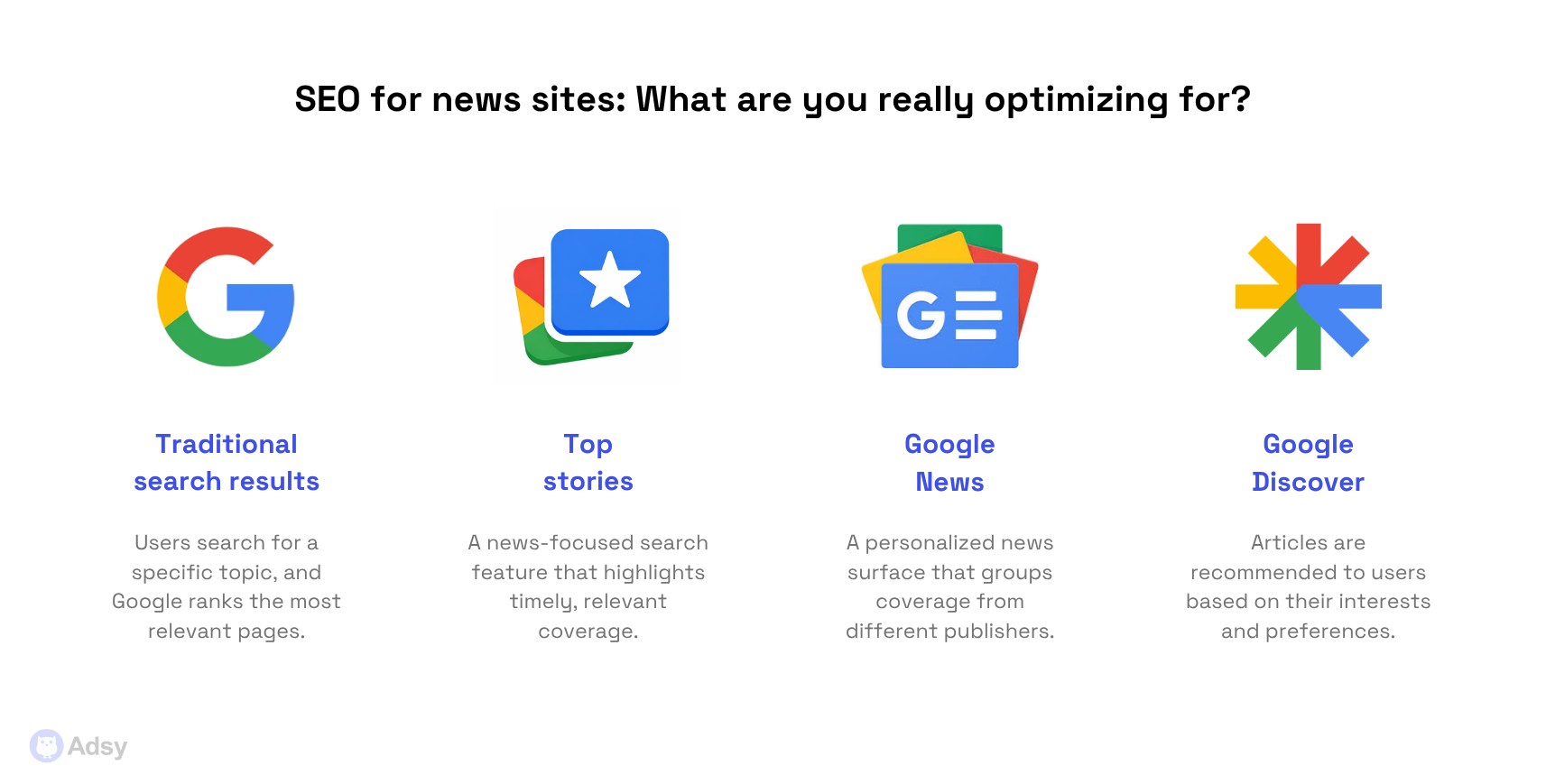
Media publishers mainly depend on the last three, which behave more like “algorithmic feeds” than traditional search engines.
So, if you treat all those the same way, nothing will work.
1. Google search results
This is the most predictable surface. And it’s the most typical thing you think of when it comes to search engine optimization.
On the surface, it’s simple: users type something they want to know about, and Google returns results.
This works for the media, too. Here is a typical example:

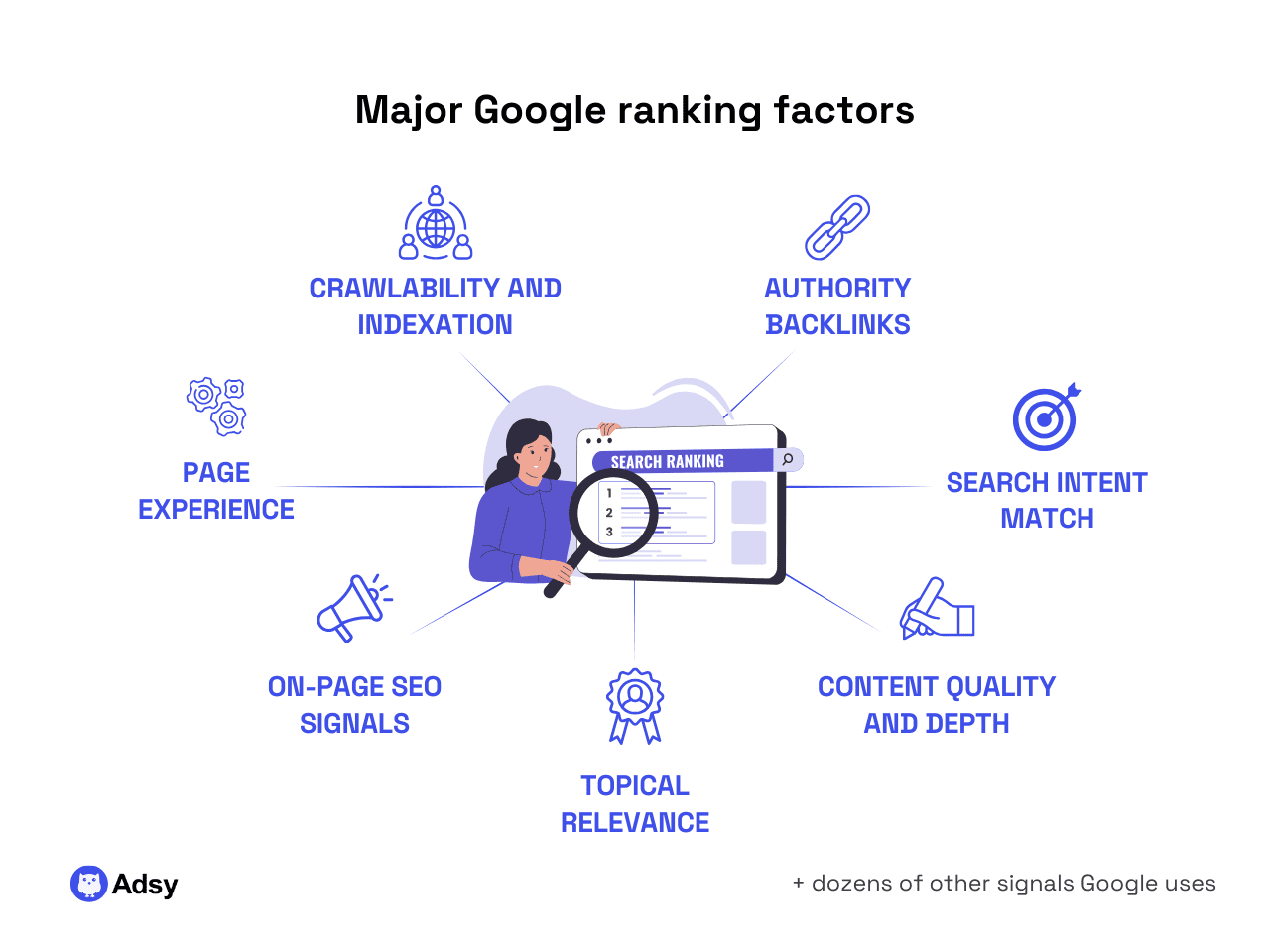
But in reality, there are many components to what shows up in those search results:
- Query alignment,
- Content quality and optimization,
- Topical and domain authority,
- The quality of your link building,
- Internal linking,
- Good desktop and mobile user experience,
- Overall site performance and dozens of other ranking signals.
One thing you have to keep in mind is that search traffic is demand-driven. It scales when demand exists and declines when demand fades.
That’s also the main issue for news outlets.
But you can use it to your advantage when you aren’t just reactive to events, but also do your keyword research and publish evergreen content (more on this later).
Note: If you want to rank in ChatGPT and show up in AI Overviews, you’ll mostly have to do traditional SEO with a strong focus on getting more external mentions and backlinks.
2. Google News
Google News behaves differently from traditional search.
It focuses on publisher authority, consistent coverage, and a clear topic/category. So, simply creating high-quality, valuable content is not enough to surface here.
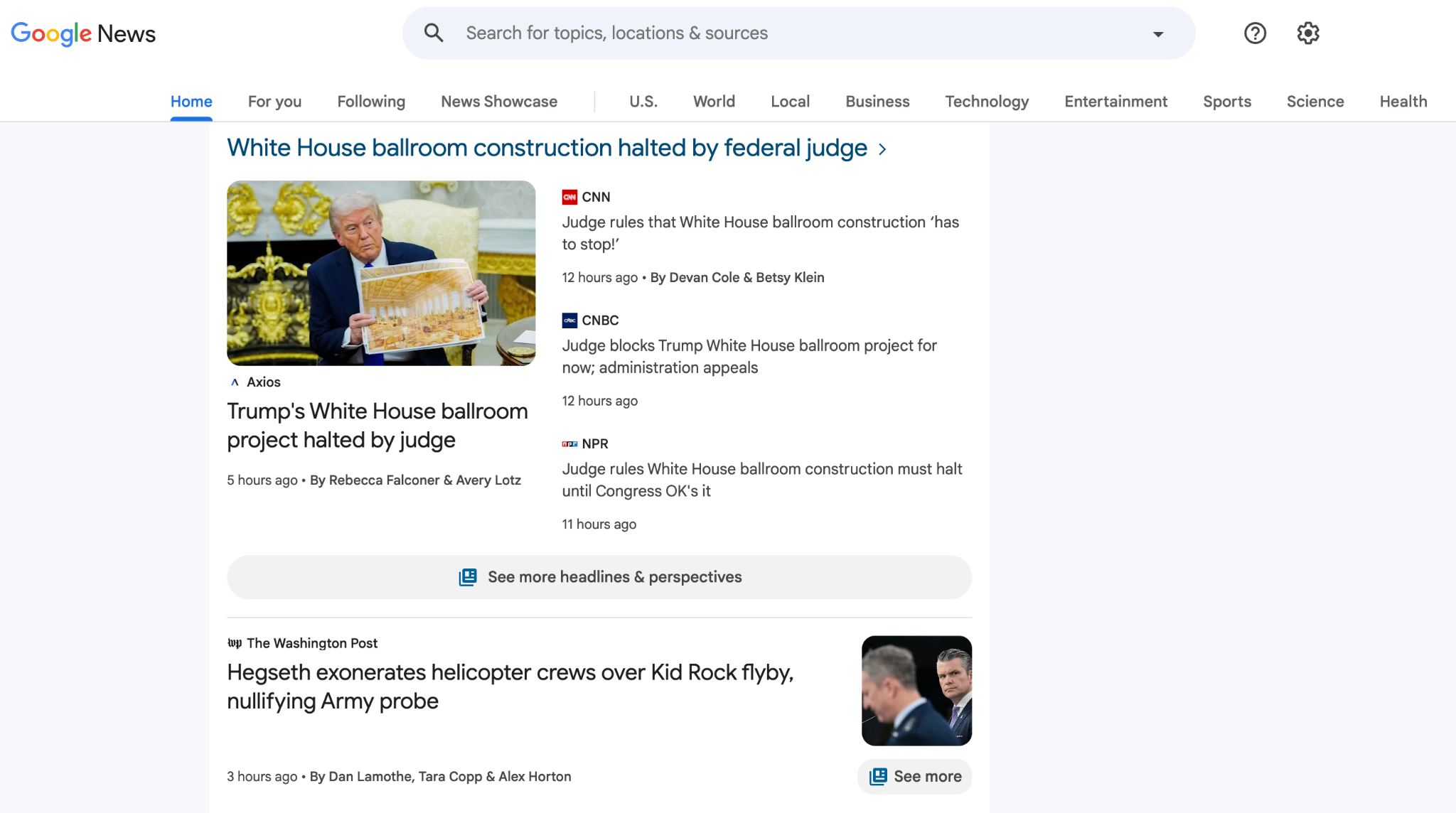
Source: Google News
If you’re not one of the really established media, you want to focus on a specific topic to help Google News recognize you as a reliable source for that subject. Otherwise, it will most likely ignore you.
So, if you’re just starting a news website, hyperfocus is better than spreading yourself thin.
It’s okay to cover a couple of categories. But first, people should start recognizing you like “Oh, it’s a website with AI news” or “Yeah, I know them, they post tech updates.”
3. Top stories
The Top stories are really the prime spot for any media outlet.
Usually, this is the first thing that shows up for a news-related search query. And of course, most users will click one of these without scrolling down to the actual search results.
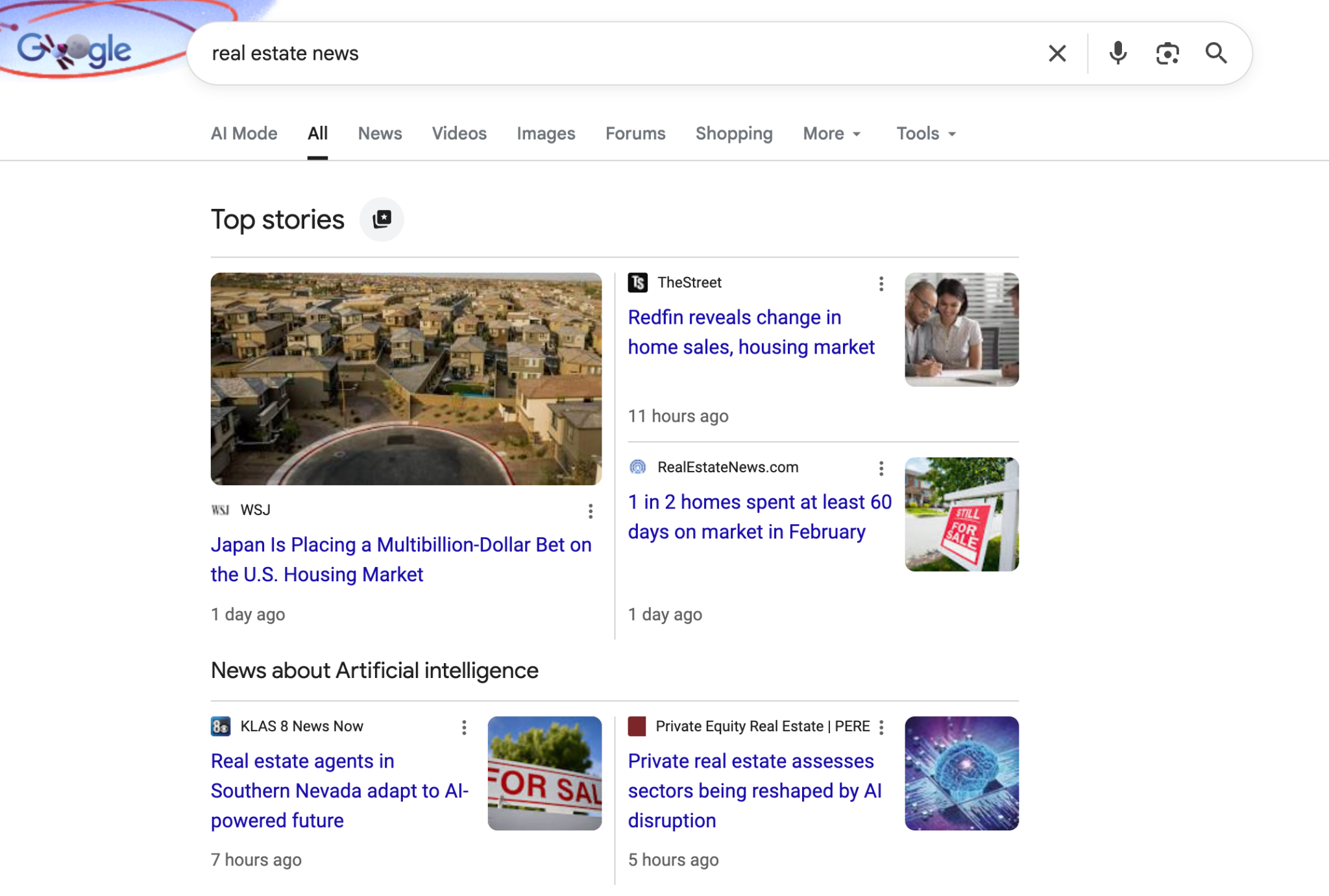
According to Google, the appearance in Top stories mainly depends on three factors:
- Speed (the faster your indexing, the better),
- Trust (this includes publisher and author info, topical expertise, contact information, etc.)
- And eligibility (this means following Google News policies).
Further in this article, we’ll talk about how you can influence each of the factors above to show up not only in Top stories, but also in other news features.
4. Discover
And then there is Discover. It’s the mobile-first feature where users get their own personalized feed in the Google app.
It isn’t keyword-driven, though. It’s a behavior-based selection of articles, where there is no actual search query. The news distribution in Discover is mainly interest- and location-based.

Source: Google
Users don’t search here. Google “pushes” content to them based on:
- Behavioral signals,
- Topical interests,
- Engagement history,
- Content freshness,
- Image quality,
- Historical performance of your domain, etc.
Discover traffic can be truly explosive, but it can also disappear overnight because it’s less controllable than traditional search traffic.
Still, Discover rewards user engagement consistency. And that’s what you can influence.
If users consistently click, scroll, and engage with your stories, you build what might be called “surface-level trust.”
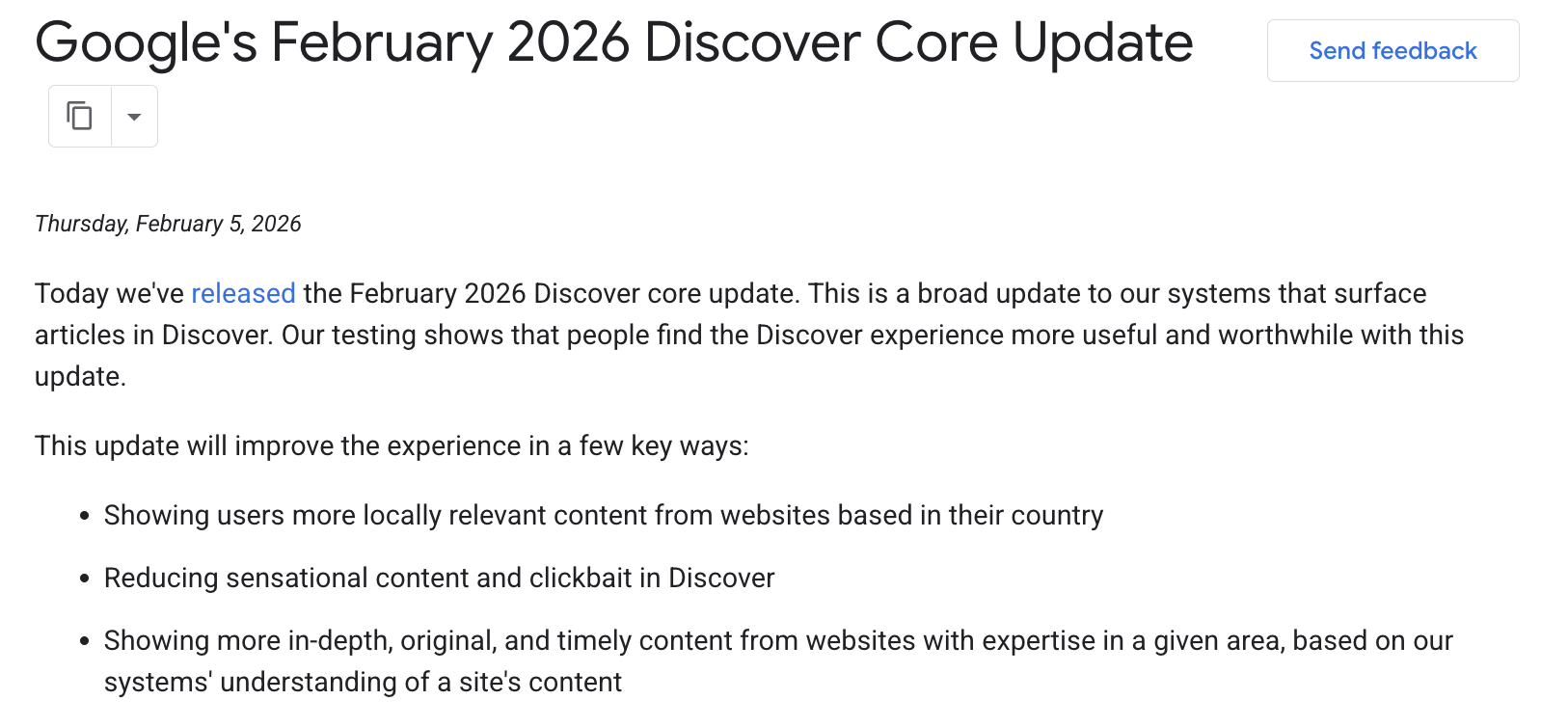
In the recent update, Google also announced that, in Discover, users will now get more locally relevant content, fewer sensational pieces, and more in-depth articles from websites with expertise in a given area (this is a recurring pattern, as you can see).
Source: Google
Overall, each surface has slightly different ranking factors and relies on different signals.
But if you create a comprehensive system for your website’s SEO, you’ll get better results everywhere.
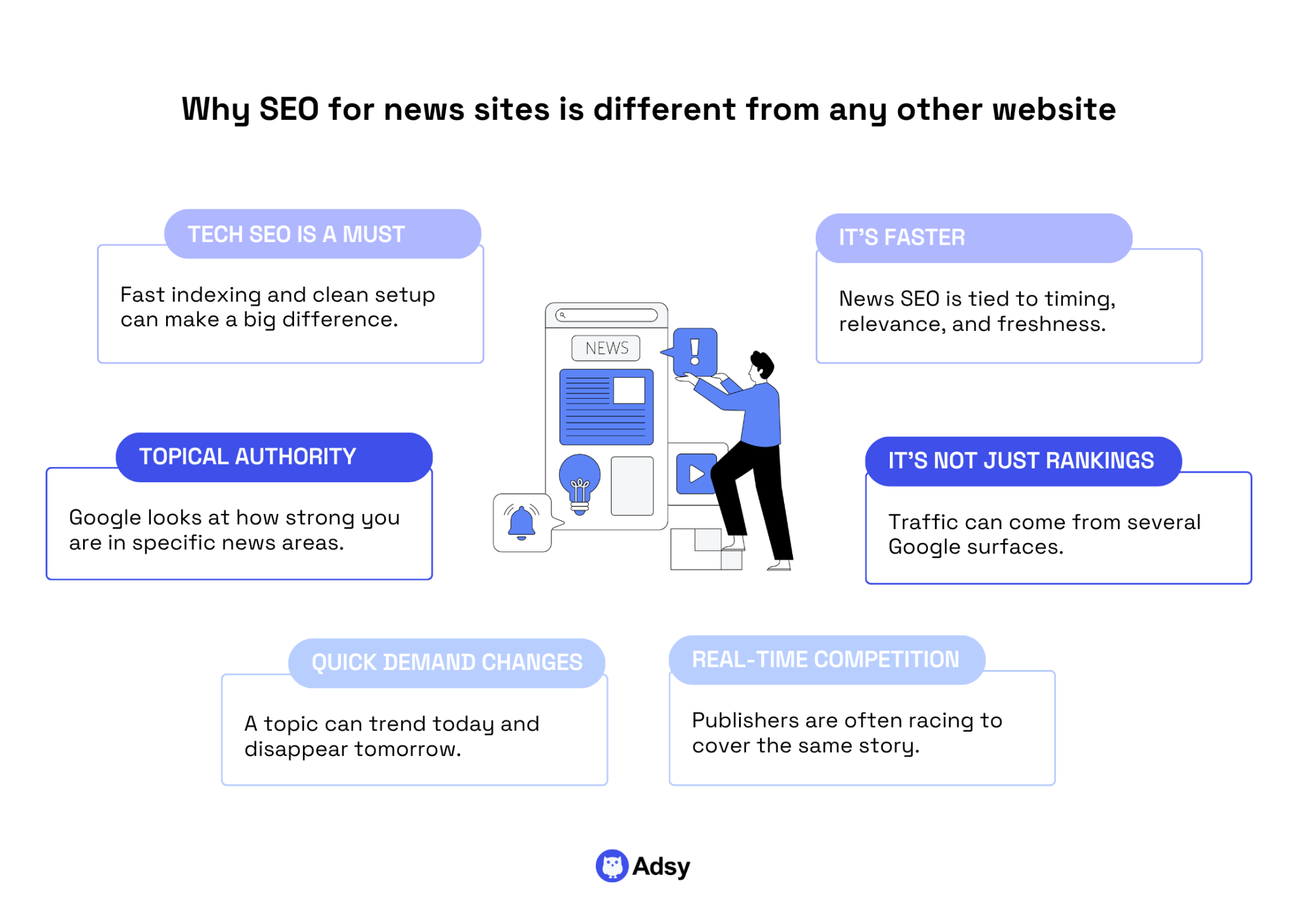
Why SEO for news sites is different from any other website
There are many differences between your regular blog (or a business website) and a news page. But let’s cover three major elements that are foundational here.
Time pressure
One of the biggest differences is time pressure.
A SaaS blog can optimize content for months, and that’s normal. But a news page, quite often, has hours (or even minutes).
If your news article about a recent event doesn’t get crawled and indexed quickly, it won’t appear in Top Stories. And once the freshness window closes, it’s over.
That’s it. There is really no “slow climbing” to position #3 over three months.
That’s why the system matters more than the individual article.
You instantly lose visibility if:
- Your technical SEO is not clean,
- Your news sitemap doesn't have a proper structure,
- Google bots waste time crawling useless tag pages instead of your latest news stories.
Keywords and research
In most industries, SEO is research-driven. That’s something brands do every single time before writing anything. They study search terms, analyze competitors, map intent, and then create content around that data.
In news, especially breaking news, the data often doesn’t exist yet.
When something major happens, there is no keyword report waiting for you. There is no historical search volume for “some major company filing for bankruptcy today.”
You’re reacting in real time and anticipating how people will phrase their searches.
News sites are news for a reason: they write about new topics. This means that traditional keyword optimization doesn’t really apply here.
Authority
And then... there’s authority.
Sure, authority matters for every website on the internet. But it works a bit differently for news outlets.
In many niches, a well-optimized small site can outrank a bigger one.
In news, it’s harder because brand authority and historical topical coverage are a big deal. You’re competing against outlets with decades of trust and coverage history.
So, quite often the SEO strategy should not be “optimize content better” but “own specific topics consistently.”
What “success” looks like here
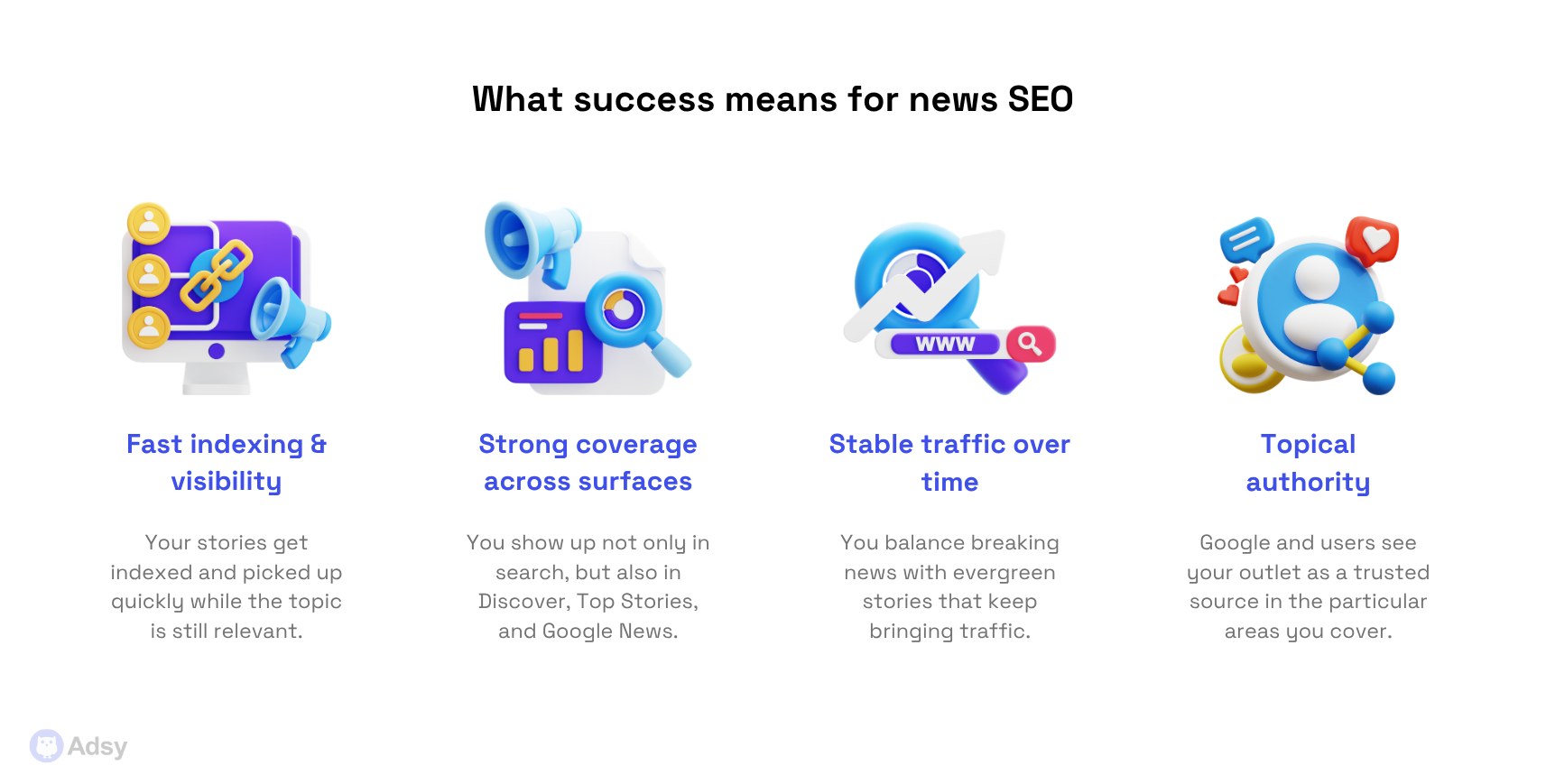
Success in news SEO is not ranking in the top 3 for a certain keyword (at least most of the time). That's still “blog thinking” that is not really applicable in this context.
Success would look more like this:
- Your article gets indexed within minutes.
- It appears in Top Stories, Google News, and Discover.
- You gain some traffic even when there are no breaking stories.
- You become a trusted source in a very particular niche and/or topic.
What do you need to get there?
More often than not, the measurable success comes down to these factors:
- Speed to index. When a story breaks, your article needs to be discovered and indexed by Google almost immediately. If it takes too long, you miss the conversation. In the news world, being technically correct but late is the same as being invisible.
- Visibility during the freshness window. Every news story has a lifecycle. Sometimes it’s a few hours, sometimes a couple of days. But there is always a peak moment when search interest explodes. That’s when you need to surface in Google News. After that window closes, your traffic generally crashes.
- Get some “stable” traffic with evergreen content. While recent news pieces create waves of interest and visits, evergreen content should be used to build compounding authority. Can you rely on hot news alone? Is that going to work? Well, yes, but your traffic will be unstable. And if you focus on evergreen content alone, you won’t really be a news site anymore:) So, it’s all about balance.
- Build topical authority. We’ll talk about this in more detail later on. But the main idea is that you compete with big news organizations. So, your best bet is to become the source for a particular topic first (e.g., wellness, tech, personal finance, gardening, or whatever else you can think of).
An example of SEO for breaking news
Let’s imagine a mid-sized national media outlet and its SEO efforts when posting a new article.
The major story that day is: “The Federal Reserve just announced an unexpected interest rate cut.”
What's happening next? You need a short article with straight facts, everything to the point. But how can this piece be SEO-aware? This is how:
- The headline has the core entity, which is the Federal Reserve,
- There's an action: “Cuts interest rate,”
- There are the details: “0.5% cut,”
- There are no vague claims like “big announcement.”
So, when someone types into Google: “Federal Reserve rate cut,” “interest rates today,” or “FED decision,” Google’s systems instantly understand what your article is about, which is critical for appearing in Top Stories.
Here’s, for example, a spike in interest toward the 2026 Winter Olympics women's single skating: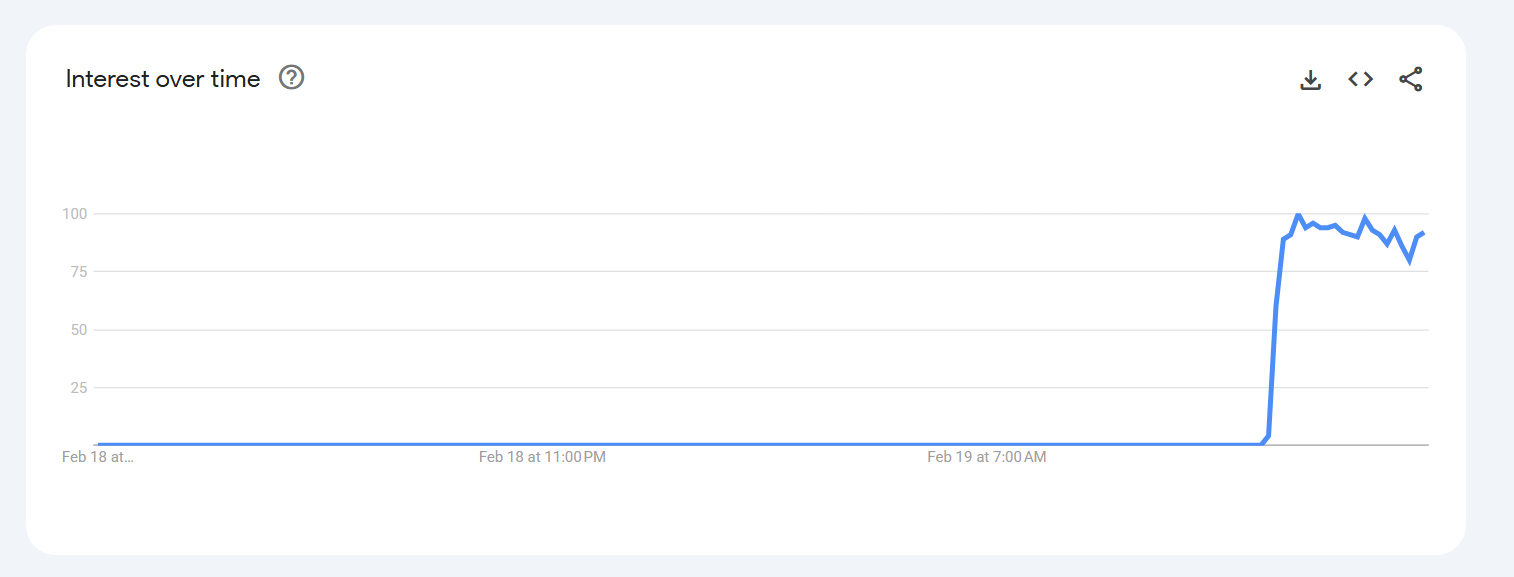
Source: Google Trends
And to benefit from that interest, you have to use relevant terms that people are most likely to search for.
Besides, you have to catch the moment, because these spikes very soon turn into a flat line again. And of course, your website has to be prepared for that, including technical SEO, authority, editorial standards, etc.
Let’s see how it works in detail in the next section.
The complete SEO system for news websites
So, you already know that when it comes to SEO, there is a lot of preparation before you publish anything. Let's figure out what a good “setup” is for people to see your breaking stories.
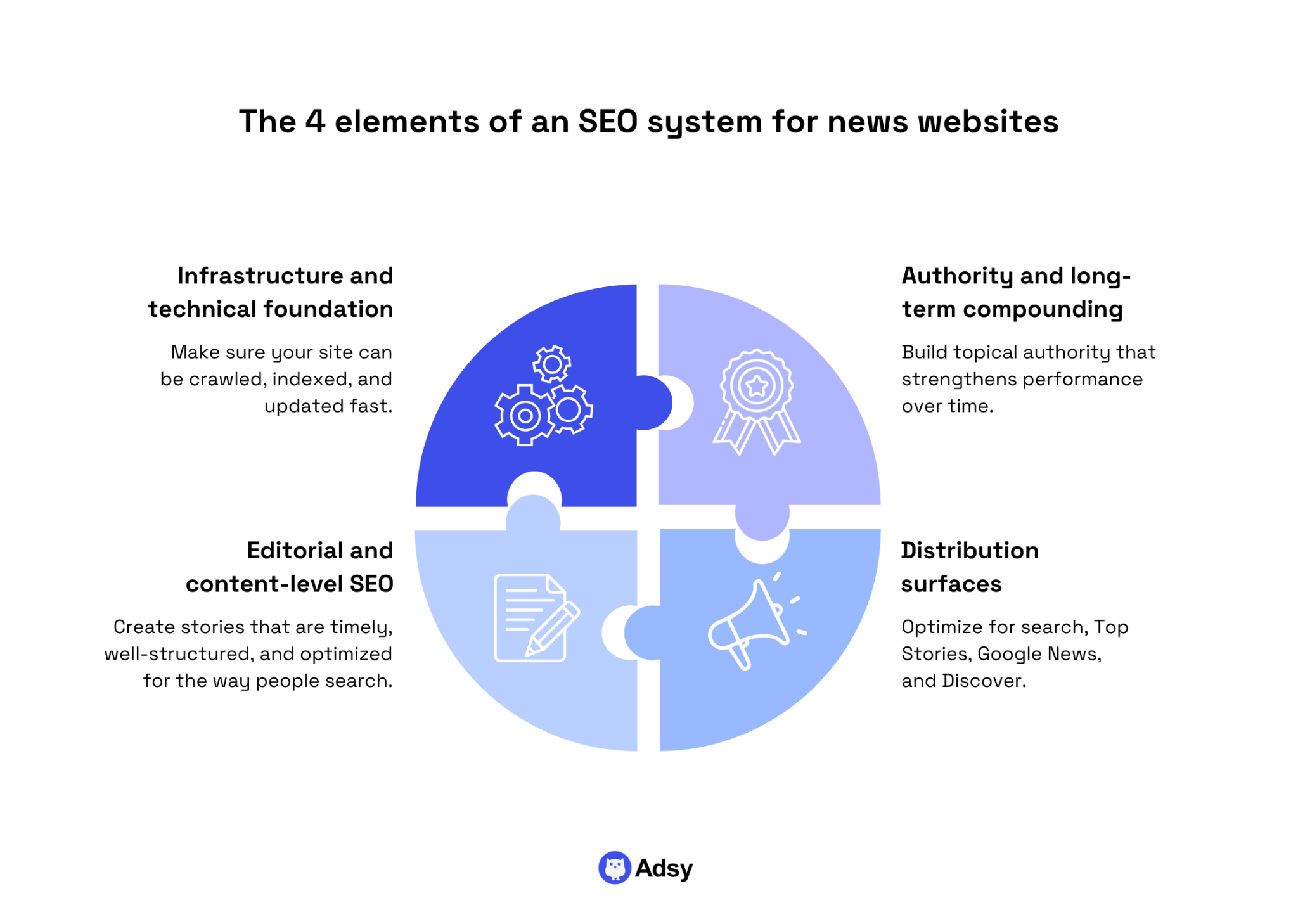
Essentially, we’ll cover four main elements:
- Infrastructure and technical foundation,
- Editorial and content-level tactics for SEO,
- Authority and long-term compounding systems,
- Distribution surfaces: Search, Google News, and Discover.
After you take control of these things, you’ll know exactly how to optimize news websites for stable results in the long run.
1. Infrastructure and technical foundation
The technical health of a news site is the entry point for good, working SEO. You might have a great content strategy, but even with highly relevant and timely content, you can lose visibility because of the infrastructure.
Site architecture
It wouldn't be an exaggeration to say that most media sites have this problem.
Here is the thing: over time, any active news portal grows organically. You create new categories, sections, tags, and thousands of new pages.
If you don’t do anything about this, even in a year, your website will feel like a jungle. While it sounds funny, it’s far from being funny when it comes to your SEO.
Google doesn’t love jungles. It loves clear site architecture.
For news pages, architecture does three main things:
- Signals topical authority,
- Supports fast crawling of new articles,
- Prevents you from wasting your authority, link juice, and crawl budget on unnecessary pages.
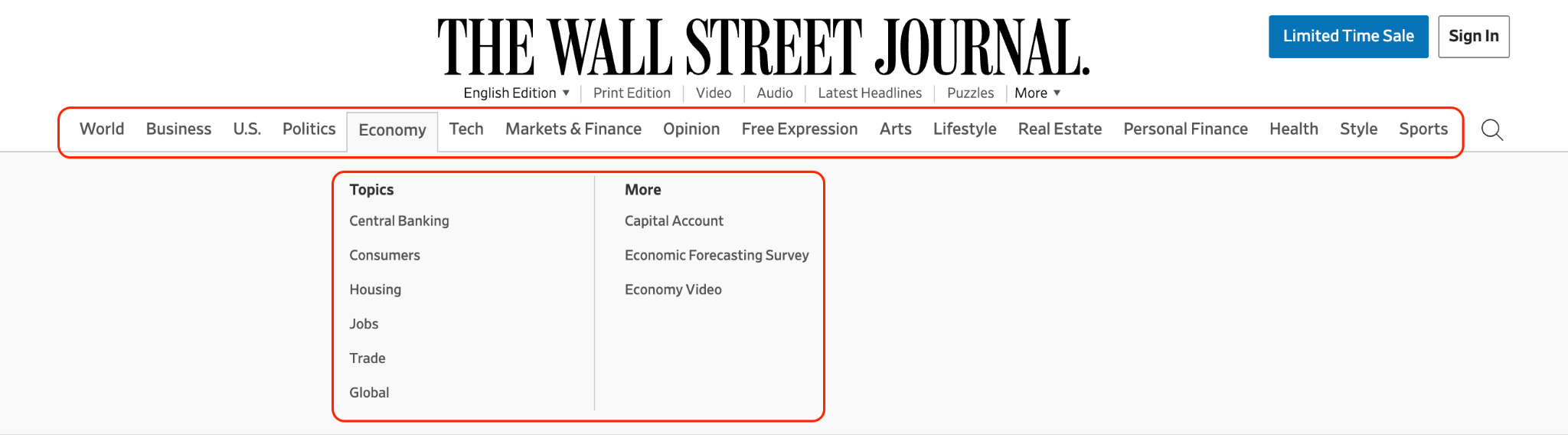
The first thing you need to do is create a clear category and subcategory structure. Usually, it simply reflects your editorial verticals. For example, politics, business, tech, local news, etc.
Source: WSJ
Then, make sure you don’t forget to categorize each of the pieces you publish.
This clean structure allows Google bots to understand whether your site covers some topics consistently and deeply enough.
And that’s how you start building your topical authority.
Crawl budget
The easiest way to think about your crawl budget is that Google has limited attention. And your site is constantly asking for it.
Literally every single page (even if it’s some random author archive that you don’t even want anyone to see) is raising its hand saying, “Crawl me.”
Now, imagine you publish a breaking story that you definitely want people to read.
If your site is bloated with low-value URLs, Google bots might still be busy crawling page 48 of a useless tag combination while your biggest story of the month waits to be discovered. You don't want that, but, unfortunately, it happens.
Large news outlets slowly “destroy” their crawl efficiency. And often, no one really notices that at the beginning because traffic doesn’t collapse catastrophically quickly.
It just… underperforms.
That’s why you need crawl discipline, which means making hard decisions. For example:
- Not every tag deserves to be indexed,
- Not every pagination needs to exist in search,
- Not every single internal search result should be crawlable.
Some pages should be canonicalized, some noindexed, and some should not exist at all.
The idea is simple: when Google spends less time on junk, it spends more time on what actually matters. Your new articles.
News sitemaps
For a news website, a properly configured Google News sitemap is usually seen as just technical hygiene. But it can also be a publishing accelerator.
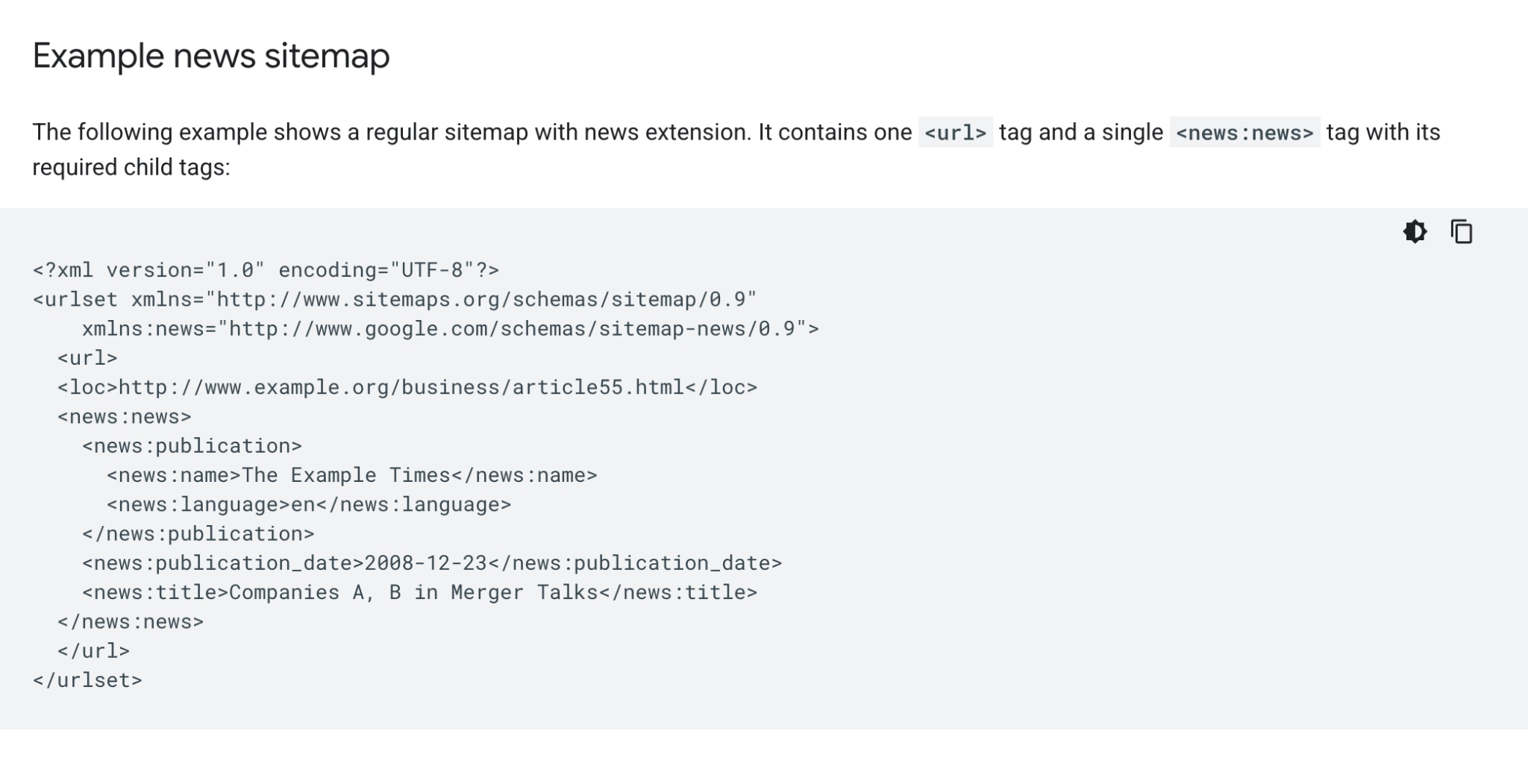
Simply put, the news sitemap helps Google discover your time-sensitive news articles faster and identify them as news content.
Source: Google Search Central
Think of it as a direct signal to Google: “Here’s what’s new. Here’s what matters right now.”
But for that to work, it has to be really clean. That means:
- Only add recent articles (typically, 2 days),
- Make sure your publication time and date are accurate,
- Update right away when you post new pieces.
If your sitemap has outdated or duplicate links, it will do more harm than good. So, make sure you update it regularly.
What should you do with URLs that are older than 48 hours?
Google suggests either removing the <news:news> metadata in your sitemap from the older URLs or removing those links from the news sitemap altogether.
Also, make sure all the data is accurate.
If your article says it was published at 10:02 AM, but your sitemap says 09:48 AM and your schema says 10:30 AM, you are not helping.
Performance
People like to say that performance is about user experience. It’s true. But it’s also important for search engines.
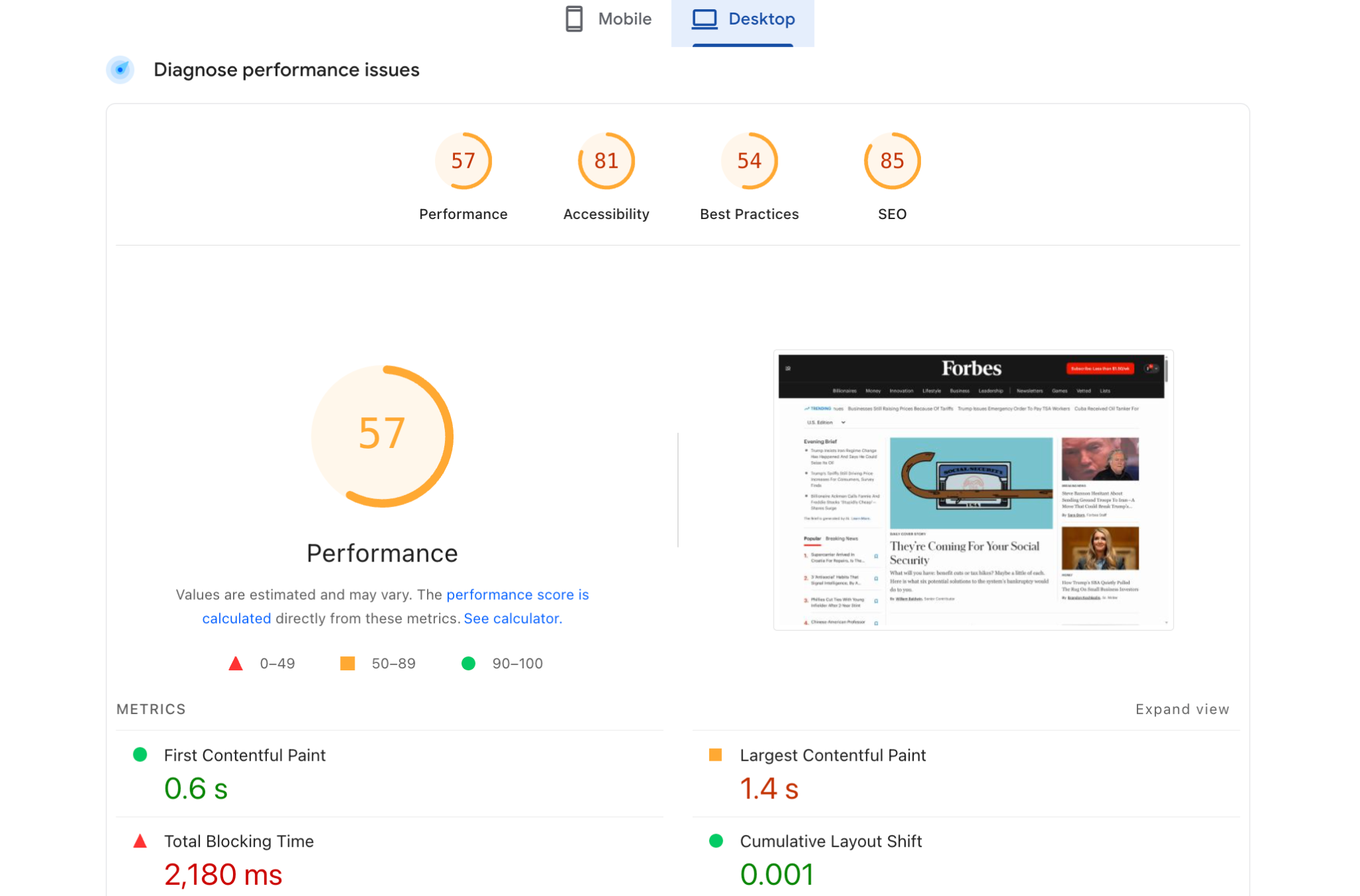
Essentially, your performance impacts crawling and rankings. When Google bots land on your breaking story, they evaluate a set of metrics to see how well your page loads.
If your website is overloaded with scripts and ad calls, page speed won’t be good, and crawling will become much heavier and slower.
Now multiply that across thousands of URLs… Yes, that doesn’t sound good.
- A slow site won't help you make your news content more visible.
- But if your server responds quickly and your pages render quickly, you earn “points” in Google's eyes.
And then, of course, there’s user behavior.
If your website is unusable, your visitors will simply bounce. And a high bounce rate is another thing that Google doesn’t appreciate much.
To analyze your performance, start by simply checking your website’s loading speed in PageSpeed Insights and see what fixes it suggests.
Source: PageSpeed Insights
Article schema
If there is one thing Google really values, it’s precision. You can't run away from that or ignore it. We’ve already covered a sitemap. But there is more to it.
There is also an article schema.
It’s an element that helps search engines understand your content more easily. And that’s the advantage you don’t want to lose.
Structured data for your stories (the NewsArticle schema) helps clarify:
- Headline,
- Author,
- Date published/modified,
- Main image,
- Publisher,
- Section, etc.
This is an example of how it might look:
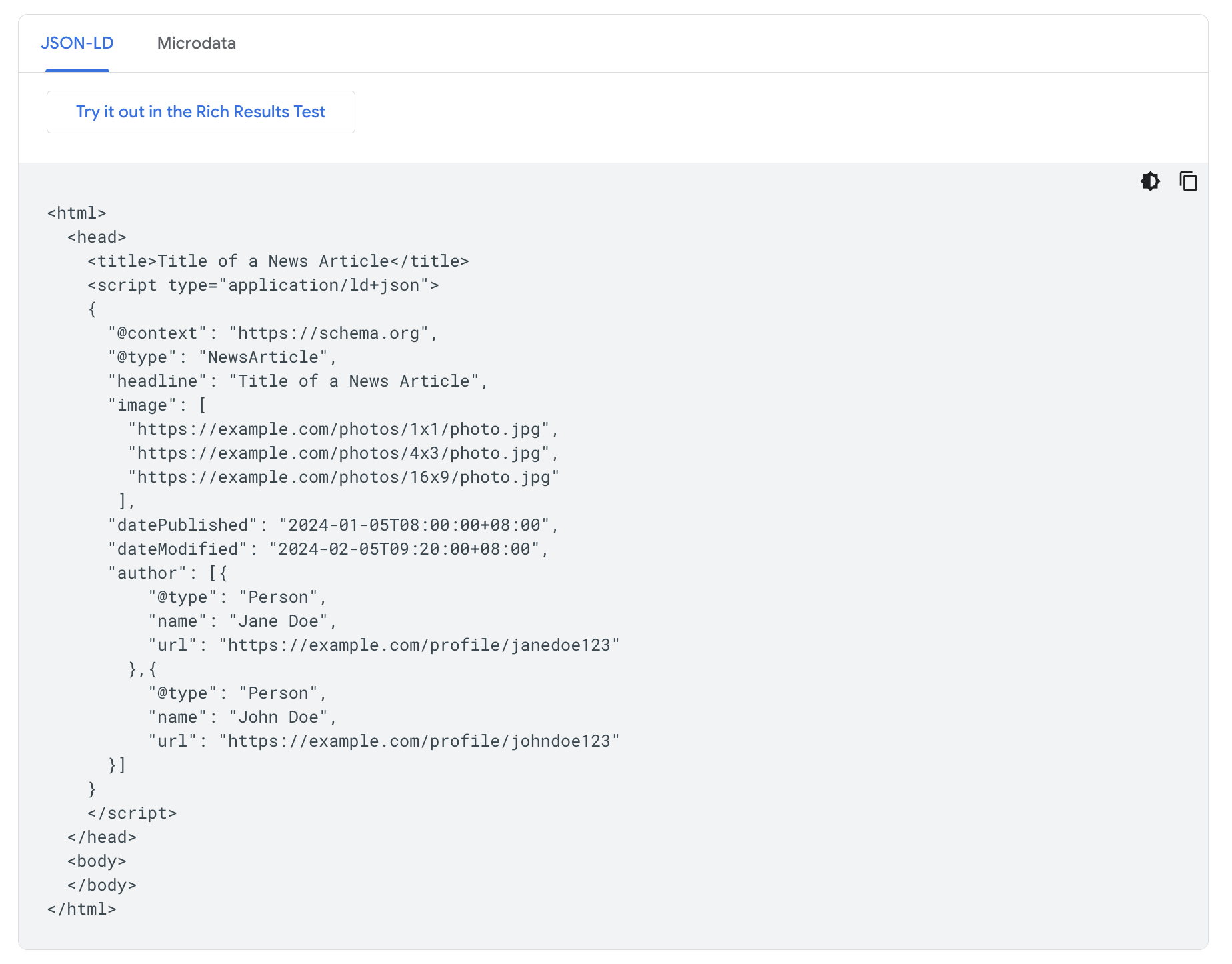
Source: Google Search Central
We won’t get into the details of how to add schemas because Google has a great guide on this already.
Archive control
Most websites on the internet don’t have to worry about this. But if you’re starting a news website (or already have one), this is something that has to be on your to-do list.
So many news outlets are sitting on years and years of unmanaged archives.
There are thousands of tag pages, deep pagination layers, random categories, and tons and tons of articles.
While you don’t need to index page 19 of a tag from 2014, some archive pages deserve to rank.
But how can you even tell if there is an archive mess?
That’s why you need strategic archive control, which means:
- Canonicalizing weaker variations of stronger parent pages,
- Redirecting some pages where it makes sense,
- Noindexing thin or duplicate archive layers,
- Consolidating overlapping tag structures,
- Cleaning orphaned microsites.
Ultimately, it’s about sharpening your focus.
Because otherwise, there is a big chance that you’re competing with yourself. We mean it: even if 60% of your indexed pages have no realistic chance of ranking, they’re still competing for crawl attention and internal authority.
And that weakens your entire optimization system.
Even “normal” blogs do content pruning (a practice of cleaning up their content). But for a news page, it’s an absolute must.
2. Editorial and content-level tactics for SEO
If infrastructure determines whether Google can see you, editorial execution determines whether it wants to rank you. Simple as that.
And this is where you can either win hard or sabotage yourself.
Essentially, you have to make sure your editorial judgment aligns with search behavior.
Keyword research for news
Traditional SEO keyword research usually focuses on:
- High-volume terms,
- Low difficulty scores,
- Relevant long-tail queries.
News keyword research is... different. Actually, it’s fundamentally different.
Here, you’re not chasing static search demand. It just does not make sense. What you’re doing is reacting to emerging demand.
When a story breaks, search queries evolve in stages:
- Initial event query (“X company’s CEO resignation”),
- Clarification queries (“where did they announce it,” “when did they announce it”),
- Identity queries (“who is the CEO that resigned”),
- Context queries (“why did the CEO resign,” “how did the market react”),
- Ongoing updates (“what’s the company’s plan now”).
If you’re a journalist reading this, you can see that it’s very much similar to how you’ve been taught to write your pieces in college.
Yes, the 5 W's + H framework is basically the foundation for how all relevant keywords are formed. Even if that’s an unusual way of looking at it.
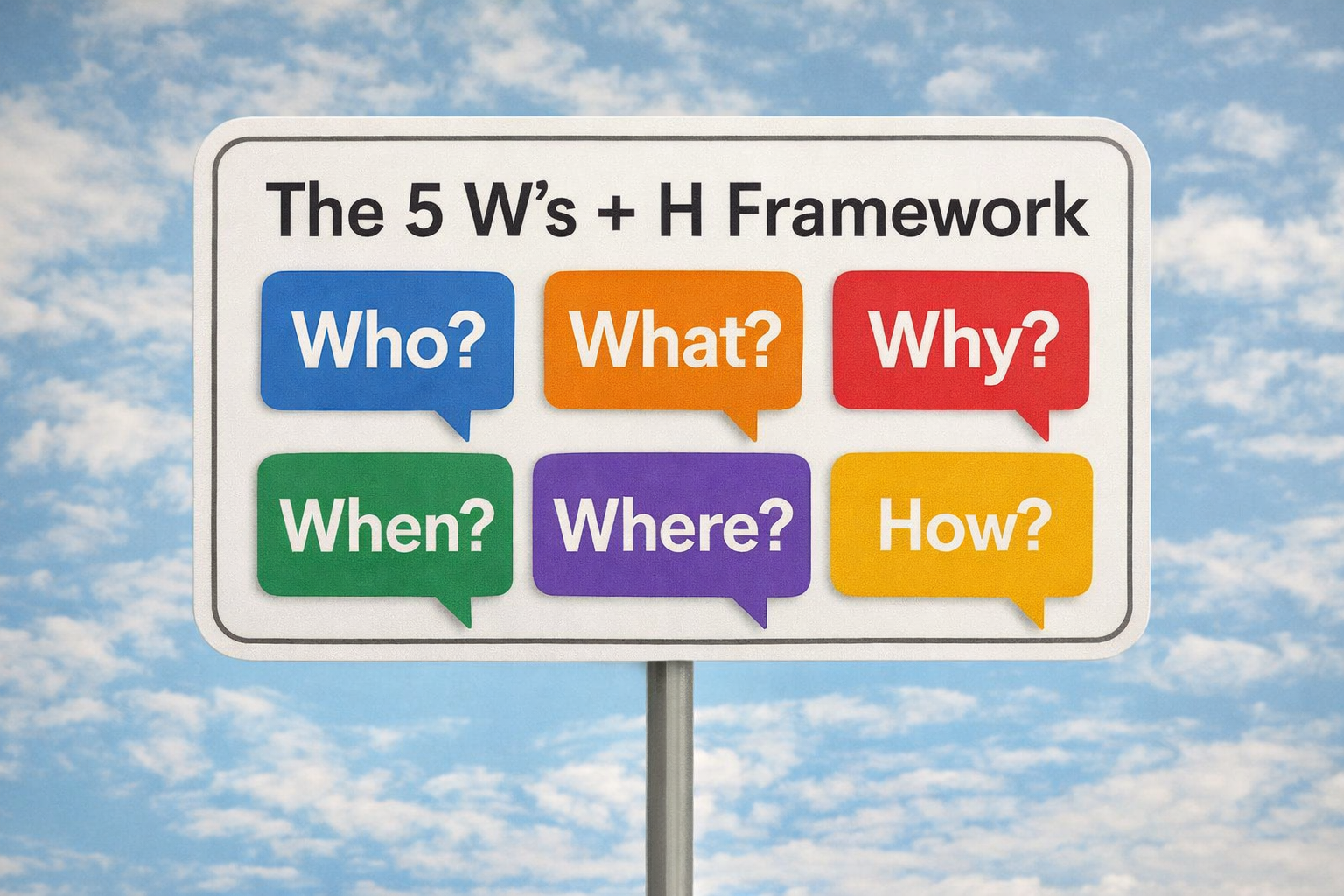
So, generally, you won’t have any keywords for optimizing news content because the events are happening right now. But you can anticipate those keywords.
The goal is to cover the story from different angles, which you, most likely, already do.
Also, smart news SEO would typically mean putting yourself in your readers' shoes and asking:
- How are people likely to ask this?
- Is there a name people will search?
- Is there an important location to mention?
- Is this tied to an ongoing topic we’ve covered before?
Writing article headlines that rank
Titles are huge. And every writer knows it.
Journalism, at its purest, usually focuses on facts. But some writers love clever headlines. We love them too, so no judging here. But the thing is that search engines praise clarity way more than any witty phrases.
So, focus on making your title informative first, clever second.
A headline like “A viral kiss turned into a career eclipse” might be cool, but Google has no idea what that means.
Now, let’s compare that to a headline like this:“Astronomer CEO resigns after viral 'kiss cam' moment at Coldplay concert.”

Source: ABC News
Even though this title isn’t really long, we clearly understand who did what and why.
The headlines for SEO might be clever, but they have to be precise and understandable above anything else.
On-page optimization
Most breaking news articles follow the inverted pyramid structure. That’s the “right” approach for journalism. But it’s also the right approach for SEO.
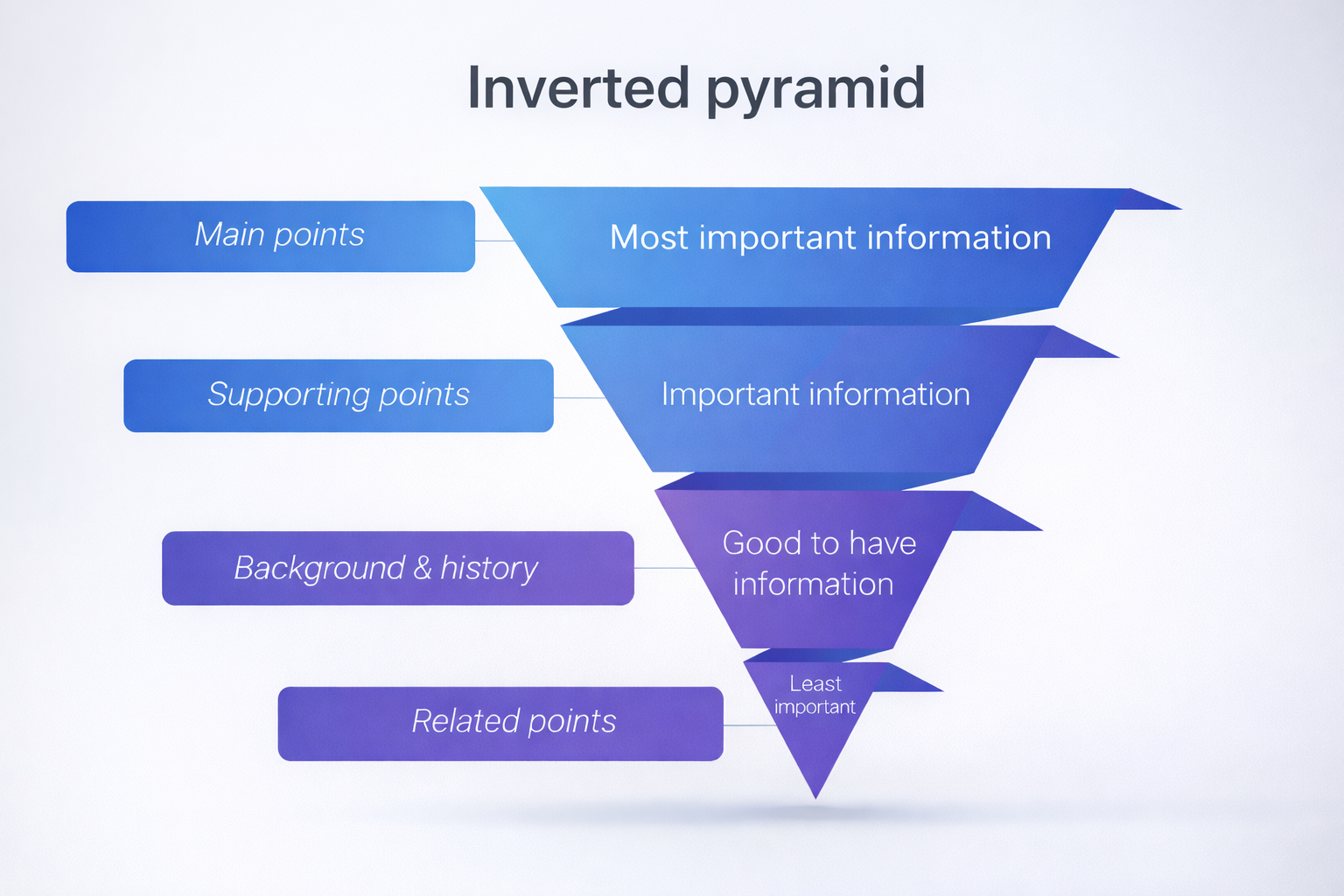
Still, in addition to this, make sure you do a little extra for your on-page optimization. Here’s what you have to pay attention to:
- Clear H1 headline (what we’ve already discussed above),
- A strong opening paragraph summarizing the event,
- Clear subheadings that go into the details,
- Internal links to relevant background coverage,
- Clear author attribution,
- Meta title and meta description.
Subheadings are especially underused in the news SEO world.
Instead of random narrative breaks, use H2s that simply match search behavior: “What happened?” “Who is involved?” “What happens next?” “Background on the investigation”
It shouldn’t be this direct, but you get the idea.
This simply helps Google understand the structure better and makes it easier for your readers to scan through the article and find what they’re interested in.
Updates for freshness
Fresh content isn’t only important for news. Search engines (and AI systems, for that matter) also always prioritize regularly updated content.
So, it’s a really important SEO KPI for any website. But it’s even more relevant when you’re a media outlet.
Generally speaking, when a story evolves, you have two options:
- Update the original article,
- Publish a new one.
Which is one better for SEO, though? You might use this simple rule:
- If it’s the same event progressing in almost real time, update and timestamp.
- If something really new happens, write a separate piece.
For example, if it's the same breaking story where you get new details, you can continuously update it. But if something new happens one month later, go for a new article.
Let’s take a look at the real case.
Here is AP’s piece on Apollo vs. Artemis.

Source: AP
Then, two days later, they published a guide to the Artemis II mission. Even though the topic is basically the same, updating the previous one wouldn’t be logical, as the focus is very different.

Source: AP
But they did link to the previous piece and several others.
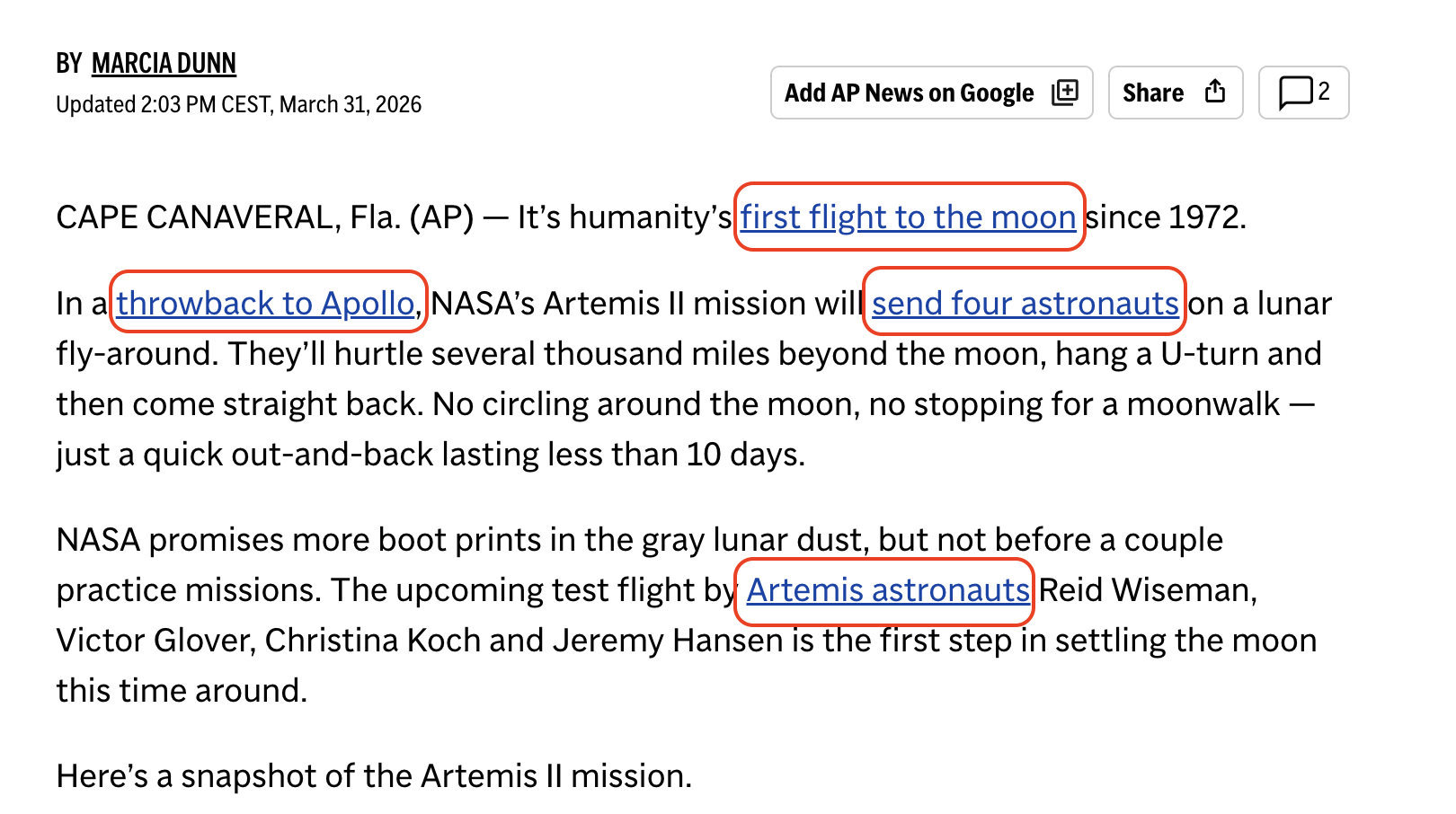
In terms of SEO, it’s very important to interlink your news content when you publish any follow-ups or anything related.
But internal linking is way too important, so we’ve dedicated the entire next section to it.
Internal linking for context
Every breaking story sits inside a larger context. It might be previous coverage, background explainers, or key figures related to historical events.
If you don’t link internally, Google has to guess your topical depth.
If you do link, and you do that as a part of your SEO strategy, you prove your expertise in seconds.
Let’s take a look at any random news piece.
Here is, for example, a Reuters story on Australia's ban on social media platforms for teens.

Source: Reuters
This is them linking to company profiles on their website:

And here is where they add internal links to other articles they’ve published before:
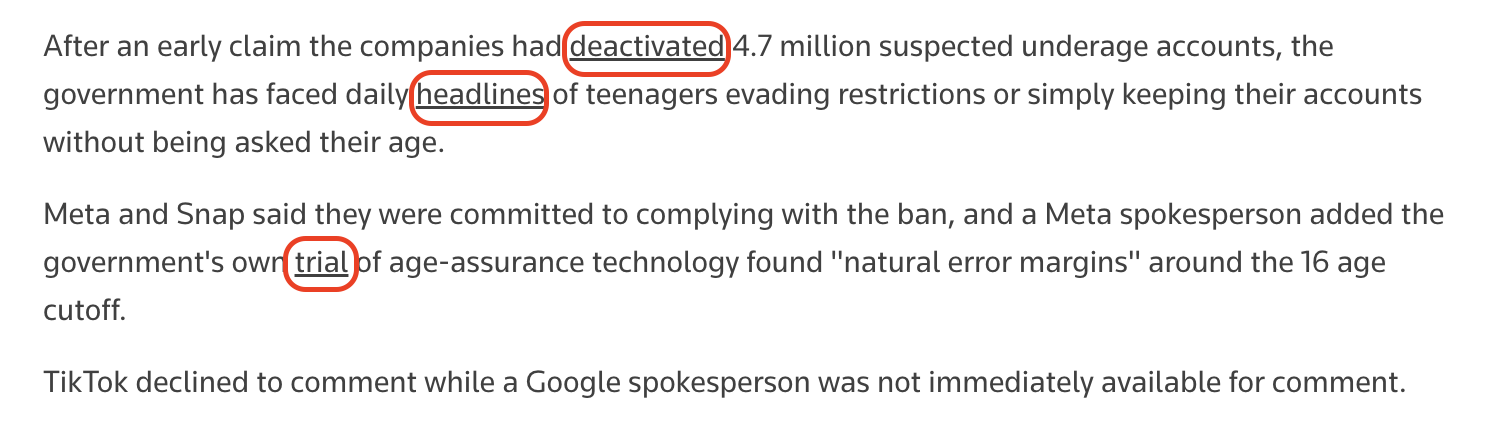
Interlinking your pages is extremely important as they help:
- Pass link authority to each other,
- Make sure there are no orphan pages (pages that have no links pointing to them),
- Reinforce your topical depth,
- Search engines and AI systems navigate through your content more easily.
3. Authority and long-term compounding systems
All the hot news pieces work like lightning, creating spikes. But you also need a system that can help you build long-term stability in terms of traffic, authority, visibility, etc.
If your SEO strategy relies solely on reacting quickly, you’ll be constantly sprinting.
And eventually, someone faster will outrank you. It’s just a matter of time. Because long-term dominance in news SEO doesn’t come from publishing more.
That’s why in this section, let’s talk about how you can compound your results.
Topic hubs
News categories tend to be very broad.
And the more content you post, the more you’ll feel the need to narrow it down. Above, we’ve already talked about subcategories.
But in journalism, there are some topics that generate way too many stories in a short period of time. For example, you could have a category Politics and then a hub on “US Presidential Election.” Or a Sports category and a hub called “Winter Olympics 2026.”
These will help you organize your news content better.
For the lack of a better visual example, here is AP’s live topic hub on the Iran war.
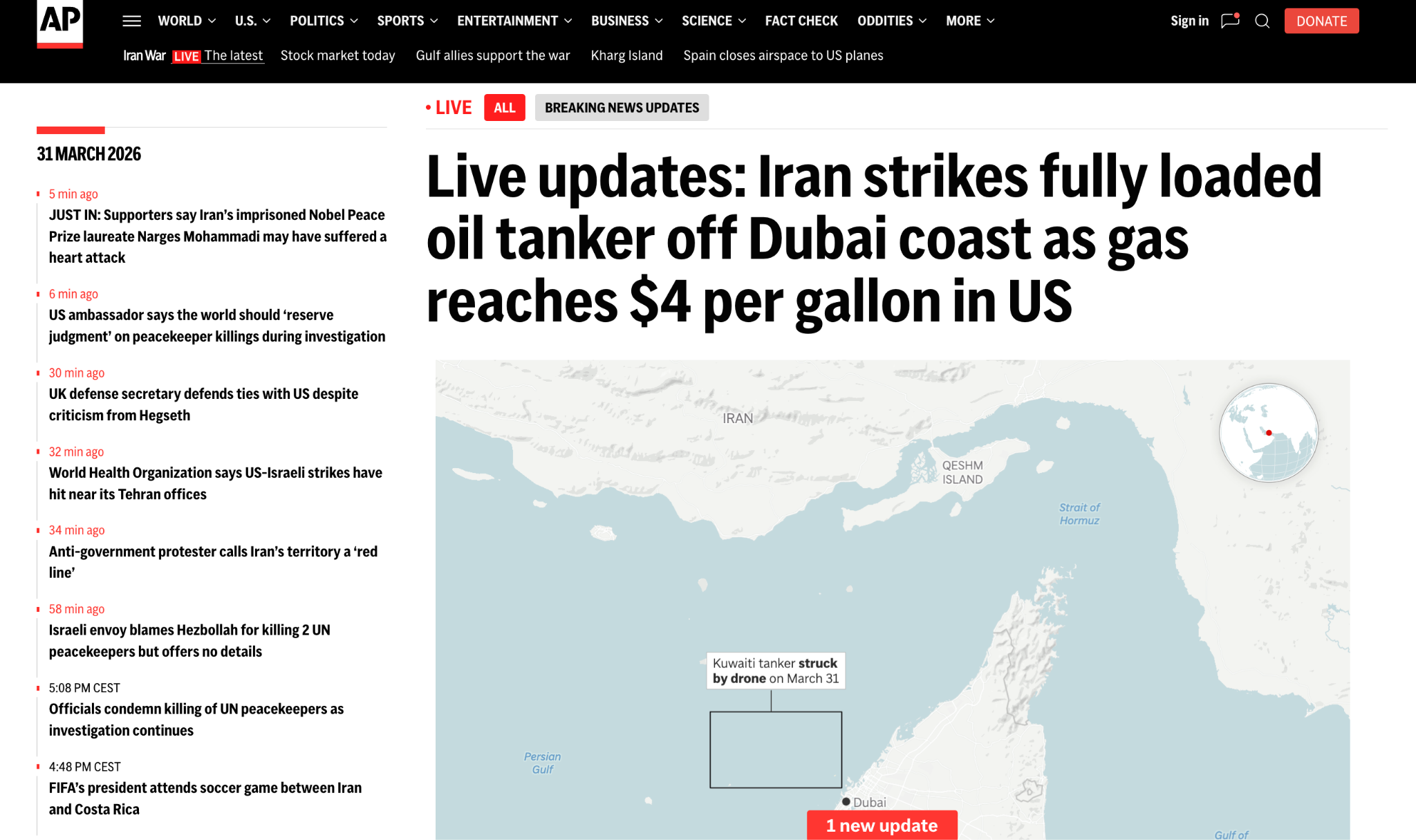
Source: AP
And of course, if we search for “gas prices” on Google, we’ll see an AP article there.
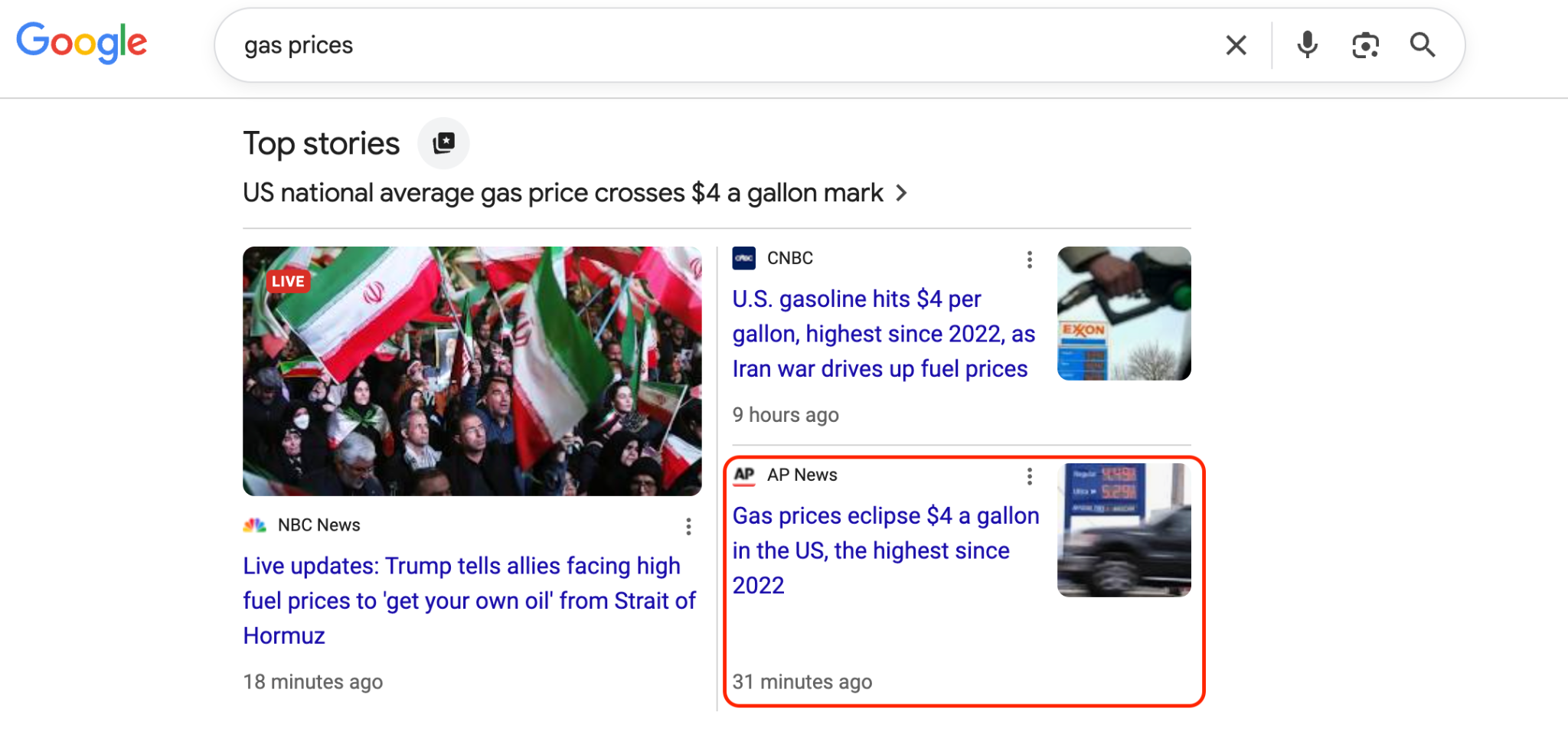
Overall, topic hubs can help you sort of “accumulate” authority and show that you don’t cover a particular topic superficially, but go in-depth.
This also works for local news outlets.
If you want to get more established in a particular area, post regional news (in addition to doing local SEO).
To create a good hub, do the following:
- Cover a defined subject, event, etc.,
- Link to all relevant breaking stories,
- Include evergreen explainers,
- Update it regularly,
- Act as the central reference point,
- When a major story breaks within that topic, make your hub stronger,
- Make each new article link back to the hub.
Over time, Google will start to recognize your site as a reliable source for that specific topic. So, only cover the subjects that you want to be associated with.
Because if you’re a finance-related media outlet and create a sports-related hub out of nowhere, it barely makes any sense, for both your readers and the search engine.
So, even if a topic attracts lots of attention, but doesn't fit your overall strategy, don’t get into that.
Evergreen explainers for traffic stability
Another thing that you need for traffic stability when you’re building a news website is evergreen content.
Breaking stories fade, right?
And once the topic is outdated, everyone will simply move on. But it doesn’t usually happen to explainers. That’s why creating evergreen content pays off big.
Ideally, every recurring topic (elections, conflicts, court cases, major corporations, etc.) should have a strong evergreen explainer attached to it.
But if that sounds too much, start small. Check out some major media and what evergreen content they post.
Let’s open the front page of the New York Times and scan it together.
First, we see a piece on red-light therapy and its effects on the body.
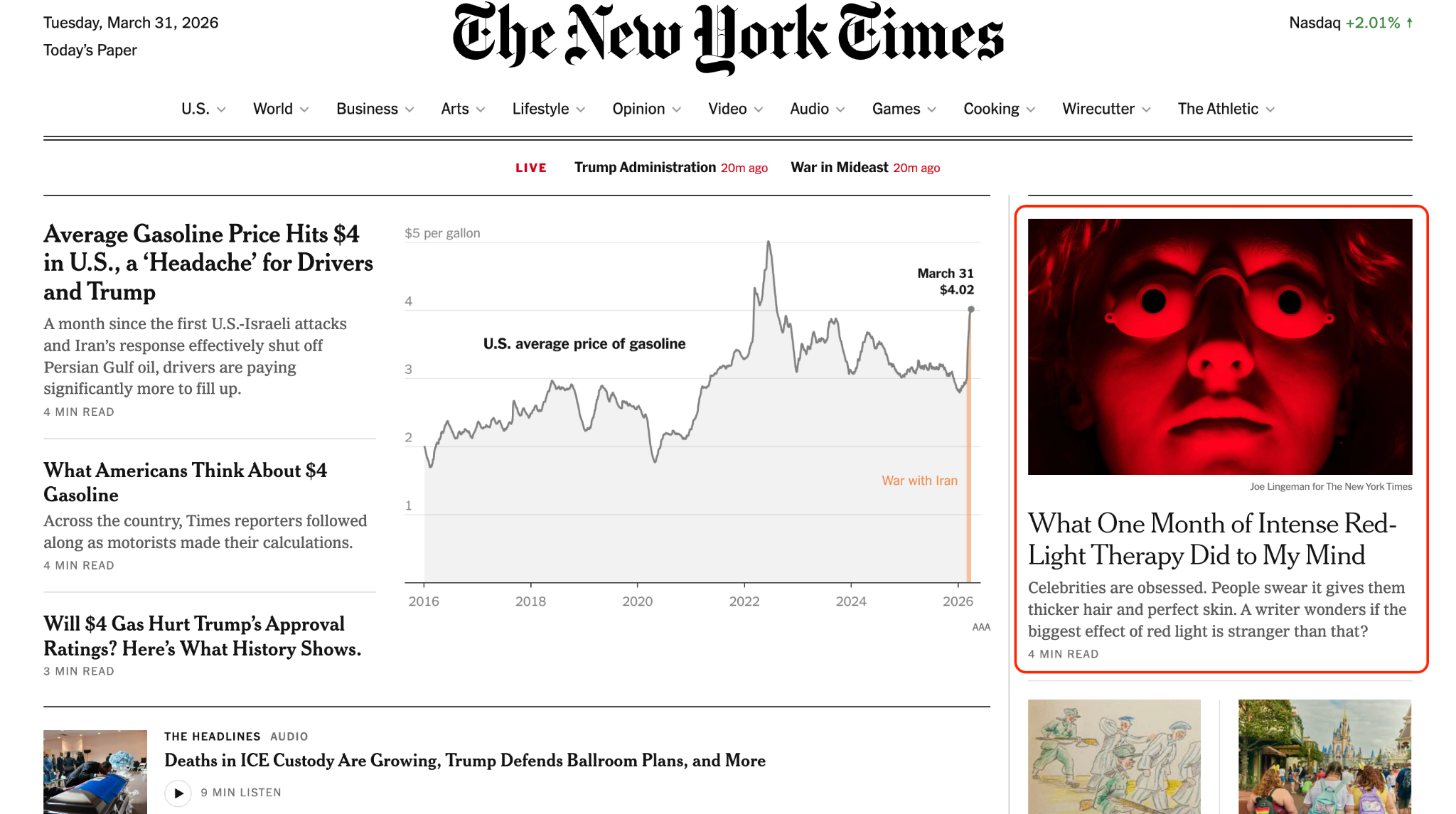
Source: The New York Times
Next, we see stories on decluttering and gray hair.

Source: The New York Times
And then, there is a whole lifestyle section filled with evergreen articles:

Source: The New York Times
But it isn’t just wellness content, even though it seems like that from the front page. They also post many “more serious” pieces, like this:

And this:

So, in reality, your evergreen articles can be extremely broad. Just try to first cover topics that are extremely relevant to your niche.
These pages will help you capture:
- Long-tail traffic,
- Background searches,
- Educational queries,
- Context-driven interest.
But they also serve another purpose: they act as internal authority anchors. And this is also where you can use traditional keyword research and competitor analysis.
Internal linking framework
We’ve already talked about internal links and their importance. But it’s also helpful to turn it into a framework, a system.
A system here means:
- Every breaking article links to at least one evergreen explainer,
- Every follow-up links back to the primary story,
- Topic hubs link downward to all the relevant pieces,
- Older high-authority article pages get updated with links to new coverage.
This creates relevance loops, where Google’s algorithms can see depth. And over time, that’s what will strengthen your ranking stability across your niche queries.
Archive strategy curation
Earlier, we talked about cleaning archives. Now let’s talk about how you can curate them.
You’ve probably noticed that some of your older news articles still attract traffic, especially when similar events happen again.
So, instead of letting them decay, you can:
- Update them annually (or as often as the topic requires),
- Refresh statistics,
- Add new context sections,
- Link to latest coverage.
For example, if you have an article titled “History of the FIFA World Cup,” that page can be refreshed before every tournament. It can be an evergreen piece with periodic updates.
This will help you preserve the site authority you earned over time, and it will also signal freshness and relevance to search engines.
The long-tail engine
You can always focus on high-volume terms like “gold prices today.”
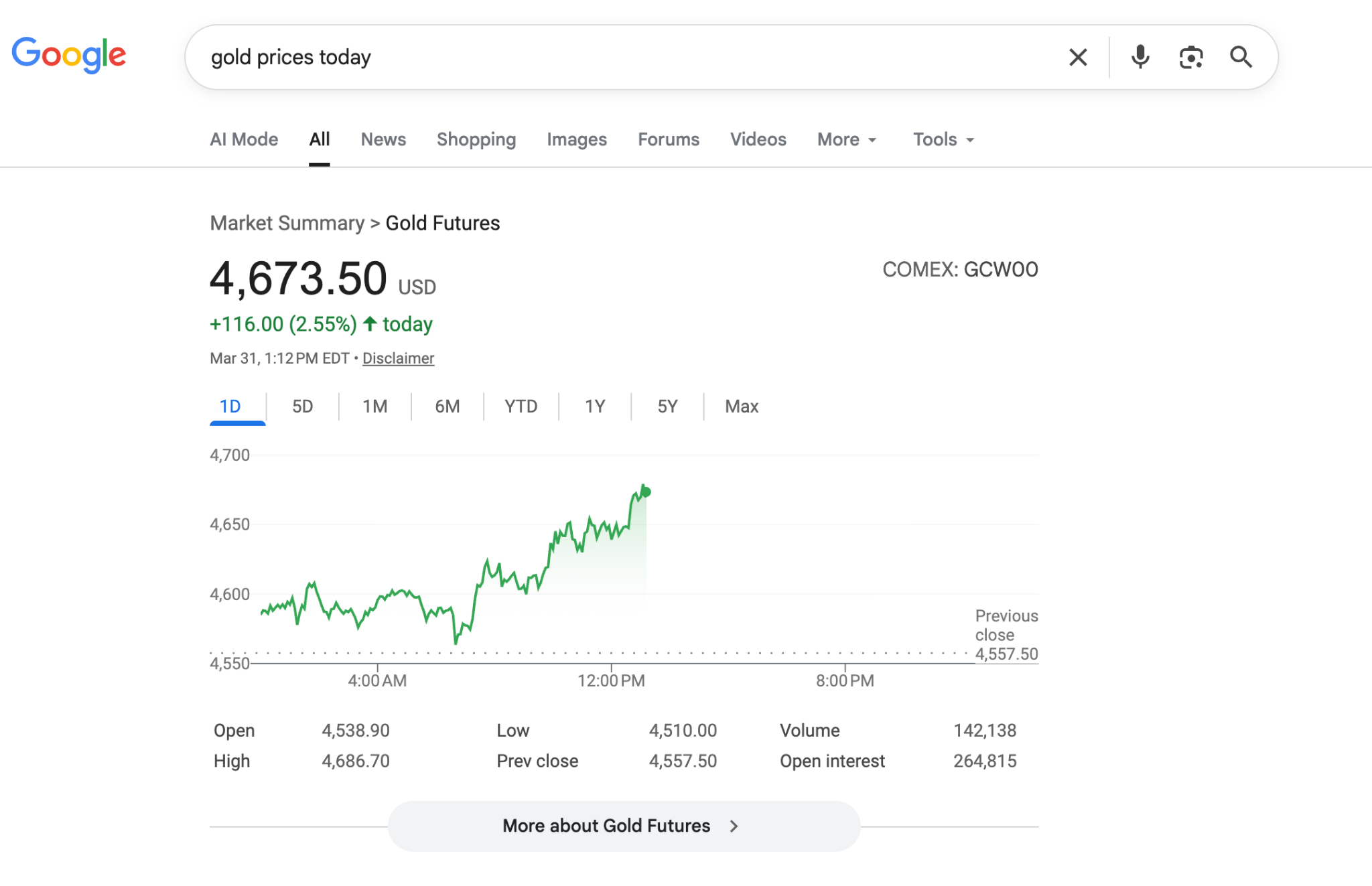
But long-tail queries are where sustainable traffic lives because these are pieces people actually read. For example, “How do economic crises impact the gold price?”
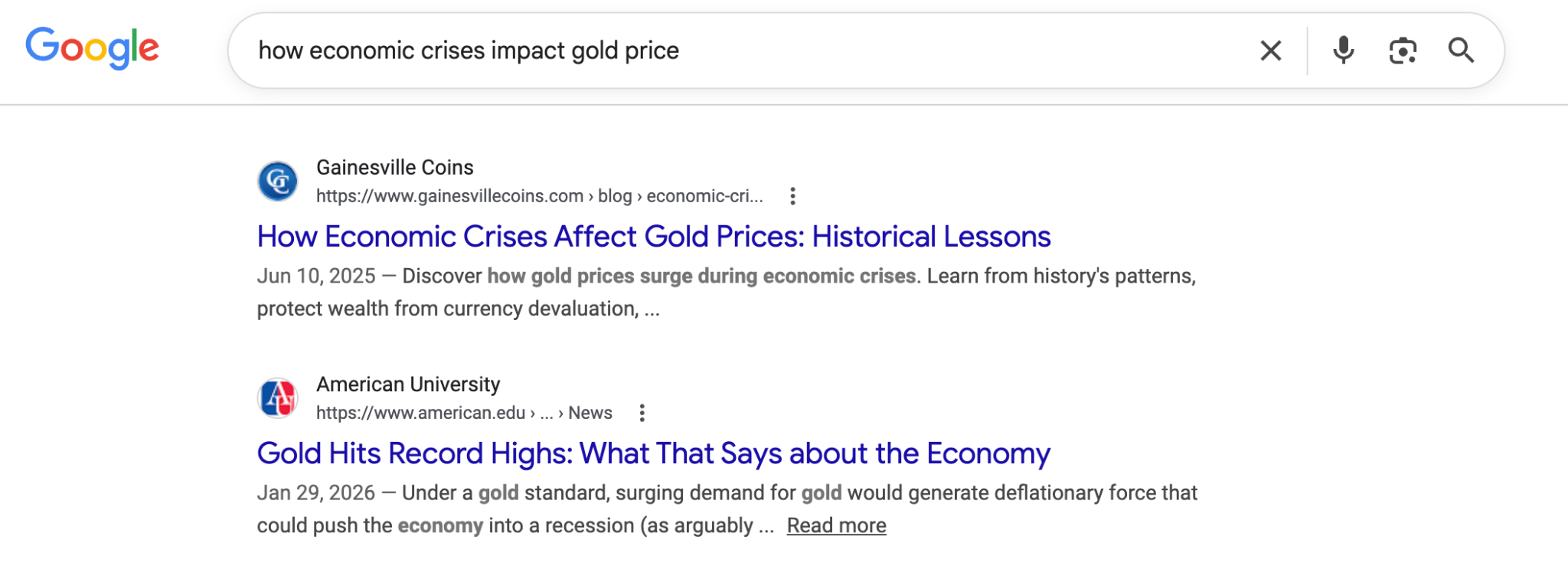
It doesn’t mean that your article has to be titled as a long-tail keyword. It can, but even if your coverage has related sections and structured subheadings, you can rank for these variations. And that's what you want.
Long-tail traffic gives you a lot of value over time. Because humans will have these questions for years to come.
This is the difference between reactive SEO and systematic news SEO.
4. Distribution surfaces: Search, Top Stories, Google News, and Discover
Not all traffic is equal, and not all visibility works the same way. As we’ve already discussed, for news publishers, these are the primary Google surfaces that matter:
- Traditional search results (including Top Stories),
- Google News,
- Google Discover.
Each has its own logic and reacts to different signals. That’s why each requires separate attention and monitoring.
Monitor surfaces separately
Of course, in theory, you don’t have to be everywhere. But we can all agree that if you’re already doing SEO for your news articles, you want them to be as successful as possible.
So, it’s important to track how you’re doing for each of these features.
You can easily analyze this in the free Google Search Console:
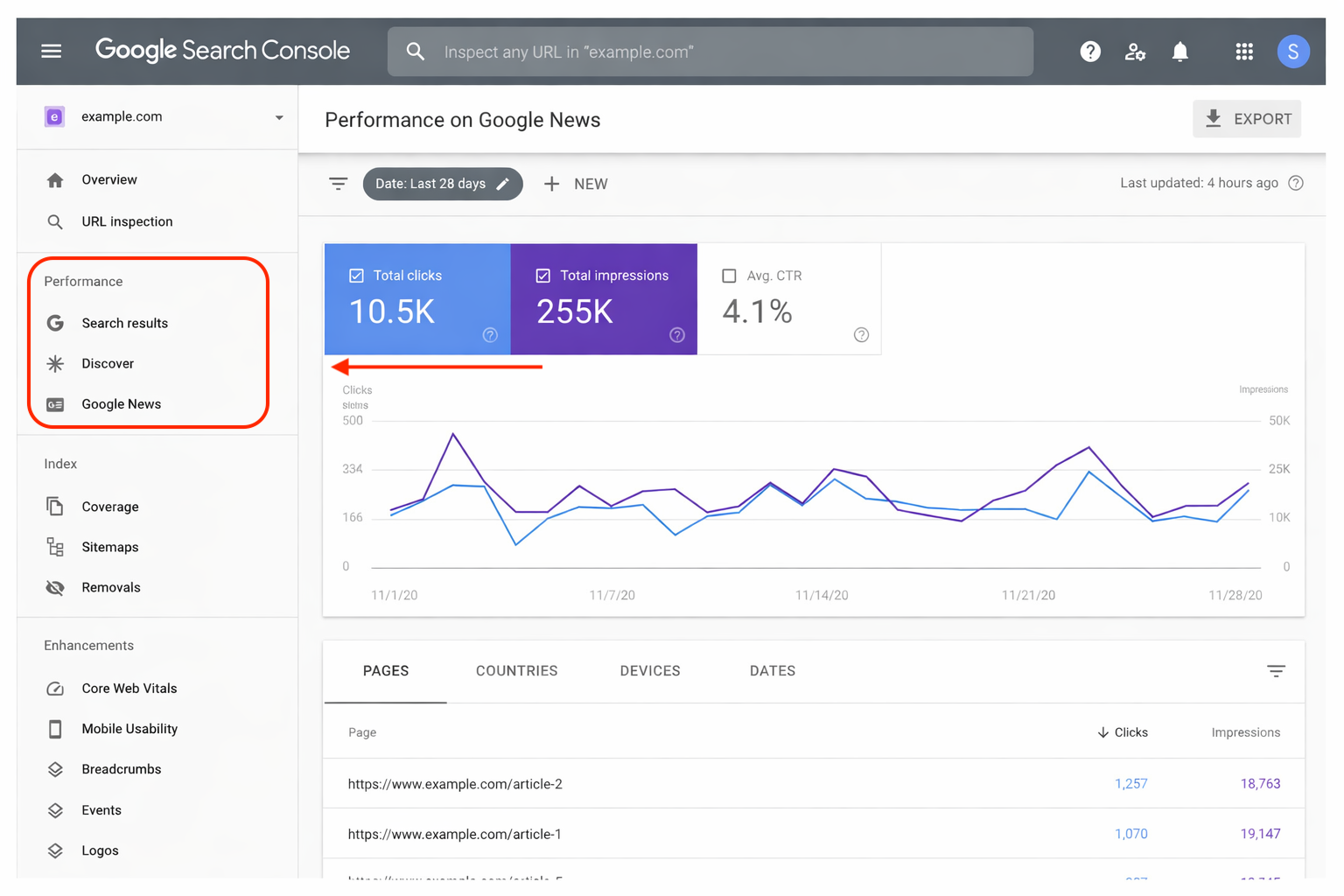
Source: Search Engine Land
Why is it so crucial to monitor each of them?
Because each tells a different story:
- If Discover drops but Search remains stable, the issue might be engagement-related, and not at all technical.
- If Search impressions decline but Discover goes up, how can you interpret it? Well, you may be relying too heavily on interest-based traffic.
- If Google News visibility is not stable for your site, review your consistency and structured data.
The biggest mistake would be to mix these numbers into one “organic traffic” report.
This way, you’ll simply hide insights from yourself.
If you want to go even further, you can also create reports or dashboards to get into more details:
- Topic performance,
- Article type performance (news vs. evergreen),
- Content update impact, etc.
The freshness window
This is the point you might want to call final, where all your systems become visible. Generally (and metaphorically) speaking, when you publish a news piece, three clocks start ticking:
- Speed to index,
- Visibility during the freshness window,
- Long-tail compounding afterward.
If your infrastructure is clean, then congratulations, your indexing will be fast. If your editorial execution is aligned (just as we described), you’ll capture initial search demand. If you work on your evergreen content, your traffic and authority will compound over time.
There you go, these are the results of the full news SEO system you’ve built in motion.
Conclusion
SEO for news websites is not a checklist you run after publishing. You can't just tweak a meta description or add another keyword into a headline and make it work.
Unfortunately, there is no “magic pill.” It’ll only work if you build a system. A system that starts with architecture and focused editorial decisions.
But what really separates high-performing news sites from the rest is discipline. And when you keep it up, all the layers we have just described will really start working.
All trademarks, logos, images, and materials are the property of their respective rights holders.
They are used solely for informational, analytical, and review purposes in accordance with applicable copyright law.




 Sign Up
 Sign Up