






Link Authority: What It Is and How to Build High-Quality Backlinks

You can see one common situation in SEO. People build a bunch of links, see almost no ranking improvement, and think “SEO is broken.” But what’s broken isn’t SEO. It’s the approach to link building.
Because the thing that matters most isn’t the number of backlinks, it’s link authority.
It’s that “hidden element” that Google uses to decide which pages rank and which ones will be forever stuck at page two and below.
As it’s so important and so underestimated, we’ve dedicated an entire guide to this question. Here, you’ll learn:
- What link authority really is,
- How it’s different from the metrics most people chase,
- How authority flows through links and how it gets wasted.
And of course, we’ll finish it all off with our proven tactics to build high-quality backlinks.
What is link authority?
Link authority is the amount of ranking power a specific backlink can pass to your page. Simply speaking, it means how weak or strong a backlink is.
When one domain links to another, Google treats that as a trust expression.
But there's something many people miss: not all trust is the same. For example:
- A backlink from a shady blog that has no traffic still technically “counts”. But obviously, it has extremely low (if any) authority.
- Meanwhile, a single contextual link from a credible source can have a stronger authority than 20 backlinks combined.
That’s why people chase authority links, links that actually carry weight. That “weight” is usually determined by:
- The authority of the linking page,
- Its relevance to your topic,
- How contextual and natural the link is,
- How selective the site is with outbound links (the more outbound links they have, the more they spread their authority thin).
And no, Google doesn’t have a metric called “Link Authority.” It’s more of a concept than a KPI.
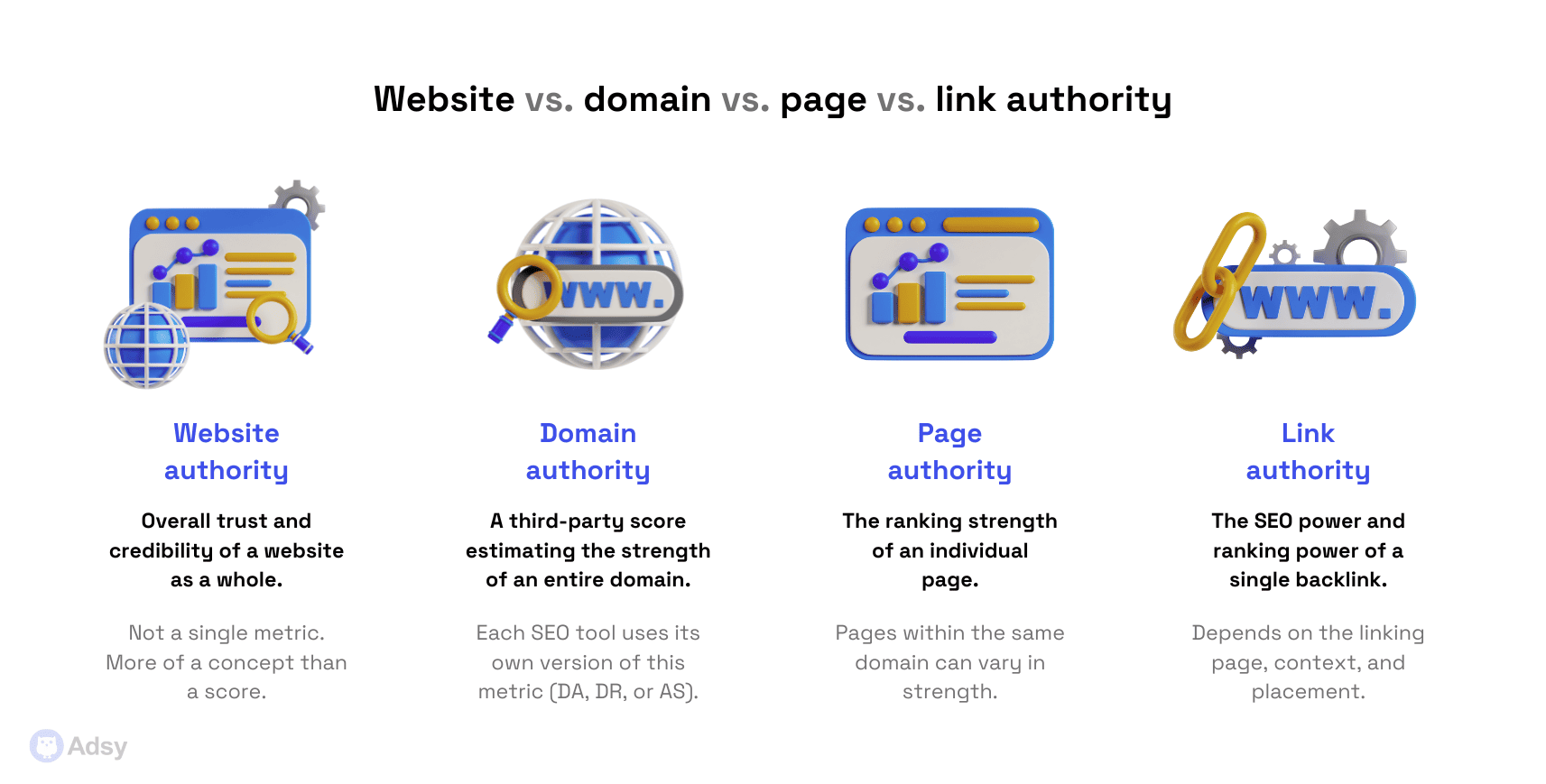
How is it different from website, page, and domain authority?
People use terms like “link authority,” “authority website,” “domain authority,” and “high-authority blog” as if they all mean the same thing.
Well... They don’t. So let's clear that up.
Website authority
Website authority isn’t really an “SEO term.” It’s about the overall credibility of a brand or business online. What matters here are things like brand recognition and mentions in various publications.
An authority website is one that Google already trusts within a specific topical space, and usually because real people trust it too.
Big brands rank not because every page they publish is absolutely outstanding. But because the site itself is trusted.
Yet again, there is no metric that can tell you, “This website has 70% authority.” It’s about a combination of signals that contribute to that credibility.
For example, pretty much anyone would say that Forbes is a trustworthy website, while something like www.fjwsejftue6738ee.com isn’t.

Source: Forbes
Domain authority
Domain authority (aka domain rating or authority score) is a third-party metric that measures the SEO strength of an entire website. You’ve likely seen these in your SEO tools:
- DR in Ahrefs,
- DA in Moz,
- And AS in Semrush.
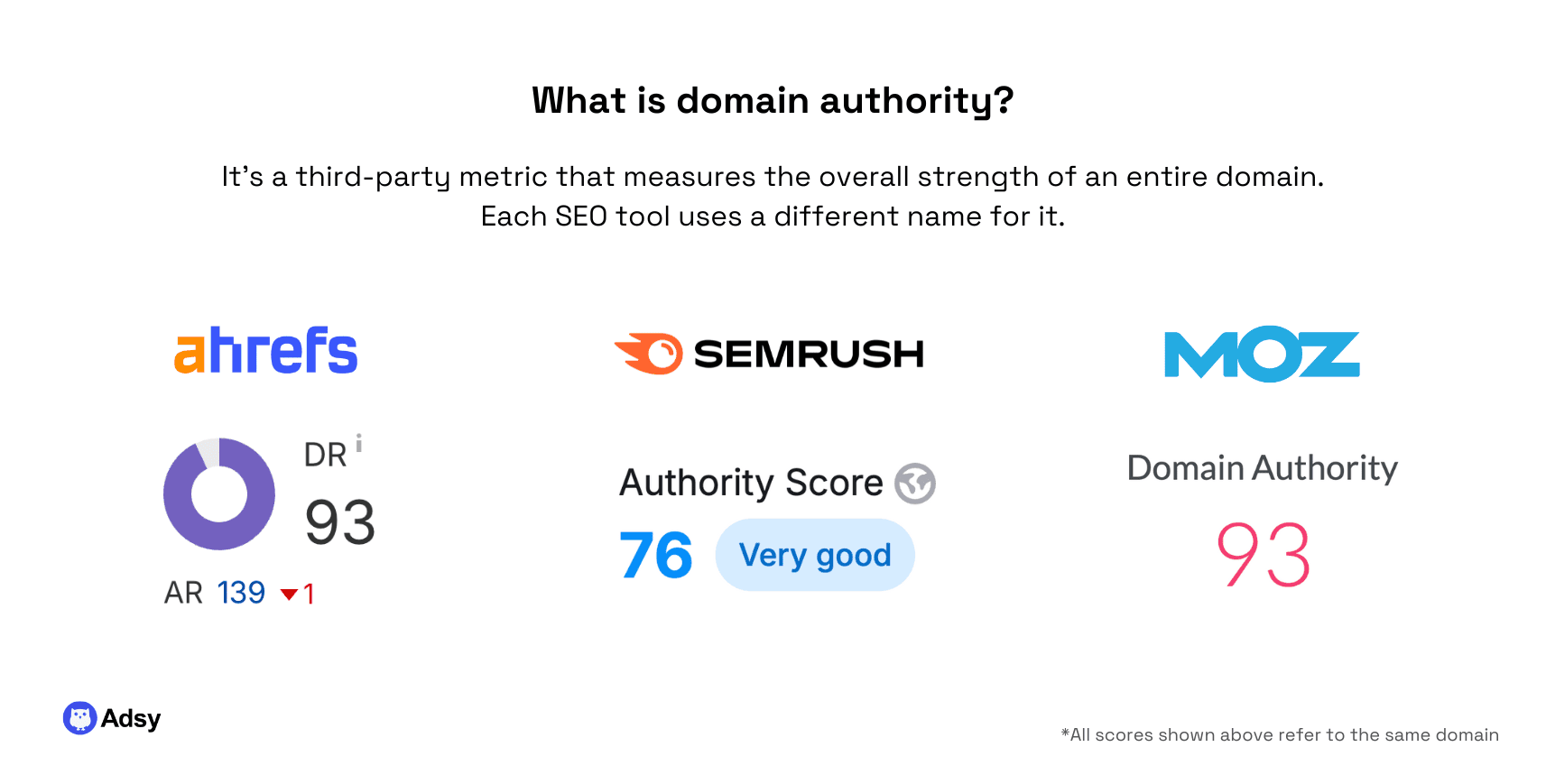
They are real SEO metrics that optimization experts rely on to see how their domain is doing.
But an important detail is that these are only estimations. If you check each of these metrics for the same website, they will be different in each SEO tool.
So, obviously, Google doesn’t use any of these as a ranking factor. But they are still the most accurate way to determine the SEO quality of an entire domain.
Page authority
Page authority (PA) measures how strong a particular page is. While it’s Moz’s original SEO metric, you can find something similar in many other tools as well (e.g., UR in Semrush). This one depends on:
- The number of backlinks,
- Any social signals,
- And page relevance.
That’s why one domain can have PAs that really vary depending on the page.
Link authority
And you already know what this one is: how much SEO value a specific link passes. It’s like an intersection of all of the above because links connect pages and domains.
Why do you need authority links for your SEO?
If SEO were only about content quality, the internet would look very different.
The best-written pages would always win. And half of the SERPs wouldn’t be dominated by a relatively small number of leading brands.
But that’s not how it works.
Google doesn’t rank pages based on how “good” they are. It ranks them based on how trusted they are. Because how can you determine what a “good page” is? It’s very subjective.
That’s exactly why all these SEO metrics exist in the first place.
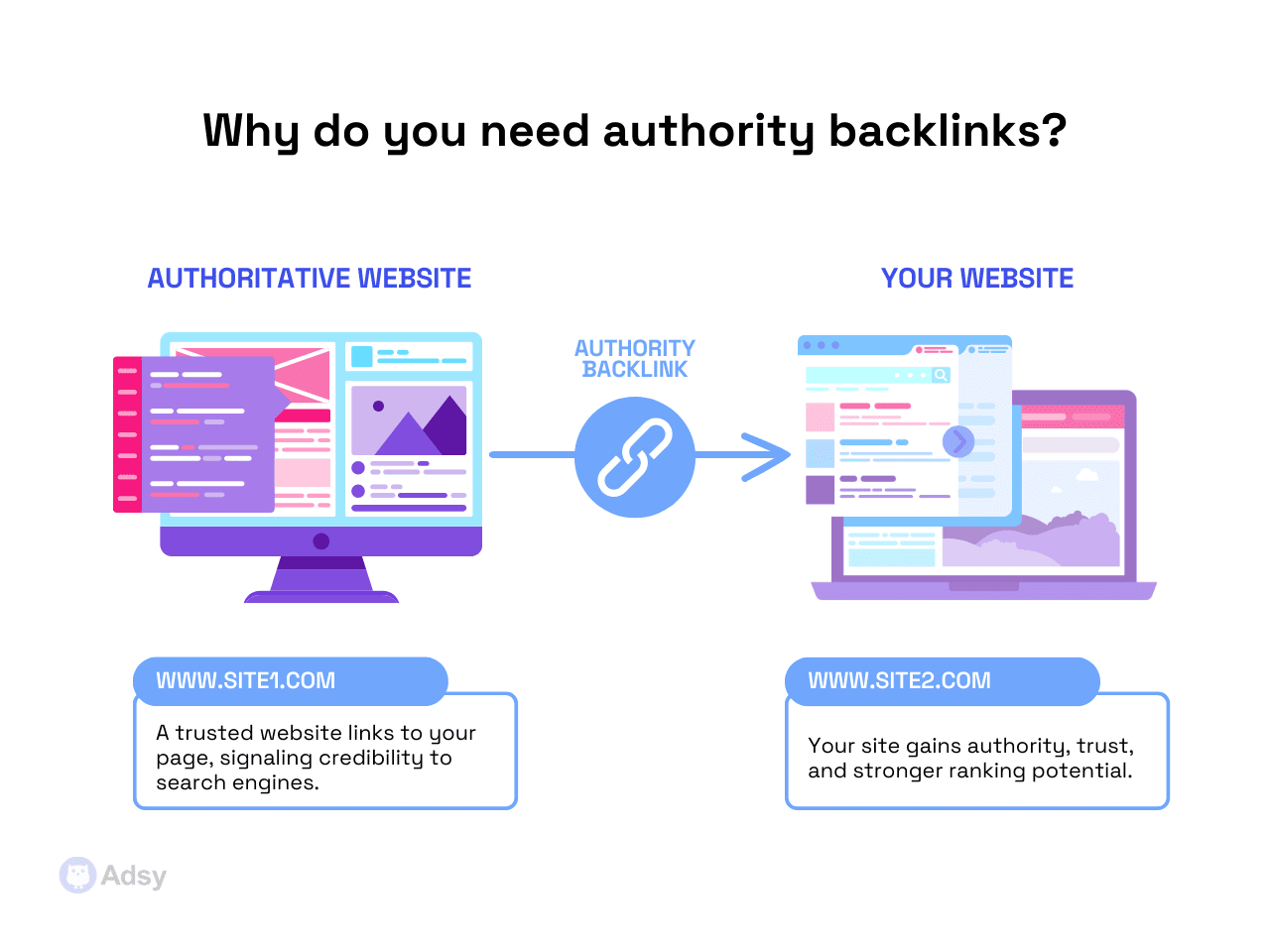
And authority links are one of the most important external signals of trust.
Here is the thing:
- Google can’t know how good of an expert you are.
- It can’t truly “understand” whether your advice is better than someone else’s.
So... it relies on proxies. One of the strongest proxies is this: Who is willing to vouch for you?
When a relevant site links to your page, it’s like them saying, “This is worth attention, and we trust them.”
That’s why links from authority websites matter much more than your link volume. For that same reason, even if you publish great content, you might still never rank. Why? Because in competitive spaces, everyone has great content.
But what makes the difference between showing up on page one versus page five on Google? It’s almost always how much authority backs the page.
This is why newer sites struggle even when they “do everything right.” It’s not that Google dislikes them; Google just doesn’t trust them yet.
Still, authority links don’t replace content. They just sort of make louder what's already there.


How to evaluate link authority
Now, let’s understand how link authority works.
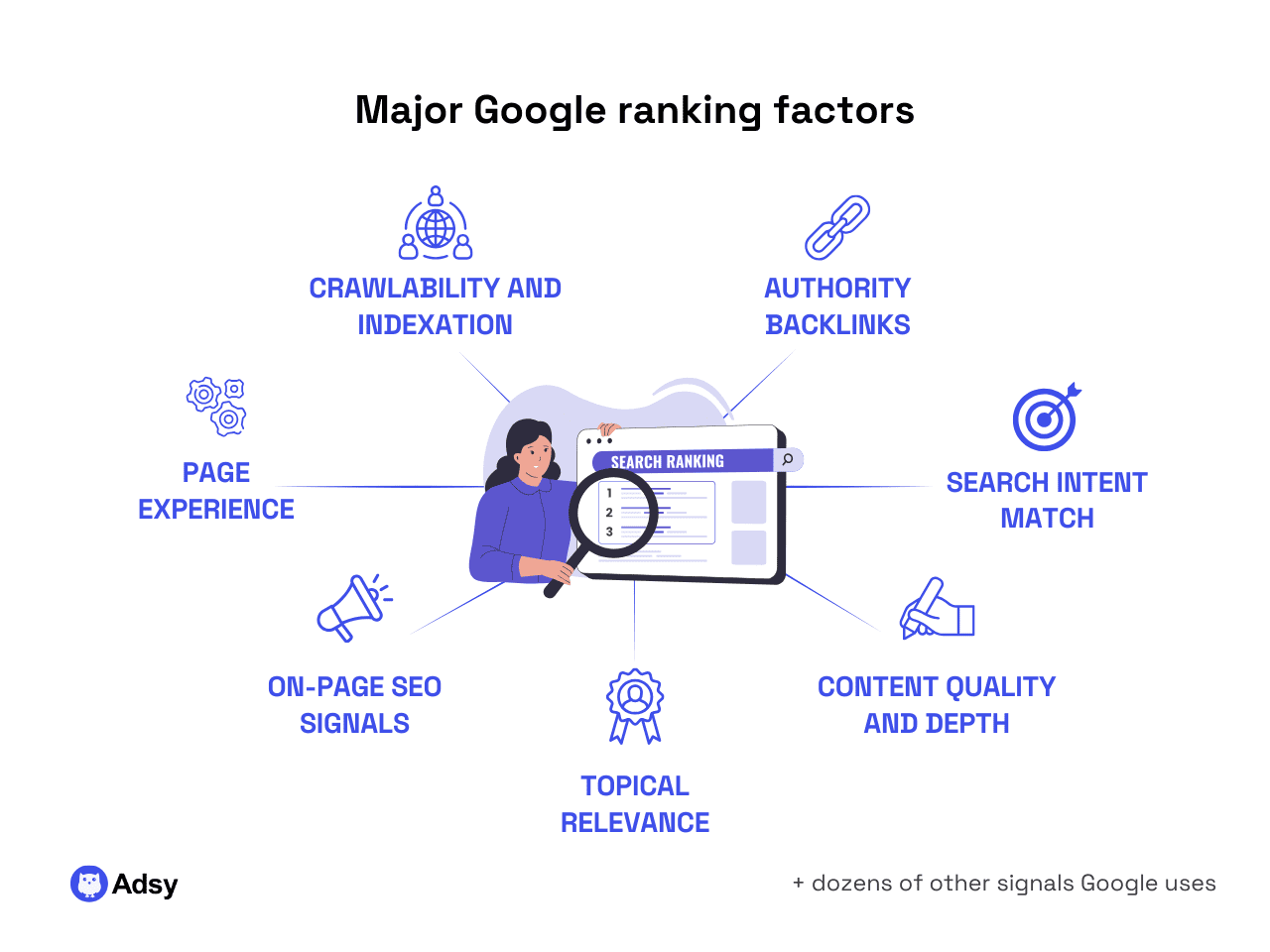
At a high level, search engines like Google are trying to answer one question every time someone hits “search”:
“Which page deserves to rank highest for this query?”
That answer is based on hundreds of factors. But links (specifically authority links) still sit near the top of the pile because they’re external validation.
And that leads us to probably the most interesting thing:
Google trusts what other sites say about you more than what you say about yourself.
Every website says a lot about its expertise. But do you always trust what other people say about themselves? Exactly:)
So, for search engines, the content you post about your business doesn’t mean much. It doesn’t mean much until other reputable sites prove it.
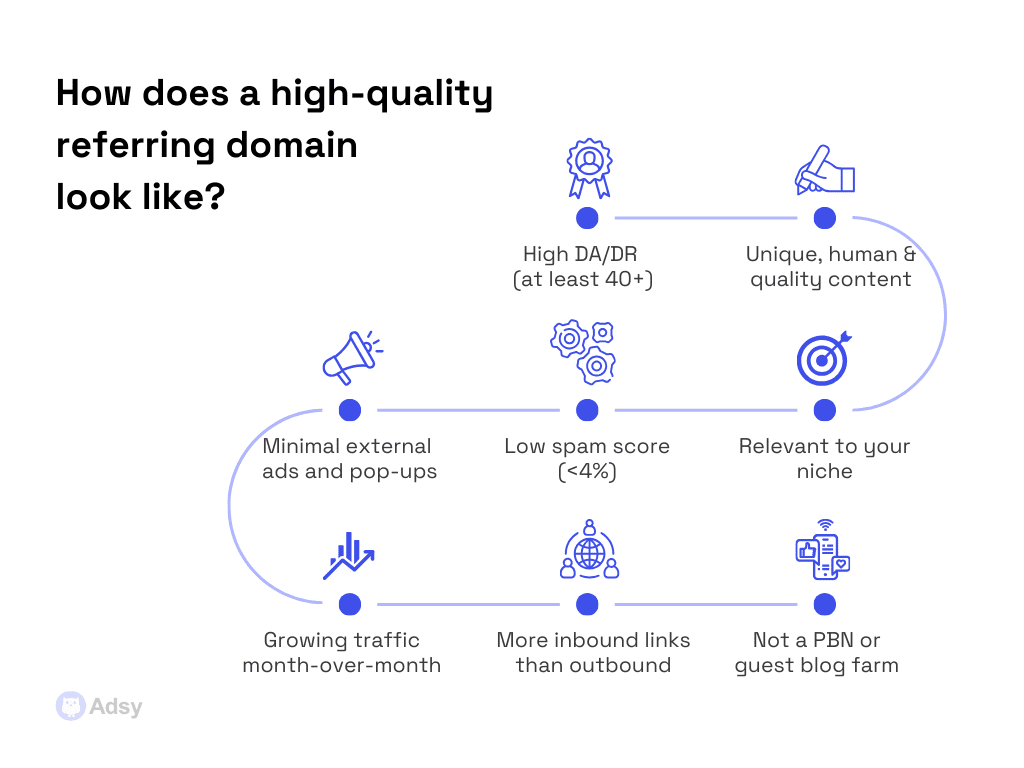
But how do you know if a website is reputable and whether its backlink is authoritative? Let’s cover some of the major points:
Topical relevance
If a link is not niche-relevant, it’s often useless. A backlink from a site in your industry carries context. And Google understands that context because it’s natural.
A link from an authority website in your niche sends a signal that "this page makes sense in this conversation.”
Meanwhile, a link from a generic site (even one with good metrics) generally passes less authority.
Authority is not a universal thing. It’s topical. So, before rushing to check all the link-building metrics, ask:
- Does this site regularly publish content in my niche?
- Would its audience care about my page?
- Does this link really make sense for my website?
If you can’t answer “yes” to the quotations above, most likely, you have to forget about that link prospect.
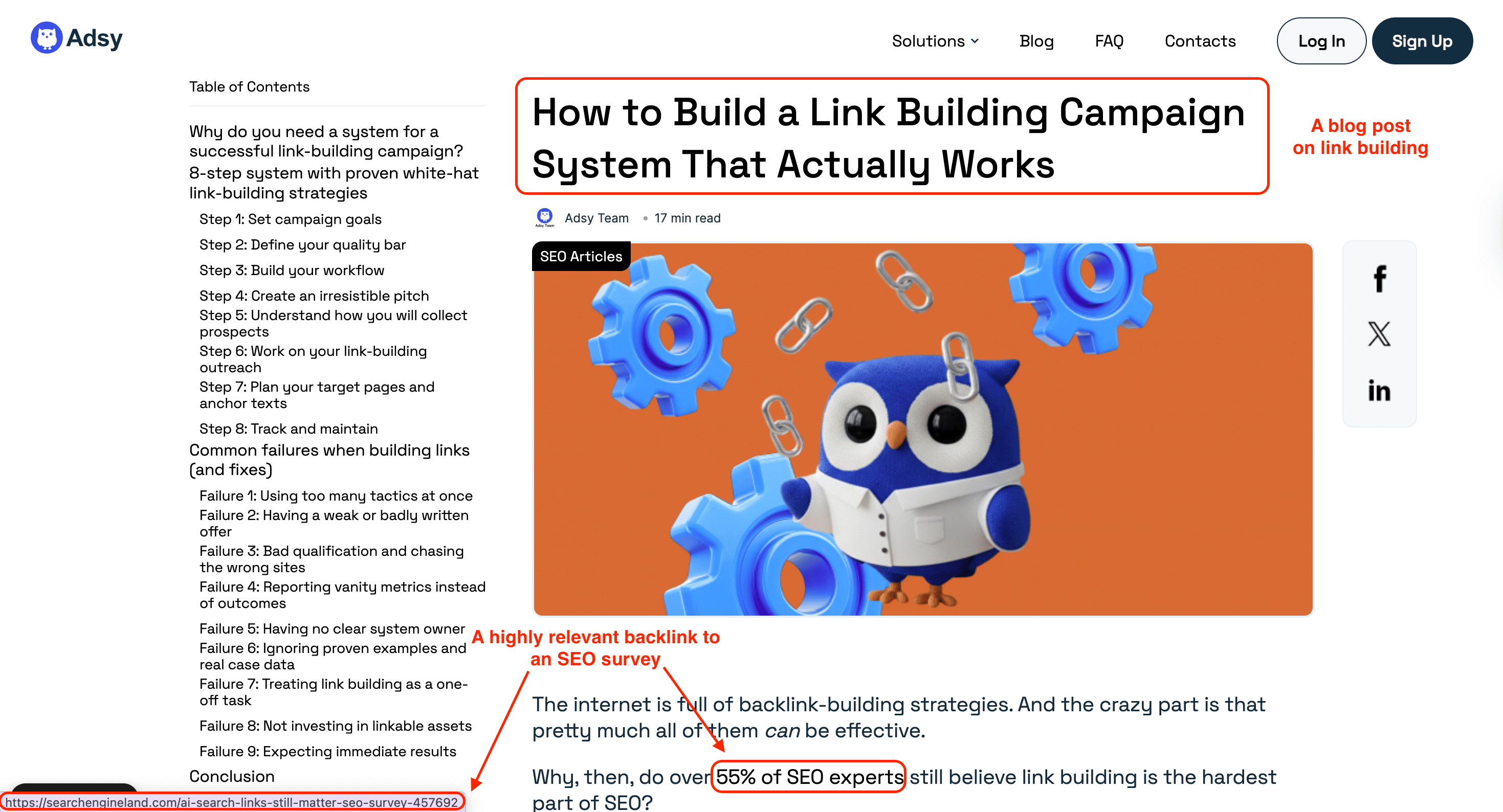
For reference, here is an example of a highly relevant link. You see an article on link building that mentions a relevant SEO study. Makes sense, right? That’s what you should aim for every single time.
Editorial context and placement
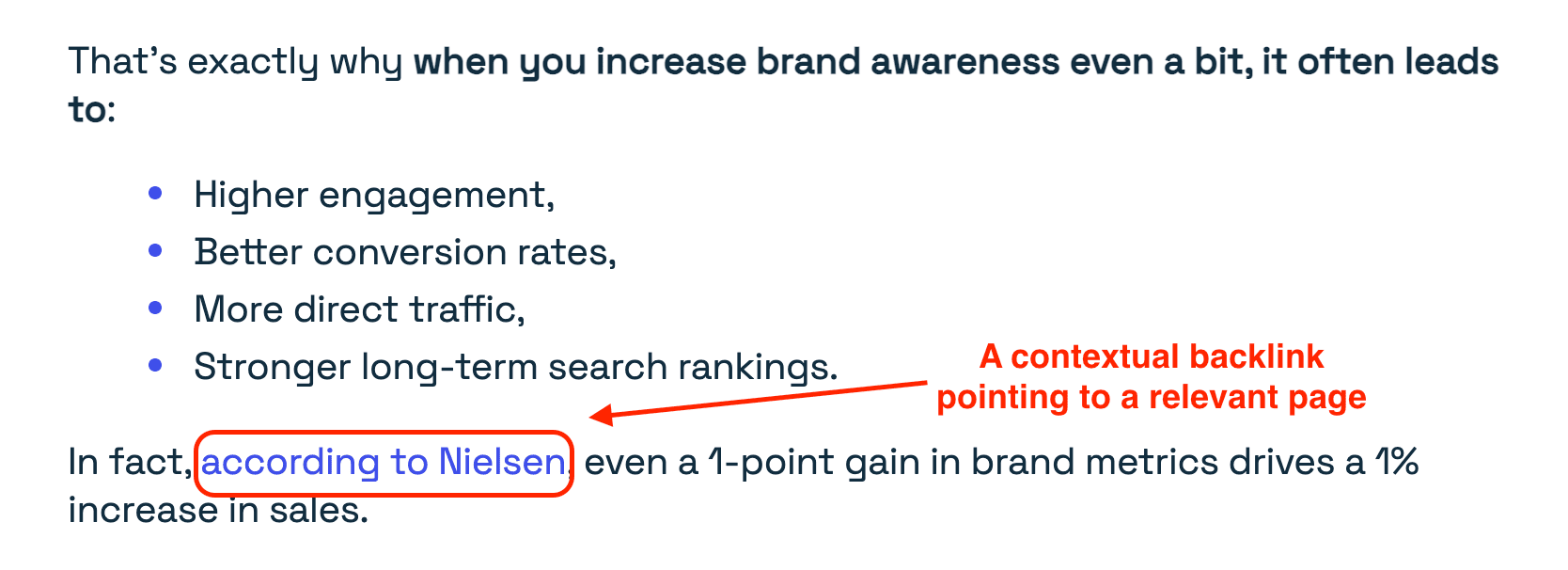
We talk a lot about links being natural. So, it’s only logical that they have to be surrounded by relevant copy. They should also point to a useful page.
This is why authority link building focuses so heavily on editorial placements. Because a random link in the footer looks weird (and even fishy). But a good contextual link like this is what Google trusts:
Outbound link selectivity
Selectivity is important for any type of authoritative source. That's the basics, actually.
So, if a website you consider for link building has millions of outbound links and much fewer inbound ones, it’s a real red flag.
High domain authority sites are usually picky. They don’t link to anyone. They reference a handful of sources, and they do that intentionally.
So, if you want to evaluate a backlink opportunity, take a look at the number of outgoing vs. incoming links on the website. Then, go through their articles and ask yourself:
- Are backlinks pointing to these pages relevant and editorial?
- Or are those pages clearly monetized and outbound-link heavy?
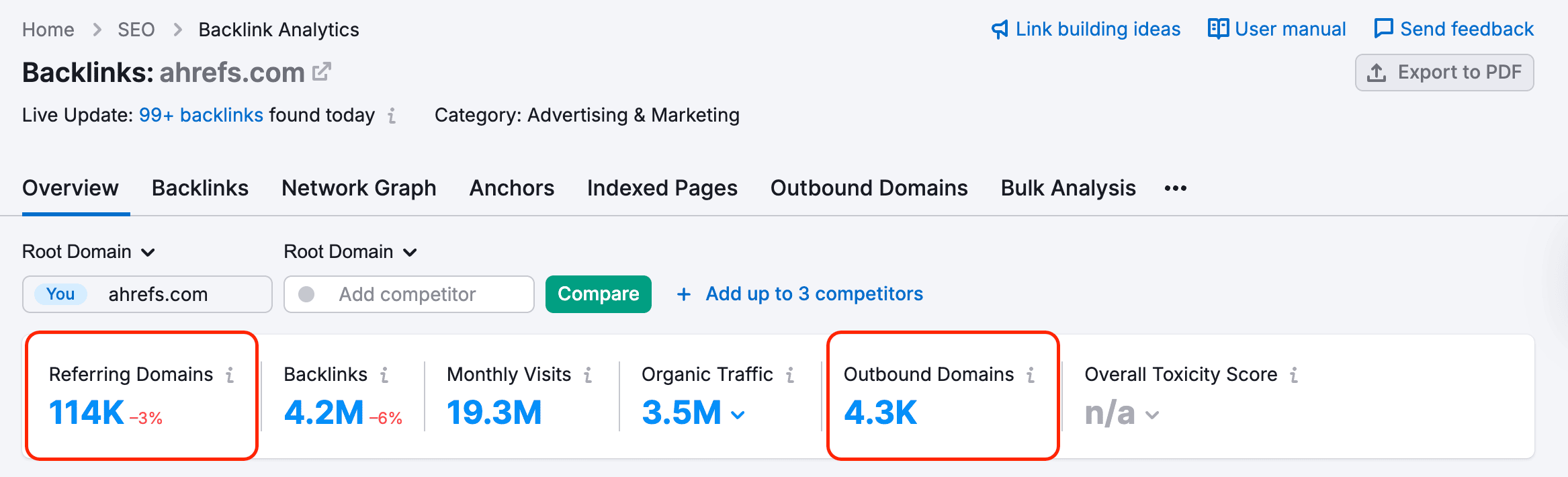
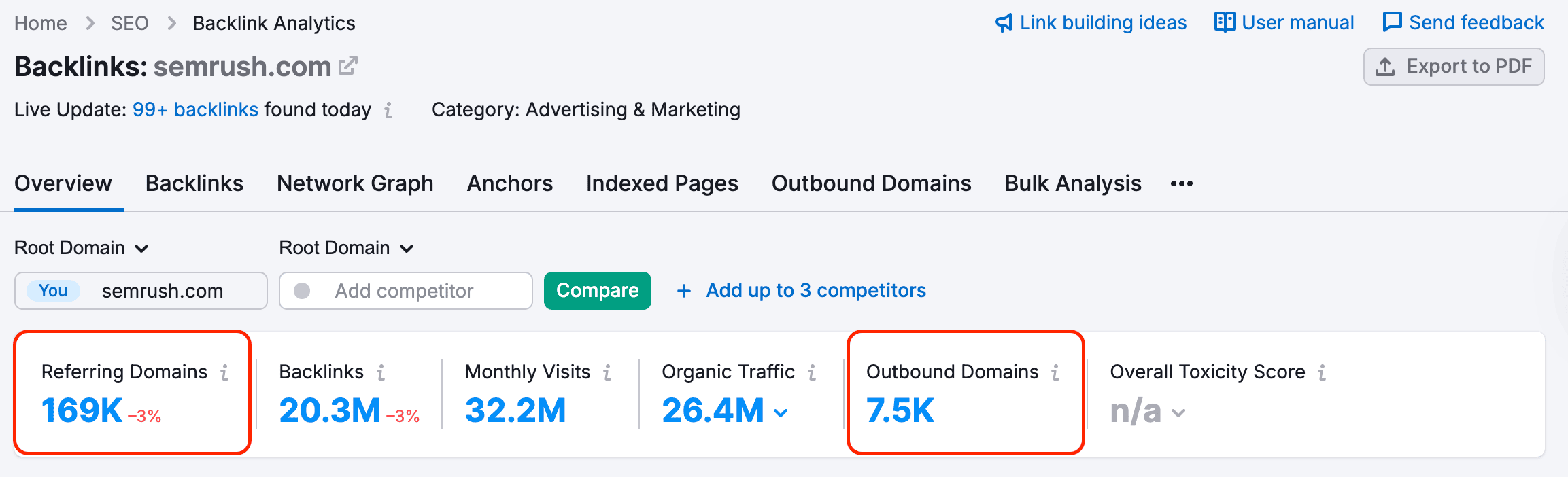
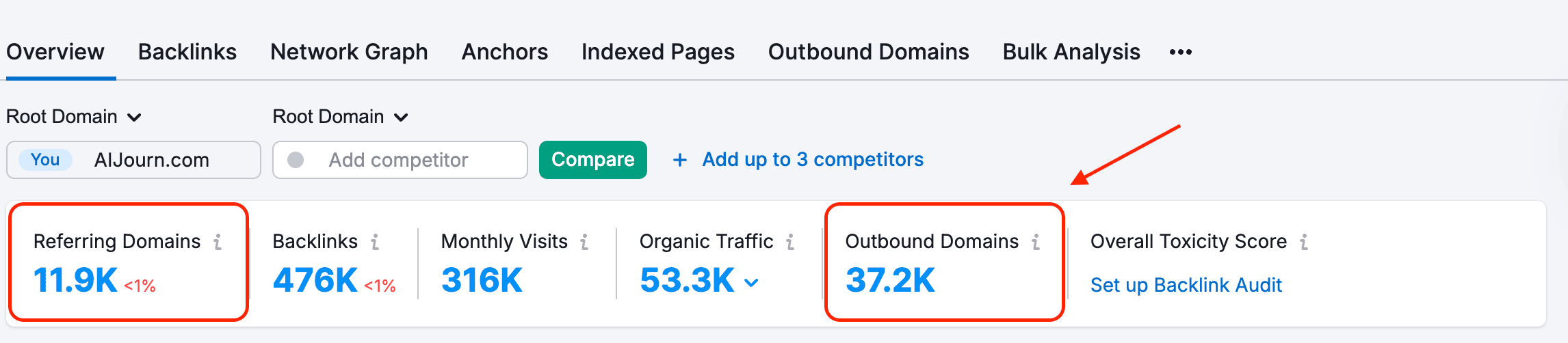
If a website links to everyone, it's likely not that good. Let’s take a look at link ratios of some of the most trusted SEO sources.
Here is Ahrefs:
Here is Semrush:
And here is a random, spammy website:
Anchor text
Anchor matters more than it might seem.
Descriptive, natural anchors help Google understand what the linked page is about. But forced and keyword-only ones do the opposite.
For example, here are some anchor phrases used by HubSpot. As you can see, these aren’t “best CRM,” “top marketing tool,” etc. They look natural.
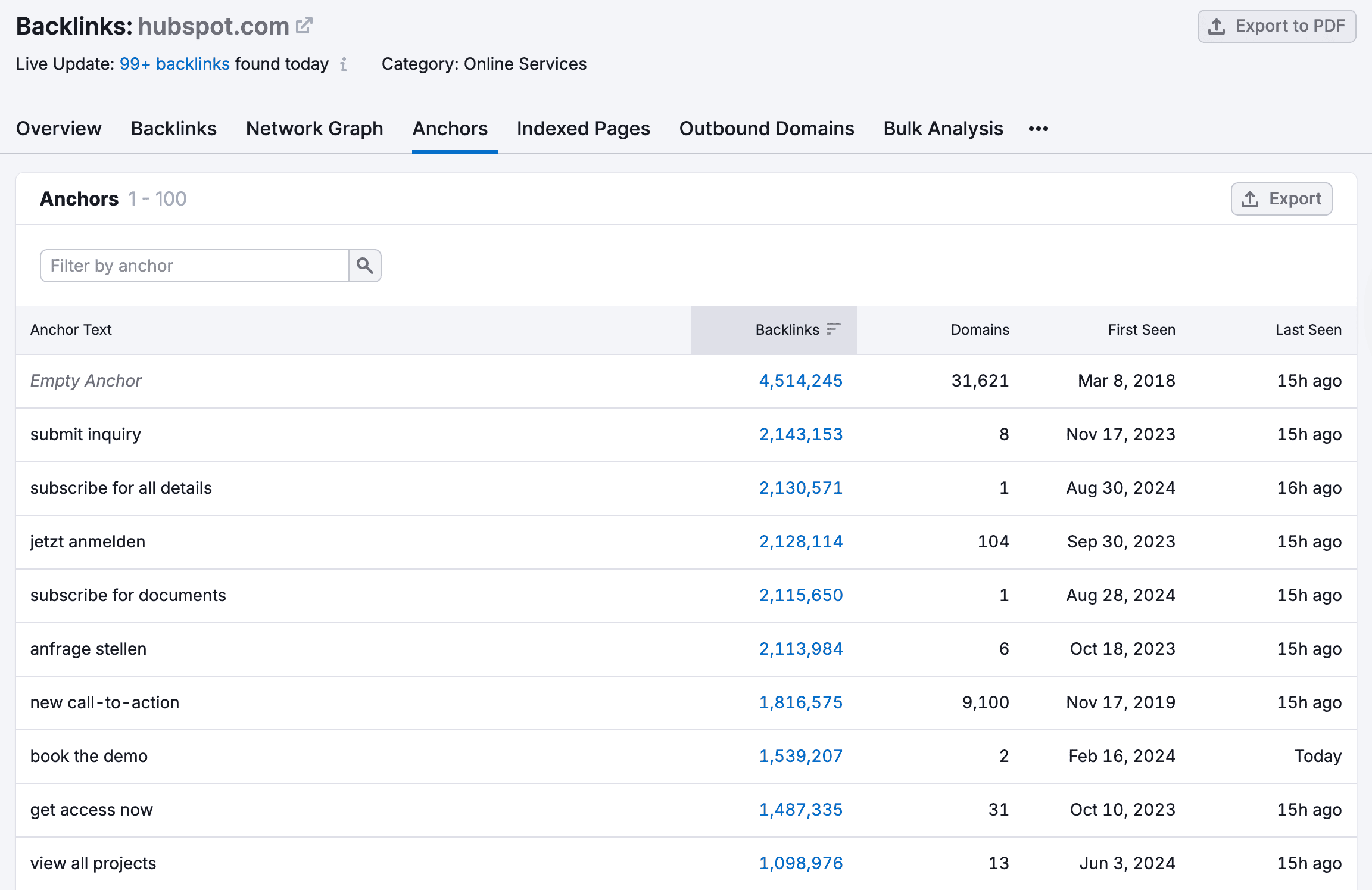
So, take a look at the anchors your link prospects use. If every outbound link has a keyword-stuffed one, that’s an obvious red flag.
Authority links never shout, that's why we call them "authority links":)
Traffic signal
Traffic is often a reality check.
Pages with more organic traffic are “approved” not just by algorithms, but (surprise-surprise) by real users. And this makes their links much more trustworthy.
A link from a page that ranks and gets actual visits is almost always more powerful than a link from a page no one ever sees. It’s also extremely logical.
So, it’s an important metric to check before getting a link from any site.
Essentially, traffic confirms that the web page still matters and that people are still visiting it.
Just a tip:
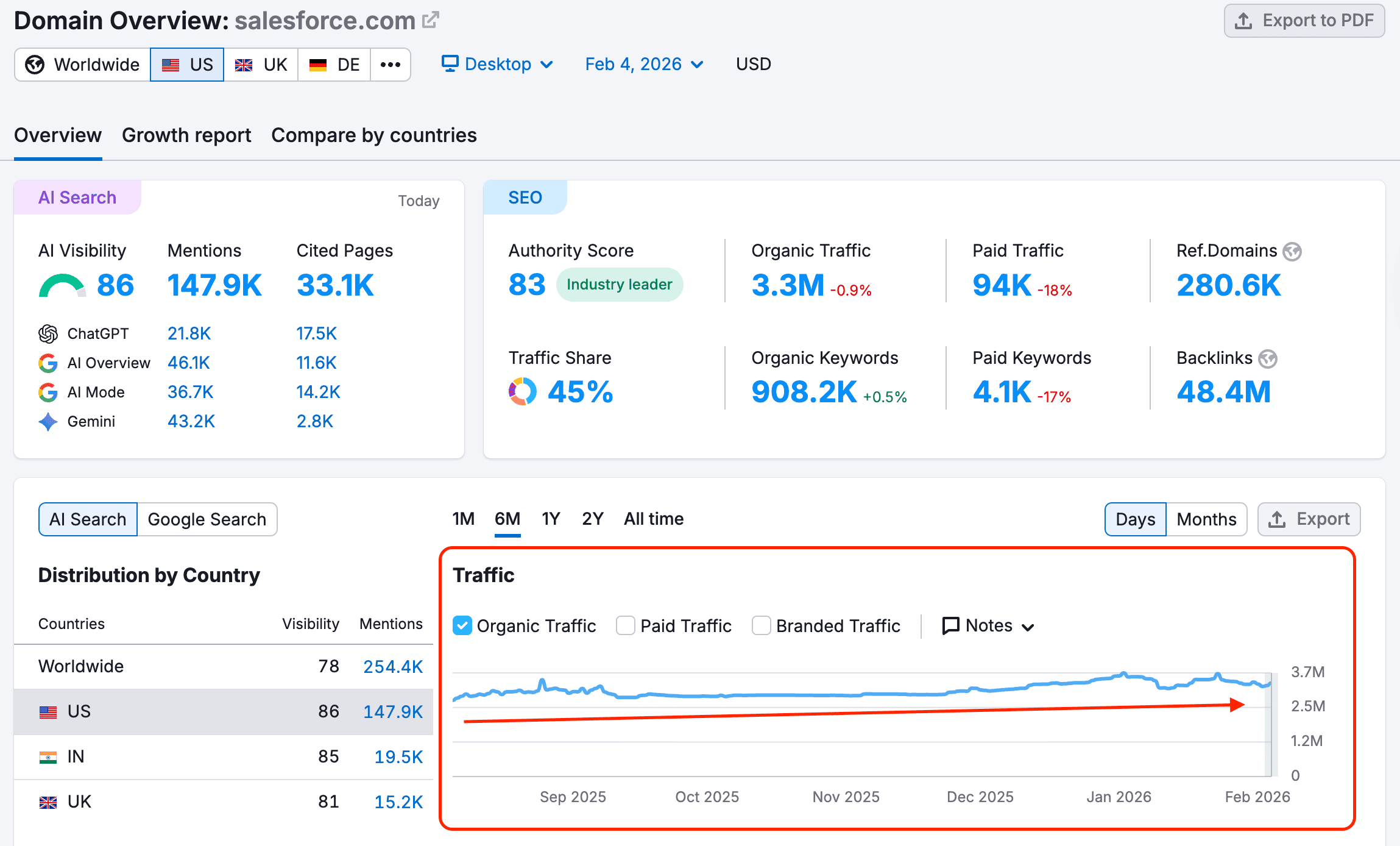
Check the traffic a website has over time. If it’s declining month over month or has huge ups and downs, those are usually bad signs.
For example, here’s Salesforce’s traffic over the last six months. Notice how smooth it is? There are no random dips, and the overall trend is upward.
The “would this still be valuable without Google?” test
Apart from all the very SEO(-ish) things above, when analyzing potential link authority, ask yourself only one question:
If search engines didn’t exist, would I still want this link?
Would this backlink:
- Send relevant traffic?
- Build credibility?
- Put my brand in front of the right audience?
If you’ve got three “yeses,” congrats! You’re probably looking at a potentially high-quality backlink. If no... it’s probably just another link that looks good in a report and does nothing in practice.
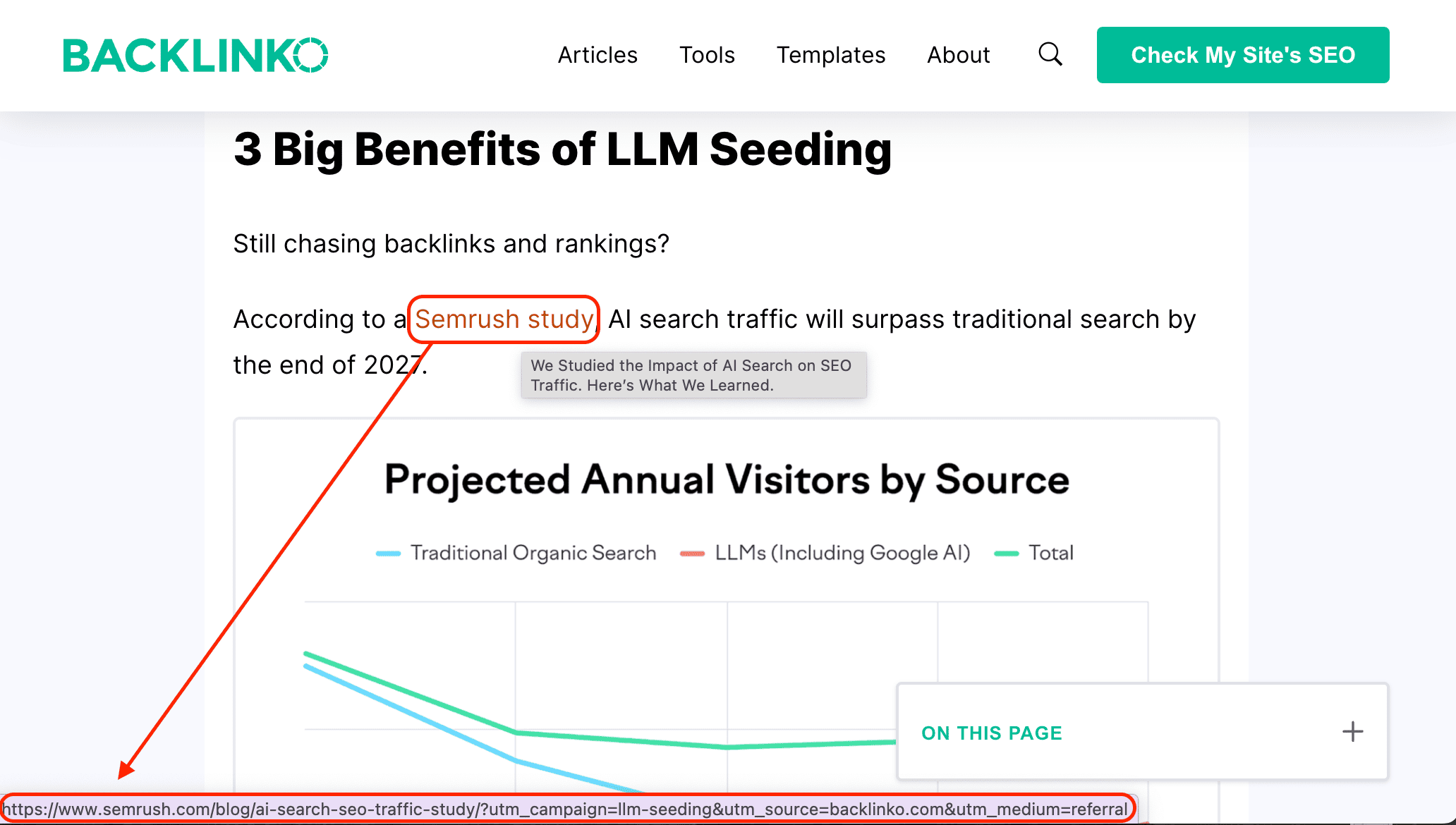
For example, look at this backlink from Backlinko to a Semrush study:
- Can it send relevant traffic? Of course, their audience is very similar.
- Can it build credibility? Sure, Backlinko is also a big name in the SEO industry.
- Can it put Semrush in front of the right audience? 100%, it isn’t a backlink from a bakery or a shoe repair business.
Source: Backlinko
10 tactics for high-authority link building
Let’s get something straight before we talk tactics. There is no “hack” for high-authority link building.
What does work is understanding why authority sites link to other pages in the first place, and then engineering your process around that reality.
Every tactic below is simply a different way to answer one core question:“Why would a credible site mention you?”
If you can’t answer that, no tool or outreach template will save you.
1. Create linkable assets
Linkable assets are some of the most popular organic ways of gaining links. The idea is simple: you create content that’s so valuable and unique that other pages can’t help but link to it.
What counts as a linkable asset, though? Usually, you can expect the following categories:
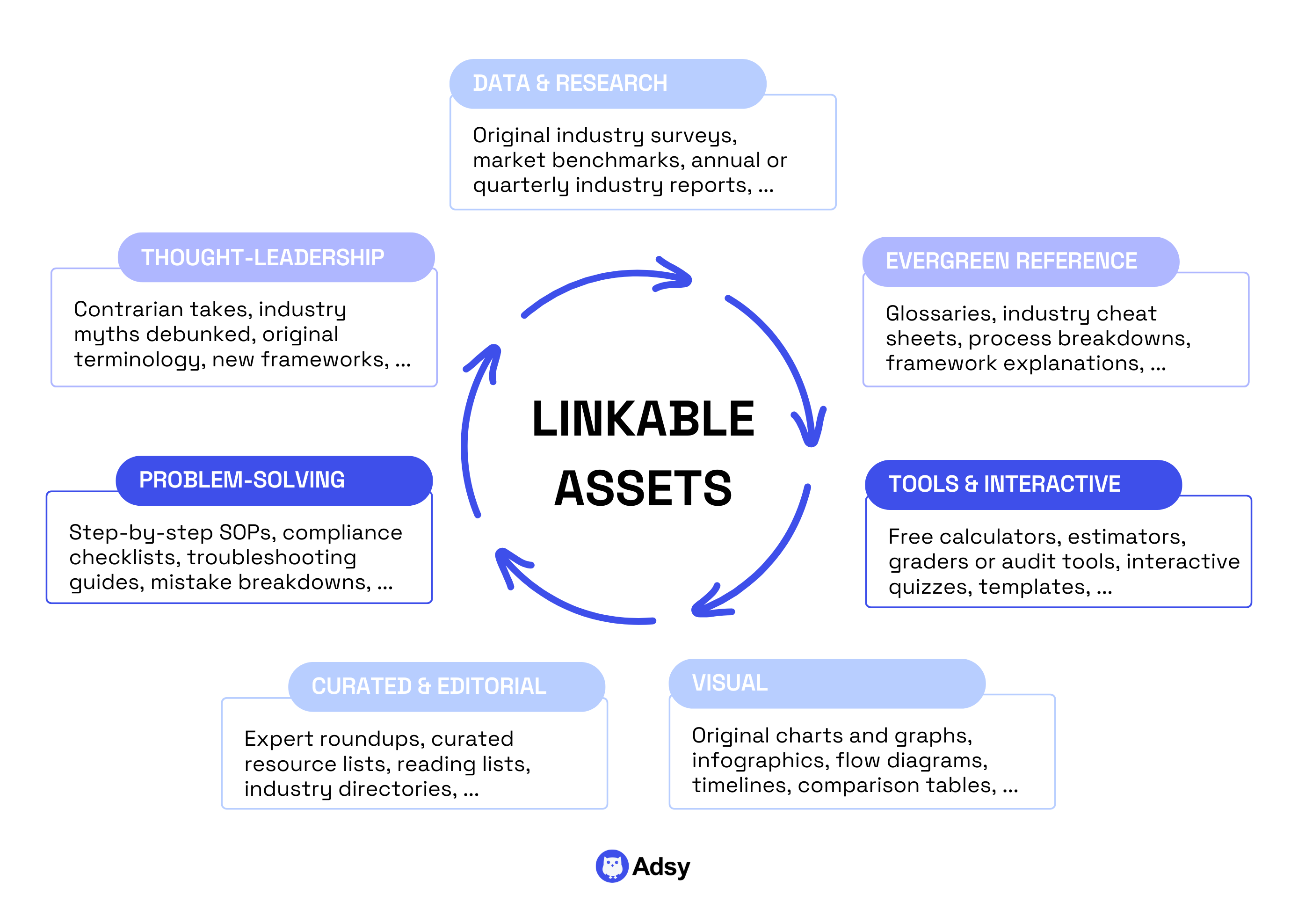
Now, let’s see some of the most actionable points in detail.
Original data
Original research is the “gold standard” for linkable assets because it’s hard to fake and hard to recreate.
When someone is writing a blog post, they won’t go on and survey thousands of people (most of the time). They’ll simply google the already available data-driven insights from an external source. And you can be that source.
For this, you’d need to create content like:
- Industry surveys,
- Data analysis,
- Benchmarks,
- Aggregated statistics, etc.
As much as possible, try to become an original source, not just a “repackager” of what’s already out there.
Frameworks or models
Frameworks are something people can easily reference and reuse. Good ones usually simplify complex decisions and give structure to fuzzy problems.
If someone explains a topic and your framework makes that explanation better, they’ll often mention it.
Why? Well, because it saves them time and increases credibility.
It’s like the famous skyscraper technique. It was first popularized by Brian Dean from Backlinko. And now, it’s a framework that everyone references.
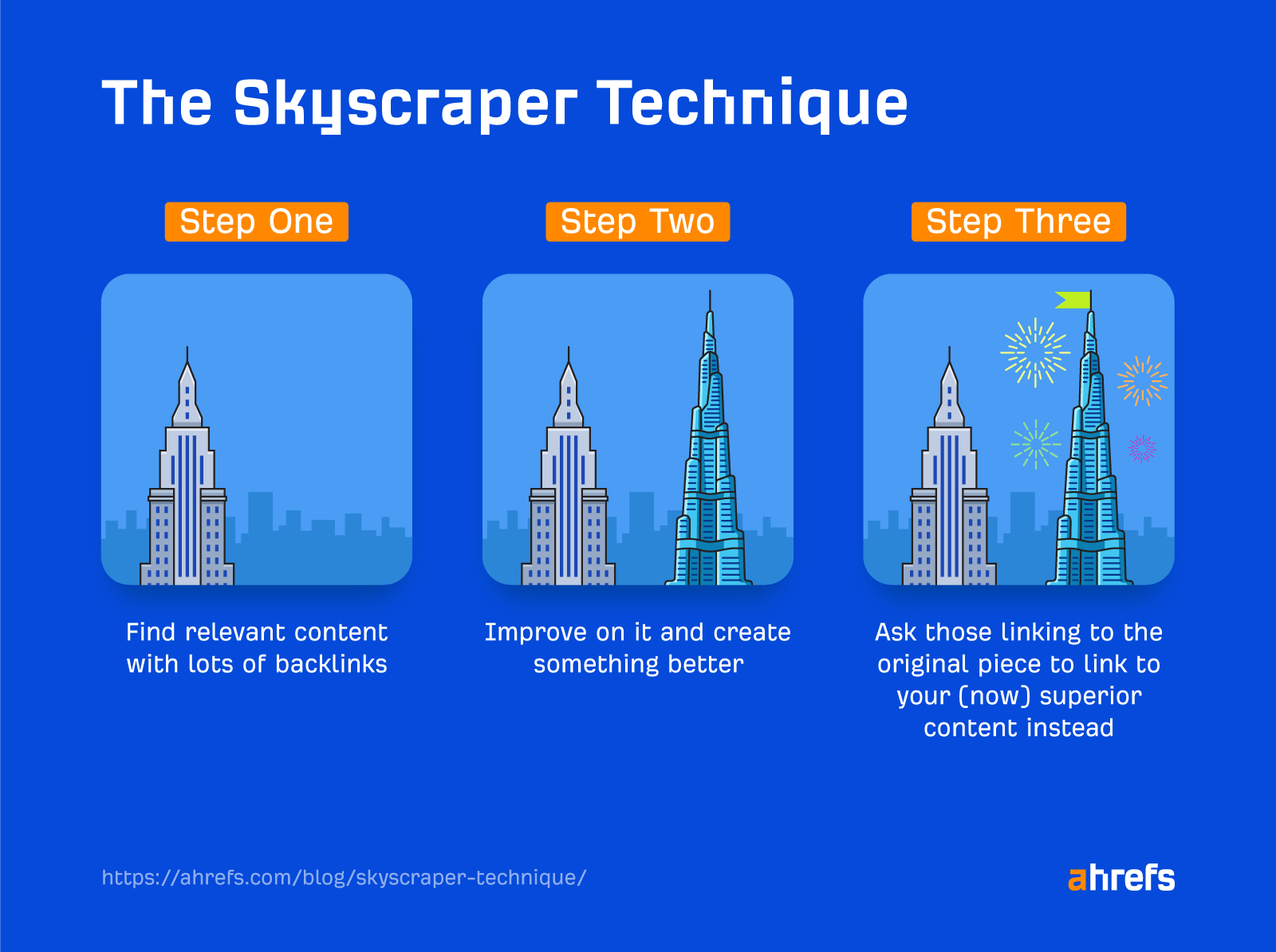
Source: Ahrefs
Tools
Calculators, generators, widgets, checklists, templates, and all those other useful things actually work. In fact, anything that removes manual effort tends to get cited naturally.
Still, there is a key difference between a good tool and a bad one:
- When it's good, it truly solves a specific problem.
- And when it’s bad, it tries to do everything at once and ends up doing nothing well.
Here is, for example, a free backlink checker by Ahrefs:
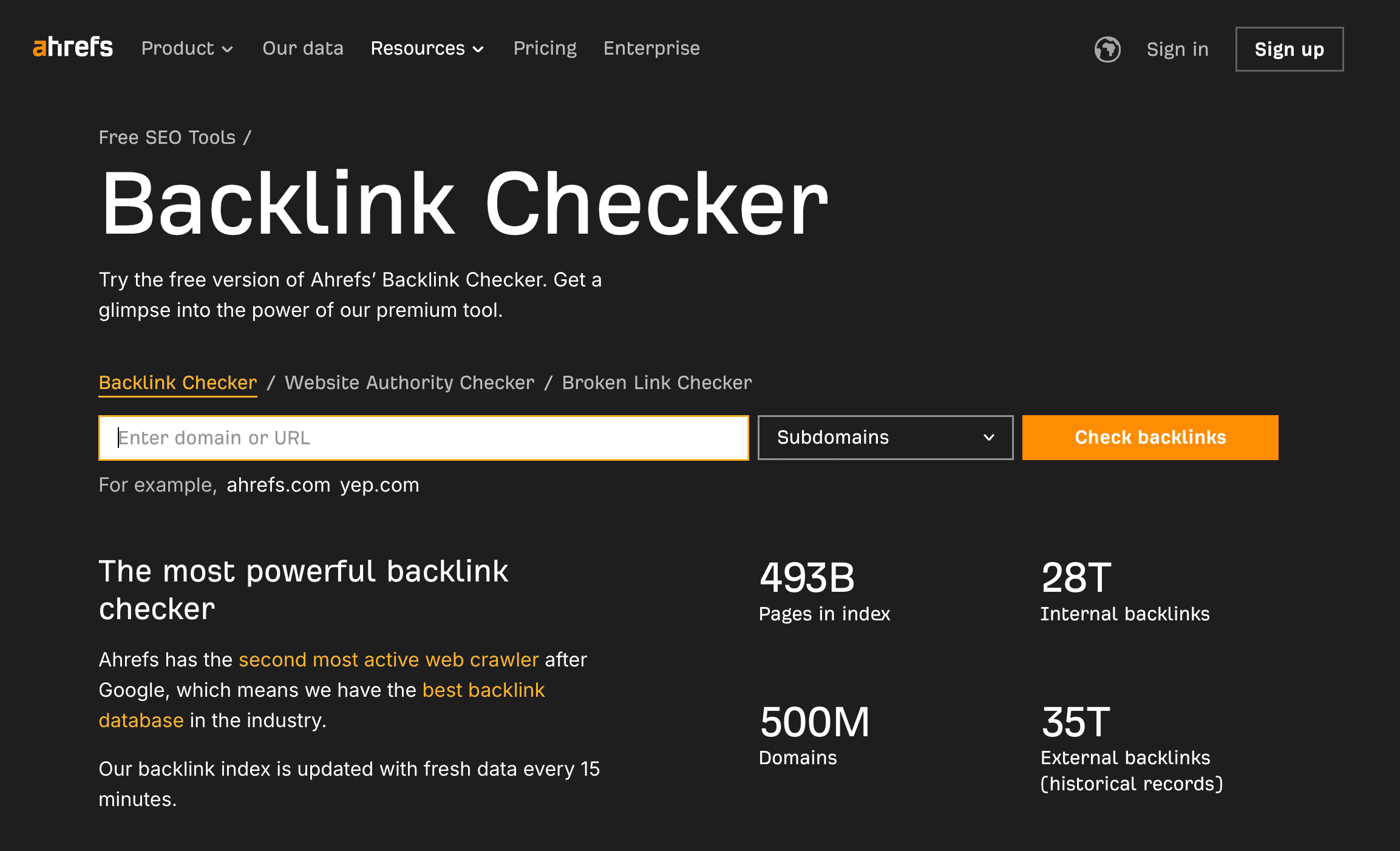
Source: Ahrefs
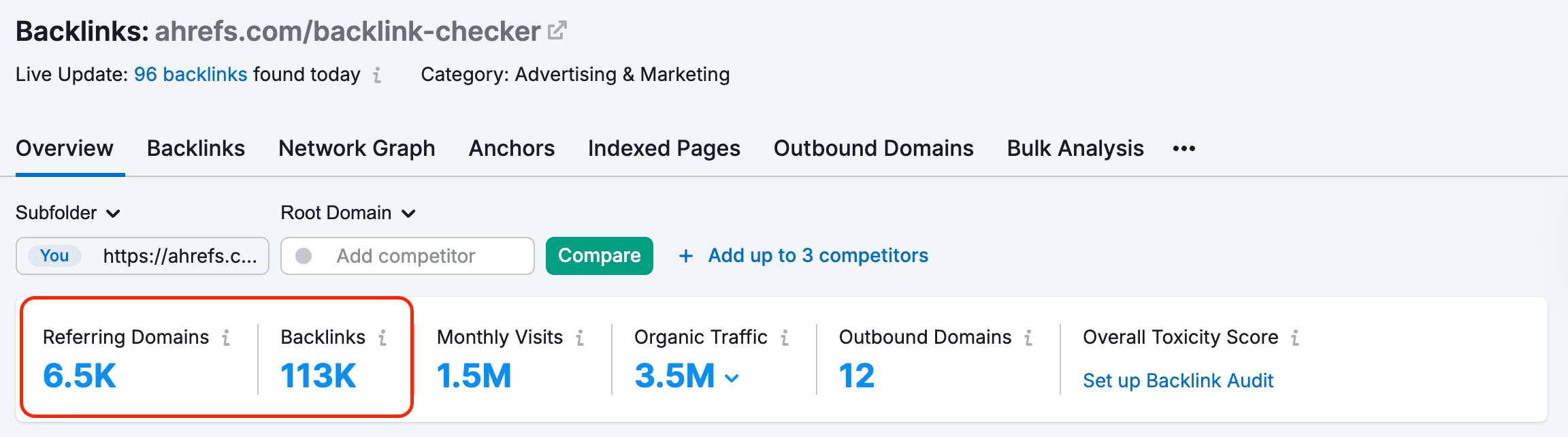
Now, guess how many backlinks it has? Yes, impressive.
Comparisons with real criteria
Comparisons only work as linkable assets when you take real-life data, multiple studies, and do decent research.
When your content looks like you know your thing, many will link to it because people don’t want to redo the analysis themselves.
Some of the things you could do are:
- Define clear evaluation criteria,
- Compare strengths and weaknesses,
- Make an actual recommendation based on context.
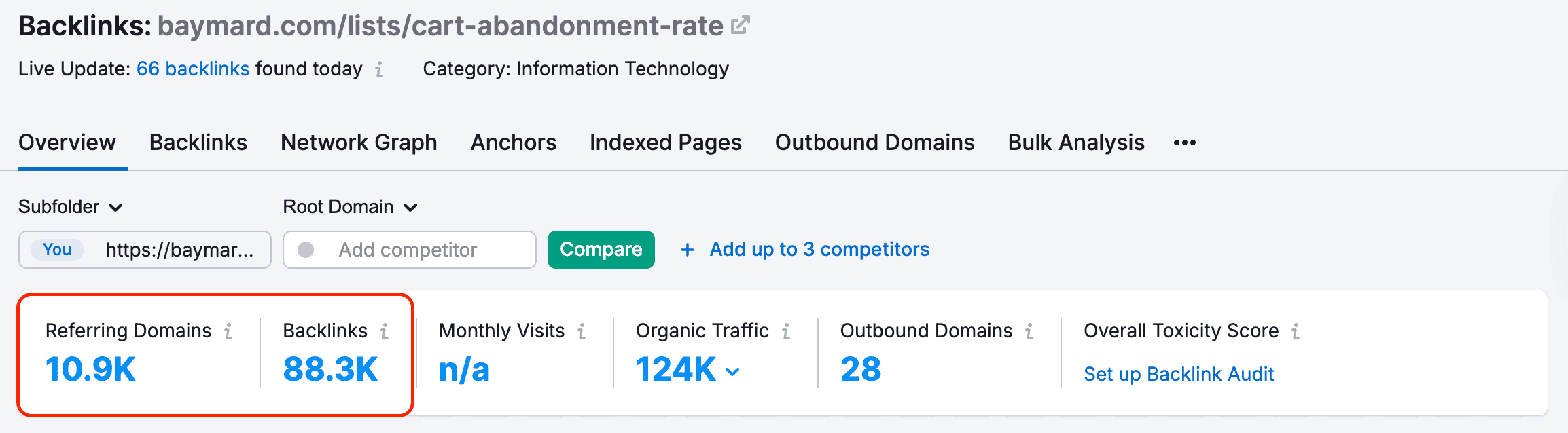
Here is, for example, how Baymard Institute took 50 different studies on the abandonment rate and unified them into a single article, calculating an average so it’s easy to cite.
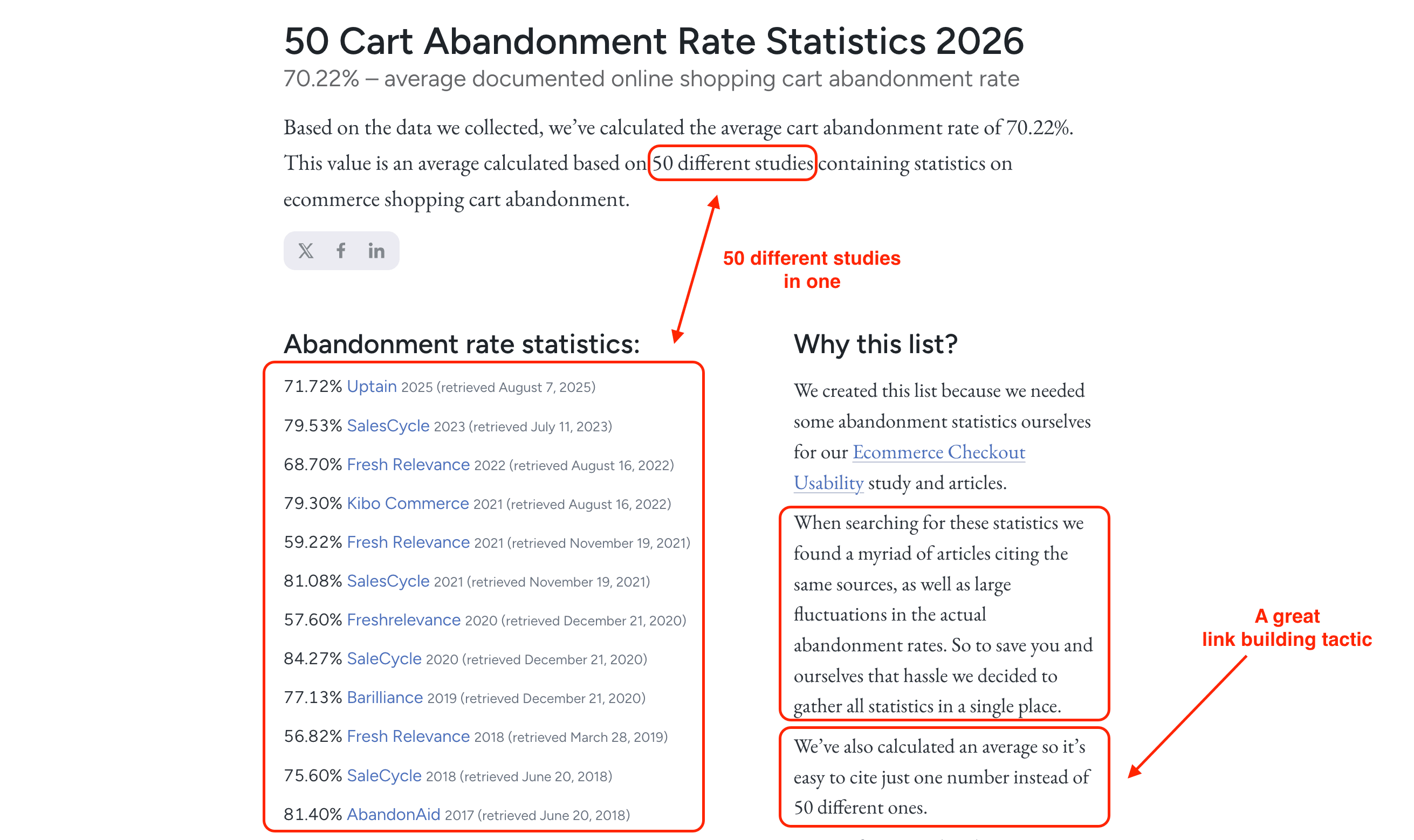
Source: Baymard Institute
And needless to say, it worked really well for them. They got thousands of backlinks, even though there was no original research.
Strong opinions backed by evidence
This is probably one of the most underused categories.
When everyone in a niche says the same thing, a well-argued opposing view becomes extremely linkable. As long as it’s supported by logic, experience, data, or anything else tangible.
People link to opinions not only because they agree, but because they help them cover different points of view and make their content juicier.
But you have to be careful with this one. Opinions have to be backed by something (we can’t stress this one enough).
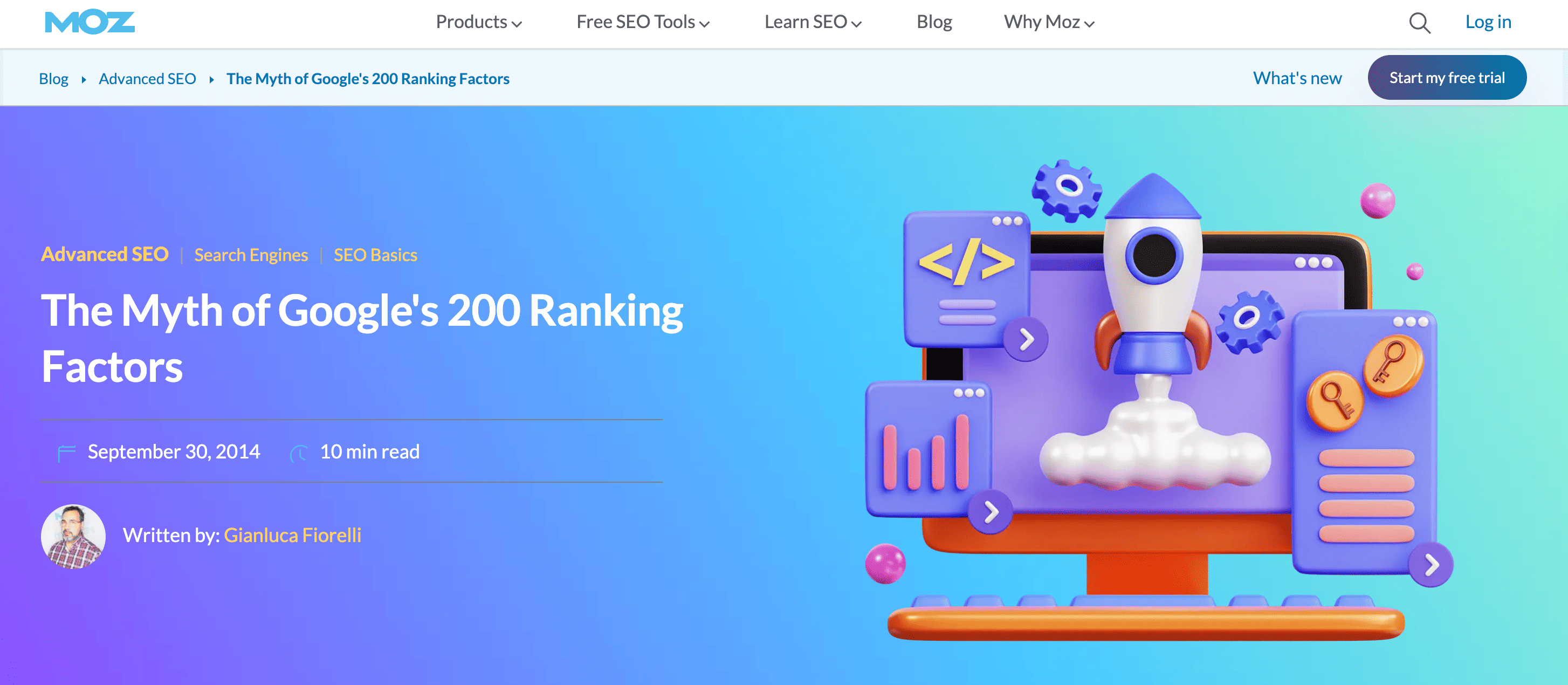
Here is an example of such a strong opinion:
Source: Moz
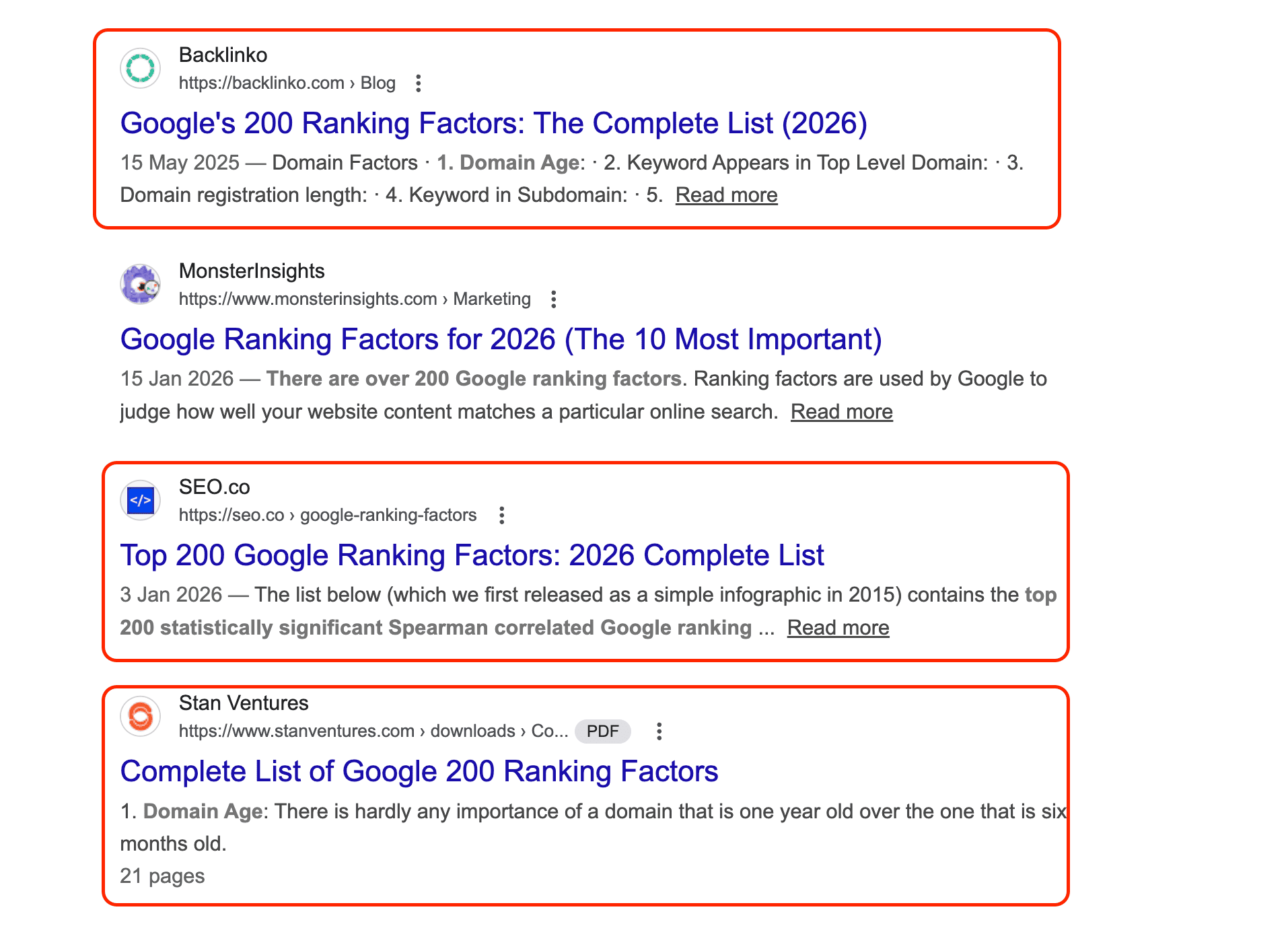
Saying that “200 ranking factors are a myth,” when there are dozens of articles like these, is definitely something that attracts attention:
2. Learn to select truly high-authority websites
You can’t build high-authority links unless you know how to choose them. Most people select sites like this:
– DA high?
– Yes.
– Let’s pitch.
Should you do that? Not really. That’s just a sure way to waste your resources.
Look, authority doesn't mean you have to chase some “crazy metrics.” A real authority actually means a site that has:
- Clear topical focus,
- Consistent publishing history,
- Decent organic traffic,
- Good editorial standards.
All these points are inherent to authority websites. They show that their owners care about quality.
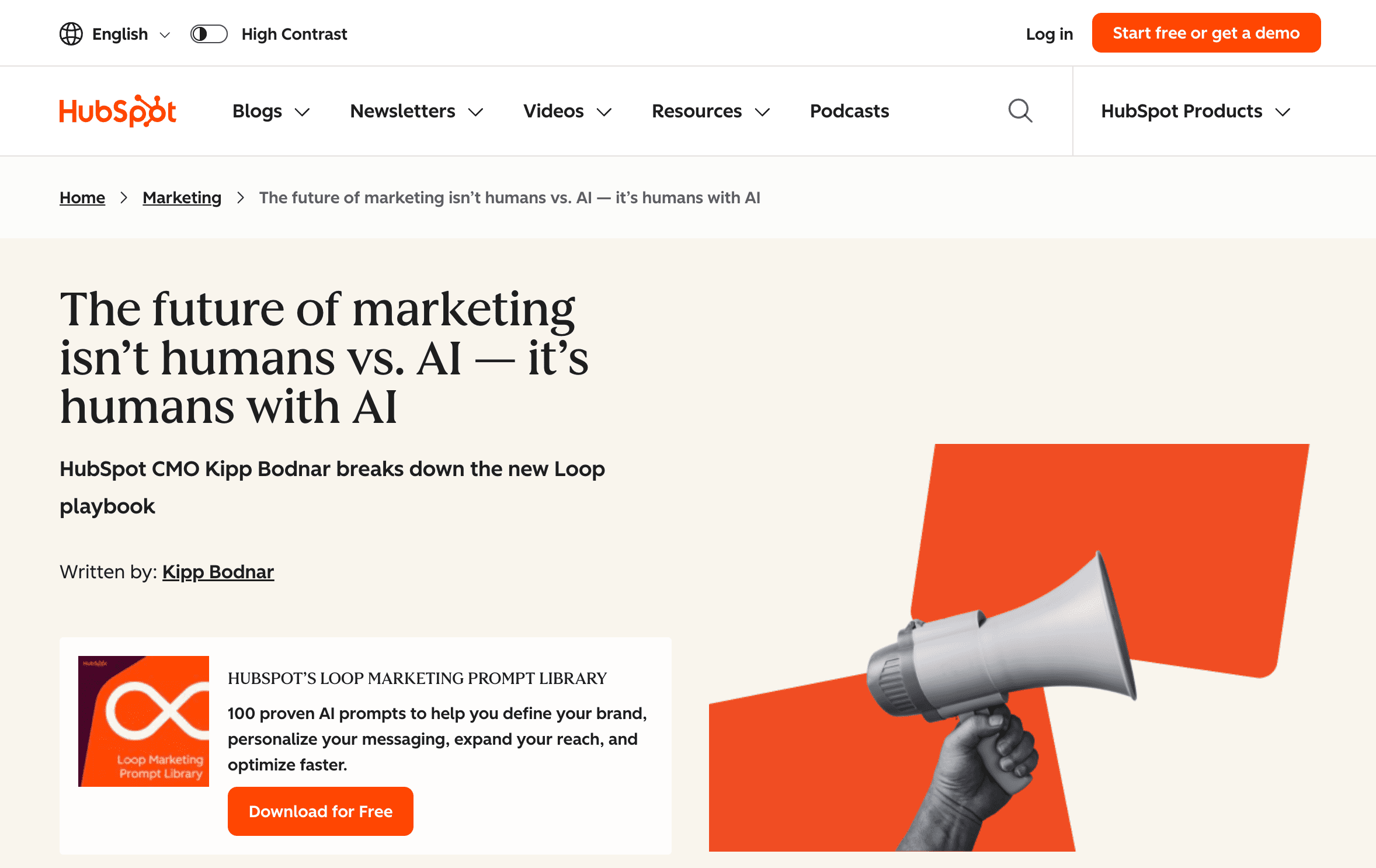
Take a look at HubSpot, for example.
It has a very obvious and clear topic. It publishes content consistently. It has high editorial standards. And its traffic is high.
Sure, you can’t only get backlinks from sites like this. But there are also many smaller web pages that still care about the quality of what they put out there.
Source: HubSpot
3. Do strategic guest posting
Guest posting is one of the most popular and reliable tactics to get quality backlinks. In fact, many SEO experts choose it as their number one link-building strategy.
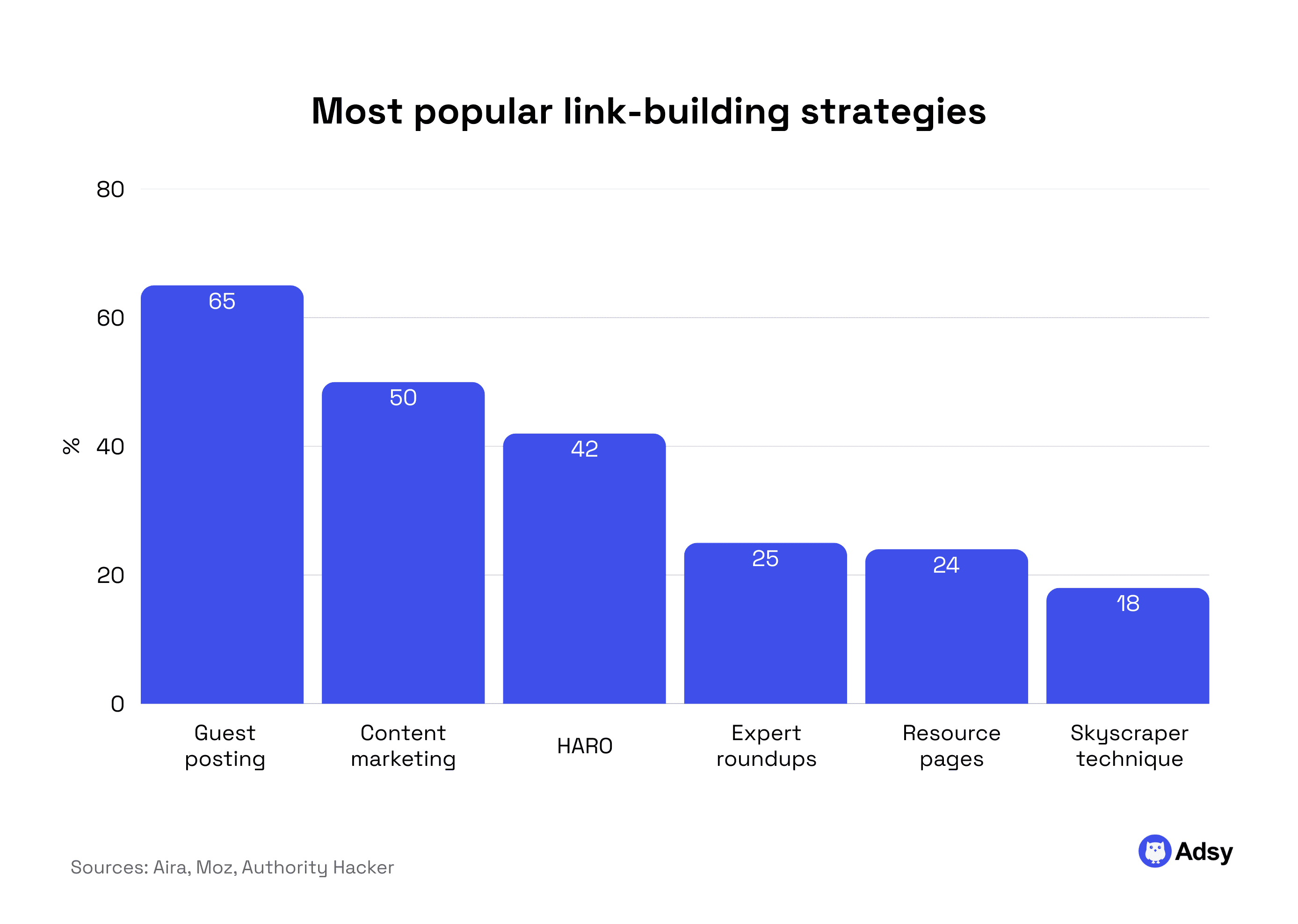
Often, when you read about guest posting, it seems very easy: find pages in your niche, reach out to them, write a guest article, and get your backlink.
Well, yes, it pretty much describes the process. But here is a huge “but.”
Authority sites don’t just sit there waiting for your email pitch to give away free links.
They already have tons of high-quality content and a massive number of other websites interested in writing for them.
So, the only things they really need are:
- New, actionable insights or original research,
- Your real-life experience with clear examples,
- True expertise that isn’t built in a day or even a year.
Authority sites don’t need more content. But they do need truly unique content that provides real value.
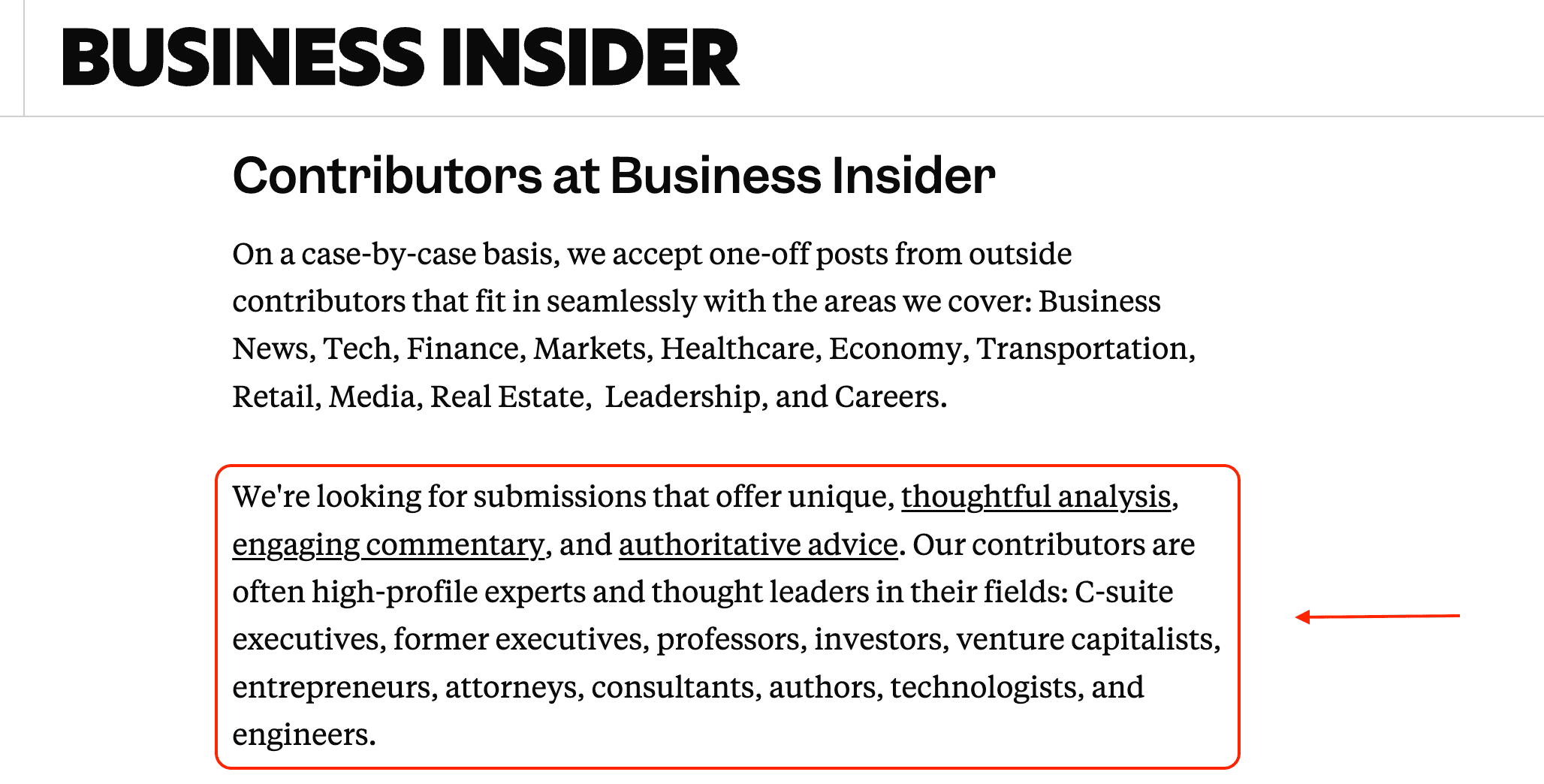
Source: Business Insider
So, ideally, to get quality guest posts more easily, you want to create a strong personal brand.
It’s a big topic, so we won’t cover it here. But what generally helps is being active on socials, participating in podcasts, having your SEO newsletter, getting featured in some expert roundups, etc.
When you already have a recognizable name, you can then pitch the topics that:
- Challenge a common assumption in the niche,
- Bring firsthand experience that others don’t have.
Because the future of link-building isn’t collecting random “write-for-us” pages and publishing basic, rephrased content.
It’s about focusing on trustworthy resources and building a brand that those resources actually want to feature.
4. Integrate relationship-based link building
Many authority links aren’t built through outreach, but through personal connections. If you think about it, it’s logical. People tend to link to:
- Sources they already trust,
- Names they already recognize,
- Work they’ve already seen before.
This is why cold outreach has its “ceiling.” But when we talk about real human-to-human trust, it beats it all.
How could relationship-based link building look in real life?
- Case studies. For example, imagine you use a SaaS tool in your daily workflows. You agree to appear in the company’s case study, explaining how it helped you. You get a backlink, and they get real-life data plus more content for their mid/bottom funnel.
- Business partnerships. When you already have a business partner, it’s easy to leverage that connection in the SEO sense. Just find a scenario where everyone gets something of value.
- Long-term guest author. If you have true expertise, you can show it off in some trusted resources in your niche. This way, you’ll gain even more credibility in the industry, and people will link more to you organically. Here is an example of such an author profile on SEJ with dozens of articles.
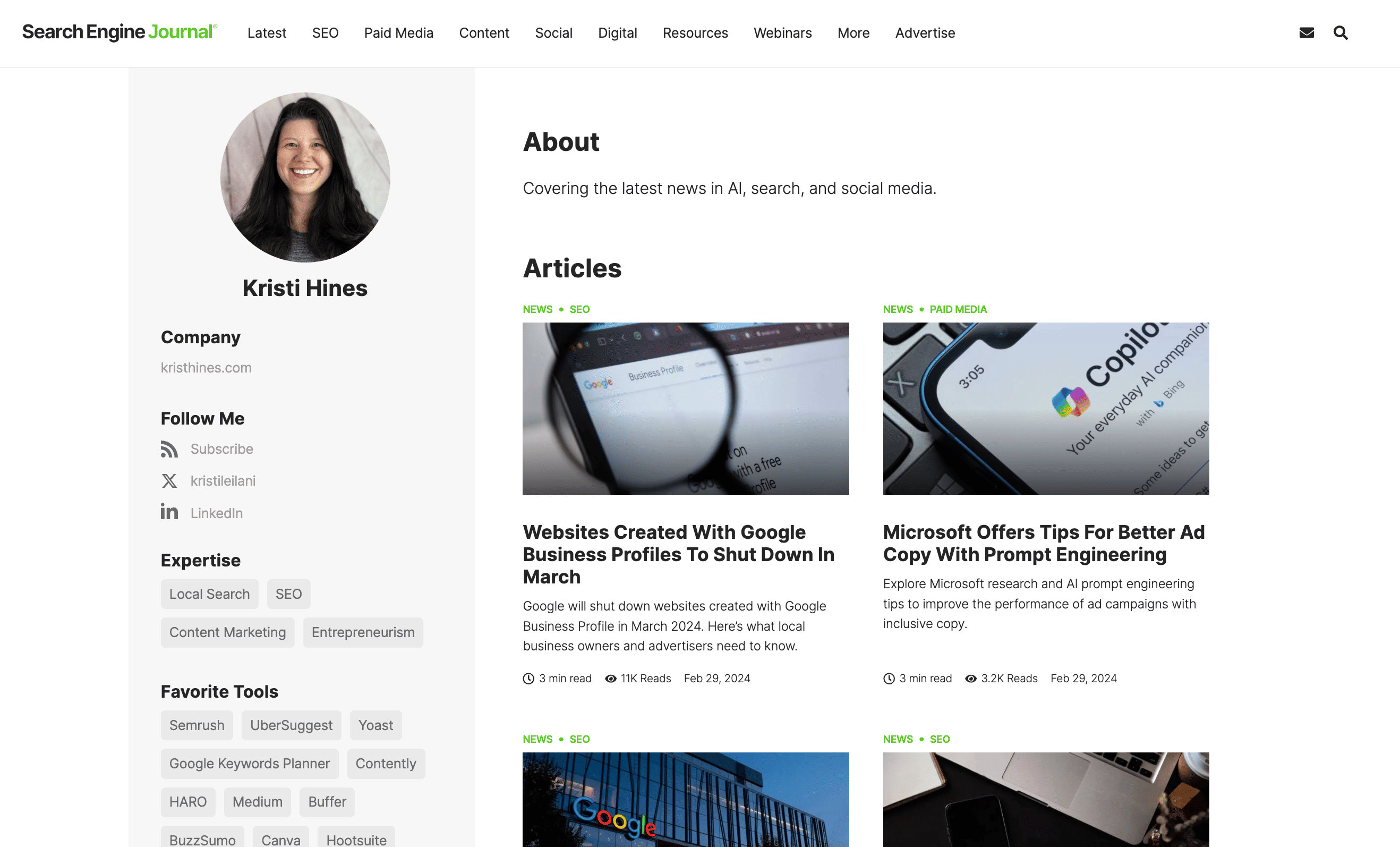
Source: Search Engine Journal
But sure, you can have a very logical question: how do you build those relationships when you aren’t a big name in the industry yet? Slowly and steadily. Unfortunately, there is no “magic pill” answer here.
So, simply be patient, connect with others, keep showing up, participate in discussions, and don’t try to get something from people right away.
5. Become the “default reference” for a narrow topic
Most people try to build authority too broadly. They want to be:
- “An SEO resource,”
- “A marketing blog,”
- “A SaaS thought leader.”
But these are quite shallow directions, especially in a world that’s so oversaturated with all types of experts.
That’s not how authority actually forms these days. Real authority starts narrow, almost uncomfortably narrow.
Most authority sites naturally link to someone because they’re the obvious source for a very specific thing. A default reference is the site people link to without thinking too much.
Not because you, as an owner, asked them. But because:
- You already solved that exact problem before,
- Your page has the clearest explanation out there,
- Linking to you is safe.
Once you own that position, links come naturally and without any issues.
A good example of that is Investopedia. It is kind of a dictionary of finance. Investopedia pages are standardized, consistent in structure across thousands of terms, and updated just enough to stay accurate. It is really safe to cite in any context.
And that’s what its SEO metrics prove:
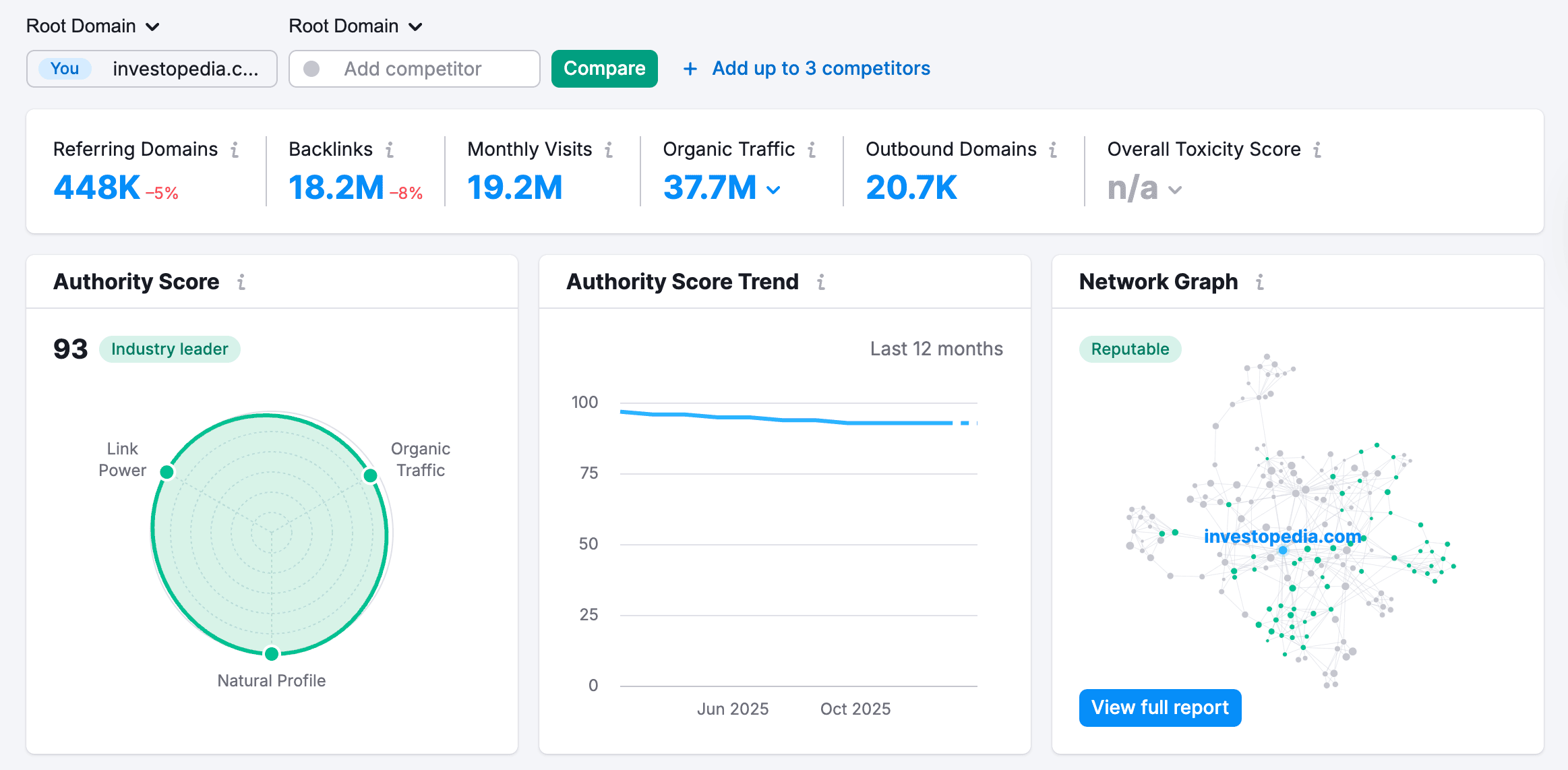
Investopedia has never promoted itself aggressively, though. But here is a thing: when someone writes an article and explains a financial concept, they generally have two options:
- Explain it by themselves (and risk being wrong),
- Just link to Investopedia and move on.
And since people are often choosing the second option, Investopedia gets organic backlinks.
6. Use other people’s authority
This one doesn’t refer to mentioning big names or quoting influencers. What we want to suggest here is to smartly integrate other people’s expertise into your content.
Think about how most users interact with expertise online. They typically don’t read original research papers or long interviews. They rely on interpretation layers (that’s also why AI overviews are so popular now).
And those layers are where authority links could be born.
Imagine a topic like “B2B SaaS pricing strategies,” for example. There are dozens of respected founders, VCs, and consultants who talk about this. But their insights are scattered and very hard to apply.
So, you can use it to your advantage. But here is a thing:
- A high-authority asset in this space won’t be something like “Top 10 Pricing Experts to Follow.” Why? Because it’s too superficial, and unless they run successful websites you can exchange links with, it won’t bring you any real value.
- A truly link-earning asset would be something like “24 B2B SaaS Pricing Strategies from Leading Industry Experts.”
Or a title like this:
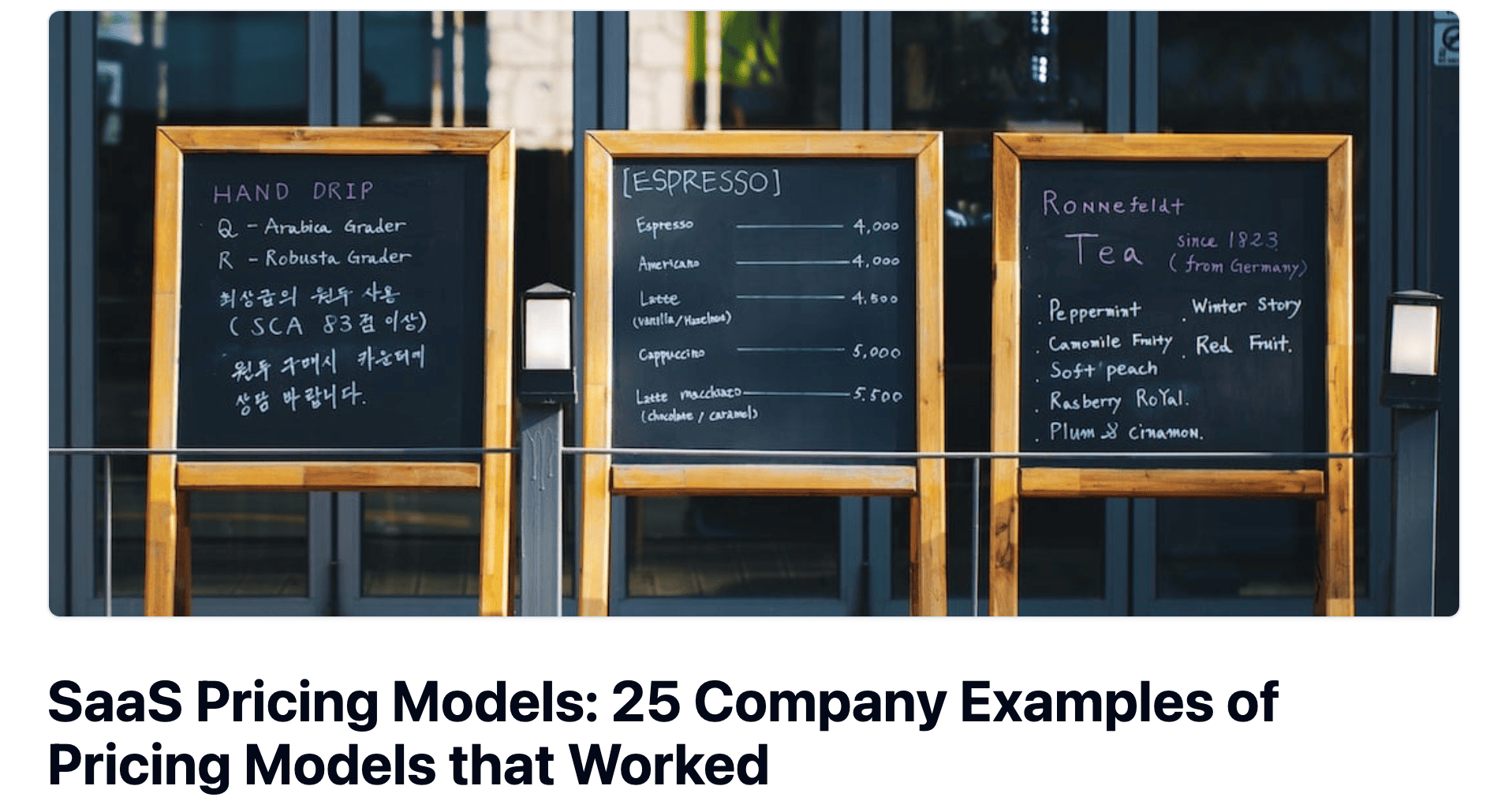
Source: Userview
And guess what? This article does collect organic backlinks:
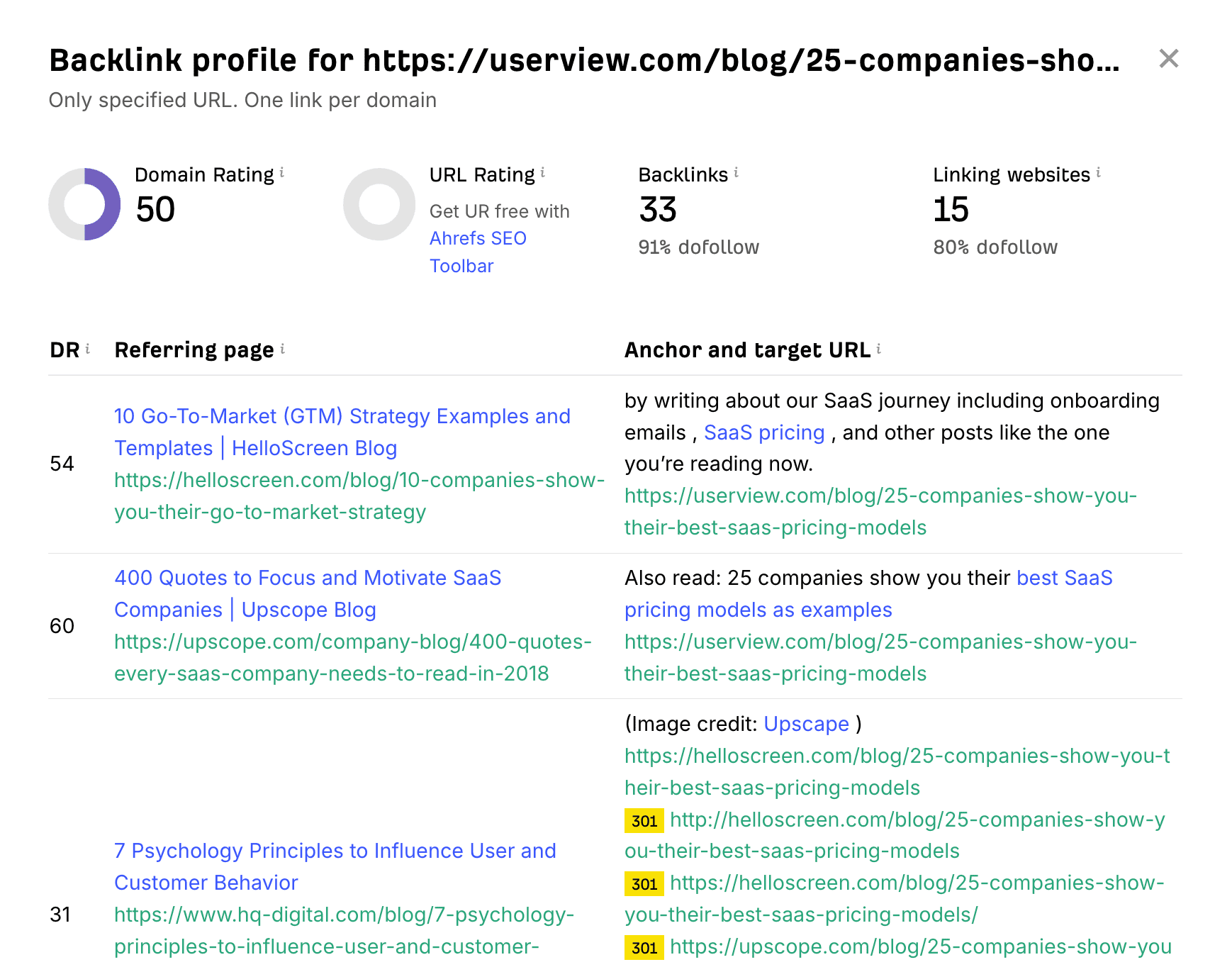
Source: Ahrefs
Why does this example work? This page essentially earns links because it:
- Gives you a number of real-life examples that are useful to reference,
- Saves writers from doing repetitive research.
So, if original studies are still out of reach for you, this is one of the best alternatives.
Even though you don’t “invent” the expertise, you synthesize it into a readable piece someone else can reference. Now that’s actually valuable.
7. Don’t try to write for everyone
Most content in competitive niches lives in the safe middle. It explains:
- What usually works,
- For the average case,
- And under normal conditions.
That kind of content is useful, sure, especially for beginners, but it almost never earns authority links. Why? Because it’s too generic and not actionable enough.
So, instead of writing things like “X best marketing tactics in 2026,” write something like “X best tactics to promote your digital product on a budget.”
Even big sites like Ahrefs do that, while they can rank well for pretty much any query:
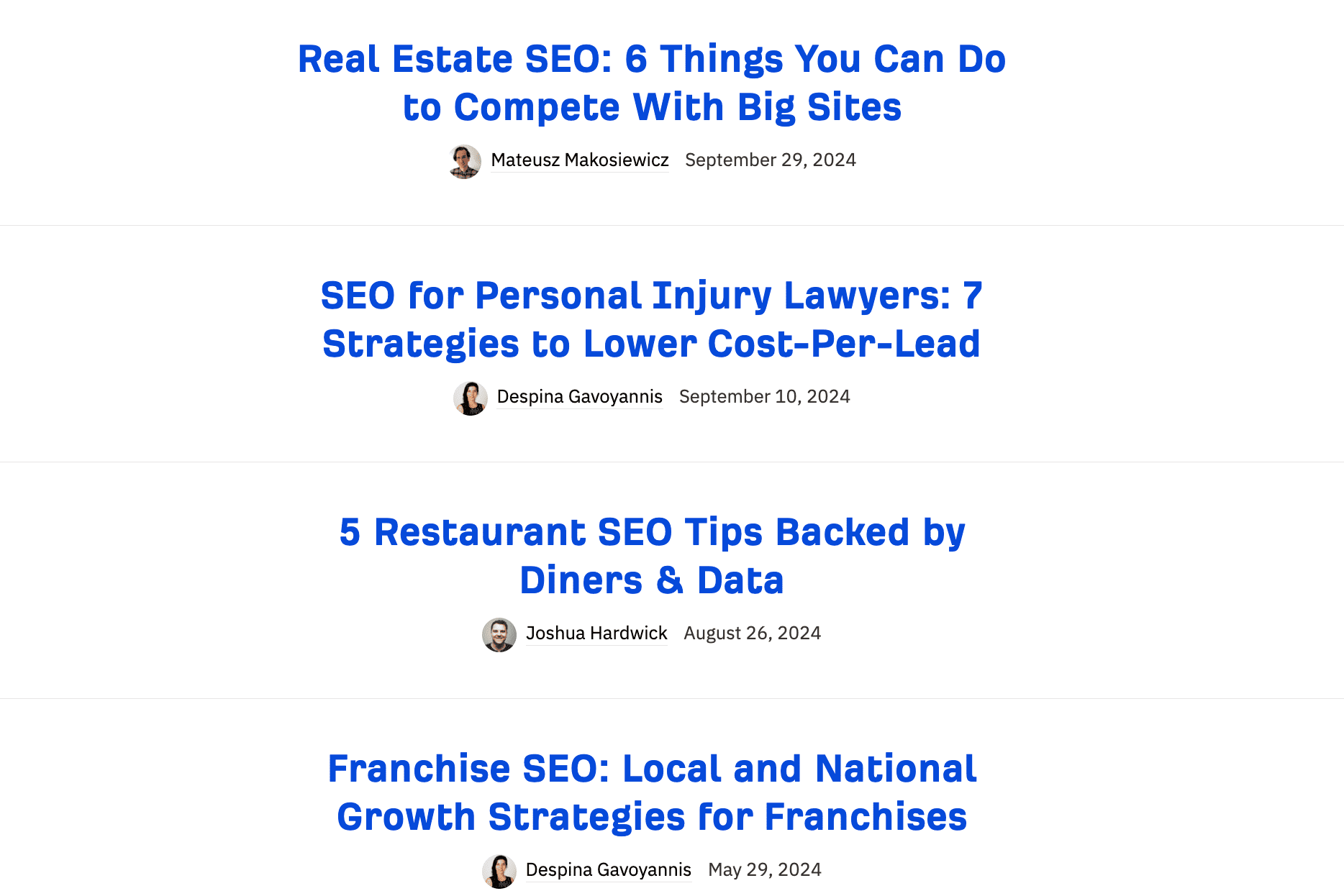
Source: Ahrefs
While your title doesn’t have to specify the exact target audience, make sure you know it before writing. Because, as a general rule, you can’t create one guide that works for everyone, from a beginner to a pro.
Even though it’s a cliché rule, we’ll repeat it once again: when you try to target everyone, you end up targeting no one.
8. Review your blog posts and consider content pruning
Often, when websites try to get more backlinks, they start posting more content to become more visible. But while it might sound counterintuitive, sometimes, the best thing you could do is remove your content pieces.
You might remember the famous HubSpot case when they deleted 3,000 articles.
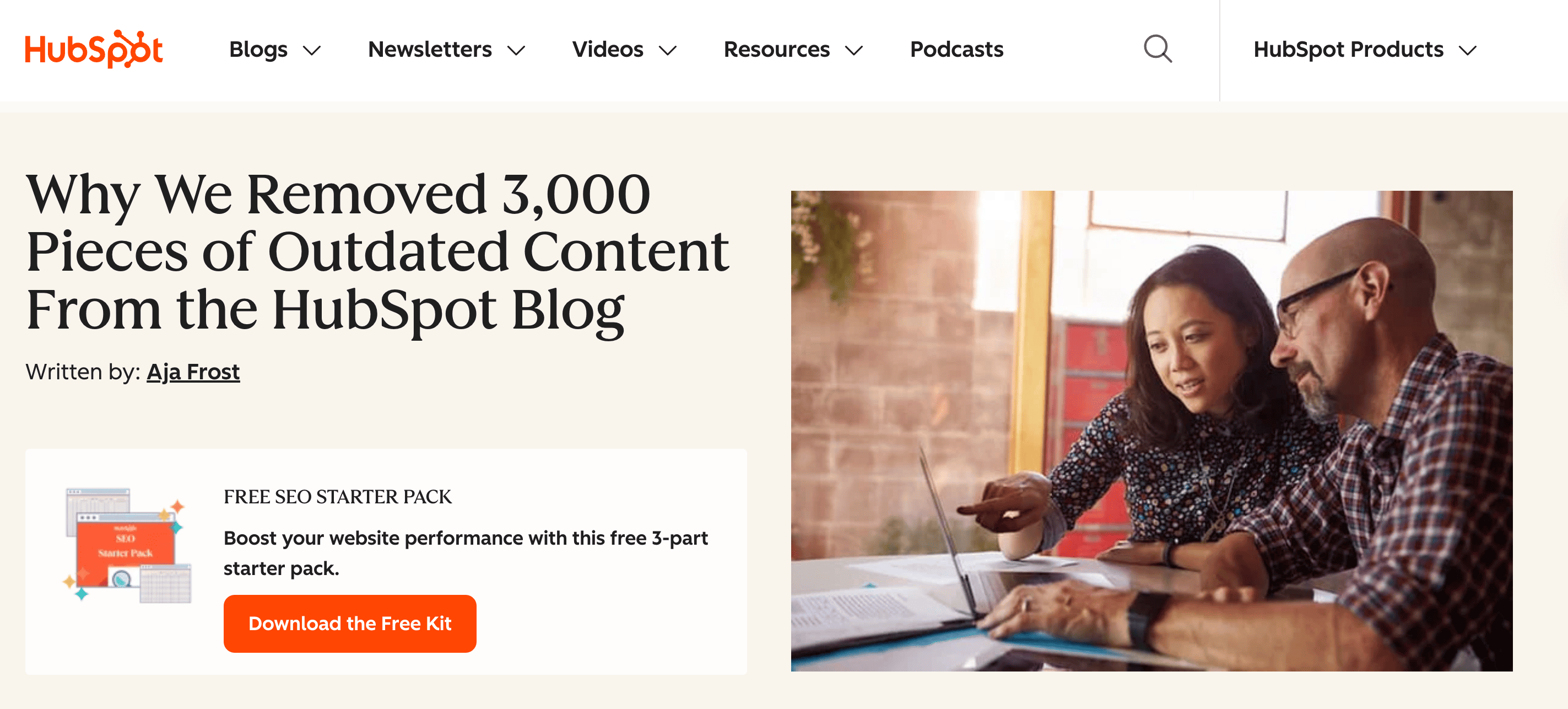
Source: HubSpot
They didn’t go wild. They simply implemented content pruning. It’s a fancy name for “cleaning up your content for SEO benefits.”
Cleaning up doesn’t only mean deleting. Depending on how your content is performing, you might want to:
- Leave it as it is,
- Update and improve it if there is more to say,
- Consolidate it with other pages,
- Use noindex or canonical tags when needed,
- And, of course, delete it and redirect the page.
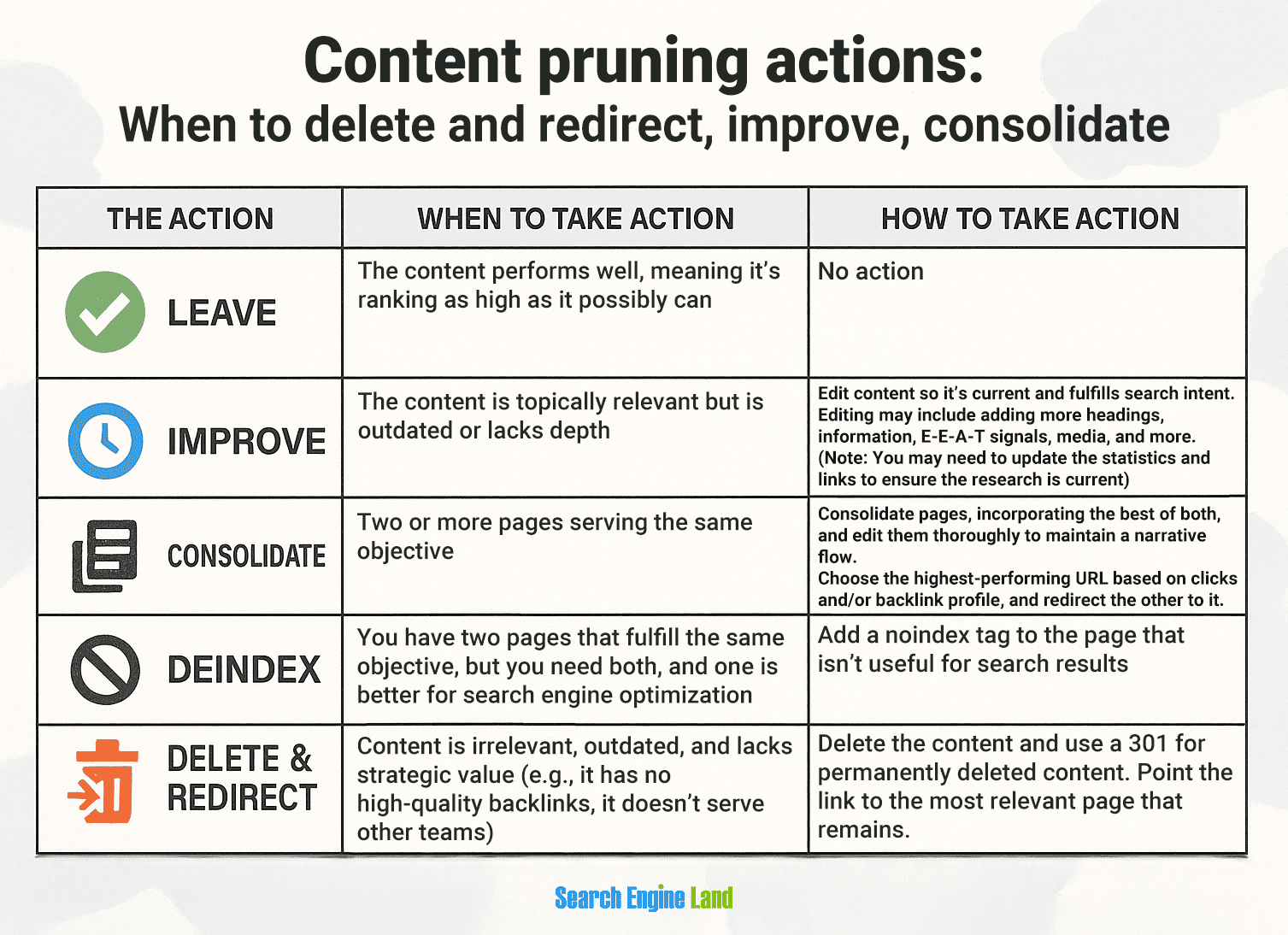
Source: Search Engine Land
That’s something you might want to add to your usual SEO audit. Because, believe it or not, removing some of the pages can help your other content improve its performance and attract more authority links.
9. Update and outrank pages that authority sites already link to
Authority sites are conservative with links. Once they link to a page that “works,” they tend to stick with it for years. Not because it’s still the best resource, but because it’s good enough.
Well, that's a predictable pattern you can use.
If you look at the backlink profiles of authority publications, you’ll notice something interesting. Some of their outbound links point to (at least slightly) outdated resources. Pages that were excellent at the time, but no longer reflect how things work today.
Your opportunity here is to create a better page on the same topic.
In pretty much any niche, there will be at least one resource that:
- Ranks decently,
- Has hundreds of backlinks,
- Hasn’t been meaningfully updated in years,
- No longer accounts for recent changes.
Something like this:

When you see anything similar, consider publishing a genuinely better version (better structure, updated examples, clearer explanations, etc.).
The key is that your version must be obviously superior. If it is like “the same thing, but rewritten,” nobody will pick your article. But if it fixes the exact reasons the original page is weak, editors will notice.
10. Create pages that exist to be referenced (not just read)
Most people write content as if someone is going to sit down, make a cup of coffee, and read the whole thing top to bottom.
That's a good old approach, and we love it. And it’d be great if it were like that. Unfortunately, it’s mostly applicable to literature these days.
Still, you can create content that is meant to be referenced.
Think about how you personally use the internet when you’re writing. If you’re using a term, a concept, or a mechanism, you often don’t want to explain it from scratch. You want a page that already did the work.
When one link replaces three paragraphs of clarification, that’s real value.
That’s why Wikipedia or any educational website in your niche gets linked constantly. Not because they’re exciting or cool, but because they’re dependable. They let writers outsource explanations without risk.
So, build pages that serve the same function. You can offer:
- An explanation that answers one specific question completely.
- A set of visuals that complements your explanation.
- Real-life examples that people want to mention.
That’s what makes a page “linkable by design.”
For example, here is a Semrush blog post on topic clusters. And what do they do?
- Answer a specific question,
- Add visuals to explain it better,
- And use several real-life examples.
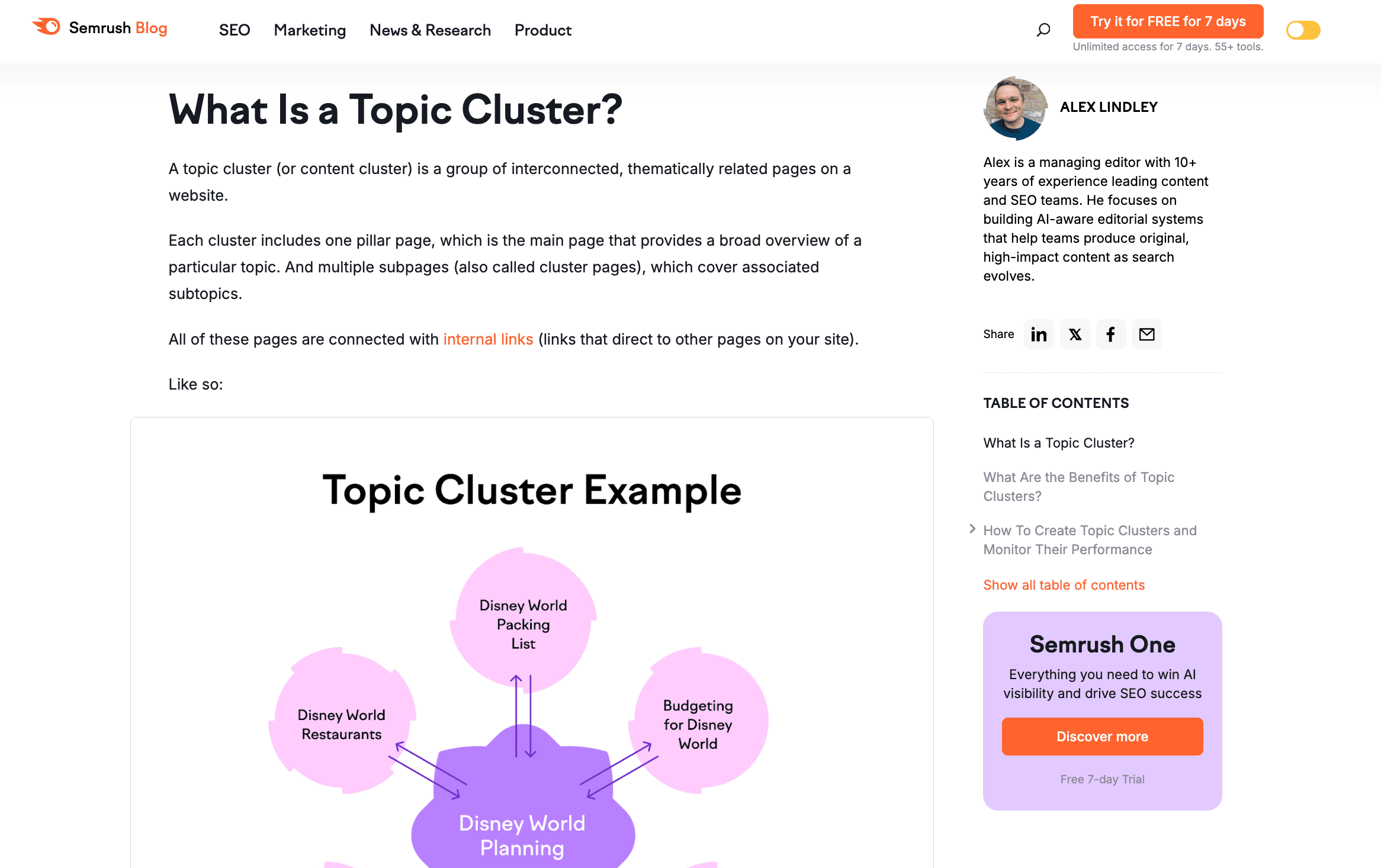
Source: Semrush
And voilà, they got 800+ backlinks. Because that’s how it works.
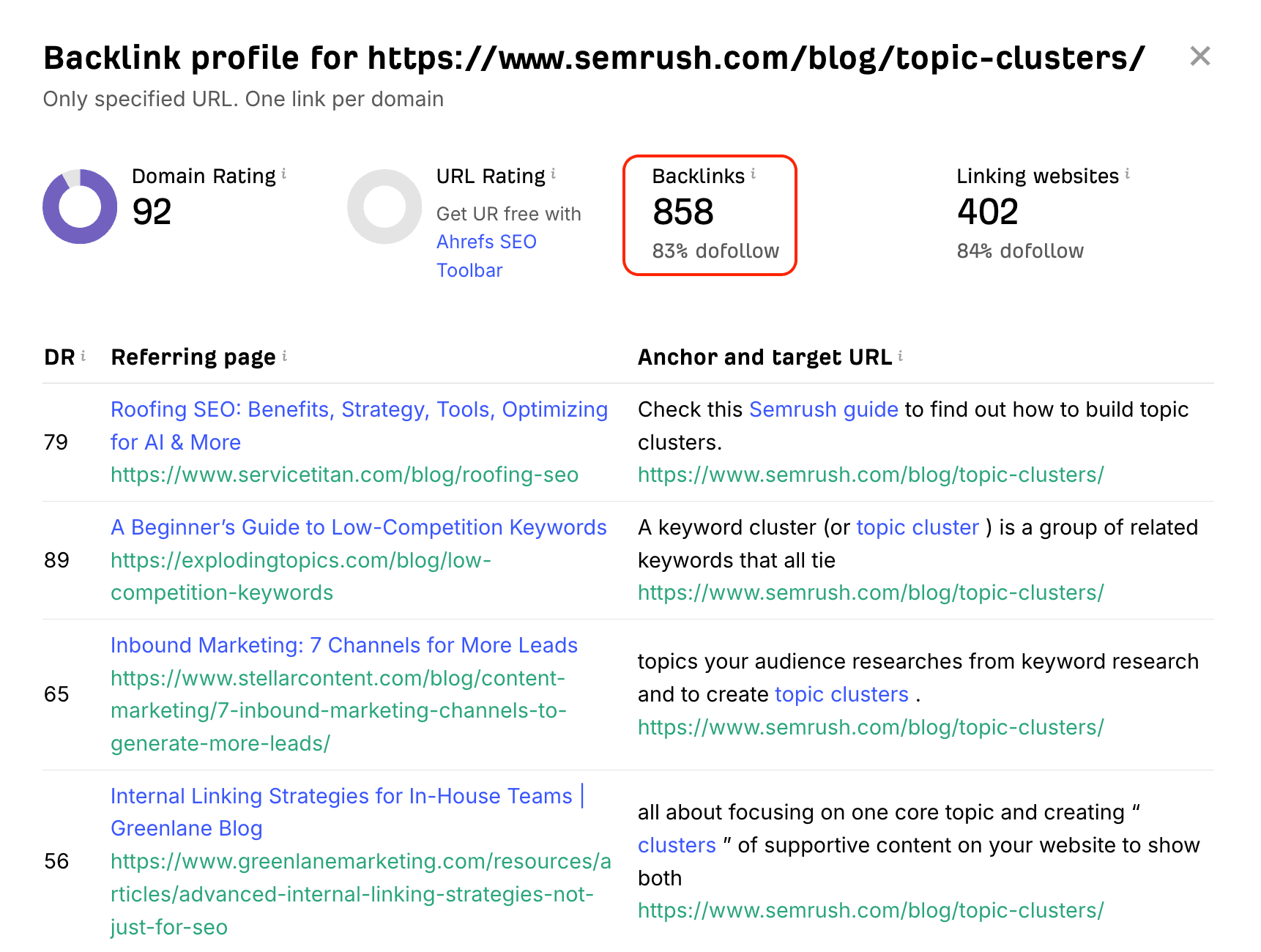
Source: Ahrefs
Authority wasn’t meant to build up fast
There is one more crucial point we have to make in this guide.
If you want to get any type of authority in SEO, you have to be ready for the long run. Because it’s the process that takes time.
Authority is boring.
The New Yorker is a good example precisely because nothing here looks “cool” in the way SEO blogs like to sell. It is stable and predictable. And that’s exactly the point.
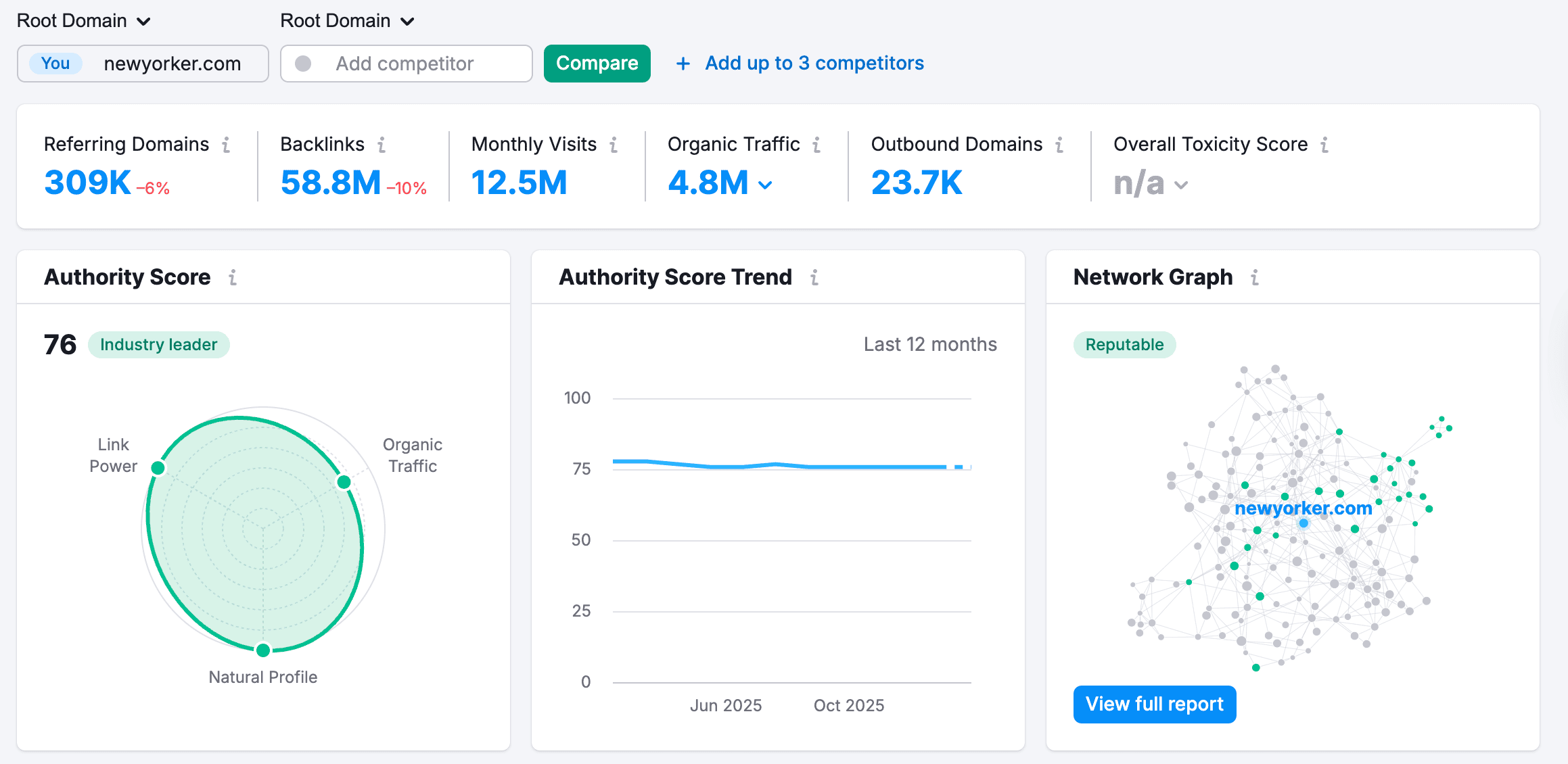
Start with the obvious stats. An authority score in the mid-70s, tens of millions of backlinks, hundreds of thousands of linking domains, and a few million monthly organic visits. Impressive, sure.
But none of that alone explains why links from The New Yorker actually matter.
Authority grows slowly... and then serves you for years.
Look at the authority score trend over the last 12 months. It barely changes. There are:
- No spikes or dips,
- No “campaign-driven” volatility.
That flat line tells you something important: this site is not trying to become authoritative, because it already is.
Real authority sites don’t jump ten points in a week because they published a viral post. They also don’t collapse when link velocity slows down. Their trust is sort of "baked in", reinforced every day by hundreds of signals.
That’s what Google wants: predictability and editorial consistency.
When you see a website where the authority score jumps up and down like a crypto chart, that is not the authority you are looking at. It is just... “activity.”
58.8 million backlinks sounds absurd until you realize what’s actually happening here.
The New Yorker never was after “building links.” It simply got cited millions of times over the years. Not because they were using some exquisite link-building tactics. But because they brought real value. That's it.
Conclusion
External backlinks still matter. They matter as evidence. Evidence that a certain page is worth checking out.
Yet, the only sustainable way to get authority backlinks from reputable websites is by earning trust through valuable content. Over time, that trust gives you organic traffic, higher rankings, more credibility, and, as a result, more external links.
Yes, it’s boring and takes time. But it’s also a strategy that won’t disappoint you.
FAQ
What is an authority link?
An authority link is a backlink from a credible and high-quality website that can improve your website’s authority and rankings.
These links tend to come from web pages that are relevant to your industry, post valuable content, have good SEO metrics (traffic, DA/DR, spam score, backlink profile, etc.), don’t link to low-quality pages, and so on.
Should I focus on DA or DR?
Essentially, Domain Authority (DA), Domain Rating (DR), and Authority Score (AS) are the same thing. They’re all scores from third-party SEO tools that estimate how well a website is doing in terms of SEO.
So, you can use all or any of them. But remember that they aren’t Google metrics. Yes, each of them is helpful for evaluating a website, but it’s only one of the components.
A link from a high-DR website doesn’t automatically make it a high-authority link.
What are authority websites?
Authority websites are pages that search engines and real users already trust within a specific topic or industry. Usually, they share the following features:
- Clear topical focus,
- High-quality and unique content,
- Expert writers,
- Great SEO metrics (including traffic, backlinks, etc.),
- At least some brand recognition,
- Good user experience (without random ads and pop-ups),
- High standards in everything, from the content they post to the pages they link to.
What is a good website authority?
There is no universal definition. Yet, overall, these are the benchmarks you can use:
- DR below 10 means weak authority and is typically associated with new websites that haven’t been actively doing their SEO yet.
- DR 11-30 is low authority. While getting backlinks from these websites is okay (if they aren’t spammy), most likely, you won’t get much link juice.
- DR 31-50 is moderate authority. These web pages likely invest time and effort into their search engine optimization. But they’re still growing.
- DR 51-70 means strong authority that’s associated with high-quality pages. Generally, you can link to these websites and get backlinks from them (if the other metrics are also on point).
- DR 71-90 refers to very strong authority. To get here organically, a website has to be extremely high-quality. So, getting links from these websites usually means getting a lot of link equity.
- DR 91+ is a top-tier authority. These are “A-list websites” that typically belong to well-known brands in each industry. Often, even one contextual link from a page like this can be more valuable than several links from mid-authority sites.
But it’s really important to understand that “good website authority” isn’t just about your DA/DR. It’s a much broader concept that includes content quality, industry trust, actual traffic and engagement, high standards, and so on.
All trademarks, logos, images, and materials are the property of their respective rights holders.
They are used solely for informational, analytical, and review purposes in accordance with applicable copyright law.




 Sign Up
 Sign Up