





SEO and Brand Awareness: A Practical Strategy to Build Visibility
For a long time, SEO and branding were completely different things:
- SEO was about rankings, keywords, and traffic generation.
- Branding was about visuals, tone, campaigns, and recognition.
But… they were never separate. Even though most of us treated them that way.
Today, this gap is completely gone.
If your business has no recognition, then your search engine optimization becomes harder and slower. If your SEO is weak, your company struggles to show up where people look for answers.
There is too much choice out there. As it’s way too easy to get lost, many just search for the names they already know and trust. And this is what you have to work on.
That’s why today, we’ll cover everything you need to know about SEO and brand awareness:
- How you can combine both.
- How to boost brand awareness (even for small businesses).
- And how to measure your exposure online.
SEO branding: What is it all about?
SEO branding is the process of making your business more visible through search engine optimization.
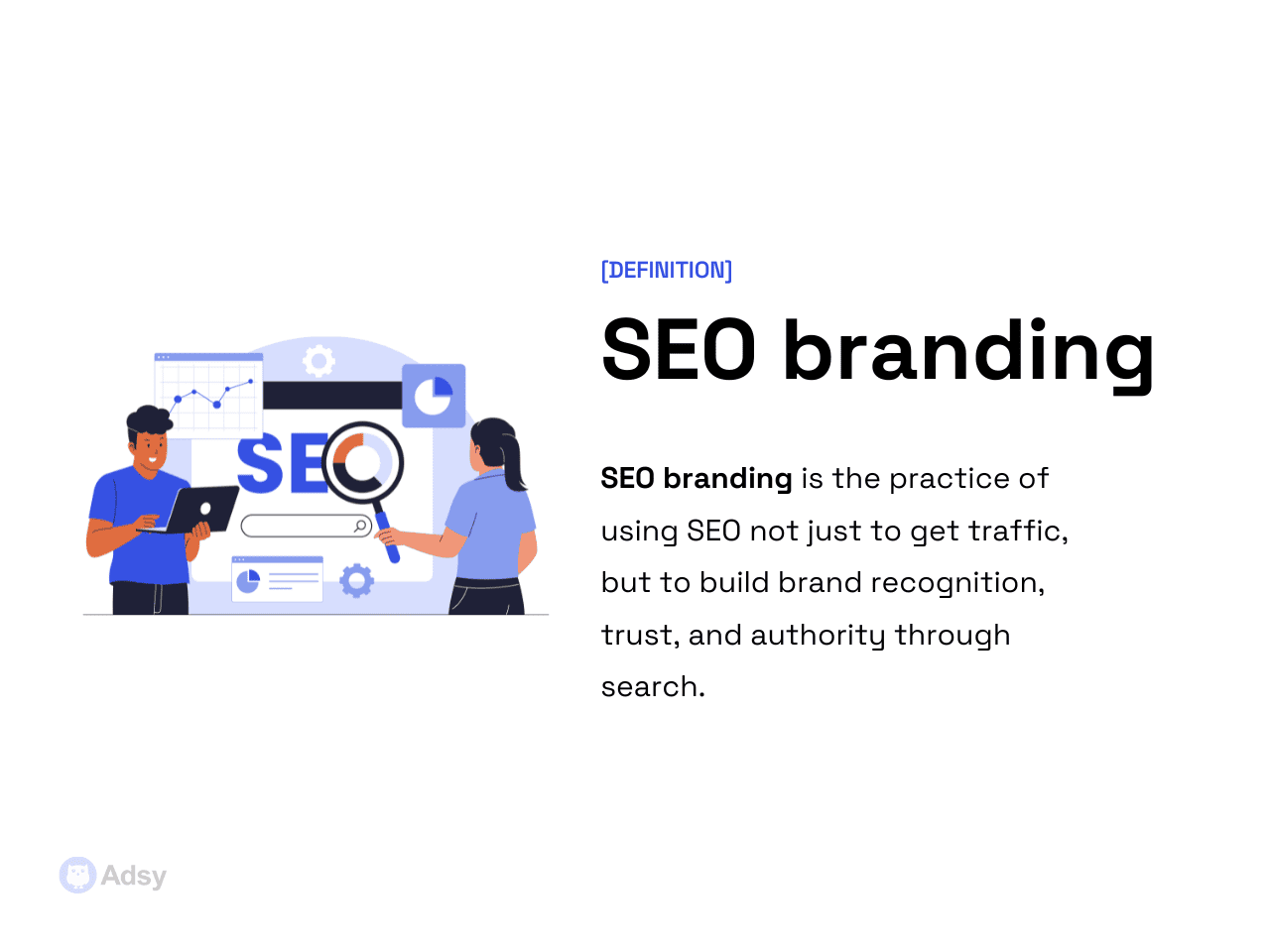
Basically, you focus on building brand awareness and trust instead of just optimizing for a set of keywords.
Traditional SEO is about ranking a page for a particular keyword. SEO branding is about making a business the obvious choice for a particular topic.
So, it doesn’t mean:
- Forcing your name into keywords,
- Ranking for your own name faster,
- Adding more branded materials to your content.
You can ask yourself a simple question:“When people search around your niche and topic, do they start recognizing your name?”
If the answer is “yes,” your SEO brand marketing is working.
But it isn’t just search engine optimization that helps your brand recognition. It works both ways. You see, from Google’s point of view, a strong name is a signal. It’s much easier for it to trust your business if users:
- Search for,
- Return to,
- Mention,
- And engage with it.
And as you know, trusted names are easier to rank. Besides, the more people search for your particular company name, the more popular your branded search gets. And this is another great sign of online visibility.
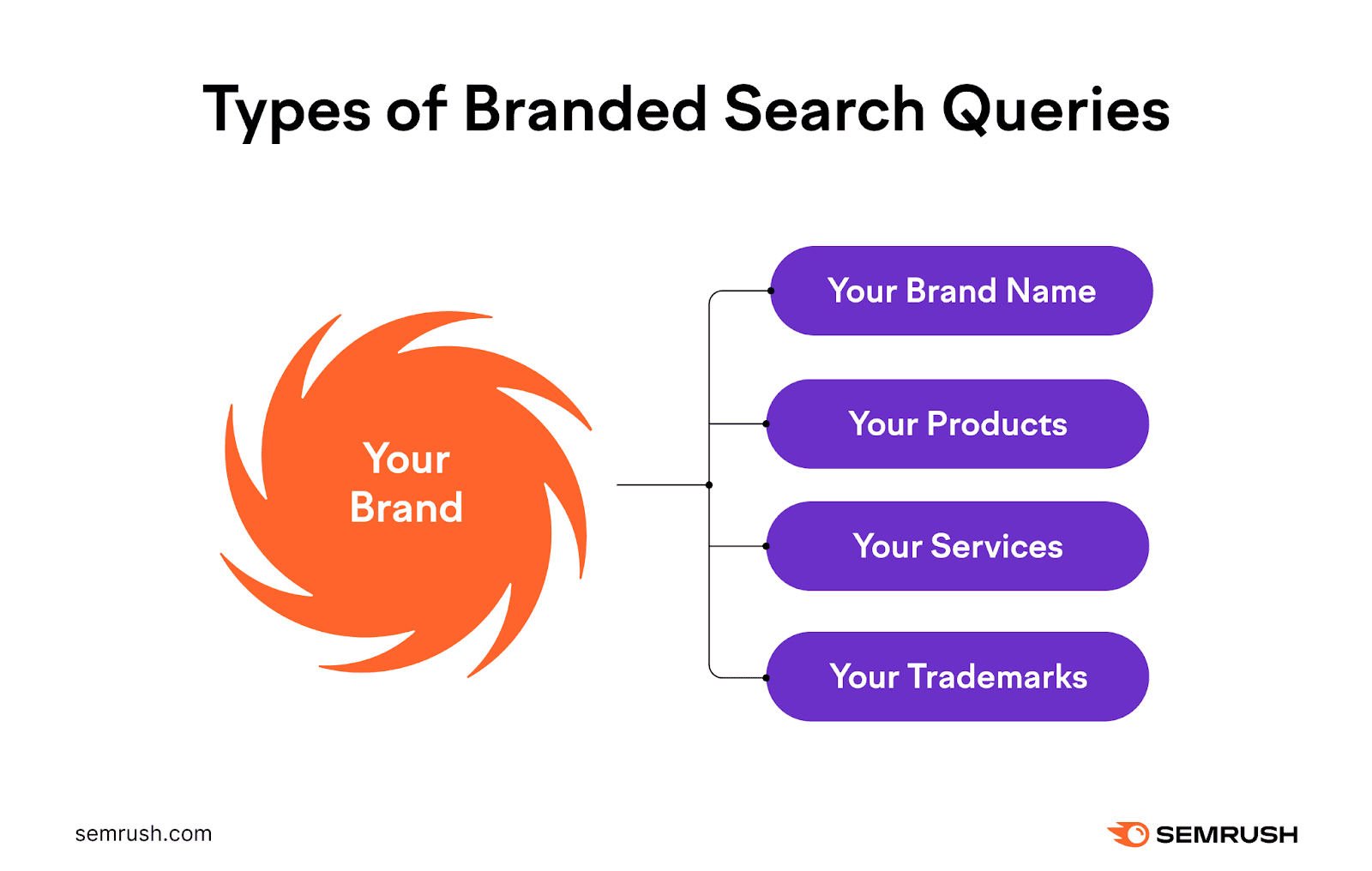
Source: Semrush
In the end, search engine optimization and branding just feed each other.
How do people search, and why does it matter for businesses?
Generally, people don’t search in straight lines. Someone might specifically search for something new. Others will discover your business through “you might also like” suggestions.
Most buying journeys don’t start with a particular company, but with a problem.
People often type a generic query into a search engine because they’re trying to understand something, fix something, or compare their options. These early searches are broad and messy.
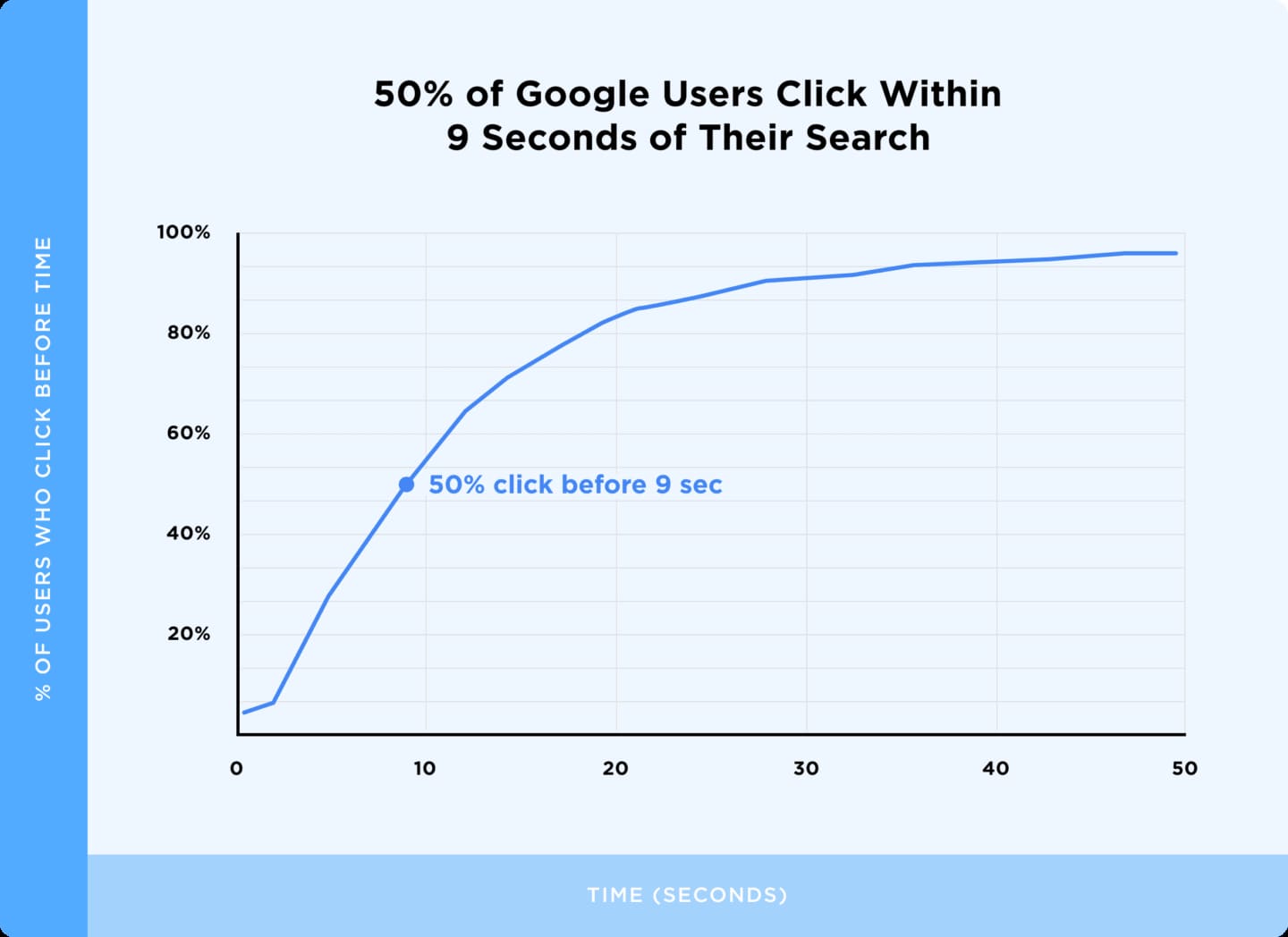
Most users will simply scan through the results and just click some link within a couple of seconds.
Source: Backlinko
But later, those searches narrow.
A person clicks a few results, skims, leaves, and comes back. Gradually, certain sites start to become familiar. A business appears more than once across search results or related queries. That’s the moment when search behavior begins to change.
After a few rounds of looking around, people get lazier. In a good way.
Instead of typing a full question, they shorten it, and then they shorten it even more. And eventually, they’ll add a name.
- “backlink audit” will now be “Semrush backlink audit.”
- “Project management templates” will become “Notion templates.”
At that point, the decision is already made, and you understand that the search is just a shortcut. These branded searches are one of the clearest signs that your awareness strategy is working.
Why does this matter more than just rankings?
You can rank for hundreds of keywords, and... people can still forget about you.
That's the truth about any type of marketing these days. Pages can perform well without building anything lasting. People come in, read, leave, and never return.
Branded searches mean the opposite: people remember you well enough to come back on their own.
This all might sound too theoretical. So, let’s consider an everyday example.
Think about how you choose what detergent or dog food to buy.
When was the last time you went to the supermarket and started checking out different, unknown brands? Exactly. Most of us don’t do it. We just choose what we already know and trust. Because it’s safe and fast.
And our behaviour isn’t much different when we search online (even if we don’t want to buy anything yet).
That’s exactly why when you increase brand awareness even a bit, it often leads to:
- Higher engagement,
- Better conversion rates,
- More direct traffic,
- Stronger long-term search rankings.
In fact, according to Nielsen, even a 1-point gain in brand metrics drives a 1% increase in sales.
Besides, Google stops seeing your site as just a collection of pages. It starts seeing you as an authority in your niche.
Your pages appear for different queries in your niche, and other websites related to your topic mention you.
This is exactly what you want: your name becomes associated with your subject.
From this point, you are no longer competing page by page. You’re competing as a known name in that space.
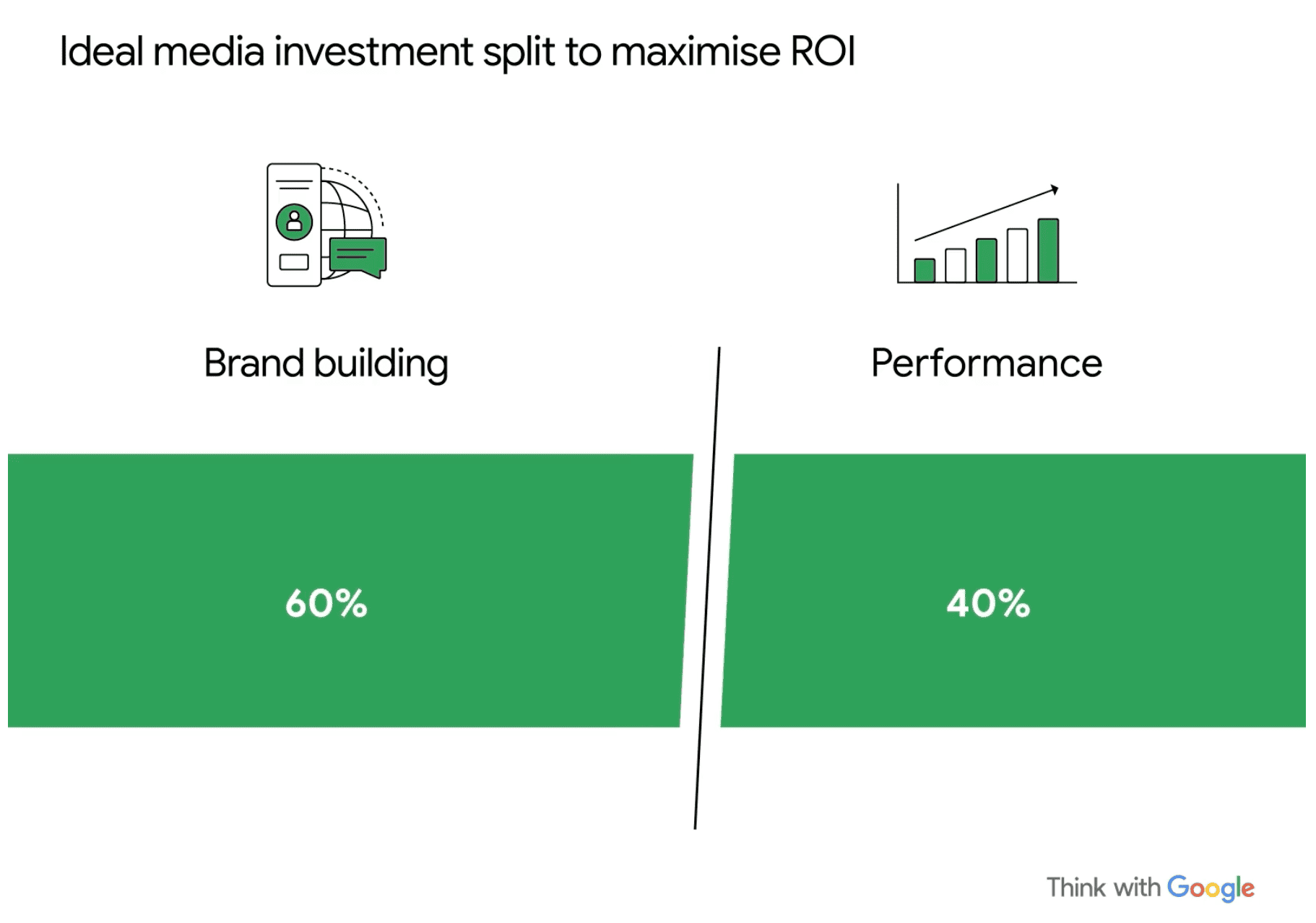
That’s why even Google says that most marketing spend (50-60%) should go toward brand building, with the remaining 40-50% invested in paid media.
Source: Google
How do search engines see your brand?
Search engines don’t think in logos and taglines. They don’t care how clever your slogan is or how modern and cool your design is.
Search engines care about patterns.
Here is the thing: from a Google’s point of view, your brand is not just your business site. It’s everything that points back to it:
- Your own web page,
- Mentions on other websites,
- Articles, reviews, interviews, and media mentions,
- Search queries that include your name,
- How users interact with your pages.
When Google sees your brand appear in multiple places, in different contexts, it starts treating you as an entity. And entities are much harder to replace than just pages.
Brand SEO vs. traditional SEO
Traditional and brand-driven optimization look similar on the surface, right? They both use keywords, content, links, and technical SEO. But the goal behind them is very different, and this changes everything:
- Traditional optimization aims for clicks and traffic.
- And SEO brand marketing is all about making people remember your company.
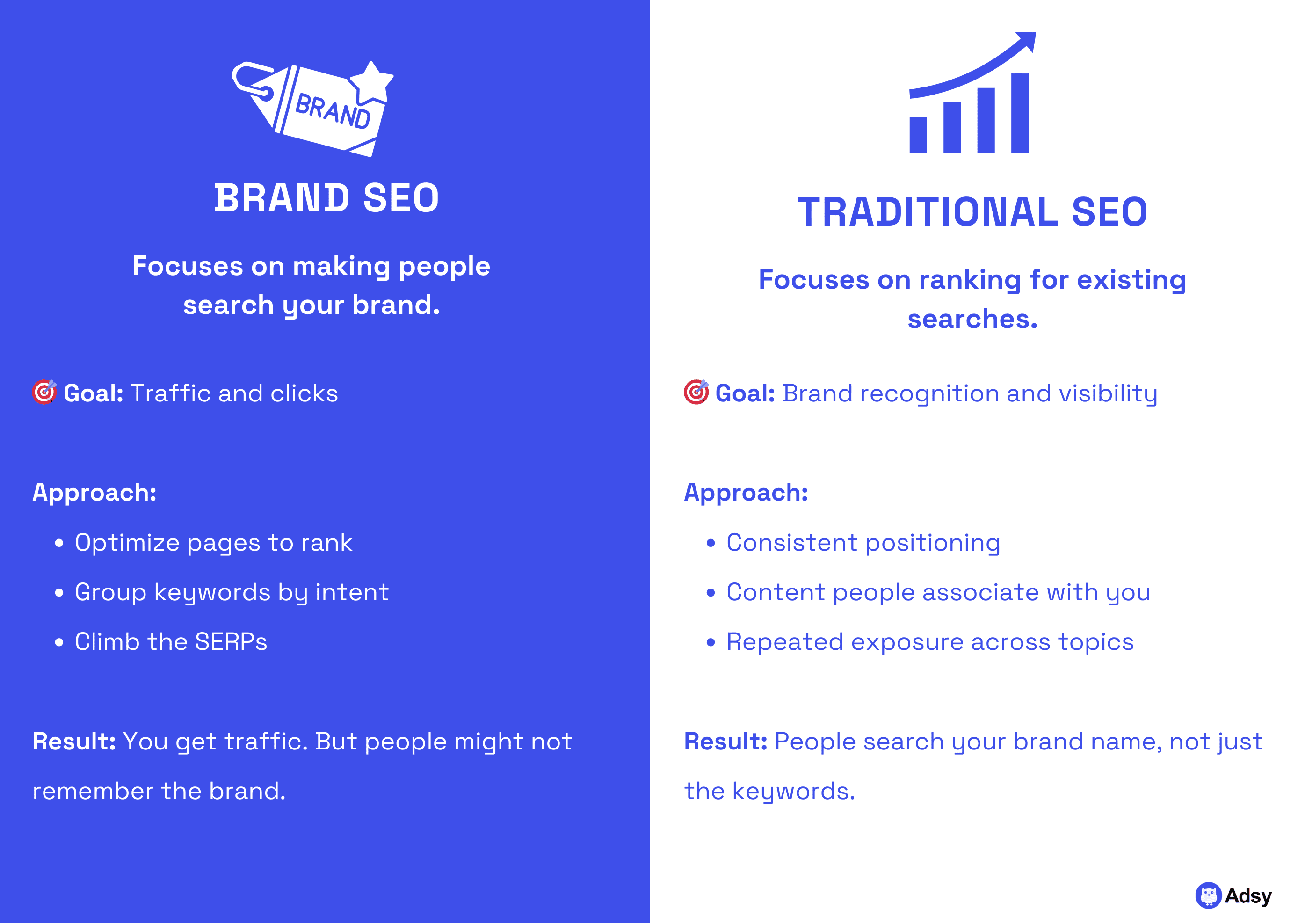
Classic keyword optimization generally starts with volume and competition.
You research keywords, group them by intent, write content, optimize headings, and try to move up the search engine results pages. If it works, you get organic traffic. Sure, it’s a very simplified description, but this is what it really is in essence.
The problem is that traffic, no matter how good, might not leave any impact on your awareness. It might not make people remember you. At all.
That’s why SEO branding focuses on growing:
- Search queries that mention your business or product,
- Direct traffic and repeat visits,
- Searches that include your company name, your products, or variations of them.
In other words, it creates demand for your name.
Can you archive that with just clever keyword placement? Nope. It comes from consistent exposure, good positioning, and content that people associate with you in particular.
So, instead of asking, “What keywords can we rank for?”, ask these questions:
- Where do people usually interact with our topic?
- What do they think about the problem we solve?
- How can we show up in a way that feels consistent and recognizable?
And while this sounds like “just questions,” they aren’t. They allow you to look at the bigger picture and turn your SEO strategy into something that strengthens your name, not just brings organic traffic in.
As a result, your content and message become consistent, and people start to associate your name with something solid.
How this improves conversions
There is a huge difference between:
- Someone searching for “best blog posting service”.
- And someone searching for “Adsy blog posting service”.
The second one means that people are looking precisely for you. And these are the users that you don’t need to convince that you’re trustworthy.
The first query sits in the middle of the funnel. But the second one suggests the person is already at the bottom. And converting these website visitors is much easier by default.
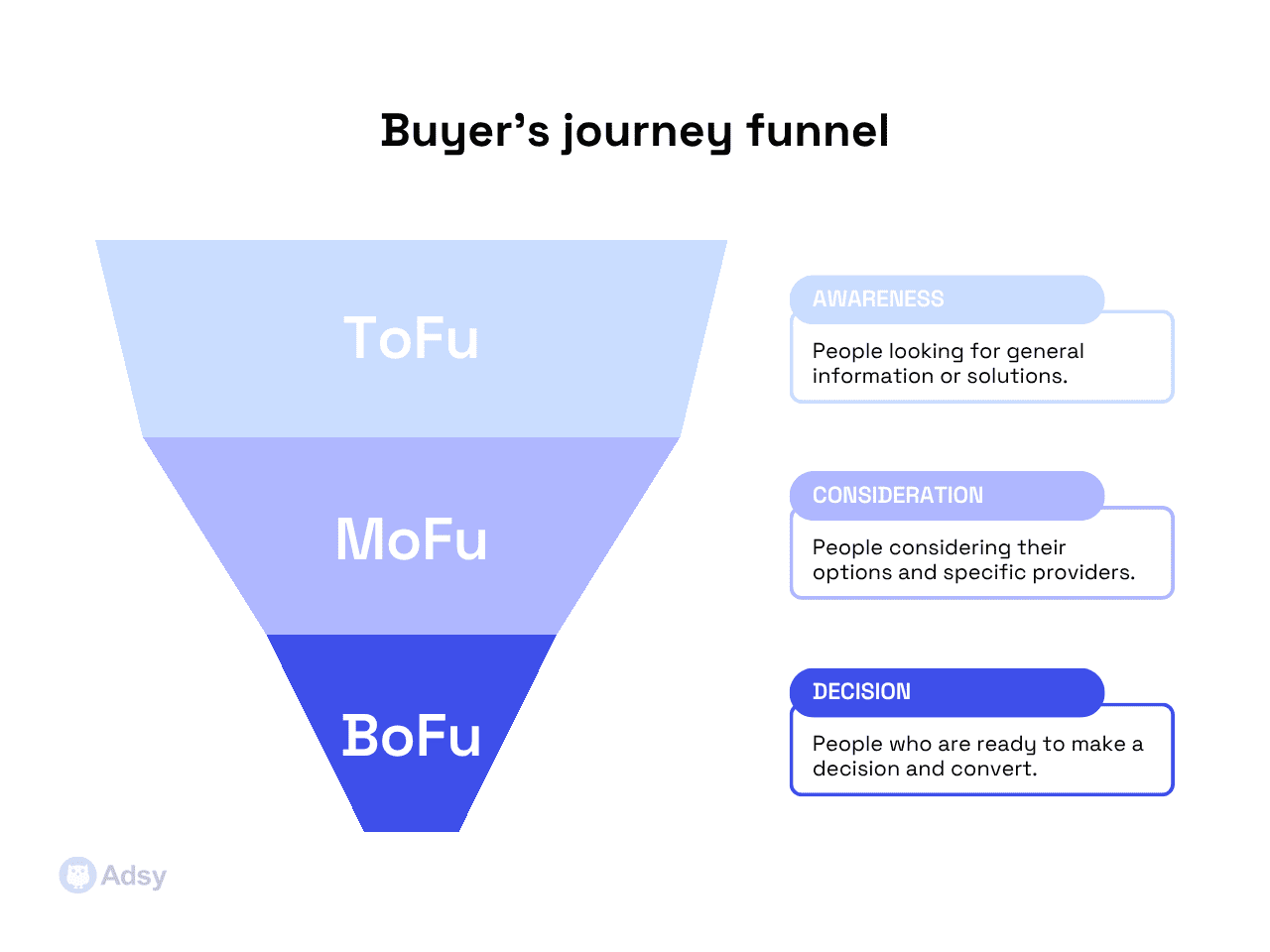
When someone lands on your site through a generic query (especially ToFu or BoFu), they’re still deciding:
- Who to trust,
- Whether this source feels credible,
- And if they should keep reading or go back.
Generally speaking, this traffic has no context about your business, and it tends to convert poorly. But people who come from branded traffic already know you. When they recognize your name, most friction is gone.
You get higher conversion rates simply because familiarity lowers resistance. The user isn’t evaluating you from scratch. They already have a mental shortcut: “I’ve seen this before.”
This is especially visible in:
- Lead generation pages,
- Email sign-ups,
- Webinar registrations,
- Product comparisons, etc.
How branded searches improve AI visibility
TL;DR: When AI sees your business repeatedly linked to a particular topic and mentioned across the web, it is much more likely to cite you.
Many people now like to say that AI killed SEO, but in reality, that's not what happened. Essentially, AI has changed the very idea of visibility.
We used to think about visibility in terms of ranking links on search engine results pages. But now, to be visible, you also need to be referenced in ChatGPT, cited in AI Overviews, or mentioned in other LLMs.
And this is where branded searches are one of the strongest signals you can build.
If you look at the infographic below, you'll see lots of “branded” popping up.
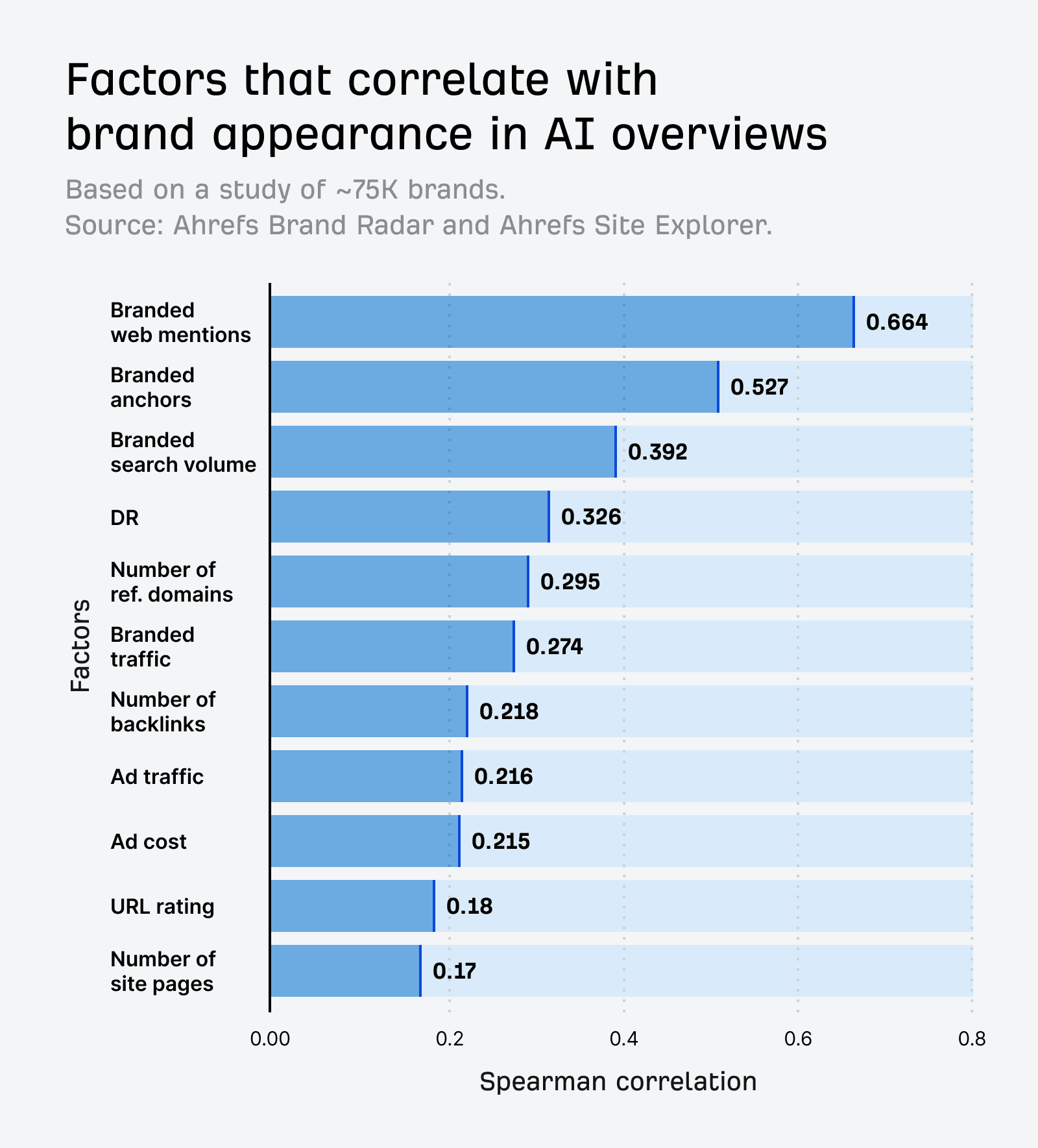
Source: Ahrefs
Why? Because AI doesn’t discover businesses the same way as we, people, do. Here is a thing: large language models (aka LLMs) don’t think in keywords. They think in associations.
When AI models try to answer a question, they look for patterns like:
- Which companies are repeatedly mentioned for this topic?
- Which names appear across multiple sources?
- Which businesses show up in comparison posts and “best” or “top” articles?
- Which websites do users already search for when asking about this problem?
So, a name that people actively search for sends a very different signal than the one that only ranks for generic keywords. Relevance is important, of course, but you also need to increase awareness.
To AI systems, this often means authority.
Besides, you’ll usually see that AI-generated answers are cautious by design. They don’t want to “invent” anything. That’s why they’re looking for sources that are already mentioned across the web.
That’s exactly why, to be cited by AI, you have to be “everywhere,” meaning get a really good exposure. Because often your business will be referenced not because of your own website, but because of your YouTube video, Reddit answer, or a press release.
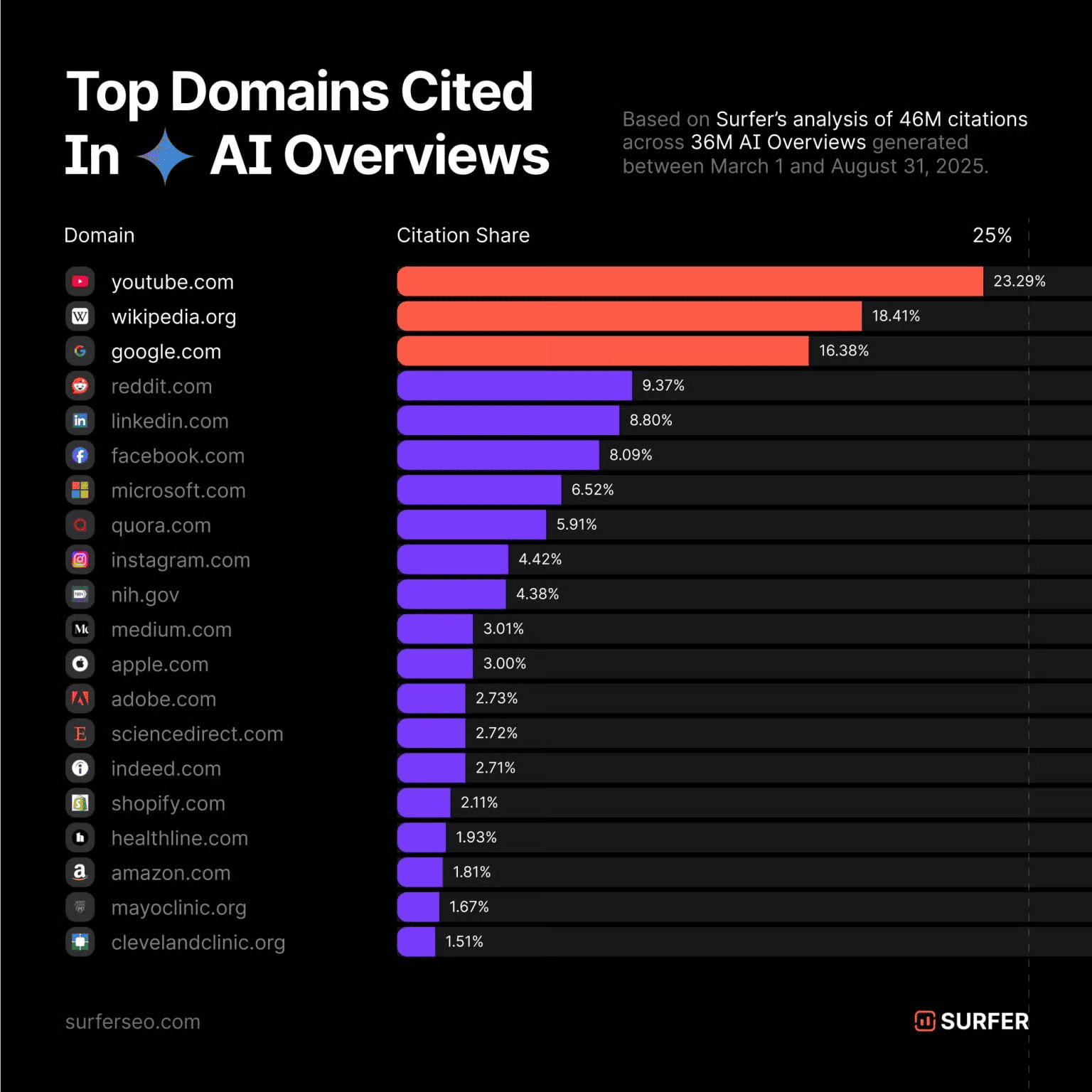
Source: Surfer
Step-by-step SEO brand awareness strategy
So, how can you establish a brand’s presence and back it up with search engine optimization? What marketing efforts does it require? Let’s take a look at the exact steps you need to take.
Step 1: Clarify what your business stands for
Before keywords, content plans, or tools, you need to get one thing straight: What should people associate with your name after seeing it a few times?
It should be something simpler and more action-driven than a mission statement or another slogan. Think in terms of:
- What problems you solve consistently,
- How you explain those problems,
- What people should expect when they land on your site.
Most companies tend to skip this and jump straight into the execution part. As a result, they get content that ranks occasionally. But in essence, they are still invisible.
Their posts might answer questions, yes, but they don’t stick. Their name isn’t strongly associated with anything.
Search engines can’t associate your name with a topic if you don’t treat that topic as your core.
For example, Canva has a really strong name in the industry. That’s why when you type “template,” you will see Canva there (even in the autosuggestion):
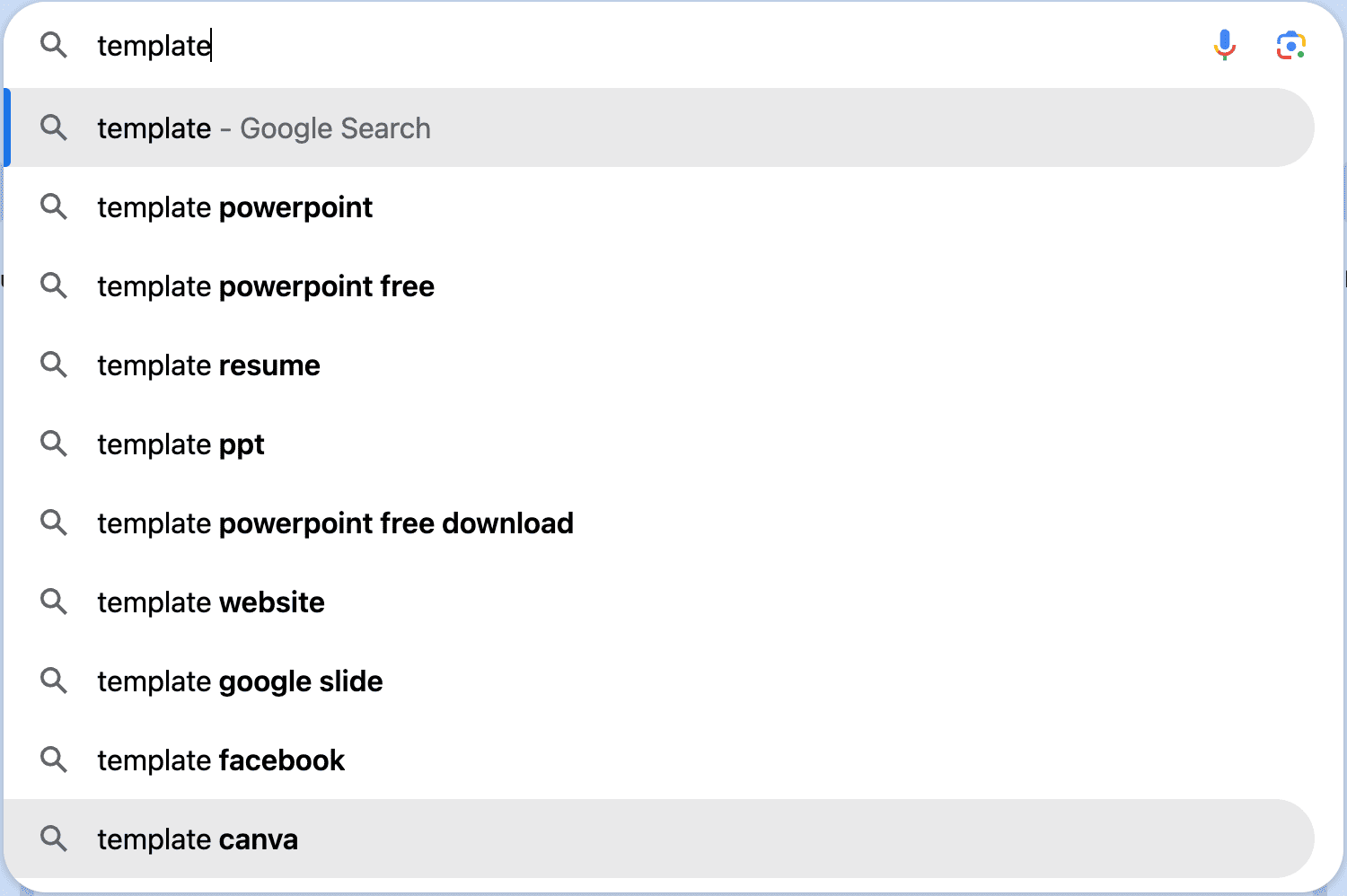
Here's a useful test. Ask yourself these 2 questions:
- How would people describe your business in 1-3 words? (e.g., templates, SEO tools, project management software, etc.) If you can’t do it yourself, you have to figure this out and make it clear in your communication.
- If someone reads three different pages on your site, would they feel like they’re learning from the same source? Your tone of voice and writing style have to be a part of the bigger strategy.
If the questions above confused you a bit, even truly great rankings won’t help your business grow and improve your brand authority.
Step 2: Identify where the first touch actually happens
Brand awareness through SEO usually doesn’t start with searches that include your company name. It starts very, very far away from that, with the absolutely opposite thing: non-branded early-stage queries.
These are the searches people make before they know who to trust:
- “How to do a marketing audit.”
- “Why did my website traffic drop?"
- “Best ways to generate leads online.”
These queries are your entry points. They introduce your business to people who aren’t looking for you yet. In fact, they aren’t looking for any particular company now.
This is why and where many optimization strategies fail. They focus on keywords that are competitive or commercially attractive. But ignore how first impressions are formed.
Ask a different question: Which search queries bring people into your space before they have any preferences?
Typically, these are informational searches, and their main goal is to help users discover a topic. And if your website consistently helps them find what they’re looking for, they’ll remember you sooner or later.
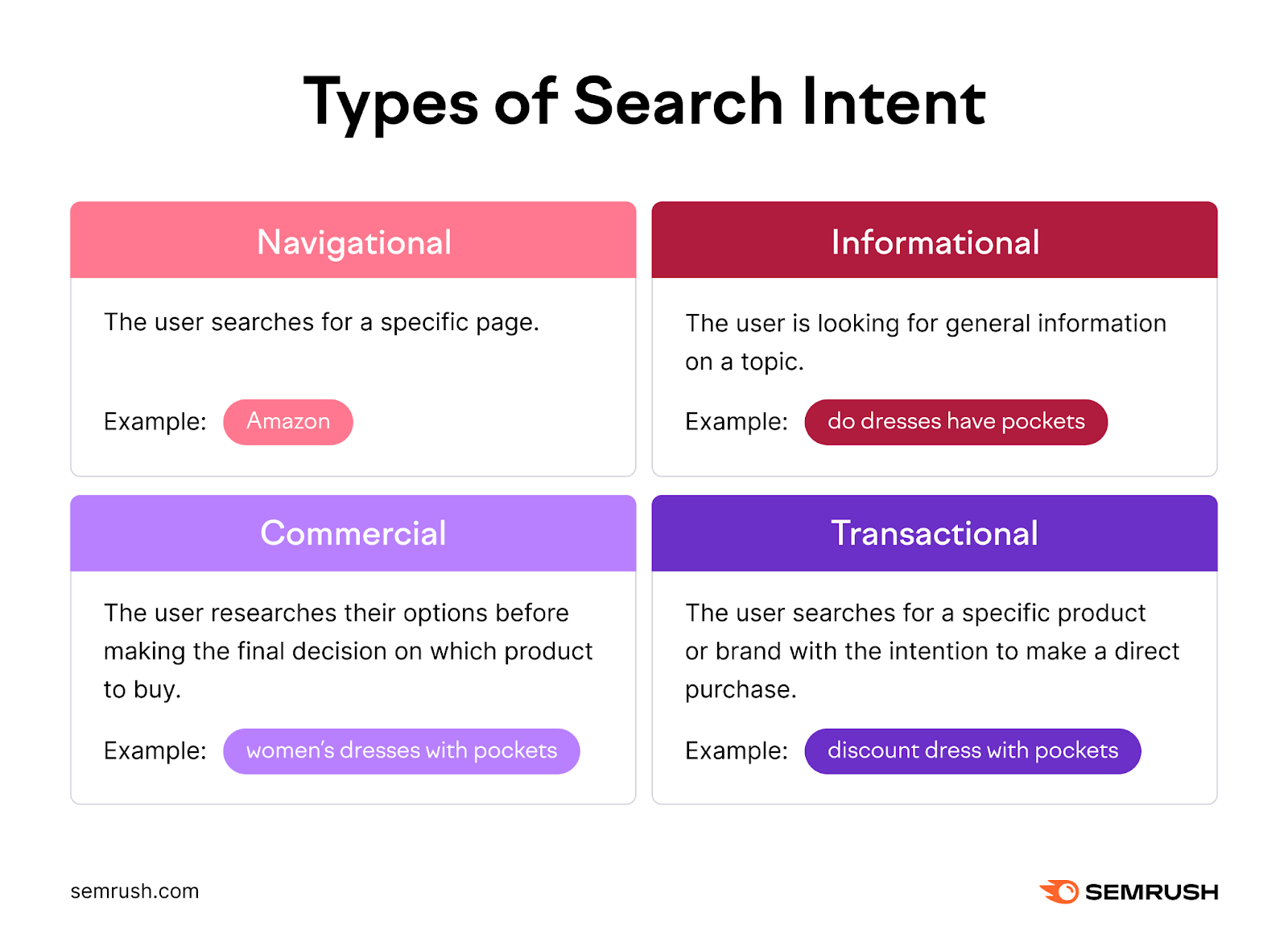
Source: Semrush
You don’t need to win all of the informational queries in your niche, though. All you have to do is show up consistently for the keywords your target audience is searching for.
Step 3: Create content that introduces your brand early
So, you’ve created lots of high-quality content in your niche. Great! But at this point, it usually becomes forgettable.
Many pages answer the question well... but then they hide the brand until the footer. The posts, like this, could belong to anyone. If the logo disappeared, nothing would change.
What is that if not a missed opportunity?
But if you introduce your company early, it could change a lot. It doesn’t mean forcing your name into every sentence, but rather:
- Using a consistent voice,
- Giving a clear formula/solution across pages,
- Showing a straightforward point of view.
Apart from having valuable content, you can introduce additional elements that remind about your business. Some of the easiest ways to do that are by:
- Showing how your tool can solve a problem step-by-step,
- Giving an example of how your service helped other clients,
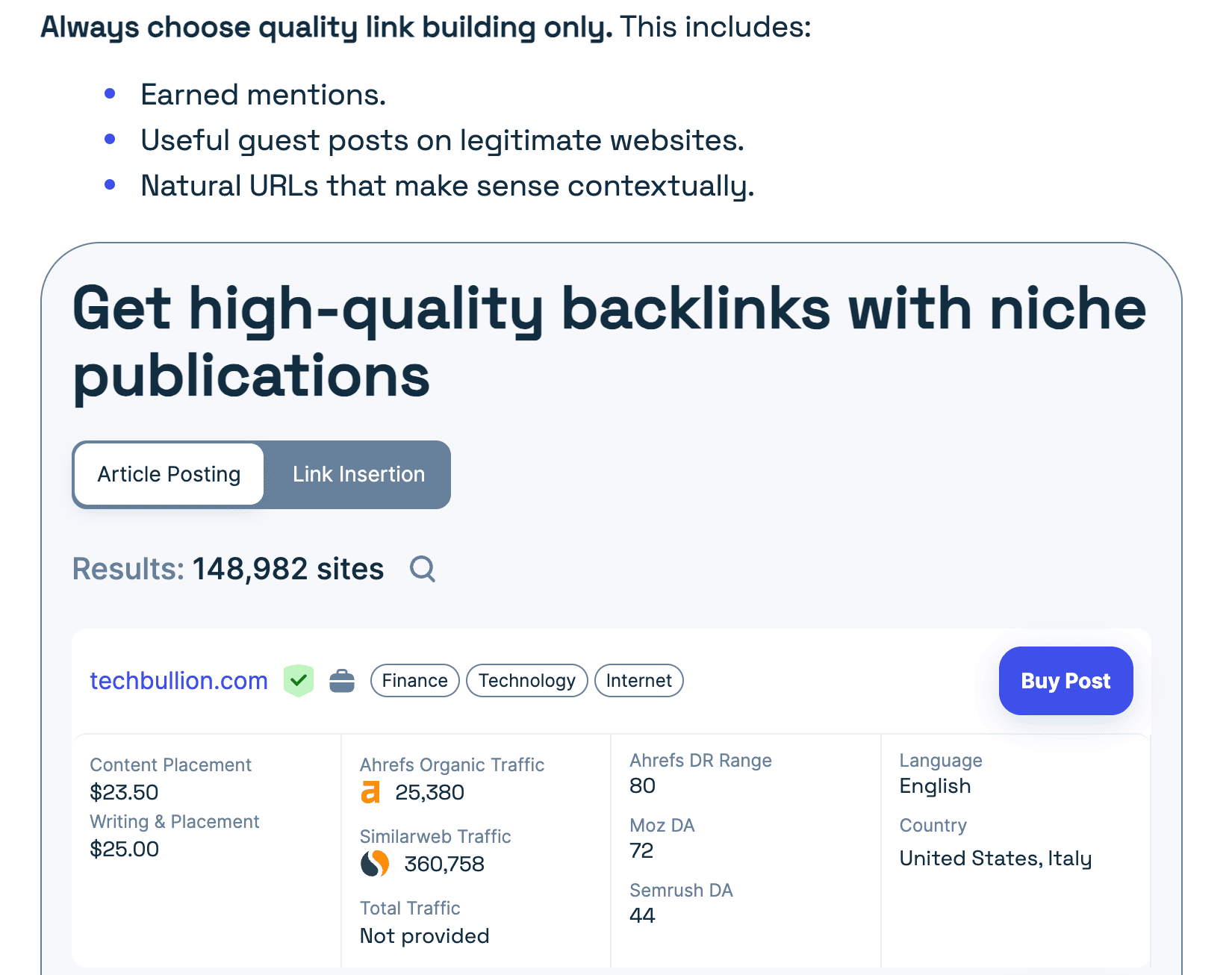
- Embedding a video tutorial or something like a widget that leads to your product, where it makes sense (like in the example below).
Step 4: Build depth around fewer topics (not more content)
Brand awareness grows faster when a business is associated with a specific product/service and subject. That means fewer topics, but much, much deeper coverage.
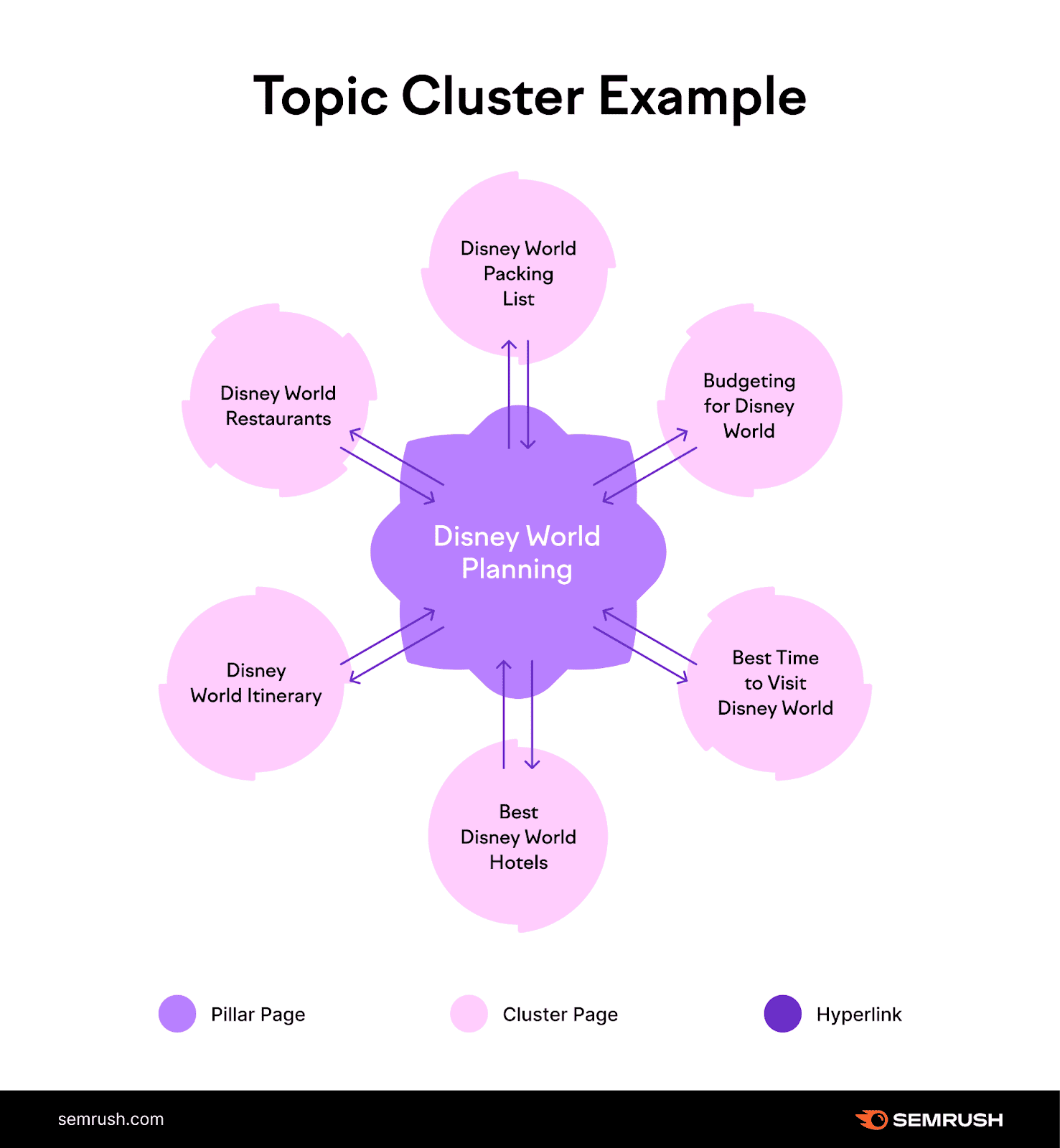
Of course, coming under the spell of creating more content is very easy. But instead of creating a bunch of unrelated posts, better focus on:
- One main topic,
- Several supporting subtopics,
- Multiple pages that connect naturally.
It’s also called topic clusters. And they really help both Google and your readers to associate you with a particular subject faster. This is how you gain true authority.
Source: Semrush
The idea is to show that you know what you’re talking about. But if you want to be truly successful, cover your topics from different angles, offering your unique perspective. With this approach, you might also end up in AI Overviews much more easily
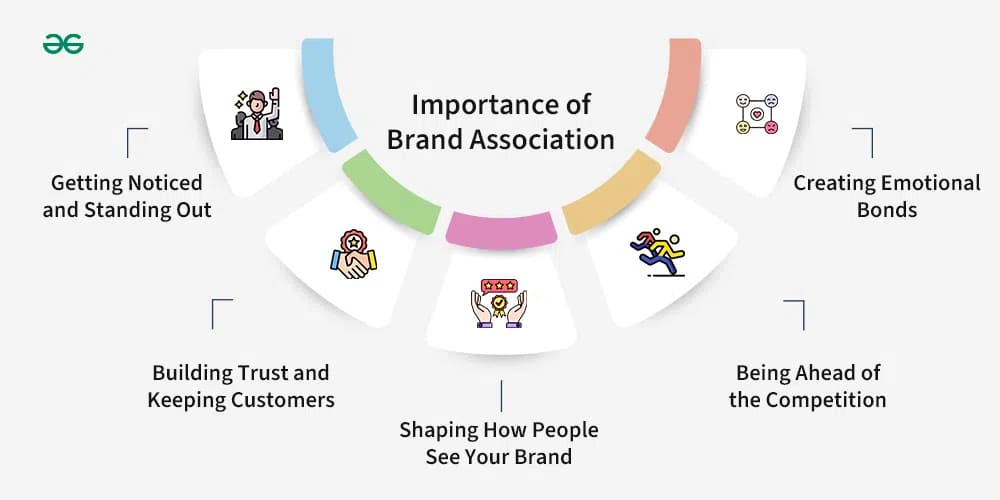
It might sound overwhelming for many. But think of it this way: you only need one strong association to be remembered. Let’s play a game. What brands come to mind when you see the following words?
- Coffee,
- Fast food,
- Smartphones.
Chances are, those were Starbucks, McDonald's, and Apple. Sure, these are way too generic, but you get the idea. Your main task is to be clear about what you are doing to help people associate you with that more easily.
Source: GeeksforGeeks
Step 5: Strengthen technical foundations to feel more trustworthy
Most people don’t think of technical SEO as a branding issue. But this could be a mistake.
Users might not know what Core Web Vitals are, but they absolutely feel them. Slow pages, broken layouts, weird redirects, and errors hurt rankings. But even more importantly, they damage trust. And once lost, trust is rarely rebuilt.
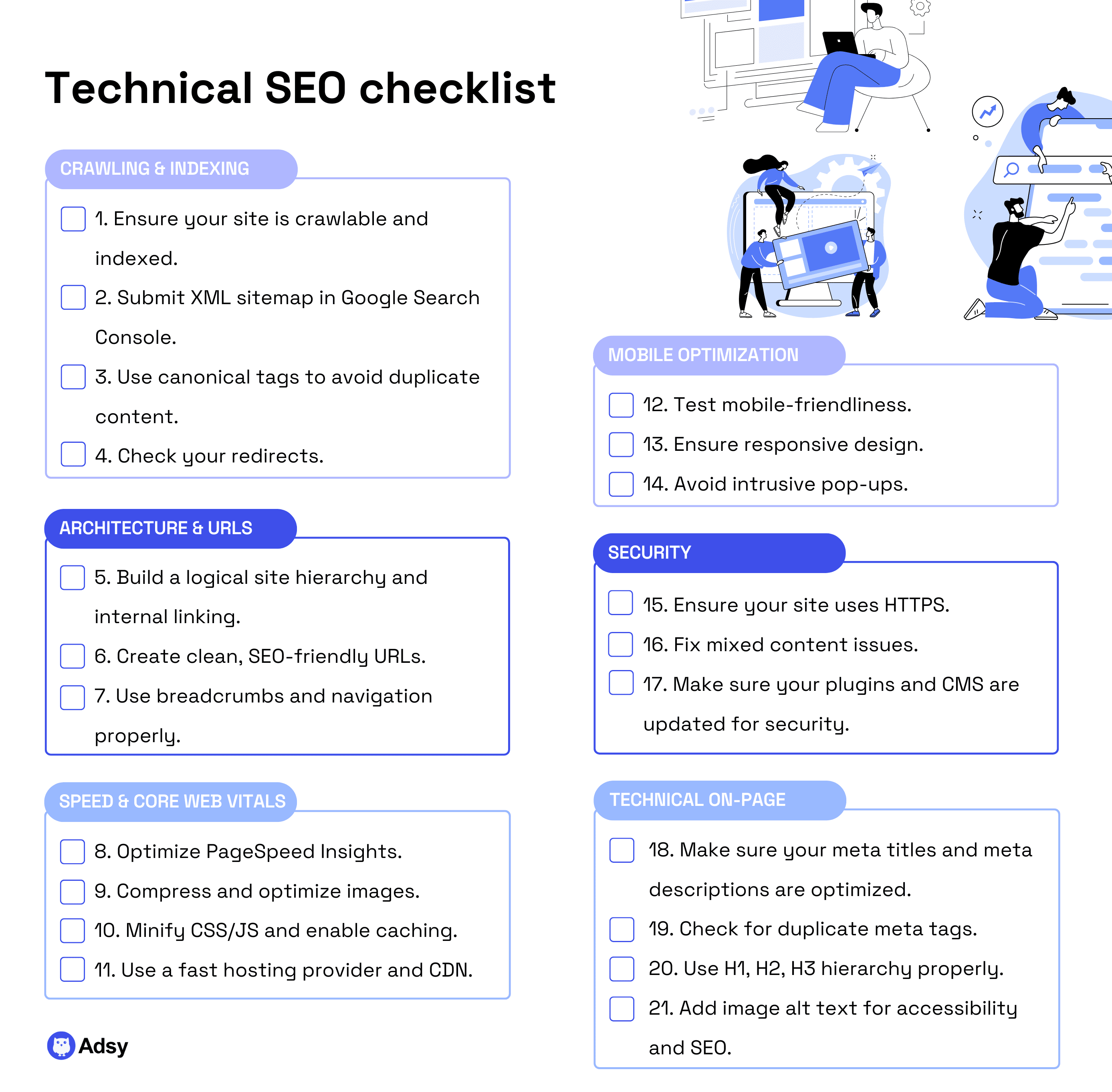
From a brand awareness perspective, technical optimization has one job: don’t create friction. If someone clicks your link in search and the page:
- Takes too long to load,
- Jumps around while loading,
- Breaks on mobile,
- Sends them to a dead end.
They don’t think “bad optimization,” but something like “this site is trashy.” Ouch.
Search engines track this behavior. When users bounce back to search results quickly, it’s a signal that expectations weren’t met.
Over time, this can affect how often you show up high in search results. And it would be a pity to work that much on your exposure to destroy it like this.
This is why technical SEO is not a one-time fix, but an ongoing maintenance for your trust.
Step 6: Use paid channels to reinforce organic brand recognition
Paid traffic and search engine optimization are often treated as separate things. And they are. They use very different mechanisms at their core. But it doesn’t mean that one can’t help the other.
Paid advertising, especially Google Ads, can reinforce your awareness. Even when it doesn’t lead to immediate conversions.
It is a psychology 101: seeing a name repeatedly in search results makes it familiar much faster.
It isn’t just common sense. There is also a pretty old Google research that suggests the same thing.
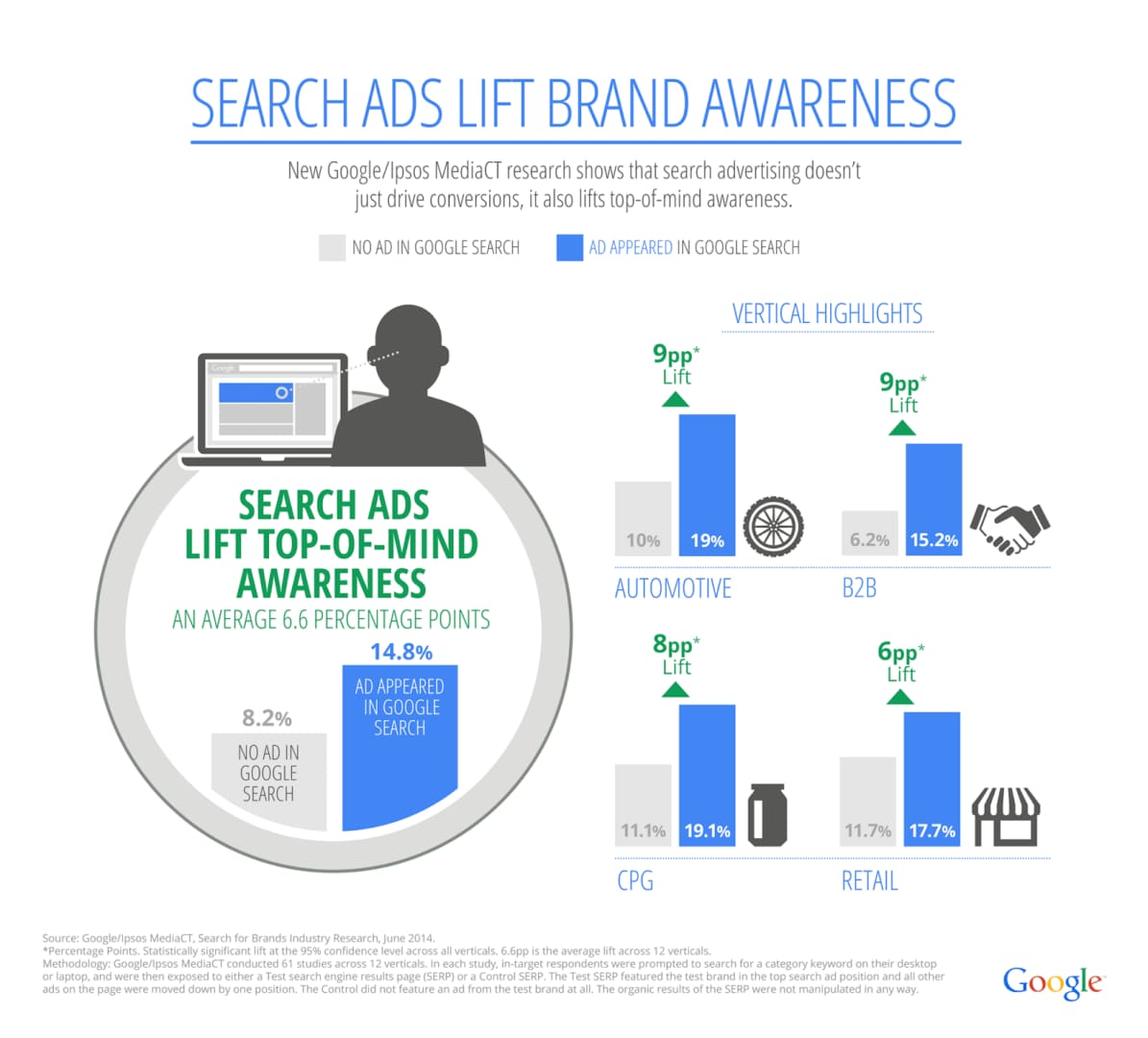
Source: Search Engine Land
So, when paid and organic results appear together, the effect compounds. And as a result, you can see:
- Higher click-through rates,
- Stronger business recall,
- More branded search queries over time.
But don't think that you have to replace organic growth with ads. No, you have to support it. These two shouldn’t really compete. They have absolutely different goals.
SEO is more about long-term results that will compound. And PPC is about quick results that vanish as soon as you stop putting money in.
Step 7: Make your business searchable even when people don’t remember the name exactly
There's an interesting thing in our modern times. People often remember something about you... but not your exact name. Well, can you blame them? There are thousands of companies out there.
They might remember what you do, the problem you solve, how you communicate things, or phrase you often use. And then, they’ll search for something like:
- “That gardening site that explains things simply,”
- “Content agency that focuses on industry leadership,”
- “Tool people recommend for technical audits,”
- Or even “popular project management software with a card-like interface.”
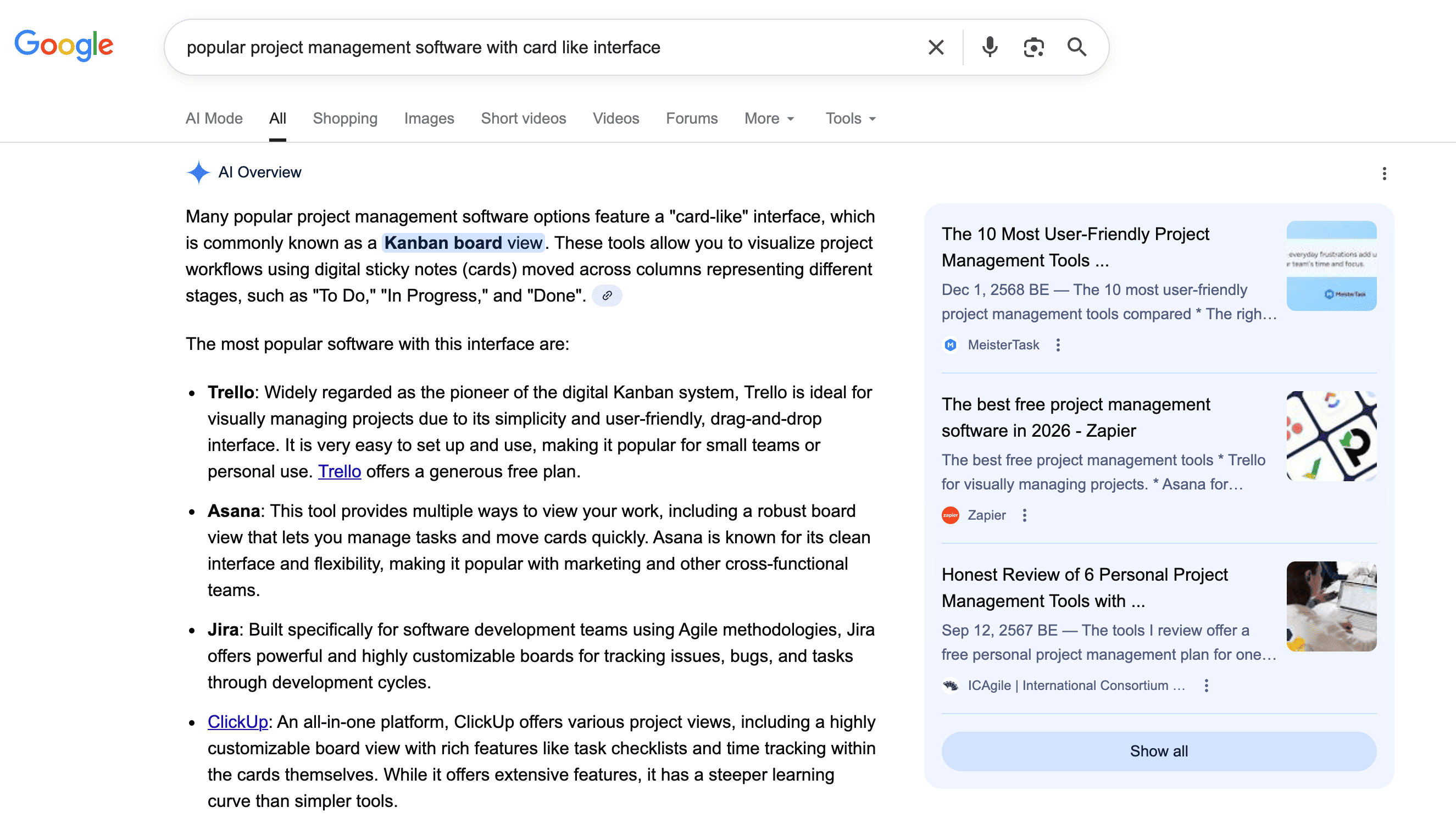
Search engines are very good at connecting these vague search queries to the actual concepts and businesses.
This is what’s called semantic search, which is now also complemented with AI Overviews or ChatGPT and other LLMs.
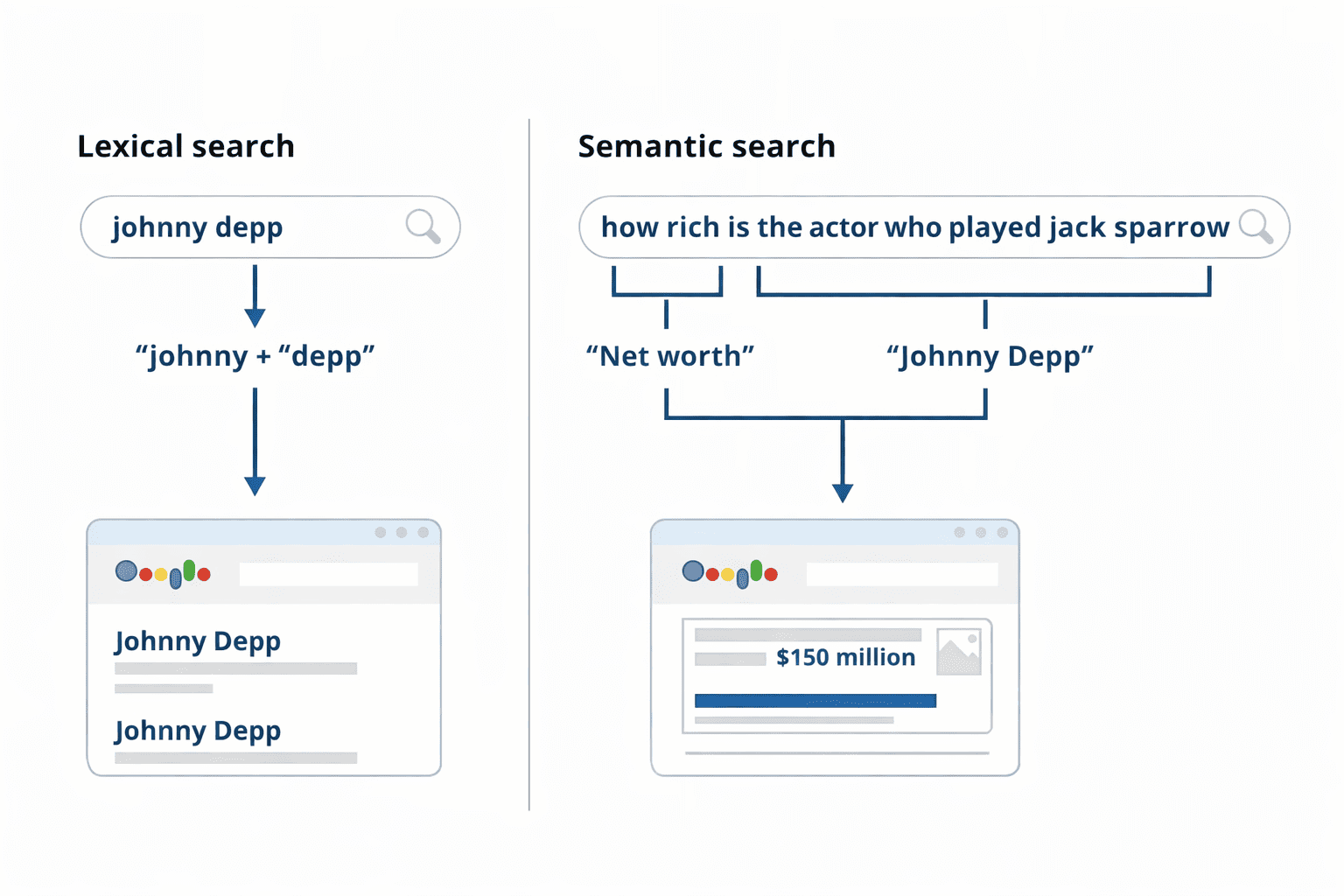
But it’s only possible if you give search engines enough context. That’s why you need the initial exposure to become more visible. Besides, you have to:
- Be consistent about what you do and why,
- Describe what problem you solve over and over again (across the pages),
- Use consistent language, wording, terminology, etc.
Sooner or later, Google will start learning that this cluster of ideas is connected to your business. And this is exactly what you want.
Step 8: Earn external brand mentions
Exposure means that your name has to be mentioned beyond just your website. That’s where PR, link building, community management, SMM, etc., are really helpful.
Here, you can get both unlinked mentions and SEO backlinks that aren’t toxic. All of them could influence your visibility in a good way. As for the sources, it can be pretty much anything, including being:
- Listed in “best/top services/tools/products, etc.” articles,
- Quoted in a blog post on another site or a newsletter,
- Referenced in a case study,
- Mentioned on Reddit, niche forums, Quora, Medium, etc.
- Reviewed on several listing platforms,
- Tagged on social media, etc.


From a search engine’s perspective, this answers an important question: “Do other people talk about this business when discussing this topic?”
The more often the answer is “yes,” the clearer your role becomes.
How to properly track brand visibility
Traffic went up, rankings look fine, so everything must be working… right? Not necessarily.
Brand awareness through SEO will not show up as immediate clicks or conversions. Very often, it reflects in how people search, how they come back, and how familiar your business becomes over time. If you only track classic SEO metrics, you will never see any of those.
Traditional search engine optimization reporting mostly focuses on:
- Keyword rankings,
- Organic traffic.
- Clicks and impressions.
These metrics are useful, but they say nothing about people remembering you. Branded SEO asks a different question: Are people starting to recognize and search for you on purpose?
To answer that, you need to look for something else beyond generic keywords. The first indicator of SEO-driven brand awareness is growth in branded search queries.
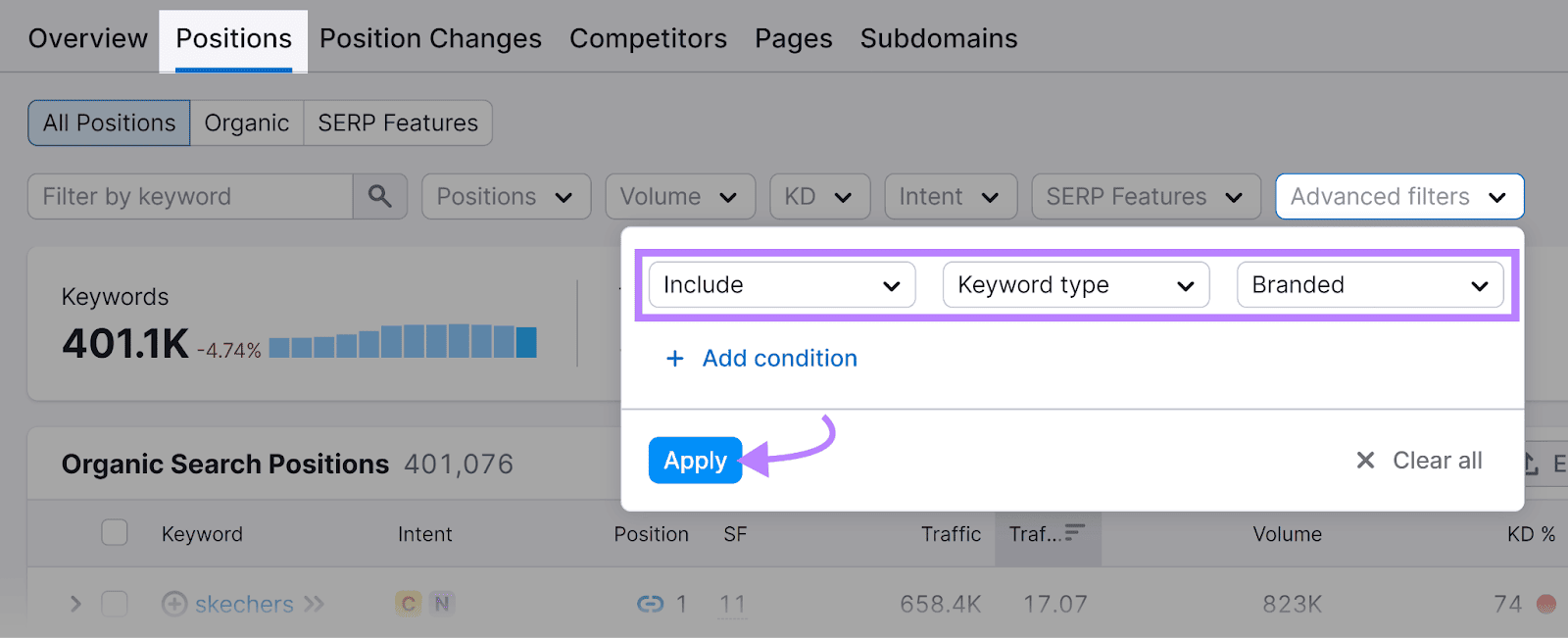
Source: Semrush
Branded searches include:
- Your business name,
- Common misspellings,
- Partial company names,
- Name + service or product,
- Name + reviews, pricing, login, or alternatives.
When the number of these queries grows, it means people found you once, but they also remembered you and came back.
You can track this in any optimization tool, but also in Google Search Console by filtering queries that include your business name. Don’t look for explosive growth, though. If you see even small increases, these are already meaningful signals.
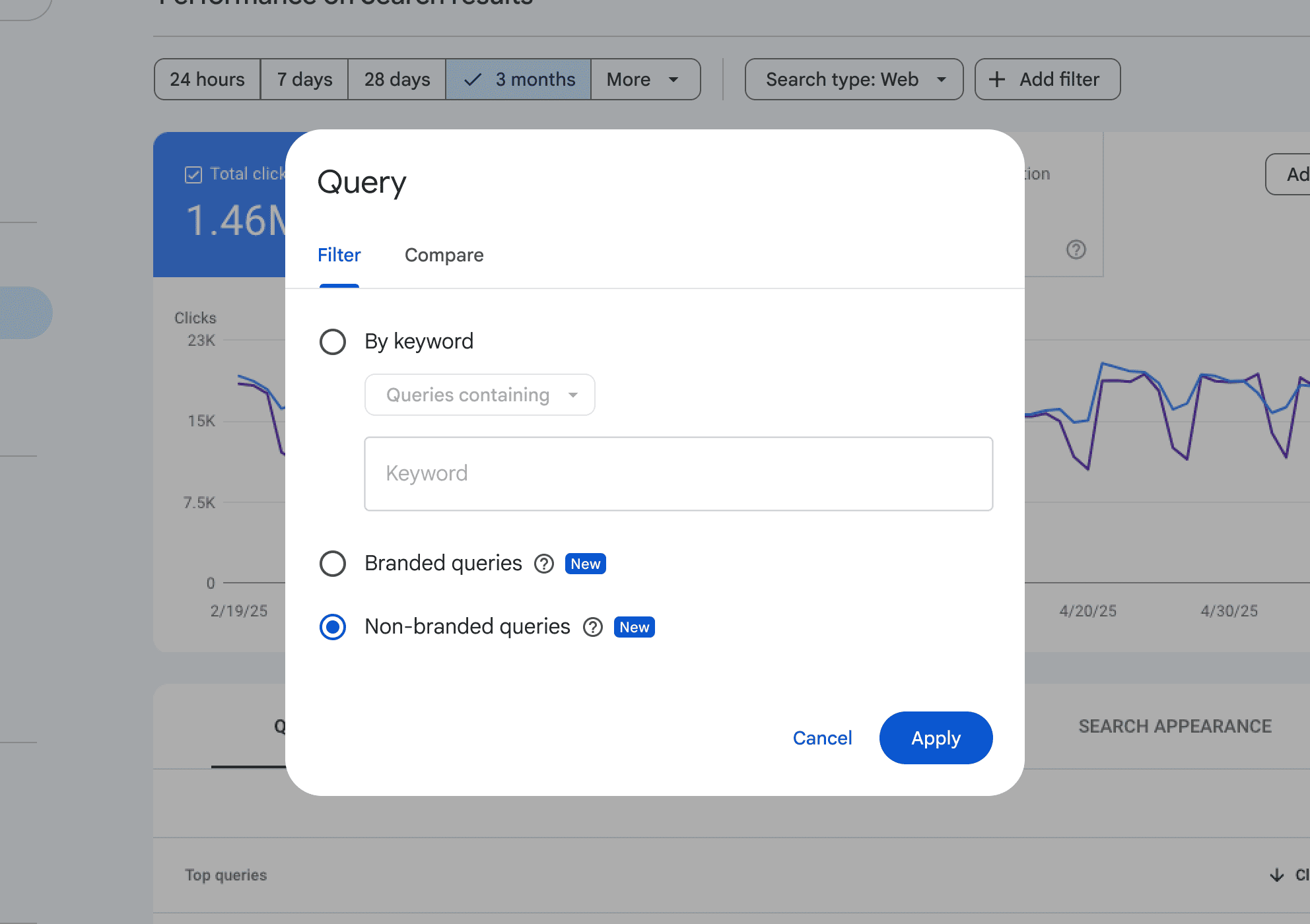
Even a slow rise in branded search volume usually means stronger brand recognition, higher trust, better recall during decision-making, etc. It won’t happen overnight, but when it’s moving at least a bit, it’s already a small win.
You can also use Google Alerts or manual checks to monitor:
- Mentions on other websites,
- References in comparison articles and other blog post types,
- Media coverage.
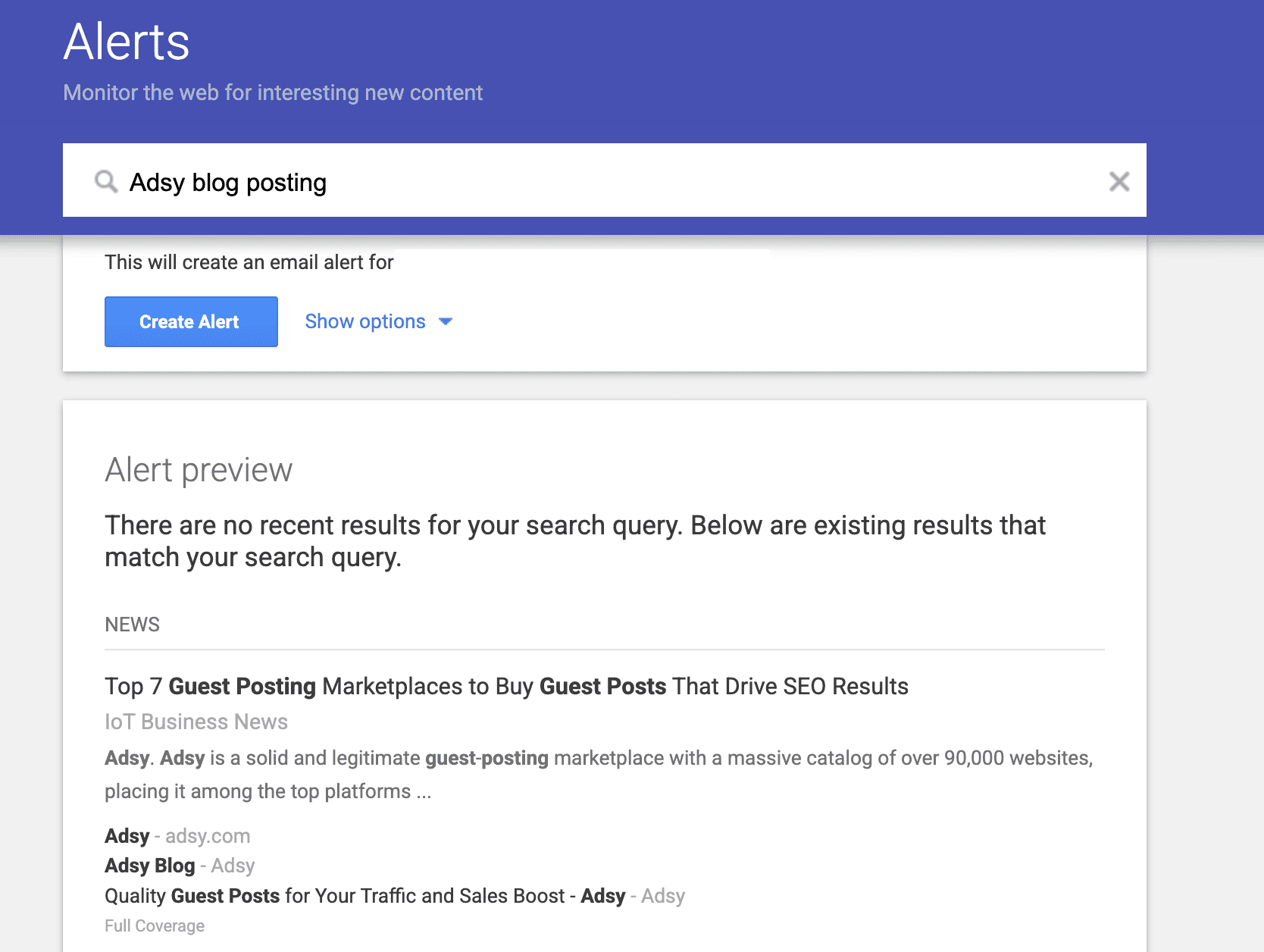
Even without links, these mentions help search engines understand your brand’s relevance and authority. More importantly, they show that people talk about your business when discussing your topic.
How long does SEO for brand awareness take?
Let’s get something out of the way: SEO branding is slow by design.
If someone promises you “visibility in 30 days,” they’re either selling ads, confusing rankings with recognition, or simply... lying.
Getting your business remembered is a lot about changing how people search, and search behavior does not change overnight.
That doesn’t mean you have to wait for ages to see any results. It just means progress looks different at each stage. Let’s take a look at 3 common stages you can expect.
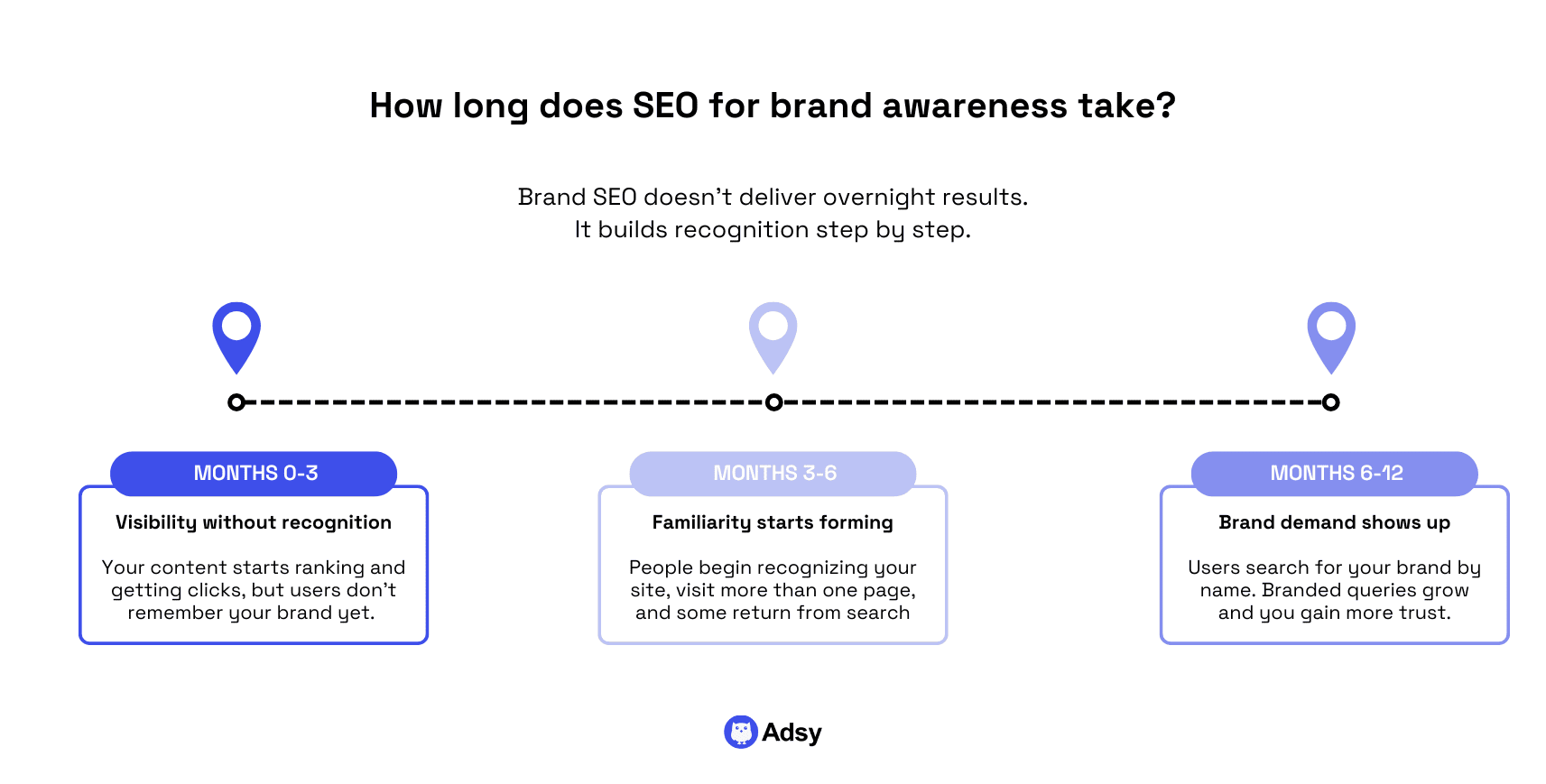
Months 0-3: Visibility without recognition
This is the phase where most people panic and assume nothing is working. But since you know it now, don't fall into the same trap.
Here, your content typically starts showing up for early-stage, non-branded queries. Impressions go up, and rankings might fluctuate. This is when you'll also normally get more traffic.
But queries that mention your business name are still ahead of you. That’s normal.
At this stage:
- People don’t remember your name yet,
- They click, read, leave, and move on,
- You are just “one of the sources.”
This phase is dedicated to the first exposure. Both people and Google are sort of testing your pages. If you quit here, you won't give your brand awareness even a chance to start growing.
Months 3-6: Familiarity forms
At this point, you will see some shifts. You might notice:
- Users visiting more than one page per session,
- A few return visitors from organic search,
- Slight improvements in click-through rates,
- Queries that include “your business name + generic terms.”
This is when users stop seeing you as “a random search result” and start recognizing you: “I’ve seen this site before.”
Branded search volume may still be small, but even a tiny upward trend here is more important than ranking jumps. It means your business is getting what you wanted: recognition.
Months 6-12: Brand demand starts showing up
Finally, you're at the point where brand SEO separates itself from classic optimization. At this stage:
- Branded searches steadily increase,
- People search your name in particular,
- You see more of “business name + product,” “business name + service,” “business name + reviews,” “business name + pricing,” etc.
The key shift here is intent.
People aren’t finding you simply because you rank well anymore. They’re looking for you. And once that happens, rankings themselves get easier. New content gains traction faster, while older pages stabilize.
Besides, Google tends to show your pages with more “confidence.” And LLMs are also more likely to reference you now. Why? Because your brand shows up everywhere AI cares.
Why does this timeline matter?
Branding efforts compound and take time. That’s why early actions don’t look that impressive on your reports, but they lay foundations that will “blossom” later.
If you judge your brand SEO by short-term traffic spikes, you will kill it before it can actually show you what it’s capable of. But if you track:
- Branded search growth,
- Repeat organic visits,
- Improved CTR, etc.
You’ll see something much more valuable: demand that belongs to you.
Conclusion
Every year, we see how SEO evolves. But we also witness how the very nature of brands and their visibility changes.
All you have to do is adapt to new rules and systems that keep appearing without forgetting the basics we’ve discussed today.
The important thing is to do that smartly. Don't expect too much too soon, and follow our timeline. You'll see that the results are slow, but actually visible over time.
And once branded demand starts forming, you will be one step closer to actually owning your search engine optimization.
All trademarks, logos, images, and materials are the property of their respective rights holders.
They are used solely for informational, analytical, and review purposes in accordance with applicable copyright law.
 Sign Up
 Sign Up