






9 Innovative Marketing Strategies That Help Brands Stand Out in Crowded Markets
Modern marketing is one of the most dynamic business disciplines that keeps evolving and progressing at an ever-increasing speed. The free market with millions of different brands, companies, enterprises, and start-ups is the main driver behind this progress.
The only problem is that each one of them wants the same — to stand out in this crowded market and to beat their rivals. How can they do that? By utilizing innovative marketing strategies that help them drive visibility, trust, attract more clients, and claim a stronger position in their niche.
Join us today as we explore nine examples of cutting-edge marketing strategies that can guarantee your brand everything mentioned above, plus a strategic advantage that competitors will struggle to challenge.
Why crowded markets punish sameness and reward distinct positioning ideas
In the environment where everyone pursues similar goals, utilizing the same methods is unlikely to guarantee the desired outcome. It’s like a car race, where everyone is driving the same car; only luck and skill can get you to the top positions.
What you need is to be constantly testing unique, innovative marketing approaches that guarantee you a competitive edge. They can be the engine behind new, winning business ideas, and an efficient utilization of your people and organizational potential.
What happens in reality, though, is that sameness is often mistaken for stability simply because it feels predictable. Defensible. Easy to justify internally.
But predictability doesn’t build preference. When brands mirror each other, customers disengage. The decision shifts from “which brand fits me” to “which is cheaper or louder.”
That’s a race few want to win.
Distinct positioning changes the dynamic. It reframes comparison before it begins. Instead of competing on checklists, brands compete on perspective.
That shift doesn’t require radical creativity. It requires discipline. And that’s what most teams overlook.
With it, three systemic transformations happen:
- Business strategy gains direction.
- Execution gains coherence.
- Growth becomes less reactive.
Crowded markets don’t reward brands that try to please everyone. They reward those who know exactly who they’re for — and communicate it consistently.
9 examples of innovative marketing strategies that help brands stand out
The theory and practice of modern marketing know hundreds of original, innovative marketing strategies that different brands try to use. However, not all of them can guarantee a good result, while some can even slow down or harm one’s business growth.
Below, we give only those strategies that have stood the test of real-world implementation across industries.
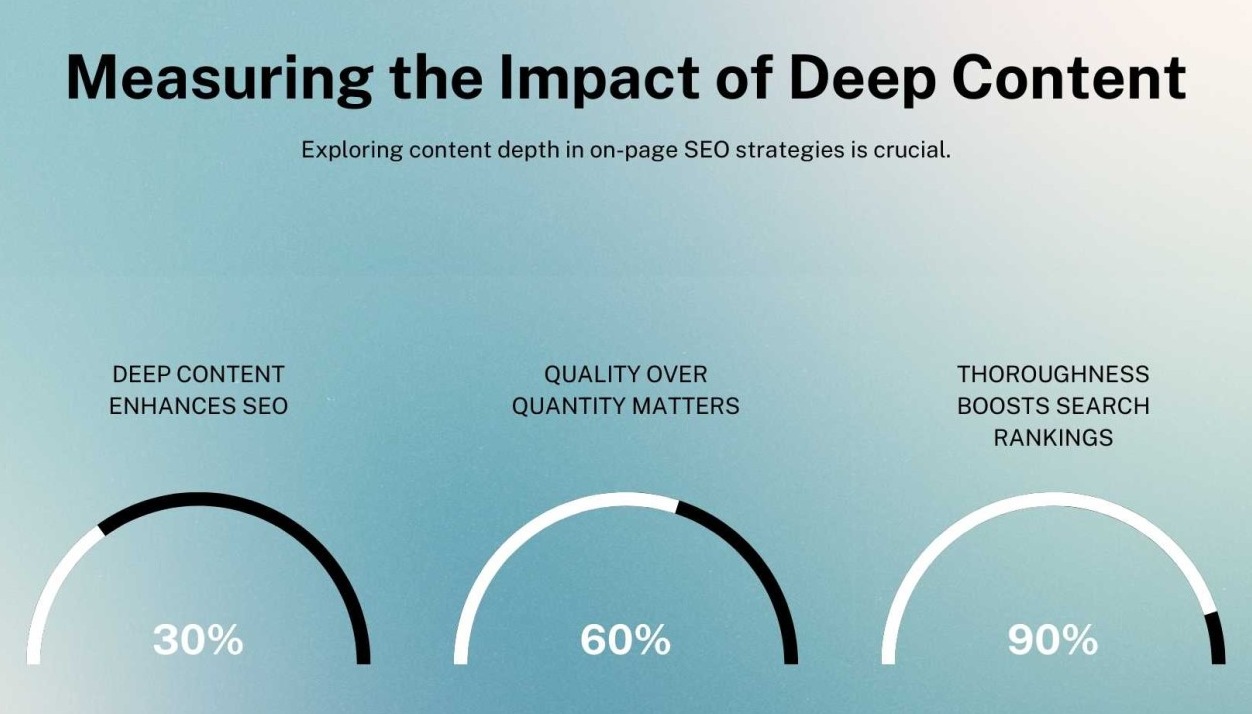
1. Human-first content that prioritizes depth over volume
Just a few decades ago, volume used to signal authority. Companies tried to produce more content and stuff it with more relevant keywords, links, and other SEO elements. Now, more content often signals repetition. It dilutes the communication focus among the already scarce customer attention.
Human-first content responds by replacing output targets with intent. Each piece exists for a reason, not a calendar slot. It also emphasizes depth over volume.
When you write for humans first, performance always improves. And with it, trust grows faster than traffic spikes. And your brand becomes harder to copy online.
What this strategy looks like in practice:
- Pick one problem and solve it fully.
- Use concrete examples, not empty slogans.
- Add something for users to hand on to (steps, templates, checklists, or mini frameworks).
- Explain “why” before pitching “what”.
- Update pages when the market shifts.
- Write like you’re talking to one smart person.
Done right, depth becomes your moat. Competitors can mimic your topic list, but they can’t easily mimic your thinking.
Source: LinkedIn
This strategy also sharpens internal thinking. Teams that write deeply are forced to clarify their own beliefs, priorities, and trade-offs. That contributes to more efficiency, better internal processes, and higher trust among copywriters, editors, content managers, and marketers.
Over time, content becomes recognizable by style and by substance. Readers know what to expect — and why it’s worth their time.
📌 The bottom line: In online markets already saturated with propositions, content depth, coupled with real usefulness and practicality, is what enables brands to stand out and to gain the upper hand among direct competitors.
2. Product-led storytelling across every touchpoint
Did you ever spend the whole evening, or even several of those, trying to find relevant product videos on YouTube, shots on Instagram, or customer reviews on large online shops? That’s very much the usual journey of every modern customer before they purchase a product.
Customers need to experience the product before buying it. They need proof coming from real users, not beautiful marketing slogans and promo videos.
Product-let storytelling is another innovative marketing strategy that brings outstanding results. Be it a microcopy inside a product interface, or a user review on Trustpilot, customers believe authentic stories more than long-form brand content.
Businesses use this strategy with great success. For example, SaaS brands increasingly replace feature lists with “day-in-the-life” product narratives, while interactive demos outperform static product descriptions in electronics and automotive industries.
This strategy works because:
- Customers trust stories that emerge from real product behavior more than marketing claims.
- Product-led stories reduce friction by showing outcomes instead of promising them.
- Users remember how a product made them feel, not how it was marketed.
One powerful tool worth highlighting within this strategy is storytelling through case studies. However, unlike with conventional website-based cases and client testimonials, cases told through product workflows perform significantly better.
Consistent narrative across multiple touchpoints, be it an ecommerce store, a social media page, or a corporate website, increases perceived coherence and generates more trust and engagement among potential buyers. It reinforces product values and communicates its features much more effectively than static product descriptions or single-channel ads.
Interactive demos and product onboarding represent some of the most promising vectors for the implementation of this strategy in the near future. Technology, for example, enables brands to create online try-on experiences and virtual tours that empower customers to experience the product before buying it.
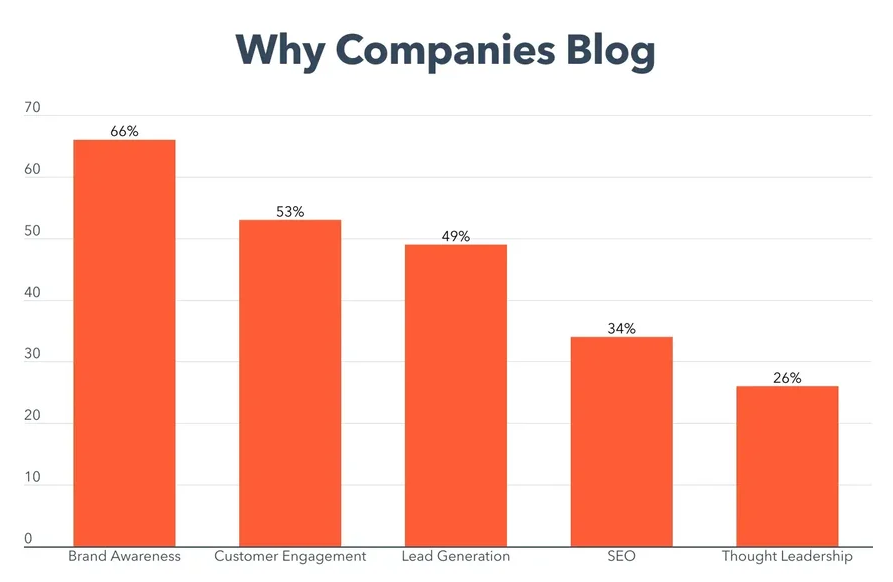
3. Blog posting integrated into a broader content distribution strategy
Most blogs aren’t ignored because they’re bad. They’re ignored because they feel and perform as temporary solutions. You publish, promote, and move on. The cycle repeats. Nothing accumulates. Nothing connects. No feedback loops, and no lessons learnt.
Integration breaks that loop.
When blog posting supports a wider distribution plan, each article has a job beyond the page itself. It becomes a building block, an important chapter in a wider content distribution framework.
That also changes how you or your writers approach their work. You focus on being useful enough that the same piece can be shared again by users who are genuinely engaged.
Source: Hubspot
This is especially important when attention is fragmented and scarce. Besides, attention span rarely exceeds a couple of minutes, sometimes, even seconds if it's social media we’re talking about. And if your post fails to capture readers’ attention from the very first paragraphs (intro), your main body, the research you’ve meticulously done, will go to waste.
Integrated blog posting into a wider content distribution strategy usually looks like this:
- Choosing helpfulness over clever phrasing.
- Aligning blog language with sales and product language.
- Sharing posts internally before promoting externally.
- Tracking which posts get reused the most.
- Improving and updating posts instead of replacing them.
So, approached with a wider content distribution strategy in mind, blog posting gains more meaning, and its impact grows. It originates with the content strategy, focuses on its goals, and then fills in the gaps in a wider content distribution roadmap.
As a result, your blog posts deliver more value to the end users, they get bookmarked, and shared more often.
📌 The bottom line: When blog posting becomes an integral part of your broader marketing communication strategy, it gains more weight and brings better results, as frequently seen in customer behavior metrics and marketing KPIs.
4. Search visibility optimized for AI-generated answers
AI-generated answers, such as AI Overviews in Google, perfectly match the laziness of modern search behavior. You see one seemingly complete and clear answer on top of the regular search results, and you tend to trust it.
Innovation? More of a consequence of search engines optimizing for speed and convenience.
AI compresses several sources into one coherent answer, which addresses the user's question directly and holistically. Companies now fight for a spot in AI-generated answers. Here is what they do, what AI search algorithms like:
- Explanatory and educational content, instead of promotional.
- Reliance on entities (names, places, contact information, brands, etc.).
- Clarity of information, which matters more than keyword placement.
- Explicit answers to “what,” “why,” and “how” questions.
- Content optimized for long-tail, conversational queries.
- Consistent terminology and clear definitions.
If you are one of those brands that want increased visibility in the AI-driven search environment, you must do some on-page optimization of your existing content. For instance:
- Refine headings and descriptions to match real user queries.
- Make lists and step-by-step breakdowns.
- Use short paragraphs.
- Reduced reliance on metaphors and vague phrasing.
Additionally, this marketing strategy implies the use of consistent brand mentions across various communication channels, industry terminology (but don’t overdo it to avoid deterring casual users), and frequent content updates.
📌 The bottom line: This strategy is one of the most dynamically developing ones, as it gets influenced by the pace of modern technological development, particularly in the AI field. It reflects how users search and tries to accurately address their pain points and concerns.
5. Authority building through expert collaborations
Our fifth strategy focuses on authority building; however, this time, not through content or storytelling, but collaborations with experts in a given field.
Expert authority is a capital that can either be built domestically from scratch, by training your in-house expertise and popularizing it via different communication channels, or be harnessed elsewhere.
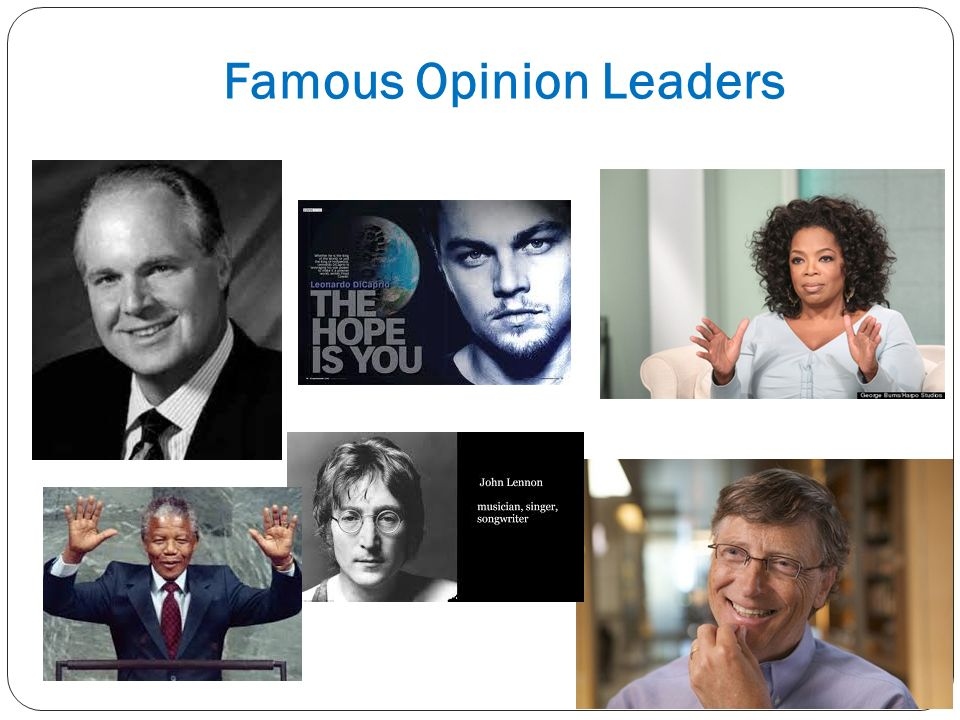
The web is full of independent or associate experts who are true opinion leaders in their respective fields. They can be innovators, bloggers, scientists, reviewers with millions of subscribers, and others who already enjoy volumes of attention and respect from their audiences.
Source: WordPress
Why not tap into their authority and, by doing so, give your own business/brand a boost?
Some of the most effective tactics include:
- Co-creating content with recognized industry specialists.
- Hosting joint webinars, podcasts, or live sessions.
- Publishing expert-led case studies or research summaries.
- Inviting experts to review or validate your product approach.
- Participating in expert-led communities and panels.
This strategy requires time and dedication. It’s far from being an effective one-time activity that brings magic results. Instead, you need to research and cherry-pick the most influential experts and develop a solid collaboration and communication strategy for how to work with them. This usually requires:
- Starting an expert collaboration project with dedicated internal employees.
- Finding and shortlisting relevant candidates.
- Preparing a communication plan.
- Pitching your collaboration ideas.
- Executing your collaboration strategy.
- Following up and evaluating collaboration results on a regular basis.
📌 The bottom line: Expert collaboration gives your brand a competitive advantage in leveraging authority that is literally waiting to be harnessed. It’s a mutually beneficial activity where your brand gains higher visibility and trust, while experts benefit from exposure to your products and services, giving them content to carry on their activities.
6. Personalization powered by behavioral signals
Personalization has become a buzzword, and for that or another reason, it is often underestimated.
Change the name in an email. Swap a banner. Adjust a headline. These gestures look personalized, but they rarely change how users behave or decide.
Real personalization starts with behavior.
Behavioral signals tell you what people actually do, not what they say they want. Pages they return to. Features they ignore. Actions they repeat. The friction they encounter.
Unlike demographic assumptions, these signals evolve in real time. They reflect intent, hesitation, curiosity, and readiness far more accurately than static profiles ever could.
This makes behavioral personalization slower to set up, but more reliable in the long run. It also requires you to analyze massive amounts of data — something you cannot do without modern IT tools, particularly the ones powered by AI. For example:
- Google Analytics (GA4) — a free-to-use tool that tracks user behavior across pages. Can be programmed to analyze conversion paths and product features (e.g., for SaaS).
- Amplitude — great for behavioral cohorts, product usage patterns, and feature adoption tracking and analysis.
- Hotjar — tracks & identifies interaction patterns and visualizes user behavior through heatmaps.
With these tools, instead of guessing, you observe patterns and respond to them. Instead of segmenting audiences upfront, you let actions shape the experience in real time.
The challenge isn’t collecting data. It’s knowing what to do with it.
Many brands accumulate signals without turning them into decisions and practical solutions. Personalization becomes reactive instead of intentional.
Effective personalization requires restraint. You don’t act on every signal. You choose the ones that indicate momentum or hesitation. When done well, personalization feels invisible. Users don’t notice customization. They notice that things make sense.
Supporting this approach doesn’t require complexity, but it does require discipline. The right tools help interpret behavior, but judgment determines what changes are worth making.
7. Multi-format content reuse across search, social, and AI platforms
Curious fact: attention span has been diminishing ever since the Internet came to be. In the 90s, we were surprised to see attention span dropping to a few minutes; however, with the advent of social media, we often hear that readers get bored after only a few seconds of holding their eyes on a piece of content.
That’s why today, most understanding forms over time, through repeated exposure in different forms. This very reality makes single-format content fragile, while a multi-format reuse gives ideas a chance to settle.
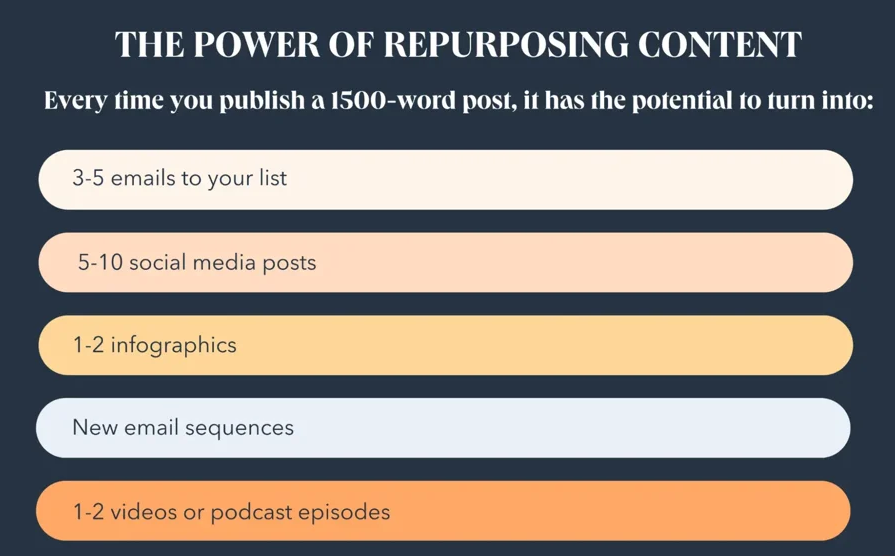
Source: Hubspot
When one piece of content exists in several forms, it stops relying on perfect timing. Someone might miss the article but see the short version. Or see an AI-generated summary first and look for the source later.
The idea survives either way.
This changes how content is written. Instead of chasing clever phrasing, teams focus on helpfulness. Instead of cramming everything into one place, often with endless footnotes and references, they let the idea breathe across formats.
As a result, instead of constantly announcing something new, the brand becomes familiar. And in digital marketing, familiarity lowers resistance. People trust what they recognize.
Modern AI systems reflect that behavior. They surface what appears repeatedly and clearly across channels. Google tends to favor repeated information in its AI Overviews, ChatGPT, and other large language models, consistently scan the web for information about entities (e.g., product and brand names, founder information, location, etc.), and they also tend to prioritize brands that succeed in this domain in their answers.
Welcome, Generative Engine Optimization, or GEO! This is when optimizing for generative engines becomes the key to driving online visibility.
📌 The bottom line: Reuse doesn’t guarantee visibility. But it increases the chances that when your idea appears — in search, in social, or in an AI-generated answer — it looks like the same idea.
8. Trust signals embedded directly into conversion paths
Conversion paths are built with efficiency in mind. They emphasize buttons, forms, and steps. Dry and emotionless. In this scheme, trust is often treated as something that happens elsewhere.
That separation creates problems. In an average conversion path, there is simply no room for building trust. It has been made redundant for no apparent reason.
Embedding trust signals directly into the conversion path solves the main problem: uncertainty. Instead of adding new messages, you reinforce existing ones. Instead of persuading, you confirm.
This works best when trust signals mirror what the user has already seen. And, in practice, such a reinforcement can take many forms:
- Clear next-step descriptions with visual continuity.
- Familiar language carried through the conversion path.
- Subtle confirmation messages (on page or in-app).
- Immediate feedback after actions.
What matters most is continuity. Users shouldn’t feel like they’re entering a new environment when they move closer to conversion. When trust signals are embedded properly, conversion paths feel engaging. There is no need for detours to bring users where motivation and engagement live.
This matters even more when traffic comes from a marketing campaign that promises one thing and delivers another. Embedded trust signals close that gap.
Trust has a very interesting peculiarity: once established, it lasts, no matter the circumstances and turbulence. It’s not everlasting, but it has a certain amount of resilience. You should strive to achieve that kind of resilient trust in your customer conversion paths that can withstand the moves from your competitors.
📌 The bottom line: Trust likes supple environments, like a spooky wish likes slow-flowing waters. If users remember being reassured, something probably went wrong. The best trust signals disappear into the flow.
9. Feedback loops that turn customer behavior into strategy updates
Customer research can also be done more proactively than just analyzing customer behavior online. The approach is called feedback loops, and that's our final marketing strategy in this post.
Innovative brands proactively collect customer information. By encouraging customers to leave comments and write reviews, they get feedback on their products and services.
The key here is honesty, as flattering and overly positive feedback don’t bring much value. Instead, open and timely feedback provides valuable information that is used to support marketing strategy and make offers better.
Here are several ways you can leverage feedback loops in your marketing today:
- Create a customer review section on your website or online store and encourage customers to leave honest feedback.
- Collect and analyze customer opinions via surveys and polls (use Survey Monkey, Qualtrics, or other self-management tools for efficiency).
- Track customer reviews and respond promptly on popular e-commerce platforms such as Amazon, eBay, and Etsy.
- Monitor and analyze customer sentiment on social media (e.g., every time they mention your brand or products).
Particularly useful in this respect is the so-called user-generated content or UGC. It’s the content (usually, videos) that users make themselves, where they review your products and services and speak frankly about their experiences with them. In such videos, you can find plenty of great ideas on how to improve your branding, marketing, concrete products, and their features.
Conclusion
The nine innovative marketing strategies reviewed today have proven effective over time across multiple brands and in different markets.
Theoretically, you can try to use them all, but a better approach is to take one or two steps at a time to ultimately arrive at your ideal mix of techniques that will guarantee your brand a clear differentiation that will hold up over time.
Furthermore, no strategy these days can stay static for long. Well, it can, but it won’t survive the competitive pressure where others constantly experiment and improve their marketing approaches.
So should your strategies, no matter how effective today, constantly evolve and utilize market (particularly, customer feedback) data to get better and more efficient. What works today might not be as potent tomorrow, and vice versa; what seems like a crazy idea today may become the next competitive baseline.
FAQ
What is an innovative marketing strategy?
An innovative marketing strategy is a marketing strategy that breaks the limits of traditional marketing strategies and proposes something new and unique. Such strategies usually solve nascent customer problems and utilize the new technologies (e.g., AI and big data) and relevant tools to deliver results.
What are the 4 main innovation strategies?
The four main types of innovation strategies are disruptive, incremental, architectural, and radical. Each offers unique instruments and a path to achieving business results. Disruptive innovation breaks the established rules. An incremental innovation strategy takes a slower, steadier approach and is usually less shock-like for customers and society.
Architectural innovation utilizes existing technologies, whereas radical innovation develops completely new technology to create a brand-new industry.
What is the 3-3-3 rule for marketing?
The 3-3-3 rule for marketing is a known simplification approach. It stipulates focusing your resources and efforts on developing 3 core brand messages, aiming them at 3 core audience segments, and doing so through 3 core distribution channels. Instead of doing everything for everyone and spreading your resources too thin, this framework helps to focus on specific targets and achieve goals faster and more efficiently.
What are the 7 C's of innovation?
To create an environment in which new ideas can thrive, marketers came up with the strategic framework called the 7 C’s of innovation. While slight variations are possible in specific ingredients, the commonly accepted ones include Curiosity, Courage, Connection, Creativity, Commitment, Collaboration, and Celebration. Essentially, these are values that can be effectively integrated into business culture to produce sustainable results and consistently drive new discoveries and novel approaches.
All trademarks, logos, images, and materials are the property of their respective rights holders.
They are used solely for informational, analytical, and review purposes in accordance with applicable copyright law.



 Sign Up
 Sign Up