






SEO Services Pricing Explained: What You Really Pay For

It seems as if SEO has been around for ages; it’s definitely not a new type of marketing service. Yet, its pricing often gets misunderstood, with many clients bouncing from one SEO provider to another, looking for lower rates, often ignoring how SEO costs reflect scope, expertise, and risk.
Understanding what you pay for is a key success factor in SEO. One should only look at SEO services pricing from the perspective of utility and long-term gains. Jumping into hectic conclusions based on the first look at an SEO pricelist leaves little room to evaluate value, accountability, and impact.
Today, we invite you to take a holistic look at SEO pricing theory and practice. The goal is to help you evaluate SEO services based on value rather than price alone, and separate meaningful SEO investments from empty promises.
What SEO services pricing really means
Before diving into practicalities, let’s align on the basics of SEO services pricing. Specifically, what's the difference between SEO costs and pricing, and why treating SEO services as a fixed product can be a flawed approach?
SEO pricing vs SEO costs: understanding the difference
Contrary to the popular misconception, pricing and cost are not the same. There are like two levels of a concept: one is shallow or superficial, and the other is much deeper, the real one.
SEO pricing answers the polite question: “What does this cost?” SEO costs answer the uncomfortable one: “What will this take?” The cost stipulates all expenses, including time, man-hours/expert hours, organizational efforts, etc. It’s easy to say that a service’s price is this one, but the real cost is often hidden from an amateur’s eye.
The real difference between prices and costs is that the former are predictable, while the latter are not. Costs respond to things nobody fully sees at the start, like buried technical issues or competitors who suddenly wake up. That’s where expectations quietly drift off course.
SEO costs usually grow or shrink based on:
- How solid the technical foundation really is.
- How aggressive competitors decide to be.
- How much content needs serious work.
- How hard it is to earn trust and links.
- How often tactics need to change.
Pricing is just a frame, a general guideline that is always lower than the cost. It’s a maxim that all SEO practitioners should know. Neglect that rule, and expectations will artificially inflate, patience will shrink, and progress will suddenly feel slower than it actually is.
⚖️ The bottom line: Understanding the gap between pricing and cost makes SEO easier to judge. It stops being about “cheap or expensive” and starts being about “realistic or not.”
Why SEO is a service, not a fixed product
The idea of SEO as a fixed product is appealing. Buy it, apply it, and move on. Unfortunately, search visibility does not cooperate with that mindset.
And often, the culprit here is also a price tag, or a superficial judgment of SEO by a mere price list. The problem is that a price list makes SEO look finished before it even starts. It suggests that the work can be defined fully upfront. In practice, half of the real work only appears after execution begins.
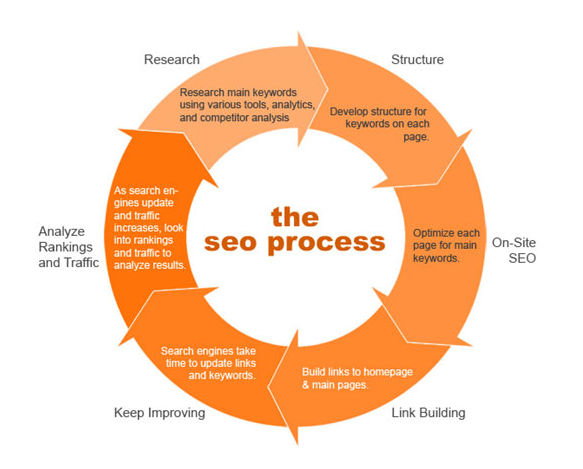
An SEO campaign is closer to ongoing maintenance than delivery. It changes as new data arrives and as competition reacts. It's a process, a live system that reacts to the signals from the inside (market and competitors) and outside (organization, business, and people) worlds.
Source: Moz
SEO behaves like a service because:
- Rankings respond slowly and unevenly; sometimes, more time passes before they respond than it took to make a relevant action.
- Competitors frequently change direction, and you cannot predict their moves.
- Content needs iteration, e.g., guest posting, and social media management campaigns require constant work and updates.
When SEO is treated like a product, patience wears thin. Adjustments are seen as problems instead of progress.
📌 The bottom line: SEO needs room to adapt. Both from organizational and time perspectives. A service mindset gives it that room.
Core factors that shape SEO rates
For similarly comparable SEO tasks, two clients may get totally different price estimates. Why is that? Let’s find out together.
In this chapter, we’ll look at the core factors that impact the initial SEO pricelist and help you answer the key question: “How much does SEO cost for your specific business task?”
Website size, structure, and technical condition
Websites are the key clients of SEO services, yet a typical website's condition is rarely obvious from the outside. A site can look clean and still be fragile underneath. Even the owner and technical staff may not know/understand that, but a good SEO has a way of uncovering that fragility early.
Size influences scale, structure influences clarity, and technical condition influences speed. Together, they decide how much preparation is needed before any optimization pays off. That preparation is where time quietly accumulates.
For these reasons, many SEO projects begin with discovery (an SEO audit) rather than execution. Once the real state of the site is known, expectations adjust, and so does SEO services pricing.
Website-related effort depends on many factors, but most often on the following five
- Total number of templates and pages.
- Structural consistency.
- Technical errors and warnings.
- Ease of making changes.
- Overall platform health.
This does not mean something is wrong. It means the site has a history, and it's complex (most of the sites out there are).
⚖️ The bottom line: SEO prices are often shaped by how much work a website needs before SEO produces visible, tangible results like a traffic boost and rankings growth.
Industry competition and keyword difficulty
Some industries are quiet. Others are loud, crowded, and very protective of their rankings. SEO behaves differently in each case, even when the task looks similar on paper.
In other words, it's easier to do SEO for a client that operates in a low-competitive market environment (e.g., custom fishing rods manufacturers) than for one in a really intense competition (e.g., solar panels producers).
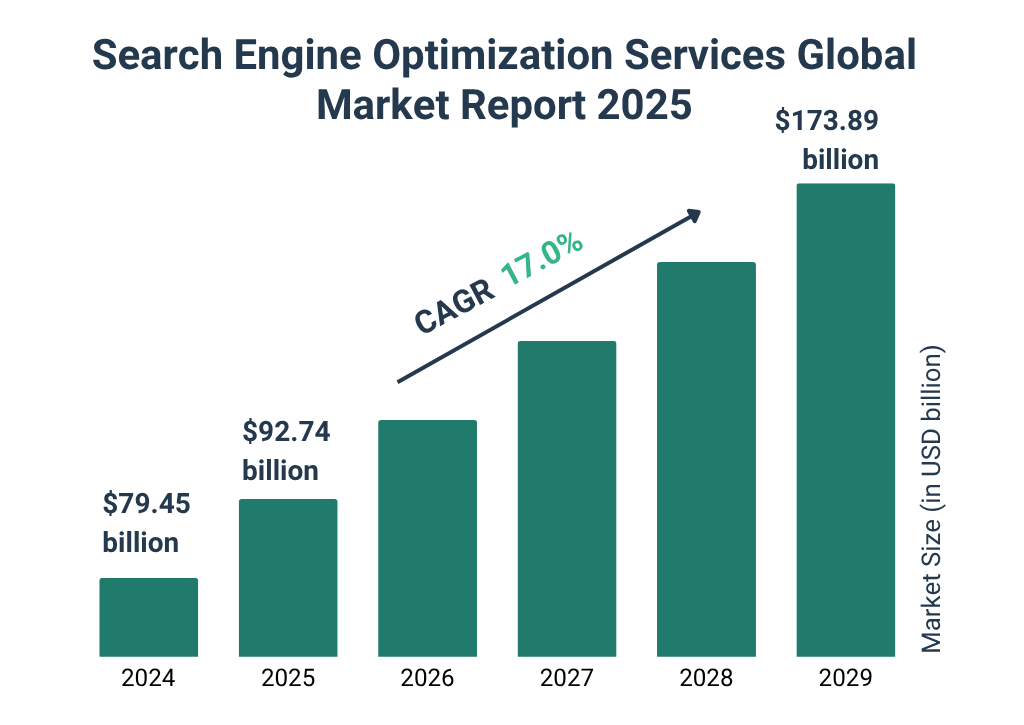
Competition changes the rules immediately. Ranking a page where nobody is actively defending positions is one thing; breaking into a space where dozens of strong sites fight for the same keywords is another. And the SEO market is only expected to grow in the coming years (from $29 billion in 2025 to $174 in 2029), so the competition will follow:
Source: Businessresearchcompany
Keyword difficulty adds another layer. Some keywords look attractive but are surrounded by entrenched players with years of content and authority behind them. Competing there is more expensive, and is less about optimization and more about persistence.
Industry pressure usually shows up through:
- Number of strong competitors in the top SERP results.
- Authority level of ranking domains.
- Depth and quality of existing content.
- The speed at which competitors react.
This is why SEO estimates vary so widely between niches. The same work applied in different environments produces very different outcomes and costs.
Business goals and growth timelines
SEO does not exist in a vacuum; it usually follows the business type, its capabilities (organizational and human), ambitions, goals, and even growth stage. Experts in the field often like to say that search engine optimization is tied directly to what a business wants to achieve and when it wants to achieve it. That holistic perspective totally transforms every SEO decision.
For example, long-term goals give SEO room to mature. Short-term goals force it to prioritize speed over depth. Both approaches have consequences, and both require informed decision-making.
When timelines are tight, SEO work becomes more intensive. When timelines are flexible, it becomes more strategic. The difference is felt almost immediately, and it continues to resonate in the long term.
Business expectations usually shape SEO through several factors, including urgency of results, investment horizon, risk tolerance, and willingness to iterate on what works well.
This dynamic is most common for small business, where timelines are often dictated by cash flow rather than strategy. Small businesses and startups are characterized by agile marketing approaches and a willingness to fight over the cost of every small SEO action on an overall roadmap.
📌 The bottom line: In practice, SEO pricing reflects how much pressure the business and its timelines place on the process. A good SEO vendor would listen to your business priorities and present the weighted cost estimate at the first or second team meeting (project kick-off).
Geographic scope: local, national, or global SEO
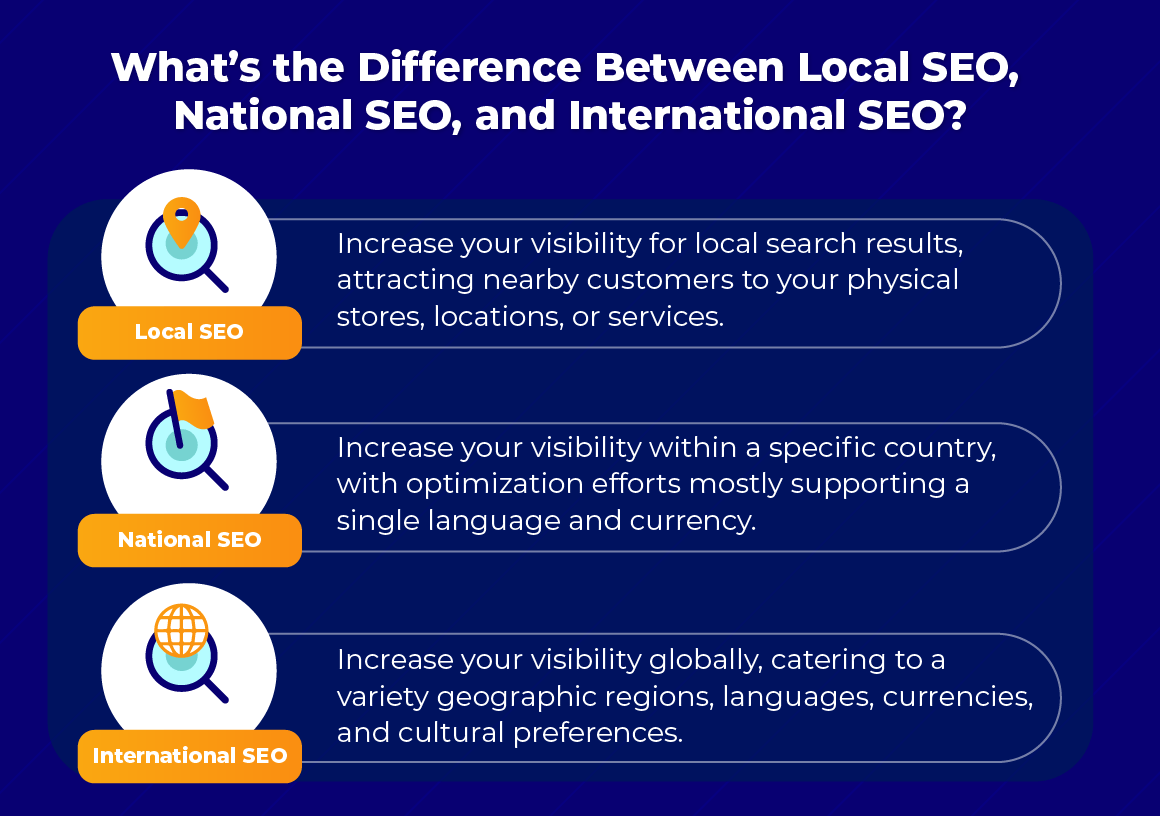
The price of the SEO service you buy is also highly susceptible to optimization reach. One thing is, when you order a local SEO optimization for your ecommerce business, that only spreads its operations across a local community, or a geographic area like a town or a small rural area. But it's totally a different thing when the reach of your operations is measured in continents or even globally.
In the latter case, the SEO work will need to take multiple cultures, languages, and even religions into account. All these things matter for SEO, and they surely affect the final service cost when done properly.
Source: Breaktheweb
Once SEO crosses borders, assumptions stop holding. The same wording, messaging, or structure can behave very differently depending on location.
Geographic reach usually adds work through:
- Separate intent patterns.
- Localized trust signals.
- Increased number of regional competitors.
- Market-specific content needs (copy localization & translation).
- Multiple performance benchmarks.
This is not about doing more SEO, but doing it differently in each place. The effort spreads rather than stacks. Your project will require more SEO specialists, more content creators, marketers, etc. Also, the number of SEO tools used and relevant budget expenses will likely increase.
As a result, an SEO pricelist becomes a rough orientation tool. The actual workload depends on how many markets must be aligned.
Common SEO pricing models explained
When you compare the prices of SEO services on several providers’ websites, you’ll most likely be confused by a variety of approaches. Some give hourly rates, some charge based on performance, while others present SEO services as discrete projects with exact prices to be negotiated.
This chapter will be your price guide to various SEO pricing models offered by agencies. Once the logic behind these models is clear, the price differences will start to make more sense to you.
Hourly SEO consulting rates
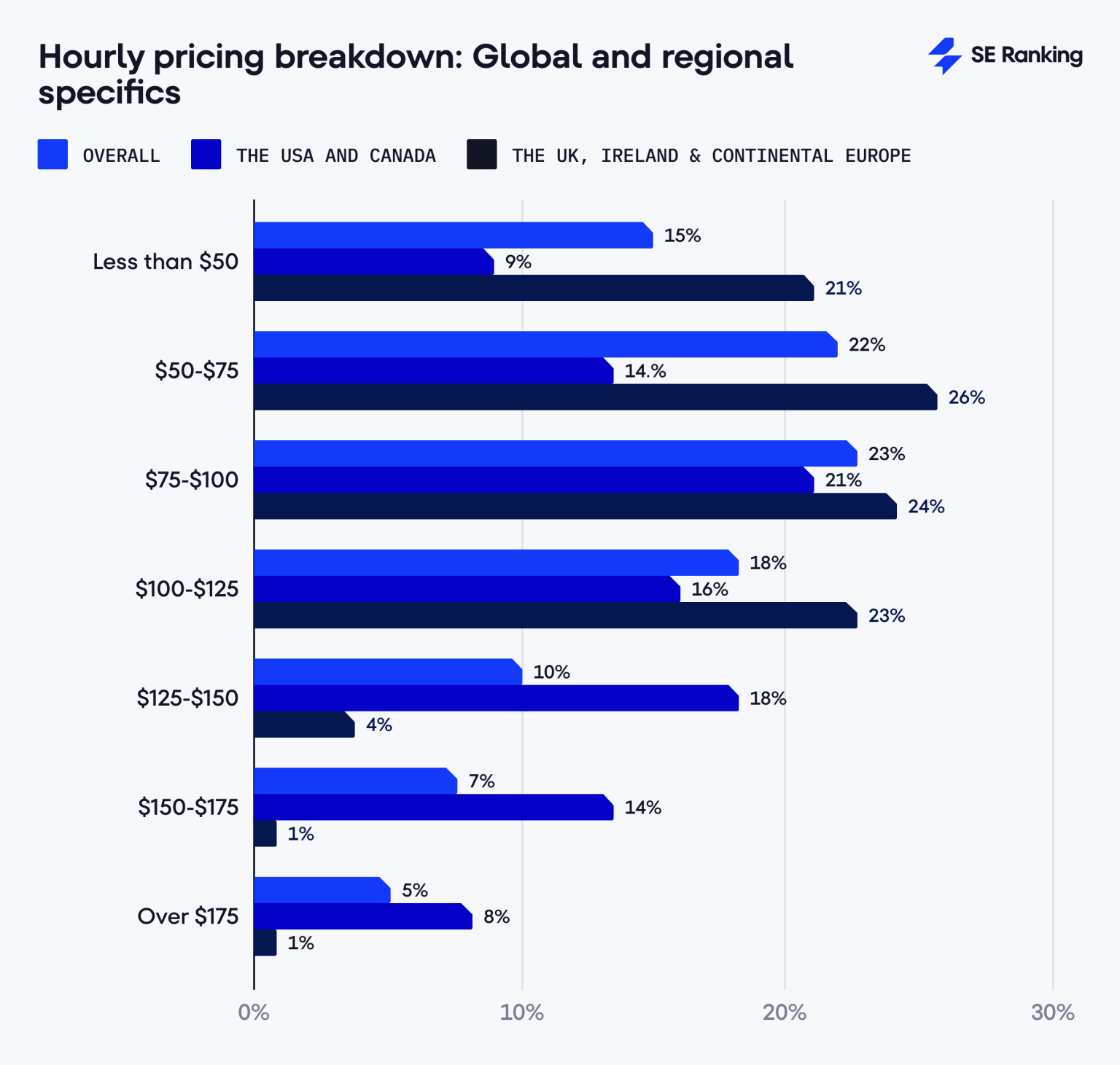
Hourly SEO consulting rates usually attract people who are tired. Not physically tired, but mentally exhausted from reading SEO advice that confidently contradicts itself. One article says “do this immediately,” another says “never do this,” and suddenly SEO feels less like marketing and more like astrology.
Jokes apart, this model turns SEO into something closer to therapy than marketing. You bring your worries, your graphs, your screenshots, and your assumptions. The consultant listens, nods, and then starts removing illusions one by one. Sometimes gently. Sometimes not.
The awkward question is always how much clarity an hour should deliver. That question sounds reasonable until you realize clarity doesn’t scale neatly. You can’t order it like coffee. One hour might produce relief, another might produce the uncomfortable realization that a whole strategy was built on a false premise.
As Keynes famously said, “When the facts change, I change my mind. What do you do, sir?”
A common case is internal teams arguing over which SEO tool is “right.” An hour later, everyone agrees the tools were fine, and the interpretation was the issue. No rankings moved. Everything still improved.
📌 The bottom line: The hourly rate model is powerful in short bursts. Stretch it too long, and it becomes expensive thinking with no execution attached.
Source: SEranking
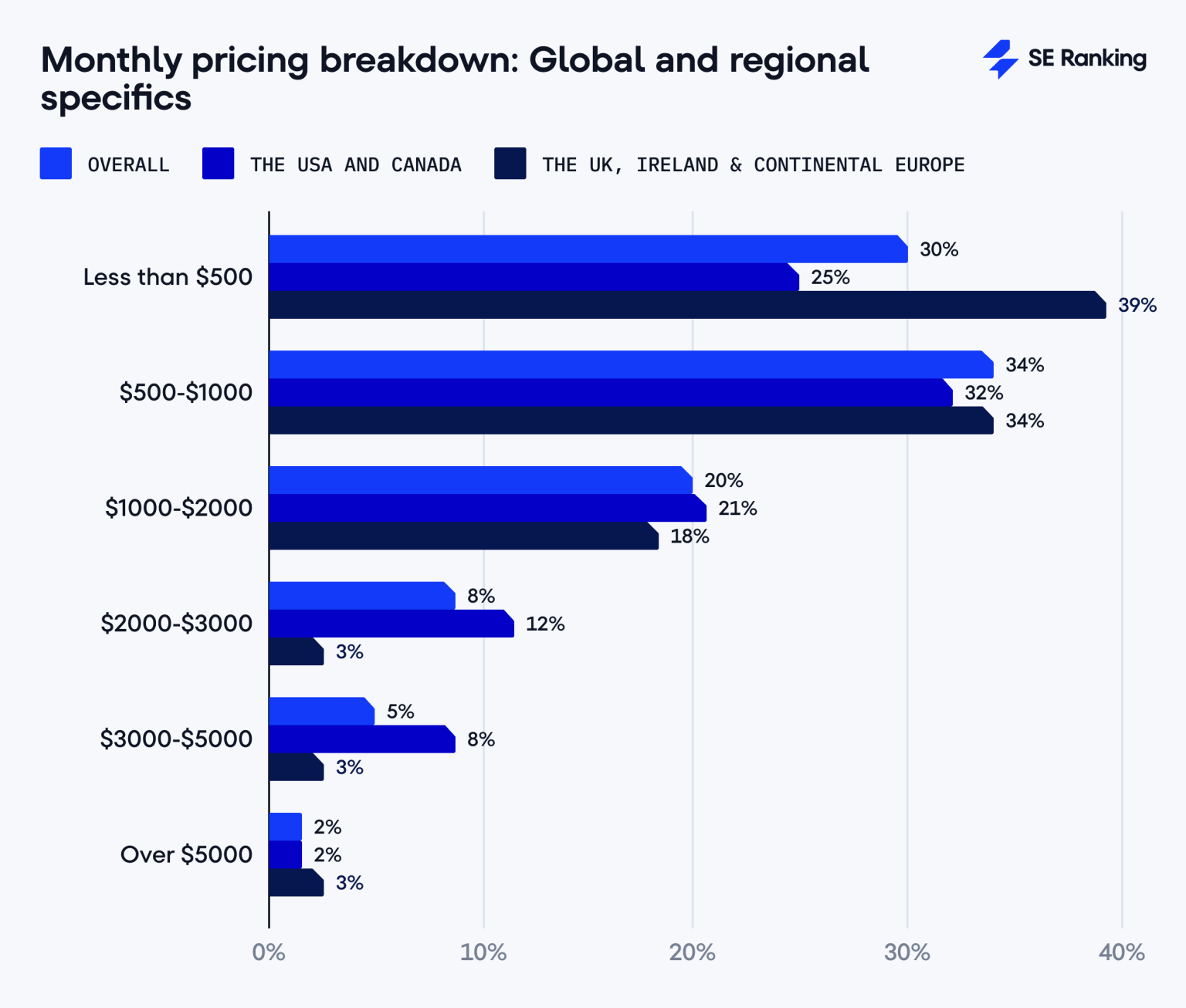
Monthly retainer pricing
Monthly retainer pricing assumes one thing upfront: SEO will need attention next month, too. That may sound obvious, but many pricing models ignore this aspect. Retainers don’t.
Instead of locking work into a rigid scope, this model allows priorities to move. It's one of the most flexible pricing models there is, and that's its biggest pro. With SEO, what mattered last month might not matter now. But under a monthly retainer pricing model, SEO adapts better when it’s allowed to do that.
A retainer usually covers things like:
- Fixing issues as they appear.
- Watching what competitors are doing.
- Adjusting strategy without renegotiation.
This model doesn’t rush, but it’s progress-friendly, so to speak. On an SEO pricelist, retainers often look too simple. One line, one price, no apparent guarantees. But that superficial simplicity often hides the true value of this approach — ongoing judgment and flexibility.
Source: SErankiing
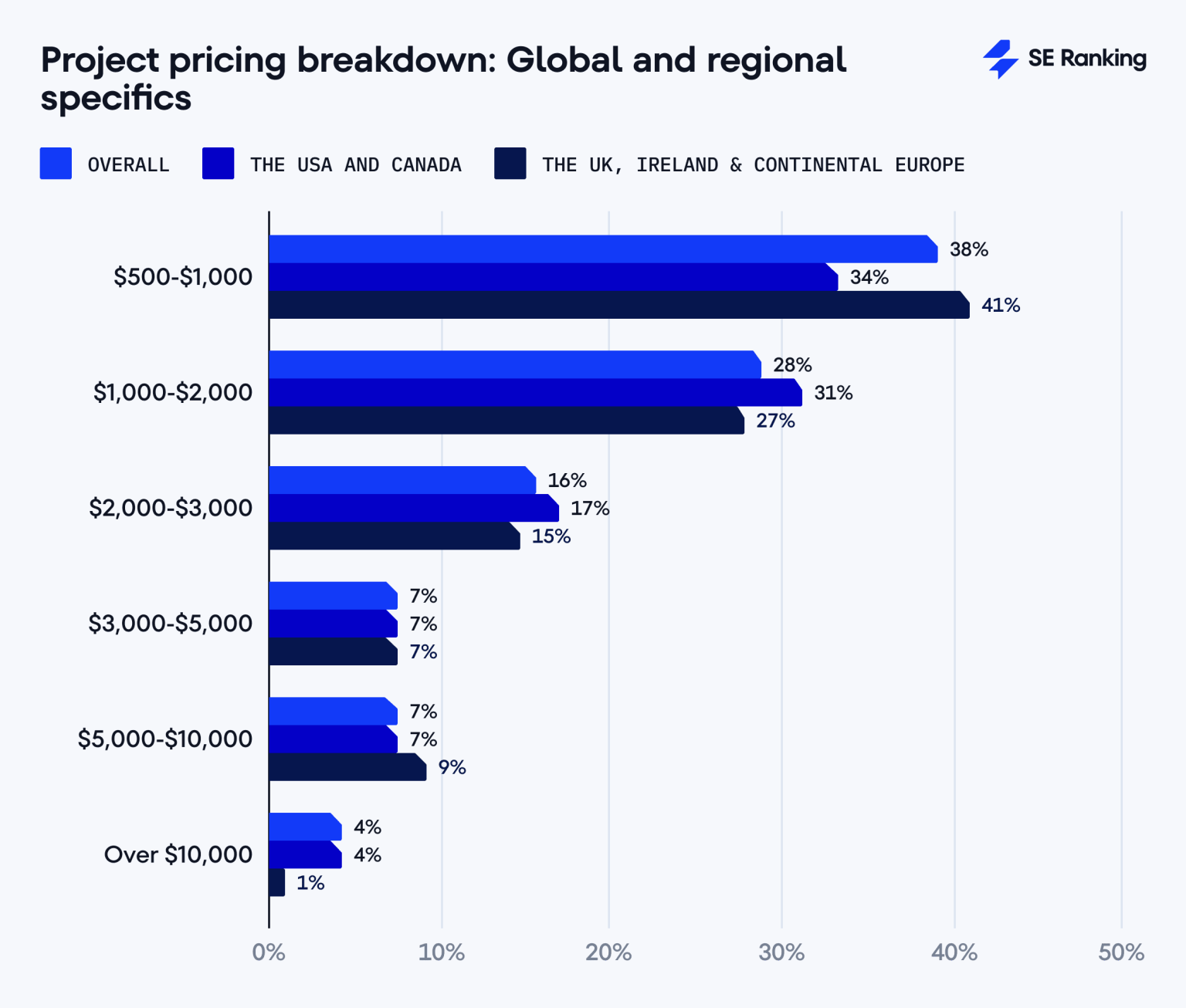
Project-based SEO pricing
Project-based SEO pricing is ideal for those who prefer full control over the service execution. When the problem is already understood, you deploy an SEO project team to find solutions and solve it. You know what needs attention and why, and you just want it handled properly. There’s little room for exploration here, by design.
The catch is that SEO projects rarely solve everything. They solve one problem, often an important one, but still just one. A project can clean things up, prepare the ground, or point out what’s broken, without guaranteeing what happens afterward.
Project-based SEO usually covers discrete work such as:
- Technical audits and diagnostics.
- Website migrations or redesign support.
- One-time cleanup of indexing issues.
- Initial, one-time optimization before a launch.
- Strategic reviews with clear recommendations.
It’s a good model when you want to save money, try something new, or test a particular SEO services provider. Without committing to a long-term collaboration, you hire their consultants to do a short-term project. If successful, it may turn into a full-fledged and ongoing SEO service. If not, it’s not a big deal; you didn’t spend much anyway.
Because the scope is fixed, responsibility is narrow. A specialist is brought in to handle a defined task, not to stay and adapt as conditions change. That’s why an SEO pricelist looks neat in this model. One price, one outcome, no ambiguity.
Source: SEranking
Performance-based and hybrid models
Performance-based SEO sounds like the fairest deal imaginable, especially to someone who has been burned before. Pay for results, not promises. It’s an attractive idea, mostly because it feels like it removes risk.
The problem is that SEO risks are hard to evade. They are always part of the game, as competitors make their unpredictable moves, markets fluctuate, and technologies shift at unprecedented speed.
Nevertheless, a performance-based SEO model always tries to mitigate risks by relying on:
- Clearly defined metrics.
- Long evaluation windows.
- Narrow keyword sets.
- Limited scope of responsibility.
These constraints exist for a reason. In most cases, this safety mechanism should work. However, sometimes it simply delays uncomfortable conversations.
Hybrid models step in when reality intrudes. They acknowledge that SEO requires investment before results show up, while still rewarding visible success. It’s less idealistic and more survivable.
A hybrid approach usually combines:
- Performance-linked incentives.
- Conservative metrics.
- Longer time horizons.
- Room to adapt.
This approach usually involves a base fee to cover ongoing work, making SEO collaboration more forgiving but also more demanding in terms of communication. Everyone needs to understand what success actually looks like, and that requires ongoing dialogue and finding a consensus.
At larger levels, where enterprise SEO cost becomes material, performance and hybrid models demand discipline and trust. Without that, pricing discussions become louder than the work itself.
What you’re actually paying for in SEO services
To use SEO services more efficiently, it helps to understand that SEO is not a holistic, fixed service, but one made up of several components. You can add and subtract different components based on your needs and budgets.
The exact market rate for each service will always be different, but knowing that you can assemble your unique set should give you confidence and the will to experiment until you find your ideal SEO bundle.
Research, audits, and strategic planning
Research, audits, and strategic planning — the three elephants that hold SEO on its feet. If you want to do SEO from ground zero, the combination of all three is the way to go. But if you need a targeted, well-calculated intervention (which your current optimization practice lacks), pick just one or two, and you’ll close your SEO gaps.
Research
Research is a slightly boring stage where SEO is decided before it is executed. It looks at what the audience actually wants, not what a business hopes they want. It also checks competitors and shows what the current “minimum standard” is in the search results. If that standard is high, research tells you early, before money is spent on content that will never compete.
This is one reason SEO services pricing can differ so much: one provider can deliver you quality analytics with actionable recommendations, while another just gives plenty of raw data/information and leaves it up to you to infer what it means.
Audits
Audits show what is broken, what is weak, and what might be holding the site back. This includes technical accessibility, indexing issues, content duplication, internal linking confusion, and a dozen other things people don’t notice until a crawler notices them.
The danger of audits is turning them into a document nobody uses. The point is not to collect issues; it’s to identify blockers as a routine process and rank them in a way that makes execution possible.
Strategic planning
Strategic planning is often regarded as the missing part between research/audits and action. It takes an experienced SEO consultant (better yet, a team of those) to tell you what needs to be done first, second, and third.
A strategic plan defines pacing: some actions target the low-hanging SEO fruits, while others require significant time and financial investments. The former usually also implies meticulous coordination with developers or content teams.
On-page optimization and technical SEO
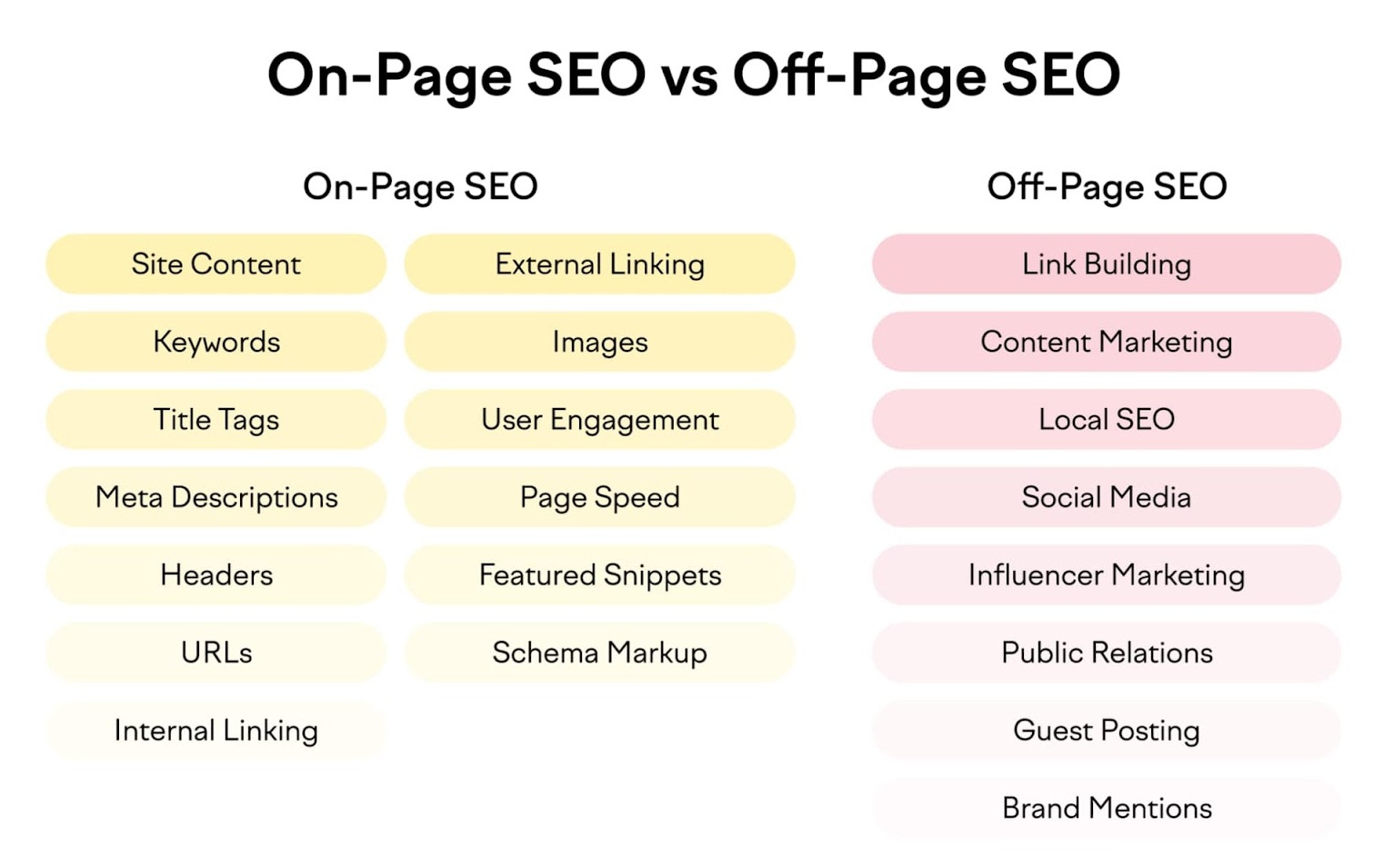
On-page optimization and technical SEO should be viewed as two sides of the same coin. One ensures that everything on your site works smoothly, and the other takes care of how search engines access your site. Together, they indicate how healthy your website is in terms of crawler accessibility and ranking.
When all components of on-page optimization are in good shape, but accessibility is lagging behind, your internal beauty, so to speak, is not accessible for Google’s crawlers to appreciate. And the other way around, when accessibility (technical SEO) is doing great, but on-page optimization is poor, you invite Google to witness your misery.
This is also where many people notice differences in an SEO pricelist. Some providers bundle on-page and technical work together, while others separate them into distinct line items. The distinction matters less than the balance between them.
Put together, on-page and technical SEO work typically includes:
- Page titles, headings, and internal linking (on-page optimization).
- Content structure and relevance signals (on-page optimization).
- Site performance and stability (technical SEO).
- Error handling and technical hygiene (technical SEO).
- Indexing and crawlability checks (technical SEO).
Source: SEMrush
⚖️ The bottom line: Only by focusing on two elements simultaneously can you achieve measurable SEO gains. Their value comes from removing friction, so other SEO efforts can compound.
Content creation and optimization
Content is the medium, the metaphorical ether that enables authority to circulate across the web, landing on your pages with visibility, trust, ranking power, and other important SEO gains.
If you want to do link-building, you need content. Want to acquire traffic to your page — content can help. Need to establish your brand as a trusted one and yourself as a thought leader in a given field — content is the king.
Content creation and optimization are big things in SEO, and they certainly are in every SEO marketing price list.
Content creation and optimization usually involve things like:
- Creating high-quality articles and posts that naturally attract readers.
- Rewriting pages that almost work, but need minor improvements to shine.
- Aligning tone with actual search intent.
- Keeping older content from drifting off-topic, i.e., updating it regularly.
Content is the part of SEO that everyone has an opinion about. Everyone reads it, everyone judges it, and everyone thinks they can spot “good content” instantly. In practice, content that performs in search often looks much simpler than people expect.
For that reason, creating content for SEO is less about inspiration and more about discipline. Pages need to answer questions clearly, stay on topic, and age well over time. Optimization then becomes a habit rather than a one-time event, because content that performs today can stop performing tomorrow.
Link building, outreach, and authority growth
Link building is the pivotal stage when SEO stops being internal and starts being social. Besides your communication skills, knowledge, and creativity, it depends on other people’s decisions, priorities, and standards, which makes it inherently unpredictable. You can plan content and fix technical issues on your own site, but authority lives elsewhere, and that changes the rules.
It’s important to choose content distribution providers that offer websites that resonate with your area of expertise, or the topic of your content (e.g., article or blog post). Your SEO rates directly depend on that fitness.
Think of it as survival of the fittest — an article ideally aligned with the target website’s audience has many more chances of ranking higher in search results, attracting targeted traffic, and driving authority to your website.
However, most authority-building work in link-building consists of:
- Identifying sites that actually matter.
- Discarding lots of prospects until you find your ideal list of publications.
- Tailoring outreach that doesn’t sound automated, but hyper-personalized and hand-made.
- Accepting rejection without escalation.
- Monitoring links’ performance after they’re live.
Tellingly, authority rarely moves SEO metrics on its own. It amplifies what’s already solid and exposes what isn’t. Perhaps for the same reason, link building works best when it’s boring, patient, and slightly invisible. When it becomes flashy and hectic, it usually becomes risky too.
Cheap vs premium SEO services
Some SEO services are outright cheap, while others are premium. An inexperienced buyer might fall prey to the first category and run away scared from the second. But what if these two SEO services pricing categories are hiding something really more nuanced than the labels suggest, and that they are worth examining before drawing fast conclusions?
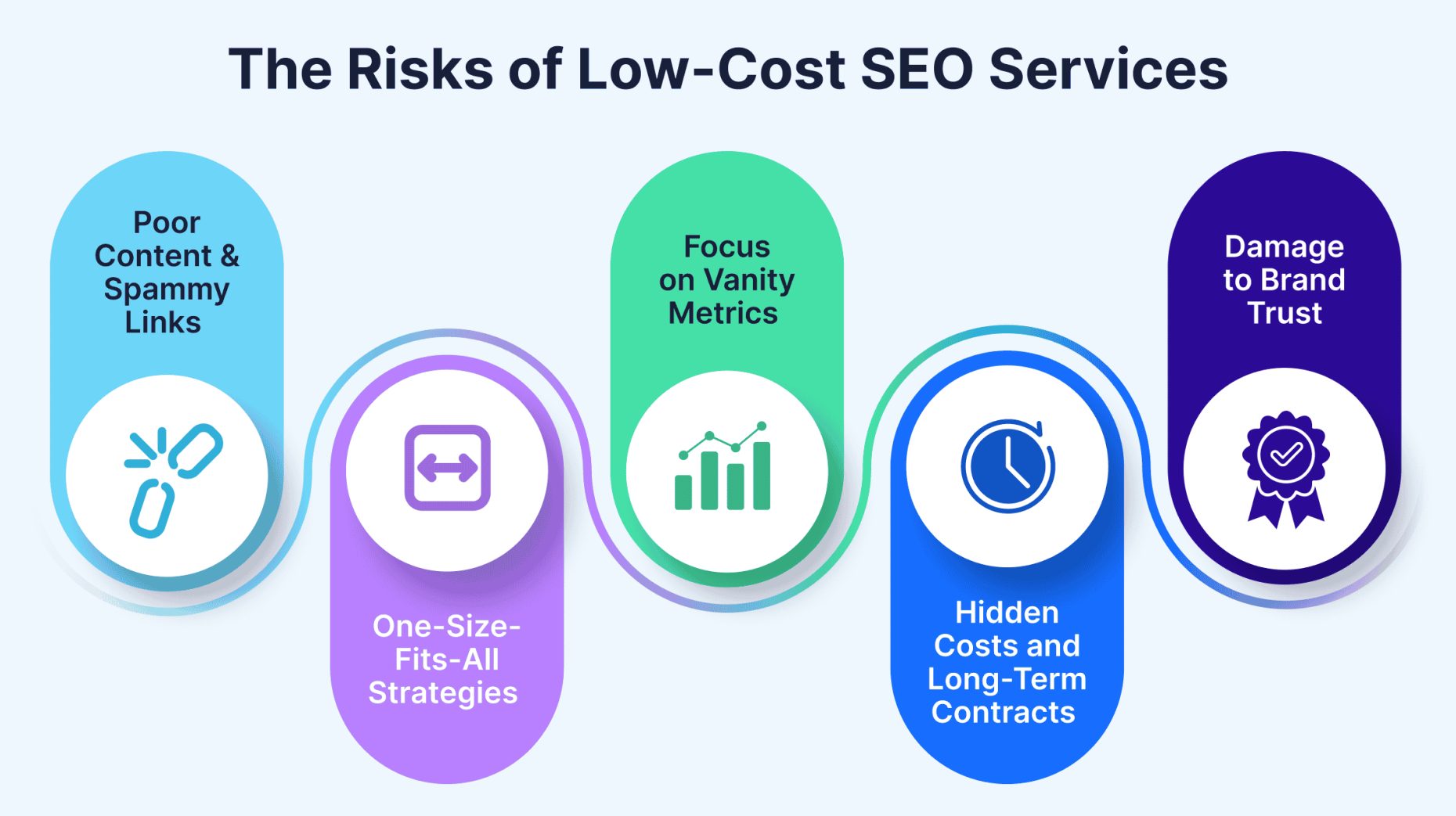
What low-cost SEO usually includes (and excludes)
Low-cost SEO exists to make SEO accessible. It lowers the entry barrier and removes some of the fear around getting started. That role is important, but limited.
In affordable SEO packages, the work itself is usually built around repeatable processes. Checklists replace analysis, and tools do much of the heavy lifting. The goal is efficiency, not depth.
What is often missing is adaptation and prioritization. Low-cost SEO rarely asks which actions will matter most or which ones can wait. Strategic decisions are replaced by predefined sequences, because strategy requires time and attention.
Source: Andava
The same goes for adaptation — cheap bundles rarely allow much of that as adaptation requires extra time, intelligence, and planning resources, all requiring extra money, of course.
Low-cost SEO typically delivers:
- Pre-packaged, standardized audits.
- Surface-level optimizations.
- Broad keyword coverage.
- Minimal competitive context.
- Standard reporting without fancy dashboards and live meetings.
⚖️ The bottom line: This approach can help clean up obvious issues, but it rarely builds momentum on its own. Knowing where low-cost SEO stops, i.e., its limitations, is more important than knowing how much it costs
Risks of bargain SEO services
Bargain SEO services may feel like the best deal ever, but behind the curtains, the reality is more complex. The thing is that such deals always come with trade-offs that aren’t always visible upfront.
The first one is limited flexibility. You must have a good understanding of what you buy, as in case of a mismatch with your organizational capabilities or needs, the service won’t change much. The work will continue anyway, as you will likely insist on reaching satisfactory results, but that stubbornness will cost you even more.
A standardized SEO pricelist can hide this rigidity. It gives buyers the sense that they’re choosing between options, when in reality they’re choosing between levels of constraint. When conditions change, those constraints become obvious.
There’s also the issue of reversibility. Some SEO mistakes are easy to undo. Others linger, quietly limiting growth or increasing risk long after the service ends. Cheap SEO rarely budgets time for cleanup, because cleanup is rarely cheap.
⚖️ The bottom line: So, ask yourself every time you come across a seductively cheap SEO offer — does it perfectly fit my current needs, and can I put up with limited flexibility and no reversibility?
What higher rates typically reflect
Higher SEO rates are often associated with maturity, both on the provider side and the client side. The service level is higher, but the increased cost follows, and the client is aware and is OK with that.
In this type of package, you’ll likely see more flexibility, accountability, and, paradoxically, even some extras for free. Since the base price is already high, extras often come without additional charges. And that is also a good sign of the maturity of the service provider.
That said, higher SEO rates typically reflect:
- More strategic guidance and better communication standards.
- Fewer automated actions and more interpretation.
- Greater tolerance for slow, compounding gains.
- Clearer ownership of outcomes.
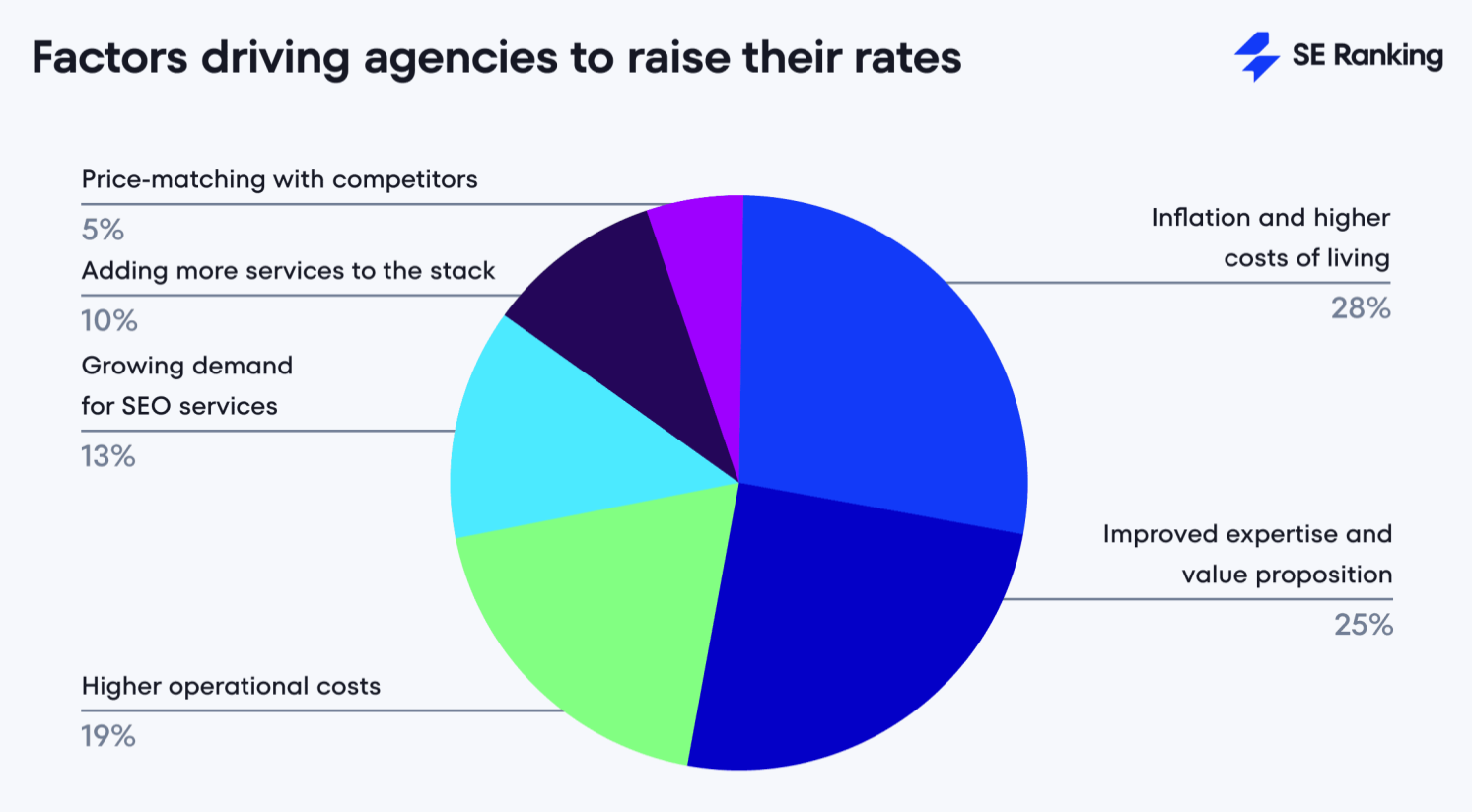
This level of search engine optimization is deeper, but also more controlled. There are fewer visible changes, but fewer setbacks as well. The provider is equally responsible for successes and failures and takes discretionary effort to achieve results.
Source: SEranking
📌 The bottom line: Higher rates don’t mean perfection. They usually mean more work, longer timelines, transparency in communications and reporting, and thorough strategic planning. The latter starts with the full-fledged kick-off meeting where you, as a client, communicate your concerns and business goals, and the service provider adapts its approaches to match your needs.
When premium SEO pricing makes sense
Premium SEO pricing is about buying fewer mistakes. When SEO becomes critical to revenue or visibility, errors stop being educational and start being expensive. Quite naturally, you want to avoid risks and are willing to pay more for that.
At that stage, the focus shifts from doing everything possible to doing only what makes sense. Prioritization, sequencing, and restraint begin to dominate the process. That shift changes the nature of the work.
Premium SEO also makes sense when SEO decisions need to survive scrutiny. Stakeholders demand full transparency, accountability, and fast reporting. They want to know why something was done and what risks were considered.
This is where SEO consulting rates reflect the involvement of one or several professional consultants, who are not afraid to work with your top management on a daily basis. They act as facilitators and can convince with reason.
📌 The bottom line: Premium SEO pricing fits best when SEO is treated as a long-term system, when you are mature enough to acknowledge the importance of online visibility, reputation, and rankings for your business.
How agencies structure SEO consulting packages
Often, the presentation of service packages is as important, if not more, than a SEO pricelist alone. Knowing how agencies structure and present their services will help you make the right decision and avoid costly mistakes.
Predefined SEO packages vs custom pricing
Predefined SEO packages exist because busy customers often look for shortcuts and quick solutions. Thinking and comparing options takes time and sometimes money.
Packages turn SEO into something that looks tangible and finite. In some sense, it’s cheating with reality, as SEO almost never exhibits those properties in practice.
For simple situations, that clarity helps. A small site with obvious issues can often benefit from a standardized set of actions with minimal effort, such as guest posting or on-site optimization.
So, the pros of predefined SEO packages include:
- Clear scope from the moment a client sees the price list.
- Easy budget planning, no negotiations and changes required (also, not even allowed).
- As a result, faster decision-making.
- Minimal onboarding friction.
The problems usually start later. Once the work begins, reality tends to interfere with predefined scopes. SEO issues don’t line up neatly with package boundaries, and priorities shift as new data appears.
These things inevitably lead partnerships to face all sorts of troubles. This is exactly when clients realize that predefined packages have their cons as well:
- Fixed scope even when needs change.
- Limited room for prioritization.
- Generic sequencing of tasks.
- Risk of paying for low-impact work.
Custom pricing starts from a different assumption: that SEO needs will change once the consulting work begins. Instead of locking the scope upfront, it leaves room to adjust.
Typical pros of custom pricing:
- Better alignment with actual challenges.
- Flexible priorities over time.
- Easier to respond to new findings and changing needs.
- Stronger strategic control.
- Better communication and higher transparency.
Once you try your first custom package, you’ll feel the difference and will never confuse the two approaches.
However, what you’ll also understand is that flexibility comes at a cost. Custom pricing asks the client to always be online and active, to communicate and respond when required, and to trust judgment rather than predefined lists.
Here is exactly why custom packages are worth thinking twice before committing to:
- Harder to forecast costs.
- More communication required (for some, this is a benefit).
- Harder to benchmark (how do you compare if there is no exact match on the market?).
- Greater reliance on the trust and authority of the service provider.
Transparency, reporting, and communication standards
The one part that often goes unnoticed when buying SEO services is reporting and transparency. Many teams perceive it as something that should come for granted, or simply underestimate its value and never really check the contracts.
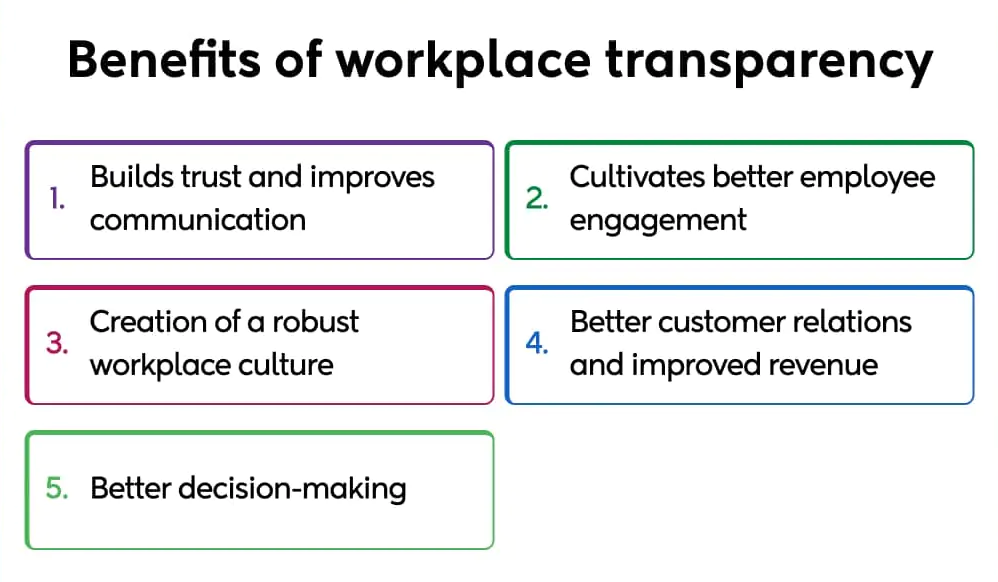
However, good reporting and communication standards play a key role in SEO. Since strategic SEO is an ongoing process, rather than a one-time intervention, communication and transparency are the keys to maintaining long-term collaboration.
Some of the highest communication standards that you can find in modern SEO packages are:
- Explicit pricing with no hidden costs.
- Extras should be clearly marked as ones, and not come as a surprise expense later.
- Communication starts before the contract is signed/work begins, and usually stipulates an alignment/ kick-off meeting at the very start of collaboration.
- Regular reporting with clear explanations of what was done, why, and what it led to.
- Defined communication cadence (weekly, bi-weekly, or monthly) agreed upfront, not improvised later.
- Clear ownership behind milestones and deliverables, so you know whom to ask if something does not go according to plan.
📌 The bottom line: Ultimately, reporting and communication define how much you spend on SEO, among other things. Usually, good services and high communication standards come together, but the communication alone should never drive the service pricing up; it’s only an addition to an SEO package.
Source: Proofhub
How to evaluate how much you should spend on SEO
This last chapter will help you assess potential SEO services’ prices with more confidence. It will equip you with the necessary questions to ask a service provider, and give you the most obvious red flags to avoid in SEO proposals.
How much you pay for SEO is ultimately the function of the initial pricing and your ability to accurately assess and negotiate the final price that suits your business needs.
Questions to ask before signing a contract
SEO works over time, which means small misunderstandings compound. Asking questions upfront reduces the chance of discovering misalignment months later, when changing direction becomes expensive.
Don’t be afraid to ask as many questions as you need. Many clients mistakenly confuse questions with distraction, while others are simply afraid to show their incompetence. But the truth is, asking questions shows exactly the opposite — your knowledge of the different SEO nuances.
And above all, asking questions shows that you are interested, engaged, and will not tolerate unjustified or overly inflated SEO price lists.
Before signing, it’s reasonable to ask questions such as:
- How are priorities decided if everything cannot be done at once?
- What happens if assumptions change after the work starts?
- How is progress evaluated beyond rankings alone?
- Who is responsible for decisions and communication?
- What is considered out of scope and billed separately?
These questions are not about distrust. They are about the alignment between you and your partner. Clear answers indicate that the provider has thought through the process rather than just the sale and that they are equally interested in moving the process forward.
People naturally want a simple answer to how much does SEO cost. In practice, the better question is how that cost adapts when priorities shift or obstacles appear. So, bear that in mind when talking to your SEO provider.
Red flags hidden inside SEO pricing proposals
SEO pricing proposals are often judged by how reassuring they feel. We trust our initial feelings, which we often mistakenly confuse with experience and almost divine-like intuition (like a blessing). That instinct makes sense, but reassurance is not the same as clarity. Some of the biggest red flags live in what’s left unsaid.
One of the most common issues is vagueness disguised as flexibility. Proposals may sound adaptable, contain many beautiful words and phrases, but avoid committing to how decisions are actually made once work begins.
That ambiguity usually favors the provider, not the client. So, stay away from overly bright promises and generalized wording.
Other common red flags include:
- Focus on activity instead of impact/deliverables.
- No explanation of how priorities change under circumstances.
- Lack of clarity around extra costs (you hear the answer “We will work that out in the process”).
- No information about risk mitigation and problem resolution.
- Overuse of generic SEO terminology and industry clichés (while a simple language delivers more value).
Some clients pretend not to notice these red flags, hoping the initial favorable price estimate compensates them all, but they’re essentially lying to themselves. Sooner or later, they’ll face the consequences manifesting as concrete problems, suddenly increased SEO maintenance costs, and ruined trust.
📌 The bottom line: Search engine optimization works best when expectations are managed properly. Proposals that avoid negotiation/calibration often create an illusion of progress.
Conclusion
SEO services pricing is only simple at first glance. The better you understand SEO and the more engaged you are in achieving tangible results from collaboration with a service provider, the higher the complexity of SEO pricing tends to reveal itself.
There is a subtle, but very important difference between SEO prices and costs. The latter stipulates all expenses involved, even the ones that are not visible at the very start. Costs include maintenance expenses, risk evasion, problem resolution, expert-hours spent solving crises, responses to sudden competitor moves, and many more nuances.
SEO pricelists may have varied structures (e.g., predefined vs. custom), contain different services and communication/reporting standards, and be built around various pricing models (e.g., hourly vs. project-based), but how much you ultimately pay is a function of the initial pricing and your ability to negotiate favorable terms.
All trademarks, logos, images, and materials are the property of their respective rights holders.
They are used solely for informational, analytical, and review purposes in accordance with applicable copyright law.




 Sign Up
 Sign Up