




Mordy Oberstein: “The Problem Isn’t Positioning – It’s Brand Identity” & Other Interview Highlights
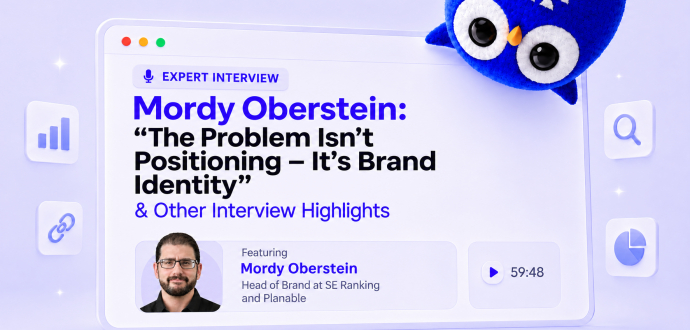
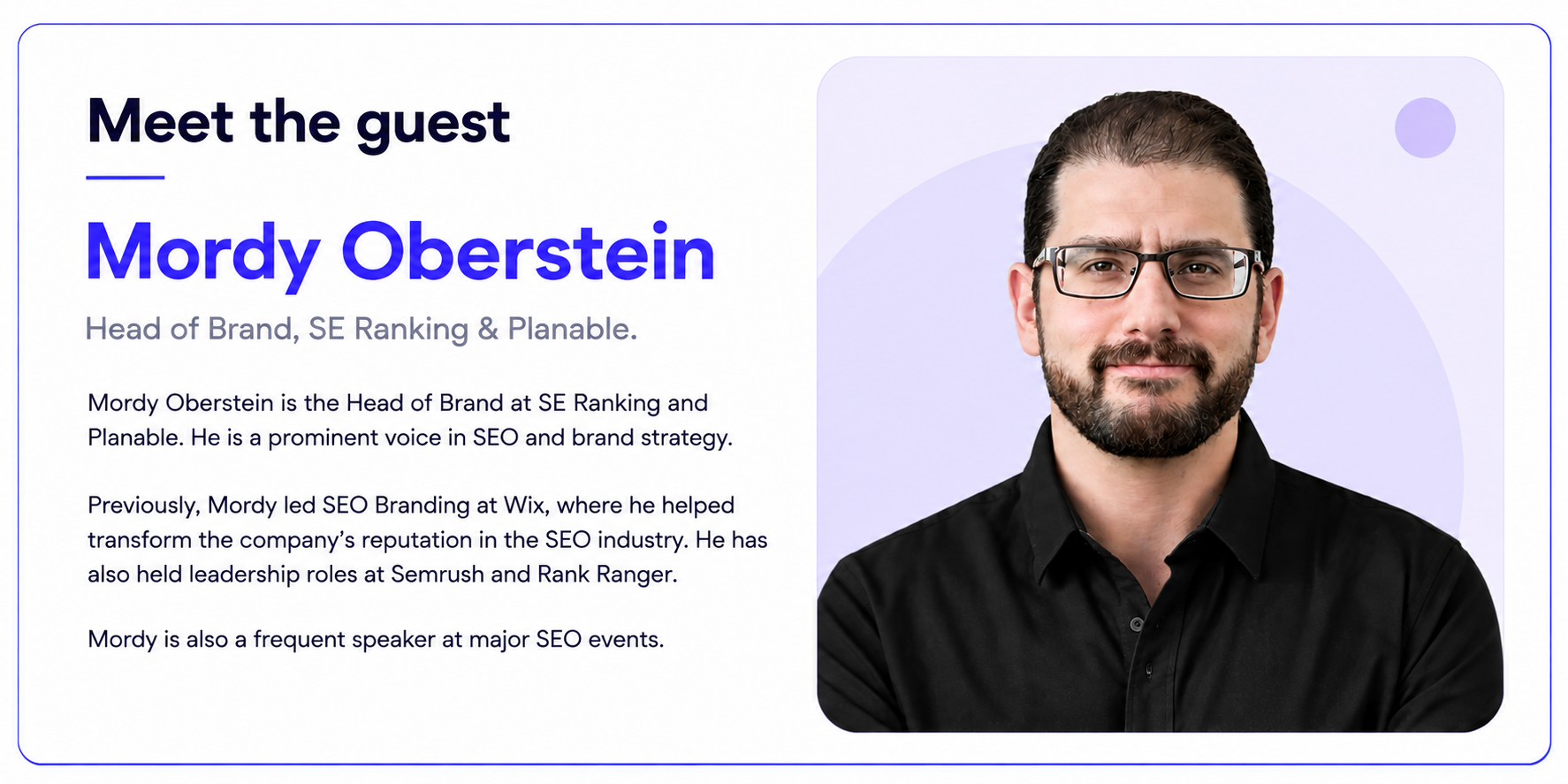
These are highlights from our interview with Mordy Oberstein. You can learn more about Mordy’s work on SE Ranking and Planable or connect with him on LinkedIn.
Why search traffic is declining: It’s not just SEOs’ fault
Declining traffic isn’t entirely SEO teams’ fault. LLMs are changing how people use the internet. And SEOs can’t control that.
But these problems aren’t new.
Take attribution. Direct traffic has been a black box for years. LLMs didn’t create this problem. SEO also played a role.
We flooded the web with generic, low-quality content. It worked for a while. So we kept doing it.
But users started looking elsewhere. They wanted more authentic information.
LLMs didn’t create organic traffic problems. They exposed issues that were already there. People were already turning to Reddit and TikTok for first-hand experience instead of generic, optimized content.
Google keeps raising the bar for content quality
Google gets better at understanding content quality.
You can see this in the evolution of E-E-A-T. With every update, search engines get better at evaluating content. The pattern is simple:
- Google gets better at understanding quality.
- SEOs find ways to game the system.
- Google raises the bar again.
That’s why it’s so important to…
Stop trying to beat the current algorithm. Build content that is genuinely useful and trustworthy instead.
When performance marketing hurts your brand
People look for real-life experiences in content. That’s one reason they turn to platforms like TikTok instead of Google.
For years, performance marketing focused on getting people to act:
- “Click here.”
- “Buy this.”
- “Get this.”
We’ve been doing this for years.
But…
What people feel unconsciously matters more than what they think consciously.
Nike understood this.
It built an association between its brand and Michael Jordan. People don’t need to consciously think about that connection. It is already there.
The same applies to content.
When you constantly push people to click or buy, you risk creating a negative association with your brand. You might get the click, but you can hurt the brand.
The same can happen when you chase short-term performance by trying to hack LLMs.
Why does your website still matter in the age of AI?
Your brand is how people perceive you. And you can either shape that perception or let others shape it for you.
Your brand isn't just what you say about yourself. It's also what others say about you. Your website, third-party mentions, reviews, and social content all contribute to one brand story.
Imagine a major website like Coca-Cola mentioning your product.
Before linking to you, they’ll probably check your brand. If it looks unreliable, they may decide not to mention you.
Your customers do the same thing.
Why many get Reddit wrong
Many brands get Reddit wrong. They focus on getting mentioned on Reddit for AI citations and forget what happens next. Getting mentioned is only the first step. The real question is what people find when they visit your website.
So the real question isn't just, “How do we get mentioned on Reddit?”
It’s “What happens after Reddit?”
Can a damaged brand recover?
Let's take Jaguar as an example.
Jaguar once had a strong brand. But its products developed a bad reputation. That damaged the brand.
This leads to an important point:
A strong brand usually starts with a strong product. You can't build a great brand around a bad product forever.
When the product goes off track, the brand can lose its identity too.
That's why brand identity isn't just a marketing issue. It involves the product, marketing, and the whole company.
Jaguar later tried to reinvent the brand. But the rebrand felt disconnected from its past.
That's where many rebrands fail.
Successful rebranding needs a clear bridge between the old brand and the new one. Because customers remember who you were.
You can't simply say, "We're a completely different company now."
You need to show how the new brand connects to the old one.
Jaguar tried to return to its original idea of doing things differently. But they never clearly explained that connection.
You can’t fix positioning without fixing brand identity
Some brands think they have a positioning problem. But often, the real problem is their brand identity. You can’t position a brand until you know who you are and who you’re for.
Take Gatorade.
It positions itself as a sports drink. But LLMs may tell people that drinking it every day isn’t healthy. They may recommend healthier alternatives instead.
So the problem isn’t simply positioning. The brand needs to ask what it actually stands for and who it wants to serve.
The same applies to minivans.
A minivan brand might try to make its cars look sporty because it thinks that’s what customers want.
But many minivan buyers don’t care about being sporty. They want a practical car for their families.
That’s an identity and audience problem. The positioning is just a result of it.
Before changing positioning, brands should ask:
- Who are we?
- Who are we for?
- What does our audience actually want?
Once you understand those things, positioning becomes much easier.
Besides…
You can’t change your positioning without changing what you actually sell. If you sell minivans, you can’t suddenly position yourself as a spaceship company. People know what the product really is.
Why product launch kickoffs matter
When you launch a new product or service, multiple teams are involved. SEO, PPC, influencer marketing, branding, and others. All have a role.
That’s why the initial kickoff meeting is so important.
The kickoff doesn't need to be a two-hour meeting. Even a 15-minute sync can help everyone understand:
- What the product is,
- How we're positioning it,
- What each team is doing,
- How their work affects other teams.
Everyone needs to understand the product and agree on the story they’re going to communicate.
It matters even more with LLMs.
If you want AI systems to understand your new product or rebranding, the information across your channels needs to be consistent.
Brand and performance shouldn’t be separate
It’s quite common to treat brand and performance as opposites.
But that’s not true
Brand and performance aren't separate strategies. Brand creates opportunities, and performance helps you turn them into results.
You can use SEO content to drive traffic while building your brand at the same time.
For example, a blog can include beginner content designed for search. At the same time, it can also include deeper, thought-leadership content that shows your expertise.
The key is to think about brand as a way to improve performance over time.
And as your brand becomes stronger, you can:
- Build better partnerships.
- Earn stronger guest-post opportunities.
- Collaborate with companies you couldn't reach before.
You can't predict exactly which opportunities will appear. But you can create the foundation for them.
These are highlights from our Adsy Talks podcast with Mordy Oberstein. For more insights, watch the full interview on our YouTube channel:
All trademarks, logos, images, and materials are the property of their respective rights holders.
They are used solely for informational, analytical, and review purposes in accordance with applicable copyright law.

 Sign Up
 Sign Up