




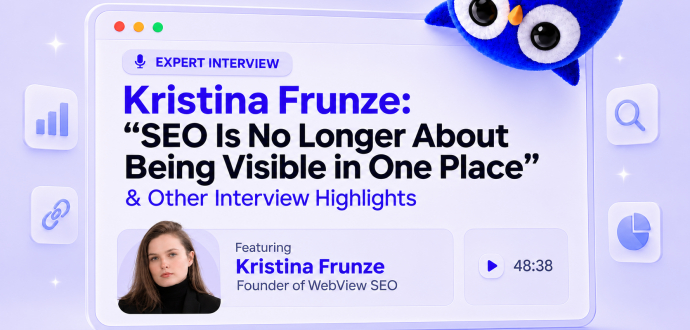
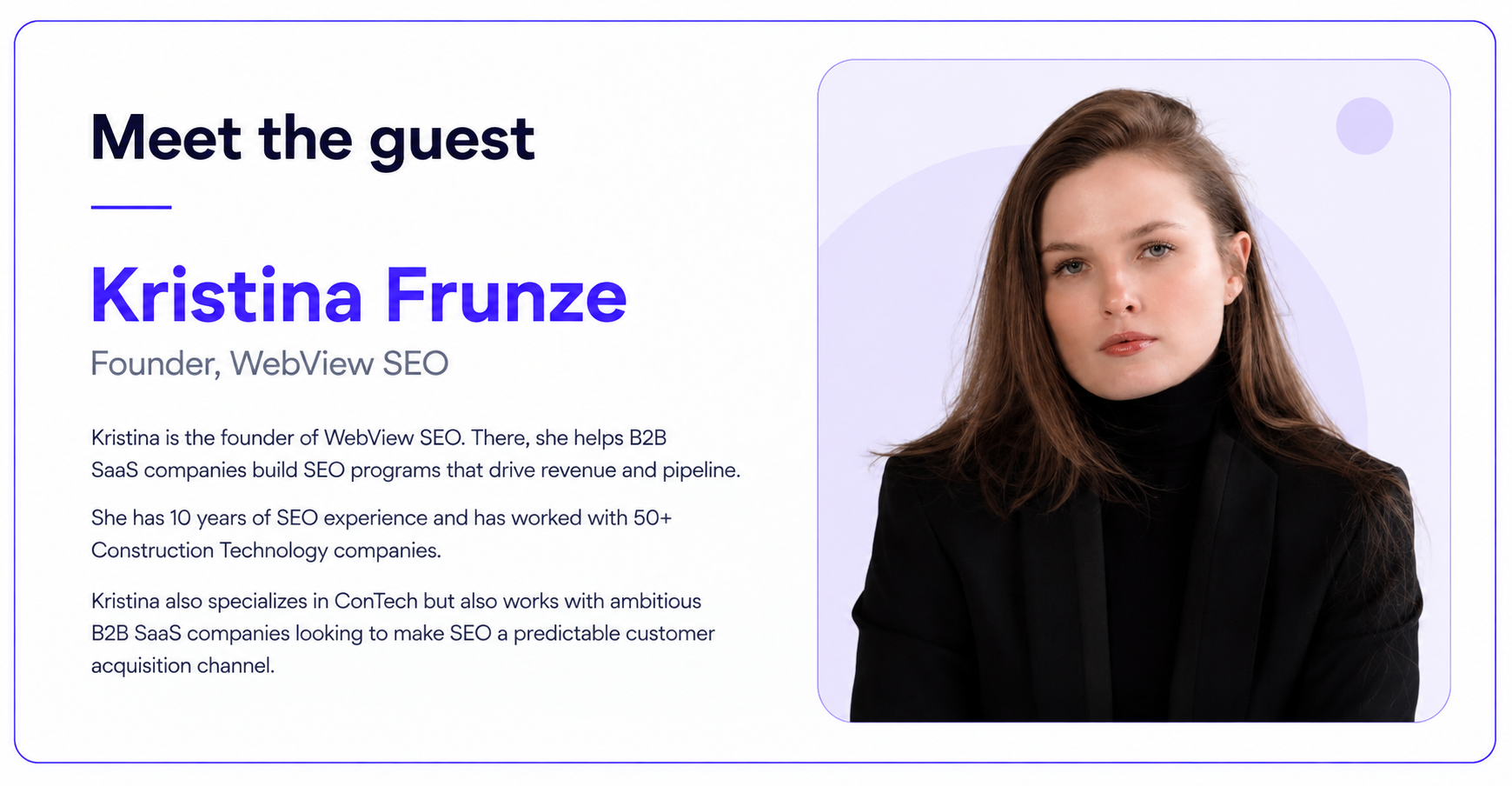
Kristina Frunze: “SEO Is No Longer About Being Visible in One Place” & Other Interview Highlights
Focus on SEO that drives conversions
Top-of-funnel content can bring a lot of visitors, but they often aren't ready to convert.
That's why I pay more attention to traffic and conversions on pages closer to the bottom of the funnel.
These can include:
- Homepage
- Solution pages
- Feature pages
- Case studies
If traffic and conversions are growing on the homepage, solution and feature pages, and case studies, that’s a good sign that SEO is contributing to the business.
SEO attribution is also getting harder.
Someone might find your page through Google, return through an LLM, and later come back to your website.
You can see that something is working. But it’s not always clear which channel gets the credit.
That’s why…
SEO should always connect back to the company’s core offering and ICP. Traffic alone isn't enough. The goal is to attract the right people and move them toward the solution.
The changing buyer journey
Today, the customer journey is more fragmented.
People move between Google, AI platforms, social media, company websites, etc.
As marketers, we have to adapt to this changing behavior.
SEO is no longer about being visible in just one place. It’s about being present across the different platforms people use throughout their buying journey.
The problem with AI traffic attribution
Organic leads are often just the floor.
The way they’re attributed doesn’t always show the full picture. So you have to question how channels are being tracked.
For example, HubSpot has different channels, including AI referrals and direct traffic.
But direct traffic can include anything without a referral or UTM.
That’s why it’s important to look at the full customer journey.
When someone comes from an LLM, the referral information can sometimes be stripped away. They may then appear as direct traffic, even though their journey started in an AI tool.
Instead of relying only on channel attribution, look at the pages people visited before they became a lead. This can reveal traffic and conversions that traditional reporting misses.
Measuring SEO’s indirect impact
You should also look at influenced leads, such as people who come through direct traffic or branded searches. You may not be able to directly attribute that lead to SEO, but SEO still helped bring that person to your brand.
For example, someone may discover your brand through Google or an LLM and later search for your brand by name.
If your traffic drops, don’t panic. Check this first
Organic traffic can fluctuate a lot throughout the year. And a drop doesn’t always mean something is wrong. Don’t underestimate seasonality when looking at your leads and SEO performance.
For example, August, November, and December are slow months for many industries.
- In August, people are taking their last vacations and getting ready for the new school year.
- In November and December, Thanksgiving and Christmas can slow things down.
However…
Seasonality can work differently from business to business. So, you need to look at the specifics of your industry and brand.
For example, summer is a very busy season for many construction technology companies.
However, my ConTech clients don’t have a lot of sales during this time. That’s because construction companies don’t want to switch software while they’re busy building.
What good SEO really looks like
Good SEO starts with a strong technical foundation and valuable, well-structured content that clearly addresses the pain points of the ICP.
But SEO can’t stop at what happens on the website.
You also need:
- A strong backlink profile
- A presence in relevant directories and third-party profiles
- Activity across social media.
A common mistake is treating organic traffic as the main sign of success.
Traffic can grow every month and still bring little value if it doesn’t convert.
If that happens, you need to focus on conversion rate optimization and understand where the problem is.
The same goes for AI search.
GEO shouldn’t be treated as something completely separate from SEO. There is a lot of overlap between the two, and the same strong foundation can support both.
Create content for your solutions
I still believe in ‘content is king,’ as cheesy as it sounds, because I’ve seen it work again and again.
Imagine there is no clear content about the company’s actual solutions.
In that case, it’s hard to show up when people search for those solutions, either on Google or in LLMs.
That’s why…
You need bottom-of-funnel content. Create a dedicated page for each solution you offer and clearly explain what it does and who it’s for. That’s how you can start showing up for high-intent searches in both Google and AI.
Why does original content matter?
Creating content has become easier. But many generic blogs are never even indexed by Google. As a result, unique content backed by deep industry expertise is becoming more valuable.
Besides, when you try to produce a lot of content very quickly, it's hard to maintain quality. Good content takes time and effort.
Still, Google needs original, useful content that demonstrates real knowledge and experience.
Brands with strong industry expertise can stand out by creating content that AI can’t easily replicate.
Don’t wait to experiment
Some companies are still in limbo with all the AI search. They’re waiting to see what happens and wondering if they can just keep doing SEO without changing anything. But the biggest opportunity right now is to start experimenting early.
They might be fine for now. But…
The companies that lead in traditional and AI search in two to five years will likely be the ones experimenting today.
What should marketers focus on?
New “best practices” appear all the time. You can’t follow all of them.
Instead, focus on the basics: your customers’ pain points and how your business solves them.
Don’t chase every new trend. Focus on what your business does best and what competitors can’t easily replicate.
These are highlights from our Adsy Talks podcast with Kristina Frunze. For more insights, watch the full interview on our YouTube channel:
All trademarks, logos, images, and materials are the property of their respective rights holders.
They are used solely for informational, analytical, and review purposes in accordance with applicable copyright law.
 Sign Up
 Sign Up