




Kristina Bergwall: “Rankings Are the Most Overrated SEO Metric” & Other Interview Highlights
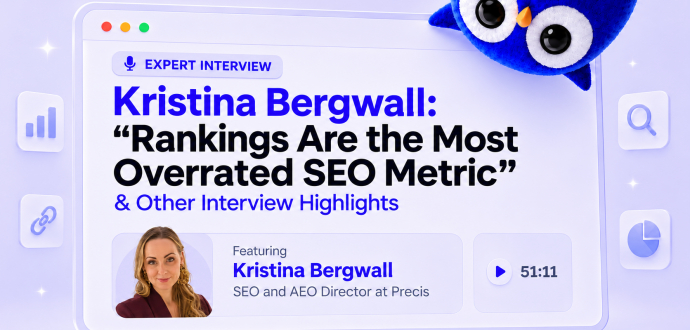
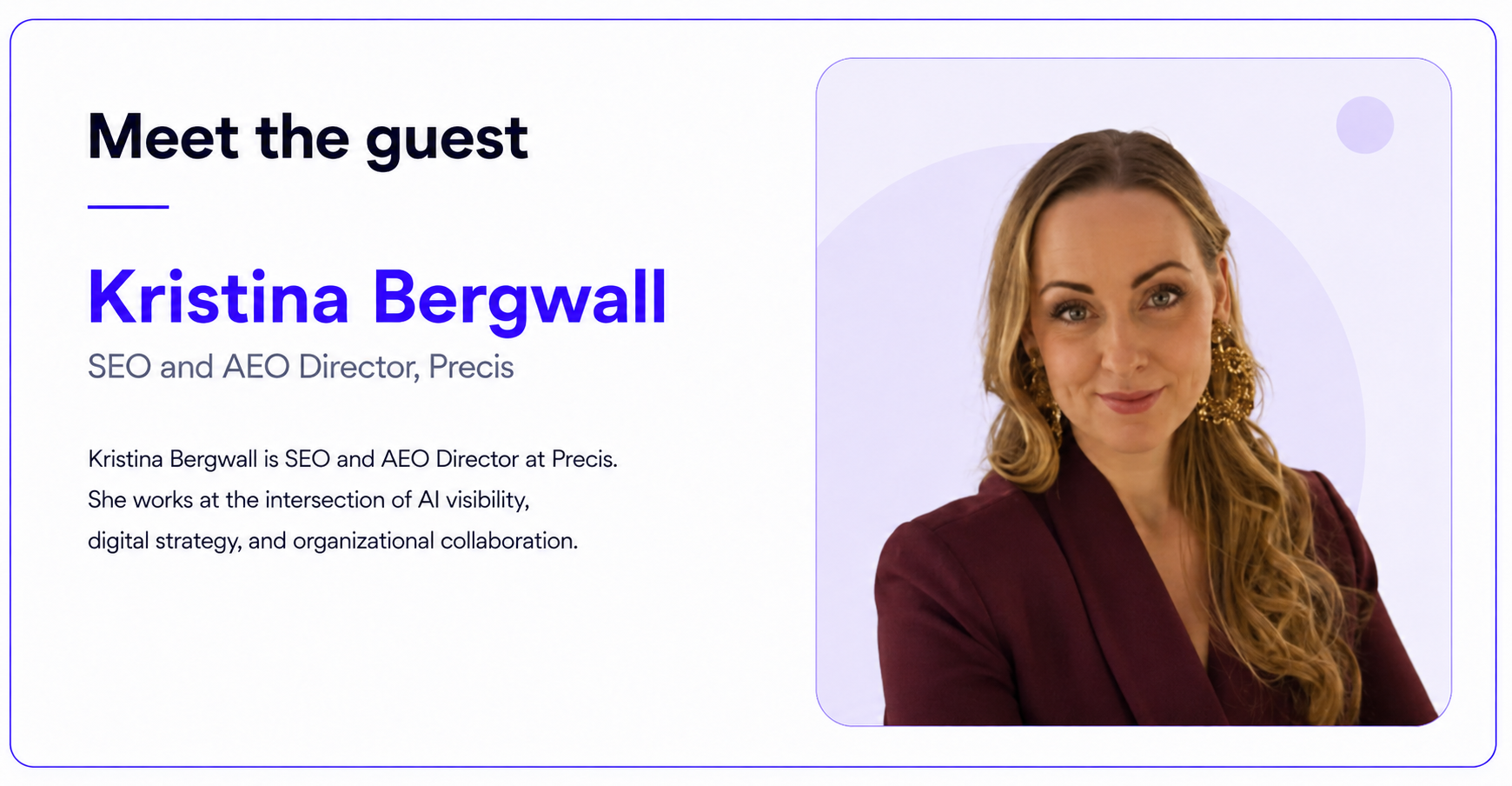
These are highlights from our interview with Kristina Bergwall. You can learn more about Kristina’s work on Precis or connect with her on LinkedIn.
Traffic and conversions don't always go together
Traffic has never automatically meant leads. Leads have never automatically meant conversions. And those relationships are becoming even less predictable with AI search.
People are increasingly getting complete, AI-generated answers that dramatically reduce research time.
By the time those users actually visit a company's website, they're much further along in the buying journey.
As a result, they're often more likely to convert, even though overall traffic is lower.
Still, while mentions are becoming more important, they alone don't create customers. You need clicks and traffic anyway.
Who's secretly responsible for bad conversions
Here are some of the most popular scenarios:
- If traffic is arriving but people aren't converting, we should bring in CRO and UX immediately.
- If your brand never appears in AI-generated answers, it's everyone's responsibility.
- If you're completely invisible, it could be a technical issue.
- If your rankings are strong, but visitors leave almost immediately, that could honestly be almost anyone. Maybe the website is difficult to use, or the expectations created by search results don't match the landing page.
- If paid ads convert better than organic traffic, I'd go back to targeting. Maybe the paid team is simply reaching the right audience, or the SEO strategy is attracting visitors who aren't the right fit.
- If the founder keeps changing everything, it often means they believe their ideas are better aligned with the business than the existing SEO strategy.
AEO isn't replacing SEO. It's extending it
With AI, the difference isn't necessarily in how people search.
It's not just that users are asking longer questions. The real difference is how answers are retrieved and presented.
Traditional search gives you a ranked list of webpages based on relevance. AI systems synthesize information from multiple sources into a single answer.
The biggest shift is in how we use data.
For AI visibility, your content should consistently answer the questions that matter to your ideal customers. At the same time, you need to build authority around the products, services, and areas you want to be known for.
That’s why digital PR is also more important than ever. AI doesn't care much about "link juice." But it cares about finding relevant, trustworthy information.
Still, we need to rethink what digital PR actually means.
Historically, digital PR focused on earning links from large, authoritative publications. With AI search, the goal is much broader: you're building trust signals across the web.
I often talk about the revival of digital PR.
Its purpose is no longer just acquiring backlinks.
It's helping build authority wherever conversations about your brand happen.
The future of SEO goes beyond rankings
Rankings are the most overrated SEO metric today. They're often much less important than people think.
But there are other things to pay attention to.
For example, brand search will matter more than backlinks.
Backlinks still matter because they're signals that other people trust and reference your website.
But if we look ahead, brand recognition will become increasingly important.
Another important detail is that…
AI Overviews will kill low-quality blogging. If content exists only to answer simple informational questions, AI can often answer those questions directly.
So, it’s really important to create content that's valuable not only for AI systems but also for real people. Human readers still matter.
Brand awareness goes beyond clicks
AI is forcing us to think much more intentionally about what we're actually trying to build.
It brings us back to authority and brand awareness.
If your business consistently provides the best answers to your customers' questions, and AI systems cite your brand, you're building brand awareness even when users don't immediately click.
For example, YouTube is the most underrated growth channel right now. More broadly, I'd include organic social and all the places where people naturally talk about your brand.
Sentiment is another important aspect of your brand awareness.
The reviews you receive, the conversations people have about your business, and the reputation you build all significantly impact your AI visibility.
AI visibility is everyone's responsibility
Companies should think about creating a visibility team and bring together expertise from SEO, PR, Brand, Content, UX, Development, and other disciplines into one shared effort. Visibility is now built across systems, not across isolated marketing channels.
Ideally, SEO, paid media, PR, and UX should work together.
However, if we're talking about where companies can make the biggest immediate impact, I'd start with SEO and development.
In the AI search environment, almost every communication activity contributes to how LLMs understand your company. That’s why consistency is so important in helping AI understand what your business stands for.
If LLMs don't recognize and trust your brand, you'll struggle to compete.
What SEO teams will look like in the AI era?
The future of SEO looks more like systems design, not just a marketing activity.
Companies often underestimate the human side of SEO because SEO has traditionally been viewed as a performance discipline.
SEO is becoming less about isolated tactics and more about how organizations operate.
Most SEO teams will merge into broader growth teams. I believe SEO will become part of broader business growth and visibility functions rather than remaining a standalone discipline.
That’s also why ideal SEO leaders combine two very different skill sets:
- First, they need deep technical expertise.
- Secondly, they must have exceptional interpersonal and communication skills.
What connects both profiles is curiosity.
Overall, I’d put it like this:
- Individual goals should support team goals.
- Team goals should support the company's overall vision.
- That vision should revolve around becoming a visibility-first organization.
These are highlights from our Adsy Talks podcast with Kristina Bergwall. For more insights, watch the full interview on our YouTube channel:
All trademarks, logos, images, and materials are the property of their respective rights holders.
They are used solely for informational, analytical, and review purposes in accordance with applicable copyright law.
 Sign Up
 Sign Up