






Garrett Sussman: “SEO Isn't Really About Keywords Anymore” & Other Interview Highlights
Is SEO still about keywords in 2026?
SEO isn't really about keywords anymore.
Google has become much better at understanding context and search intent, rather than exact wording.
Now the way someone phrases a search can produce entirely different results. We're also seeing AI search and AI Overviews use what's known as query fan-out.
Writing content for a single keyword is no longer the best strategy. Because Google doesn't simply answer the exact query you typed. Instead, it expands that query into 20 or 30 related searches across the user's journey and synthesizes information from all of them.
The problem becomes even more obvious with conversational search.
Now, people tend to ask more specific queries. Something like: "What are the best basketball shoes for a 40-year-old man living in Virginia who runs twice a week?"
That exact query may only ever be searched once.
That’s why…
Our strategy needs to expand beyond individual keywords. It needs to focus on broader topics and expertise that allow us to appear across many related searches.
The best content doesn’t always win
Distribution matters just as much as content quality.
Whether it’s traditional SEO or AI search, the best content doesn't automatically receive the most visibility. There are many factors that determine what gets surfaced.
The four pillars of modern SEO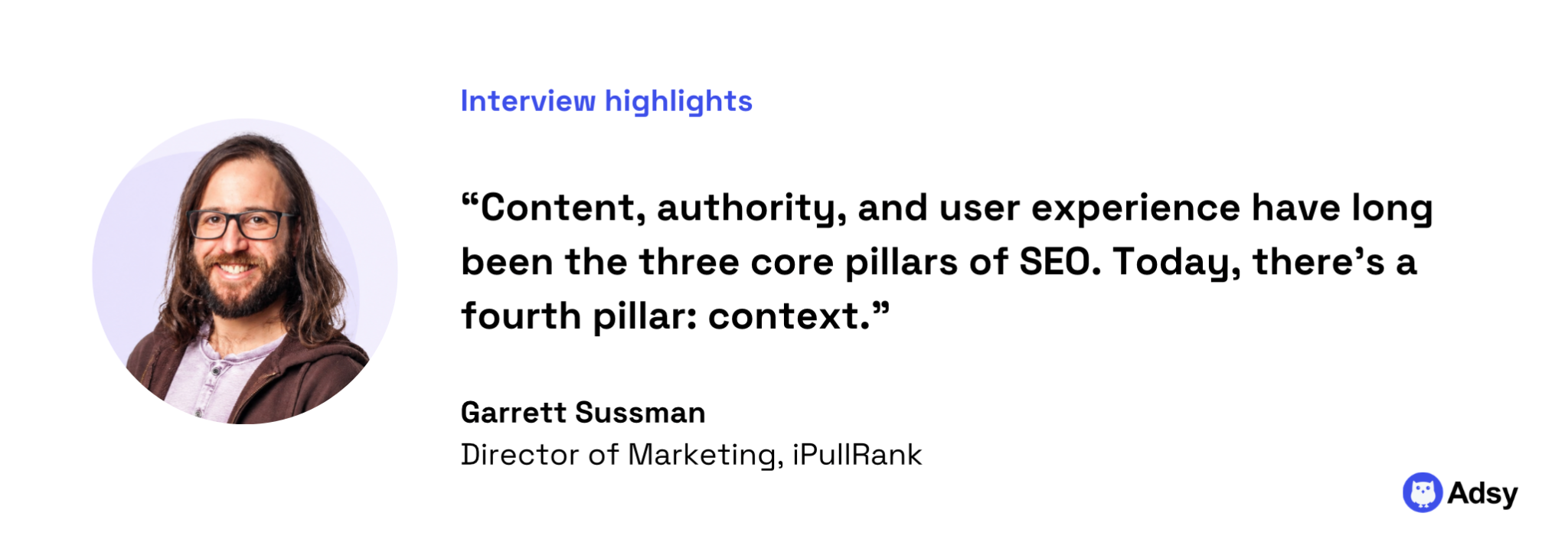
Content, authority, and user experience have long been the three core pillars of SEO. Today, there's a fourth pillar: context.
That's where GEO and hyperpersonalization come in.
In AI search, it's no longer enough to create great content. You also need to understand how AI systems discover, evaluate, and recommend information.
At iPullRank, we use Relevance Engineering that brings together five key areas:
- Information retrieval: Can search engines and AI systems discover your content?
- AI systems: How do language models decide what to generate and cite?
- Content strategy: What content should you create, and where should you publish it?
- Digital PR: How do you build authority, trust, and brand mentions across the web?
- User experience: Once visitors reach your website, can they easily find what they need?
Together, these five help improve your visibility across both traditional and AI search.
Personalization in AI search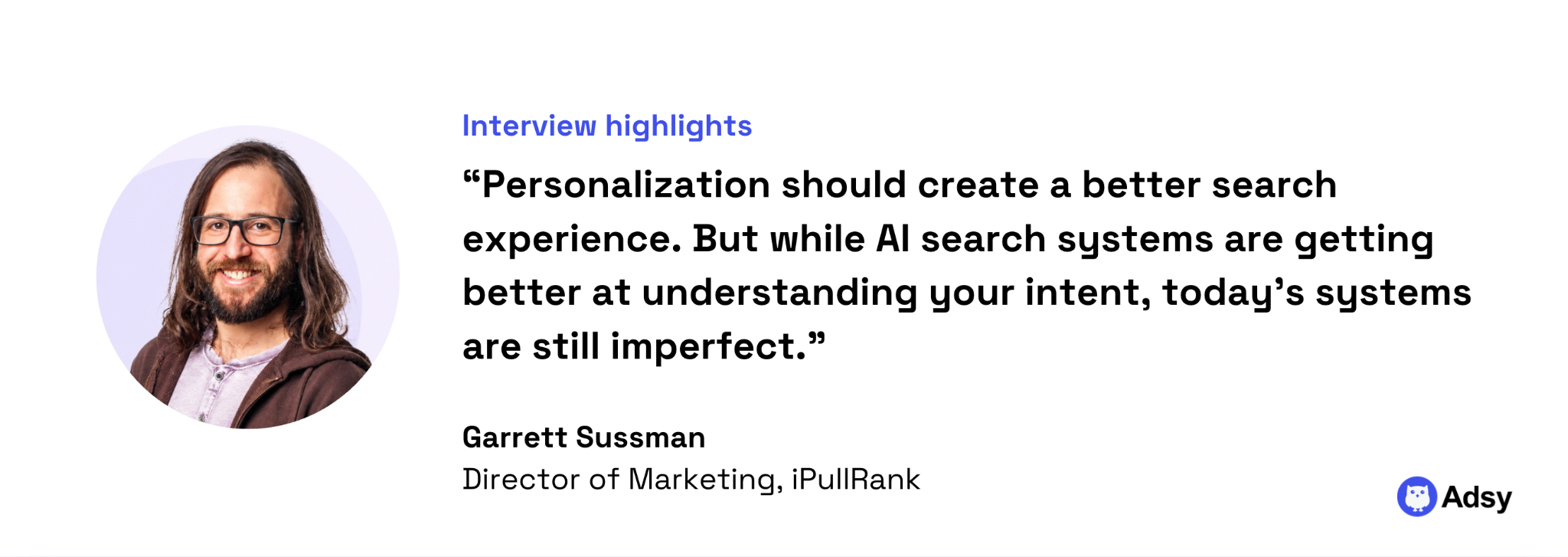
Personalization itself isn't new. We've dealt with it for years.
Hyperpersonalization is the next step in search. Now, search systems already analyze many more signals: your device, location, search history, interests, expertise.
In theory…
Personalization should create a better search experience. But while AI search systems are getting better at understanding your intent,today's systems are still imperfect.
There are plenty of situations where AI doesn't use all the available context. And therefore doesn't provide the best answer.
The three-tier measurement framework for AI search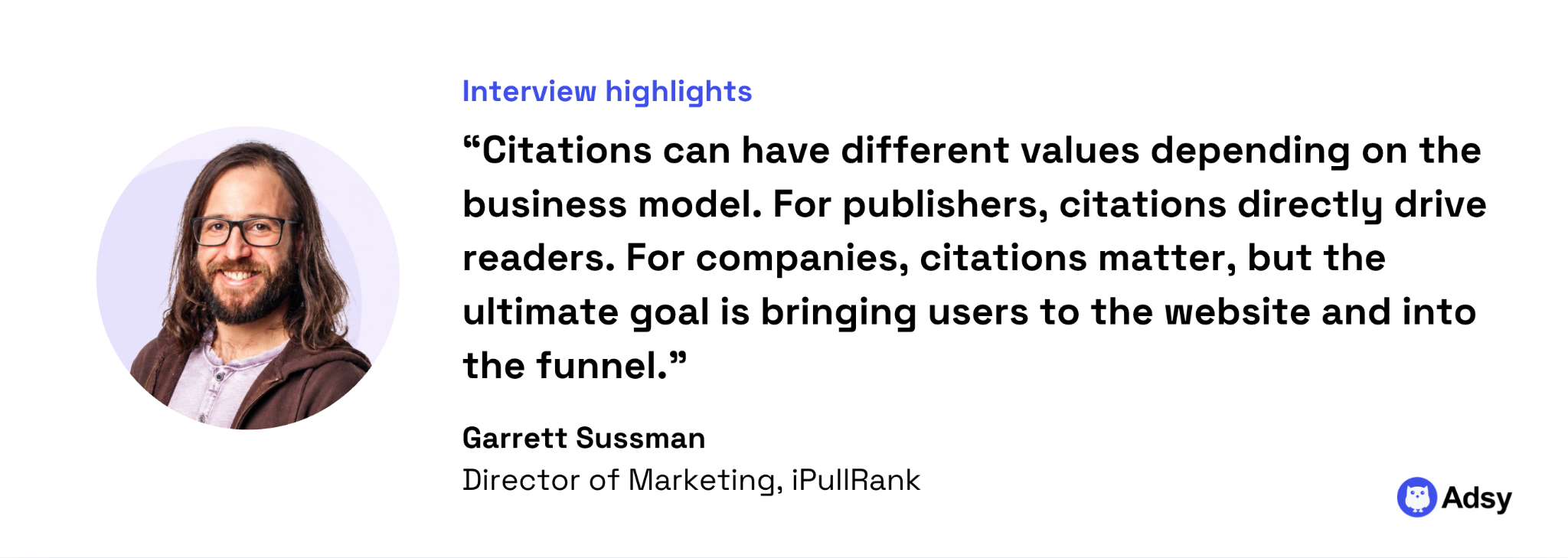
The real challenge is building an AI search measurement framework that ties your inputs, channels, and metrics together.
At iPullRank, we think about AI visibility measurement across three levels:
- Input metrics: First, what content and how consistently are you publishing? Is it relevant to the topics you're targeting? These metrics tell you whether your content even has a chance to appear in AI search.
- Channel metrics: The second level focuses on visibility itself. How often are you recommended, cited, and mentioned? What's your share of voice across different prompts and user personas?
- Performance metrics: The third level consists of the traditional business metrics like traffic, conversions, and revenue. These are ultimately what keep the business running.
But it won’t be the same for every business. For example:
Citations can have different values depending on the business model.For publishers, citations directly drive readers. For companies, citations matter, but the ultimate goal is bringing users to the website and into the funnel.
How to win in personalized AI search?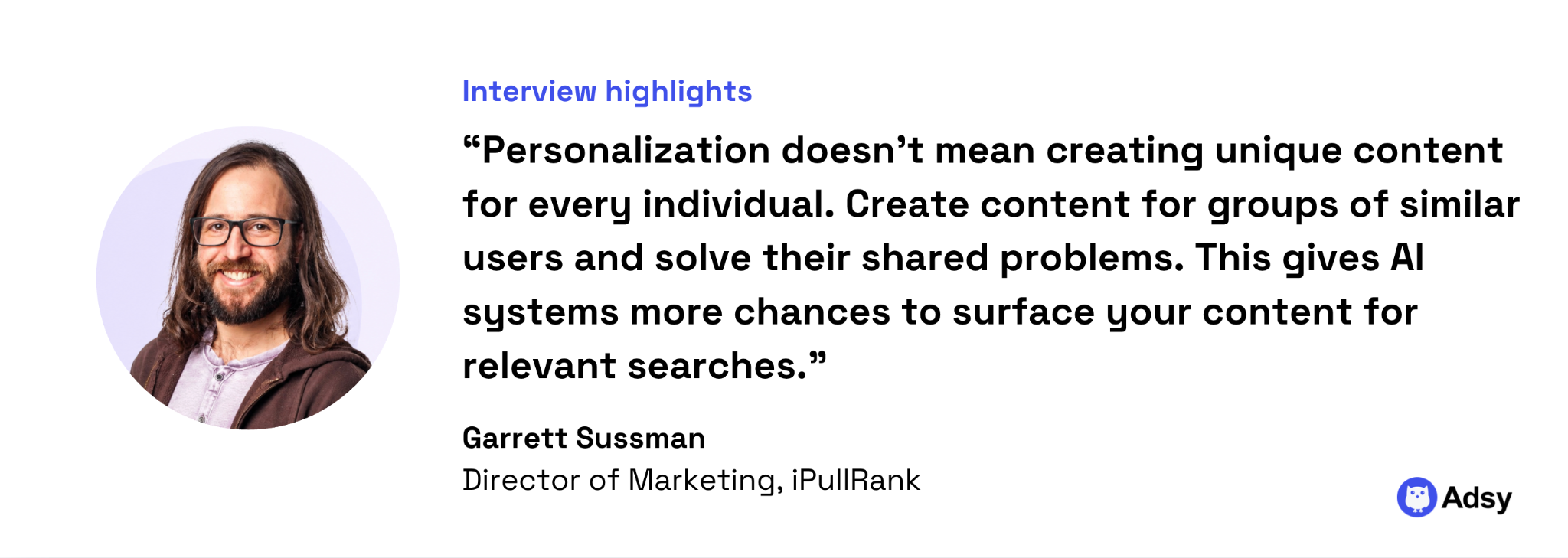
Personalization definitely makes SEO harder.People increasingly expect content tailored specifically to them, especially with AI answers.
There are still many signals that determine whether your brand becomes part of the conversation in AI systems.
SEO is about building and strengthening those signals.
If you want AI visibility, take an omnichannel approach. Make sure your brand is visible across the sources AI systems are most likely to reference.
That includes:
- Social media
- YouTube
- Industry publications
- Blogs
Personalization doesn’t mean creating unique content for every individual. Create content for groups of similar users and solve their shared problems. This gives AI systems more chances to surface your content for relevant searches.
Do rankings still matter?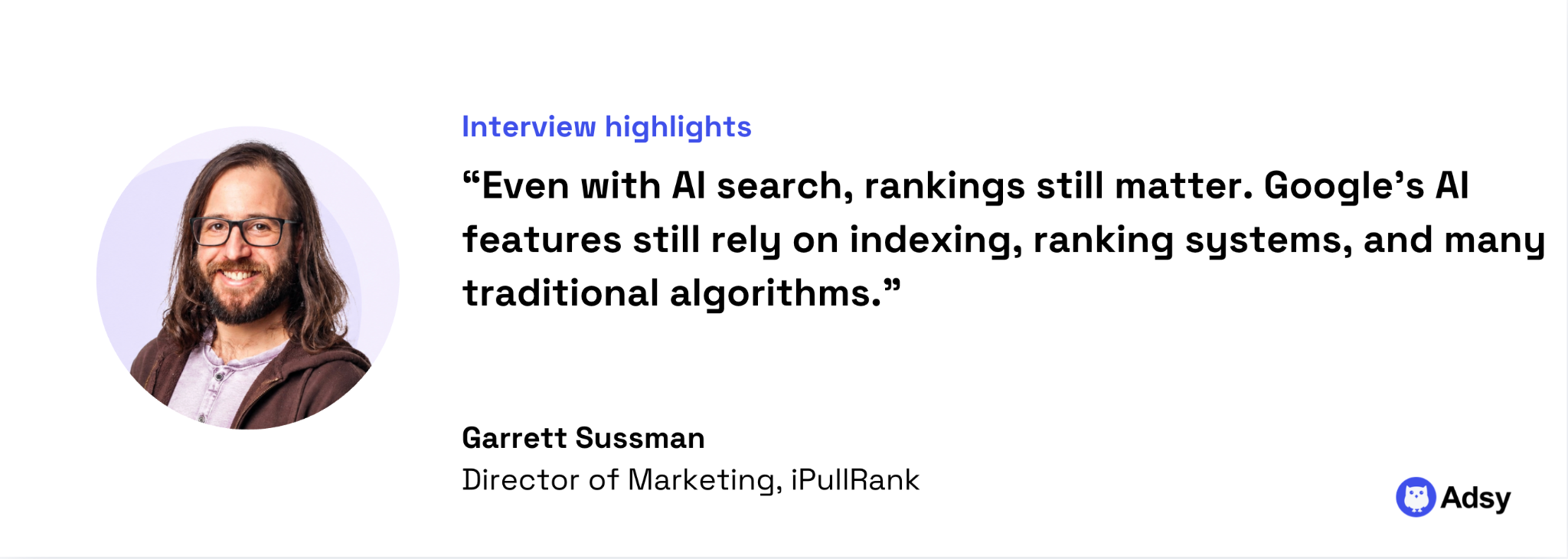
Even with AI search, rankings still matter. Google’s AI features still rely on indexing, ranking systems, and many traditional algorithms.
ChatGPT also uses Google in various ways that are influenced by search rankings.
But it’s not something that can be true forever.
OpenAI could build its own independent search index and ranking system at any point.
How search behavior shapes AI answers?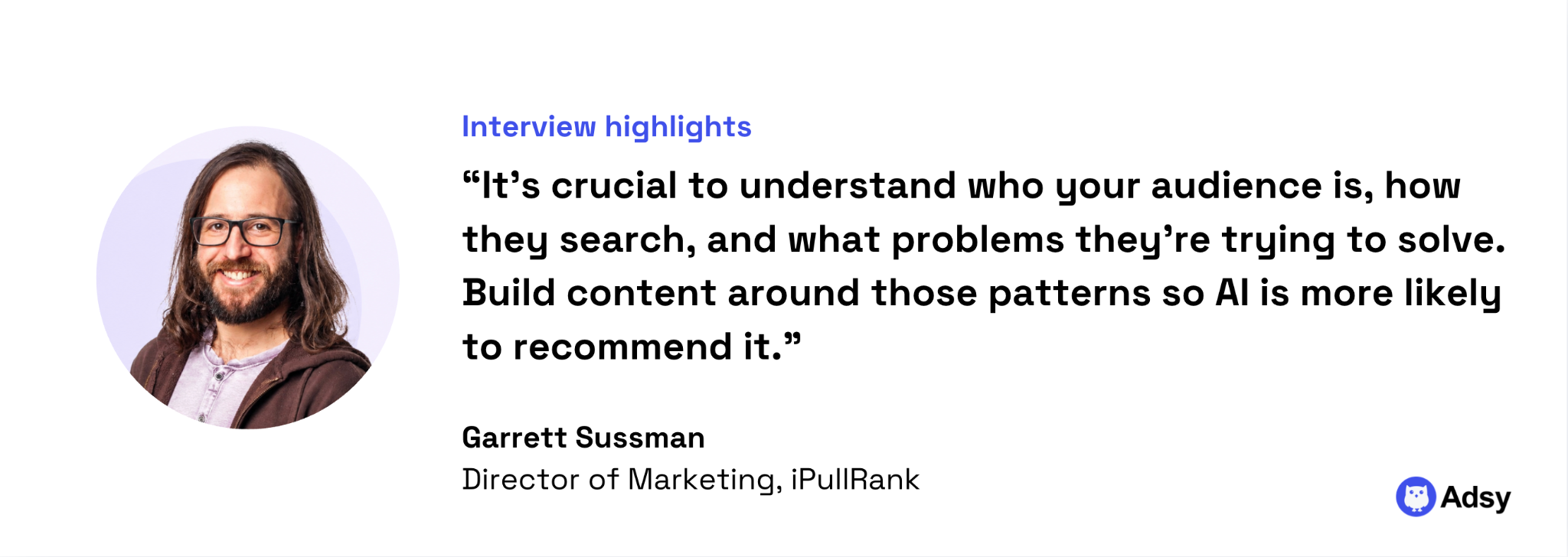
AI systems tend to respond to your framing. They rarely challenge your assumptions. This changes only when the scientific evidence overwhelmingly supports one answer.
As a result, the way your audience phrases their questions directly influences what information AI surfaces.
You can try to create content for everyone. But that's rarely an effective strategy for AI visibility unless you're already the dominant authority in a mature industry.
If you're operating in a newer or rapidly changing market, results may shift every single day.
It’s crucial to understand who your audience is, how they search, and what problems they’re trying to solve. Build content around those patterns so AI is more likely to recommend it.
Backlinks do matter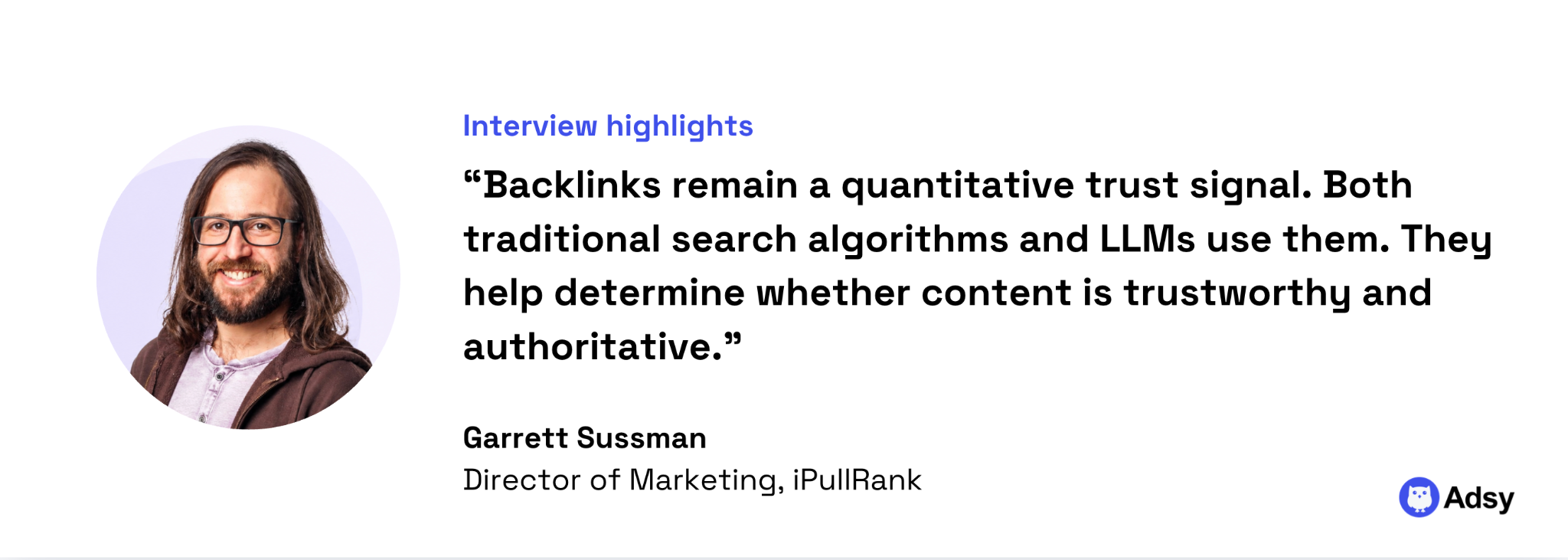
Backlinks remain a quantitative trust signal. Both traditional search algorithms and LLMs use them. They help determine whether content is trustworthy and authoritative.
That isn't going away anytime soon.
Citations vs. traffic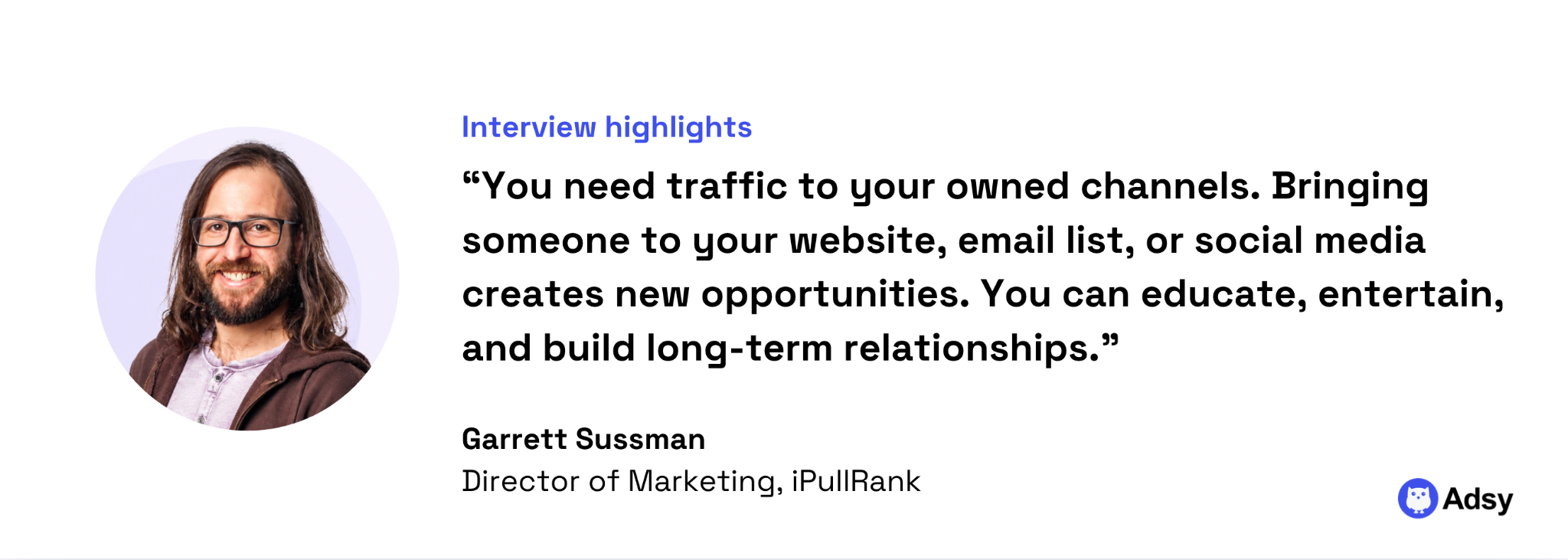
Both citations and traffic matter.
You need traffic to your owned channels. Bringing someone to your website, email list, or social media creates new opportunities. You can educate, entertain, and build long-term relationships.
At the same time, citations in AI search are just as valuable.
Some users complete their entire research process directly in AI search without ever visiting a website. That’s why you need citations.
AI visibility best practices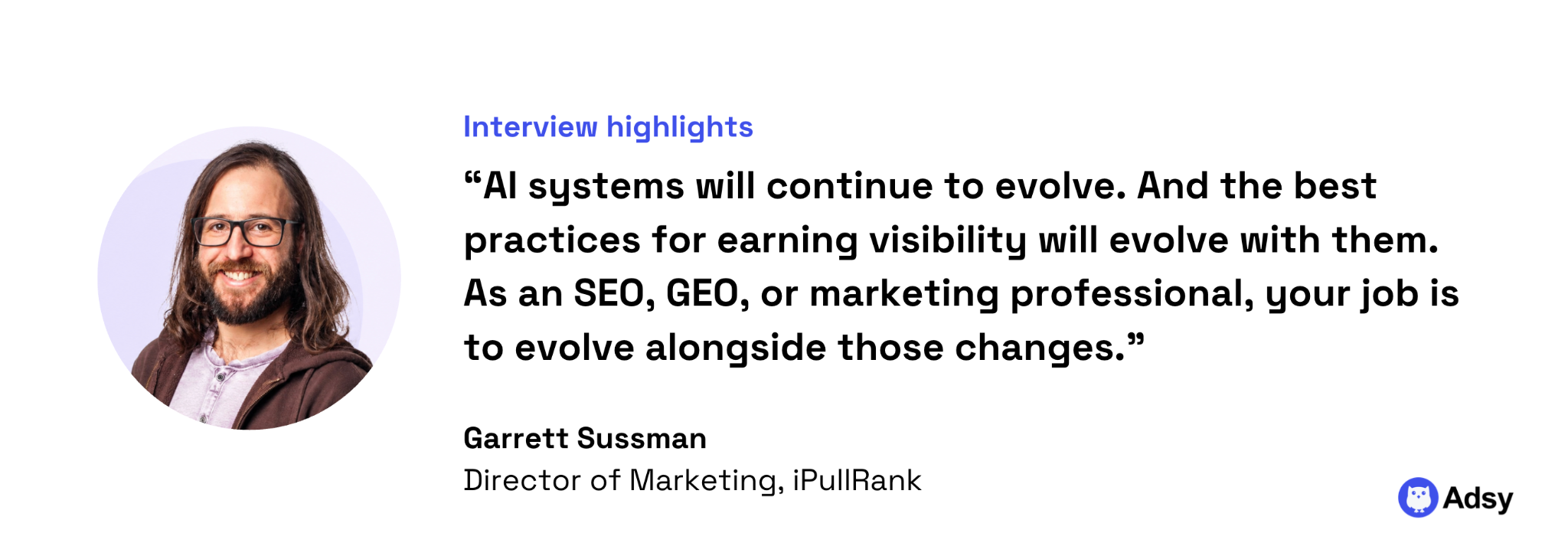
These are foundational best practices for improving AI visibility:
- Structure your content well.
- Make it easy for both humans and AI systems to understand.
- Publish information that's factual and verifiable.
- Avoid unnecessary fluff.
- Include citations.
AI systems will continue to evolve. And the best practices for earning visibility will evolve with them. As an SEO, GEO, or marketing professional, your job is to evolve alongside those changes.
How to create content AI systems can cite? 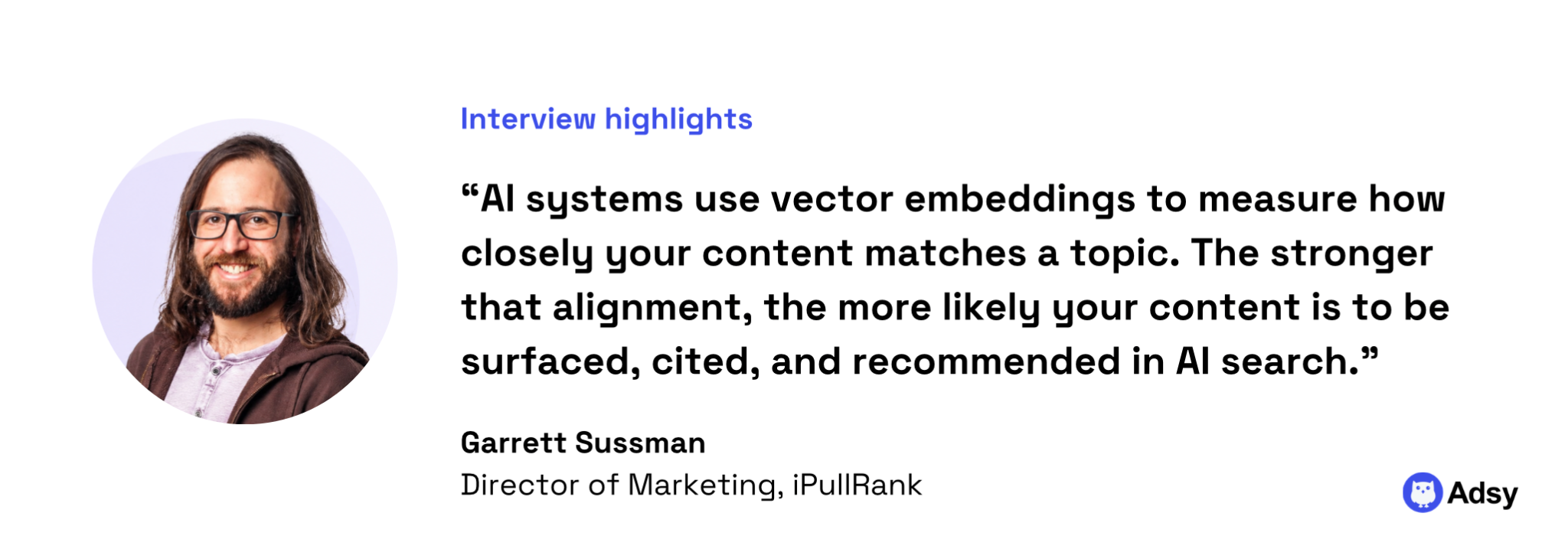
Some of the most important best practices include:
- Cite reliable sources.
- Support your claims with relevant statistics.
- Structure your content into clear, meaningful sections.
AI systems don't always process an entire page. Instead, they often retrieve individual passages during query fan-out. That’s why each section should be able to stand on its own.
Think beyond text.
AI search is increasingly multimodal. Use content formats that best match user intent. That can include videos, audio, images, tables, datasets, and well-structured text.
Beyond that, many traditional SEO fundamentals still apply:
- Try to build a clear site architecture.
- Earn quality backlinks.
- Create semantically relevant content.
- Prioritize facts and citations.
AI systems use vector embeddings to measure how closely your content matches a topic. The stronger that alignment, the more likely your content is to be surfaced, cited, and recommended in AI search.
Stay focused on your expertise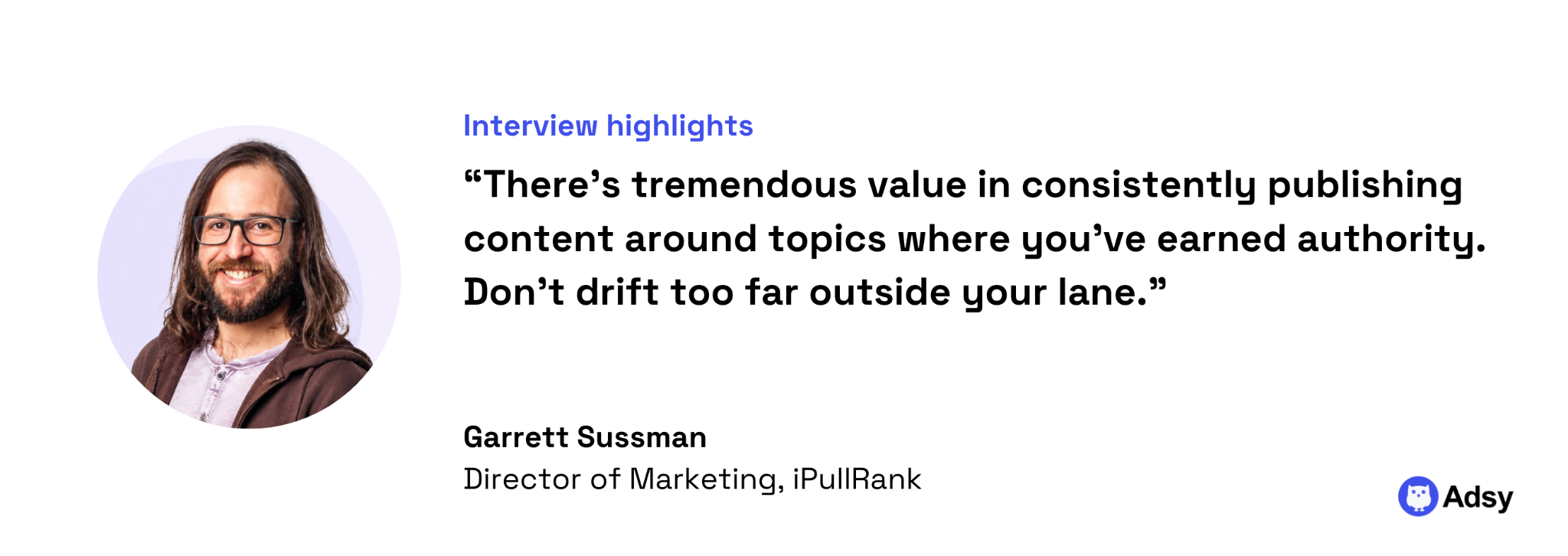
Google develops an understanding of what your website is fundamentally about.
Both Google and OpenAI will increasingly favor websites that remain tightly focused on the subjects they're genuinely authoritative about.
There are obvious exceptions:
- News organizations naturally cover many different topics because reporting news is their specialty.
- Large retailers like Amazon or Walmart sell products across countless categories. But that's still part of their core identity as e-commerce platforms.
For everyone else, staying focused matters.
There’s tremendous value in consistently publishing content around topics where you’ve earned authority. Don’t drift too far outside your lane.
Avoid generic marketing phrases
Focus on outcomes instead of adjectives.
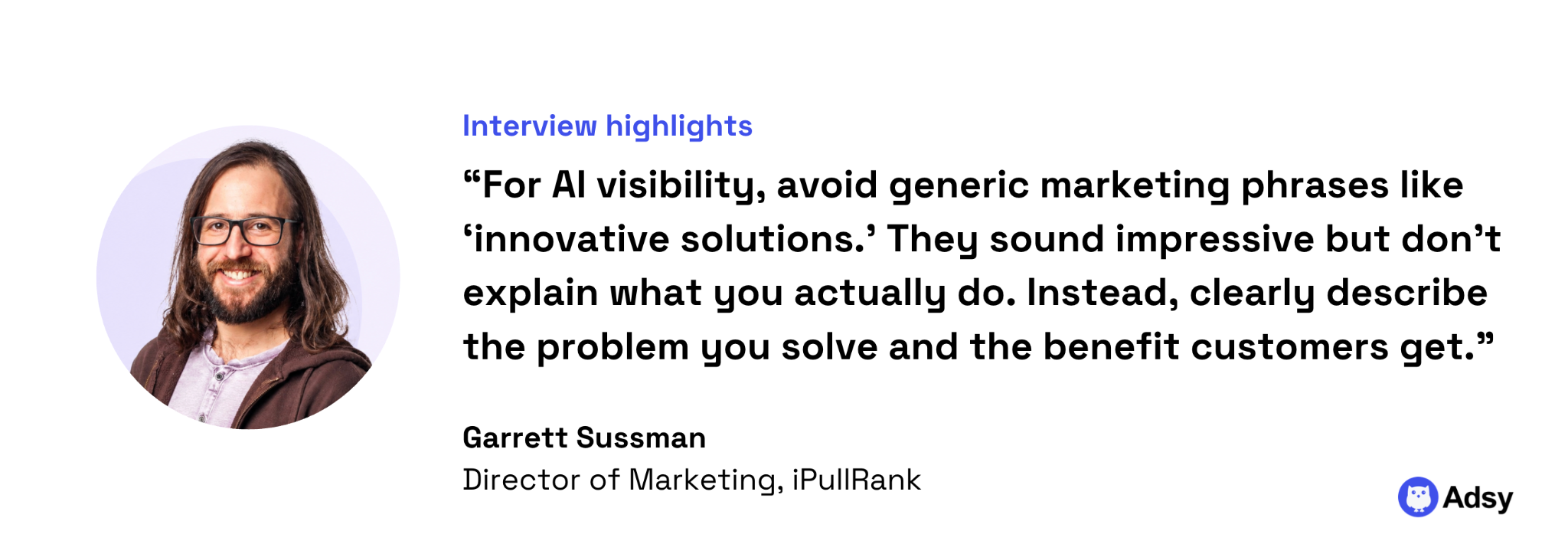
For AI visibility, avoid generic marketing phrases like “innovative solutions.” They sound impressive but don’t explain what you actually do. Instead, clearly describe the problem you solve and the benefit customers get.
Should everyone change their KPIs in 2026?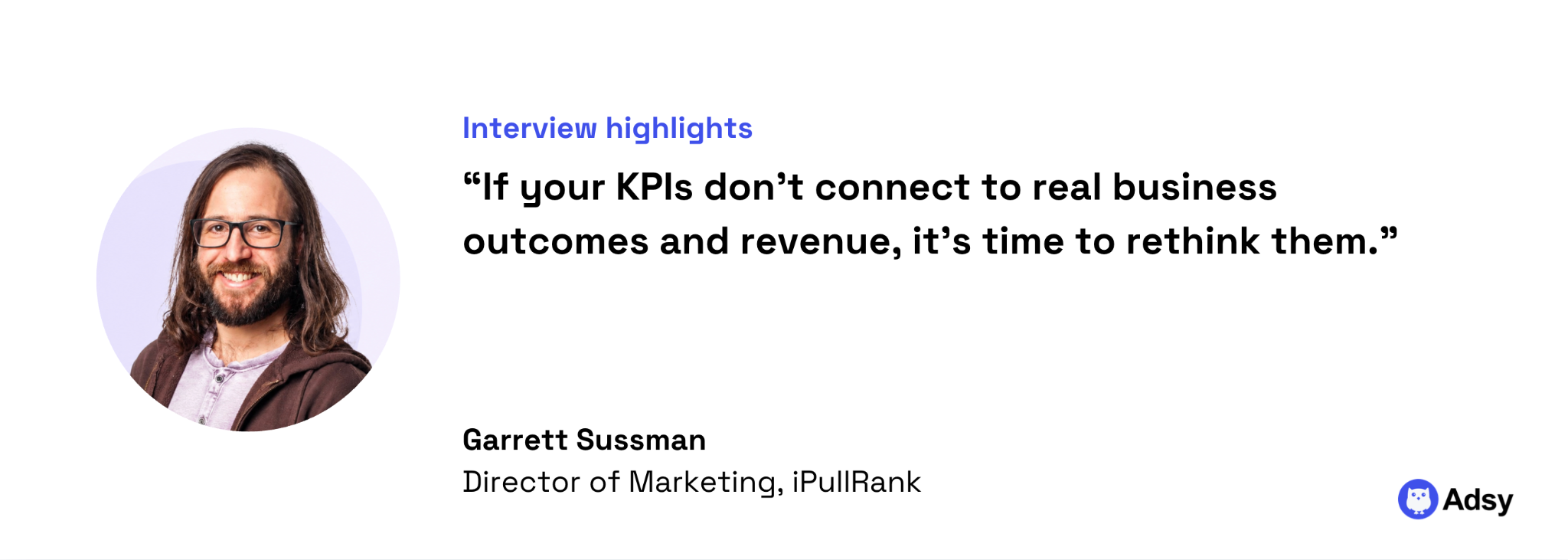
If your KPIs don’t connect to real business outcomes and revenue, it's time to rethink them.
How to measure AI search success?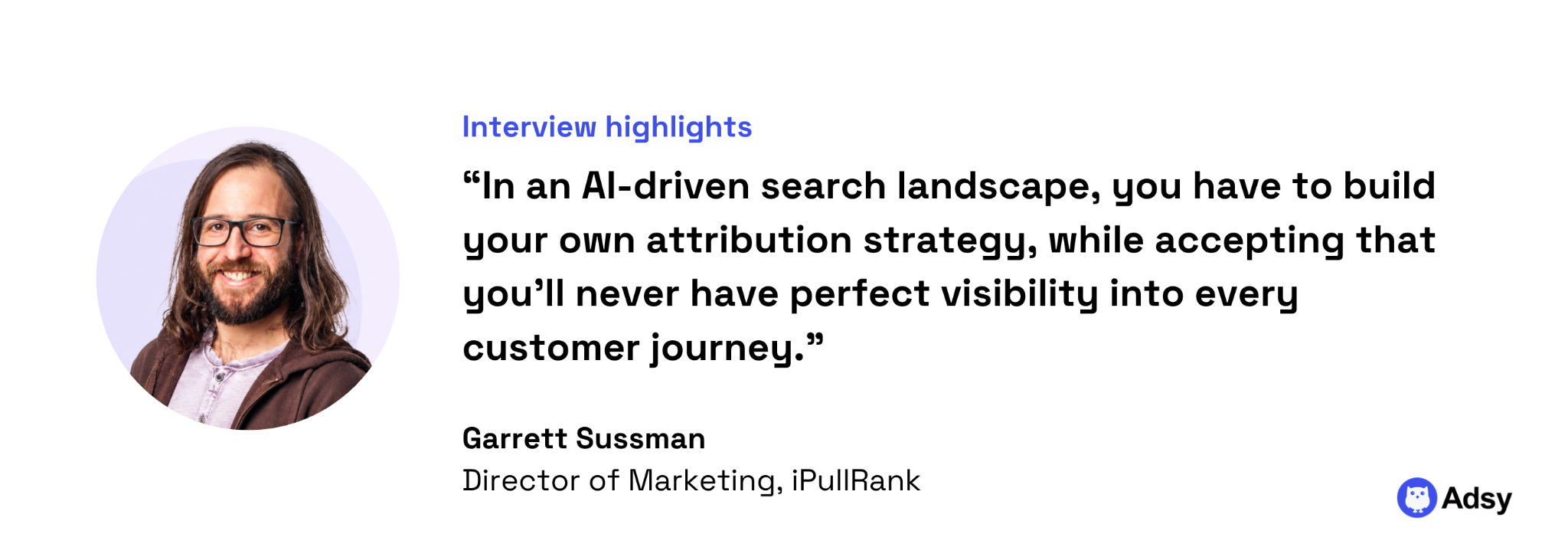
AI search can't be measured perfectly. AI systems are probabilistic. They're constantly evolving. And much of how they work remains hidden.
But people still need solutions. And they’re still going to find your business somehow. The challenge is measuring all the different ways they get there.
In an AI-driven search landscape, you have to build your own attribution strategy, while accepting that you'll never have perfect visibility into every customer journey.
Look for patterns across multiple signals, such as:
- Brand lift.
- Growth in branded search volume.
- Direct traffic from AI platforms.
- Asking customers how they discovered your business.
None of these metrics are perfect on their own. Human memory is unreliable.
A customer might say they found your brand through ChatGPT, while forgetting they had already seen your display ads or retargeting ads.
The digital PR flywheel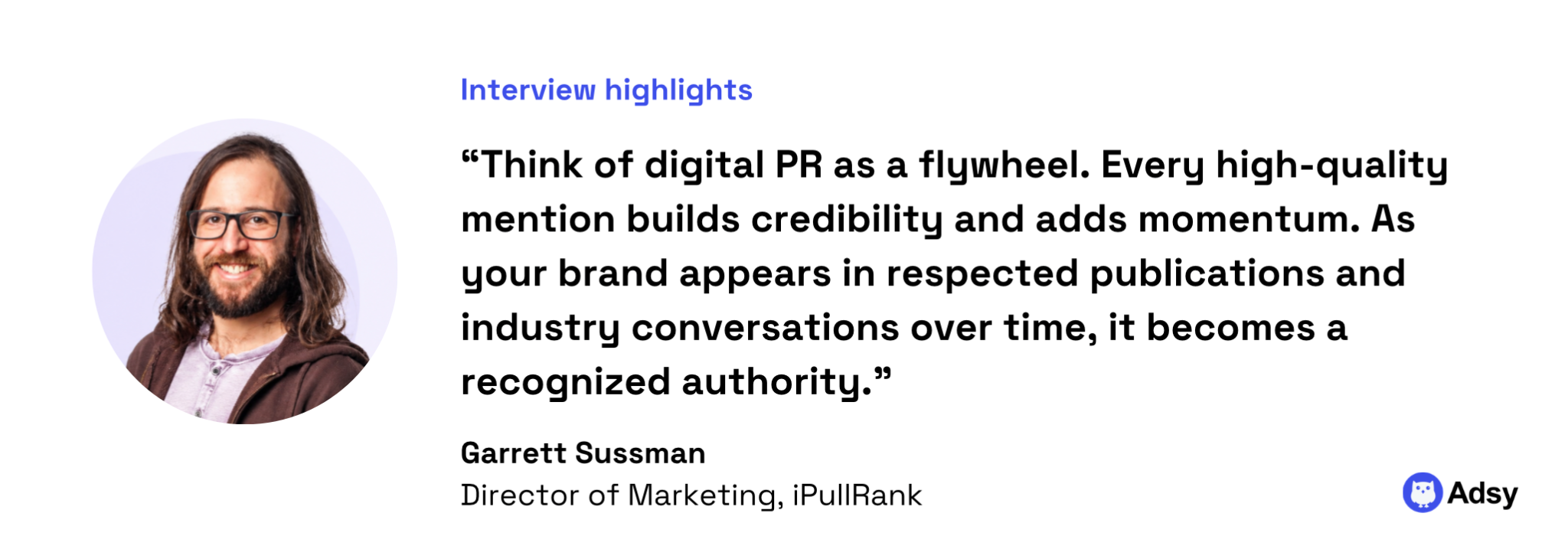
Think of digital PR as a flywheel. Every high-quality mention builds credibility and adds momentum. As your brand appears in respected publications and industry conversations over time, it becomes a recognized authority.
Eventually, you're more likely to be featured in:
- Thought leadership articles.
- Listicles.
- Recommended service roundups.
- Product comparisons.
Those mentions often lead to even more mentions and citations.
But momentum fades if you stop.
Older mentions lose impact over time. So you need to keep earning new visibility to keep the flywheel spinning.
Digital PR beyond link building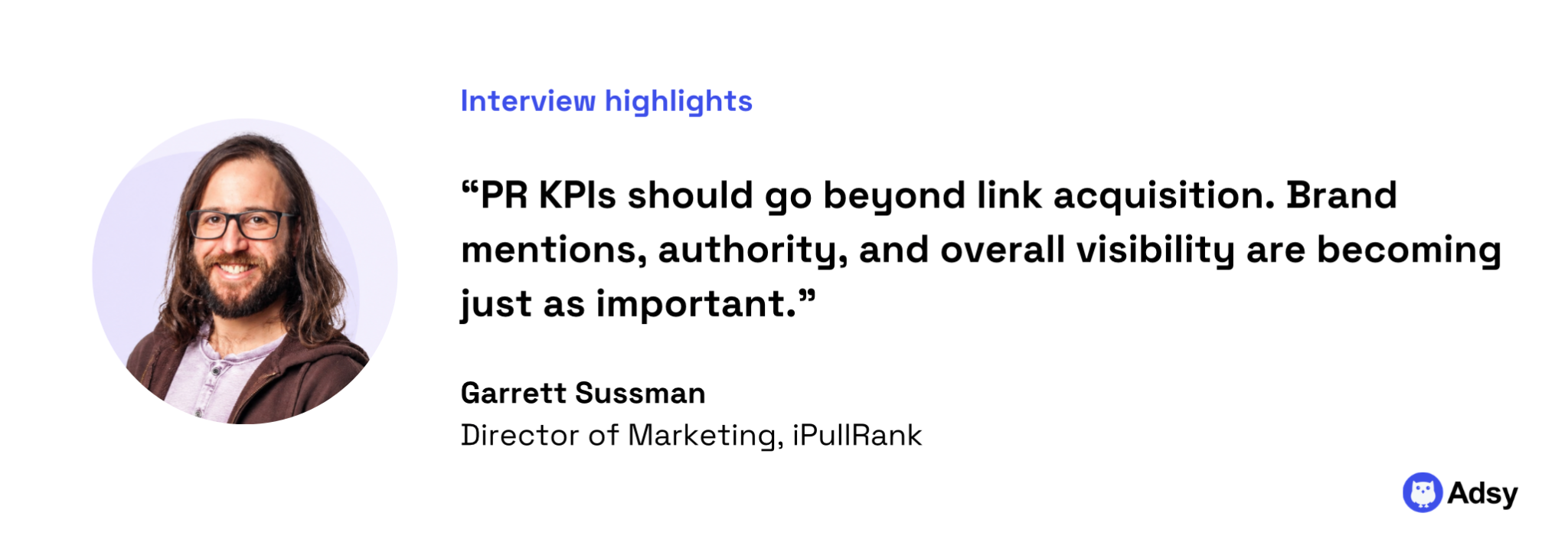
PR KPIs should go beyond link acquisition. Brand mentions, authority, and overall visibility are becoming just as important.
If your team appears on podcasts, speaks at conferences, gives interviews, or publishes videos, you may not earn a backlink.
Even so, those mentions strengthen your brand's presence. And can be surfaced by AI systems through platforms like YouTube, TikTok, and podcasts.
This also changes how we think about links.
The old debate over nofollow vs. dofollow links may matter less in AI search. Even a brand mention without a hyperlink can help build authority.
Biggest mistake brands make when building authority in AI search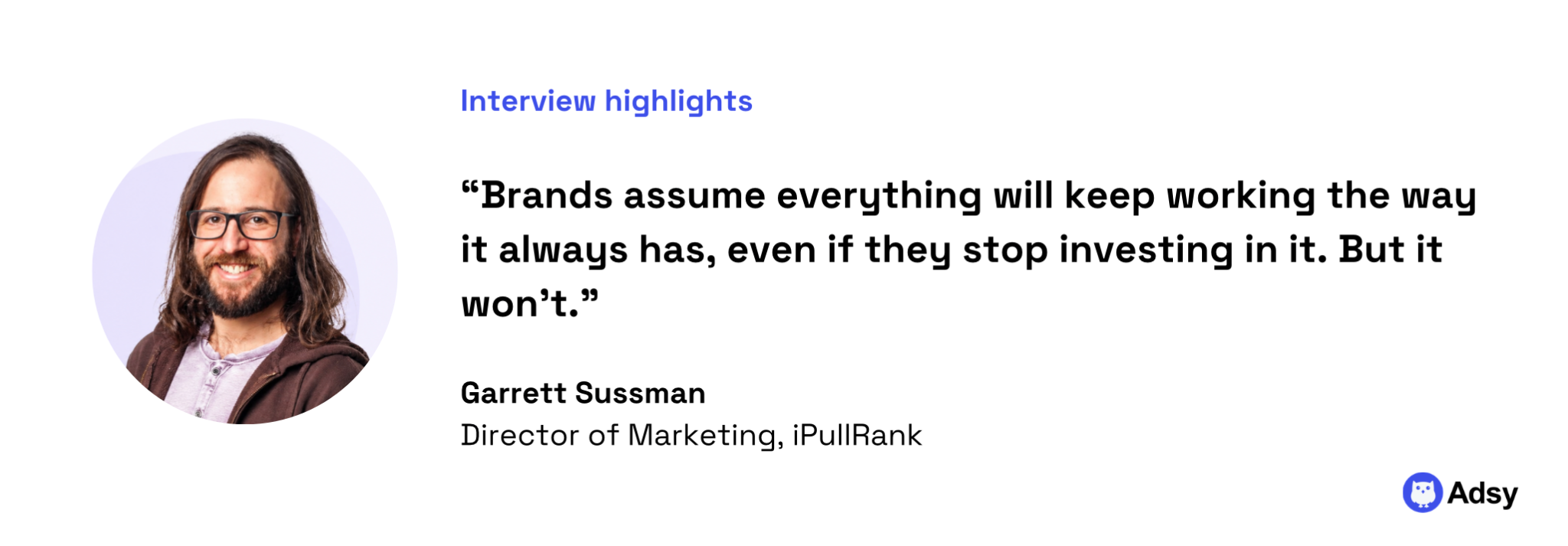
Stopping.
Brands assume everything will keep working the way it always has, even if they stop investing in it. But it won’t.
Everything is evolving. Freshness matters. Experimentation matters.
It’s also important to make informed decisions while understanding the risks.
If you're scaling AI-generated content without any human oversight, you might see short-term gains. But that success probably won't be sustainable because you're optimizing for scale rather than quality.
Your content needs to be researched and edited. It needs to be something you're willing to put your name behind.
These are highlights from our Adsy Talks podcast with Garrett Sussman. For more insights, watch the full interview on our YouTube channel:
All trademarks, logos, images, and materials are the property of their respective rights holders.
They are used solely for informational, analytical, and review purposes in accordance with applicable copyright law.

 Sign Up
 Sign Up