






SaaS Link Building: 10 Strategies for Earning Better Backlinks
SaaS companies have an unusual advantage in link-building: they sit on big data, customer feedback, unique product insights, and technical expertise that most other businesses simply don’t have or lack severely.
Yet, this ocean of link-building potential rarely gets fully explored.
That’s the paradox with SaaS companies. Linkable assets they possess are so plentiful that it’s easy to get lost. It’s also tempting to do everything at once.
So, these companies build hundreds of backlinks but still struggle to gain visibility.
In SaaS link building, more opportunities don't necessarily mean better results. The challenge is knowing which ones can turn the expertise and assets you already have into backlinks worth earning.
The 10 strategies below will help you rethink your current SaaS link-building practices and focus on the link opportunities most worth pursuing.
What makes link building different for SaaS companies?
According to the Content Marketing Institute’s latest research, 95% of technology marketers used short articles or posts in the previous 12 months, while 52% published research reports.
Research reports were also among the most effective content formats, with the majority of technology marketers naming them as a format that produces good results.
There is an apparent discrepancy around link building for SaaS. On the one hand, marketers explicitly name solid research as the most influential content marketing format. On the other hand, the most popular formats they actually use are short articles and posts.
That discrepancy is hardly surprising, given that short posts are easy to produce, while research takes time and data analysis.
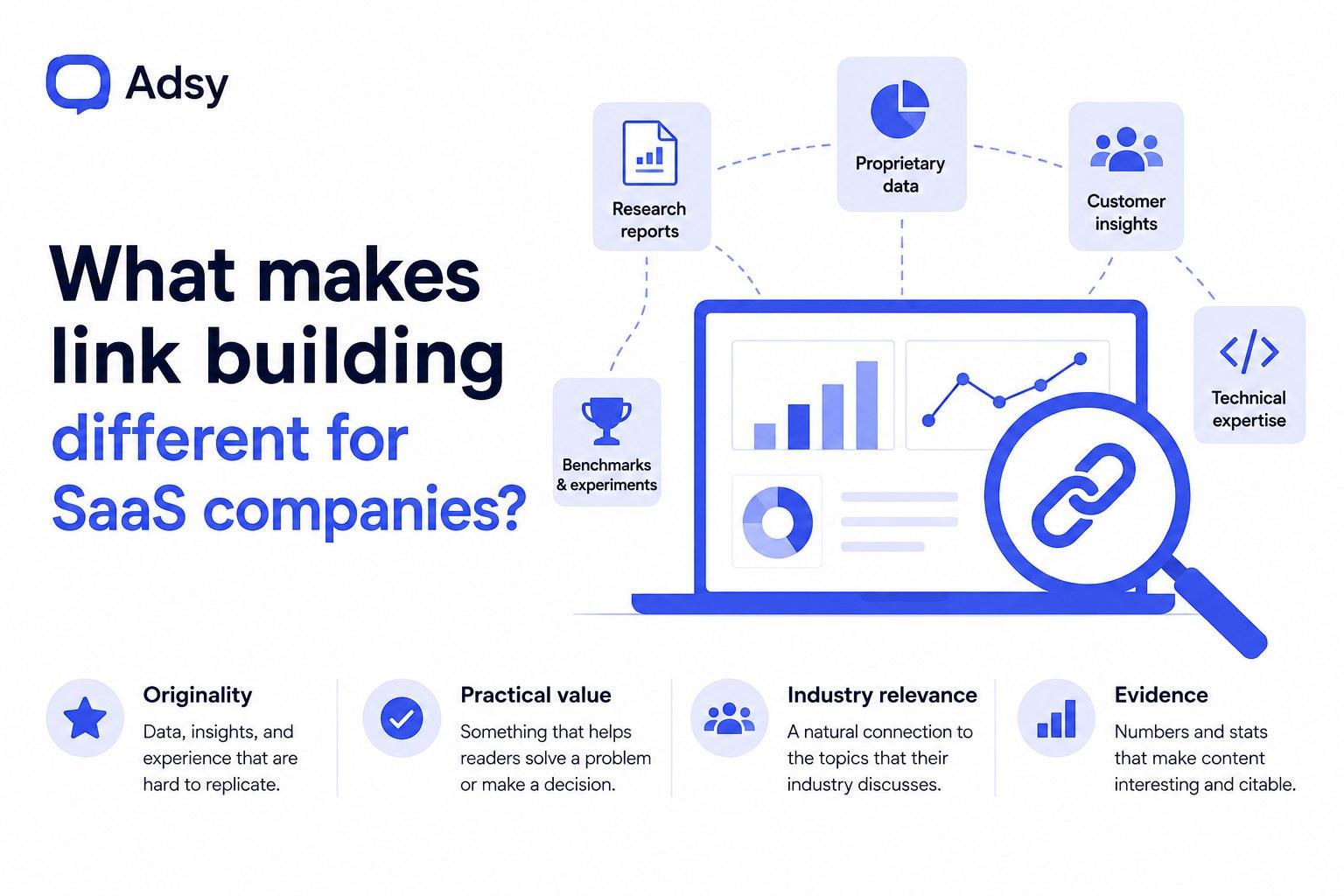
The gap is especially interesting as SaaS companies regularly produce volumes of reference-worthy content: product data, customer insights, proprietary research, technical expertise, benchmarks, experiments, and lessons gathered from working in a particular niche.
Yet, they don’t know how to transform them into valuable backlinks. While other businesses have a constant shortage of data to publish something original, SaaS companies literally sit on data but rarely tap into its link-building potential.
Here is what makes SaaS assets ideally positioned for link-building:
- Originality: data, insights, and experience that are hard to replicate.
- Practical value: something that helps readers solve a problem or make a decision.
- Industry relevance: a natural connection to the topics that their industry and community already discuss.
- Evidence: numbers and stats that make relevant content interesting and citable.
Beyond that depth of expertise, SaaS content also has an implicit scaling advantage.
A single platform might be relevant to marketers, developers, sales teams, finance professionals, agencies, or a specific industry. That gives SaaS companies multiple potential ecosystems in which to earn relevant links.
But having more SaaS link building opportunities can create its own problem.
When a company has research, case studies, tools, integrations, product updates, comparison pages, and thought leadership competing for attention, trying to promote everything usually dilutes the effort. Some assets deserve a serious push; others don't.
10 SaaS link building strategies that work
SaaS products can be complicated. This has a direct implication for link-building, as SaaS customers require detailed information and education. They need to understand what the software does and what problems it helps to solve.
The best link building for SaaS therefore isn't necessarily about pitching more websites. It starts with creating assets that make a publisher, researcher, or industry expert think, “This is worth citing.”
Here are 10 strategies that put that principle into practice.
1. Create original research and industry data
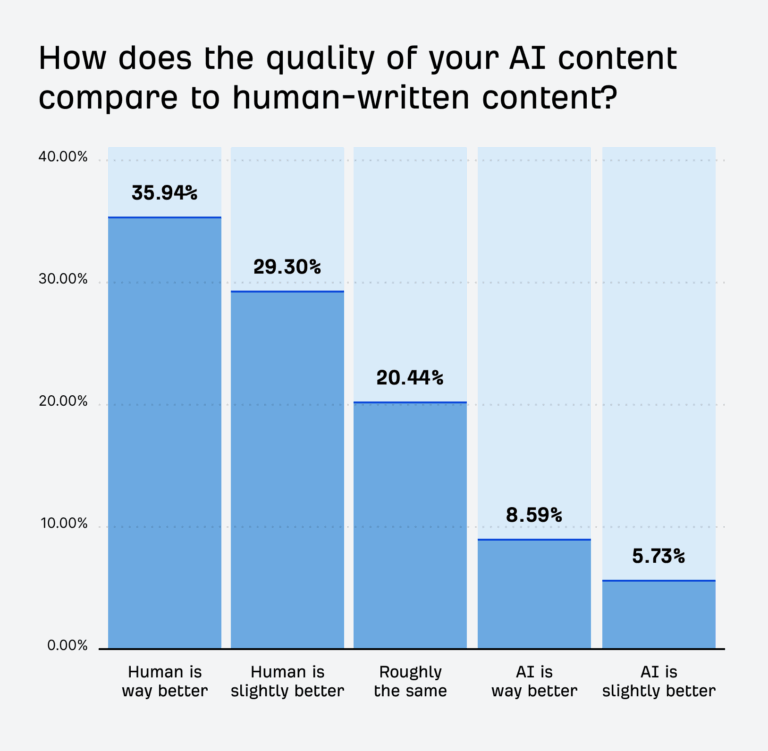
The web is full of recycled information that harms SEO. Especially since AI has made content creation a breeze, marketers often overuse popular chatbots for low-quality content production.
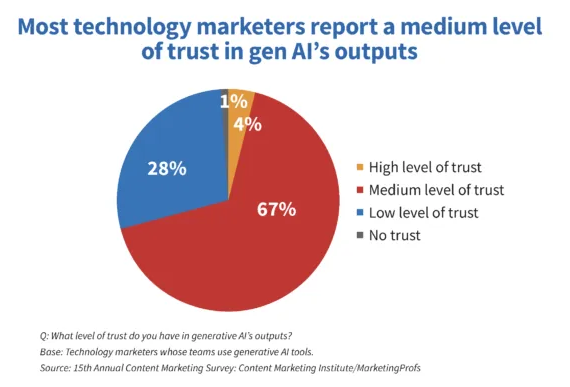
According to research by the Content Marketing Institute, 87% of marketers actively use generative AI tools, but only 1% of them have a high level of trust in their AI-made content:
Source: Contentmarketinginstitute
Under these circumstances, original research and industry data stand out as valuable linkable assets.
The key is to avoid turning the research into a thin promotional exercise. If every finding conveniently proves that your product is the best solution, journalists and other publishers have little reason to treat it as an independent source.
Instead, look for questions where the answer itself is interesting.
A good research project should ideally:
- Answer a specific industry question.
- Draw on original or hard-to-find data.
- Produce findings that others can quote or reference.
If you don’t currently possess good data, you can always dig for some. For instance, you could run marketing research, analyze specific product data, and produce a relevant report. You could also survey customers about emerging practices, ask for their feedback on your products and services, or ask them to evaluate their business gains.
Alternatively, your team could investigate a specific problem faced by your target market.
The important part is to present the methodology of your research clearly, explain the limitations, and highlight the findings that have genuine news or practical value. Openness about these things will add credibility to your findings and make them easy to reference.
A dedicated research page or a report should contain the key figures, supporting charts, methodology, and concise explanations that writers can quote or link to without digging through dozens of pages.
Also, cut the fluff, and if you use AI tools to generate content, be sure to assign an experienced human editor to soften AI vocabulary and add what is known as a final human touch. This could be a shared story, a mini case study, or a slight hint of humor. The goal is to increase readability and improve the ranking power of your research piece.
2. Use SaaS integrations to earn relevant links
Product integrations are the low-hanging fruit of link-building in the SaaS sector. You don’t need to do anything special or approach outreach from scratch; you already have two or more products in your inventory that have a natural reason to mention one another.
If your platform integrates with an HRM, project management tool, commerce platform, CRM, analytics tool, or payment processor, these spaces already have audiences that are keen on knowing about adjacent products.
And a well-developed integration page can become a useful resource for all sides. The trick is not to stop at a basic “We integrate with X” page. Give the integration some substance.
For example, you can create:
- A detailed setup guide.
- A use-case page showing how the two products work together.
- A workflow or automation template.
- A technical integration tutorial.
- A joint customer success story.
This creates several potential link sources at once. You just need to see the opportunity and use it to your full advantage.
The linkbuilding for SaaS is powered by relevance here. The integration partner may reference your documentation, an agency may link to the setup guide, and an industry publication may cite the workflow as an example of how businesses combine the two platforms. These connections are natural and are based on mutual benefits.
There's also room for collaboration. You can co-author a guide with a technology partner, publish joint research, or create a resource showing how the two or more products join forces to solve a specific business problem together. The combined force is always greater than working in silos, and participants are savvy enough to see these benefits without you making a promotion effort.
3. Build free tools and calculators
Tools offer people not only useful information about their problems, but actual solutions. That’s why they are invaluable in link building for SaaS.
Instead of publishing another guide or long article about a particular problem, or explaining how to solve it, a SaaS company can create a calculator, and visitors will actively engage in the process of solving their problems and achieving goals.
What are some of the best ideas in this direction? Try beginning with those that address recurring problems and help to streamline common processes. For example:
- ROI or cost calculator.
- Project planning tool.
- SEO or website checker.
- Marketing benchmark calculator.
- Industry-specific template generator.
- Do-it-yourself survey tool.
This must be a useful tool that can quickly get bookmarked, shared, or referenced.
A publisher writing about the problem can link directly to the tool to increase click-through rates and conversions. Consultants can recommend it to clients. Bloggers can include it in their blogs or guides. You’d be surprised, but even competitors may occasionally reference a genuinely useful resource if it has become a recognized shortcut for solving a particular problem.
Some particularly useful and popular tools may long outlive their content medium. An article may become outdated, but a useful tool it contains will continue to attract clicks and bring in high-value visitors.
A SaaS company shouldn’t build a tool simply because it's interactive and others have used it to their advantage. A better approach is to stay within your particular SaaS area of expertise and develop only those tools that help strengthen your authority and improve SEO performance.
4. Turn customer success stories into link opportunities
Customer success stories are widely used to increase trust and build a positive reputation. However, the same success stories can get a second life when used as linkable resources.
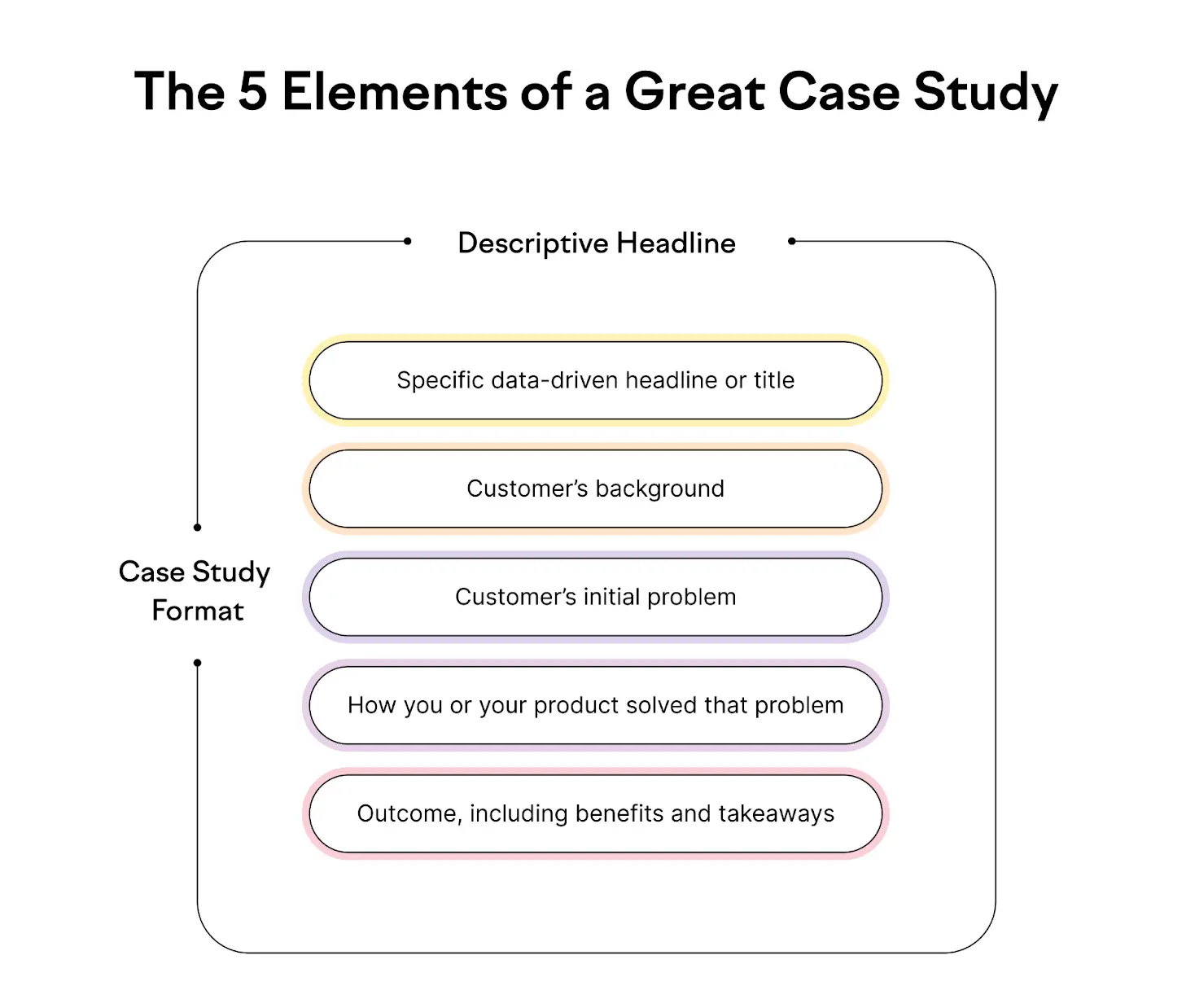
The trick is to move beyond the familiar “Company X used our software and got great results” format. A stronger case study contains a problem, a process, evidence, and a lesson that other businesses can apply. A good practice is also to describe a client in a favorable light—this creates empathy and increases trust.
How exactly can you turn customer success stories into link opportunities? Here are several examples for inspiration:
- An ecommerce SaaS company could turn a customer's experience into a detailed analysis of how it reduced checkout friction.
- A project management platform might document how a distributed team redesigned its workflow.
- A marketing software provider can showcase how their product helped a known client drive conversions, boost sales, and increase revenues.
The product remains part of the story, but the business lesson becomes the reason to read and reference it. The key is to describe the achievements in as much detail as possible. Avoid vague wording and generalized conclusions.
Ideally, develop only those case studies that have documented statistics from problem identification to solution implementation, and ask client representatives to provide concise written feedback to increase credibility. Coordinate what you publish with each client to avoid possible legal and ethical collisions.
Source: Semrush
5. Contribute expert insights to industry publications
If anything, SaaS companies have a surplus, not a scarcity of expertise. For link-building, the challenge is to make that expertise appear in front of the interested audience’s eyes.
Research and shortlist publications within your SaaS niche. Drop unscrupulous publications with high spam scores, and leave only those with strong authority scores (use free authority checkers by Ahrefs or Moz). Then, as part of your outreach process, offer expert insights and proprietary data to naturally fit the publication’s specialization.
For instance, if you develop software for cybersecurity, contribute to industry publications and news outlets that cover cybersecurity and everything around it. Your contribution can take on many forms:
- Expert commentary on an emerging digital security trend.
- An answer to a cyber journalist's request for expert opinions.
- Share a quote to an industry roundup.
- Write a useful article for a featured publication.
What’s interesting is that it’s not a particular contribution form that will define whether you fail or succeed. The key ingredient for successful link-building is your genuine desire to make a difference. Instead of writing a shallow article with recycled, widely available information, focus on providing deep insights and something that your target audience cannot easily find elsewhere.
You don’t need to approach different publications with unique insights. Take one particular topic or focus area and pitch it to different recipients.
This is where proper pitching starts to make a huge difference. What matters here is whether you’re vague or specific.
For instance, an opening email phrase “Would you be interested in publishing our article on the customer onboarding process?” won’t impress your outreach partner.
Now, compare this to “Here's what has changed in customer engagement after introducing our proprietary AI-assisted support”. This is much more concrete, giving an editor something to discuss and approve with their publishing team.
6. Use digital PR around product and company news
Not every change in your SaaS business deserves a public announcement. Some things should remain inside your corporate communication field.
For example, a new executive appointment, a new partnership or merger, a business optimization initiative, or a training program—these make sense for your team but create additional information noise when shared externally.
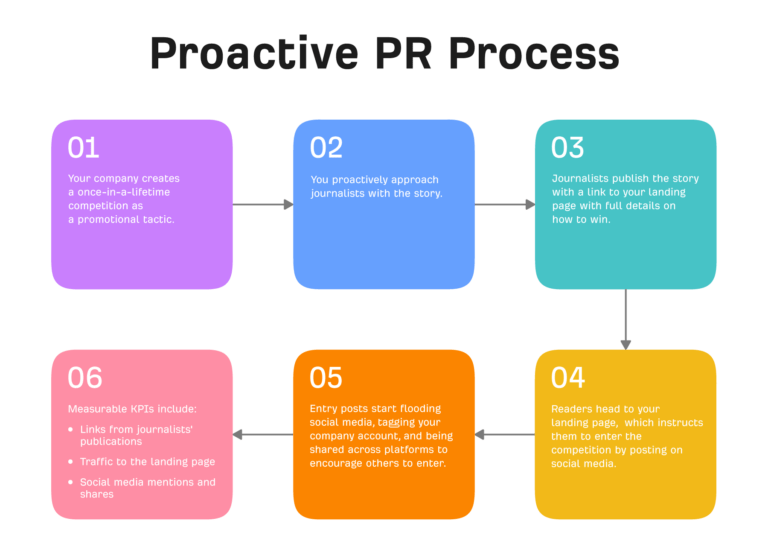
Digital PR is a powerful information amplifier. Think of it as a magnifying glass that you can point to an important news story or product update to make it more visible. This visibility is exactly what you need for link building for SaaS.
Source: Ahrefs
This shifts the link-building quest from a passive “How can we get journalists or bloggers to quote our product or corporate news?” to an active “What would make a journalist want to cover our story in the first place”?
The art of digital PR implies using storytelling techniques to appeal to human emotions. Some effective techniques that work particularly well for SaaS companies include:
- Reactive PR: Respond quickly to breaking news, regulatory changes, new technologies, or industry developments with a useful expert perspective.
- Newsjacking: Connect your expertise or product information to a hot, developing news story in your niche. Essentially, you hijack that story and free-ride on the hype around it.
- Data-driven visual assets: Turn interesting findings into charts, infographics, or other easy-to-reference formats that publications can incorporate into their coverage.
- Expert commentary: Associate the power of personal brands (your executives, managers, subject matter experts) with particular product and service information.
The time when PR was only effective on major news outlets and platforms is long gone. Today, people and search engines alike receive and trust multiple authority signals.
So, your digital PR must spread across various channels, including but not limited to social media, major forums and review sites, industry bloggers, podcasts, and even dedicated YouTube channels.
7. Create comparison and alternative pages that attract links
Comparison pages can be a surprisingly good linkable asset, because they bring order to the informational noise so common in the SaaS industry. Software buyers don’t make buying decisions easily; they read a lot of guides, endlessly compare options, and ideally look for free trials. This creates uncertainty, which a good comparison page can reduce and restore order (if you know how to articulate the benefits of your SaaS products).
The main challenge is to be persuasive without being pushy. A too-salesy comparison where your product is the obvious choice may even scare away knowledgeable and finicky buyers. Comparisons will only attract links if they sound natural and contain enough technical details.
And there is a hidden bonus here. A well-researched alternative page or a comparison can get a second life when reused by consultants, reviewers, industry publications, and businesses creating buying guides.
You need to earn references naturally, instead of manufacturing or buying them. Let this idea rest with you for a while before you move on to the next strategy on our list.
8. Repurpose original content into linkable assets
The more natural references you earn from a piece of content, and the more people voluntarily share and link to it, the higher the repurposing potential for such content.
By repurposing, we mean turning a particular content format into multiple other formats without changing its essence. A detailed industry report, for example, might contain dozens of statistics, observations, and examples that are worth spreading beyond the original publication.
Possible content formats for repurposing your report may include:
- A short infographic or data visualization on your website.
- A collection of expert quotes or findings published in your blog.
- A downloadable checklist or template.
- A presentation or webinar that you share with your strategic partners.
- A series of focused articles, spin-offs speaking in Hollywood movie terms.
SaaS linkbuilding will only benefit from such systematic content repurposing. You just need to continuously monitor the performance of your initial content pieces and repurpose the best performers.
The bottom line: repurposed assets create plenty of new link opportunities. Different formats appeal to different publishers, communities, and audiences, so repurposing allows a strong idea to travel further without requiring an entirely new research project every time.
9. Publish statistics pages worth citing
People constantly need numbers to support their claims and arguments. And today they need something concrete more than ever.
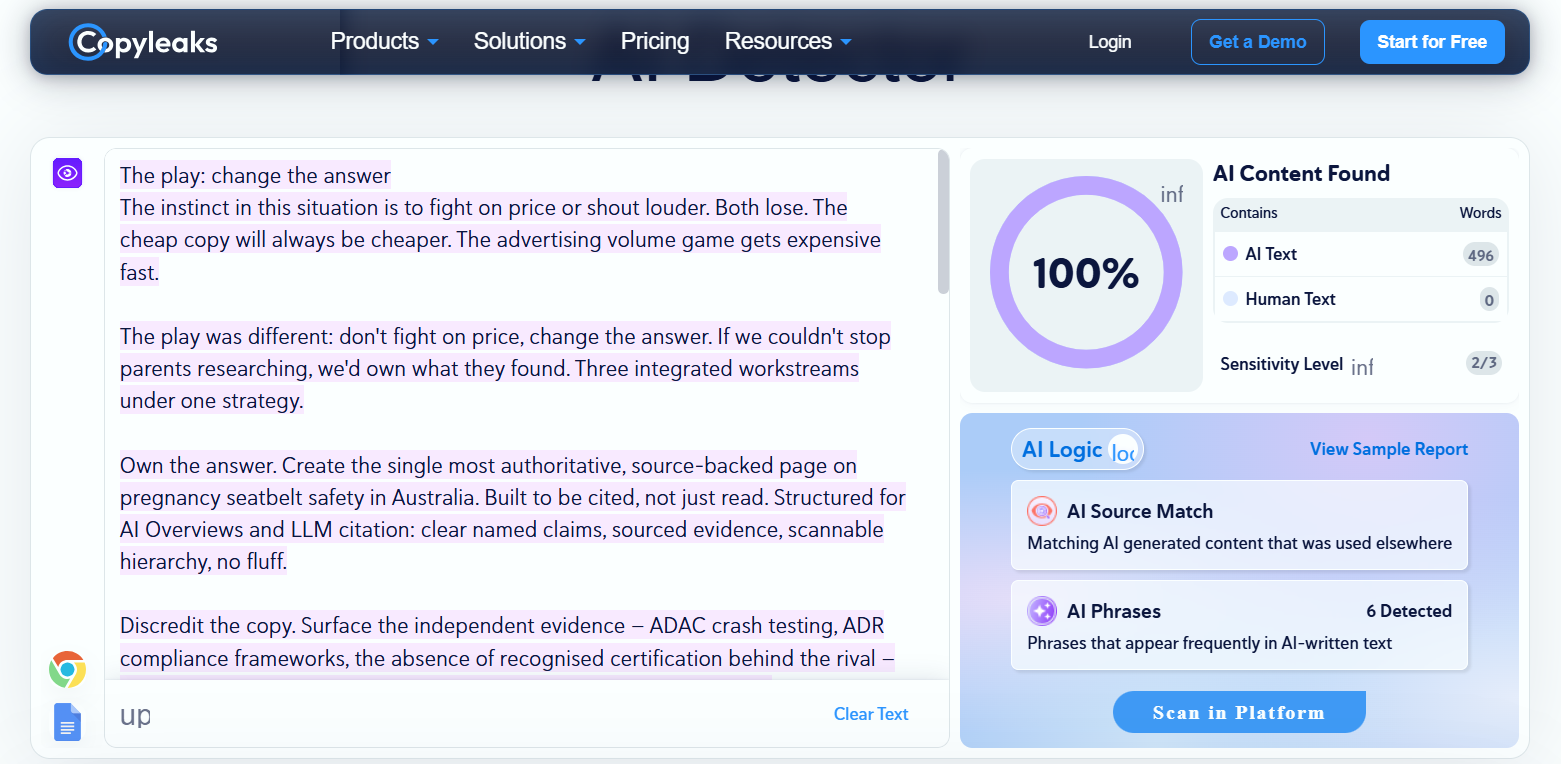
If you check ten random articles you can find online for AI content, most likely eight or nine of them will be flagged as AI content. That’s how bad the current online content has become since the introduction of ChatGPT and other large language models. The web is full of recycled, generic articles and posts, while original, supported by numbers content has become increasingly rare.
Source: Copyleaks
If your SaaS company can fill in this gap and give people a reliable figure in a format that's easy to find and verify, you’re already better than 90% of content creators out there. Your statistical information will create a natural reason to link back to your site.
Publishing statistical pages worth citing requires certain knowledge and expertise. A strong statistics page should include:
- Recent figures from credible sources.
- The original source for every important statistic.
- Publication dates so readers know how current the data is.
- Brief context explaining what each number actually means.
Search engines reward statistical information that is relatively new, i.e., one or two years old at most. So, it’s a good practice to constantly review your statistical pages and update information whenever possible.
Your statistical pages can take on many forms. The most effective ones include presentations, reports, research pieces, and business cases. By the way, you can exchange presentations and reports for your visitor subscriptions or contact information (filling in short forms on your site). If the statistical content you gate is not too difficult to obtain, you’ll kill two birds with one stone: earn links and acquire leads.
10. Find and reclaim unlinked brand mentions
Not every link has to be earned that hard. Some easier link opportunities are sitting and waiting to be taken.
Your SaaS company is constantly leaving an informational trace: articles, blogs, social media posts, research pieces, expert commentary. Somewhere your brand or product names are already mentioned, but not linked back to your website or relevant product page.
These are called unlinked brand mentions. Your goal is to find them, select the worthy ones (e.g., where your brand is mentioned in a positive light), and request the author or publisher to insert a link to your product or brand.
Selecting the good link opportunities is the key part. Good candidates typically include:
- An editorial article that discusses your company or product.
- A partner page that mentions your product or brand.
- A review or comparison that doesn't link to your product page.
- An outdated page that points readers toward an old URL.
Compared to link-building from scratch, the outreach process here is much easier because the hard part has already happened: someone decided your company was worth mentioning. All you need to do is to point out the existing mention, explain why linking to the relevant page would be useful to readers, and provide the most appropriate URL. There is no need to demand a backlink or pretend that every mention requires one.
How AI is changing link building and brand authority
Unlike a popular belief, AI isn’t forcing backlinks to retire. It just changes the environment in which backlinks exist.
SaaS companies need to be especially aware of how AI is changing online visibility. Instead of fighting for a top place in search results, software-making companies must aim to get into AI-generated answers.
From backlinks to broader authority signals
Traditional SEO tends to frame a backlink as a vote from one website to another. That remains useful, but visibility in the AI age is no longer about a single metric.
A SaaS company can be mentioned in a news article, on an industry blog, in social media posts, in a partner’s presentation, or discussed by a respected presentation reviewer. All these mentions occur at different times and in different places, but together they send multiple trust signals and strengthen a SaaS company’s presence within a particular topic.
This is where link building for SaaS starts to overlap with brand authority.
Your SEO objective as a SaaS brand isn’t simply to collect as many referring domains as possible. It's to become a credible and recognizable source of information within the topics your company wants to be associated with.
AI makes originality more valuable
AI has made professional-looking content easier to create. Anyone who relied on generic articles as their primary linkable asset is now losing their bread and butter, so to speak. The web is flooded with shallow articles on SaaS topics, and nobody wants to read them.
Original, human-made content has become more scarce. It’s harder to make, but it’s essential for effective SaaS link building.
Source: Ahrefs
Where there is a problem, there is also an opportunity. SaaS companies can leverage their proprietary research, product data, customer insights, expert observations, industry benchmarks, and genuinely useful tools to close the originality chasm.
Original information and statistics can provide evidence that will positively stand out in the ocean of AI-generated fluff.
Particularly useful content forms include:
- Original data that reveals a previously unreported SaaS trend.
- First-hand technical expertise from practitioners.
- Software-focused research with a transparent methodology.
- Digital tools that solve a specific customer problem.
- Unique examples or corporate case studies.
AI can change the link-building workflow, too
The lack of content originality doesn’t mean AI is useless in link-building. Not at all. You don’t need to uninstall and unsubscribe from your favorite AI applications simply because someone doesn’t know or doesn’t care to learn using AI properly.
AI tools can help you prepare research, summarize the key points, and create drafts, but your original data will still be at the center of your content creation. AI can massively speed up your work, while originality and a unique human voice (a professional writer or proofreader) will make your creation highly valuable for link-building.
AI-powered process automation is what SaaS companies should be building if they want to earn more backlinks. For instance, AI tools can help you:
- Identify appropriate publications for link-building.
- Analyze competitor backlink patterns.
- Cluster prospects by topic.
- Summarize editorial guidelines (if not readily available).
AI is exceptionally good at finding link-building opportunities, but it is still weak at identifying which ones are worth pursuing.
Human judgment remains particularly important when evaluating relevance, editorial quality, brand fit, and the actual reason a publication would want to reference a piece of content. And the more crowded the web becomes with generic AI-made content, the more valuable human judgment becomes.
Conclusion
SaaS link building is unique in the way that it already sits on an abundance of linkable assets. SaaS companies have data, expertise, customer insights, integrations, research, tools, case studies, and industry knowledge. So, lack of material is the least of the problems that anyone doing linkbuilding for SaaS has to worry about.
The key difficulty is identifying which of these materials are worth turning into link opportunities. Here lies the second peculiarity of the SaaS link-building model: better backlinks come from usefulness, originality, and relevance.
For you as a software provider, the key task is to create something genuinely useful or interesting enough that another website has a reason to reference it. Whether it's original research, an integration guide, a calculator, a case study, or a statistics page, the link should be a consequence of the asset's value rather than the sole purpose behind it.
FAQ
What is SaaS link building?
SaaS link building is the process of earning backlinks to software-as-a-service websites from relevant, authoritative sources. This process mainly relies on original, linkable assets that a SaaS business model constantly produces: unique technical data, expert insights, relevant digital tools, case studies, and original research.
Why is link building important for SaaS?
SaaS companies are now facing fierce competition as modern technologies (particularly AI) make it easier for new players to enter this niche. This makes visibility and authority a scarce resource, with backlinks being a powerful driver of authority and referral traffic acquisition. Via backlinks, SaaS companies can access broader audiences and support their brand recognition.
What makes a good SaaS backlink?
A strong backlink for a SaaS company is one that is placed in an authoritative place, is relevant to its specific niche, and fits naturally into the surrounding content. The latter is particularly important, as it should give the picky SaaS reader a genuine reason to follow the link.
Can AI help with SaaS link building?
AI tools are particularly useful for helping SaaS companies identify link-building opportunities, find unlinked brand mentions, and create content at scale. However, AI is not a magic wand; without expert human oversight, it lacks focus and tends to produce low-value, overly generic content. In linkbuilding for SaaS, AI should support, rather than replace human judgment.
All trademarks, logos, images, and materials are the property of their respective rights holders.
They are used solely for informational, analytical, and review purposes in accordance with applicable copyright law.


 Sign Up
 Sign Up