






Rand Fishkin: “Traffic Is Now a Vanity Metric” & Other Interview Highlights
Undefined array key "avatar"
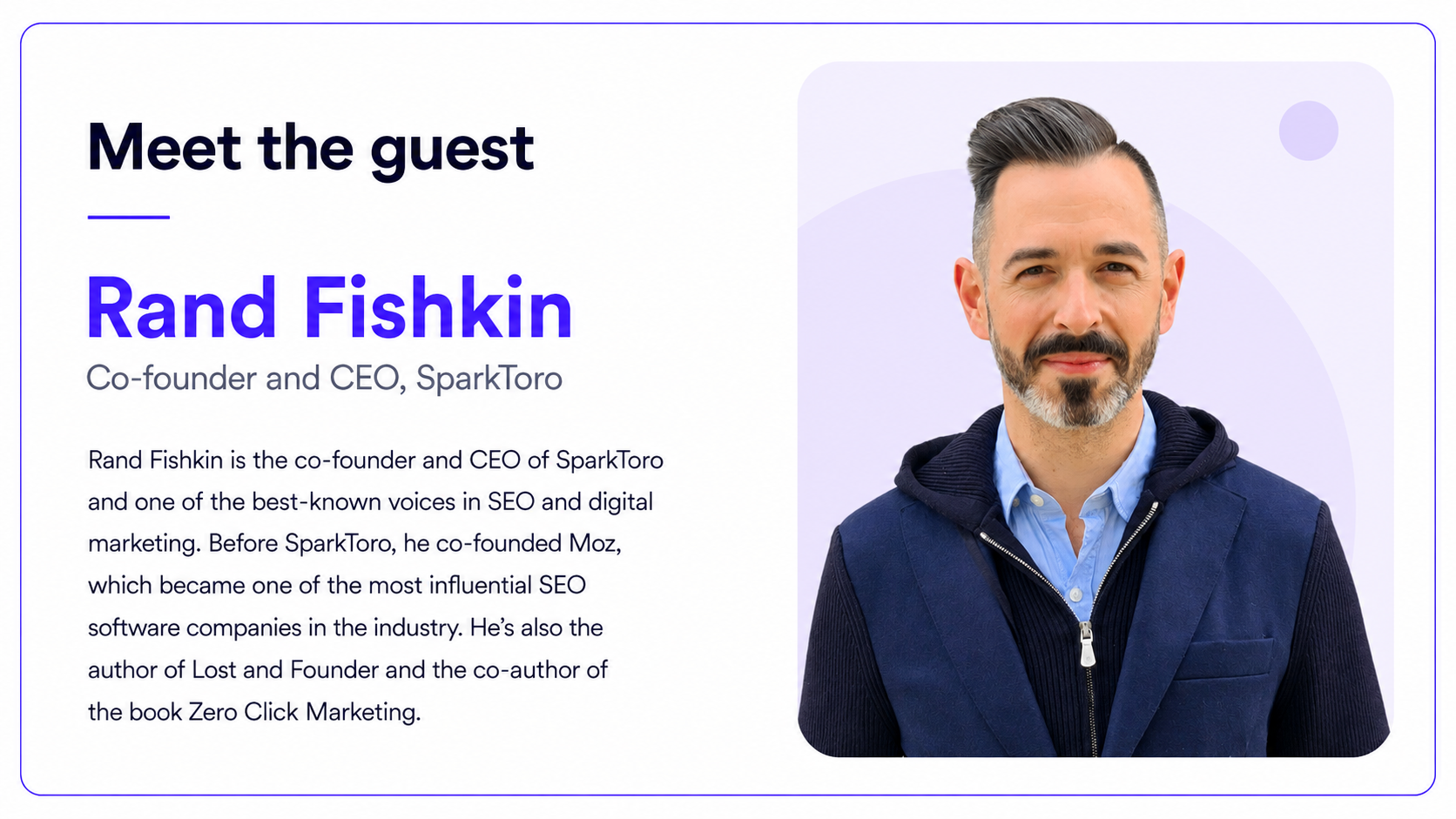
These are highlights from our interview with Rand Fishkin. You can learn more about Rand’s work on SparkToro or connect with him on LinkedIn.
The web stopped sending clicks: Is Google really to blame?
Note: Rand Fishkin and Amanda Natividad have written a book called Zero Click Marketing. It’s based on months of research into how traffic has changed and what actually influences customers before they ever click through to a website.
Google may have been early to the zero-click trend, but they were definitely not the first. If you’re looking for a culprit, it’s probably Facebook.
When Facebook acquired Instagram, the leadership team clearly saw the opportunity to keep the audience inside walled gardens.
Facebook saw that Instagram had no real way to link out. A post could not include a link. That was radically different from how the web worked until then.
Every other platform had links.
The zero-click trend really started with Instagram.
Then the mobile app revolution accelerated it. Then Google doubled down and invested more and more in it.
Google saw that when you perform a search on Google and get a quick, instant, accurate answer, you are more likely to search Google again. That quick answer creates an addiction to search.
So, yes, the zero-click trend didn’t start with Google. But our research shows significant growth of zero-click Google searches over the last decade.
Around 60-68% of Google searches now end without a click. If that continues, Google will become less and less of a traffic sender.
Where does influence happen now?
These days, we describe customer journeys as a pinball machine. No two journeys are ever the same.
You launch the ball into the playing area, and then it bounces against all these different sources. It could be Reddit, email newsletters, podcasts, webinars, online events, Twitter, TikTok, LinkedIn, Facebook, Pinterest, or YouTube.
It depends on the sector, the person, the personalization, how long the journey is, and how considered the purchase is.
Marketers have to identify which bumpers the balls are likely to hit, which paths they’ll go down, and where they need to put their flippers to keep people in play.
The customer journey isn’t observable like old web visits used to be, or like ad-supported journeys are supposed to be. These days, you can’t see the journey all the way through.
The promise with Meta and Google advertising is that you can do that.
But you can kind of see that journey only if you pay for ads and do no organic marketing whatsoever.
Traffic is down, and everyone blames marketing
Google traffic is down for everyone.
But here is the thing. Google searches are up. Searches per searcher are up. Total searches per year are up. Google’s revenue is up. Google’s stock is up.
People are not searching less. They’re searching more. They’re just not clicking on websites because Google is not presenting websites the way it used to. Google is presenting answers.
The job has changed: From driving traffic to creating influence
If your job is “drive traffic from search, social, and AI,” that’s not really the job anymore. The job has changed.Now, it’s about switching the focus from traffic to influence.
Historically, if customers had a question, we would write a blog post about it.
You still have to do those things. But now that same information had better be on all the platforms where your audience pays attention. The more platforms, the better.
You can influence AI through YouTube videos with five views or Reddit posts with two upvotes.
It still matters because Google and AI tools are scraping that content and showing it.
The job is no longer, “Will people click this and will it drive traffic?” The job is, “Will this create the influence we want?”
If someone ignores Reddit, YouTube, communities, and AI, are they still doing SEO?
You can do SEO however you want. You can make a living doing old-school things. But…
To what degree do we still need people whose job is only: “Get this page ranking in Google. Ignore all other platforms. Don’t try to create influence through zero-click marketing, AI Overviews, or instant answers.”?
That seems strange to me. But maybe there’s still a place for it.
How to separate competitor presence from audience attention
Competitive intelligence can be very misleading. That’s one reason I strongly recommend that if you’re being told to do competitive research, you should also do audience research.
You can find plenty of examples of competitors buying ads, buying space at events, ranking for keywords in Google, or getting into AI answers that no one searches for, no one in your audience cares about, and that are not driving business value.
There is a big difference between “our competitors participate in these places” and “our audience actually pays attention to those places.”
Your website is just as important as ever
It doesn’t matter if people are visiting your website in the same volume as before.
Just because traffic to something is down does not mean the value of that thing is gone.
If the information on your website is showing up at the top of Google, appearing in AI tools, being shared on social, and spreading the message, it still has value.
If great content isn’t enough anymore, what replaced it?
You need a product that cannot be imitated or replaced by AI or Google.
What has changed most is content as a product.
Historically, content could be a product. It provided value, people wanted it, people would pay for it, and people would seek it out and amplify it.
That has changed deeply.
There is still a place for content AI can’t imitate. If you’re covering new things, writing about things AI doesn’t know yet, creating videos, images, charts, or original research, that still matters. You’re influencing AI, and you’re influencing people.
The value of content is not entirely gone. But you can’t build your business or marketing around content alone the way you once could.
The biggest change in marketing today
The biggest marketing change is where people pay attention and how they get information.
10 years ago, when someone had a question about a product or service, the journey used to happen on the websites of companies and their competitors.
Today, that journey is happening more and more on platforms: social platforms, AI tools, and search engines that don’t send traffic out.
As a result, everyone’s traffic is down.
The types of measurement and attribution people used in 2016 are dead.
A lot of people would say the biggest change is AI.
The biggest change AI ever made was machine learning optimizing for engagement in Google, Facebook, Instagram, Reddit, LinkedIn, TikTok, and YouTube.
That happened before the current era of AI.
In a way, the biggest change AI had on marketing happened 15 years ago, not 15 months ago.
What didn’t change at all in marketing?
In terms of the state of the web, we use the web only slightly more than we did in 2016.
Maybe average usage is up 30 or 45 minutes a day. The internet didn’t become a 20-hour-a-day addiction the way people feared.
Art is a human practice with a story behind it
Anything that is art, in my opinion, can’t be replicated by AI. When a human makes it, there’s a story behind it.
And as soon as I say that, people come out and say, “Here’s a beautiful painting AI made,” or “Here’s an amazing piece of music AI made.”
But I disagree. What AI has done is clone and copy a bunch of other art.
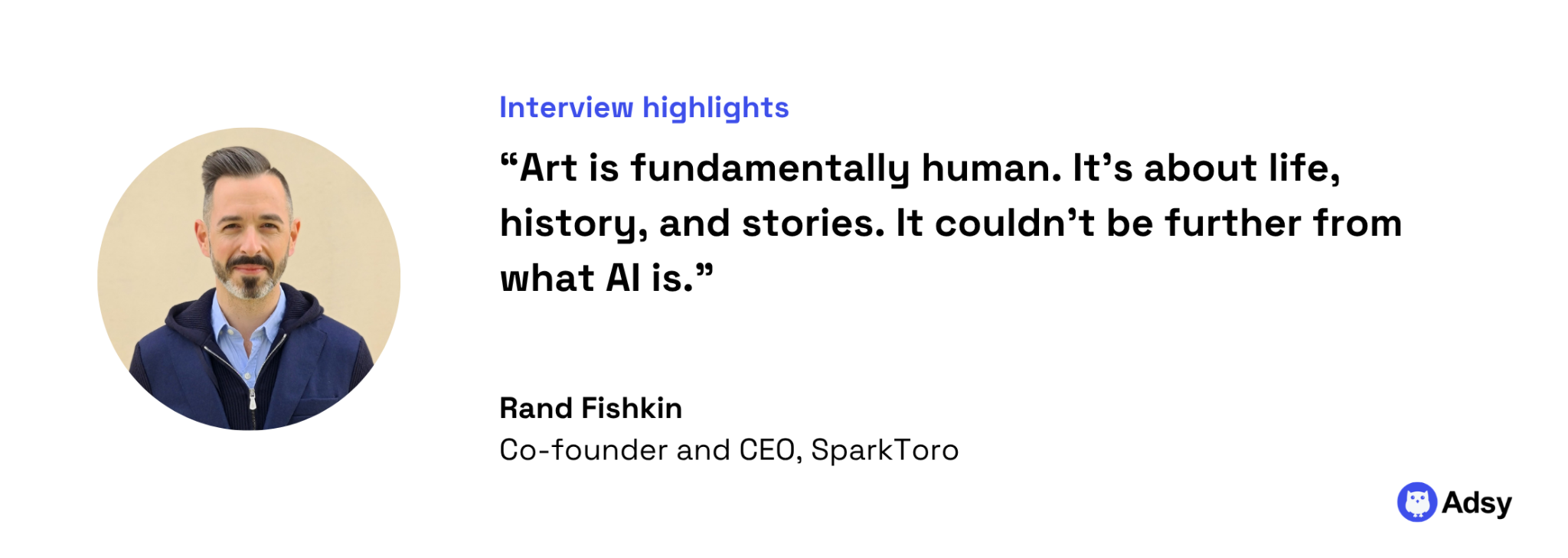
Art is fundamentally human. It’s about life, history, and stories. It couldn’t be further from what AI is.
Storytelling is a lost art in digital marketing
If you go back to the 20th century and look at why advertising firms were successful, why ads worked, and how brands were built, it wasn’t because of the fanciest targeting, the best placement, or the most advanced mathematics.
It was storytelling.
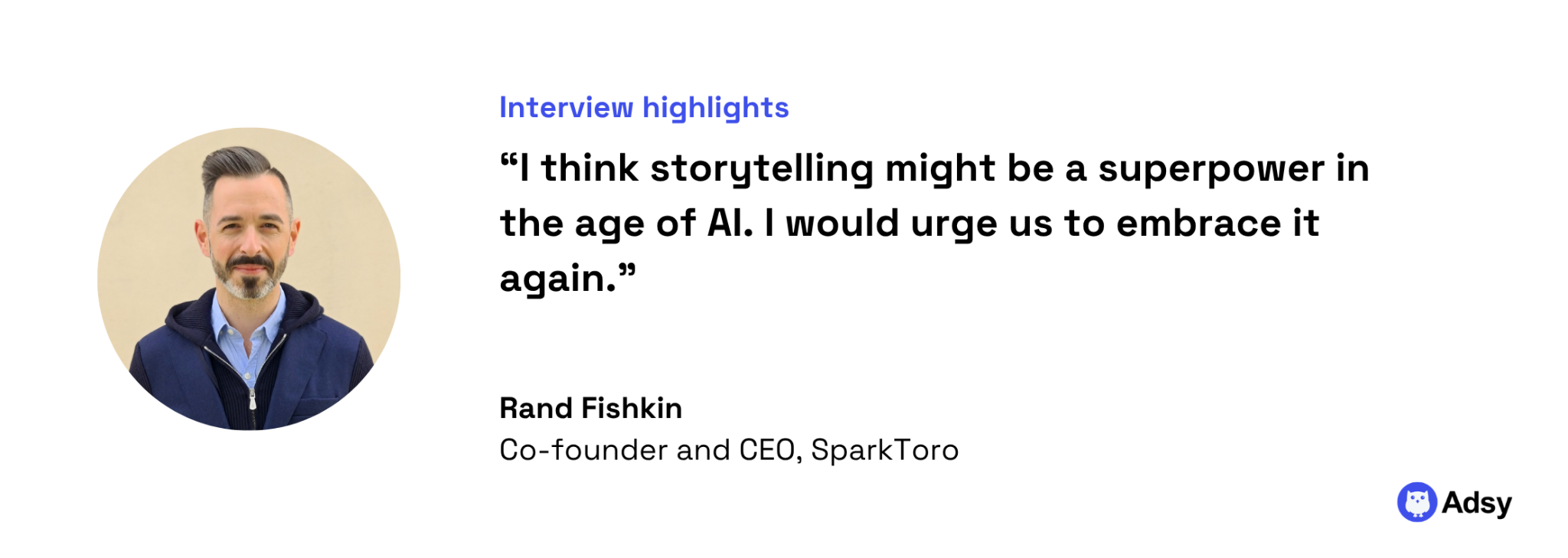
I think storytelling might be a superpower in the age of AI. I would urge us to embrace it again.
AI hype: What makes Rand roll his eyes?
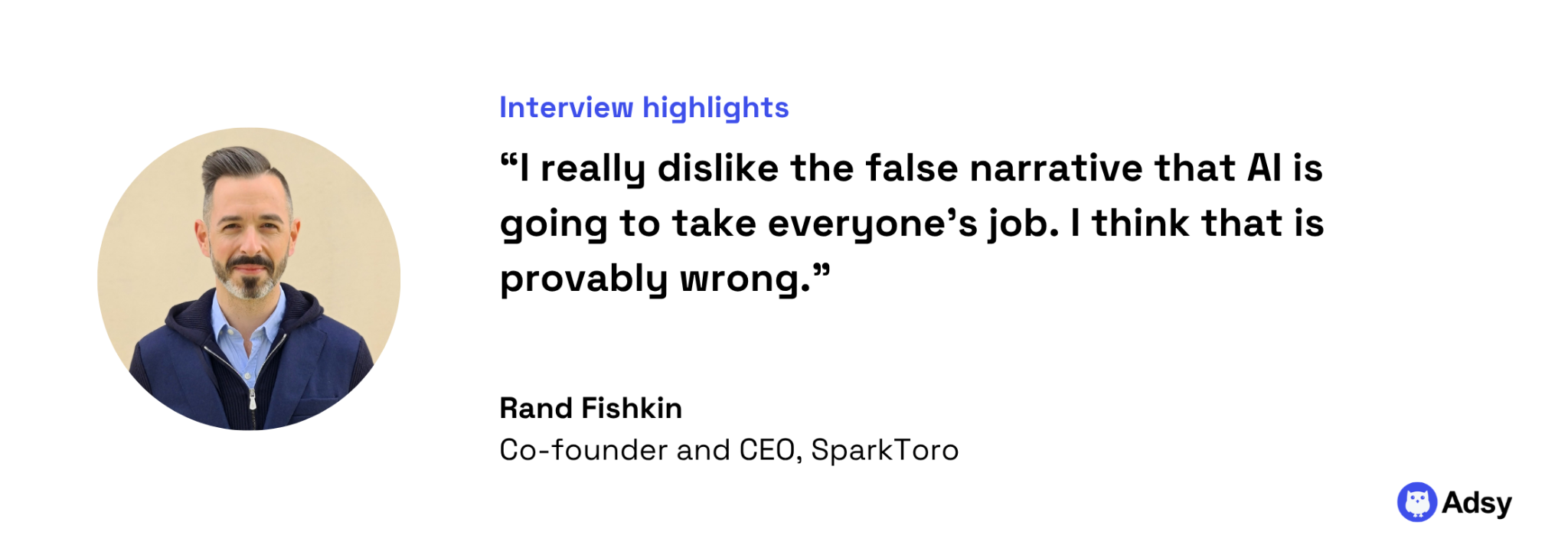
I really dislike the false narrative that AI is going to take everyone’s job. I think that is provably wrong.
For more insights, watch the full interview on our YouTube channel:
All trademarks, logos, images, and materials are the property of their respective rights holders.
They are used solely for informational, analytical, and review purposes in accordance with applicable copyright law.

 Sign Up
 Sign Up