






Cyrus Shepard: “Create Pages That End The User's Search Journey” & Other Interview Highlights

Rankings are no longer the finish line
Since the beginning, Google has relied heavily on users and user behavior to determine top positions.
It watches how people interact with search results.
When you publish a new page, it often starts appearing in search results, gets impressions, and then its rankings bounce around quite a bit. That's Google testing your page.
Based on those user signals, Google can quickly adjust your rankings.
When users quickly leave a web page because it didn't satisfy them, Google gains valuable information. It starts thinking: "Maybe this page shouldn't be ranked first."
So, rankings are no longer the finish line.
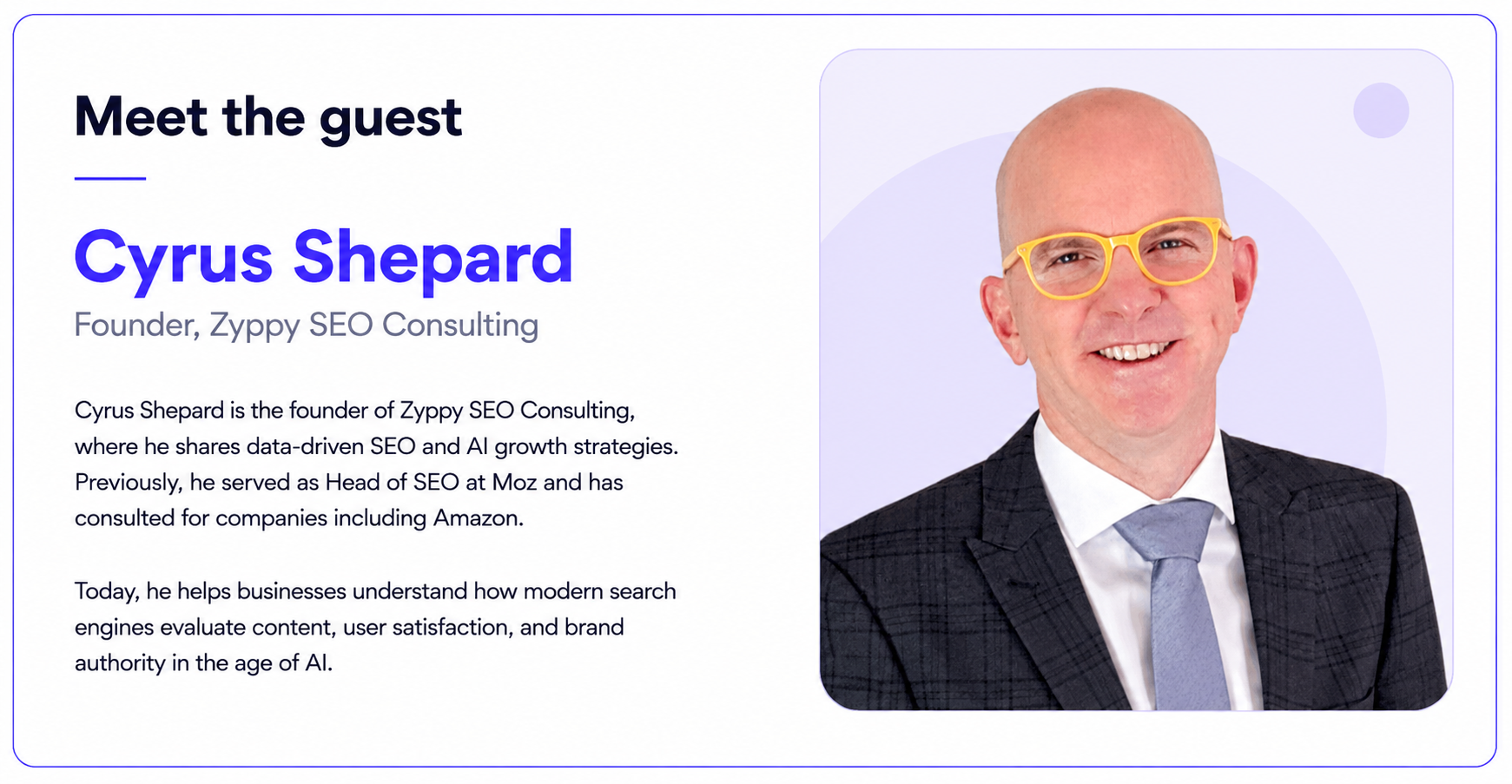
You want Google to test your page and see positive signals. And then steadily reward it with stronger rankings, more traffic, and greater visibility over time.
"Create great content" isn't enough anymore
Google used to constantly tell us: "Create great content." Today, Google doesn't actually need our content anymore.
It has built an infinite content machine. It's called Gemini. And it has changed everything.
Now, Google is looking for content AI can't reproduce. That can include genuine first-hand perspectives, real human opinions, original data, unique experiences, or products and services that only your business provides.
Figuring out what that "something" is becomes our job every single time.
Stop optimizing for Google, start optimizing for humans
Your goal is to make sure users don't return to Google looking for another answer. Your page needs to fully satisfy the user's query and keep them engaged just a little longer than competing pages.
Of course, that can be incredibly difficult. After all, we're competing against millions of pages.
So, think about your optimization strategy carefully.
Google's two-stage evaluation process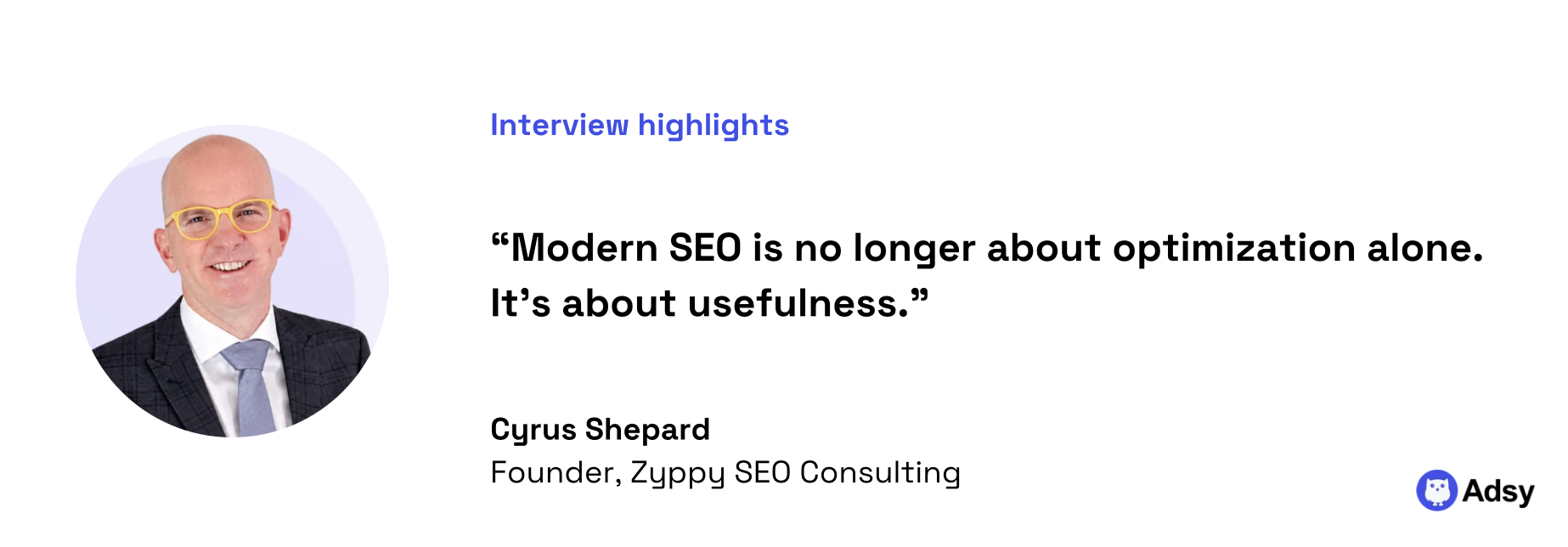
Step 1: Get noticed
Before Google has any user data, it predicts how well your page is likely to perform. If your page looks like something users will enjoy (with strong design, thoughtful structure, useful content, and clear effort), it has a better chance of appearing in the top search results.
Step 2: Get chosen
Once your page appears in search, Google begins collecting real user signals.
At this stage, it evaluates:
- Whether users click your result (based on your title or snippet).
- How users interact with your page compared to competing results.
- How long do they stay engaged for that specific search query?
The ultimate question Google tries to answer is: Did this page end the user's search journey? If users find exactly what they need, even on a simple or unattractive page, and don't return to Google to click another result, that's a strong signal of satisfaction.
That's why…
"Ugly" pages can sometimes outperform beautifully designed ones: they solve the user's problem. Modern SEO is no longer about optimization alone. It's about usefulness.
More clicks don't always mean better rankings
Many marketers want a higher click-through rate because more clicks mean more visitors.
To achieve that, they sometimes promise incredible results just to earn the click.
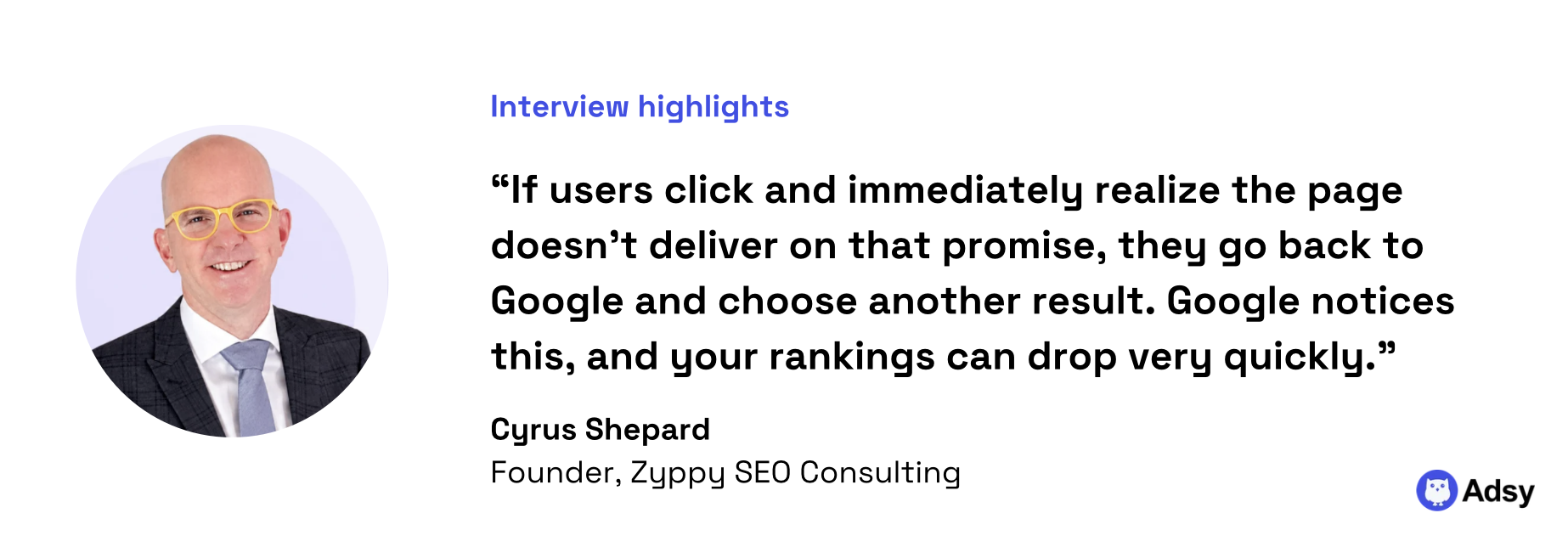
If users click and immediately realize the page doesn't deliver on the promise, they go back to Google and choose another result. Google notices this, and your rankings can drop very quickly.
SEO extends far beyond rankings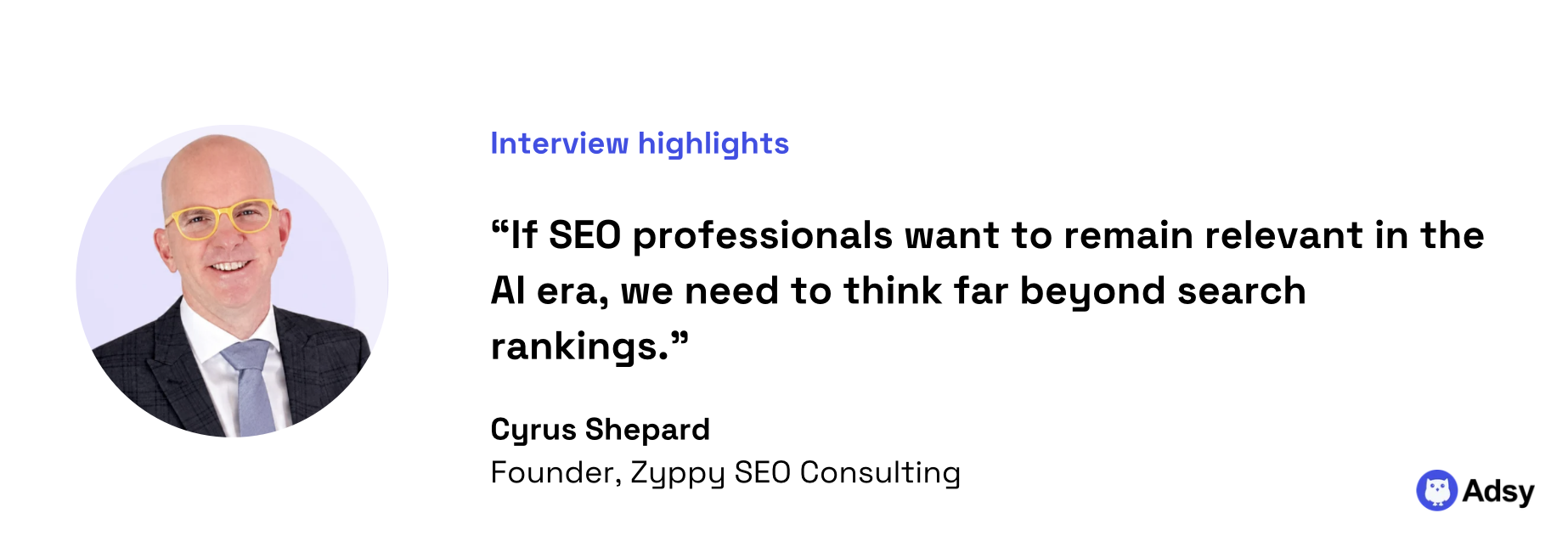
SEOs need to take ownership of much more of the customer journey.
Today, SEO influences far more than just search ranking. It shapes social media, email, branding, customer experience, and other conversion channels.
That’s why SEO teams need a seat at those conversations.
SEO is no longer just an isolated marketing function but part of a much larger ecosystem. If SEO professionals want to remain relevant in the AI era, we need to think far beyond search rankings.
Can informational websites still win?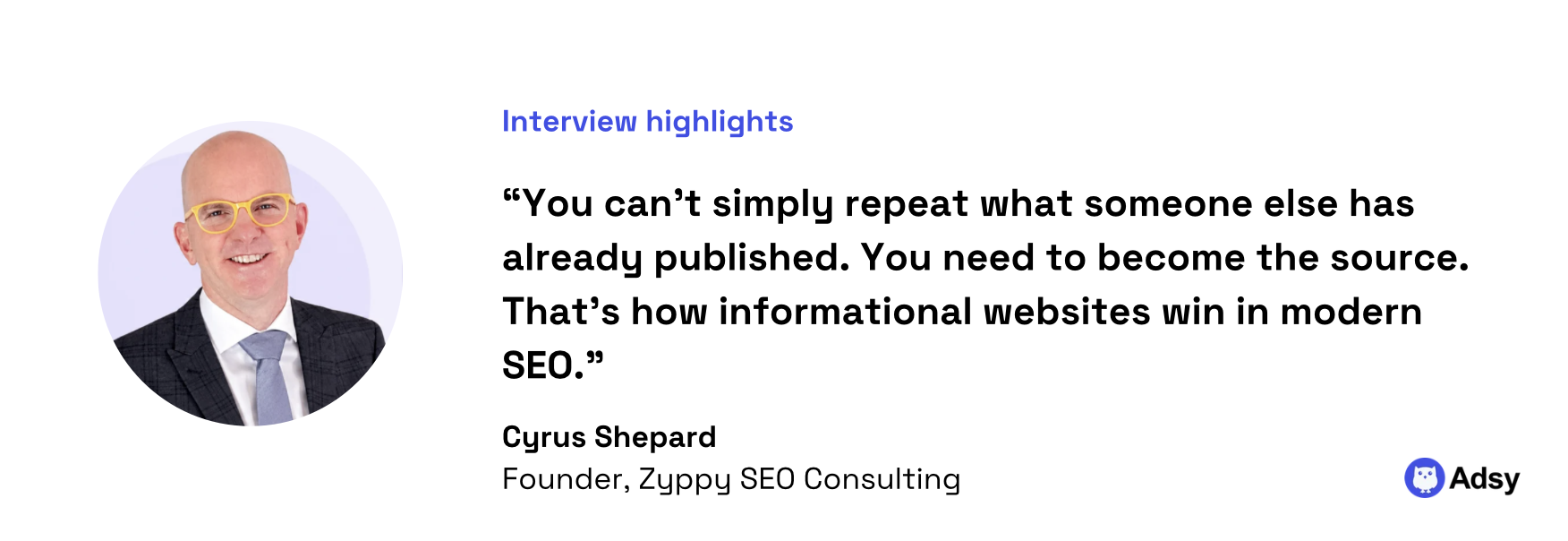
If all you're offering is information, you're competing directly against AI.
Over the past few years, roughly 80% of affiliate sites have been devastated because of the user’s choice towards AI.
That's why you should try to be authentic and unique.
You can't simply repeat what someone else has already published. You need to become the source. That's how informational websites win in modern SEO.
Brand demand is becoming more important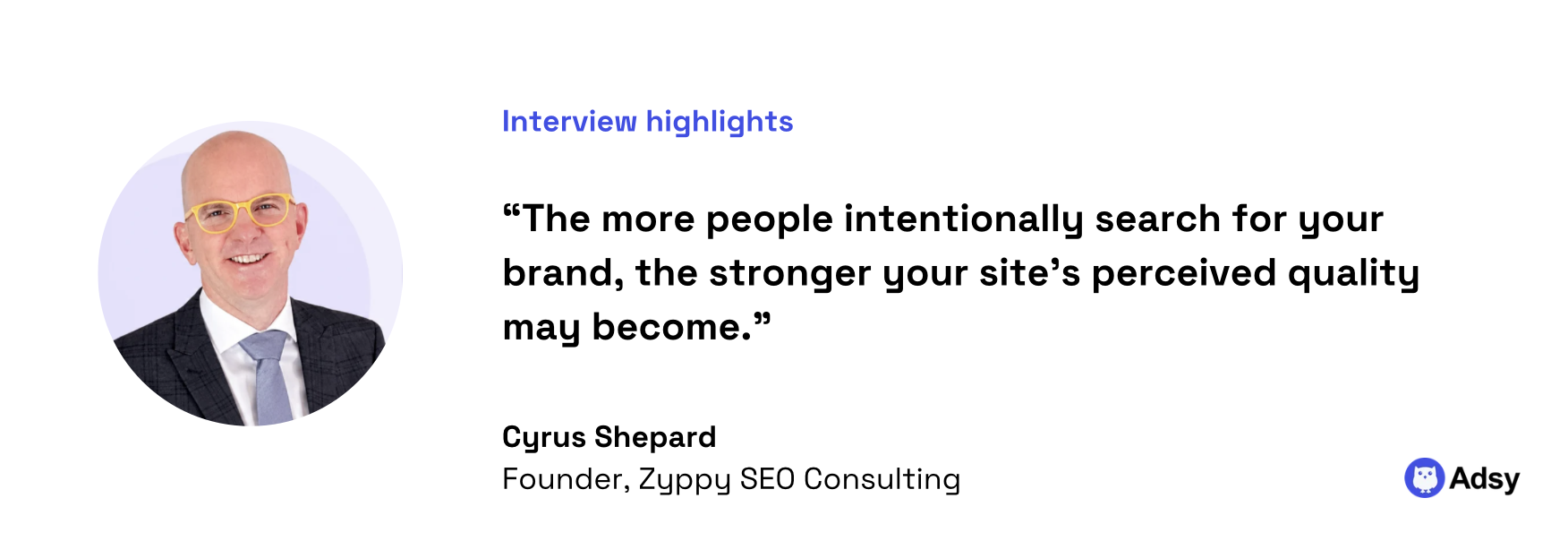
Your brand is becoming your biggest competitive advantage against declining organic traffic.
Here's a fun SEO fact.
Google has a patent called the Site Quality Score. One of the ideas behind it is measuring how many branded searches people perform for your website compared to your overall search demand.
The more people intentionally search for your brand, the stronger your site's perceived quality may become.
AI is reshaping the customer journey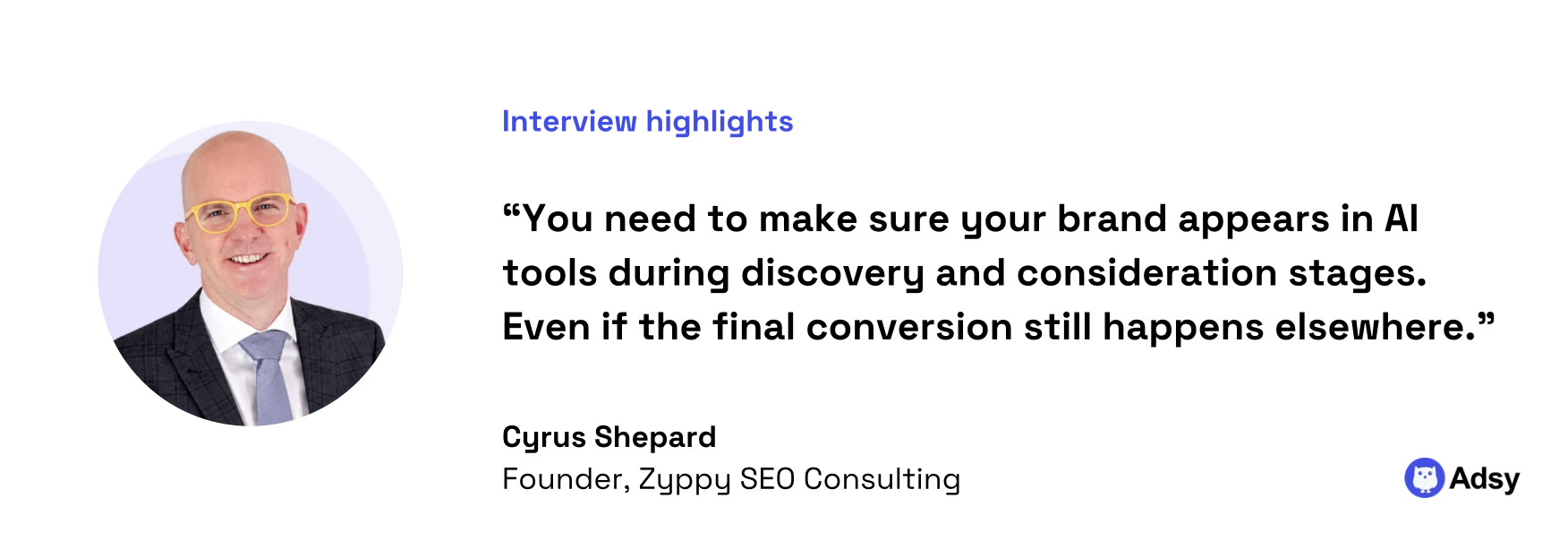
Today, discovery and consideration often happen inside AI systems like Gemini or ChatGPT.
The final stage, which can be purchasing the product or becoming a customer, still happens on our websites.
You need to make sure your brand appears in AI tools during discovery and consideration stages. Even if the final conversion still happens elsewhere.
Is brand the fastest path to trust?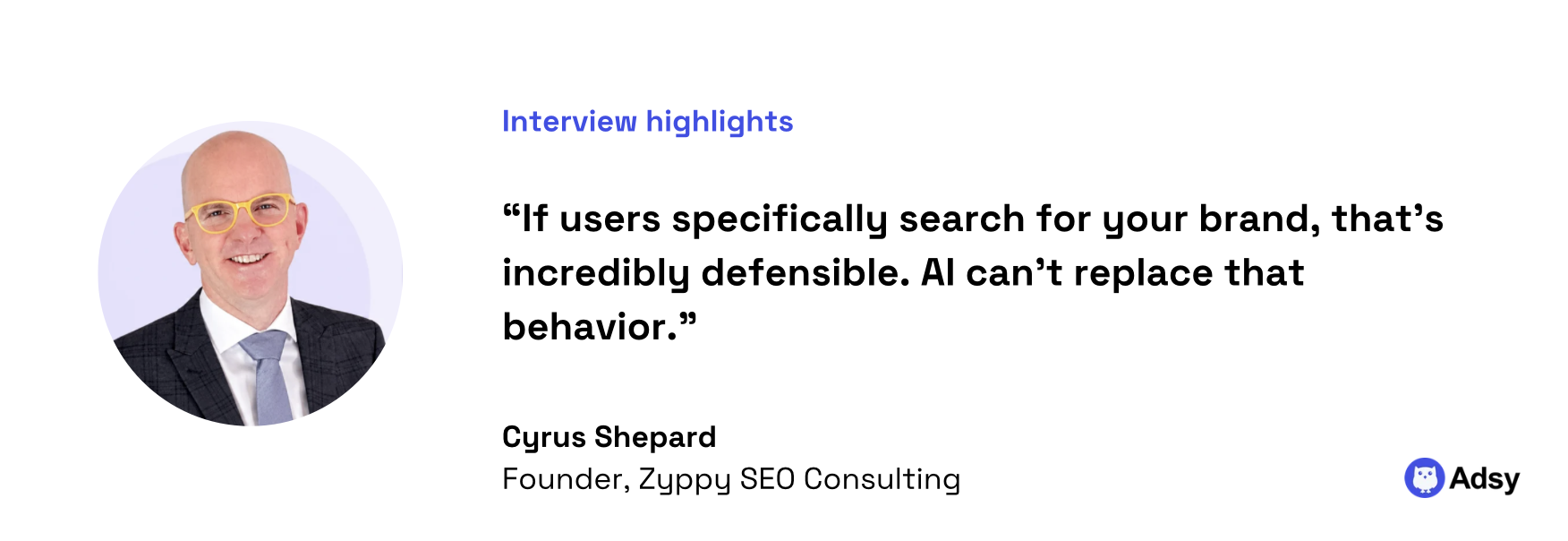
Branded queries are one of the most important metrics you can monitor.
When people intentionally search for your brand, they're much more likely to click your result. That improves all kinds of engagement signals.
It's also worth remembering that more than half of Google searches are navigational.
That's exactly what every business wants.
If users specifically search for your brand, that's incredibly defensible. AI can't replace that behavior.
The gold rush for AI mentions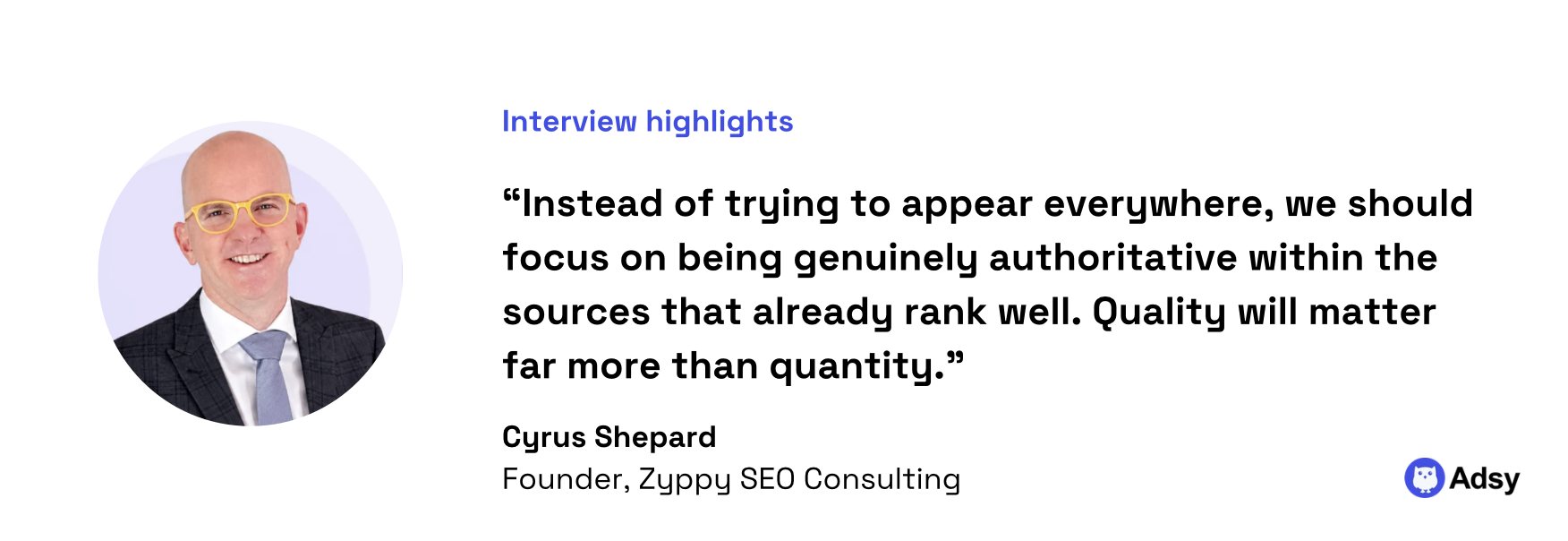
Right now, we're definitely experiencing a “gold rush”.
Everyone wants to be mentioned on as many websites as possible. However, both Google and ChatGPT increasingly rely on a grounding process.
The strongest predictor of appearing in AI answers today is still something much more familiar. It's your ranking in traditional search results.
Ranking in the top 10 or 20 organic results remains incredibly important.
Instead of trying to appear everywhere, we should focus on being genuinely authoritative within the sources that already rank well. Quality will matter far more than quantity.
Measure what happens after the click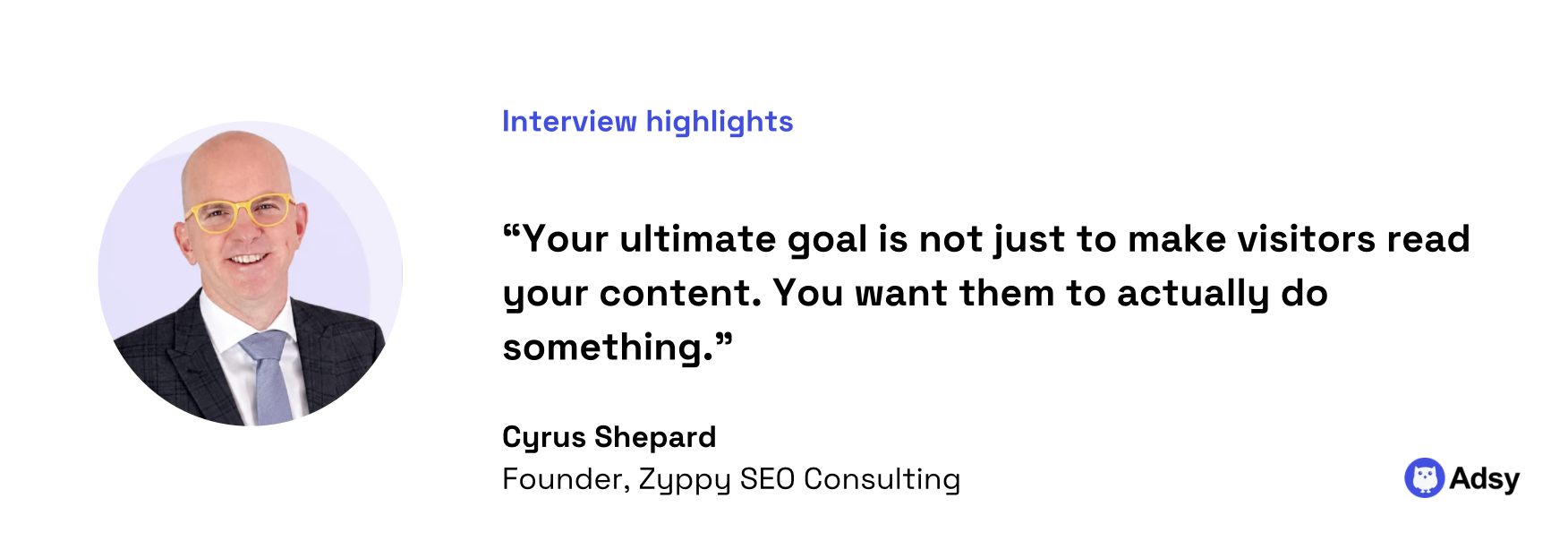
You should focus on engagement signals to understand how visitors interact with your page. But don't evaluate these metrics in isolation. Compare them with your competitors' performance for the same search query.
Some of the most useful ones are:
- Bounce rate,
- Time on site,
- Conversions,
- Additional page views,
- User actions.
Your ultimate goal is not just to make visitors read your content. You want them to actually do something.
These are highlights from our Adsy Talks podcast with Cyrus Shepard. For more insights, watch the full interview on our YouTube channel:
All trademarks, logos, images, and materials are the property of their respective rights holders.
They are used solely for informational, analytical, and review purposes in accordance with applicable copyright law.



 Sign Up
 Sign Up