






Google Just Rebuilt Search. Here's What It Means for SEO
If you work with SEO, whether in-house or for clients, you might already have heard about the May 2026 core update. It seems to be a great shift in how Google's systems evaluate content quality across the web.
Notably, the core updates coincided with I/O conference, where Google announced the integration of AI models directly to the browser. We’re witnessing the biggest changes in more than 25 years. And all of these changes go beyond traditional ranking signals.
We gathered what actually changed, what it means for SEO experts, and how to stay visible in the new AI search era.
What is known about the May 2026 Core Update
Google officially released it on May 21, 2026, and the implementation may take two weeks. No doubt, these changes concern many SEO professionals, because AI Overviews have already led to a traffic drop. Now, the AI search shift is even more obvious.
Google commented on LinkedIn as a “regular update designed to better surface relevant, satisfying content for searchers from all types of sites”.
The recommendations stay the same: focus on creating content that is genuine and trustworthy to real people. However, if we look at the official Google document about optimizing for generative AI, the picture is clear. We see 4 main priorities:
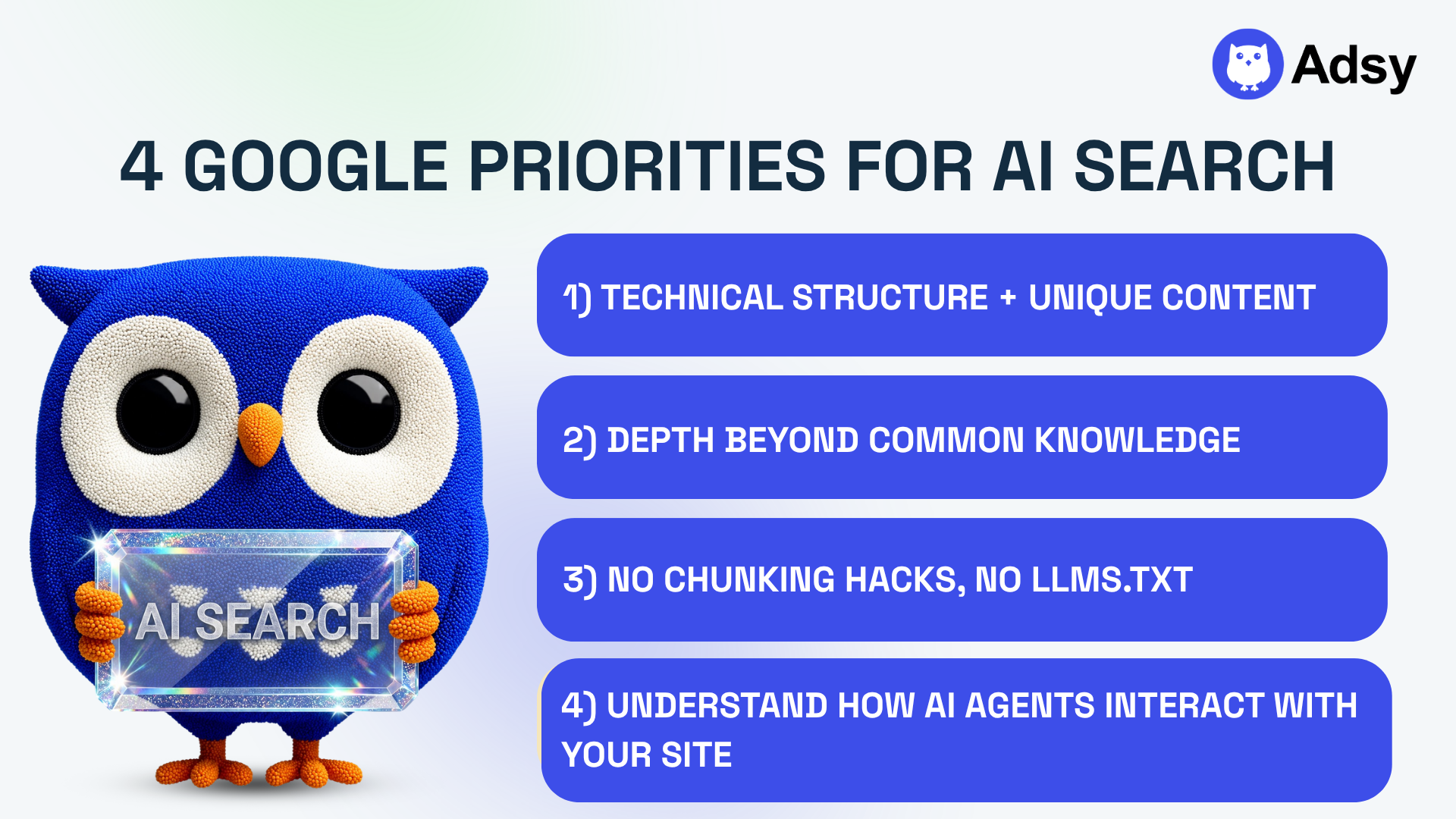
- Building a clear technical structure. It is a foundation for visibility in Google Search overall.
- Focus on developing unique content that provides value and goes beyond common knowledge.
- Ignoring hacks about “chunking content”, creating unnecessary AI text files (like llms.txt), or pursuing inauthentic mentions.
- Understanding how AI agents and new protocols interact with your site.
If you want to get an overview of how algorithm updates have worked over the past 20 years, we highly recommend watching the Adsy Talks episode with Barry Schwartz, CEO of RustyBrick, founder of Search Engine Roundtable, and News Editor at Search Engine Land.
More importantly, there are key updates coming directly from the Google I/O 2026. The announced changes led us to the world of AI agents, new interfaces, and completely different infrastructure. We put together the main updates every marketer and SEO professional should know about.
The search box got its biggest redesign in 25 years
Google's search bar basically hasn’t been changed since 1998. And it was completely reimagined now.
Firstly, it was expanded, so it is possible to type longer and ask more conversational questions. As a result, the answers include AI-powered suggestions and go far beyond autocomplete.
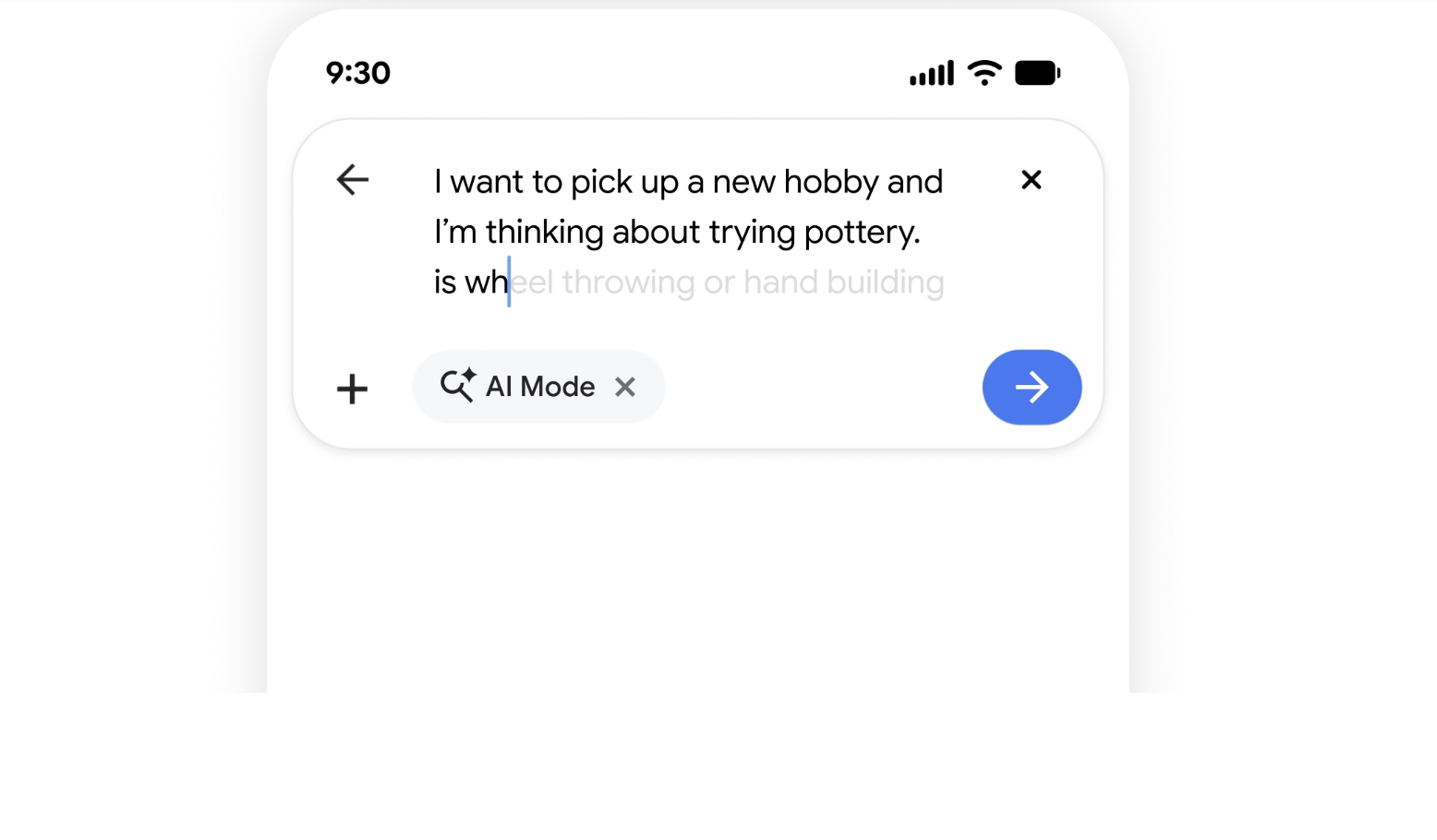
Source: Google Blog
Now you can add images, files, videos, and even open Chrome tabs as inputs. It is also possible to continue the conversation in the AI mode and put follow-up questions directly under your answer.
As a result, users don’t type a few keywords. They could describe what they need in natural language and get a broader response. That is the shift SEOs have been warned about for years. And it is time to completely change the strategy from keyword-based SEO to creating topical depth for contextual answers.
AI mode hit one billion monthly users
The search engine is now running on Gemini 3.5 Flash. It is Google's newest model, which is the new default for AI Mode globally. It's fast, capable, and built to handle complex multi-step questions.
The most important thing is that AI Mode has surpassed one billion monthly users just one year after launch. Every quarter, the number of queries has doubled since it went live. It is important to mention that nearly 48% of all Google searches now trigger an AI-generated answer, according to BrightEdge. A year earlier it was only 30%.
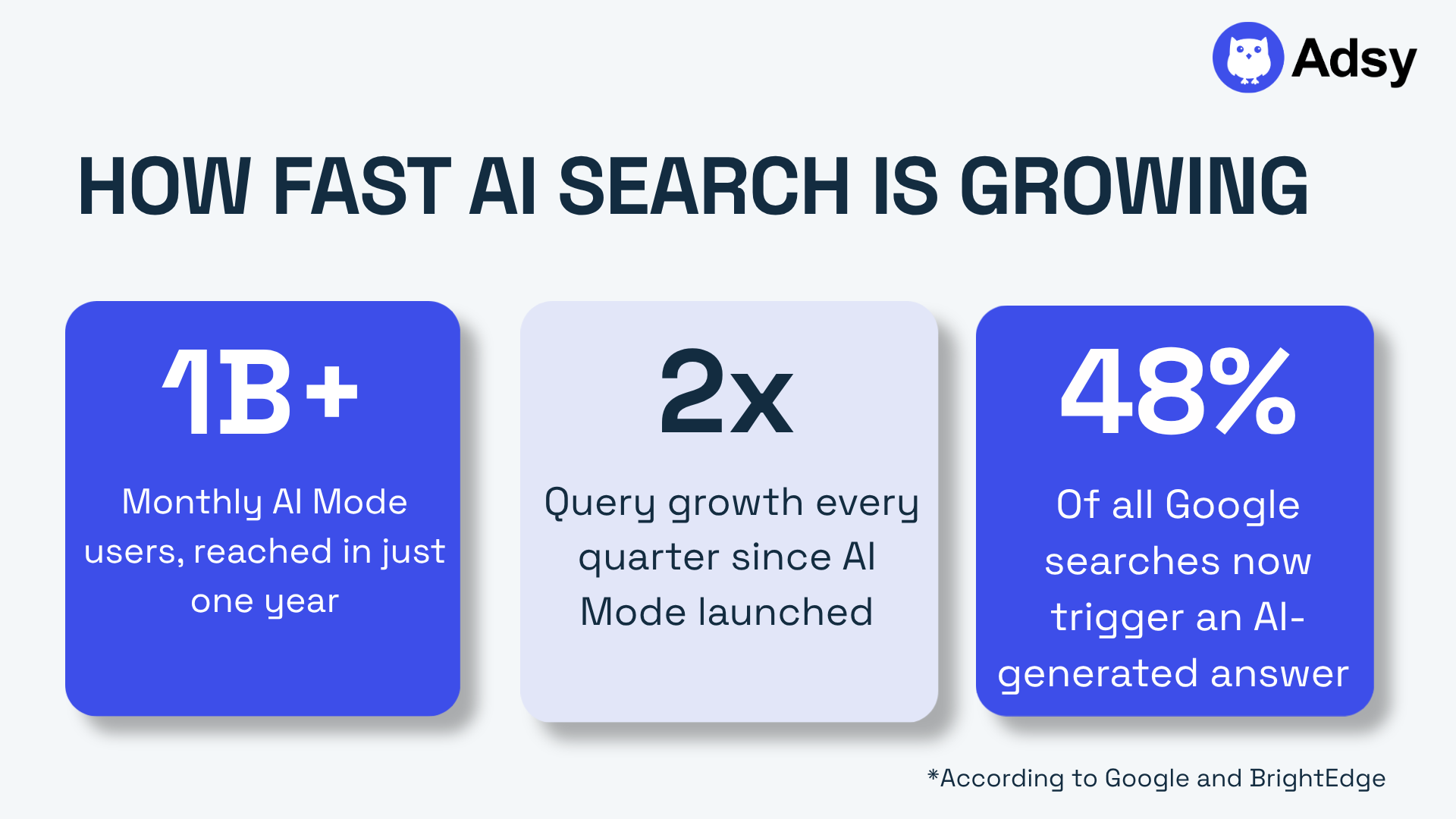
For content creators and SEO professionals, the output is significant. That means that people aren't just using AI Mode occasionally. AI mode is gradually becoming a default way to interact with Google. Cited sources will get a traffic bump, the sites without citation will gradually lose their traffic.
Search now has agents
Another important update is the entering into the Search agents era. Google announced that they will start with information agents that run in the background and monitor 24/7 whatever you care about.
You just need to describe what you want to track. And the agent will watch blogs, news, social posts, real-time financial data, sports updates, and more. When something relevant happens, it will send you a synthesized update.
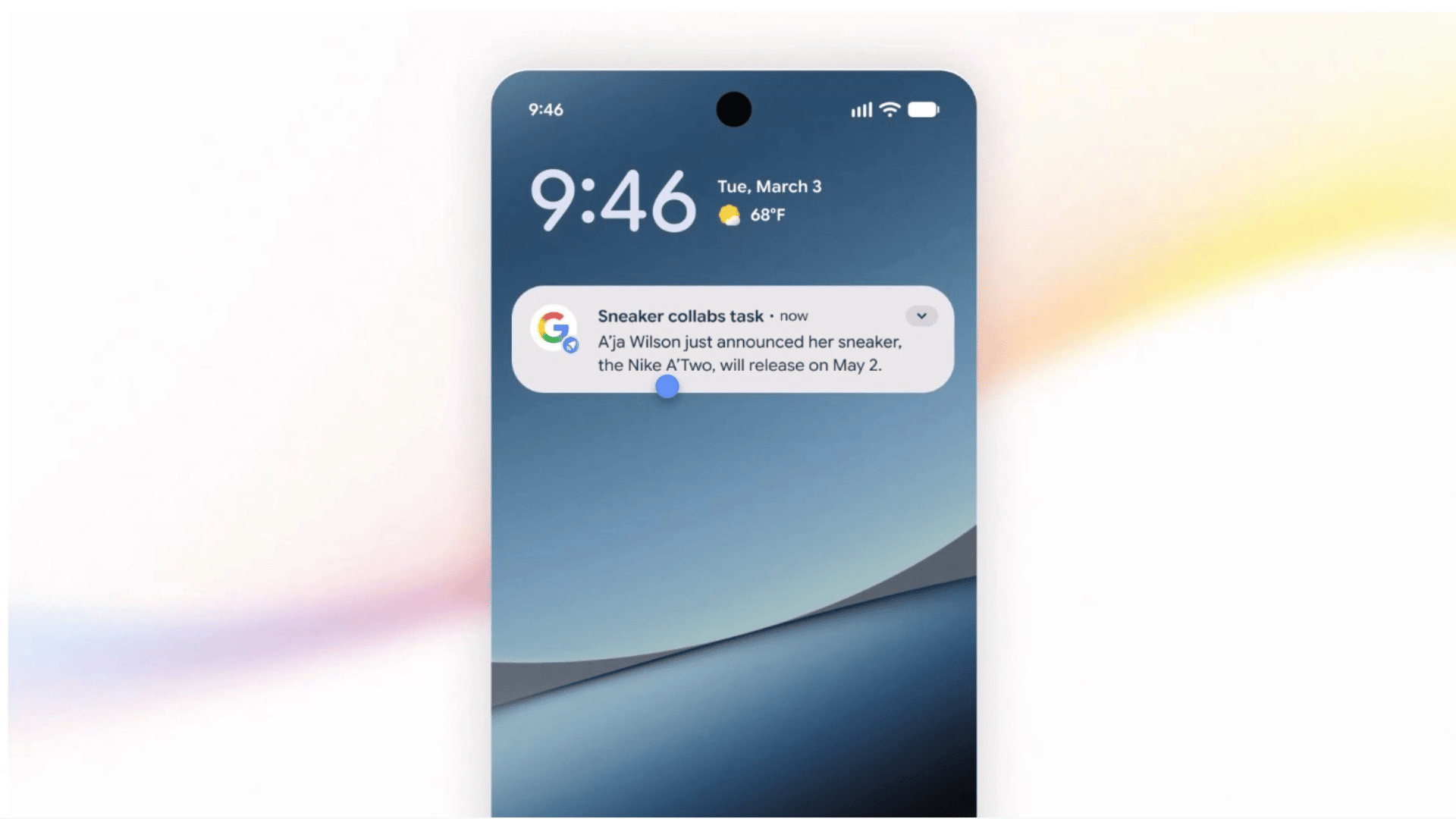
Source: Google Blog
It doesn’t work like a chatbot. This is autonomous AI working on your behalf inside Google Search, which will be available for subscribers this summer. We’ve already researched how AI agents and bots actually work and how to detect them in analytics in our article about synthetic users.
What does it mean for SEOs and brands? It means that agents will do research instead of humans. They will surface your content without any query. So, it is time to rebuild the strategy from “ranking on page 1” to becoming a trusted source for both AI and humans.
Google will allow users to build Mini Apps
Google also announced what it calls generative UI. It is the ability to build custom interfaces, dashboards, and interactive tools as a response to your search query.
It will design interactive visuals, tables, graphs, or simulations to help users understand complicated topics. These pages will not be static. They will be generated on demand for a special user’s query. Generative UI will be available this summer for all users for free.
But it’s not the whole update. Google goes further and also announces solutions for ongoing tasks. For example, planning the wedding, moving to another house, or preparing fitness plans. If you ask about your fitness routine, you will get a fitness tracker and dashboards with information about the weather in your location, local gyms, and live reviews. And it would be possible to come back to this information. These mini apps will be available soon for subscribers only. And it also emphasizes the changes in AI search.
What this means for your content strategy
Here's the honest picture: Google is moving from a link delivery system to an answer and agent delivery system. Despite the fact that Google never reveals exactly what changed or how it will affect any specific site, a short-term plan is simple: monitor your rankings attentively and check your Google Search Console data.
If you dropped, audit your content for depth, accuracy, and genuine usefulness. It is important not to panic-publish, trying to recover.
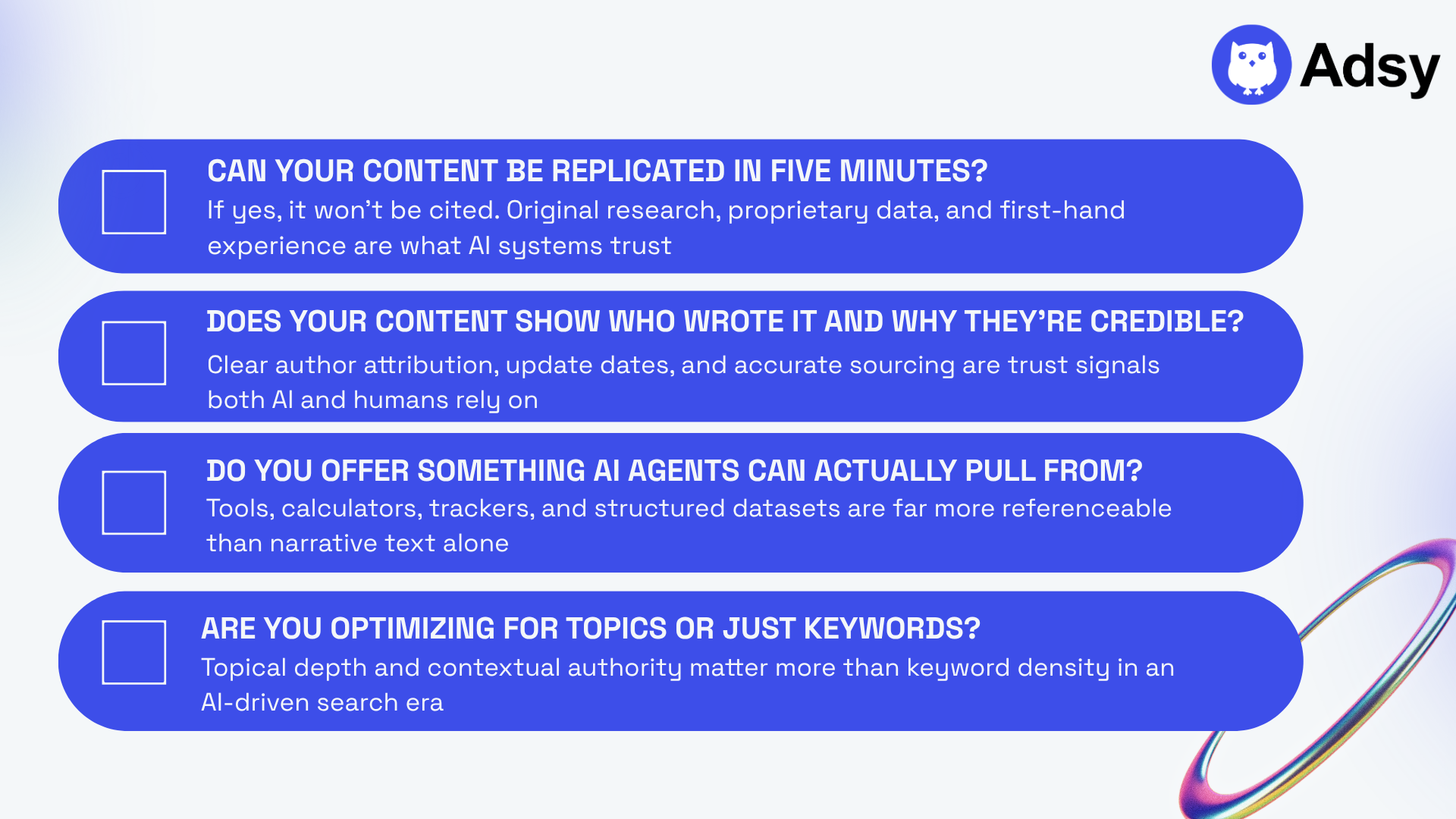
The long-term thing is to make structural changes. We are witnessing a massive shift right now. What should the new strategy include?
- Publishing original research and data that is hard to replicate.
- Building trust signals. It includes clear author expertise, updating dates, accurate sourcing, and structured data markup.
- Creating experiences (tools, calculators, trackers, data) that AI can reference or pull from.
- Covering topics with real depth without focusing on traditional keywords.
Google's own helpful content guidelines spell this out clearly. The old "write for keywords" playbook doesn't survive in a world where agents are making the research for users.
Conclusion
The May Core Update 2026 could be perceived as a routine reminder to make genuinely useful content for people. But the I/O announcements are something different. Google completely rebuilt the interface between users and information. Agents, generative UI, and a new search box are not some random features. It completely changes how people get answers.
For SEO and marketers, it is one more sign to review their content strategy. Focusing on authoritative content, earning links that signal real credibility should be the key point for development.
All trademarks, logos, images, and materials are the property of their respective rights holders.
They are used solely for informational, analytical, and review purposes in accordance with applicable copyright law.

 Sign Up
 Sign Up