






How to Promote Your Blog: 9-Step Framework That Works Every Time

Blog promotion is one of the oldest challenges on the internet.
Even back in the early 2000s (long before most of today’s marketing jargon existed), people were looking for some effective tactics to make their blog content visible.
The tools, platforms, and strategies have changed, but the desire to be seen hasn’t.
These days, it's already overcrowded.
Everyone is publishing, reposting, optimizing, repurposing, and trying to get their slice of attention.
Since there are so many channels and so many “best practices,” promotion has become more confusing than the writing itself.
- So, how to promote your blog?
- And how to make it discoverable?
Let's answer these and many related questions today.
What blog promotion really is
Blog promotion is often misunderstood. Many bloggers think it’s about posting links on social media platforms, leaving comments, or running a few ads and waiting for traffic.
Well, that is not even a strategy as such.
Real blog promotion is an effort of systematically making your content discoverable. But also useful and credible for the people who care about it.
It is not a tactic or a single channel. It is a continuous process that connects your work with an audience.
Essentially, there are three main elements to make your content visible.
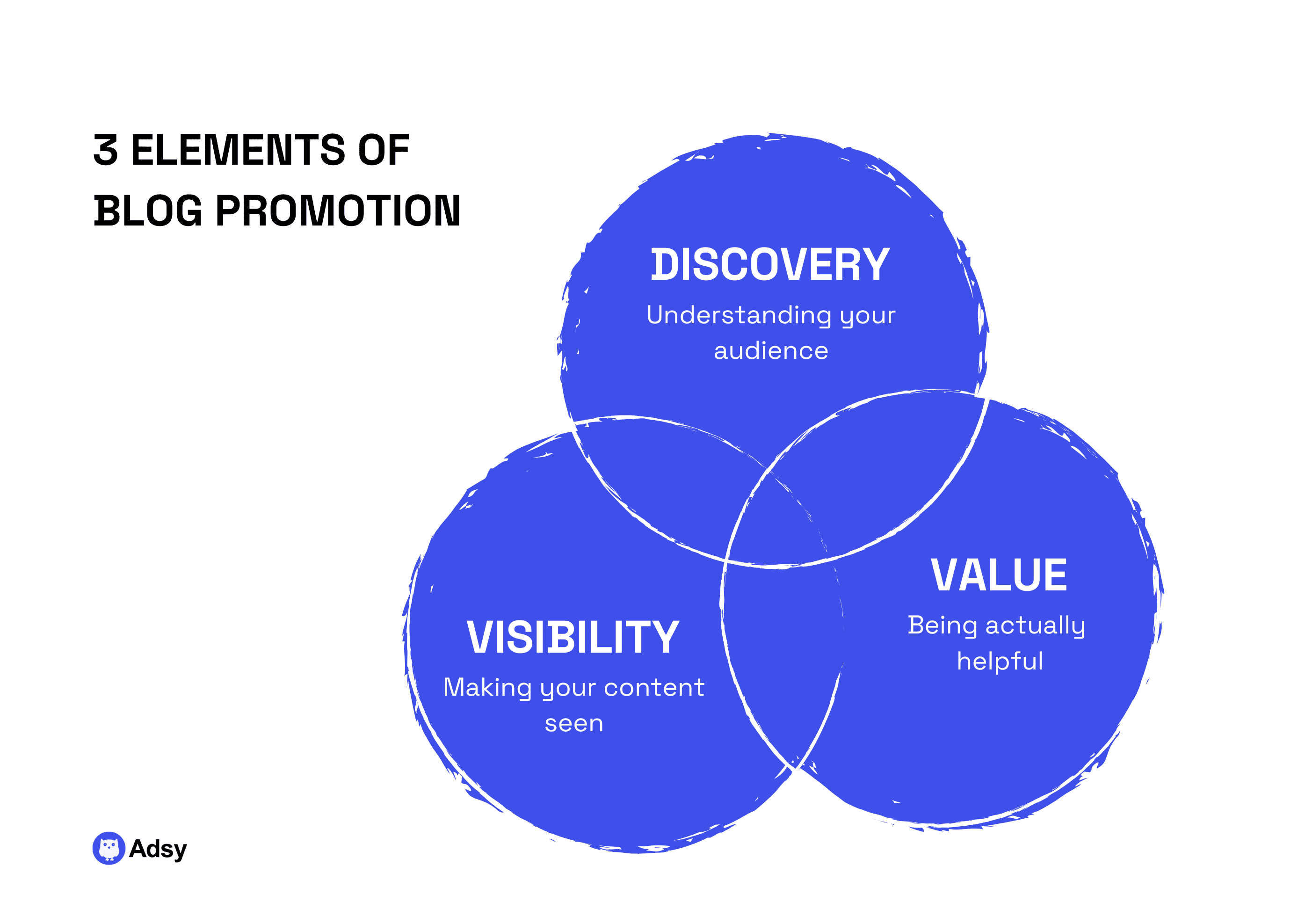
Discovery: Understanding your audience
Before anything else, promotion is about being found.
Even though it’s extremely obvious, it’s the part many people skip. Not because they don’t care, but because they assume discovery “just happens” if a post is good enough.
But nothing discovers itself on the internet.
That’s why you have to put each article on the “paths where people already walk”.
Discovery means:
- Understanding that your audience is already active somewhere,
- Knowing where your target readers actually spend time,
- Communicating in the formats they already consume.
Your job here is to simply meet them there. Consistently.
Value: Being actually helpful
Promotion works only when the content itself has real value.
Sharing a low-quality post, no matter how aggressively, does not build an audience or credibility.
To be successful, your content needs to:
- Solve a real-life problem,
- Answer a “haunting” question,
- Or provide insight that people can’t easily find elsewhere.
Visibility: Making your content seen
Visibility is essentially about removing friction. It’s the quiet, often invisible work that makes your content easy to locate, read, navigate, and return to.
So, how do you make sure your website has all it takes? You have to:
- Structure posts so search engines understand them,
- Use clear language that your audience searches for,
- Connect your articles with logical internal links,
- Update older posts, so they stay relevant,
- Make sure your website loads fast and works on mobile,
- Organize your content so people can binge-read several posts.
Making sure you are visible, ultimately, means making your content “reachable” through multiple channels.
Someone might find you on Google. Others, through a shared post or a newsletter mention. And some through a YouTube comment, a backlink, or a Pinterest pin.
Even a question you answered six months ago can make people learn about you. Yes, compounding is a real thing when it comes to any growth.
Step 0: Success is impossible without the right mindset
Apart from the technical elements we’ll discuss in this guide, blog promotion consists of patience and a proper mindset. It might sound like a less obvious thought.
But if you take a look at the successful examples, that's what you'll see.
If you treat your own blog like a “side hobby” and write when you “feel like it,” you won’t get far.
Gaining traction while publishing once in a while is nearly impossible. For a good illustrative metaphor, consider this: successful websites treat every post like a product launch.
Let's take a look at a famous example.
When Apple releases a new iPhone, they don’t just post it on their website, waiting for people to find it on Google. They actually do a gigantic amount of work around it:
- They build hype,
- Create stories,
- Host a huge presentation,
- Get influencers to talk about the launch,
- Run ads everywhere,
- And do tons of other things.

Source: Apple
Of course, you can’t compare the scale of a typical website and a multi-billion (or is it trillion now?) corporation. And you don’t need that much effort either.
Still, you do need the same mindset: each article is your “product.”
If you spent hours writing it, give it the same level of attention when you distribute it. This makes sense, don't you agree?
But the real work starts way before your piece is all done and edited. Ideally, add this little detail to your creation process.
Before you write blog posts, ask yourself:
- Who is this post for? (your target audience)
- What problem am I solving?
- Why should anyone care right now?
- How will I make sure people see it once it’s live?
These are the fundamentals of a strategy you'll be using.
For example, say you want to write a guide on SEO. The questions above will influence everything: content, angles, distribution channels, etc.
- If you write for small business owners, they have limited budgets and likely limited knowledge and experience in optimization. So, if you shower them with dozens of terms they don’t understand, your piece won’t make any sense to them.
- If you write for an SEO specialist, a generic guide won’t do. They have their own pains. And they likely won’t even read your article if you aren’t a credible source in the industry or have some sort of unique experience.
And of course, promotion itself will also be very different.
SEO professionals hang out on SEJ and Search Engine Land, but small business owners probably don’t even know what these resources are.
So, you have to address all these seemingly “not that important” things before you even type the first intro sentence.
Because it’s the only way to give your post a chance for visibility.
Another helpful thing is to pay attention to the most powerful ideas in your articles. You can even take notes of these while writing. These parts could later:
- Become Instagram Reels,
- Fit into a YouTube video,
- Get shared in a Facebook group,
- Be expanded into a guest post on other articles.
All these simple actions can easily boost your blog without creating any extra content.
Check your expectations
… because it is a highly important part of the right mindset.
You know, the whole expectation/reality thing might be tough:)

You might publish 10 or even 50 posts before one of them takes off. That’s normal, and you should expect that.
Even pros with massive audiences deal with this.
When you’re just starting, you’re not really competing in search yet. You’re building your authority, earning backlinks, and giving your readers reasons to trust you.
The first few months are like planting seeds.
You won’t see much on the surface, but the roots are growing underground. These are your SEO signals, internal links, and social footprint.
So, don't make the mistake many do, don't obsess over traffic. Instead, focus on:
- Building consistent publishing habits,
- Writing genuinely useful and relevant blog content,
- Improving your search rankings post by post,
- Learning from what performs best and worst.
How to promote your blog with a 9-step framework
When it comes to making a website visible, many think that it is a matter of chance. So, they sit expecting one of their posts to go viral.
But… relying on such a chance in an extremely overcrowded space is not a good idea.
What actually matters is having a clear framework for promotion:
- Without one, you end up doing random actions on random platforms, hoping something works.
- With one, you know exactly what to prioritize, what to ignore, and how to make your content seen.
Step 1: Research your audience
This point may seem so basic that we could just omit it.
And yet, there are too many variables when it comes to knowing your audience. Or rather, when preparing to search for who your audience is.
A lot of bloggers fall into the trap of broad thinking: “I write about fitness, so everyone interested in fitness is my audience.”
A reality check is very much needed if you think the same.
There’s a big difference between:
- A busy parent searching for “quick 20-minute workouts at home.”
- A college student hunting for “bodybuilding routines for beginners.”
If you try to serve both with the same article, your content will feel generic and sort of useless.
It’s a cliche, but it’s so true: when you try to reach everyone, you end up reaching no one.
This is where your audience personas might help. And you might also consider building a negative persona.
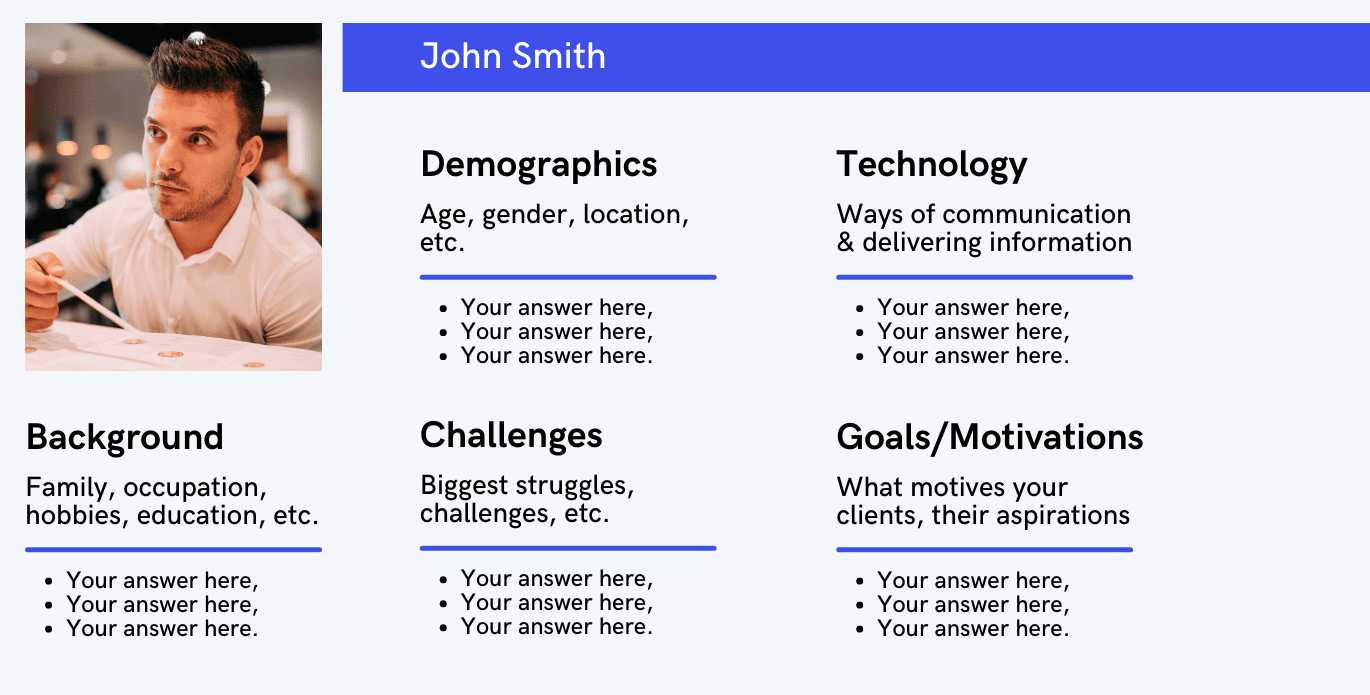
Let’s say your new article is titled something like “7 Tactics to Make Your Brand Stand Out on Social Media.” A simple persona might be:
- Name: Marketing Mary
- Age: 28
- Occupation: Social media manager at a small startup
- Goal: Increase brand awareness without paying for ads
- Pain points: Overwhelmed by all platforms, doesn’t know what really works
- Where she hangs out: LinkedIn, Twitter, Facebook groups for marketers, and Reddit marketing forums
Check the keywords
Yes, keywords are useful not only for reaching your SEO KPIs (we will talk about search engine optimization later).
In terms of the audience research, keywords tell you what your readers actually care about and how they search for it.
Semrush, Ahrefs, Ubersuggest, and even simple Google search suggestions can show you the popular queries. Everything your target readers are interested in learning.
And that’s where you can understand the real pains of your audience and the topics they want to read about.
Suppose your guide is about “boosting your website's organic traffic.” Keyword research could show you that people are searching for:
- “How to rank on the first page of Google.”
- “How to get my business on top of Google search for free.”
- “How to get traffic to your website fast.”
- “How to increase website traffic through social media.”
- “How to increase traffic on a website through SEO.”
We’ve literally got all these ideas for free from “People also search for” for several terms we assumed these users could google.
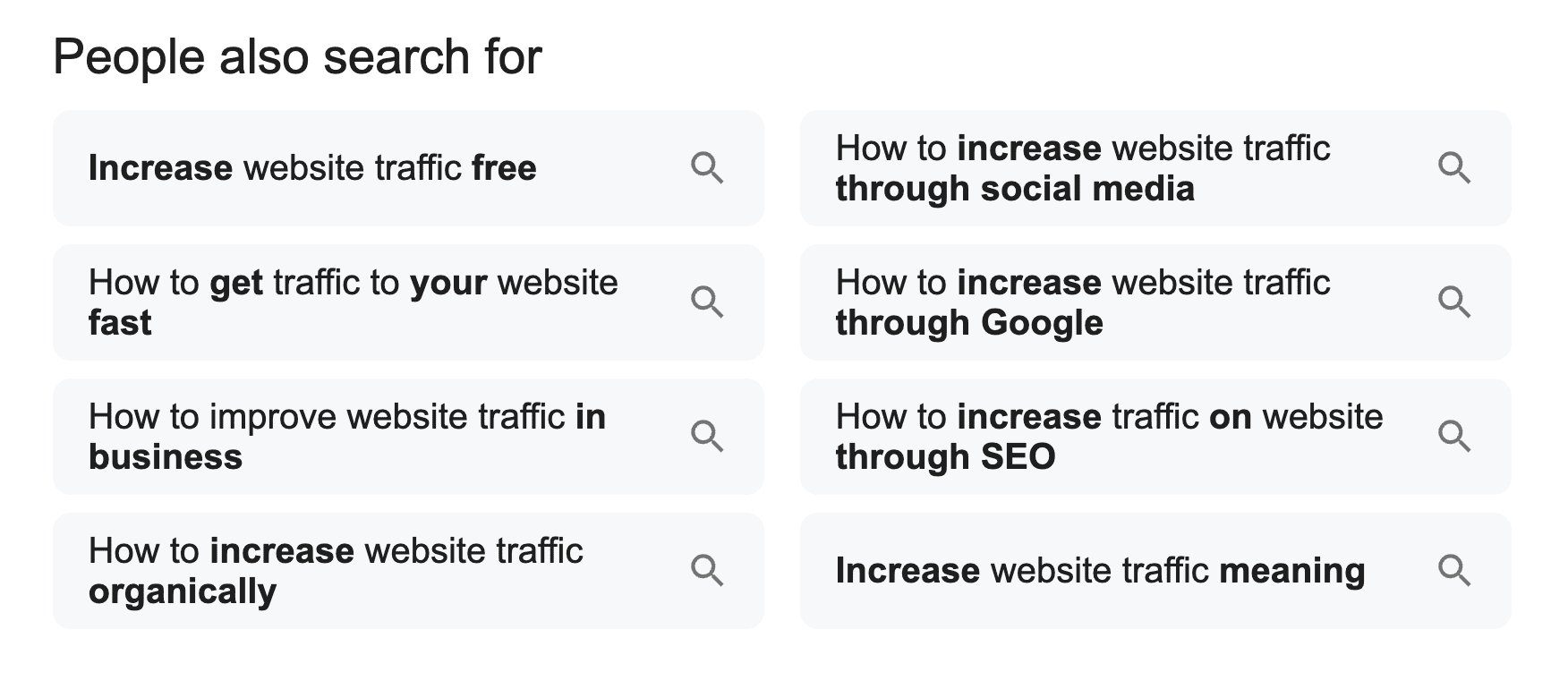
Of course, we can’t see keyword difficulty or search volume without any SEO tool. But it is still better than nothing.
Doing even basic keyword research will help you speak to your audience in their language and make sure your messaging matches their expectations.
Do competitors research
Another way to understand your audience is to see where they already read content. So, you can check the following:
- What other websites are they visiting?
- Which other bloggers are they following?
- Which social media accounts get the most engagement?
Consider this example:
Say your target readers often comment on marketing YouTube videos or ask questions on Reddit forums. Why not use those channels, then?
You can simply post snippets of your latest blog post on that “popular” platform or answer questions with your blog URL.
If it’s actually useful and not spammy, it can bring you some highly targeted traffic.
Step 2: Create high-quality, searchable, and shareable content
A lot of bloggers write “good” posts. Nice tone, decent structure, some personality. But it isn’t necessarily high-quality content. Look at it this way:
Everything you write should solve a specific problem so completely that the reader never needs to open another article.
To get there, each post needs three things:
- Searchability: This is all your basic SEO and keyword clarity.
- Shareability: This concept often includes hooks, atypical ideas, good and unique visuals, and quotable elements. Writing quotable lines is a skill in itself. If you can do that, make sure to share those on Twitter or Instagram as visuals.
- Depth: This refers to the very detailed content and advice that is helpful and tested. Depth is also one of the most important factors for ranking in AI overviews. So, maybe this will also get you there, who knows?
This is how you can create a real attraction marketing machine.
Let’s look at each of these elements in detail.
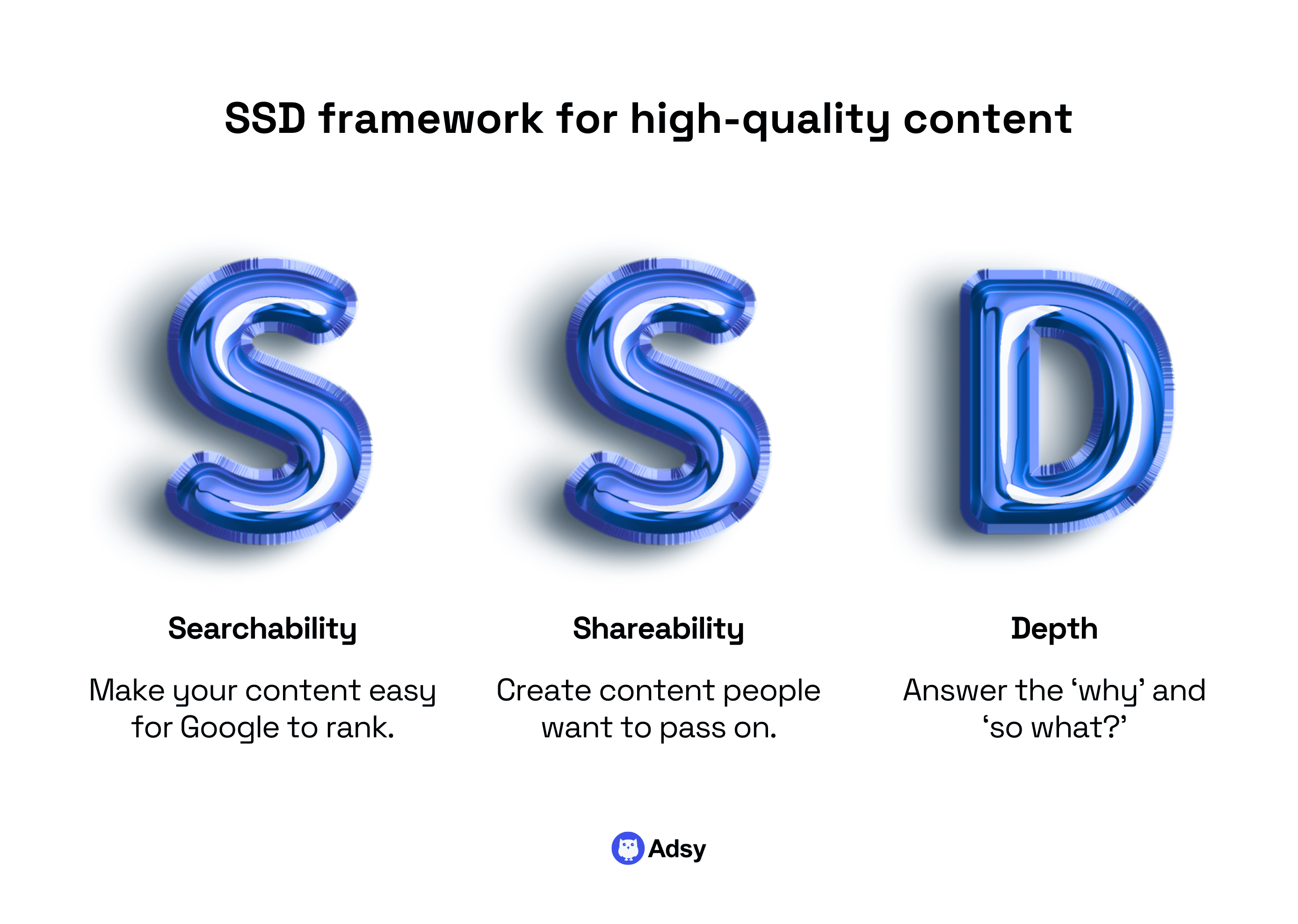
Searchability
This is where most website owners unintentionally sabotage themselves. They write for people, but forget to also write for search engines.
Yep, 50-80% of long-term blog traffic usually comes from organic search, which makes SEO very important.
Making a post searchable doesn’t mean stuffing it with relevant keywords. It means structuring it so search engines understand it.
If you’re absolutely new to SEO, these are the basics you should have in order:
- Have one main topic per post (with one main keyword). Of course, you can add additional keywords, but mixing in tons of queries won’t help you rank.
- Add internal links. Internal linking is very important to distribute link juice properly and avoid having orphan pages (pages that have no links to them).
- Do link building. In order to rank well, you need to have backlinks.
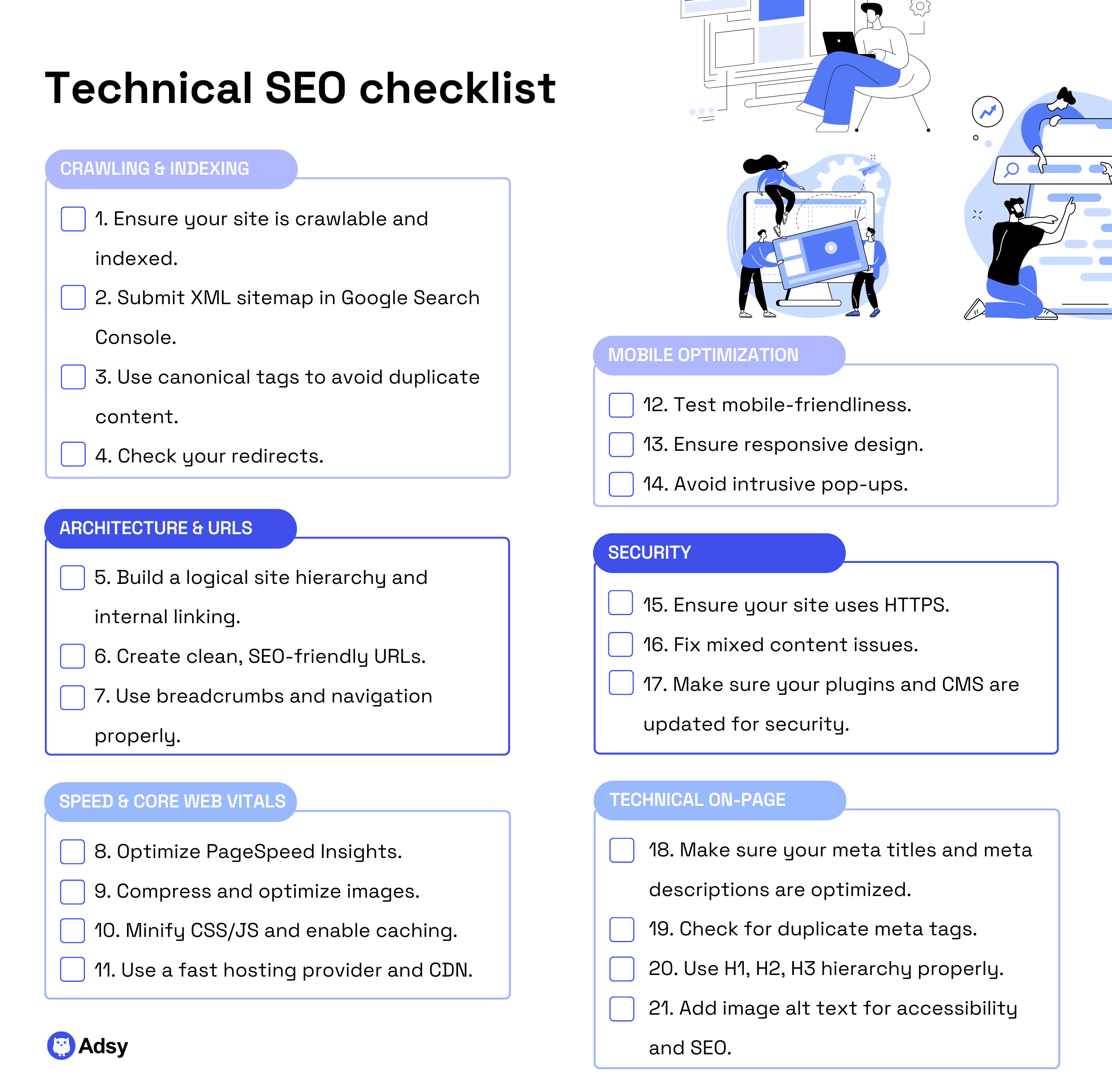
- And of course, fix at least the basic technical SEO (indexability and crawlability, site speed, architecture, security, etc.)
Shareability
Promotion becomes 10x easier when your content naturally invites sharing. But the thing is, you have to make it worth sharing.
People won’t even bother to send any generic and boring article, simply because there's too much of that.
But they will share:
- Personal stories,
- Surprising insights,
- Original visuals,
- Unusual angles,
- Anyhting emotion-triggering,
- Fun things, etc.
Overall, when it comes to shareable content, it’s everything that is unique in our time of growing content mediocrity. And everything that is easy to share format-wise.
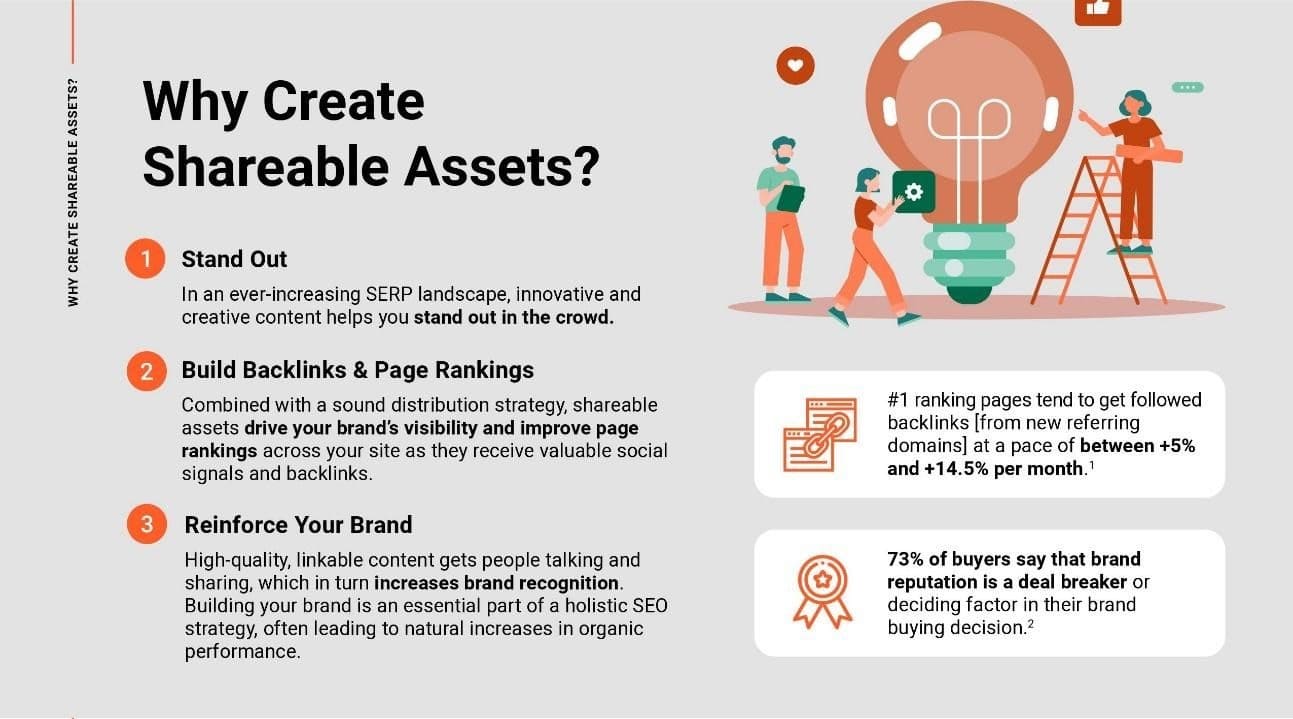
Source: Neil Patel
Depth
Search engines are tired of surface-level content. And readers, too. The only real way out of it is to add more depth to your pieces. How?
There are several frameworks and models you can use to write more profoundly.
But if we were to reduce it to just a couple of points, these are the most effective ways to improve the depth of your content:
- Don’t stop at the basics. Sure, first, cover the obvious (preferably briefly). And then, add on more details that help your readers actually understand the topic, not just learn something about it.
- Always make your writing actionable. Just giving information is okay. But profound writing means getting into what you should do with that information. That’s why, always when writing, ask yourself, “So what?”
- Address the “why”. Explaining what to do is great, but the reasoning behind your logic and claims is also very valuable. Especially if you target an expert audience.
- Answer related questions. Ideally, when writing, you want to understand your main audience and anticipate their questions. The People also ask section can help you here.
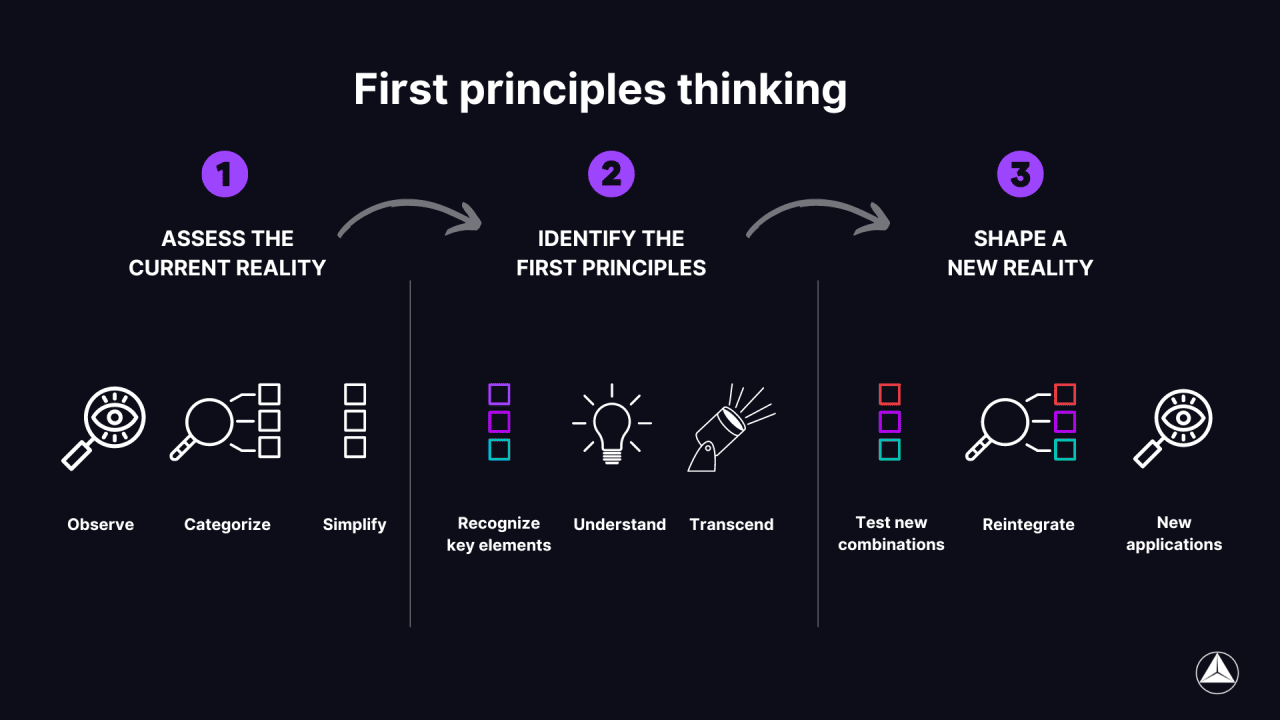
But if you deal with some complex topics, you can use the First Principles Thinking. It helps you eliminate the assumptions that might not be true in real life.
Source: LinkedIn
The idea of this approach is simple:
- You take a complex concept and identify any assumptions that are around the topic.
- Break it down into fundamentals (basic things that are both undeniable and easy to understand).
- Then, take those fundamentals and find potentially new solutions to the issue, reconstructing them from scratch.
You’ve probably heard Elon Musk talk about how he often uses this strategy.
Step 3: Build a content hub
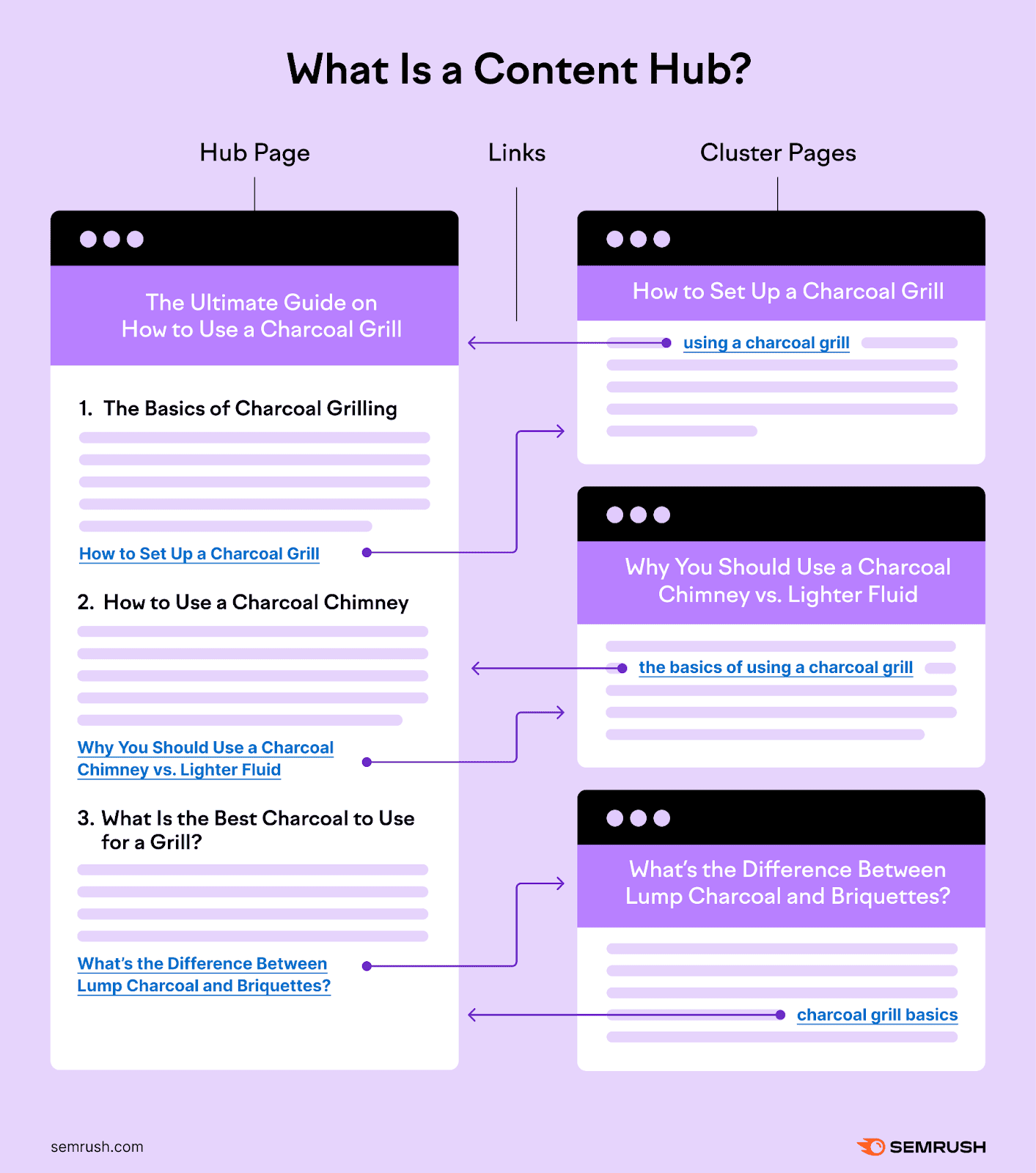
First, let’s figure out what a content hub really is. Let's imagine your blog as a city (yeah, we’re taking our metaphors seriously:). If that’s the case:
- A content hub is the “downtown”.
- One main guide is the skyscraper.
- Several supporting posts are the streets and buildings around it.
- Internal links connecting everything are the roads.
It's quite easy, right? And search engines love this, just as readers do (it often pulls them in if the content is useful).
Source: Semrush
With content hubs, promotion becomes much easier because every new article supports every previous one. And it works in both directions.
In practice, it looks simple:
- Every supporting post links back to the pillar page.
- The pillar page links to every supporting post.
- Supporting posts link to each other naturally.
This creates a content “web” that makes it easier for search engines to crawl your site and gives you more opportunities to build topical authority.
Plus, internal linking is especially helpful for newer posts. It helps Google discover and index them faster.
Wait, but why do you need to build a hub before you promote anything?
There are at least a few good reasons for that:
- Rank for multiple keywords instead of one. You can try to rank one generic article for everything, but that's too hard to do. It is much easier for you to rank many smaller posts that target specific questions.
- Promotion becomes easier because you have endless angles. Sharing one link repeatedly is boring and annoying. But with a content hub, you can publish a checklist from one post, a story from another, a case study from a third, etc. But they all lead back to your main content hub.
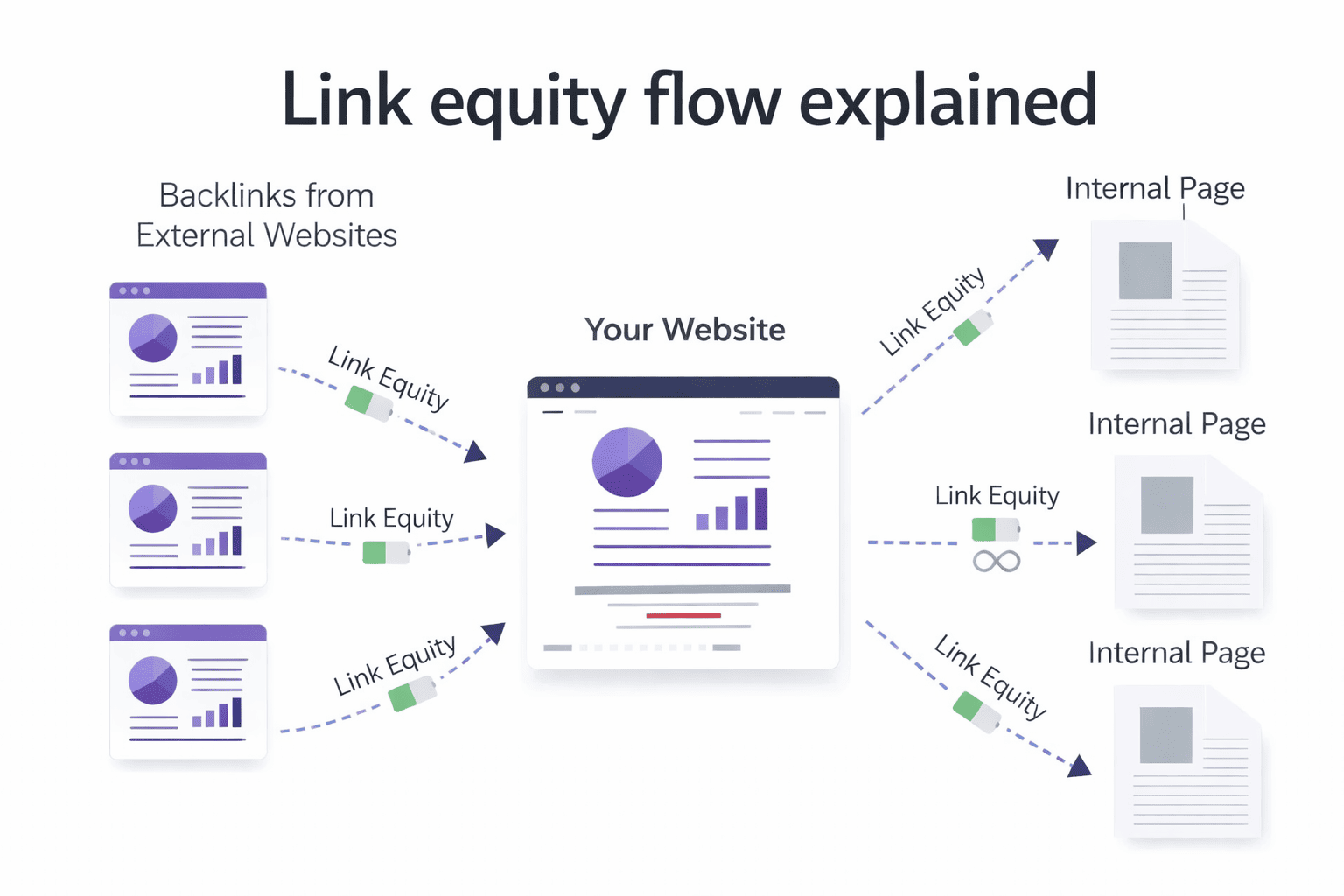
- Every external link strengthens multiple pages. If someone links to your main “pillar post,” all the surrounding posts benefit from that authority. Link equity basically “flows” through your internal links.
Step 4: Promote your blog organically
Organic promotion is where many bloggers burn out, because they treat it like a frantic race.
They share their work everywhere, hoping someone sees it, and refresh analytics every 15 minutes. Well, no wonder it doesn't work.
Real organic growth is all about being in the right place and in the right shape.
You show up where your audience already is, and create value in their language. This is how your website becomes the “natural next click”.
Organic promotion mainly comes down to these channels:
- Social media sites (organic posts, not ads),
- Email marketing (newsletter, regular emails),
- Community-based (forums, Reddit, Quora),
- SEO (of course).
Organic growth typically fails for one simple reason: people try to “sell” before they try to connect.
When your audience doesn’t know you, by default, they don’t see any value in clicking your links. Why would they?
Clicking is an investment. And we invest in those who make us feel something.
So instead of posting a “New blog post!” announcement (which screams “I want something from you”), shift to a value-first approach. Make your followers feel something:
- Share the moment that made you write the post.
- Share the most surprising fact you found during your research.
- Share one actionable insight from the article that someone can use even if they never click your link.
When you make the content itself valuable, you don’t need to push anything.
So, choosing a value-first strategy is the absolute best thing you can do for your online presence management.
Repurposing
Repurposing also plays a huge role here. Don’t treat your article as a one-time announcement. Treat it as raw material.

Source: Backlinko
A single article can live much longer if you turn it into:
- A 40-second Reel or a carousel,
- A Twitter thread or a Q&A,
- A short video for your YouTube channel or a discussion starter inside a Facebook group.
Each format reaches a different slice of your audience, and each one deepens familiarity with your message.
Especially now, when you can repurpose content with AI, there is no reason to ignore it.
Step 5: Leverage other blogs and guest posting
Nothing accelerates a blog’s growth like showing up on other quality sites. Especially when that page already has the audience you’re trying to reach.
For a new or growing website, guest blogging could be a shortcut to reaching readers who would never find you on their own.
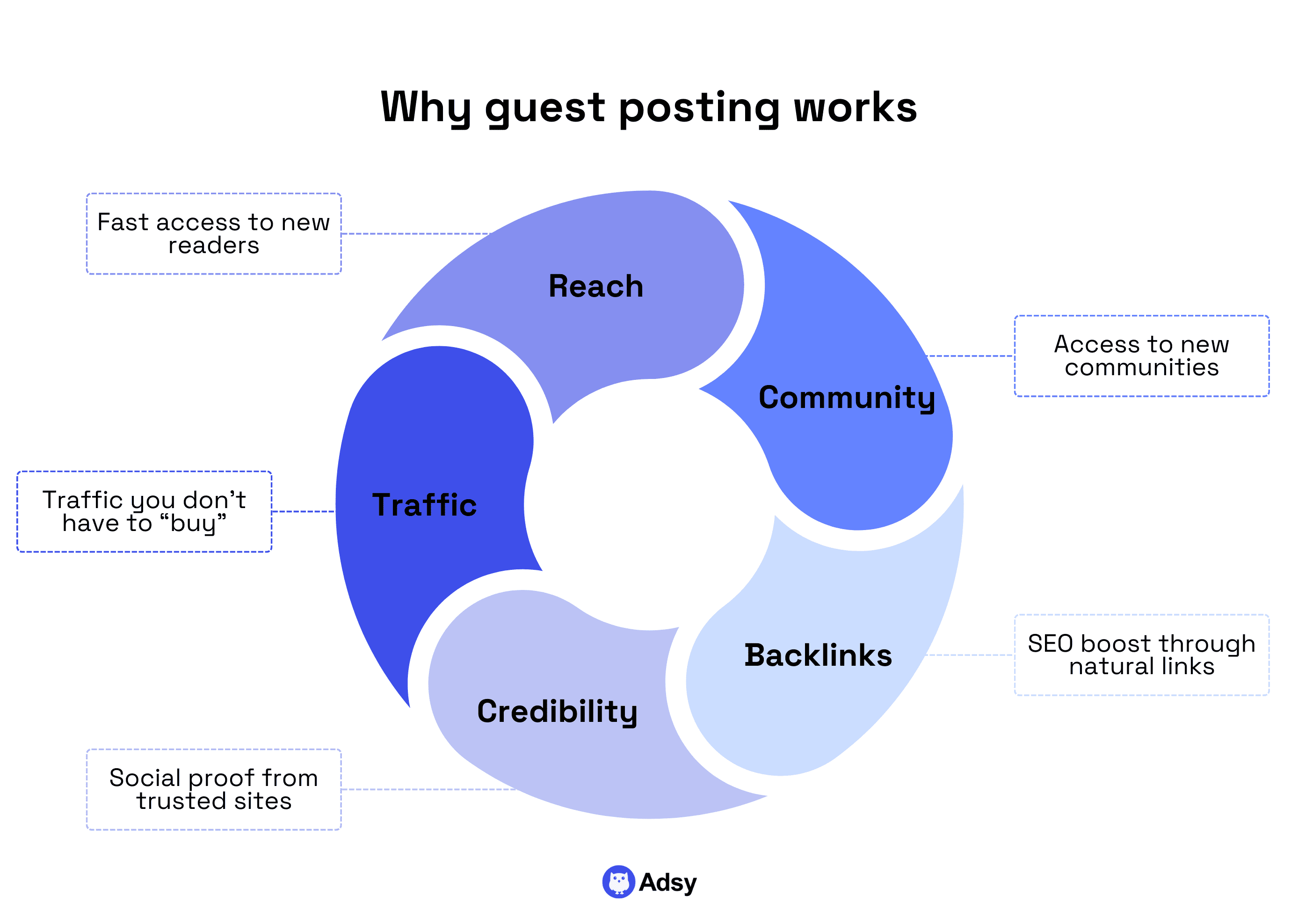
Why does showing up on other blogs work?
- It brings you backlinks, which are extremely important for SEO and high rankings.
- You get to share your expertise and “show off” your brand.
- A new audience discovers you in an organic way.
The mistake many people make is pitching any site vaguely related to their topic.
But the best results come from websites whose audience is not identical to yours, but close enough that your content naturally fits.
For example:
- If your main topic is marketing, pitch content, advertising, copywriting, SaaS, etc., websites.
- If your main topic is productivity, pitch business, remote work, career growth, etc.
- If your main topic is personal finance, pitch entrepreneurship, lifestyle, etc., sites.
What you want here is a related audience (that simply makes sense).
This is how you find readers who don’t normally cross paths with you, but who would absolutely benefit from your work.
How do you find all these relevant pages?
There are multiple ways:
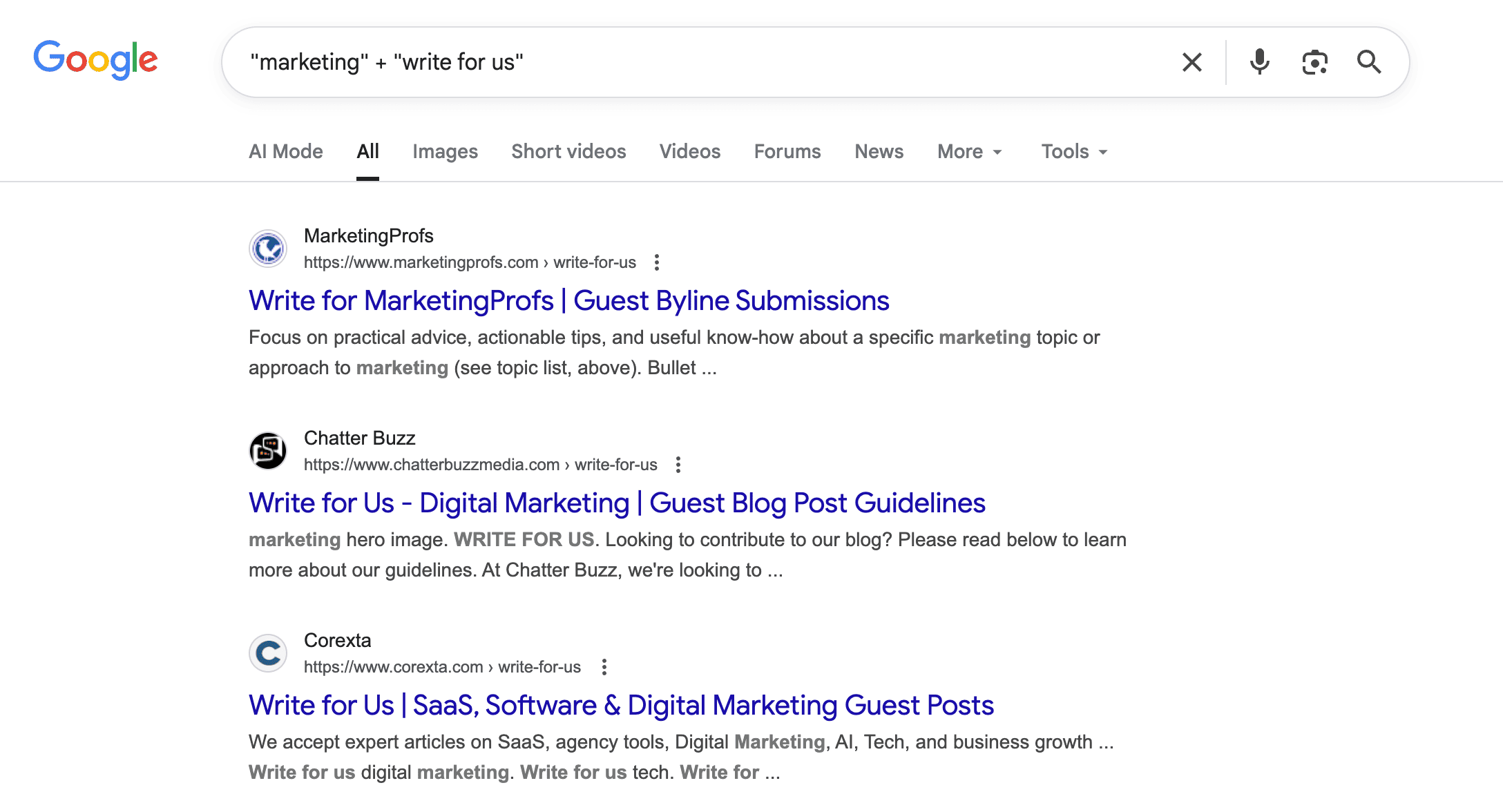
- Google “your main topic” + “guest posting,” “guest blogging,” “write for us,” etc.
- Use keyword research tools to find websites that target queries similar to yours and have decent rankings. Then, contact them. Ideally, find their editors on LinkedIn or X because they might not answer your emails.
- Use Adsy to get free access to 150K+ websites in virtually any niche.


Here's an additional thing you can do before pitching any website for a guest post. Ask yourself:
- What topics bring them most of their organic traffic?
- Which posts are outdated but still ranking well?
- What is the unique expertise you can “sell”?
These gaps are very good opportunities to mention in your pitch. If you offer a topic they already know they need, you will bring a sort of solution to their blog.
Step 6: Add paid promotion
Contrary to what some people think, paid promotion is not a rescue boat for weak content.
If a blog post doesn’t solve a problem or offer a new insight, no ad campaign will save it.
Paid advertising only amplifies what already works.
But still, in order for PPC to bring any results, you have to choose the right channel and know what users expect on each advertising platform.
Here is another crucial (and slightly controversial) thing. Sometimes, wanting to reach wider audiences or get more traffic isn’t the best approach.
Why?
You don’t need just any audience or any traffic. You only need relevant people and clicks.
So, don’t get discouraged when you don’t have big budgets and can’t run huge nationwide marketing campaigns. It’s okay. And most website owners are like that.
You just have to play smart, not hard.
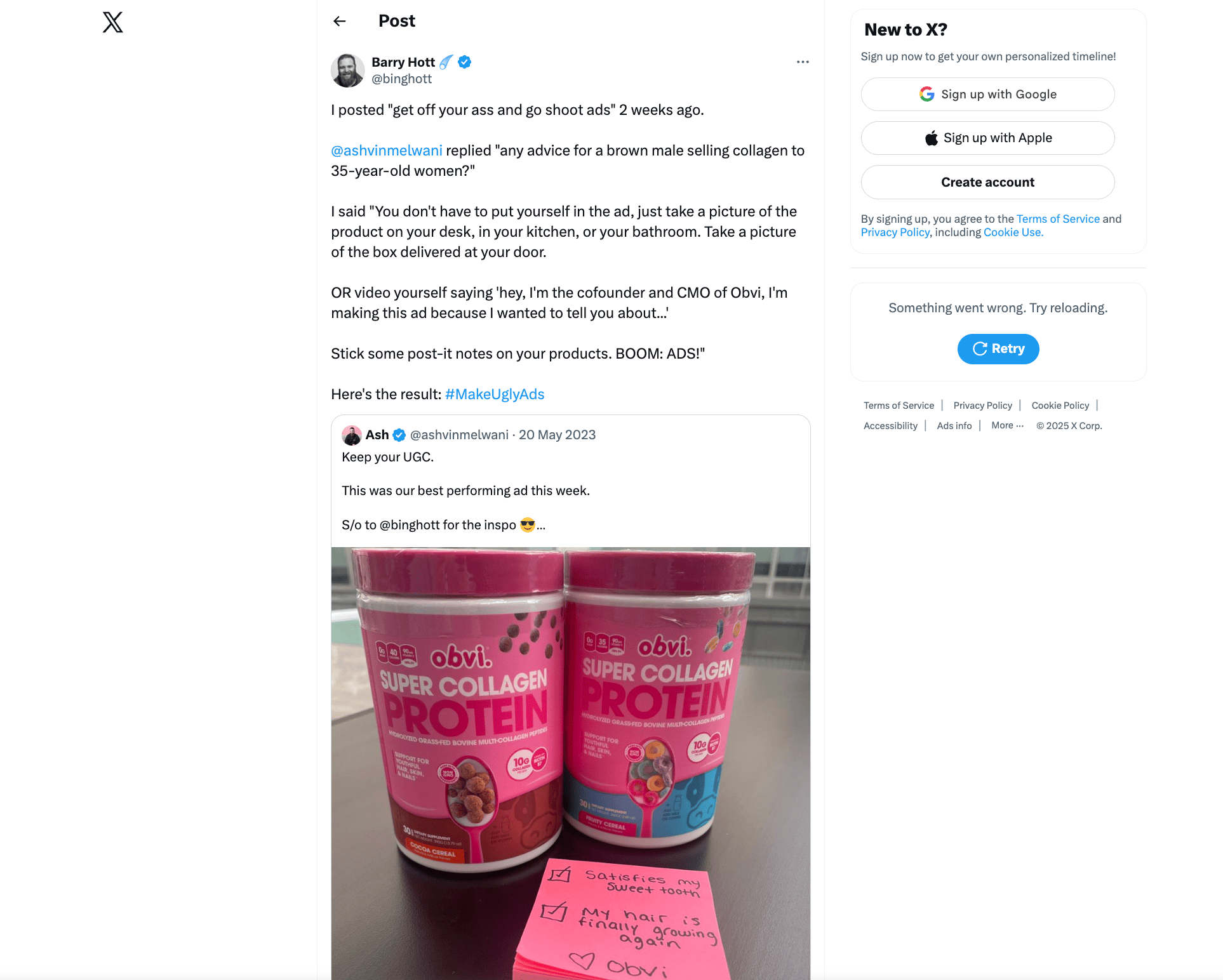
And one of the best ways to do that is by testing the waters with smaller budgets. And just so you know, your ads don’t always have to be polished either.
Even a random picture and a post-it note could work. We’re not kidding:)
Source: X
These are some of the basics you have to keep in mind, whether you run Google Ads or sponsored posts on social media sites:
- While the number of advertising platforms is nearly endless, you most definitely don’t need all of them.
- Don’t try to target cold audiences at first. Focus on those who’ve already interacted with your content somehow.
- Advertise posts that already work well, instead of trying to push “weaker” pieces.
- Start with smaller budgets to test how your tactics work.
- Don’t just share links. It’s much easier to promote a useful asset (tutorial, checklist, audit example, practical case study, etc.) than just an article.
- Make sure your ad formats correspond to the platform. For example, TikTok is all about lifestyle content. So, running a corporate ad won’t work there. Look at this Adobe example. Instead of bluntly selling their product, they went on to redesign signs in NYC.
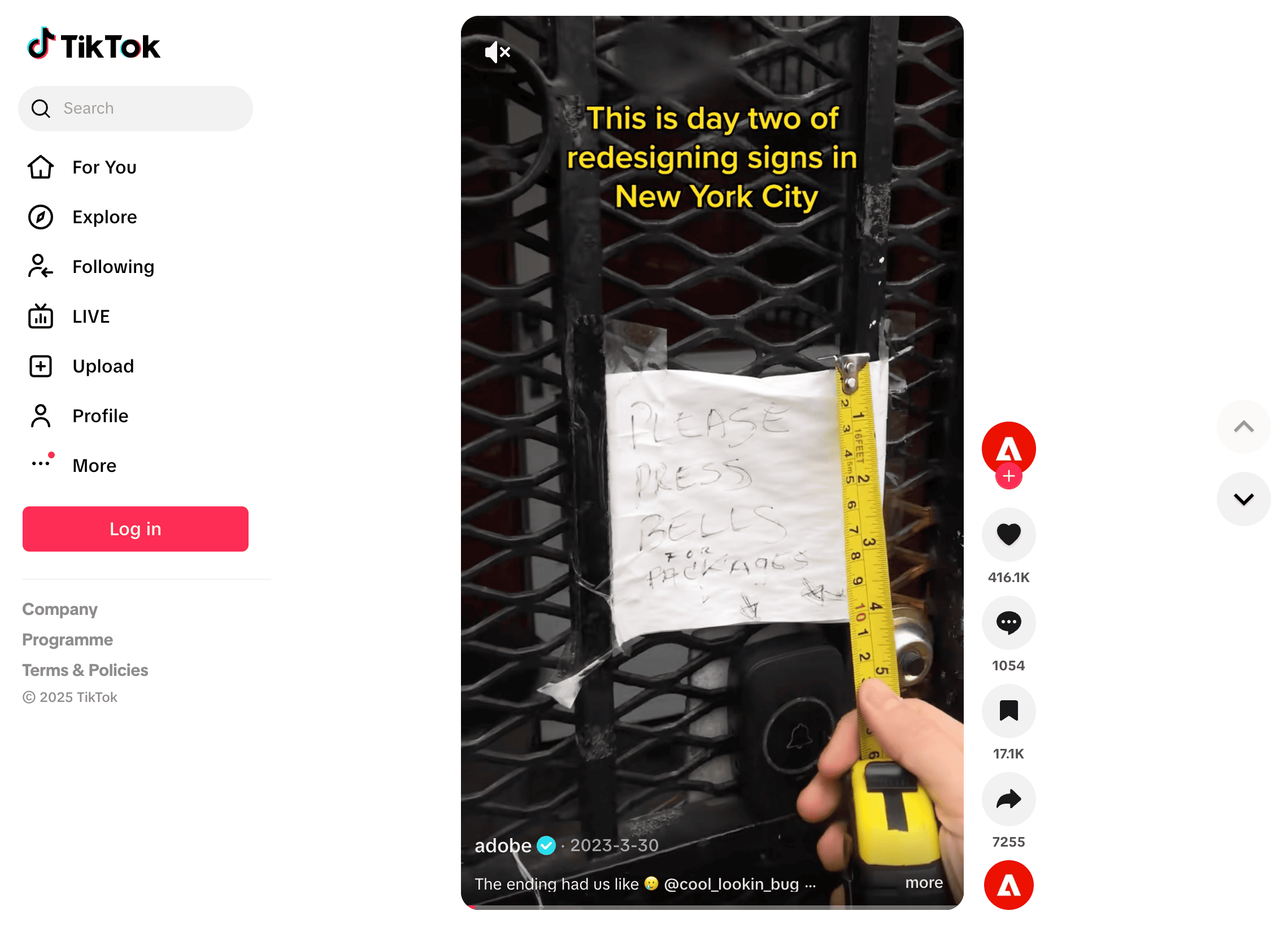
Source: TikTok
Step 7: Build distribution routines, so promotion becomes repeatable
What separates consistent blog growth from inconsistent “bursts” is not motivation. It’s actually the presence of routines and systems.
These little repeatable steps that “remove the thinking” and carry the main workload for you are huge.
They make everything easier because you don't have to make every decision from scratch.
Clear workflows are the fundamentals of any successful blog.
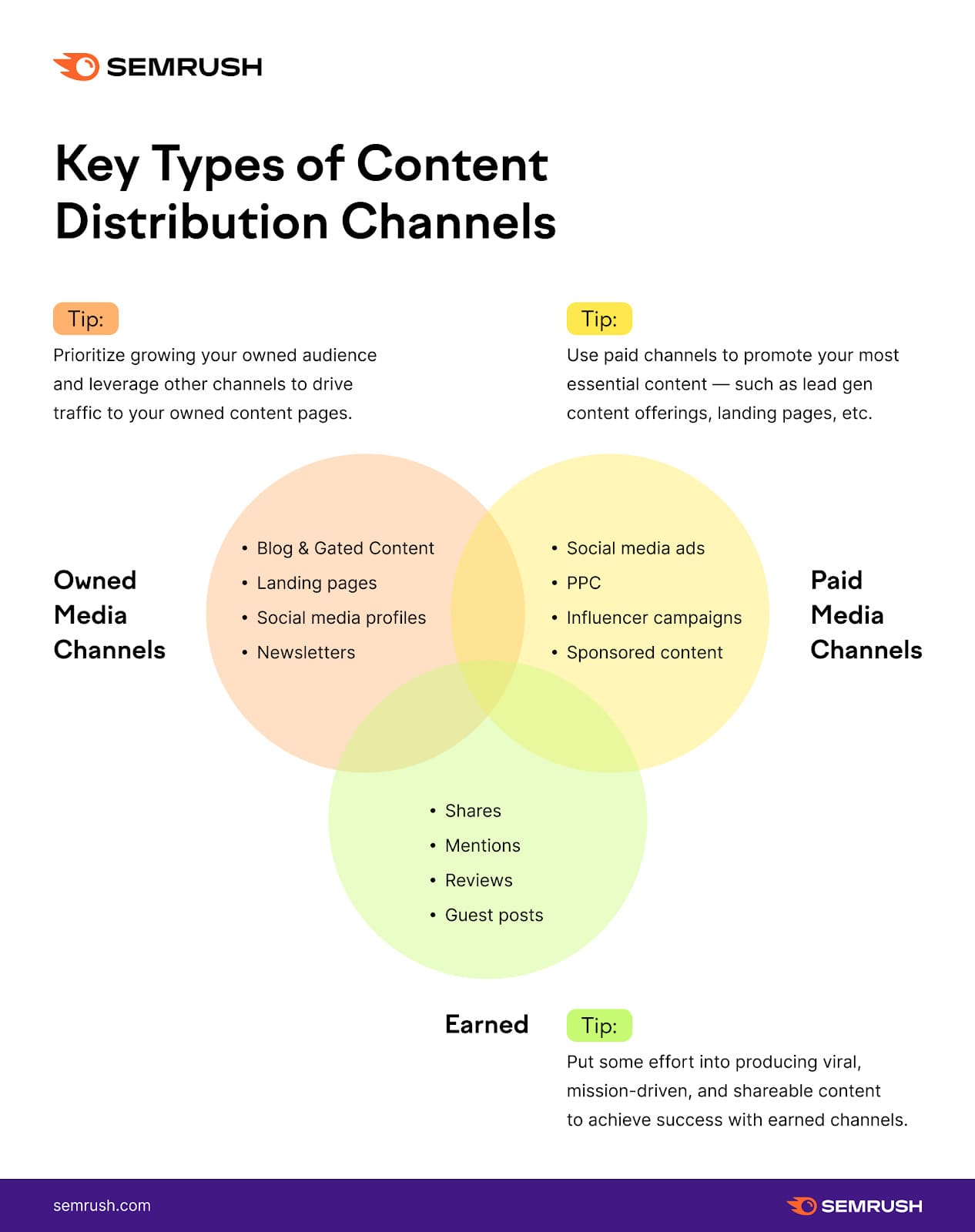
Source: Semrush
A good distribution routine looks something like this:
- 3-5 platforms you can show up on consistently (not 15 you’ll most likely quit in a week).
- A small checklist for each platform.
- A simple schedule so distribution becomes a reflex and not another “unbearable task.”
For example, your promotion checklist might include some things right after publishing and within a couple of days.
Right after publishing:
- Turn the main idea into a LinkedIn post.
- Create a Twitter thread out of one point.
- Turn an insight into a Reddit answer.
- Share a visual as a Pinterest pin.
- Email your list with a short personal anecdote.
Within 48 hours:
- Join one existing conversation on X and mention the idea (not the link).
- Share a Story on Instagram that highlights one lesson.
- Add the post to your internal link structure.
- Update 2-3 older articles with links to the new one.
Of course, this is just an example. It doesn't mean you have to follow the same structure.
Simply consider your goals, target audience, niche, and channels, and then start small with something that makes the most sense. You can add on later.
Step 8: Build your authority network
If the earlier steps were about getting your website to stand on its own legs, this one is about giving it shoulders to stand on.
A lot of new bloggers imagine authority as something you gain by publishing enough good content. Something like, “Write 30 ultimate guides, and the world bows to you.”
But of course, it’s far from the truth.
In reality, blog authority grows the way a reputation grows in real life.
It comes through people who:
- Know your work,
- Trust your work,
- Talk about your work,
- And want to be associated with your work.
So, this step is about building the network that makes all of that possible.
And just to be clear: you’re not networking to “get favors.” You’re building an authority ecosystem, a circle of people who grow each other’s trust signal.
Start with a micro-relationship.
Forget about fancy “influencers.” Forget DMing someone with 150k followers on Twitter and asking them to “collab.”
Those people live in a different world, and right now, they have zero reason to care about your blog.
So, you have to start much smaller. For example:
- Writers with 1,000-10,000 monthly readers.
- YouTubers with 2,000-8,000 subscribers.
- Newsletter creators with 500-3,000 subs.
- LinkedIn creators who get 20-50 likes per post.
Why these people?
Because they actually respond, and they actually read your messages. And most importantly, they are also in the “building mode.” They need allies just as badly as you do.
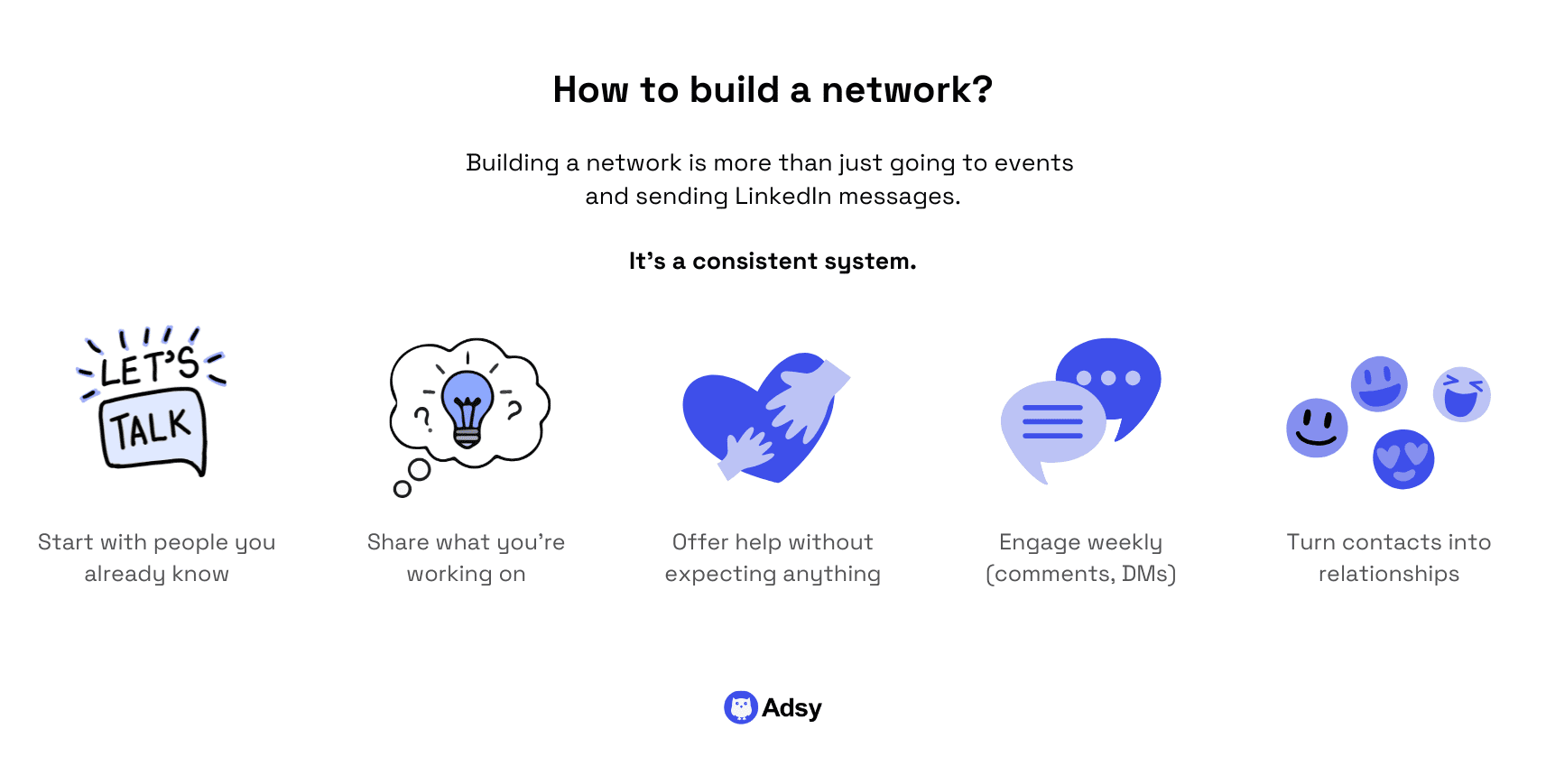
Ideally, every week (if not every day), you want to dedicate some time to:
- Comment on their posts with substance.
- Reply to their newsletters. If something helped you, say how.
- Share something they wrote and add a note about what you learned.
- Sign up for some networking events (online or offline).
Your authority network doesn’t need 1,000 people. It needs 5-10 people who write in or around your niche and/or offering consistently.
It would also be great if they care about depth, quality, and audience building. And, of course, if they are open to exchanging ideas.
When you find these fellow bloggers, you already start creating your authority engine. Together, you can:
- Share each other’s content naturally (no formal agreements).
- Send each other backlinks when relevant.
- Guest post for each other.
- “Push” each other to publish higher-quality work.
- Brainstorm search engine optimization angles together.
- Combine audiences during launches.
The thing is, even the small bits of visibility add up:
- People who see your name once might forget it.
- People who see it five times start to think, “Oh, this person knows what they’re talking about.”
- And those who see you 10 times go directly to your website when they notice you’ve published something new.
Step 9: Measure and iterate
This step is as basic as the one about the audience, and it’s equally important.
There are dozens of blogs that might be your competitors, so you need to see the data. Otherwise, it will be hard for you to get better and stand out.
Start with Google Search Console
Google Search Console (GSC) is the most underrated tool in the entire marketing space. First of all, it’s free. And secondly, it has lots of valuable data.
Here are just some of the insights you get:
- Which queries your article is showing up for,
- Your average search rankings,
- Organic search traffic,
- Impressions vs. clicks,
- Opportunities for relevant keywords,
- Pages that are trending up or down,
- Indexing issues on your own site.
It tells you no more, no less: how your website is actually doing in the organic search.
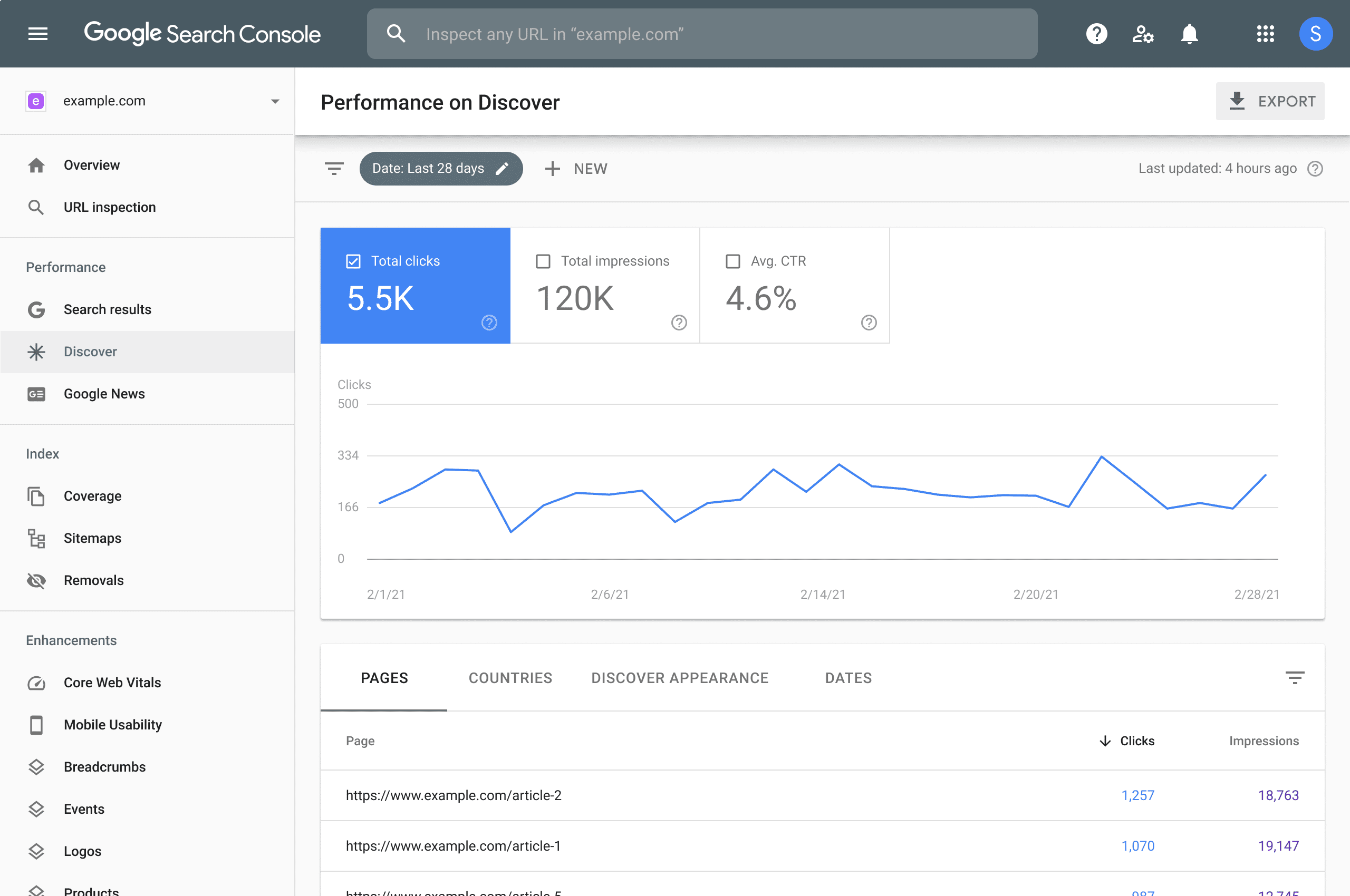
Source: Google
You can use GSC for several use cases. But the least you can do is to take at least 10 minutes every week to:
- Sort pages by impressions.
- Look for posts that have high positions, get tons of impressions, but few clicks.
- Fix their title and meta description to be more compelling.
- Add missing relevant keywords if necessary.
- Add internal links from stronger posts.
Use Google Analytics to understand behavior
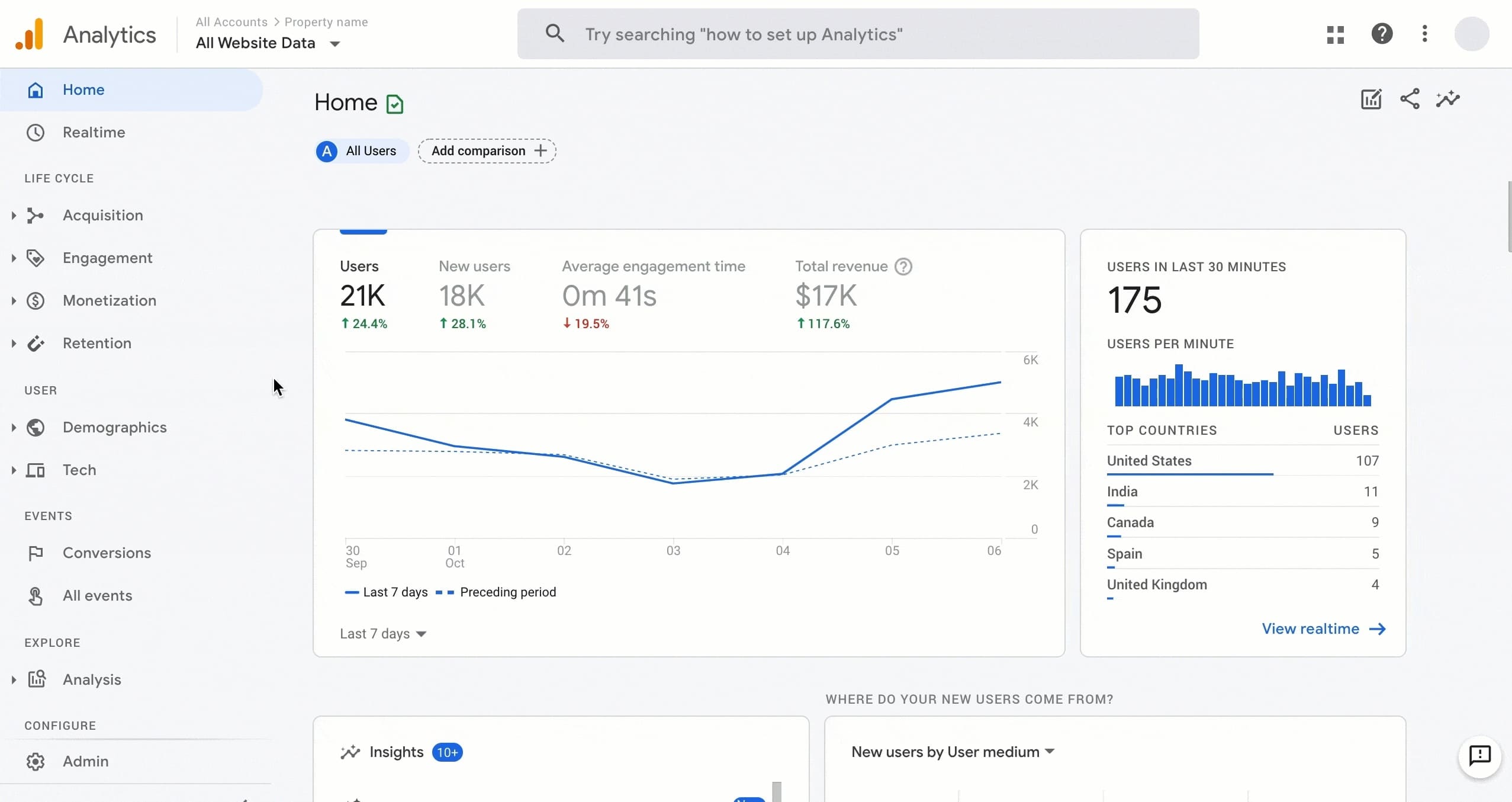
Another free Google tool is GA4. It gives you an even deeper understanding of your content performance. It is particularly helpful to interpret and understand your audience’s behaviour.
Source: Google
These are the things you can track in Google Analytics:
- Where did people come from? (Channel group)
- How long did they stay? (Average engagement time)
- Which blog post did they read first? (Session start)
- Did they visit other relevant posts? (Event count)
- Which platforms drive readers who actually stick around? (Engaged sessions)
Sometimes, the smallest traffic source gives you the highest-quality audience. And that’s something you want to track and dedicate more time to that source.
Monitor your keyword rankings
Monitoring your keyword rankings in search engine results is extremely important to see the full picture.
It basically tells you:
- Which posts are about to break into page #1.
- Where a quick update could push you upward.
- Which Google search results pages hold opportunities.
- Whether your current tactics are actually improving your visibility.
For example, if a post is stuck at positions 11-15 (top of page 2), updating it with fresh content, more relevant links, unique visuals, deeper insights, an FAQ, additional keywords, etc., can push it to page 1.
And this will inevitably bring in more organic traffic. But you can’t know that until you check your keyword rankings.
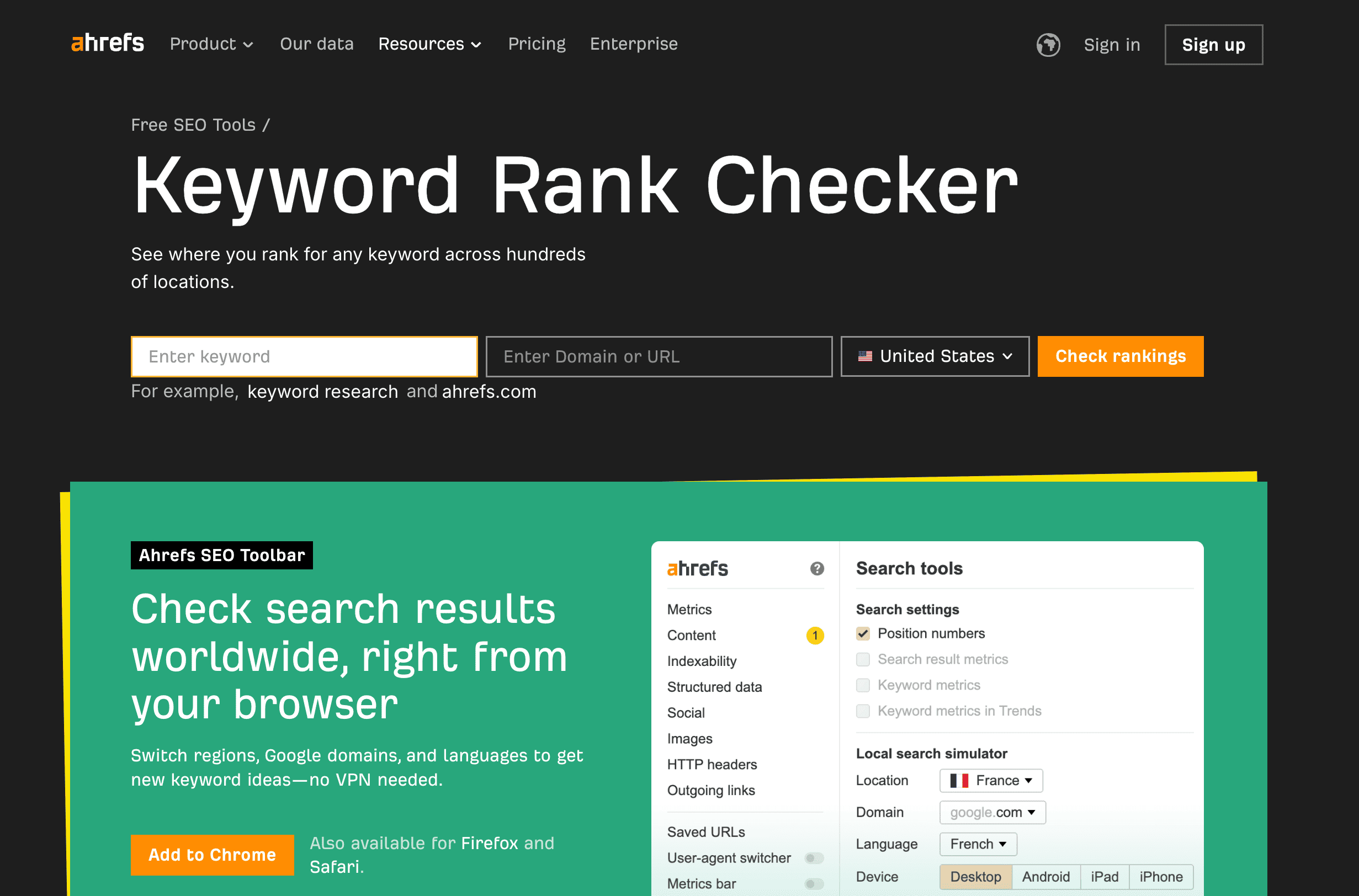
You can even use a free tool for this, like this one by Ahrefs.
Source: Ahrefs
Additional methods you can apply to make your blog more visible
By following the framework above and being consistent, you’ll definitely make your website successful over time.
But if you want to do a little extra, or if you’re looking for a “quicker fix” rather than an entire framework, here is a section for you.
The most effective techniques are surprisingly simple and repeatable.
You don’t need 20 tactics to make it. You need a handful of reliable habits you can use every time you publish something.
The “explain first, link second” method
This one is a mix of a mindset and a practical tactic. The idea is straightforward: you just need to find posts with questions in your niche and write a genuinely helpful answer.
After that insightful comment, you can add, “If you want the full breakdown, I wrote a detailed guide here,” and drop your blog post URL.
This doesn’t only mean commenting on forums relevant to your topic. You can also use:
- Facebook groups,
- Niche subreddits,
- Quora and other Q&A sites,
- Slack/Discord communities,
- LinkedIn comment sections,
- Other people’s posts, etc.
The most important part of this strategy is to explain (aka give value) first and link after (only if it makes sense).
Here, you don't just say, “check out my blog post." You give a complete answer right inside your comment and then add a URL if there is more to say.
When your answer already delivers value, the link feels like a resource. And if you worked well on your content, it is a resource.
As you see, everything comes down to usefulness.
If your “mini-lesson” gives readers something useful in 30 seconds, they’ll assume your article must be an absolute treasure. And if it is, they might become your return visitors.
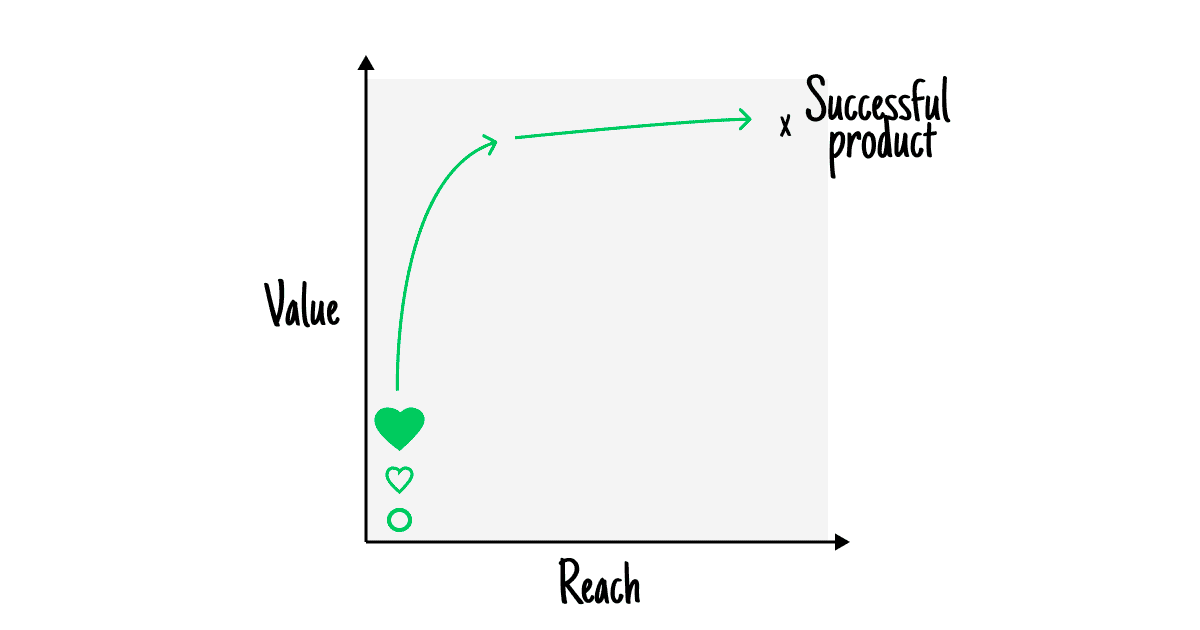
Approach this tactic as quality product marketing, where everything starts with value, not the reach.
Source: Medium
This method normally works great with:
- Specific blog posts (could be tutorials),
- Visual topics you can pair with images,
- Problem-solving pieces for SEO, coding, design, and fitness.
Focus on evergreen content: That's your quiet traffic machine
When it comes to advertising your blog in the long run, you can’t rely on trends. They tend to vanish as fast as they appear.
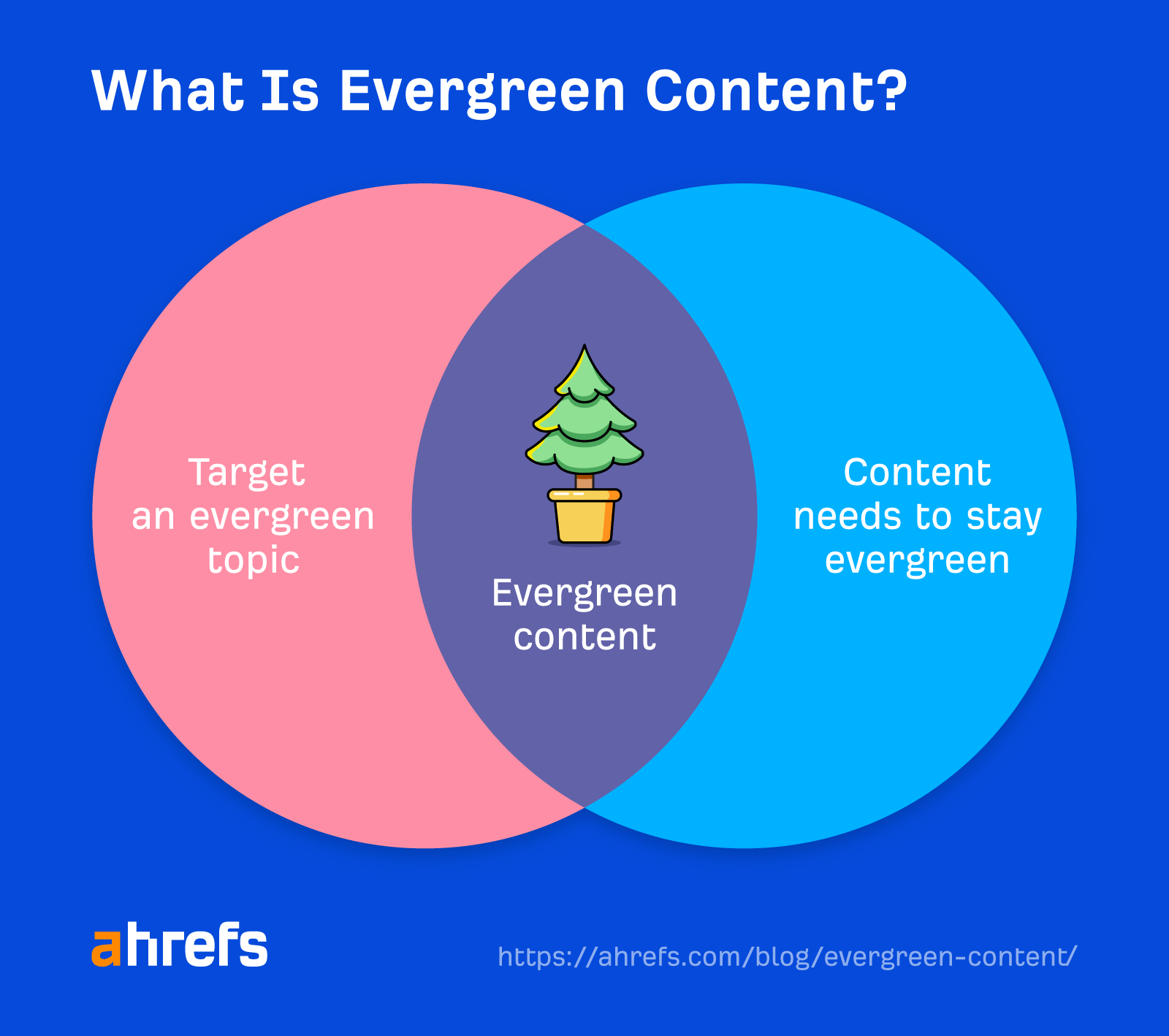
But there is an opposite type of content that won’t let you down in terms of its “expiration date,” it’s evergreen content.
Don’t get us wrong. You should definitely publish timely pieces, but the posts that build a successful blog are evergreen ones.
This is content that stays relevant for years. In other words, people will always look for that.
That’s why it’s one of the most effective blog marketing strategies.
Evergreen posts often become your “traffic roots.” They keep pulling in new readers even when you’re not doing anything new.
Source: Ahrefs
Here are some examples of evergreen content:
- “How to Start a Freelance Business”
- “Beginner’s Guide to Keyword Research”
- “X Best Tennis Rackets for Beginners”
People search for these topics every day, for years. So, once you manage to rank your post, it continues to drive traffic to your page.
If you keep adding some relevant backlinks to your post and update it every 3-6 months, it can stay in its position for years (literally).
And when it comes to promoting evergreen content, it is generally easier because it never “expires.” You can:
- Repost and re-share it,
- Keep linking to it,
- Keep answering questions with it,
- Include it in email sequences,
- And pitch it as a guest post reference.
Evergreen content, if you will, is your traffic retirement plan.
Find the right blog post types
Different types of blogs are meant for different goals.
Certain articles work consistently because they match how people search, learn, and make decisions online.
All you need is to understand which content formats actually bring your website closer to traffic, trust, and revenue.
Here are just a few you can use:
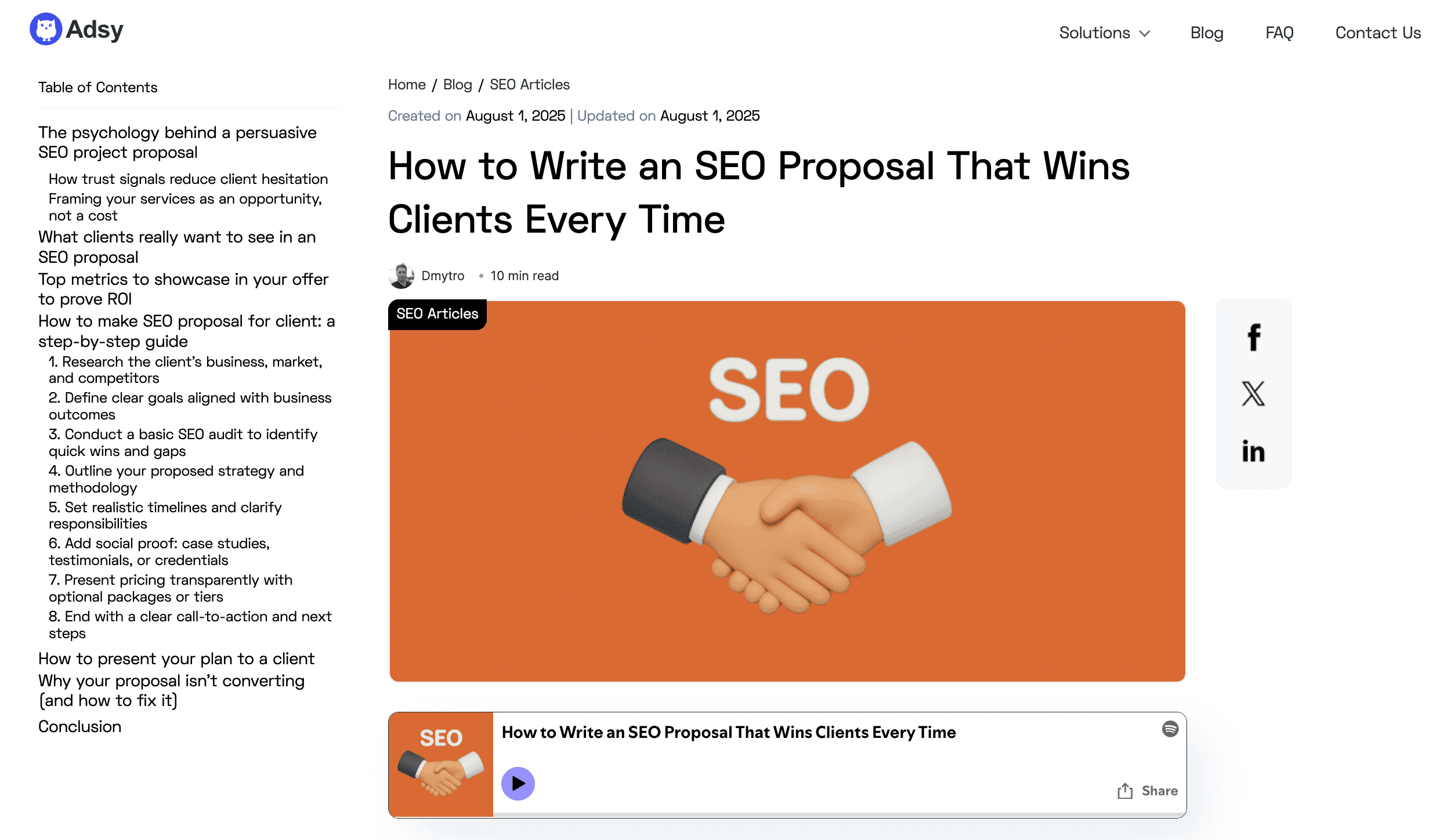
1. Search-driven posts (the ones that build long-term traffic)
These are the posts that target keywords people are actively googling. Not glamorous or cool, as you understand, but essential. These posts:
- Bring predictable traffic,
- Capture readers at the moment of intent,
- Compound over time.
These include how-tos, comparison posts, tutorials, definitions, and problem-solving pieces. They’re the backbone of blog growth because they’re discoverable.
2. Authority posts (build trust)
These are deeper pieces where you show your true expertise. The internet is drowning in surface-level content.
But authority pieces stand out because they show original thinking and experience.
These are some of the examples:
- Industry breakdowns,
- Data-driven insights and original research,
- “What we learned from X years doing Y,”
- Frameworks you actually use.
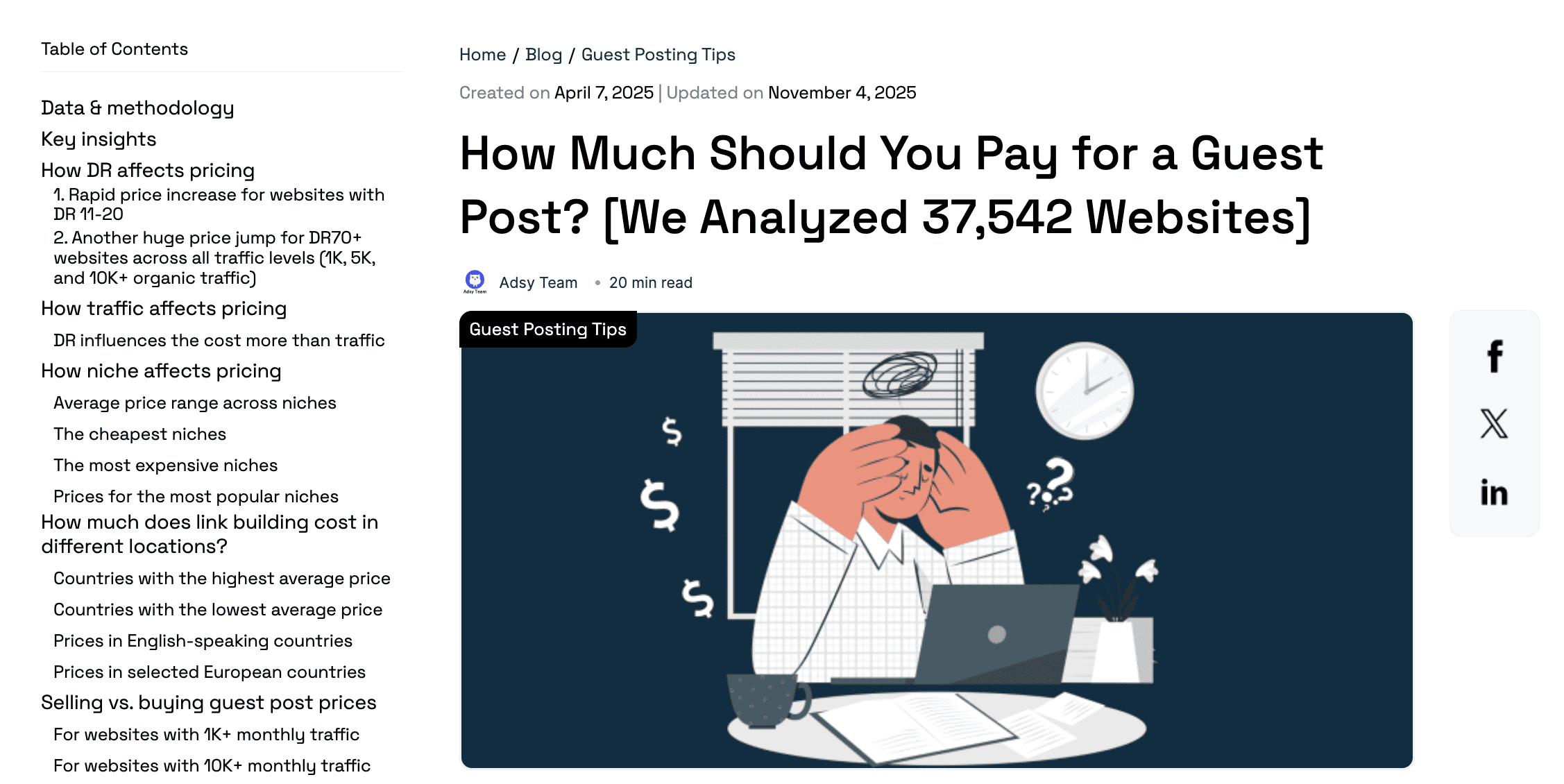
While not every blog owner can get some original data, you can still share your own story and your own experience. The idea of these articles is to offer your expert perspective.
These posts rarely go viral, to be honest. But they make people return.
They establish you as someone worth following. And that's what can bring you more traffic in the long run.
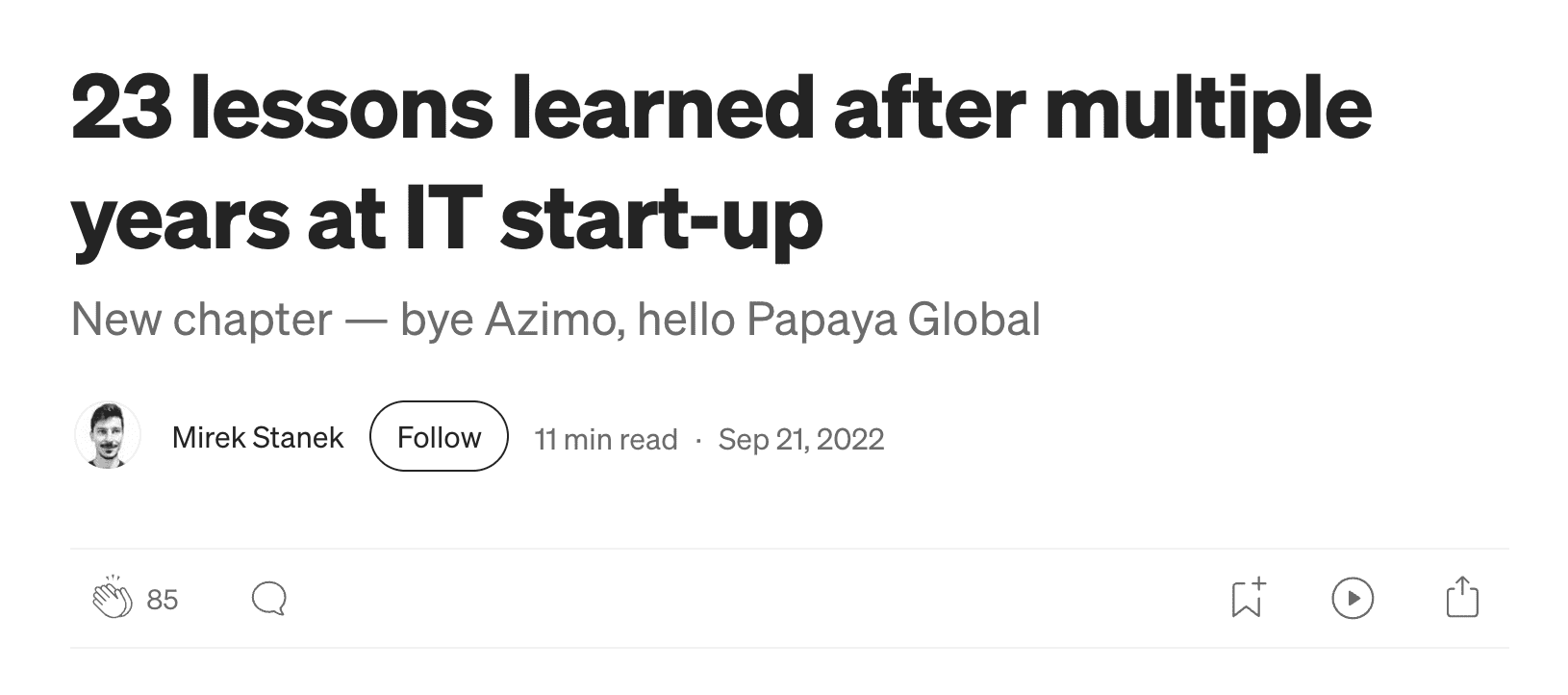
3. Narrative or experience-based posts (create connection)
Usually, people follow websites not just for information, but also for their unique voice.
This is where this type of article works really well. It shows who you are, giving some human features to your website.
Good narrative posts share things like:
- Mistakes you made,
- Systems you built,
- Stories from real clients or real projects,
- Observations from your field.
Source: Medium
These posts create emotional memory.
Readers remember your company better and learn something relatable about you besides all the “super-useful tips”.
4. Content designed to be shared (spread on socials)
Some articles are built to travel. These include:
- Strong opinions,
- Contrarian takes backed by logic,
- Short, punchy “insight” pieces,
- Lists or summaries that people want to bookmark.

Source: TIME
These don’t necessarily rank, but they’re magnets for engagement, quotes, comments, and reactions. They also often pull “not your typical audience” into your world.
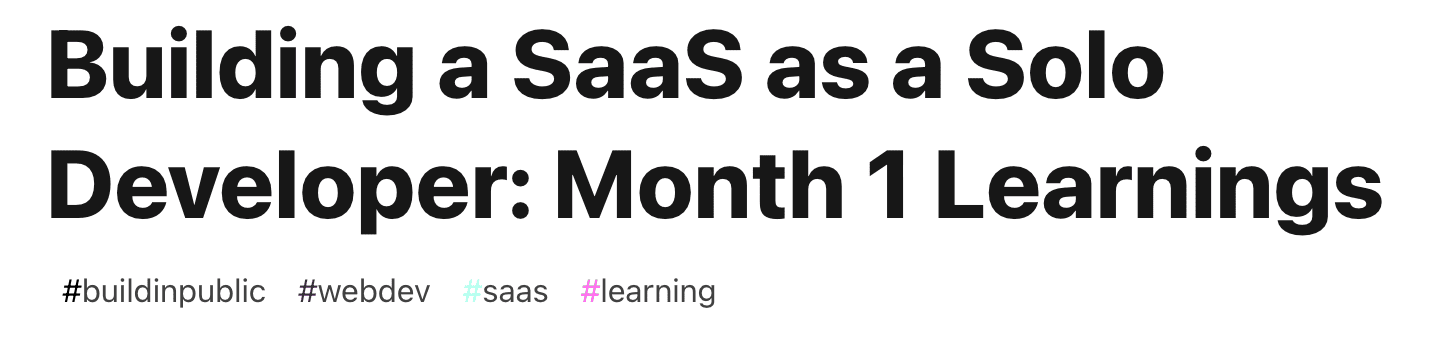
5. The “progress log” format
This is one of the easiest article types to promote. Why? Because every update creates a new wave of interest.
Here, you document an ongoing challenge or experiment. For example:
- “I’m trying to rank for a competitive keyword in 90 days. Here’s the first update.”
- “Building a freelance portfolio from scratch: week 1 recap.”
- “Trying to grow traffic without publishing anything new: month 1 results.”
Source: DEV
This works for many reasons:
- First of all, people love to see some progress. And every single update naturally encourages readers to check previous posts.
- Besides, you create a built-in distribution where everything you do becomes “content”. Readers start rooting for you, and that emotional tie grows your audience.
- This format is especially powerful because it promotes itself. Your next update becomes marketing for your last one.
Conclusion
When it comes to promoting a website, many start searching for the best days and times to post blogs. But in reality, this doesn’t matter much.
The only sustainable way to grow your website and brand is to look at the bigger picture:
- You have to build a whole system that starts with a mindset and a clear understanding of your audience.
- Then, you have to focus on creating truly valuable content.
- And only after can you really start all the self-promotion.
When you consistently add value, the URLs you post out there do not seem like ads anymore. People know they are actually helpful resources.
And as for the exact tactics, simply follow our 9-step framework or mix it with your own, and you'll definitely see good results coming.
All trademarks, logos, images, and materials are the property of their respective rights holders.
They are used solely for informational, analytical, and review purposes in accordance with applicable copyright law.




 Sign Up
 Sign Up