






Average Bounce Rate Benchmarks: 92 Statistics
If you’ve ever searched for bounce rate benchmarks, you know how different the numbers can be from one study to another.
Yes, we feel you. It’s extremely frustrating.
And it also raises the question: what is an actual average bounce rate?
To answer it, we gathered 92 studies on average bounce rates for websites and different industries. And then calculated the average.
Average bounce rate: quick summary
Average website bounce rate: 47.42%
Bounce rate benchmarks by industry:
- Ecommerce: 44.23%
- B2B: 54.37%
- Real estate: 47.10%
- Travel: 49.22%
- Health care: 51.45%
By traffic channel:
- Organic search: 45.81%
- Paid search: 45.47%
- Social: 54.53%
- Email: 39.55%
Why this list?
We created this list because we know how confusing it can be to see different bounce rate numbers across multiple studies.
Especially when all of them seem relevant and credible.
That's why we decided to solve this problem. For that, we gathered 92 available credible benchmark studies in one place and calculated their average.
Website average
Average website bounce rate: 47.42%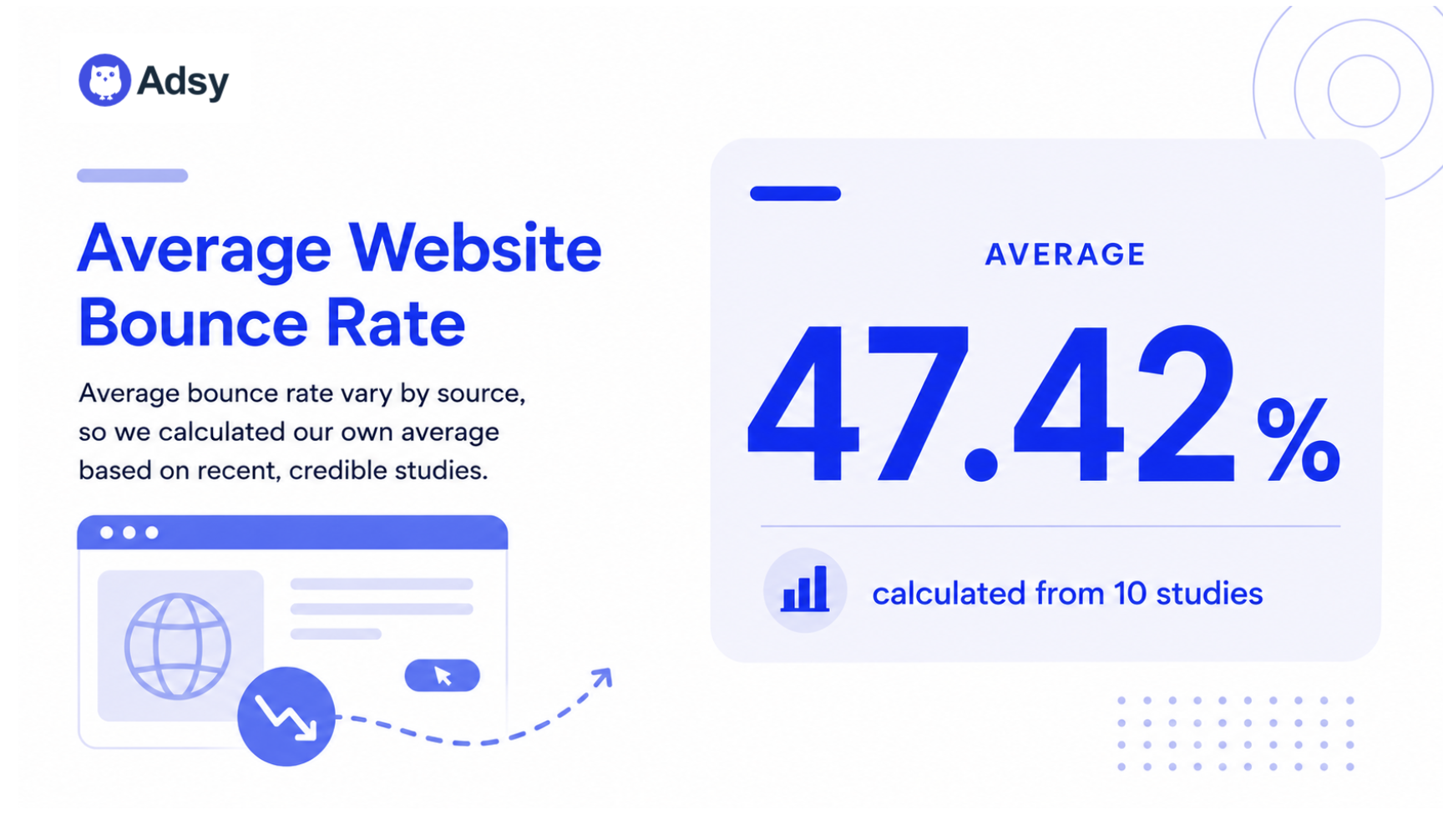
These are the studies we used to calculate the average:
- 44.04%Databox (2024)
- 48.7% Contentsquare (2024)
- 50.9% Siege Media(2024)
- 60.99% Orbit Media (2020)
- 44.48 Agency Designs (2025)
- 55.53% Business Dasher (2026)
- 42.9% Monetate (2022)
- 56.2%NCBI(2022)
- 30.5%SimilarWeb (2021)
- 40% UEA eprints (2020)
Bounce rate benchmarks by industry
Ecommerce
Average bounce rate for e-commerce: 44.23%.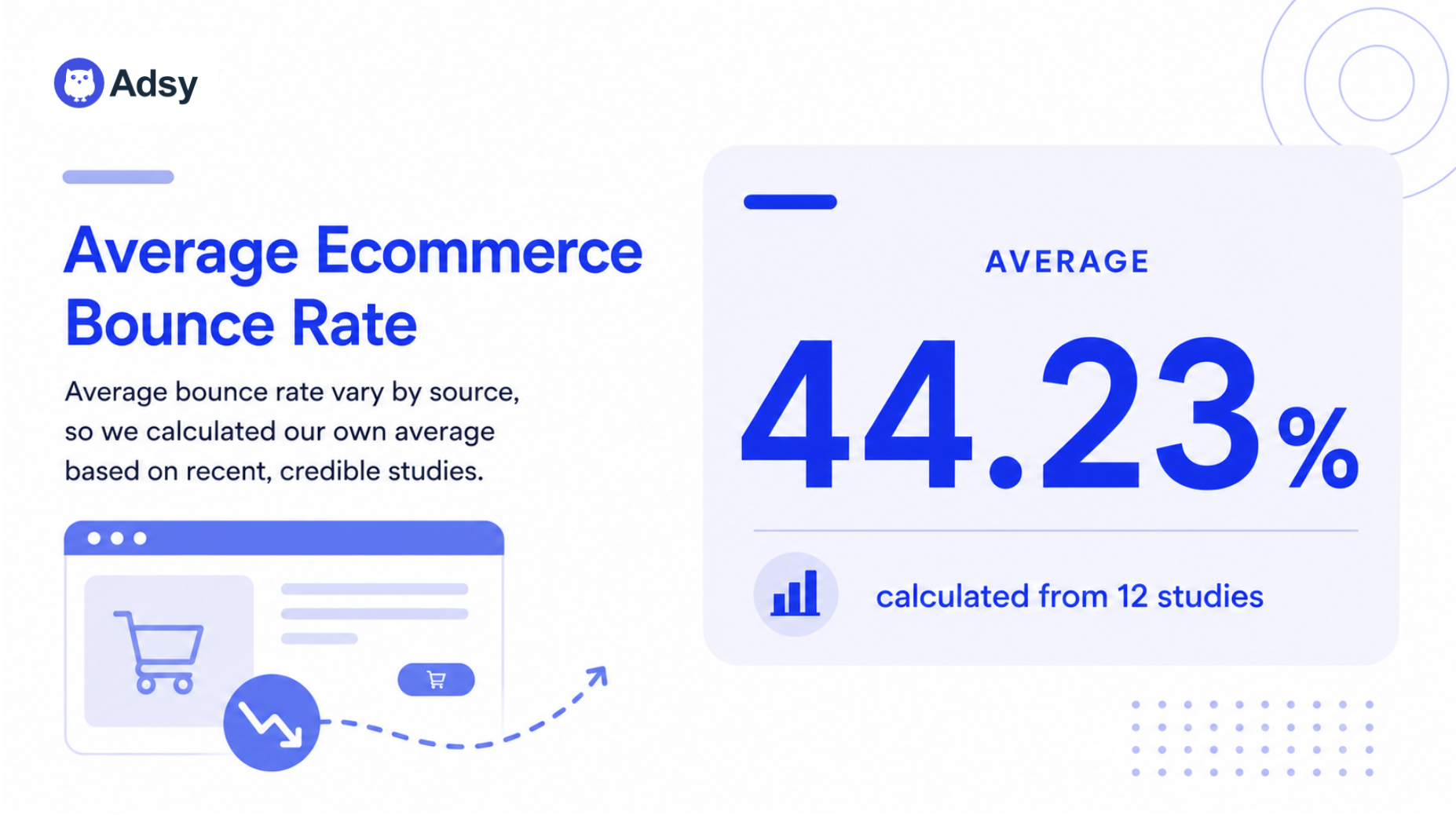
Below is a list of studies we used to calculate the average:
- 38.61% Databox (2024)
- 54.54% Siege Media(2024)
- 62.1% Orbit Media (2020)
- 36.14% Agency Designs(2025)
- 45.68% CXL (2026)
- 41.7% Digital Applied (2026)
- 47% ConversionBench (2024)
- 47.39% Digishuffle (2018)
- 47.5% SiteWorthIt (2026)
- 32.5% Common Ninja(2026)
- 41.50% Shopify(2025)
- 35.14%SimilarWeb (2021)
B2B
B2B bounce rate benchmark: 54.37%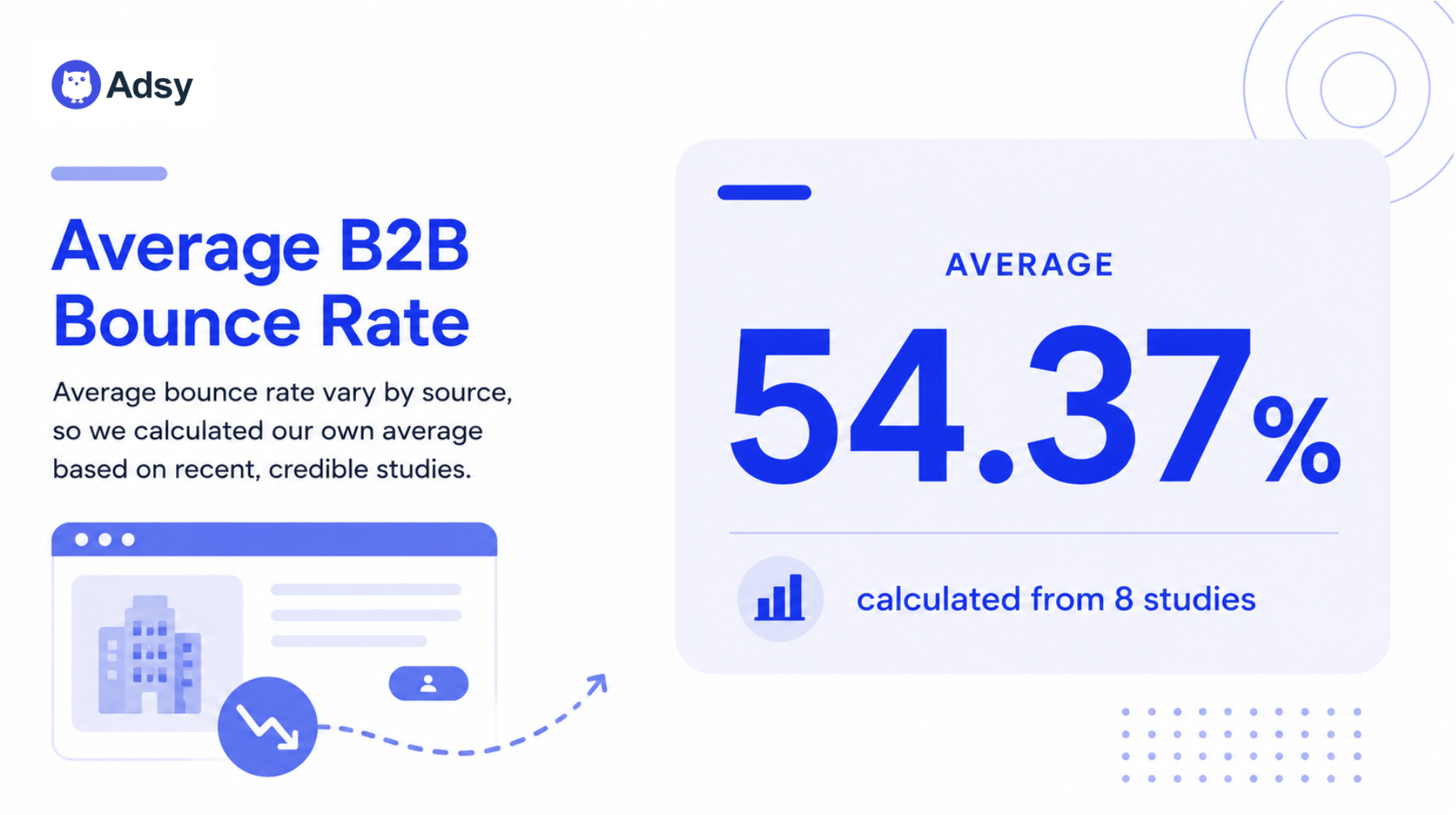
These are the studies we used to calculate the average:
- 65.17% Siege Media(2024)
- 62.1% Orbit Media (2020)
- 57.5% SiteWorthIt (2026)
- 49.2% Digital Applied (2026)
- 75% Contentsquare (2021)
- 40% Common Ninja(2026)
- 45% Shopify (2025)
- 41% Talon.One (2026)
Real estate
Average real estate bounce rate: 47.10%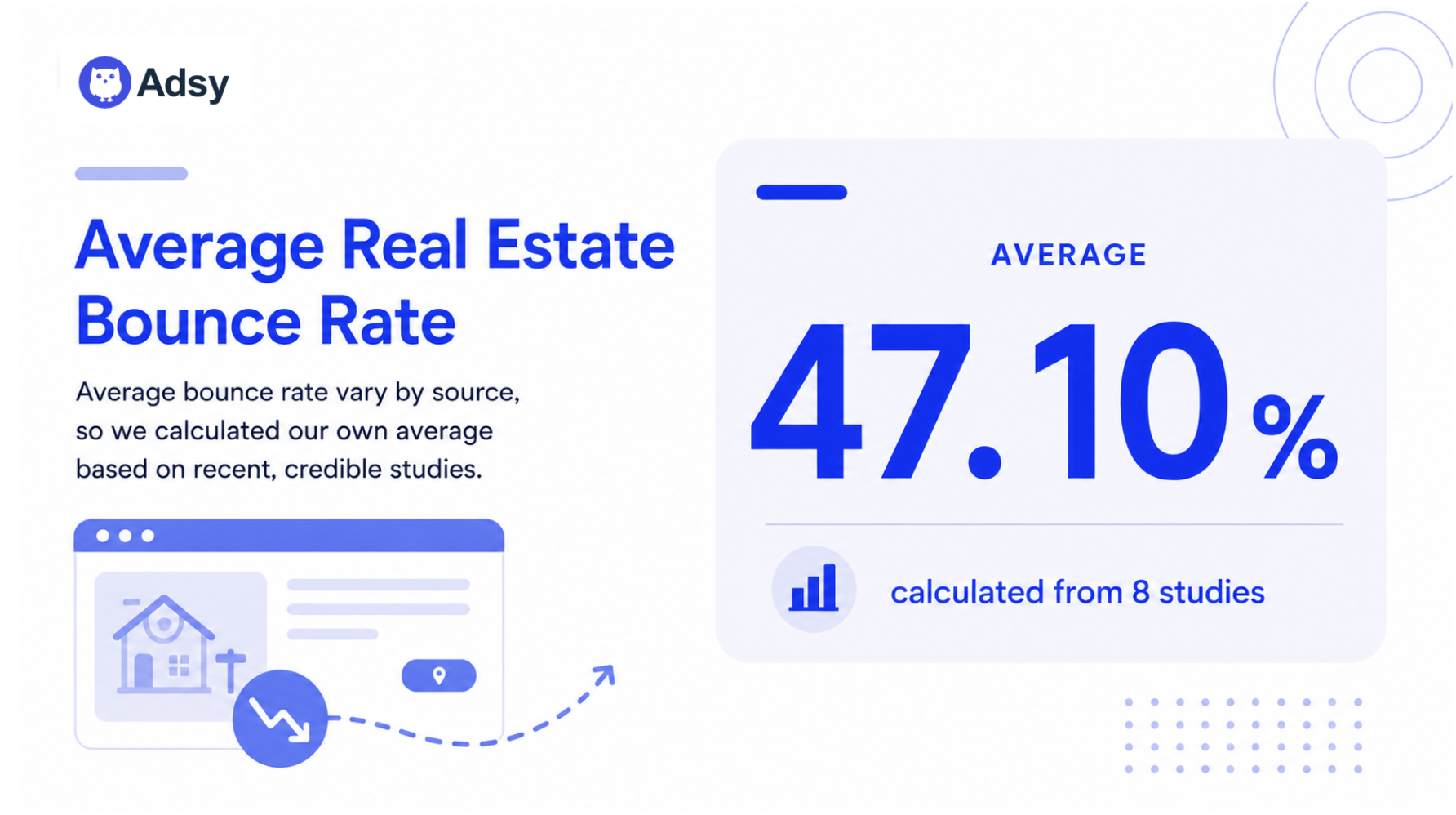
These are the studies we used to calculate the average bounce rate:
- 42.14% Databox (2024)
- 40.78% Siege Media (2024)
- 41.50%SimilarWeb (2022)
- 44.50% CXL (2026)
- 54.2% Digital Applied (2026)
- 58.3% Orbit Media (2020)
- 51.56% Digishuffle (2018)
- 43.83% Agency Designs (2025)
Travel
Average travel bounce rate: 49.22%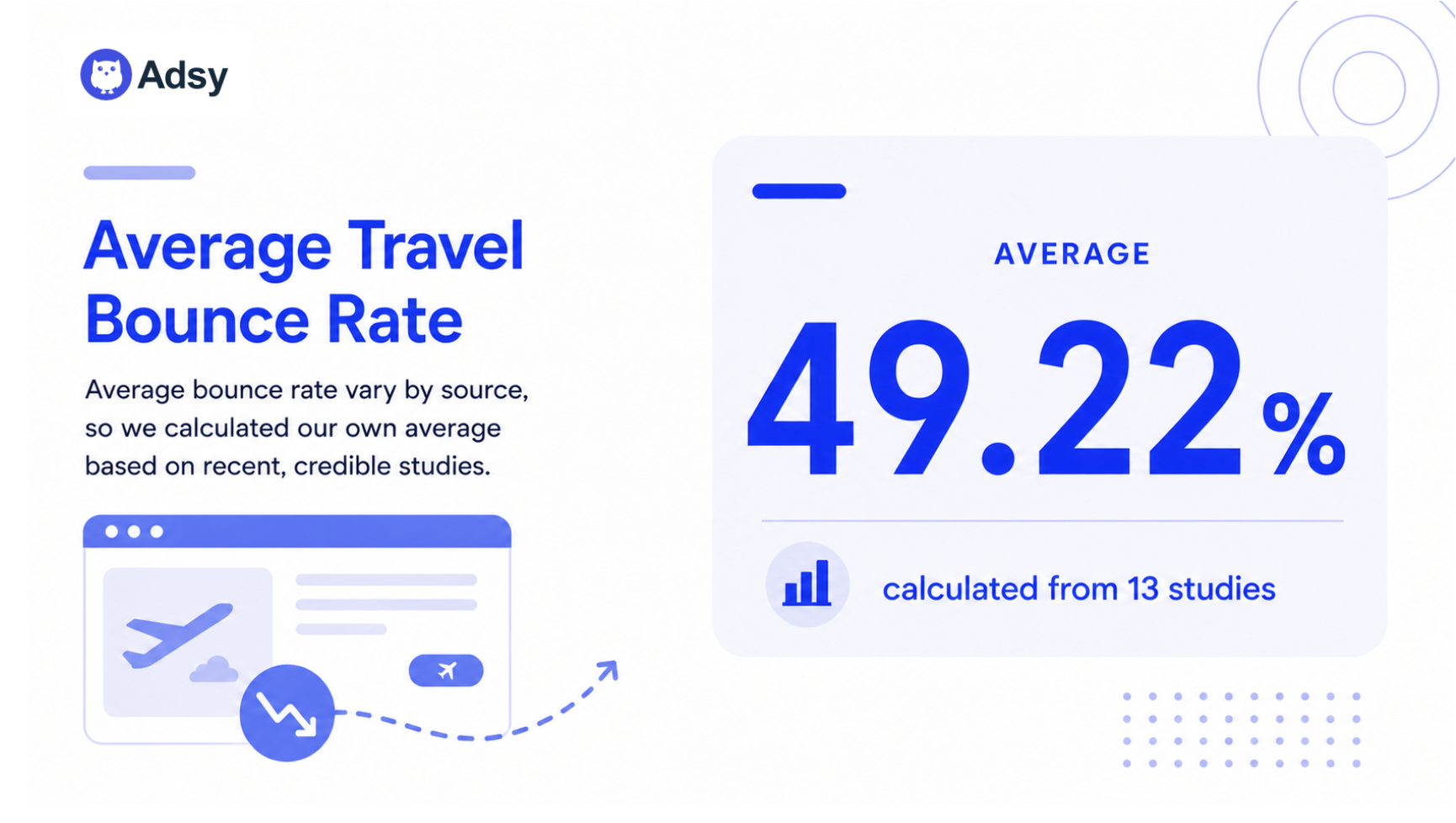
These are the studies we used to calculate the average:
- 38.84% Databox ( 2024)
- 82.58% Siege Media(2024)
- 57.9% Orbit Media (2020)
- 36% Agency Designs(2025)
- 37.6% Contentsquare (2023)
- 50.65% CXL (2026)
- 53% ConversionBench (2024)
- 47.6% Digital Applied (2026)
- 62.6% SiteWorthIt (2026)
- 32.5% Common Ninja (2026)
- 50.65% Promodo (2026)
- 52.44% Digishuffle (2018)
- 37.52%SimilarWeb (2022)
Health care
Average health care bounce rate: 51.45%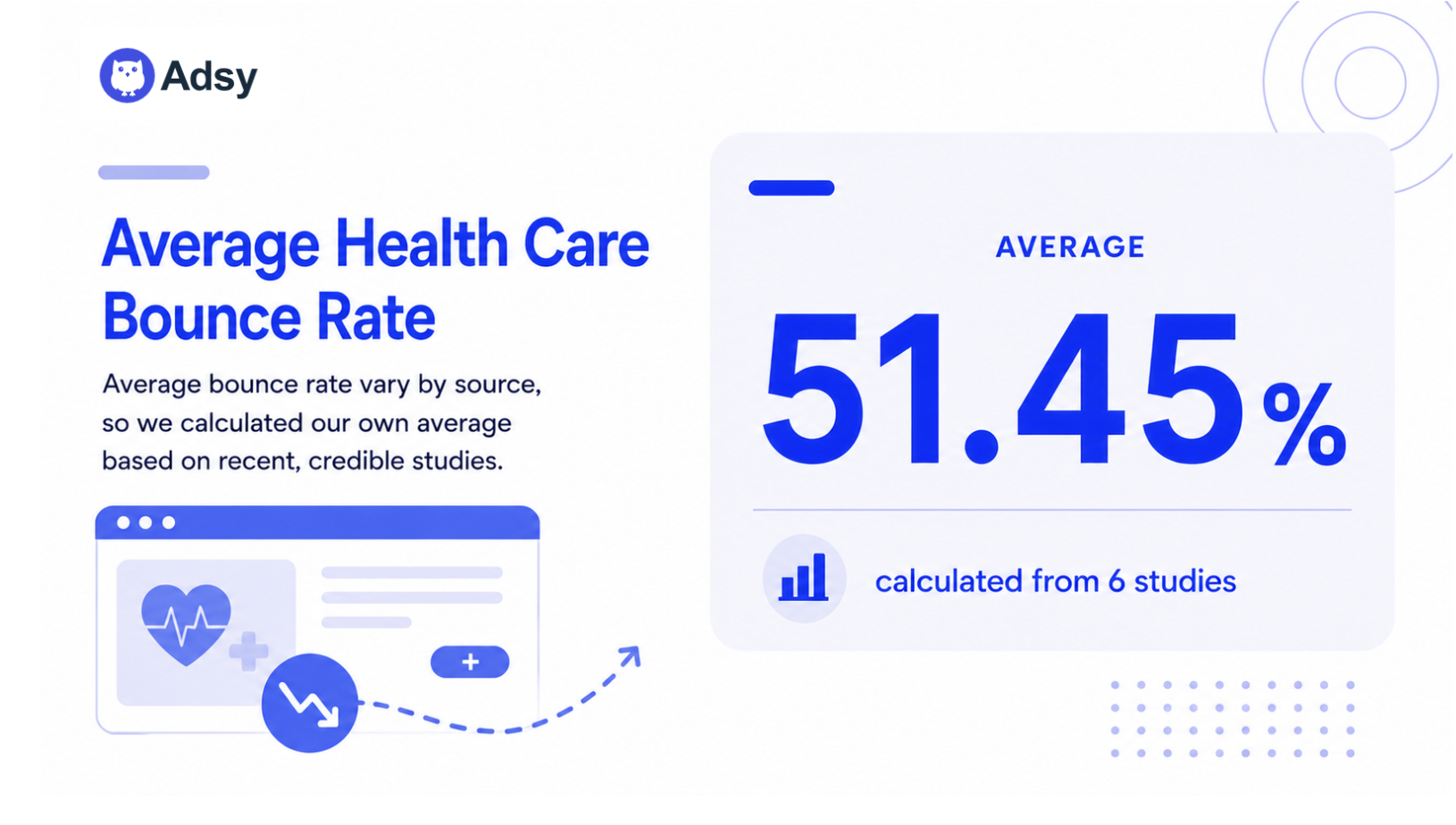
These are the studies we used to calculate the average:
- 40.94% Databox (2024)
- 59.50% Siege Media(2024)
- 62.6% Orbit Media (2020)
- 43.38% Agency Designs(2025)
- 56.8% Digital Applied (2026)
- 45.5% Common Ninja(2026)
Bounce rate benchmark by traffic channel
Organic search
Average organic search bounce rate: 45.81%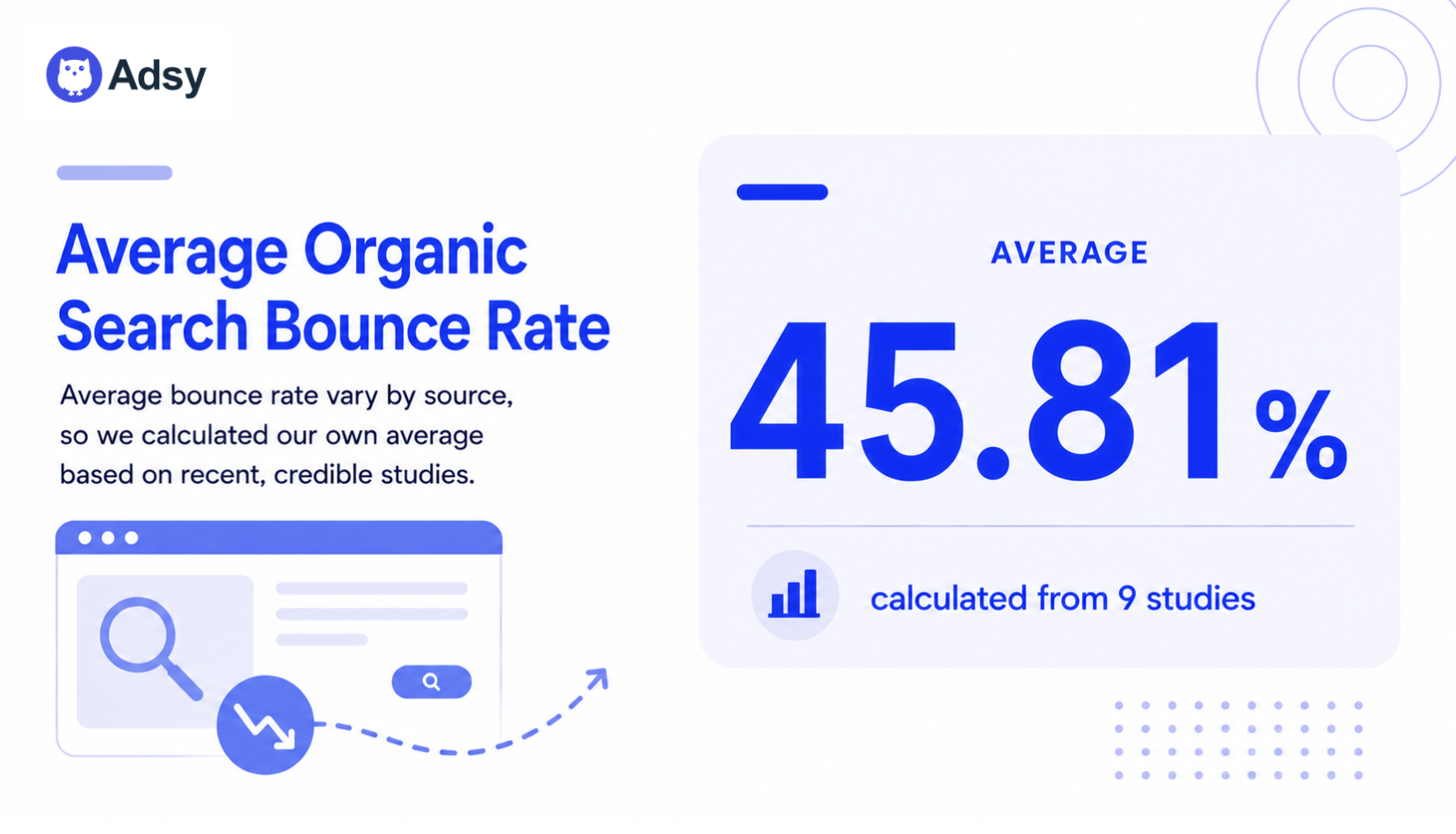
Below is a list of studies we used to calculate the average:
- 43.70%SimilarWeb (2022)
- 55.6% Orbit Media (2020)
- 43.60% CXL (2026)
- 45.45% Digishuffle (2018)
- 50% Agency Designs (2025)
- 41.8% Digital Applied (2026)
- 43% Common Ninja (2026)
- 46.1% Contentsquare (2023)
- 43% Shopify (2025)
Paid search
Average paid search bounce rate: 45.47%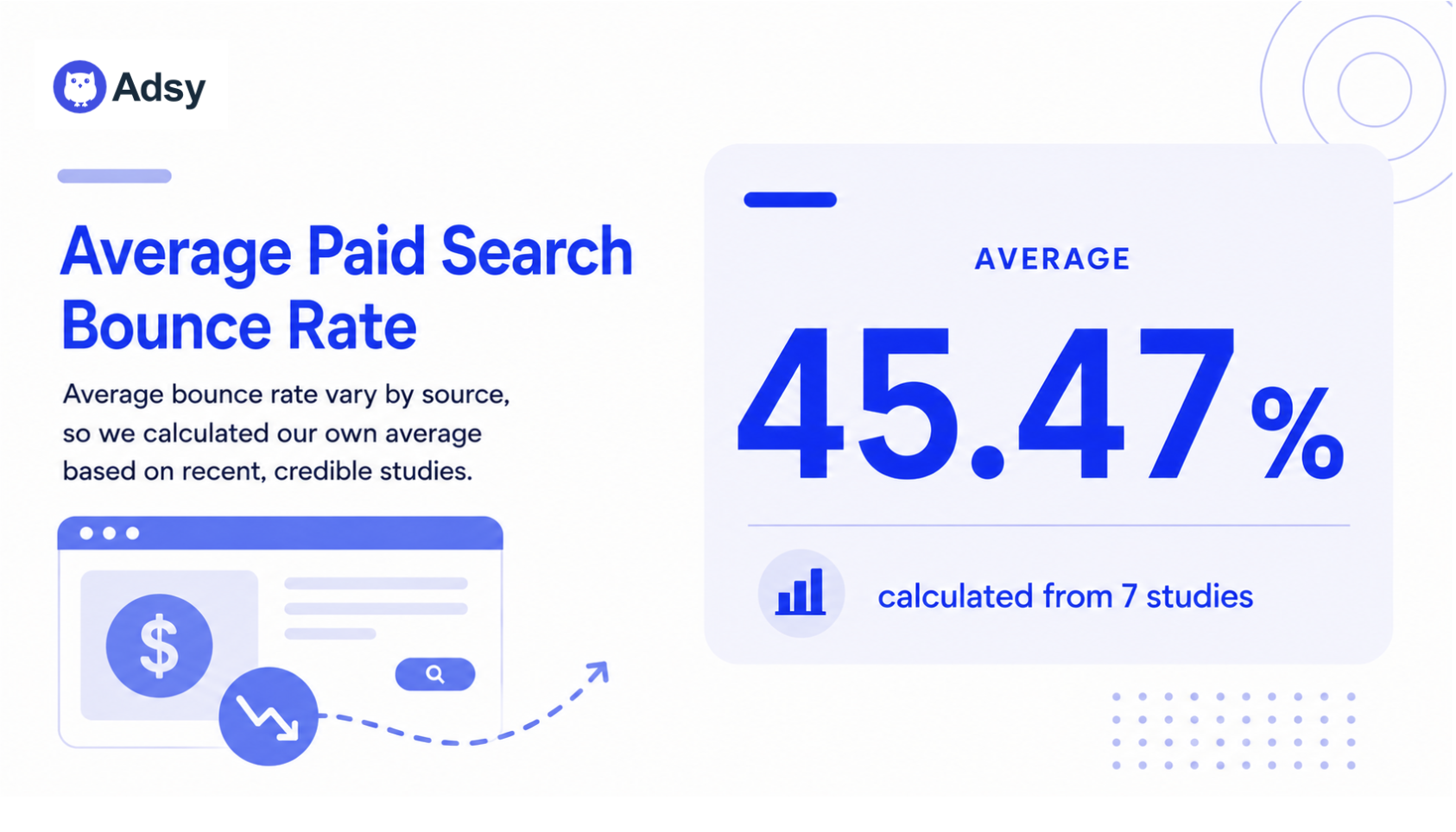
Below is a list of studies we used to calculate the average:
- 62.6% Orbit Media (2020)
- 44.10% CXL (2026)
- 49.17% Digishuffle (2018)
- 40% Agency Designs (2025)
- 38.6% Digital Applied (2026)
- 40% Common Ninja (2026)
- 43.8% Contentsquare (2023)
Social
Average social bounce rate: 54.53%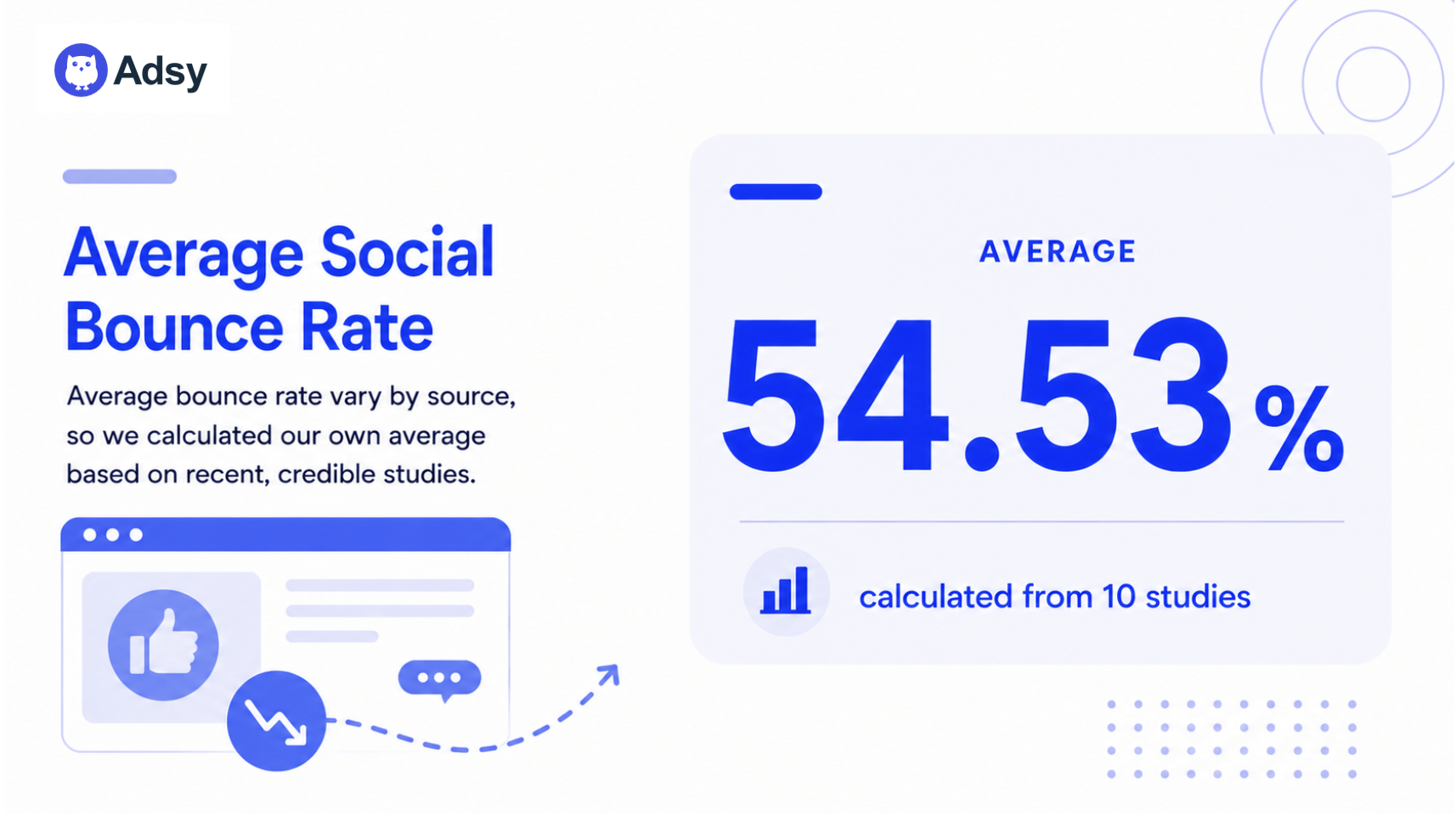
These are the studies we used to calculate the average:
- 51.70%SimilarWeb (2022)
- 67.6% Orbit Media (2020)
- 54% CXL (2026)
- 45.88% Digishuffle (2018)
- 60% Agency Designs (2025)
- 44.6% Monetate (2022)
- 52.85% Digital Applied (2026)
- 53.50% Common Ninja (2026)
- 61.15% Contentsquare (2023)
- 54% Shopify (2025)
Average email bounce rate: 39.55%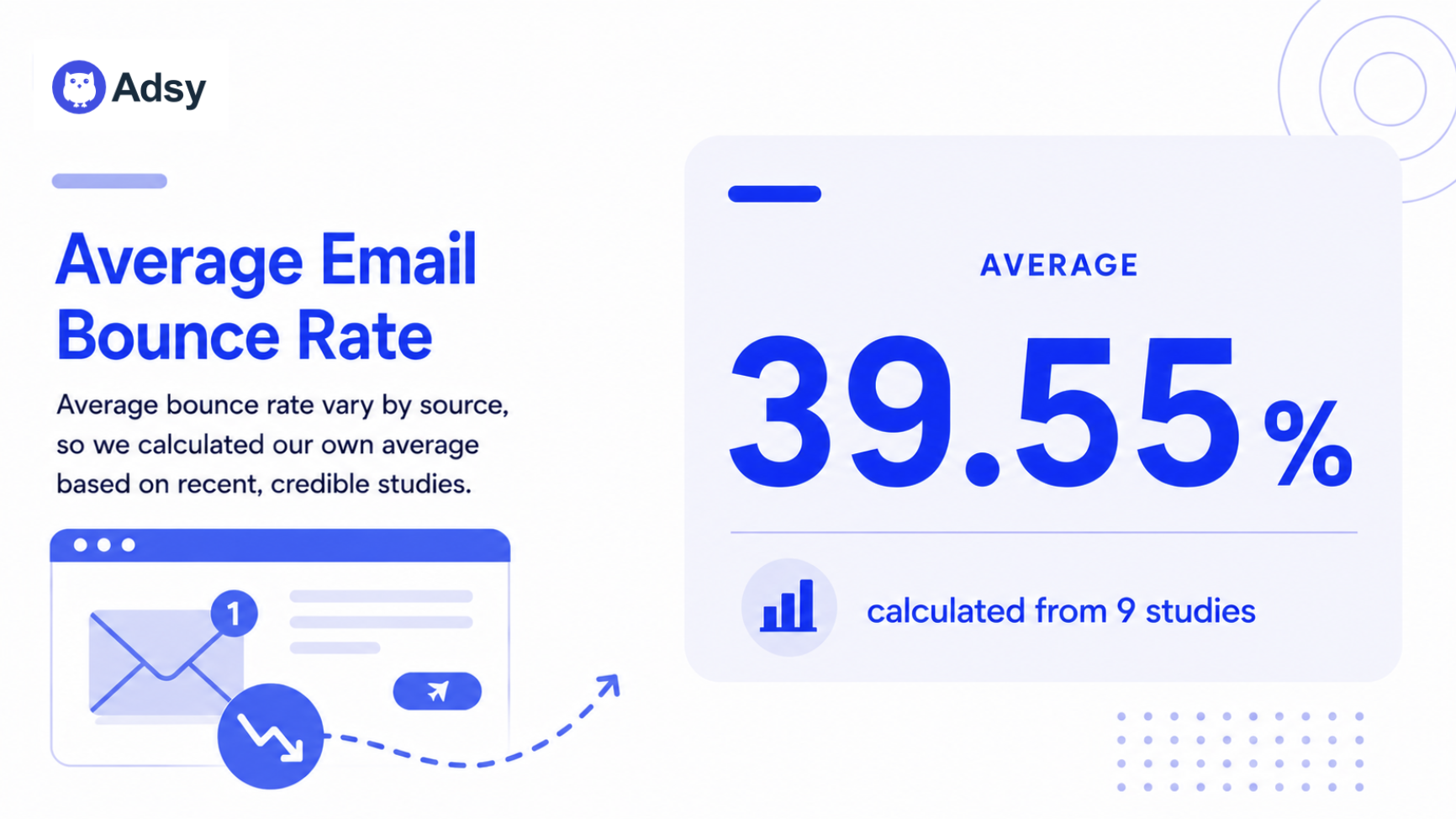
These are the studies we used to calculate the average:
- 41.90%SimilarWeb (2022)
- 61.5% Orbit Media (2020)
- 35.20% CXL (2026)
- 39.15% Digishuffle (2018)
- 30% Agency Designs (2025)
- 30.9% Monetate (2022)
- 36.1% Digital Applied (2026)
- 35% Common Ninja(2026)
- 46.2% Contentsquare (2023)
What is a good bounce rate?
Bounce rate is a metric that helps you understand how visitors interact with your website.
A consistently high bounce rate typically means that people are leaving your website without engaging beyond the first page they visit.
On the other hand, a good bounce rate suggests that users are finding your content relevant.And engage with your website by viewing more than one page.
However, there is no single number that defines an ideal bounce rate for every website.
The right benchmark depends on factors such as:
- Your industry,
- Website type,
- Traffic source,
- Purpose of the page.
The best approach is to establish your own baseline for what a "good" bounce rate looks like and then work to improve it over time.
How to reduce your bounce rate
1. Improve your design and page speed
Many users simply leave a website because they find it too complicated, unattractive, or because it is too slow.
Even if your content provides exactly what they are looking for, people are people. And they may leave before they even read anything if the overall experience is poor.
That’s why make sure your website is easy to navigate and loads quickly.
These are just some of the things that can encourage visitors to stay longer and explore more pages:
- Good technical SEO (security, speed, etc.).
- A clean design,
- An easy-to-navigate layout,
- A clear page structure, etc.
2. Make sure your website delivers what it promises
Your headlines, meta description, and ads should reflect and match the content visitors find on the page.
If users expect one thing but find another, they are likely to leave immediately.
So, it is always better to address the search intent as quickly as possible.
3. Use a visible and strong CTA
Don’t hide your call to action if you want your users actually to engage with it.
Whether you want them to sign up, make a purchase, read another blog post, etc., your CTA should be easy to find. It also needs to clearly communicate the next step.
Give people a good reason to click. For this, you can use:
- Valuable content,
- Discount,
- Free sources,
- Checklist,
- Other benefits.
4. Add internal links
Include links to related blog posts, products, services, etc., throughout your content.
Internal links encourage visitors to continue exploring.
And that is exactly what we want: take them to another page.
5. Add widgets
Interactive elements like chatbots, calculators, quizzes, product filters, and other custom features can improve the user experience. They also make it more fun.
This, in turn, can encourage visitors to spend more time on your website.
Bottom line
An average bounce rate can vary not only by study but also by industry or traffic channel.
So, it’s useful to determine your own “good” bounce rate. This is where industry benchmarks can be a useful starting point.
But keep in mind that ahigh bounce rate is not always a bad thing.
If a single page fully answers a visitor's question, they may leave without visiting another page. For example, a high bounce rate on a blog post or FAQ page can be completely normal.
FAQ
What is a normal bounce rate for a website?
A normal bounce rate for a website is typically somewhere between 25% and 65%. But the ideal number depends on your industry, website type, and traffic sources.
Based on the average Adsy calculated after analyzing 92 studies, the average website bounce rate is 47.42%. For e-commerce websites, it’s 44.23%.
How to calculate bounce rate?
Bounce rate is calculated by dividing the number of single-page sessions by the total number of sessions. Then multiply the result by 100.
Bounce Rate = (Single-page sessions ÷ Total sessions) × 100
How often should I check my bounce rate?
Checking your bounce rate once a month is enough for most websites.
If you recently launched a new campaign or made significant changes, monitoring it weekly can help you spot issues earlier.
Is a low bounce rate always better?
Not really. A very low bounce rate is not always a sign of success.
If visitors find exactly what they need on a single page and leave satisfied, a higher bounce rate can still represent a good user experience.
Why is the bounce rate different in Google Analytics 4?
Google Analytics 4 calculates bounce rate differently than Universal Analytics (UA). In GA4, bounce rate is based on non-engaged sessions.
This means your numbers may look different even if user behavior has not changed.
All trademarks, logos, images, and materials are the property of their respective rights holders.
They are used solely for informational, analytical, and review purposes in accordance with applicable copyright law.




 Sign Up
 Sign Up