






Book Marketing for Self-Published Authors: 11 Strategies with Real Examples
Months or even years may have gone into writing and editing the book. And even the cover and title are ready.
Now comes the next step: putting the manuscript in front of others.
At this point, many writers take the self-publishing route, which raises one essential question:
How do you market a book?
Of course, writing a book is the hardest part. But marketing is not easy either, especially if you are a new author.
To help you with that, we’ve created a list of eleven practical strategies (rated by importance and difficulty). We’ve also added real-life examples to show how it all works in practice.
Before you start marketing your book
There are two fundamental things you need to do before you start marketing your book:
- Identifying your target audience.
- Building your author brand.
Without these foundations, even the best marketing strategy can struggle to deliver results.
1. Identify who your target audience is and where they spend their time

As an author, you can already tell that the book industry is huge. Therefore, the number of different audiences is also huge. Each with its own preferences, reading habits, behaviors, and interests.
So, the first step is to think about who would be interested in your book.
Think carefully about your book’s:
- Genre,
- Plot,
- Characters,
- Conflicts,
- Moral.
You already know all these aspects of your work. You just need to combine them all together. And start picturing the type of reader who would enjoy them.
The deeper you dive into your audience, the clearer that picture will become.
Identify why your book will stand out. What is its strongest appeal?
It may fall into one or more of these categories: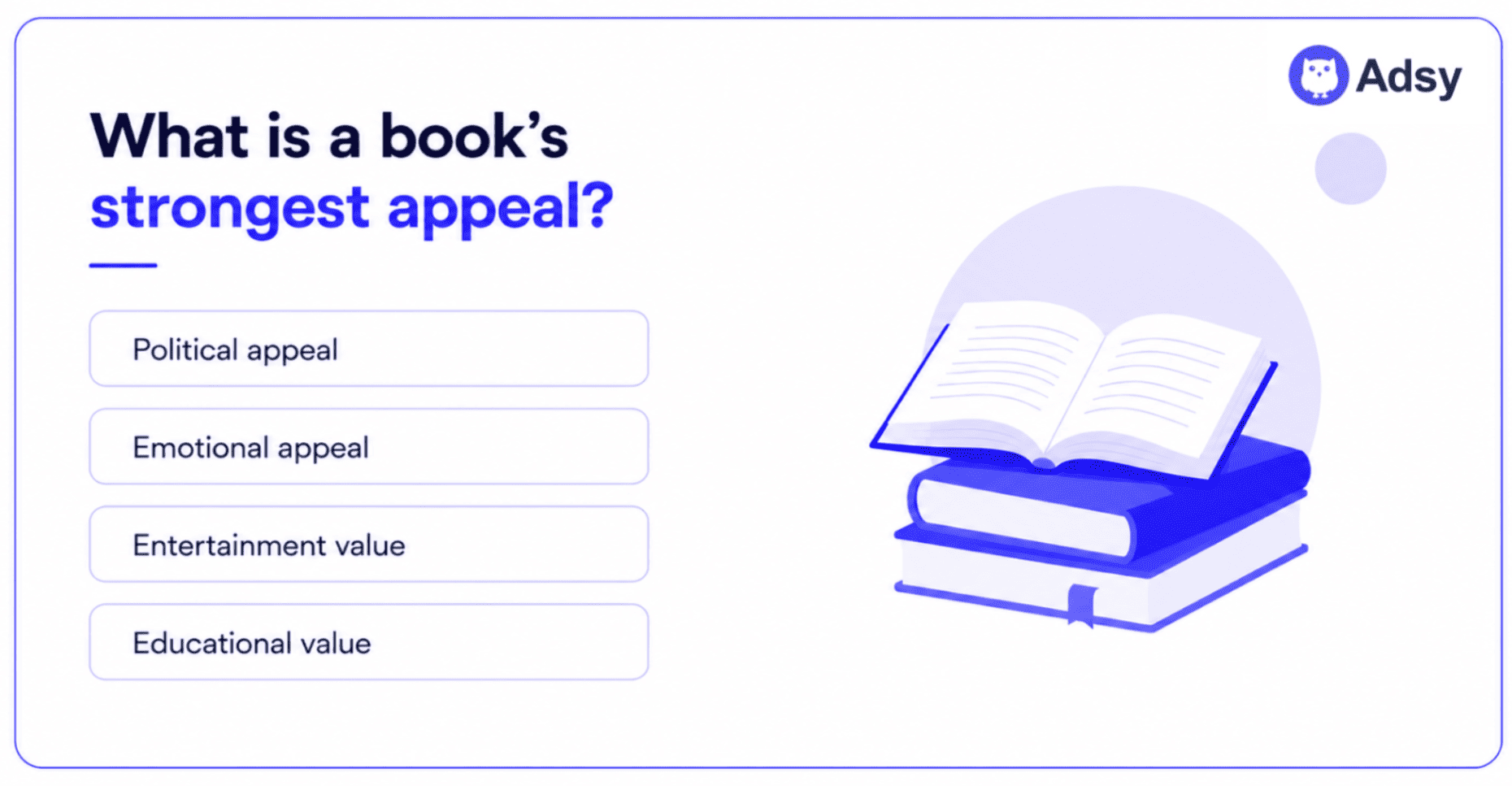
Once you identify your book's strongest appeal, it becomes much easier to understand who will connect with it.
Here's another tip:
Take successful books similar to your manuscript as a reference. And look at:
- How they are positioned,
- Who their audience is,
- Where that audience spends time.
Understanding where your audience spends time is one of the most important parts of book marketing.
In fact, it's the main reason you're identifying your target audience in the first place.
Ask yourself a question: Where does my potential audience discover new books?
That can be:
- Amazon or Apple Books,
- Bookstores or Events,
- BookTok, Facebook, Instagram, and other socials,
- Organic search (Google) and AI systems,
- Online communities and forums,
- Recommendations from friends, influencers, or reviewers, and so on.
Once you identify where your audience spends time, building a marketing strategy becomes much easier.
You don’t need to promote your book everywhere.
You just need to focus your efforts on the platforms where your potential readers are already looking for their next read.
2. Build your author brand

Note: Building a personal brand is nearly a lifetime project. So, you can postpone this step at first and go directly to the next section where we offer eleven practical tactics. You can start applying those today and generally see first results faster.
Yet, we strongly recommend investing at least some time into building your brand, as it will compound and bring you much better results over time.
For any author, building an author brand before publishing a book can be a huge advantage. This way, you'll be able to promote your book yourself and build a trustworthy relationship with your audience.
Besides, the stronger your brand, the easier it becomes for readers to recognize your work and connect with you.
Here are a few tactics you can use to build your author brand:
Build an author website
Your website can become a place where you share not only your books, but also your personality.
Readers often want to know the person behind the story. They want to learn about your writing journey and what you're working on next.
But it shouldn't be just a randomly built page.
Your website should look professional, be well-designed, and have a clear structure.
It should reflect both your personality and the personality of your books.
Typically, an author website needs these three pages:
- Home page
- About the Author
- Books or Works
From there, you can add other pages depending on your goals. These might include:
- Upcoming Releases
- News and Events
- Blog
- Contact Information
- FAQ
- Additional Works
- Media or Press
Take a look at Stephen King's official website:

Source:Stephen King
Why does it work?
Stephen King's website is clean, easy to navigate, and well-structured. It has all the important pages readers might need, while keeping his books at the center of the website.
Of course, Stephen King is an established author. If you're just starting your journey, you probably won't need that many pages.
Start with the essentials and expand your website as your author brand grows.
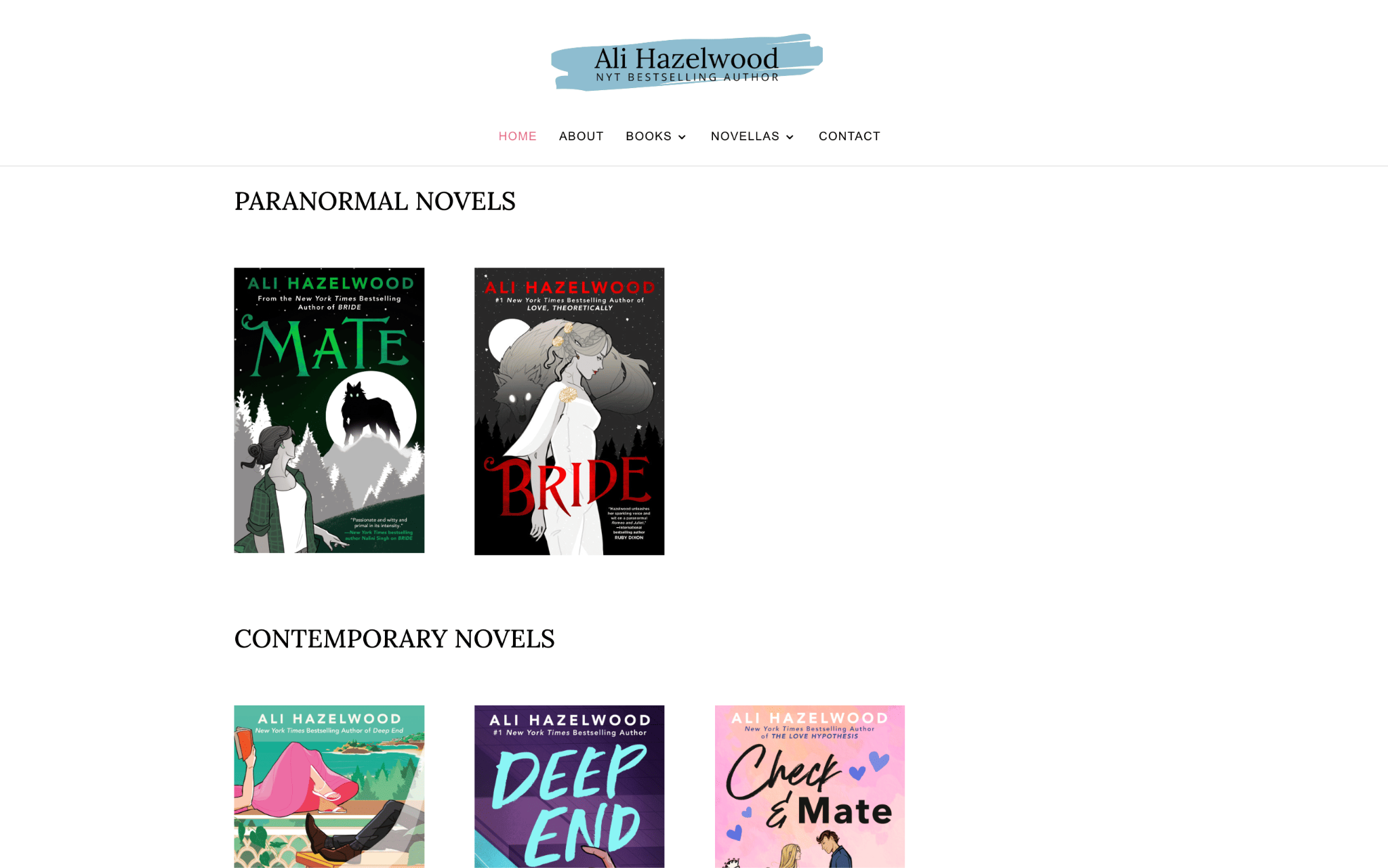
Here is, for example, a very simple website:
Source: Ali Hazelwood
Ali Hazelwood's website is clean and straightforward.
Instead of overwhelming visitors with too much information, she keeps the focus on her books. Ali organizes them by category, making it easy for readers to browse and find what they're looking for.
Besides, each book has its own page with a description and links to purchase it.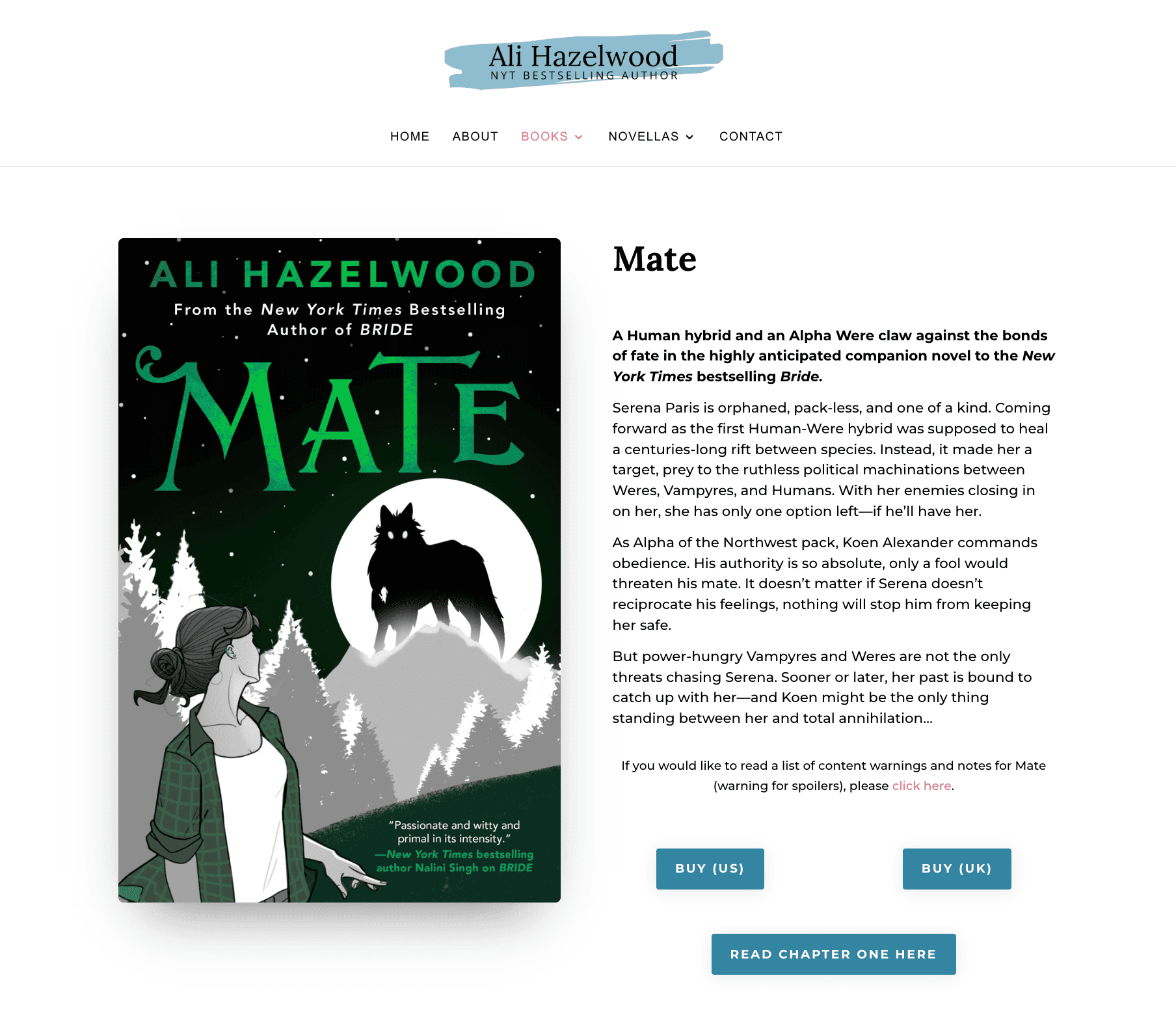
Key takeaway: Your website should make it easy for readers to discover and buy your books. At the same time, it should stay true to your author brand.
Write an author blog
Your blog is another way to show readers who you are. It lets you share not only news about your books, but also your thoughts, experiences, writing journey, etc.
That's why adding a blog to your website can be a great way to strengthen your author brand.
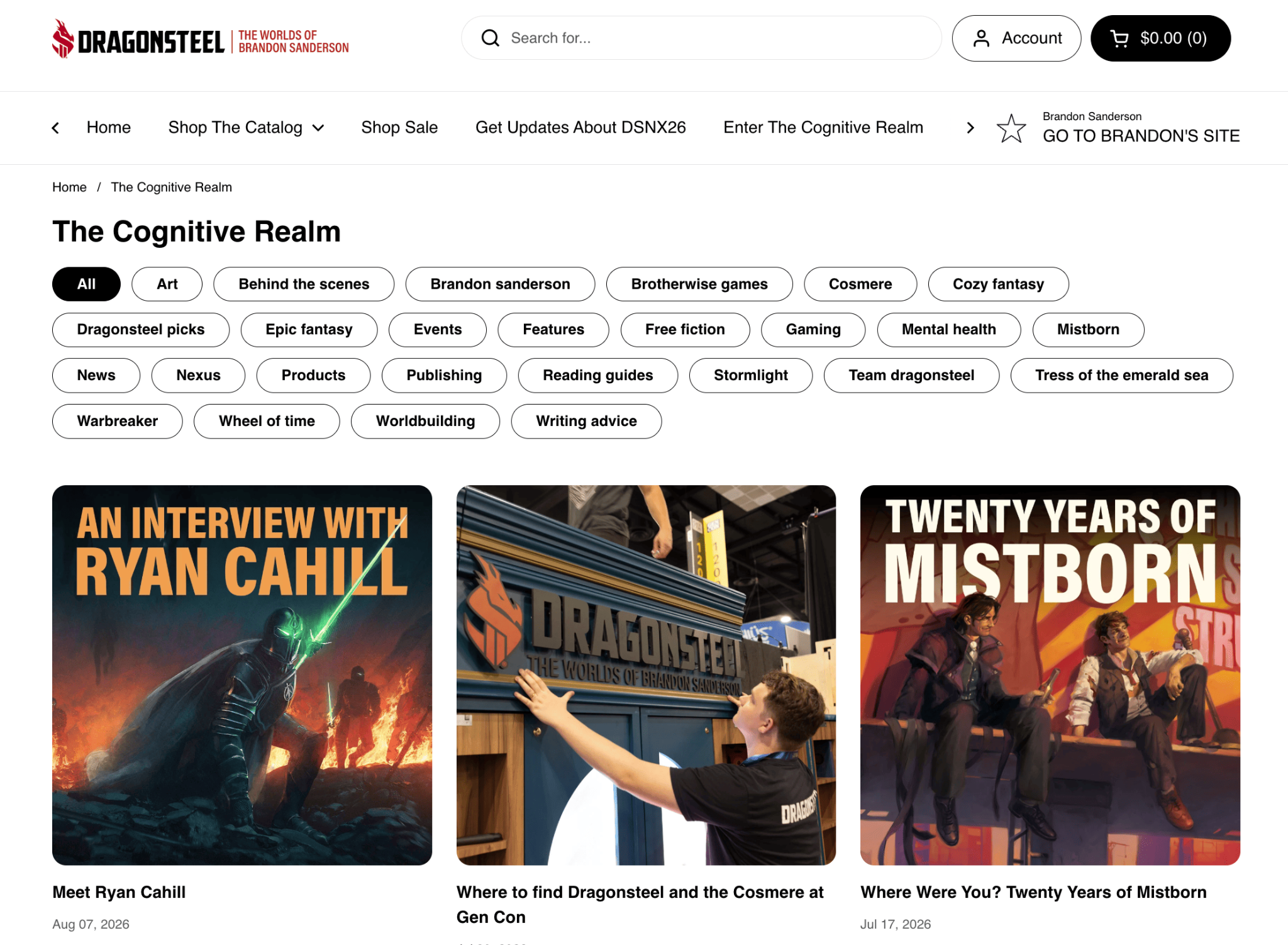
Source: Dragonsteel
Besides that, writing blog posts is also great practice. The more you write, the more you improve your craft.
At the same time, your blog can help new readers discover you through search engines and AI search. Especially if you cover the questions readers tend to ask often.
You can interpret your blog as you want.
For example, you can name it a journal. This way it becomes even easier, as you gain more flexibility in terms of formats and style.
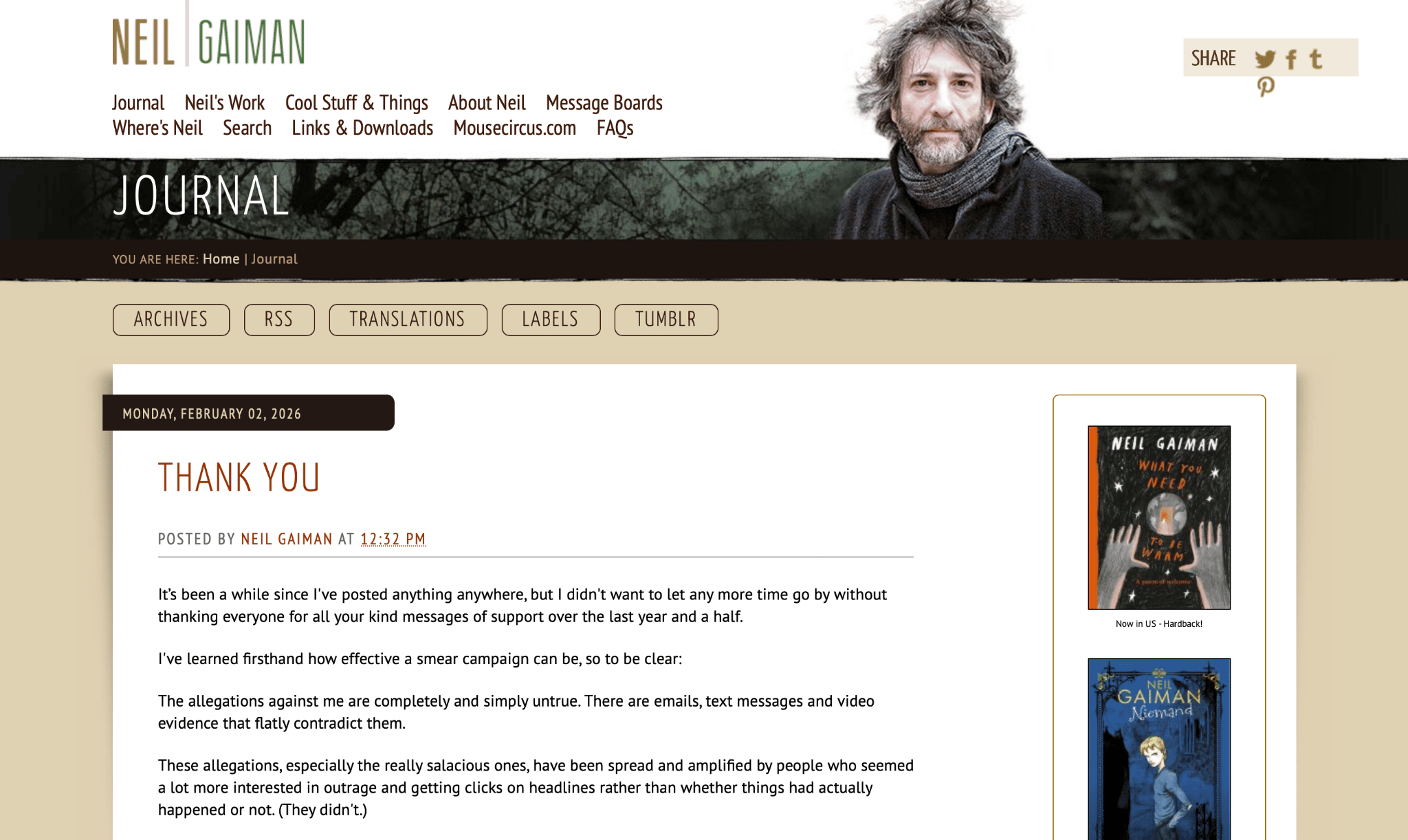
Source: Neil Gaiman
Overall, there are many formats you can use in your blog. For example:
- Behind-the-scenes stories,
- Writing tips,
- Discussion on topics related to your books,
- FAQ,
- Updates on your writing journey, etc.
Just choose what feels natural and best represents you as an author. And of course, experiment. It’s your blog, after all:)
Do social media
Creating a social media presence is another powerful way you can consistently develop and share your author brand.
Of course, you don't need to create an account on every social media platform.
That’s too much, even for a professional SMM.
Instead, focus on the ones where your potential readers spend their time.
Your social media should become a place where readers can follow your news, discover your books, and get to know you as a person.
Here are some of the most popular platforms for authors:
1. Goodreads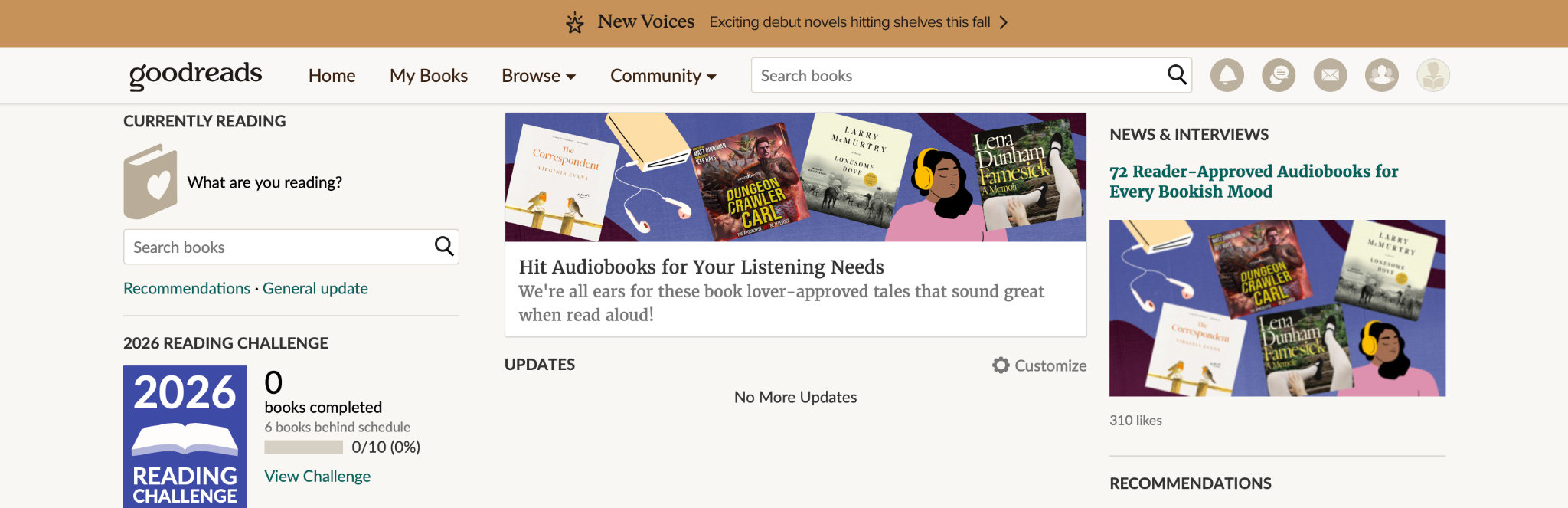
Source: Goodreads
Goodreads is one of the biggest platforms for authors and readers.
Here, readers can leave reviews, rate books, ask questions, and discover new titles. And authors can interact with their audience, publish updates, and promote new releases.
2. Instagram
On Instagram, you can show both your professional and personal side. You can do it by sharing writing updates, book aesthetics, behind-the-scenes content, etc. You can use multiple formats, such as:
- Feed posts and carousels,
- Reels,
- Stories and story highlights,
- Instagram Live,
- Broadcast channels,
- Collab posts,
- Notes, etc.
However, try to keep your content focused on writing.
Don't turn your Instagram into a mix of everything happening in your life. If your current account is dedicated to another niche, it may be better to create a separate author account.
Of course, you can always find a balance.
Let’s take a look at how Adam Silvera runs his Instagram:
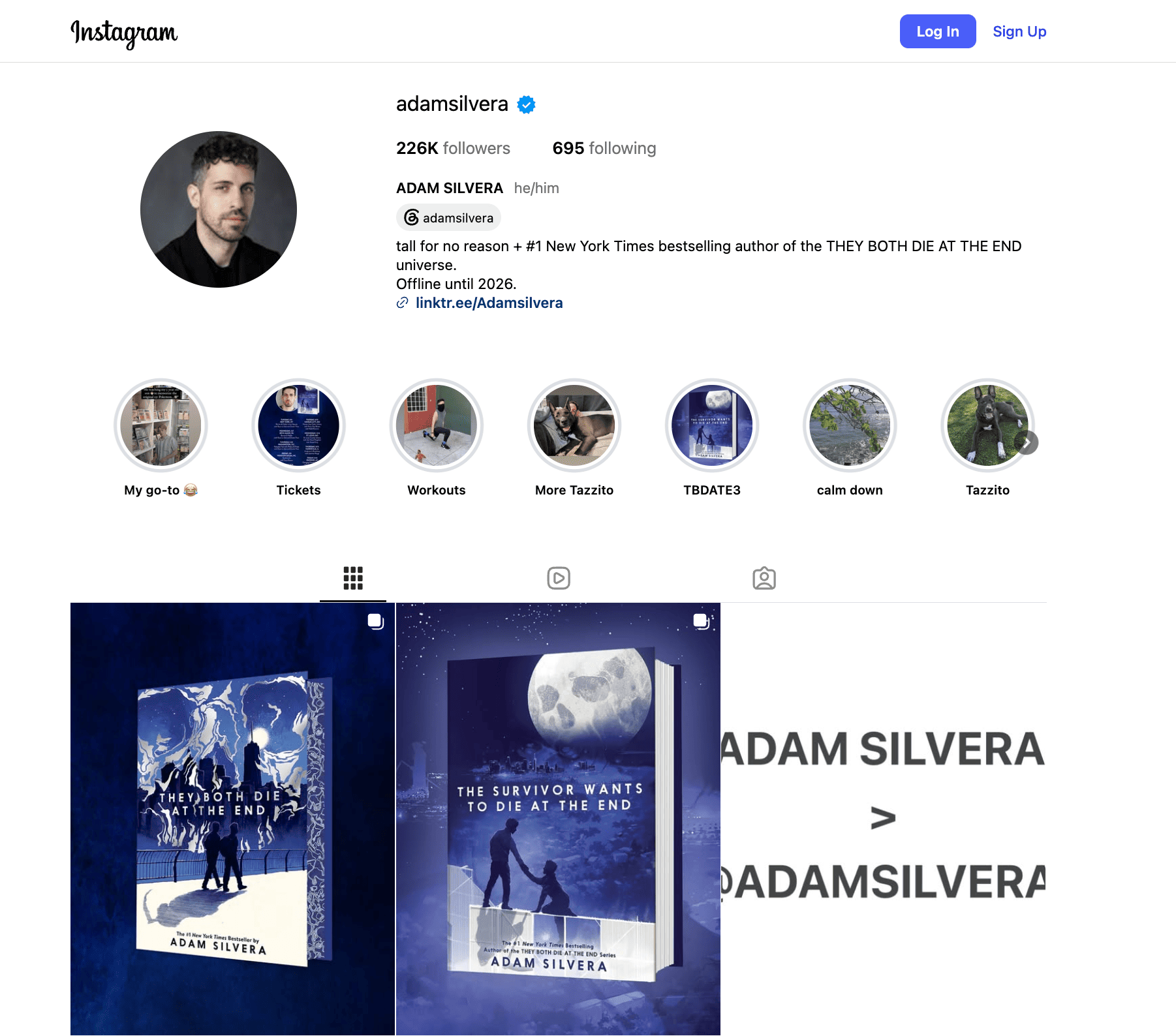
Source: Adam Silvera
Adam mainly emphasizes his work, quotes, and other content related to his writing.
At the same time, he posts updates related to his own life, which shows his personality and connects him more with his followers. But he doesn’t overwhelm users with that at all.
3. TikTok (BookTok)
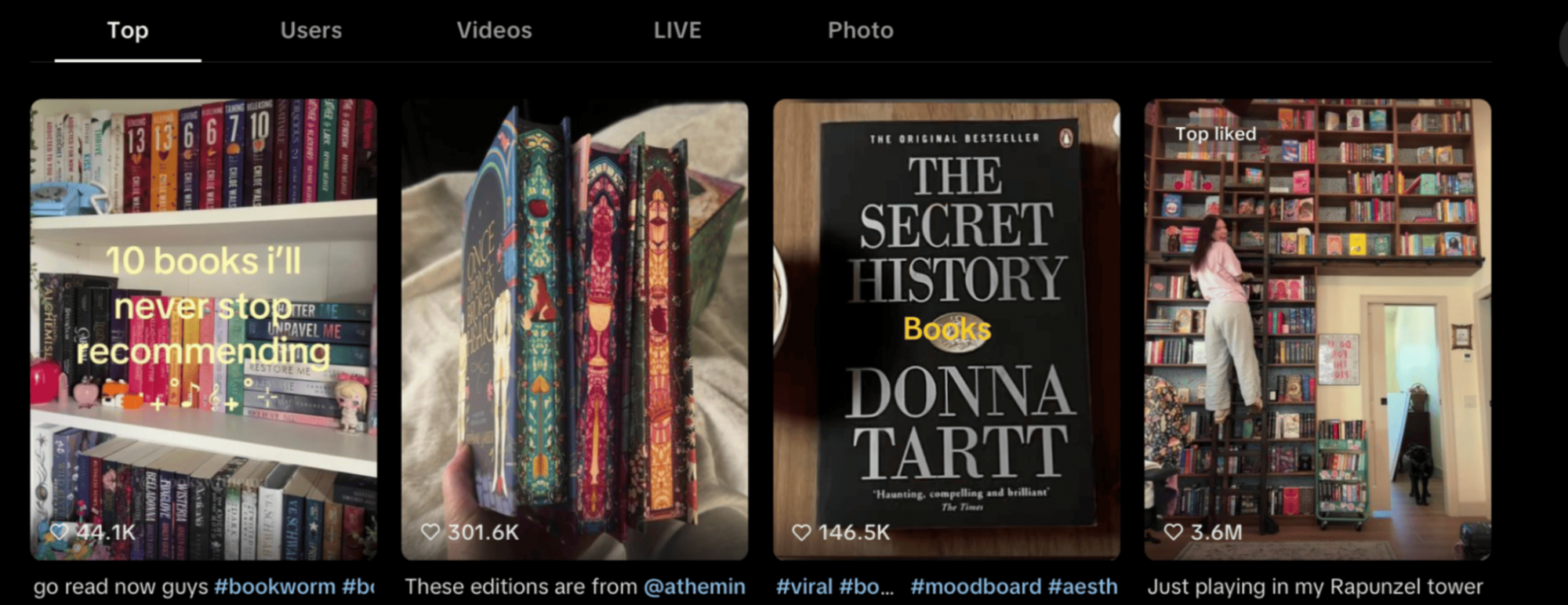
TikTok is one of the most powerful platforms for book discovery.
Many books have become bestsellers after going viral on BookTok.
You can share short videos here about your writing process, your books, trends related to your genre, or just your opinion.
This platform can not only strengthen your author brand, but also become one of the best ways to market a book.
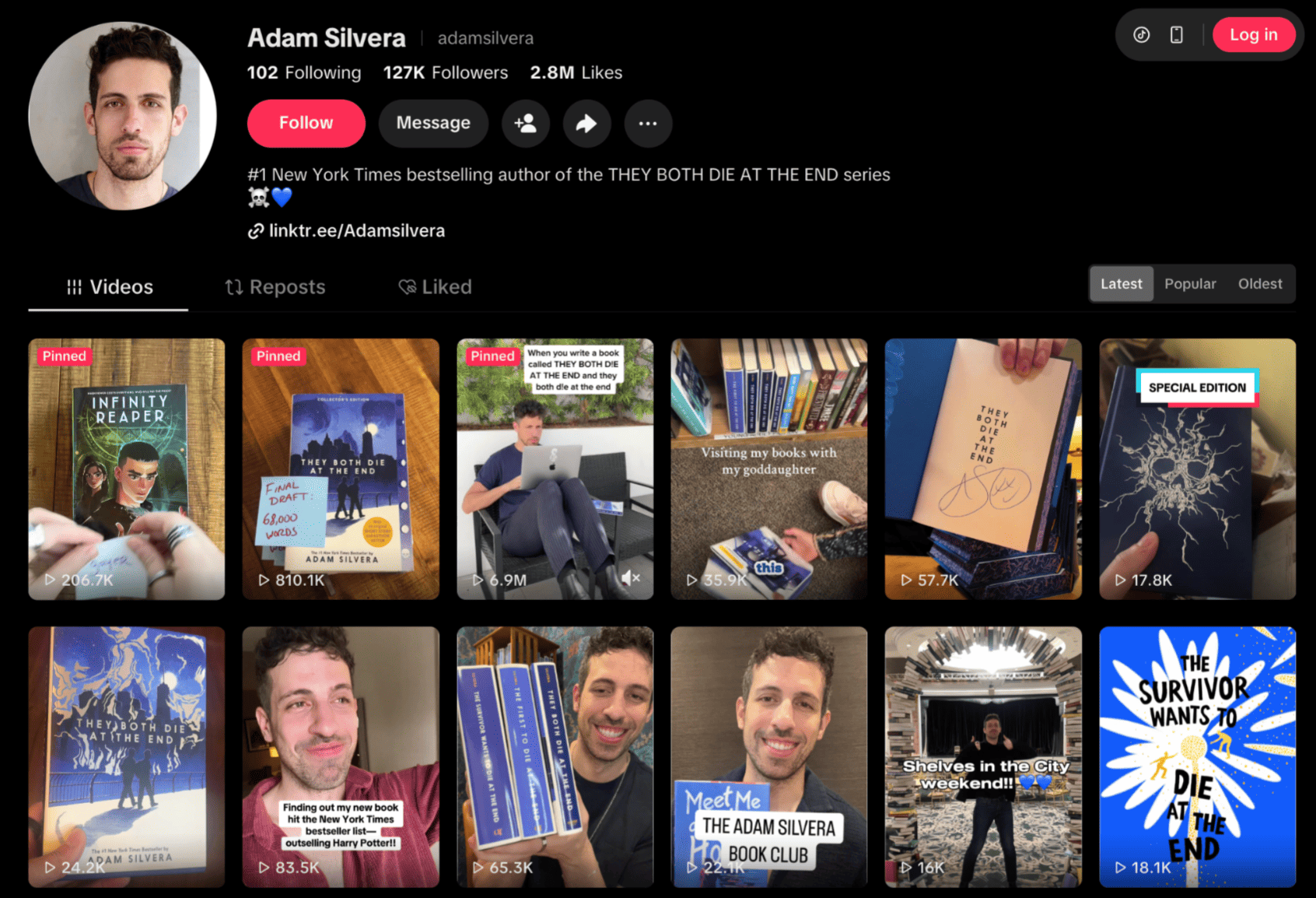
Take a look at how Adam Silvera runs his TikTok. It feels very alive, personal, and yet always tied to his books:
Source: Adam Silvera
The best part of BookTok is that you don't necessarily need to spend money on ads.
If your audience is on TikTok, simply start creating content.
Research which videos perform well, identify common patterns, and experiment with your own ideas.
It may take time, but one successful video can introduce your book to thousands, or even millions of potential readers.
4. Facebook
Facebook is usually a strong platform for authors with slightly older readers. Most of the platform's users are 35-65+. So, if that’s your target audience, you might consider using Facebook.
You can create an Author page to share book updates, writing insights, and light personal moments that feel natural to your audience.
This will help you build recognition and loyalty without the faster-paced style of newer platforms.
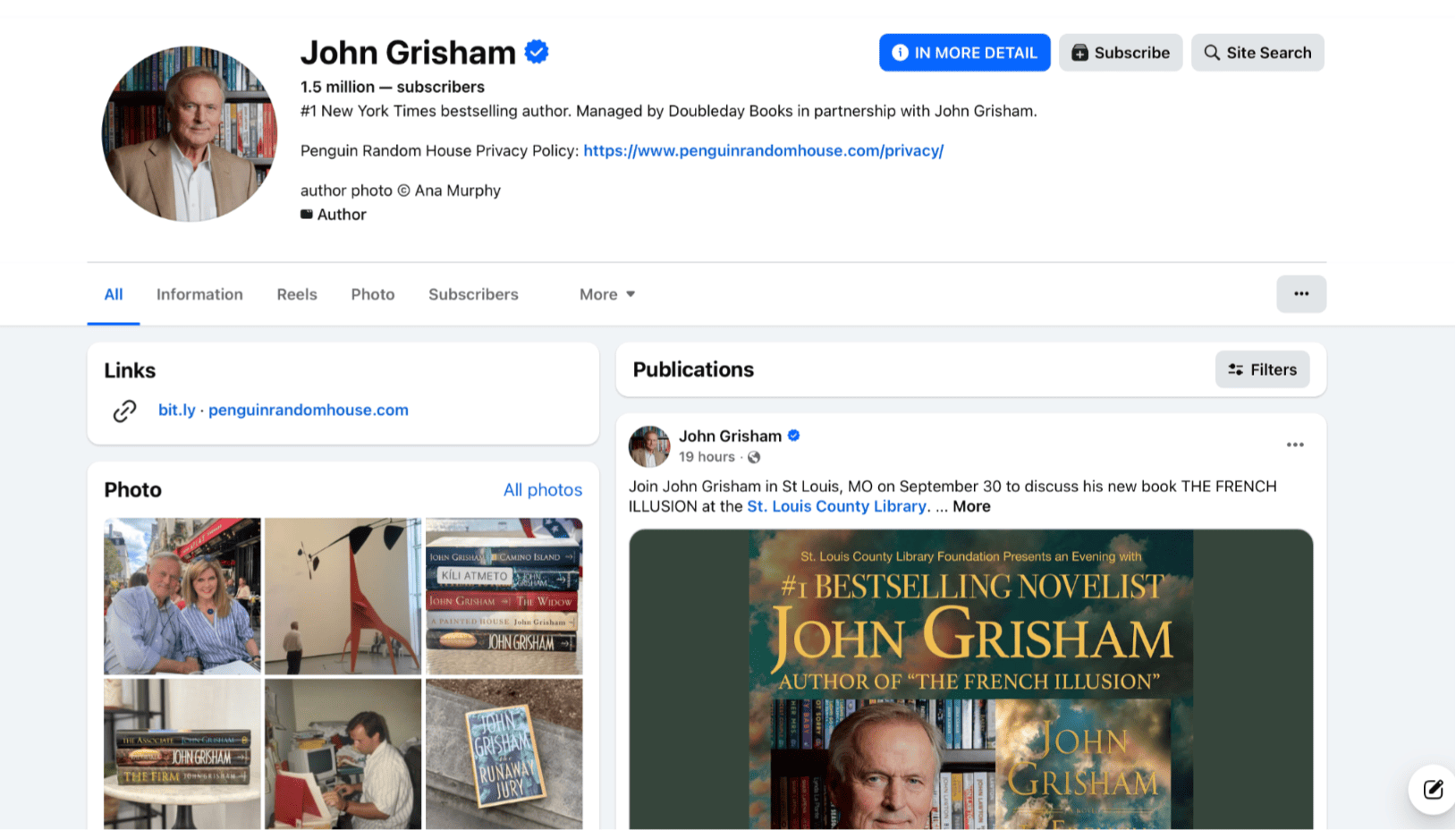
Check how John Grisham runs his Facebook:
Source: John Grisham
5. YouTube
YouTube is perfect for long-form content, such as:
- Writing advice,
- Book discussions,
- Q&A videos,
- And even vlogs.
Long-form videos help readers get to know you on a much deeper level.
They let you show your personality, share your life, talk about your writing journey, or simply discuss topics you enjoy.
You can attract new readers not just because of your books. But because people enjoy watching your content. And then, once viewers connect with you behind the books, they're much more likely to become readers.
So, if you've ever thought about becoming an influencer, this might be the perfect time to start.
Your content doesn't have to be all about writing or books.
The goal is to become someone people genuinely enjoy watching and want to hear from.
As your audience grows, your books become a natural extension of your brand. In many cases, simply mentioning a new release in a video is enough to encourage loyal followers to check it out.
Here is a great real example:
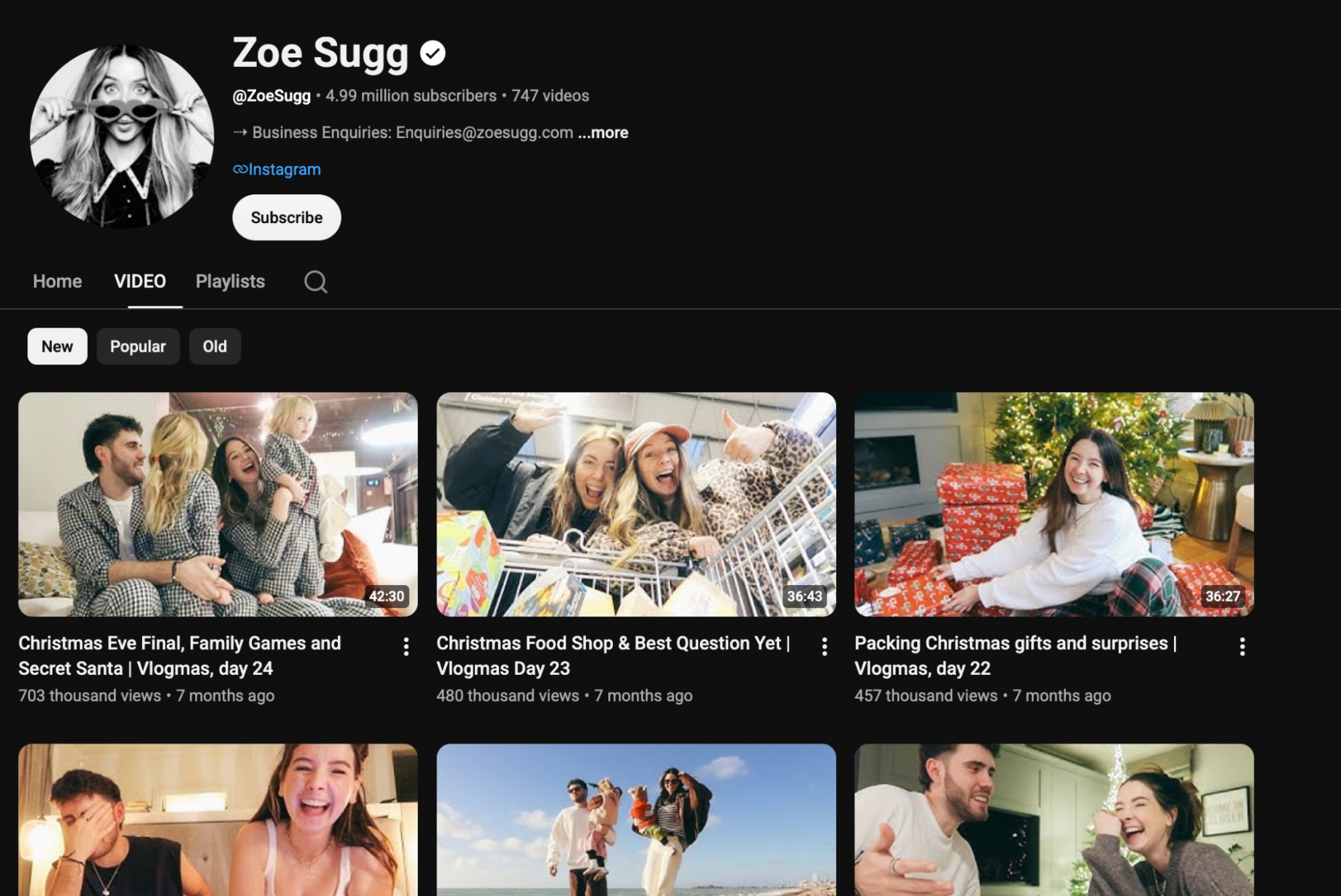
Zoe Sugg first became a popular influencer after launching her blog and YouTube channel in 2009. There, she shared beauty, fashion, and lifestyle content.
Source: Zoe Sugg
After growing an audience of millions, she published her debut novel, Girl Online.
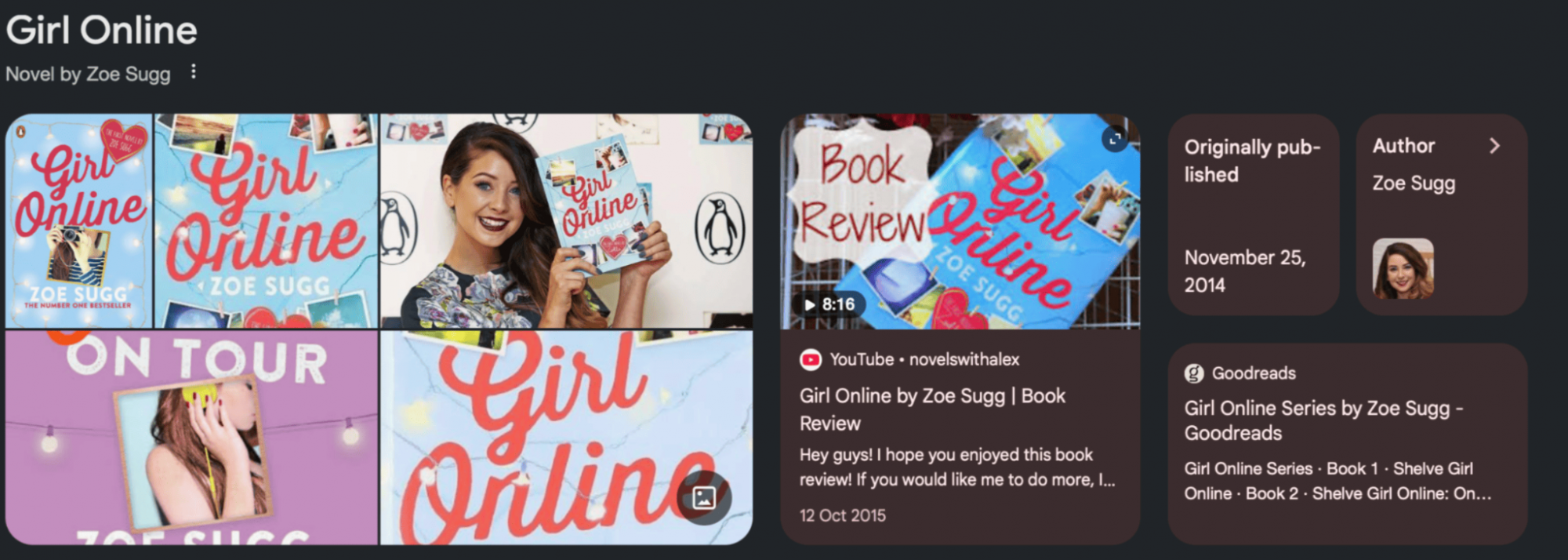
Her fans immediately started buying the book. It quickly spread across the internet and became a worldwide bestseller.
Over time, the book brought her a new audience.
Many readers discovered Zoe through Girl Online without knowing her YouTube channel first.
As a result, she grew the audience for both her books and her YouTube channel.
6. X (Twitter)
X is a great place to connect with authors, publishers, journalists, and readers. Here, you can show another side of yourself by:
- Showing your audience who you network with,
- Sharing your quick thoughts,
- Talking about the topics you care about.
- Showing how you interact with other people.
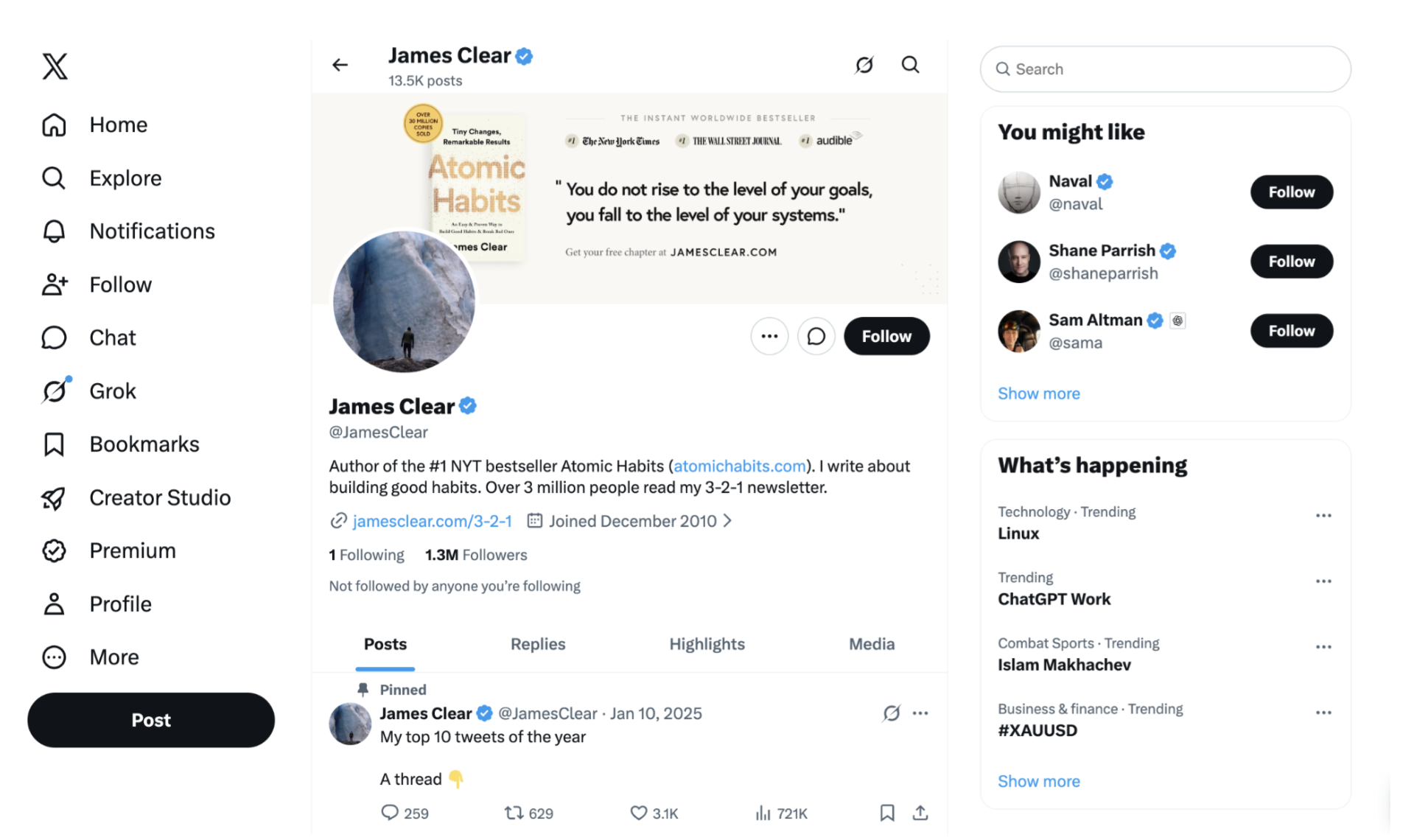
If you aren’t sure what to share there or how to do that best, you can always check how other successful authors approach it. Here is, for example, what James Clear does:
Source:James Clear
7. LinkedIn
LinkedIn is especially useful for nonfiction authors.
You can share your expertise, publish articles, and build credibility in your field while promoting your books.
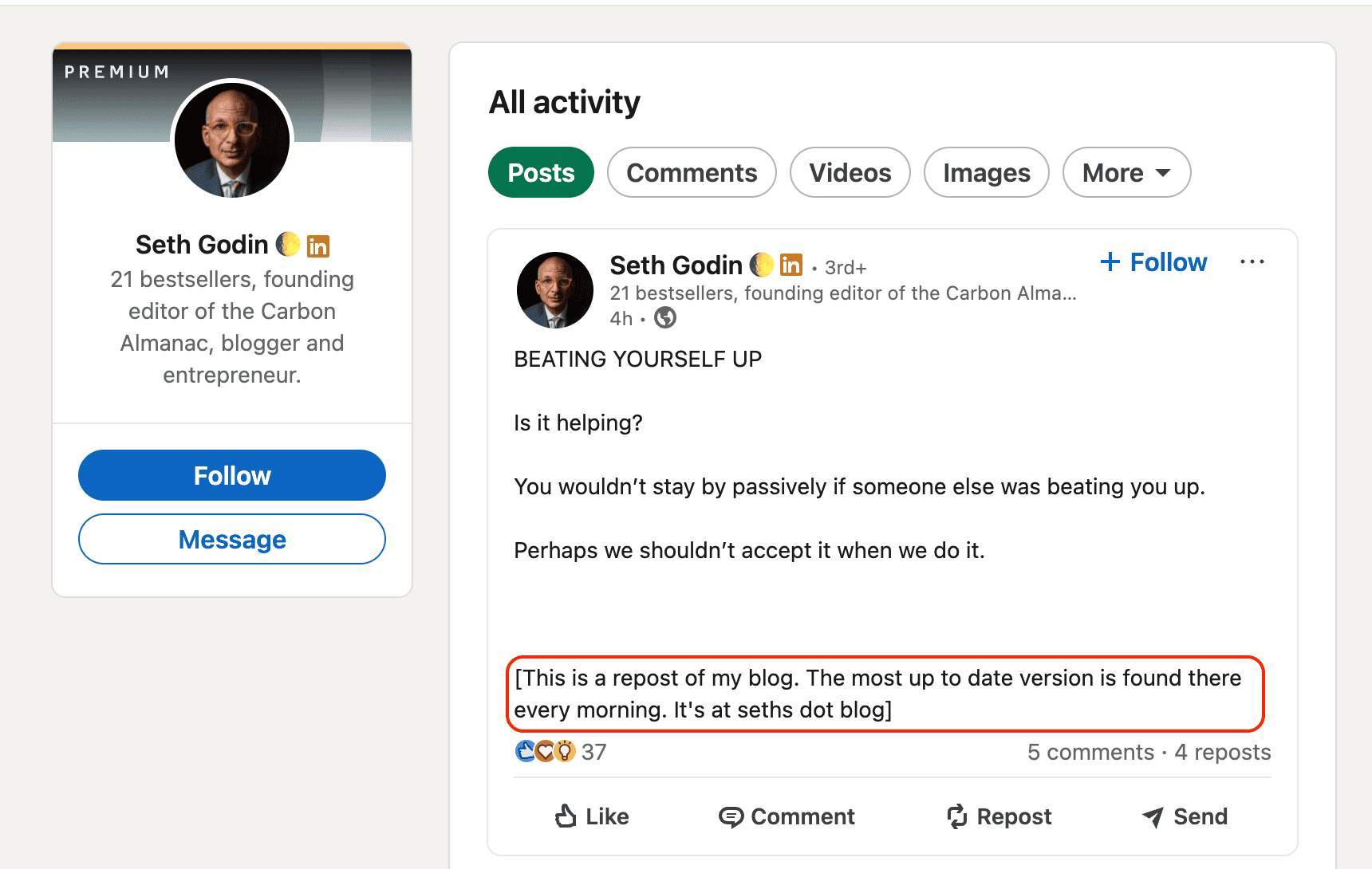
Check how Seth Godin runs his LinkedIn.
He is a great example of how to be present on social media without burning out or having to write too much. Most of his publications are reposts from his blog.
So, he prioritizes his blog format and then simply shares some of the highlights on other platforms. This is a smart approach if you don’t have much time for all your social media presence.
Source: LinkedIn
8. Threads
Threads is another Meta platform. It is similar to X (Twitter), but has a slightly different audience. Here, you can have casual conversations with readers and other writers.
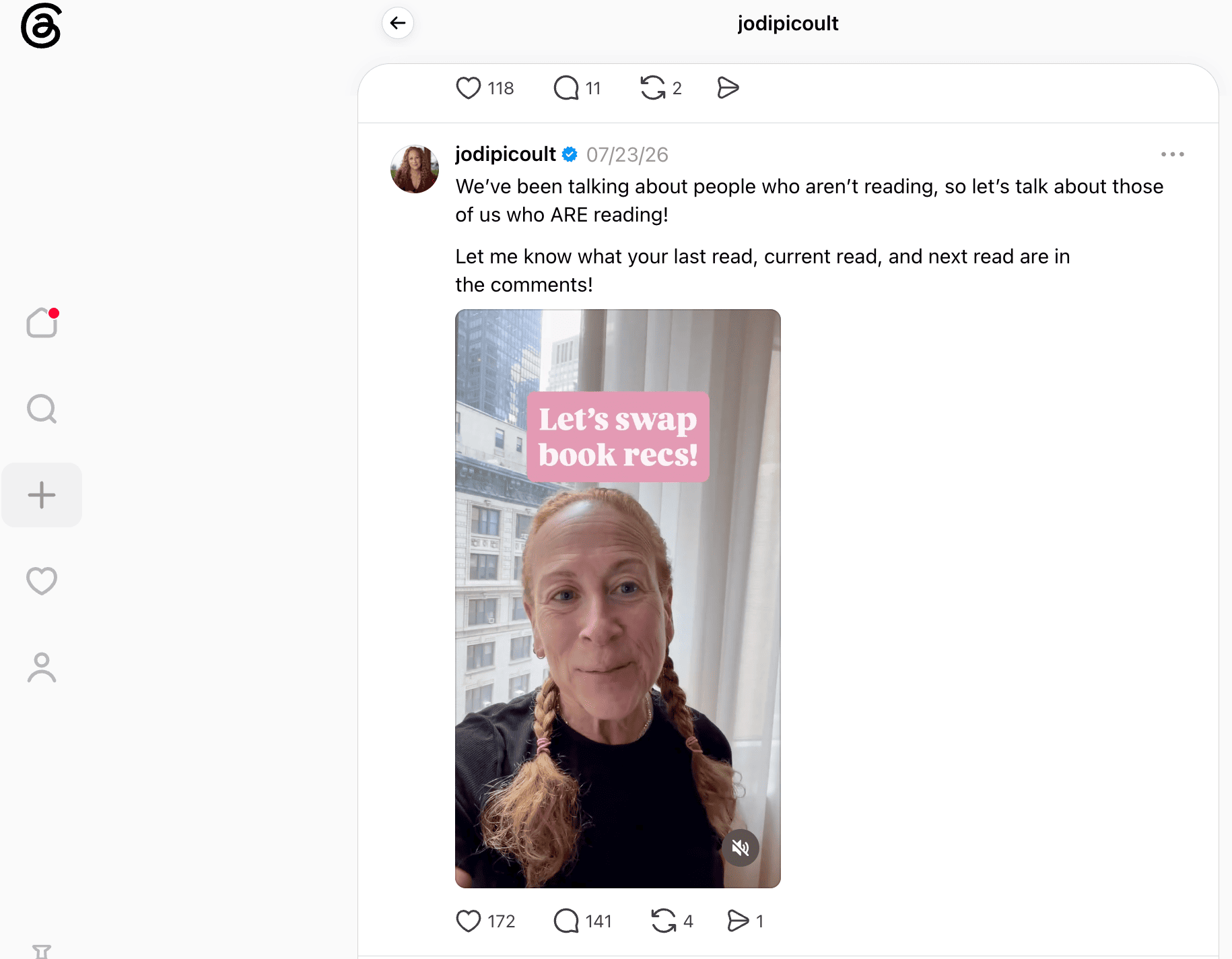
Look at how Jodi Picoult runs it. She both talks about her books and other things that readers can be interested in, whether it’s AI or swapping book recs.
Source: Threads
Speak to your audience
Both your website and social media can become places where you communicate with your audience.
No matter what channel you use, it's important to establish your own tone of voice. It directly shapes how readers see you as an author.
- On your website, this communication is usually more indirect. Readers learn about you through your biography, blog posts, book descriptions, and updates.
- On social media, the conversation is much more direct. Readers can comment, ask questions, share their thoughts, and interact with you in real time.
For many fans, having access to the author behind their favorite books is an important part of the experience. They may want to ask about your new releases, characters, plots, or your writing journey.
That's why answering these questions matters.
It’s even important to respond to questions that readers haven't directly asked yet. You can do it through posts or updates. That can help them better understand you and your work.
For example, Goodreads allows authors to interact with readers through features like Ask the Author.
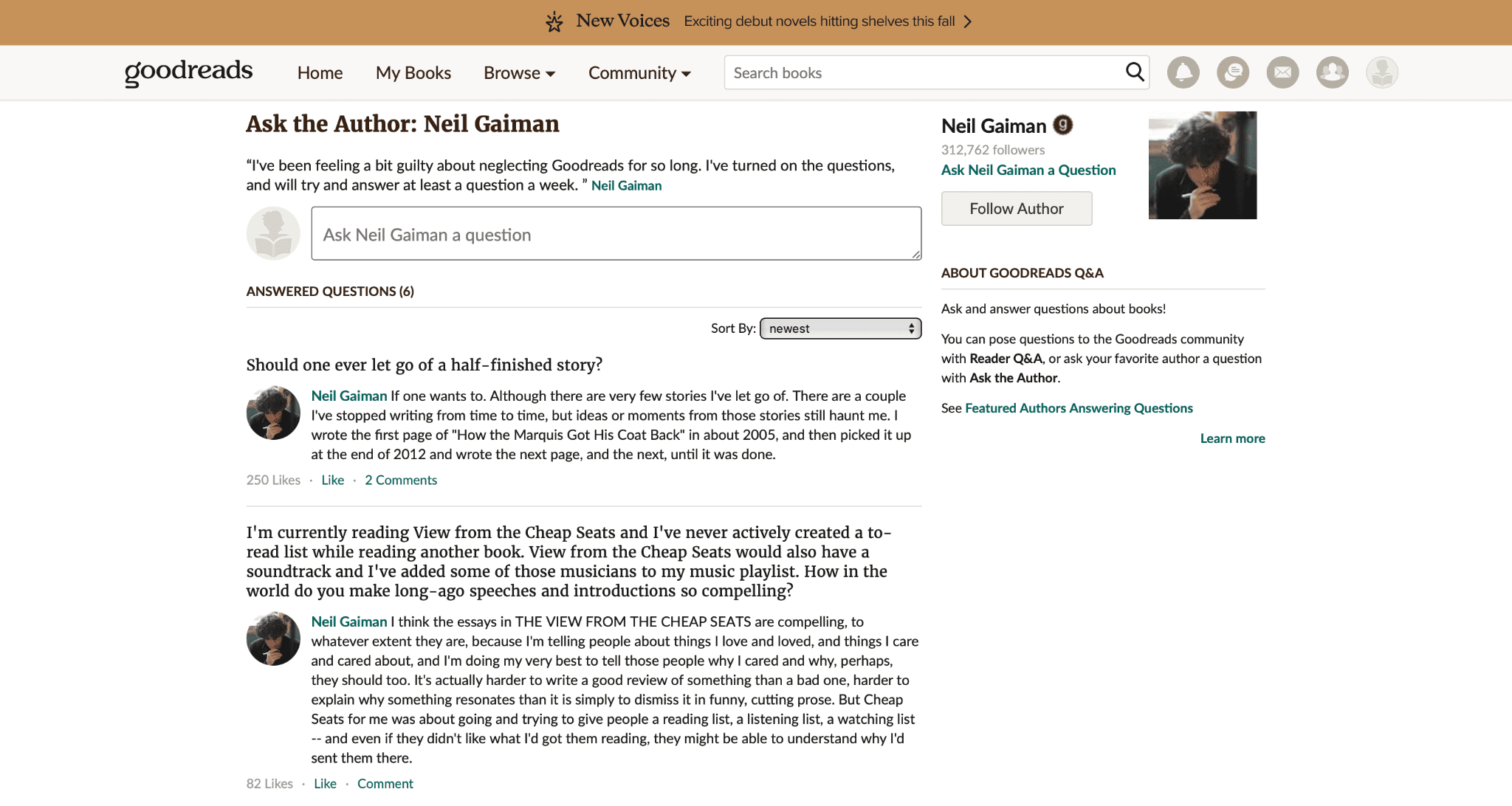
Source: Goodreads
But you don't need to limit communication to one platform.
Every interaction helps build a stronger connection between you, your future books, and your readers.
Note:
Building an author brand is the foundation of long-term success.
Of course, there are exceptions.
Some authors have achieved success without building a strong author brand. But that doesn't mean branding isn't important.
There are far more authors whose books never get the attention they deserve simply because they didn't invest in building their brand.
All of this may sound overwhelming, but it doesn't mean you have to do everything at once.
Start with small steps and build your author brand over time. Focus on what feels comfortable to you at this moment, and expand as you grow.
11 strategies to market your book
Once you've defined your audience and built your author brand, it's time to start promoting your book.
Let’s take a look at the practical strategies to help you reach more readers.
1. Create book listings on reading platforms

Book listings make your book accessible to a large audience.
They're simply platforms where potential readers can discover and buy your work.
It's important to list your book on at least a few of them. Sales aren't the only goal. Book listings also increase your overall visibility and make you more recognizable.
Here are some platforms and websites where you can list your book:
1. Amazon 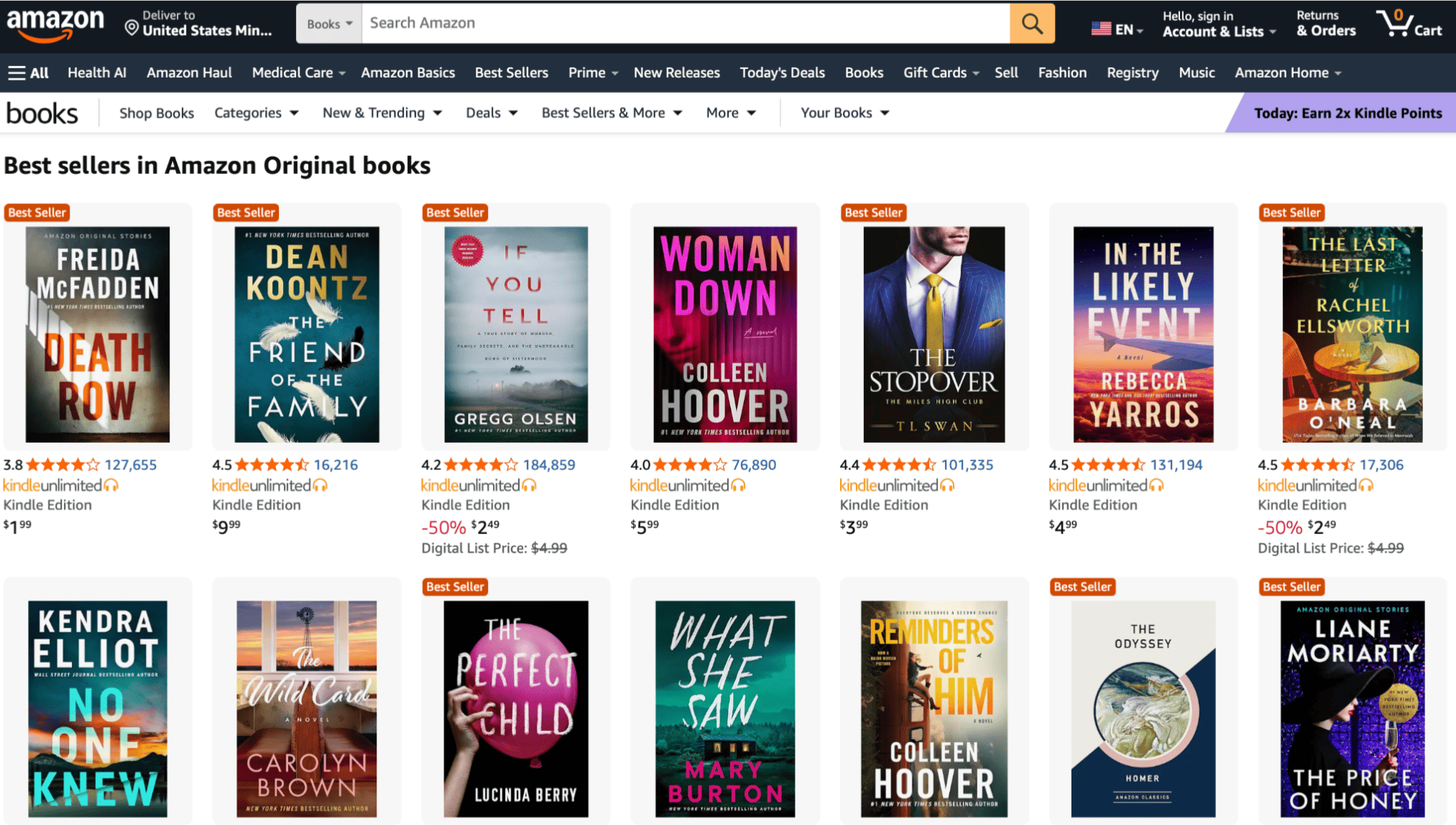
Source: Amazon
Amazon Books is one of the biggest marketplaces where people discover and buy new books.
It's also one of the most popular platforms for self-publishing.
It allows readers to buy your book for Kindle or order it as a paperback or hardcover. This makes it easy to publish your book in both digital and print formats.
2. Goodreads
We've already talked about Goodreads as a platform where you can interact with your audience. But that's not all it offers.
Goodreads also provides book listings through Listopia.
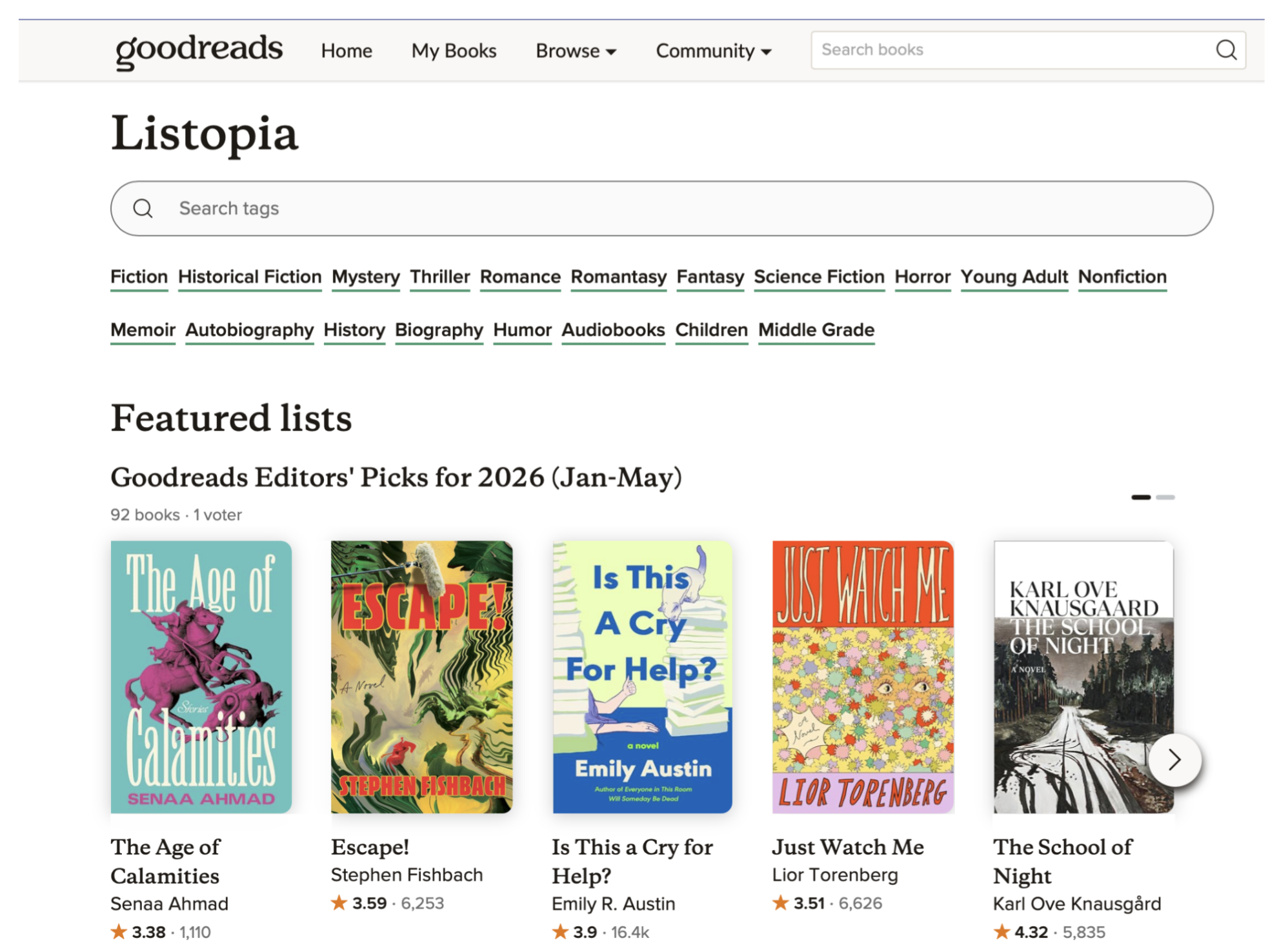
Source: Goodreads
Readers can discover your book, write and read reviews, rate it, and add it to shelves like Want to Read, Currently Reading, and Read.
Goodreads doesn't let readers buy books directly on the platform. But it still makes purchasing easy by linking to retailers such as Amazon, Barnes & Noble, AbeBooks, Audible, etc.
3. Barnes & Noble
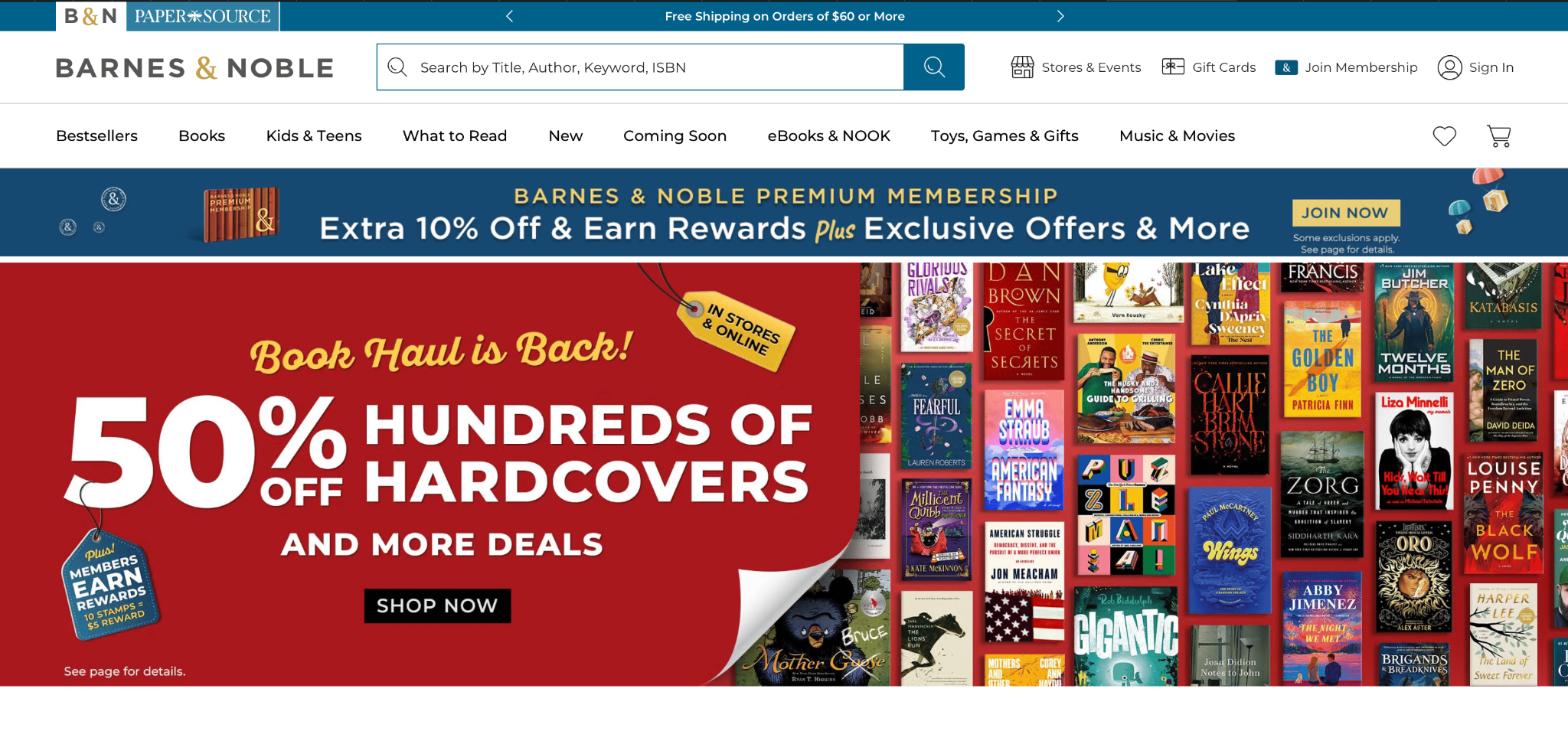 Source: Barnes & Noble
Barnes & Noble is not only one of the largest bookstores in the United States but also an important place for your book to be discovered.
Readers can search for books, read descriptions, browse reviews, and purchase both physical books and ebooks directly from the platform.
Having your book listed on Barnes & Noble gives readers another trusted marketplace to find and buy your work, even if they don't shop on Amazon.
2. Do SEO for authors

Optimize your description
One of the main goals of a book description is to grab a potential reader's attention and convince them to read your book.
However, that's not its only purpose.
A well-written description can also help readers discover your book through search.
But how?
Start by choosing the right categories and keywords.
After identifying your target audience, think about the words and phrases they would actually search for when looking for their next book to read.
Instead of targeting broad terms like romance or fantasy, focus on more specific keywords that fit in well.
Note: If you're publishing on Amazon, pay special attention to your metadata.
Amazon primarily uses your title, subtitle, categories, and backend keywords to understand what your book is about.
Here's part of the metadata Amazon uses to understand and recommend your book:
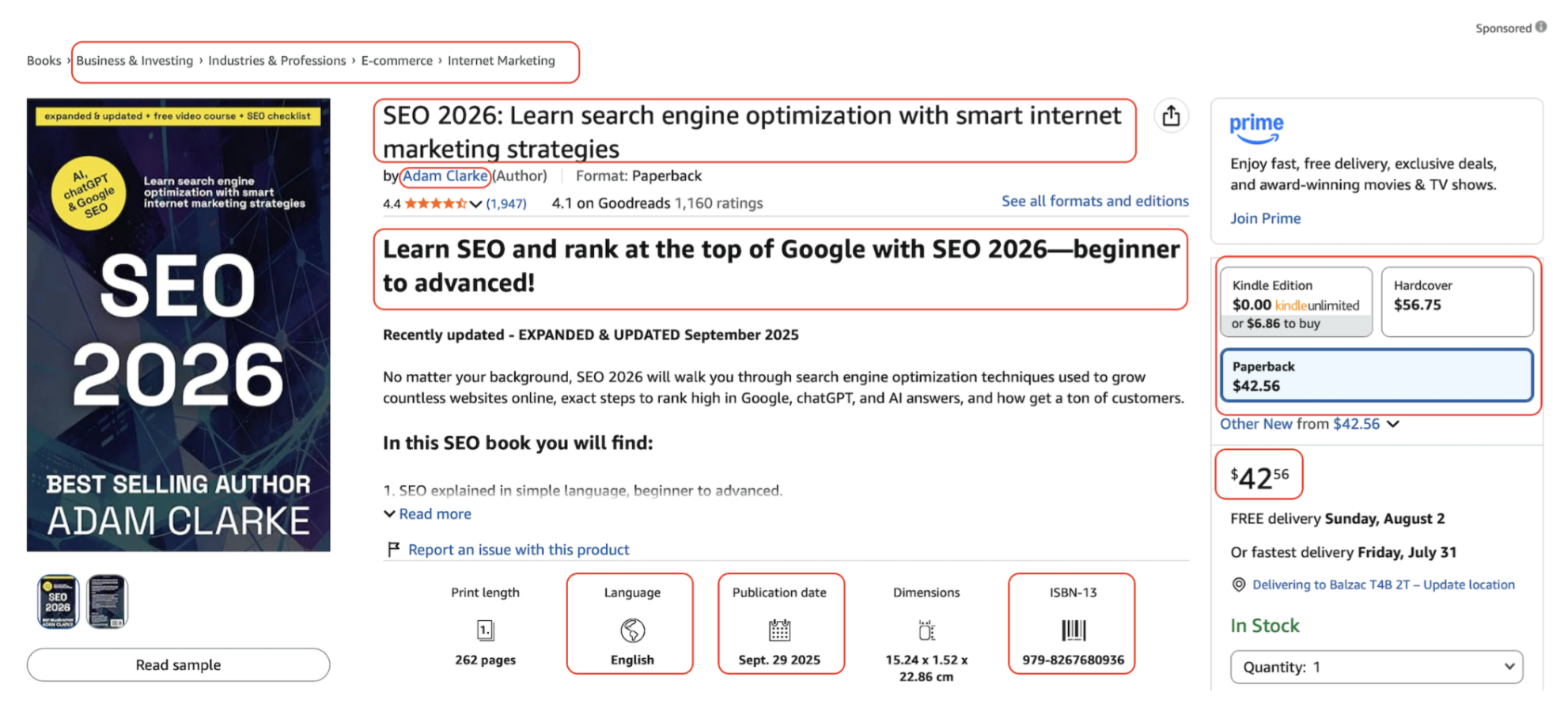
Your book description also matters on Amazon.
It might not be the primary place Amazon looks when deciding which searches your book should appear in. But it’s still important.
This type of optimization works for other book listing platforms and marketplaces too. So, just keep it in mind whenever you list your books anywhere.
Optimize your website
Your website is another place where SEO can help readers discover both your books and your brand.
You can naturally include relevant keywords across different pages, whether it's your homepage, About page, book pages, or blog.
Each page should focus on a different topic and target the search queries that are most relevant to it.
But before adding keywords, find answers to these two questions:
- Which queries have enough search volume?
- Which keywords best match the purpose of each page?
Answering these questions will help you create content that's useful for both readers and search engines.
Besides that, it's important to stay authentic.
SEO works very differently today than it did a few years ago.
It's no longer just about keywords. Search engines are becoming much better at understanding context and whether your content genuinely answers a user's question.
As an author, this can actually work in your favor.
You don't need to build your writing around keywords. Instead, write naturally and include them where they fit.
There’s even a good chance you’re already using many of the words your readers search for without even realizing it.
3. Build an email list and do email marketing

The biggest advantages of an email list are that:
- You have full control over this marketing channel.
- There are no algorithms that can change in a day, like on social media.
- Every subscriber has chosen to hear from you.
All this makes email one of the best ways to stay connected with your readers over the long term.
Even though it often seems slow at the beginning, you might be surprised by how many benefits it brings over time.
Now, how can you do that practically?
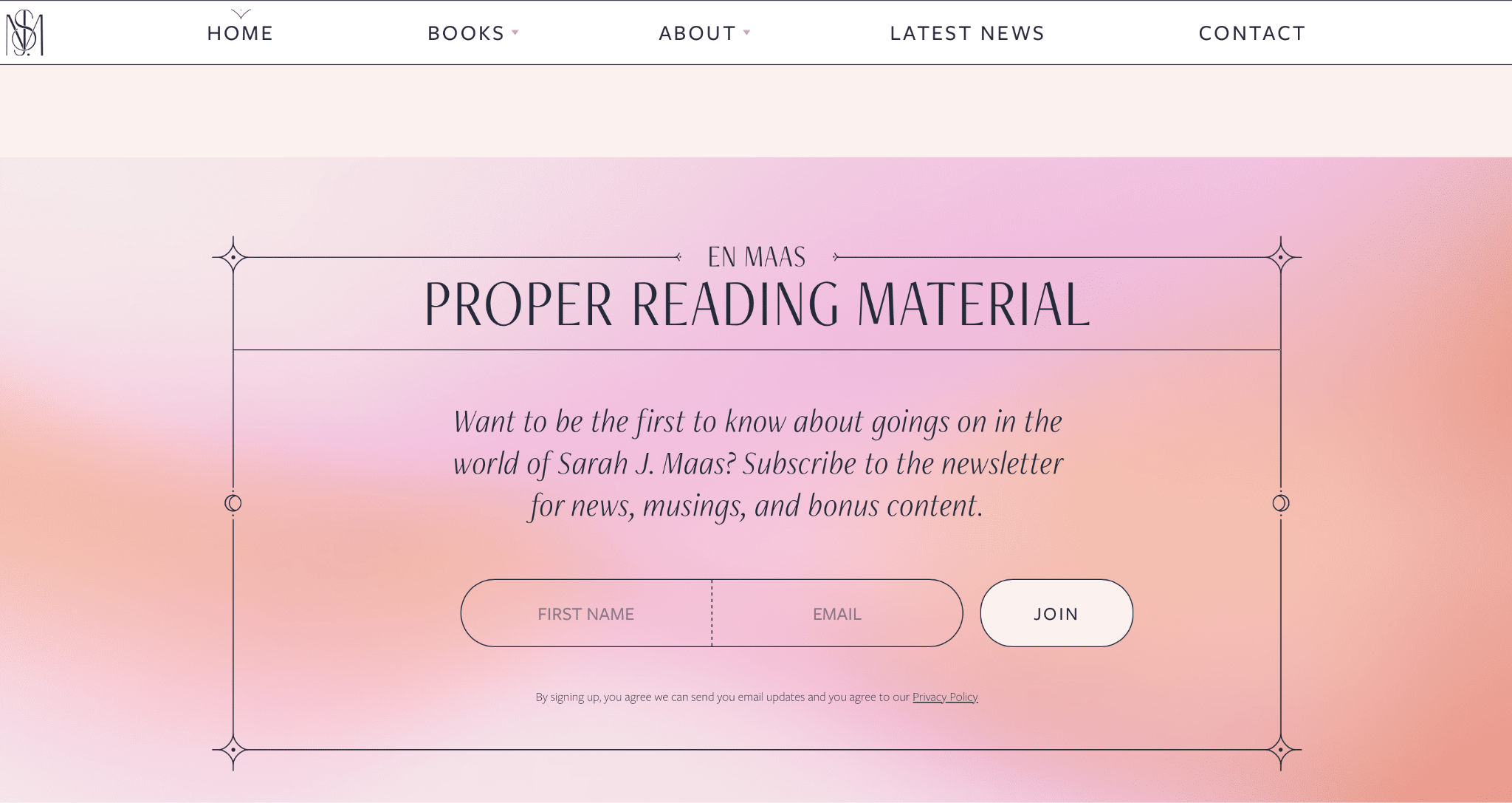
- Create a place where people can subscribe. Add a sign-up form to your website. Share it in your social media bios, posts, and anywhere else it makes sense.
Look at how Sarah J. Maas includes a sign-up form directly on her website:
Source: Sarah J. Maas
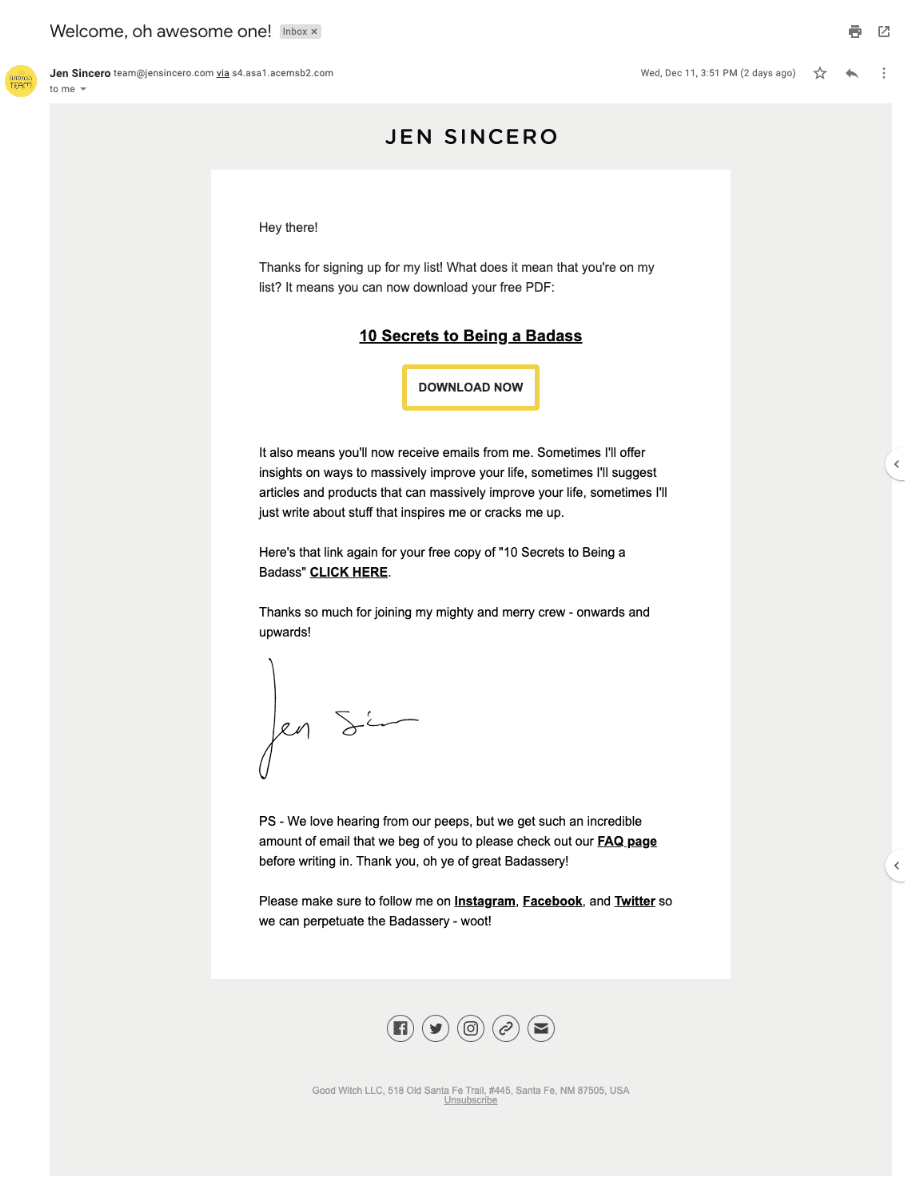
- Offer something free and valuable to encourage people to subscribe. Authors often use a lead magnet, a bonus readers receive after signing up. A lead magnet can be a prequel, a short story, a deleted chapter, an exclusive epilogue, a checklist, or any other content related to your book.
Here’s an example of how Jen Sincero sends a lead magnet in her emails:
To manage your email list, you'll also need an email marketing platform. Popular options for authors include:
- MailerLite,
- Kit,
- Flodesk, etc.
If you're just getting started, MailerLite is often a great choice. It's beginner-friendly and offers a generous free plan.
When it comes to the actual email marketing campaigns, there are plenty of options you can try.
Apart from content related to your book, you can also send valuable newsletters that align with your author brand.
For example, if you write psychology books, you can share interesting psychology articles or links to your latest blog posts.
This helps you build a relationship with your readers instead of treating them like customers.
Here's an example of what your newsletter’s page could look like: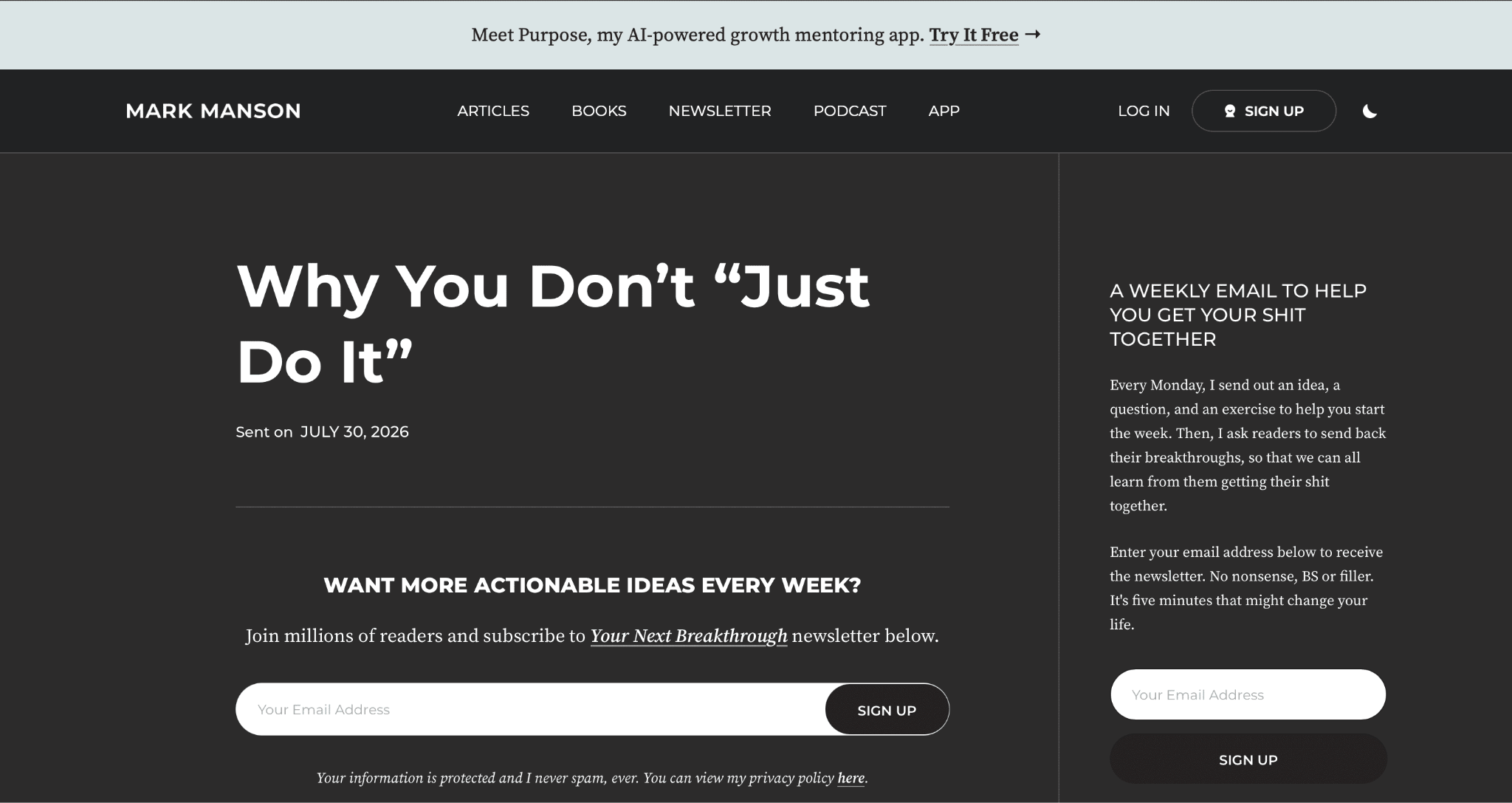
Source: Mark Manson
You can also use email to:
- Announce new releases,
- Share exclusive content,
- Promote discounts,
- Invite readers to events, and so on.
It's a direct communication channel that helps keep your audience engaged and informed.
4. Do digital PR and guest posting

One of the most effective marketing strategies for promoting your book is digital PR.
It includes many different tactics, from online media coverage to event participation. But you don't need to implement all of them at once. Start with the channels you can manage right now.
One of the strategies you can begin with is press releases.
It’s a great way to promote your debut book as an author and get it in front of journalists and media outlets.
But the most difficult part is making it really interesting and attention-worthy.
Journalists receive a huge number of pitches and press releases every day, so you need to give them a reason to care.
Don’t just talk about your book. Talk about the story behind it:
- What problem does your book address?
- Is there something unique about the topic?
- Does the problem you encounter connect with real-world problems?
- Or maybe you have an interesting personal story that connects to the book?
The most important thing is to get noticed first.
Once you have their attention, you have a much better chance of getting them interested in the book itself.
You can also try guest posting.
It’s another powerful strategy to expand your reach and even build backlinks for your website.
The idea is pretty simple. You basically share your knowledge and insights on established and credible websites in the form of a blog post.
As a result, you build visibility, credibility, and potentially make connections with literary communities.
However, don't write guest posts just to promote your book.
Provide value to readers. Share stories, advice, tips, etc. Mention your book naturally, or don't mention it at all if it doesn't fit the content of the article.
Readers who find your content helpful are more likely to visit your website and discover your book there.
When choosing a website, focus on relevance.
A guest post on a trusted writing, publishing, or book-related website will often bring better results than publishing on a large website with an unrelated audience.
Of course, finding websites and pitching editors can take time.
So, if you want to simplify the process, you can use a guest posting service that connects you directly with website owners and helps place content on relevant, high-authority websites.


5. Participate in podcasts

A podcast guest appearance is another great way to become more visible.
- Over 584.1 million people listen to podcasts worldwide.
- At the same time, more than 4.58 million podcasts already exist.
That creates a huge opportunity to become a guest on one of them. As a result, you can reach a whole new audience and introduce it to both yourself and your book.
But how do you become a guest?
Don't think you need to be a well-known author to get invited. You don't. But you do need to have at least some online presence.
That's why it's a good idea to have at least one active social media account.
Create a LinkedIn profile, a website, or a blog where people can learn more about you.
That’s where your author brand becomes an important factor.
It also helps if your book is already listed on platforms like Amazon or Goodreads.
Before inviting a guest, most podcast hosts do their research. If they can't find anything about you or your book, getting invited becomes much more difficult.
And once you've built your online presence, it's time to start your outreach.
One of the most common methods is sending cold emails.
However, this usually works best if you've already built an audience or have a strong author brand. Otherwise, there are more effective ways to get noticed.
1. Find podcasts your readers already listen to
Don't try to appear on every podcast you find. Focus on the ones your target audience already listens to.
Look for places where you can genuinely share your knowledge, experiences, stories, or writing journey.
Make a list of potential podcasts and listen to a few episodes. Before reaching out, you should be able to answer these questions:
- What topics does the host usually cover?
- Who are their typical guests?
- Have they interviewed debut or new authors before?
- Why would your book be valuable to their audience?
The more you know about the host and the podcast, the better you can personalize your outreach. It also shows that you've done your research.
Most importantly, make sure your book is a good fit.
The more relevant your story and insights are to the podcast, the higher your chances of getting invited.
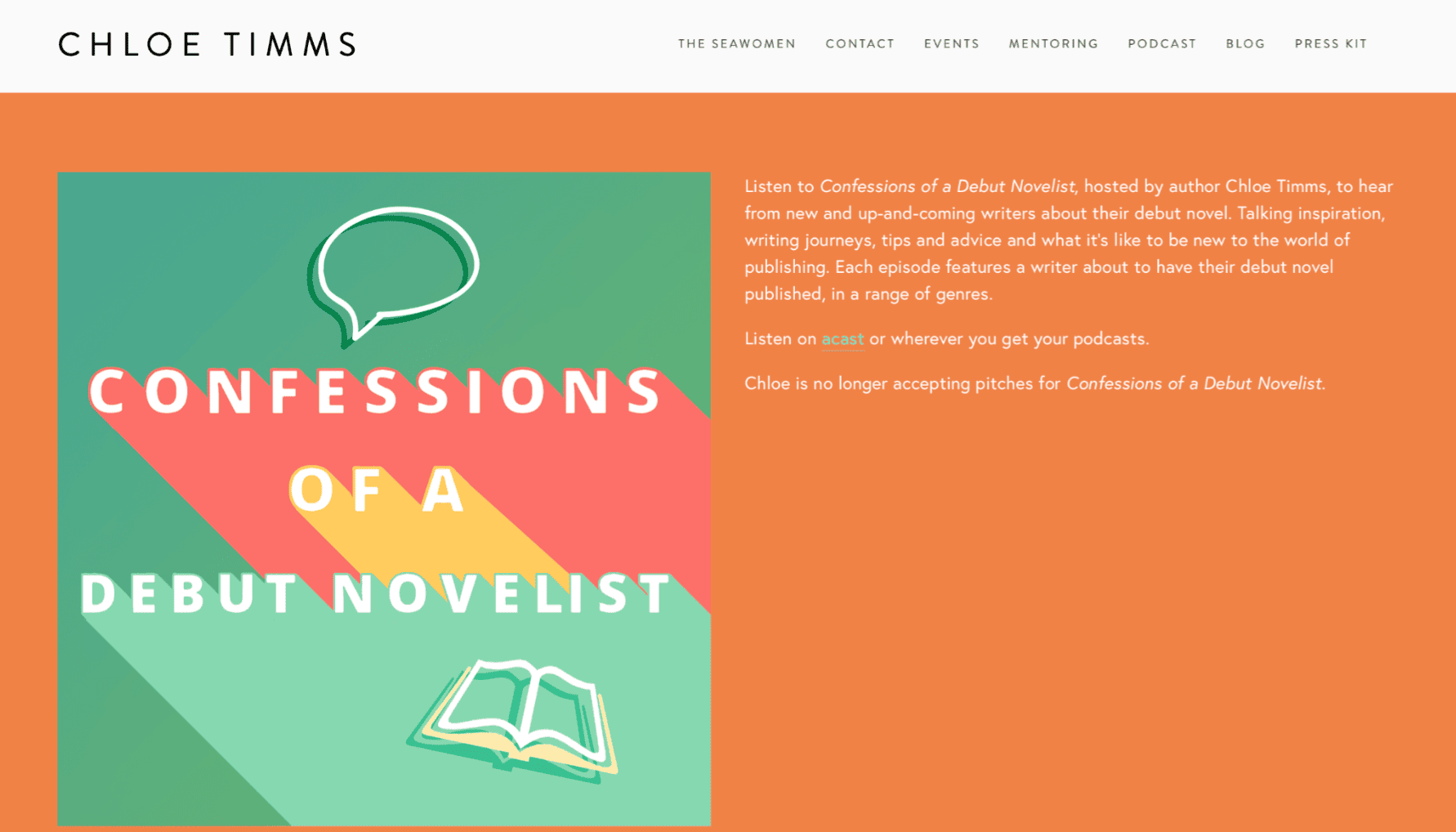
There are even several podcasts that are especially targeting up-and-coming writers. So, just do your research, and you’ll definitely find potential opportunities.
2. Use podcast-matching platforms
Podcast-matching platforms are one of the easiest ways for new authors to find podcast opportunities. They connect podcast hosts with guests based on their interests and expertise. This makes the outreach process much easier.
Some of the most popular platforms include:
- PodMatch,
- MatchMaker.fm,
- PodcastGuests.com,
- Podchaser Pro,
3. Focus on value, not promotion
Most podcast hosts aren't looking for someone to advertise a book. They're looking for interesting conversations that provide value to their audience.
Don't say, "I'd like to promote my book."Think about the topics you can discuss beyond it.
Then, during the podcast, let your book become a natural part of the conversation.
4. Personalize your pitch
Show the host that you're genuinely interested in their podcast:
- Mention a recent episode.
- Explain why you're a good fit for their audience.
- Briefly introduce the topics you could discuss and the value you can bring to their listeners.
Keep your message short and clear.
Don't include too much detail. Make it easy to read. And don't forget to include links to your website and social media profiles.
Or you could even send a short video message instead.
This is a really great tactic in the podcast industry.
It lets the host immediately hear your voice and see your personality. It also makes your outreach feel more personal and helps you stand out from other guests.
5. Create a media kit
A media kit is another powerful thing you can include in your outreach message.
It makes you look more professional and gives the host an easy way to learn more about you.
A media kit usually includes:
- Author bio,
- Book information,
- List of publications,
- Website and social media links,
- Endorsements from well-known people or organizations,
- Your latest press release,
- Information about your target audience.
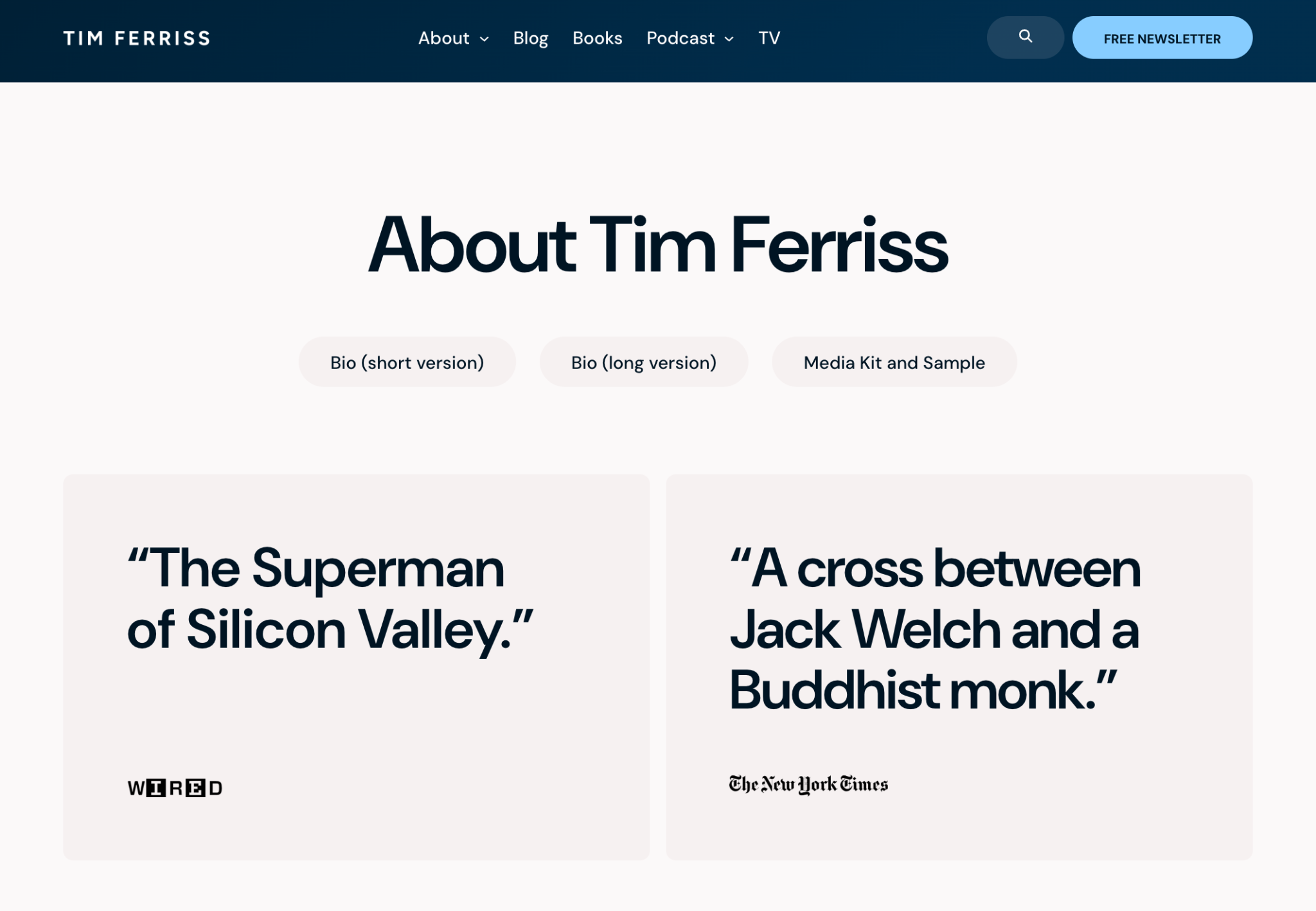
A media (press) kit can take many forms.
Tim Ferriss, for example, adds it to his About section, where he adds pictures, notable coverage, podcasts, public talks, etc.
Source: Tim Ferriss
After you've done all this work, your chances of getting invited increase significantly.
And once you do get invited, remember that appearing on a podcast isn't the only advantage.
You can also promote the episode on your social media. And even go a step further and turn the episode into short clips for Reels, TikTok, or YouTube Shorts.
The host can do the same.
The more successful the episode is, the more both of you benefit.
So, don't hesitate to suggest any ways you can promote the episode together. Show that you're genuinely excited about the podcast. Build a relationship with the host instead of treating it as a one-time interview.
A great experience can lead to future invitations or recommendations to other podcast hosts.
6. Get as many reviews as you can

Reviews are one of the biggest factors that influence whether someone buys a book.
Before making a purchase, people often want to know what others think about it.
A book with plenty of good reviews looks much more trustworthy than one with only a few. Right? That’s exactly why we give it a 5/5 score for importance.
Now, let’s see how you can get those.
Reviews from readers
Your readers should be your first source of reviews. After someone finishes your book, encourage them to leave an honest review on Amazon, Goodreads, or other platforms where your book is available.
You can remind them through:
- Social media,
- Your newsletter,
- At the end of your book, and so on.
Don’t worry if the review is short. Even a one-sentence comment helps build trust and show potential readers that people are actually reading your book.
Reviews from influencers
Reviews from influencers have a huge potential to promote your work in the book community. This includes:
- BookTok creators,
- BookTubers,
- Book bloggers,
- Journalists,
- And other content creators.
Their recommendation can introduce your book to thousands of potential readers who already trust their opinion.
A common approach is to send them a free copy of your book and ask if they’d be interested in sharing an honest review.
If they enjoy it, they might post a TikTok, YouTube video, Instagram post, etc. about your work.
Professional editorial reviews
You can try platforms like NetGalley. Their reviewers, librarians, booksellers, and other professionals are constantly looking for new books to review.
Besides, there are a bunch of paid editorial services online. Professional reviewers can write you a review for your website, Amazon page, book cover, social media, etc.
The most popular services are:
- Kirkus Reviews,
- Publishers Weekly BookLife,
- Reedsy Discovery.
7. Do price promotions

Price promotions are another effective strategy for marketing a book, especially for new authors.
Lowering your price, even for just a few days, can help increase your visibility and attract more readers.
Everyone loves discounts, right?
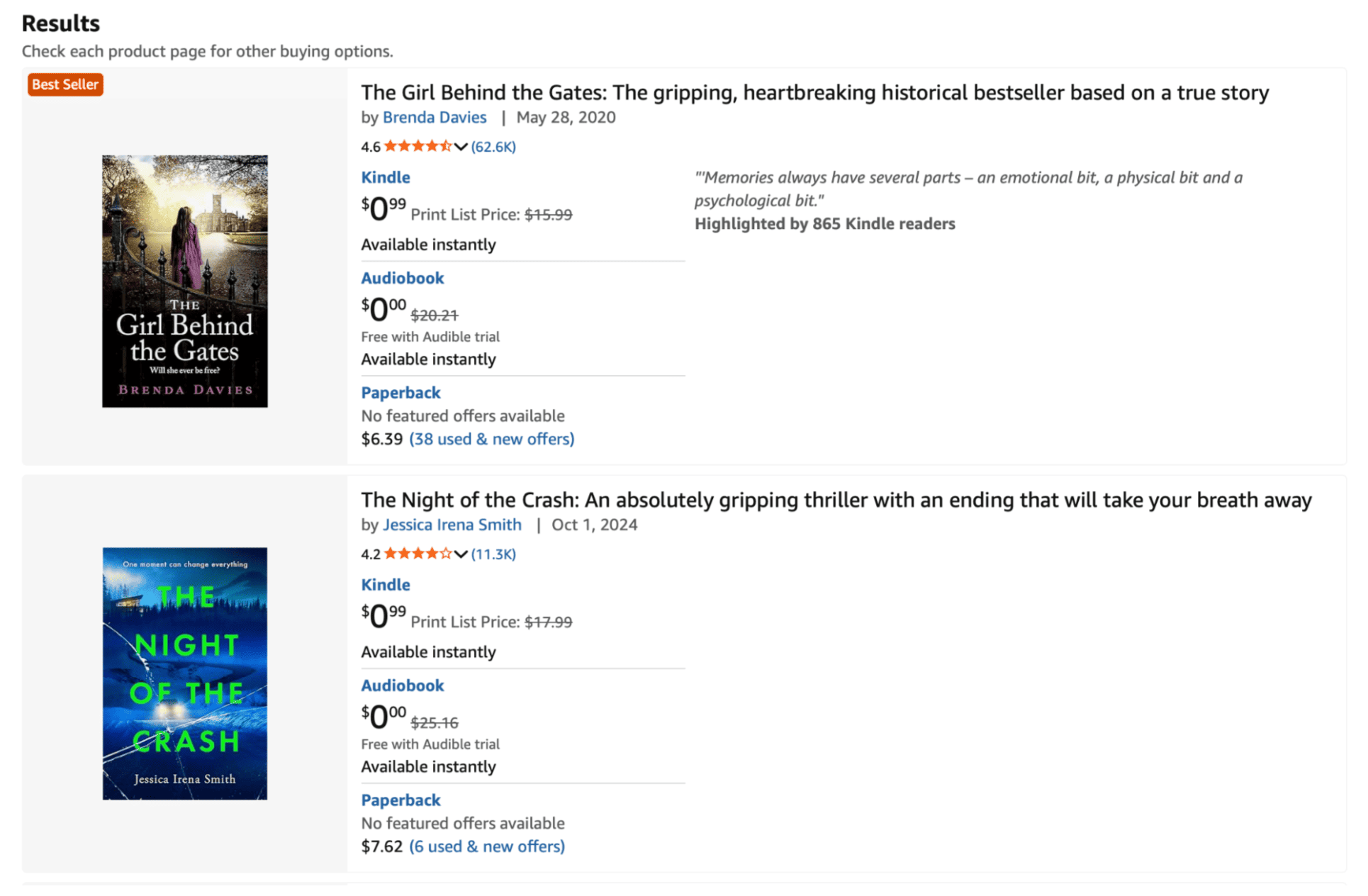
That's why readers are often much more willing to give a new author a chance if the book costs, say, $0.99.
Besides, price promotions can even increase your revenue. That may sound contradictory, but that's how marketing often works.
Instead of selling one book for $20, you might sell five books for $5 each. While the numbers won't always work out exactly like this, you get the idea.
Every price promotion should have a specific goal.
Before launching one, think about what you want to achieve. That will help you choose the right pricing strategy.
Here are three common approaches you can use for the ebook version of your book:
- Free: If your goal is to maximize downloads, build an audience, or collect reviews, offering your ebook for free can be a great strategy, especially early on.
- $2.99: This is often a great option if your goal is to maximize revenue while still offering readers a discount. Amazon also increases ebook royalties from 35% to 70%once your book is priced at $2.99 or above, allowing you to earn significantly more from each sale.
- $0.99: A great balance between attracting new readers and still earning royalties. Many readers are willing to take a chance on a new author at this price point.
And don't forget that you can also promote your discount. Run Amazon Ads, send an email to your subscribers, and share the news on your social media channels.
You can also use book promotion services such as Freebooksy or Bargain Books. These platforms promote discounted books to thousands of readers who are actively looking for their next read.
8. Create audiobooks

Audiobooks are becoming more and more popular among readers.
In fact, in 2025, 58% of Americans have listened to an audiobook. With demand continuing to grow, offering your book in an audio format can help you reach an entirely new audience.
There are several ways to create an audiobook:
- Narrate it yourself. This works especially well if your readers already know you or if your book is personal, such as a memoir or a nonfiction title. Hearing the author's own voice can make the experience feel even more authentic.
- Hire a professional narrator. While this is usually the most expensive option, it often provides the best listening experience and can make your audiobook sound more polished.
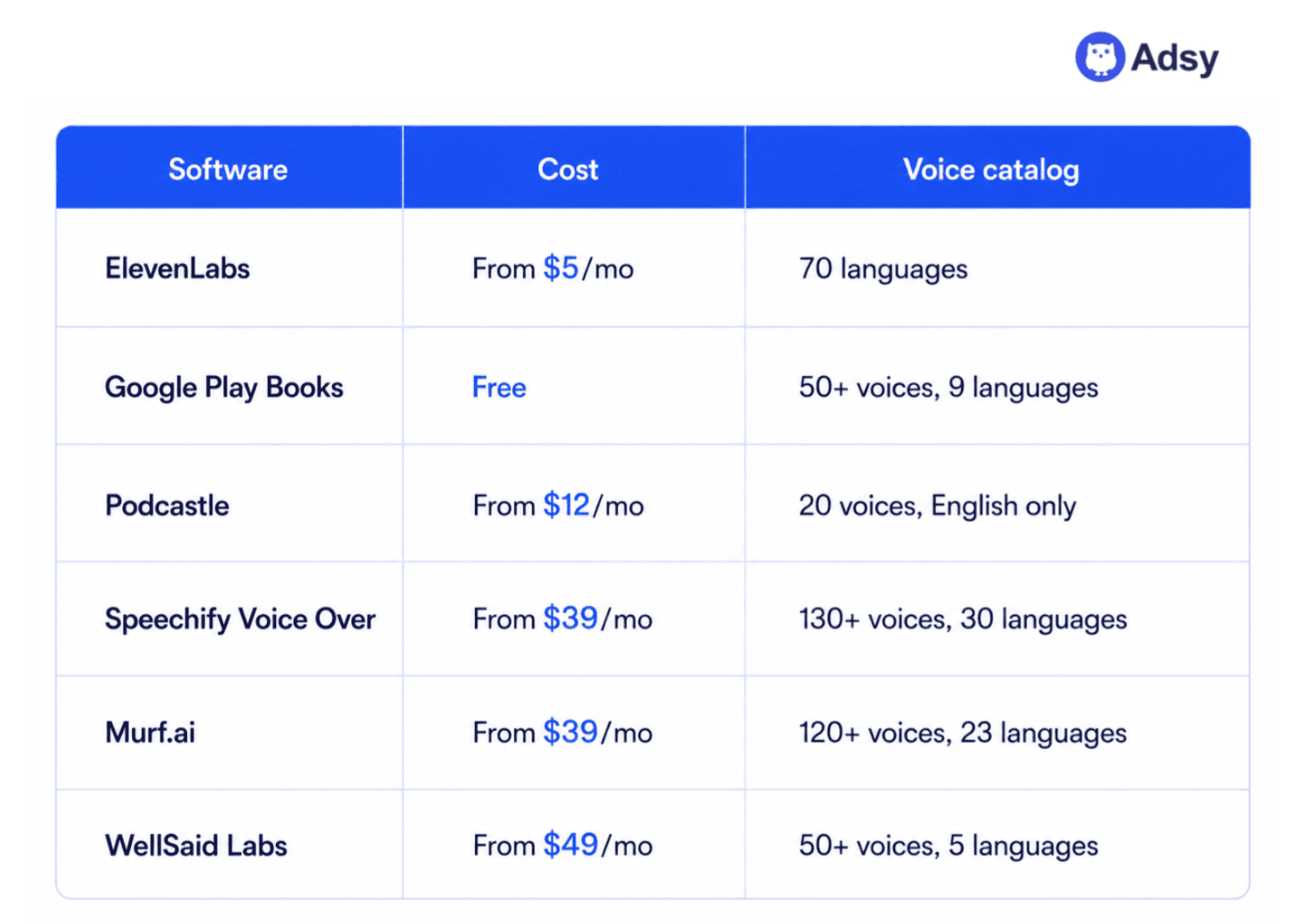
- Use AI narration. As AI technology continues to improve, more authors are using AI-generated voices to create audiobooks. While they still don't fully replace professional narrators, they can be a great starting point if you're publishing your first book and have a limited budget.
Many AI tools now offer natural-sounding voices, multiple languages, and customizable narration styles. Some platforms even allow you to adjust pronunciation, pacing, and emphasis to make the narration sound more natural.
Here are some of the most popular AI tools for audiobook narration:
After you've finished your audiobook, you need to choose the platform where it will be published.
Here are some of the most popular options:
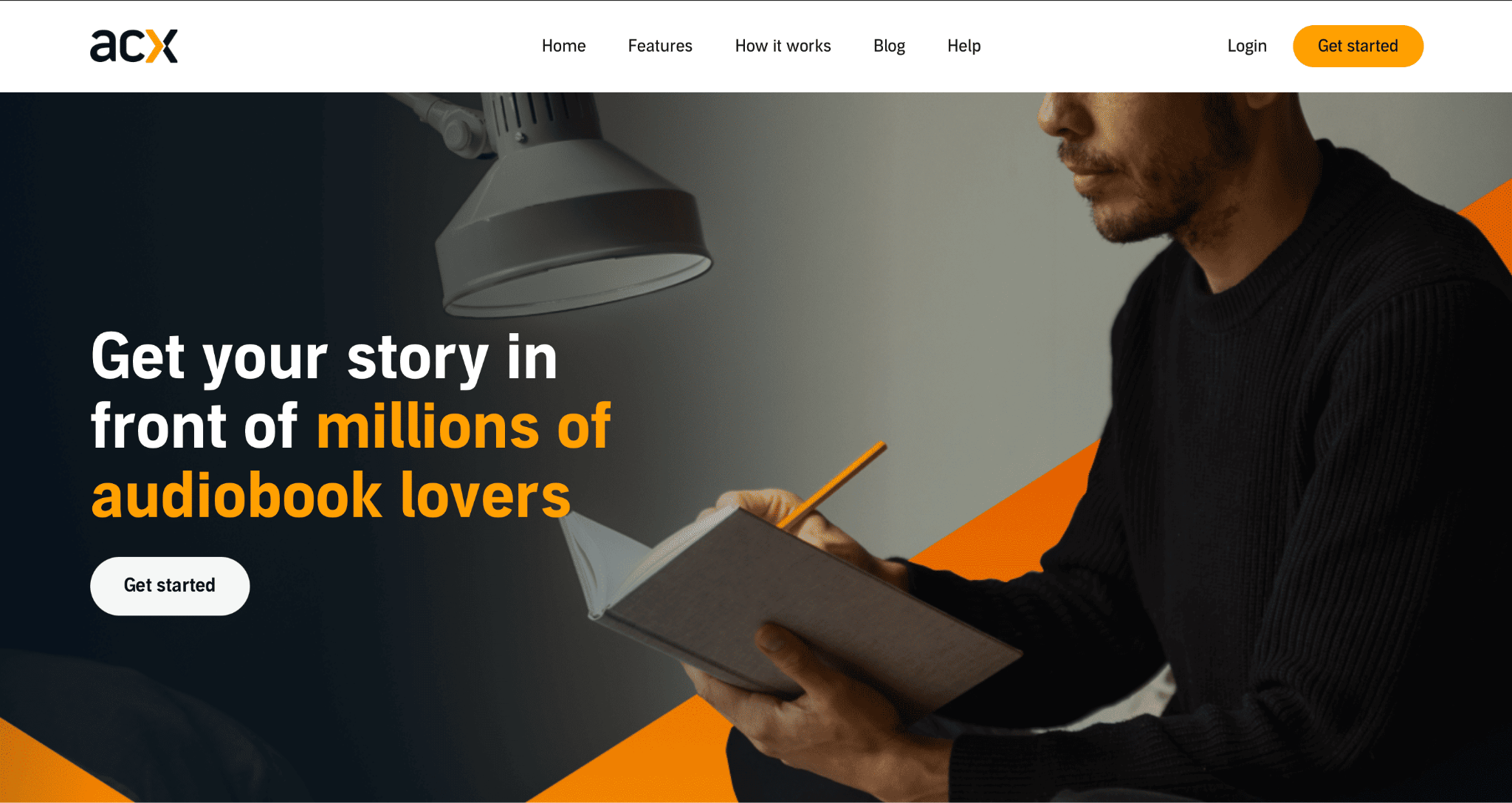
1. ACX
Source: ACX
ACX allows you to distribute your audiobook directly to Audible, Amazon, and Apple Books, making it a great option if you primarily want to reach Amazon customers.
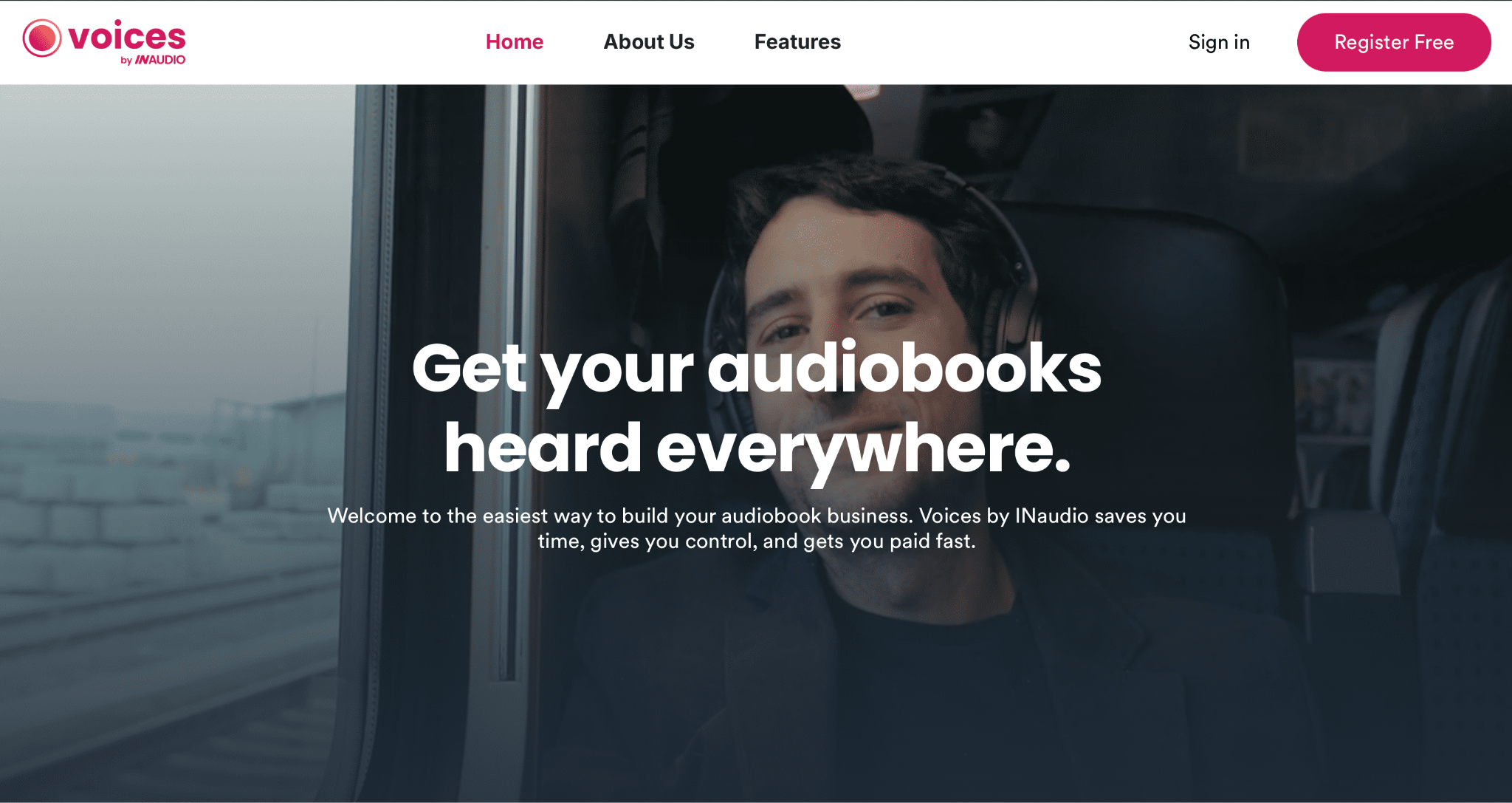
2. Findaway Voices
Source:Findaway Voices
Findaway Voices offers a much wider distribution. It can publish your audiobook to dozens of retailers and library services, including Spotify, Apple Books, Google Play, Kobo, Chirp, and many others.
This makes it a great choice if you want to maximize your reach instead of relying on a single marketplace.
9. Participate in events

Regular readers love attending book events. And for you, that creates an opportunity.
You can promote your book, become a speaker, sell signed copies, or simply make connections with bookstores, publishers, literary agents, and other writers.
Look for events where debut authors are welcome.
If you're attending in person, start by searching for events close to you. You don't have to travel across the country to get noticed. Many cities host literary events throughout the year.
These can include:
- Book festivals,
- Book launches,
- Fundraisers,
- University literary events,
- Literary conferences,
- Writing workshops,
- Library events,
- Local author fairs,
- Independent bookstore events,
- Publisher or literary agent networking events.
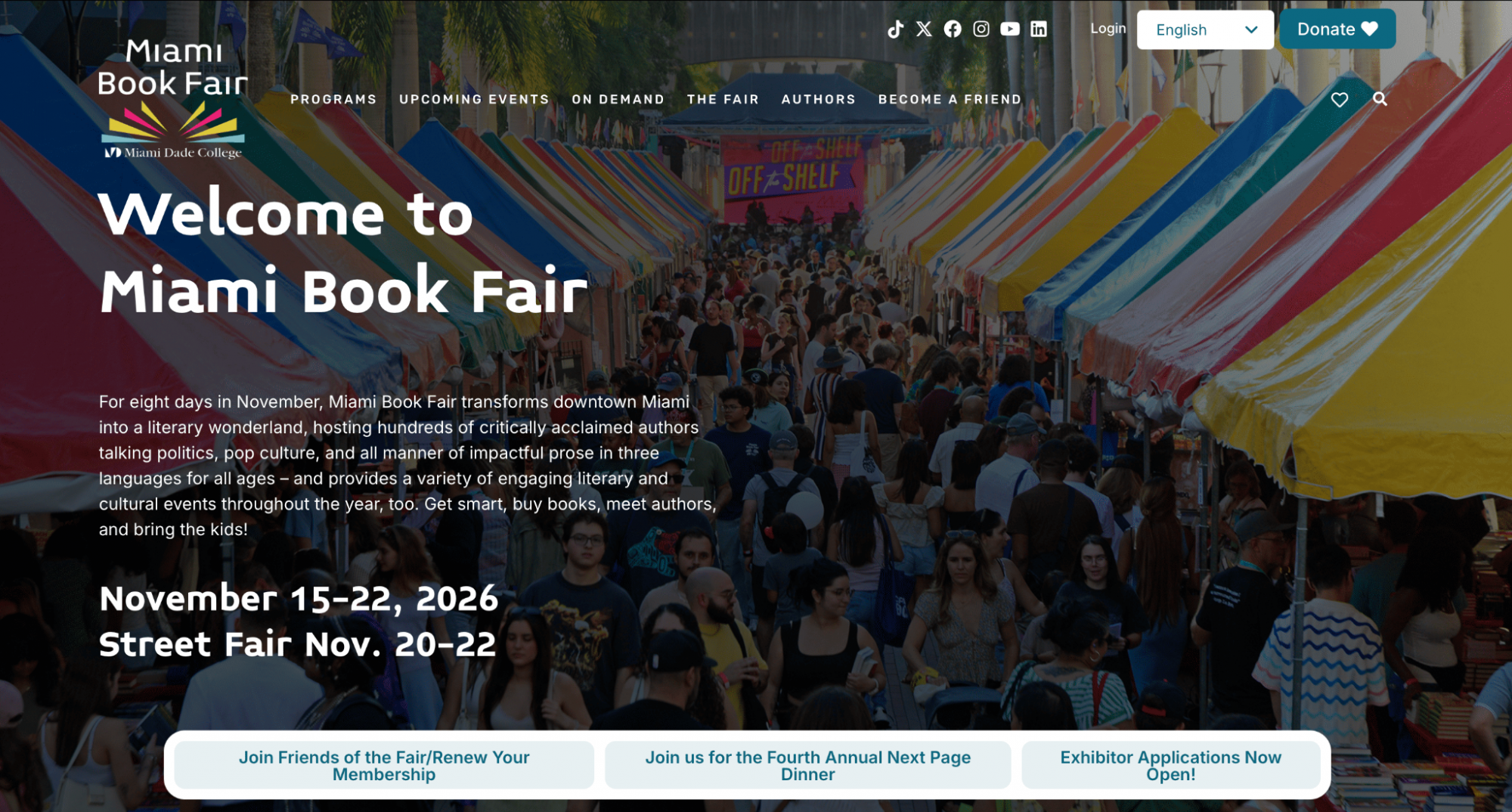
One great example is the Miami Book Fair.
Source: Miami Book Fair
It's one of the largest literary festivals in the United States and takes place every November.
Every year, it brings together hundreds of authors, publishers, booksellers, and thousands of readers for author talks, book signings, workshops, and networking events.
The fair also welcomes independent and self-published authors, who can apply for an exhibitor booth to sell their books and meet readers directly.
It's a great place to build connections, gain visibility, and learn from publishing professionals.
Note: Even if you can't attend a large event like the Miami Book Fair, don't overlook local opportunities. Smaller festivals, library events, and university book fairs can be just as valuable.
As a debut author, every new reader and every new connection matters.
10. Merchandising

Book merchandise is another strategy that can help you market your book and keep readers engaged long after they finish reading it.
This strategy works especially well if you're writing a series or a trilogy.
Readers who fall in love with your world often want something to remember it by. Merchandise gives them another way to support your work while keeping your book in their minds.
Besides that, a product featuring your book can become a free promotion every time someone posts a photo or uses it in public.
You can offer products such as:
- Stickers and bookmarks,
- Tote bags and clothing,
- Mugs and art prints,
- Exclusive items inspired by your book, world, or characters, etc.
The best way to sell merchandise is on your website or through a separate online store.
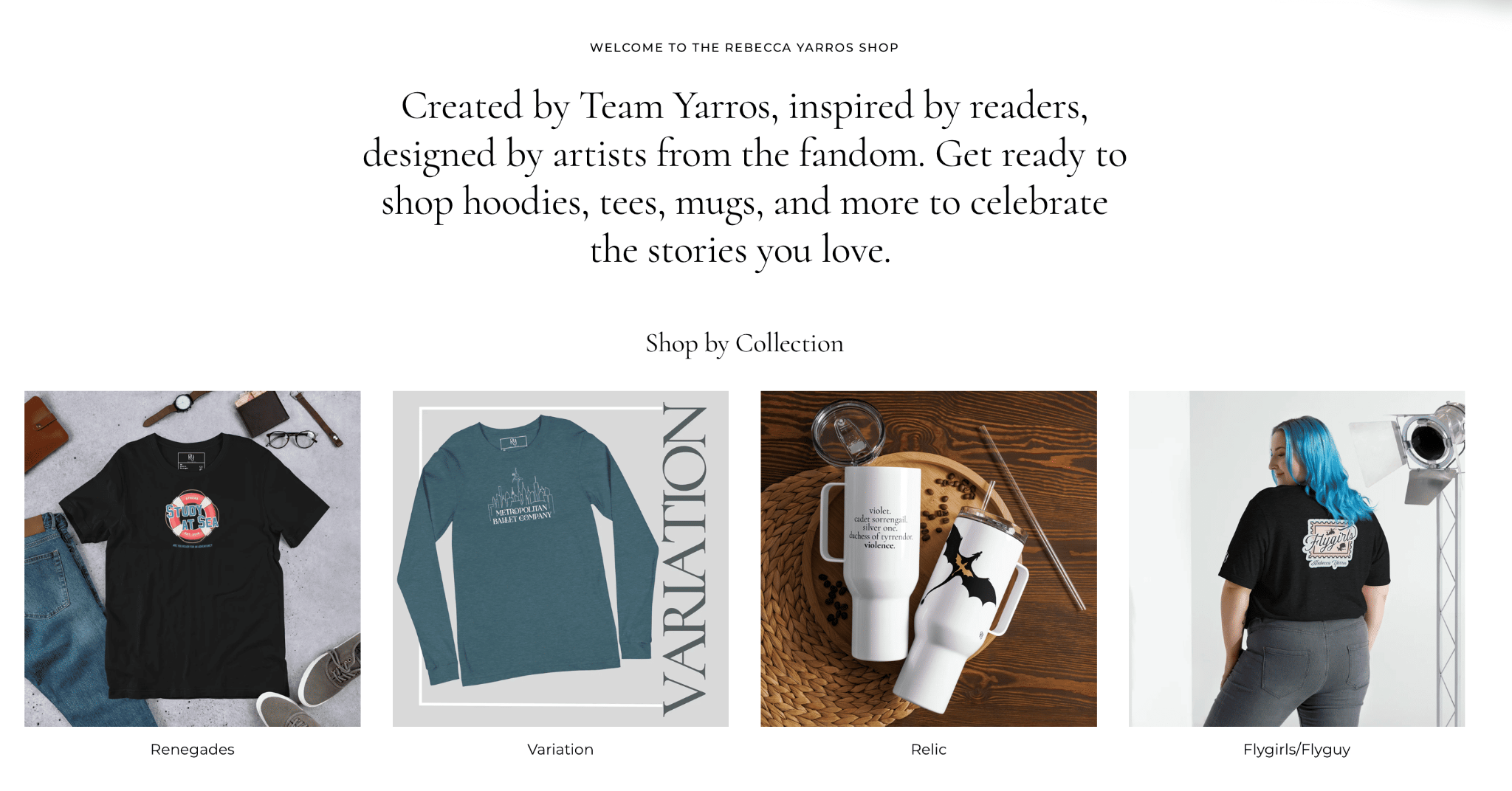
For example, Rebecca Yarros has created a separate online store for merchandise related to her Empyrean fantasy book series:
Source: Yarros Shop
11. Run paid ads

Running paid ads is an optional strategy, and it can’t replace your organic growth. But it can bring you extra exposure and become an effective promotional channel.
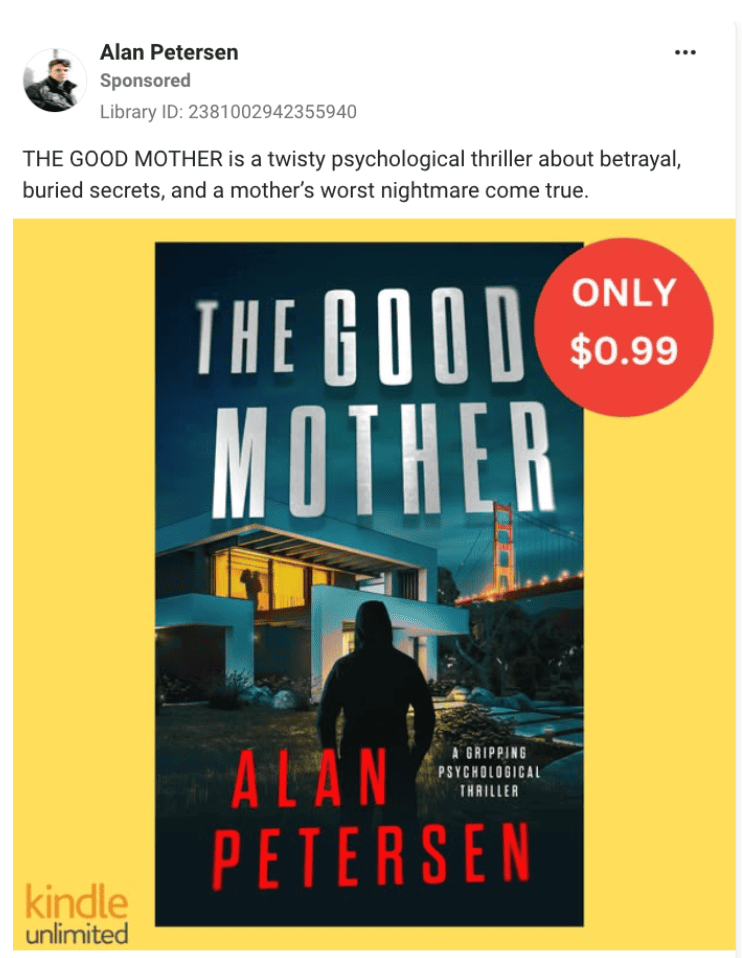
1. Facebook Ads
Facebook Ads allow you to target readers based on their interests, demographics, and reading habits.
They work particularly well for reaching readers of specific genres and promoting new releases or discounts.
Source: Alan Petersen
2. Instagram Ads
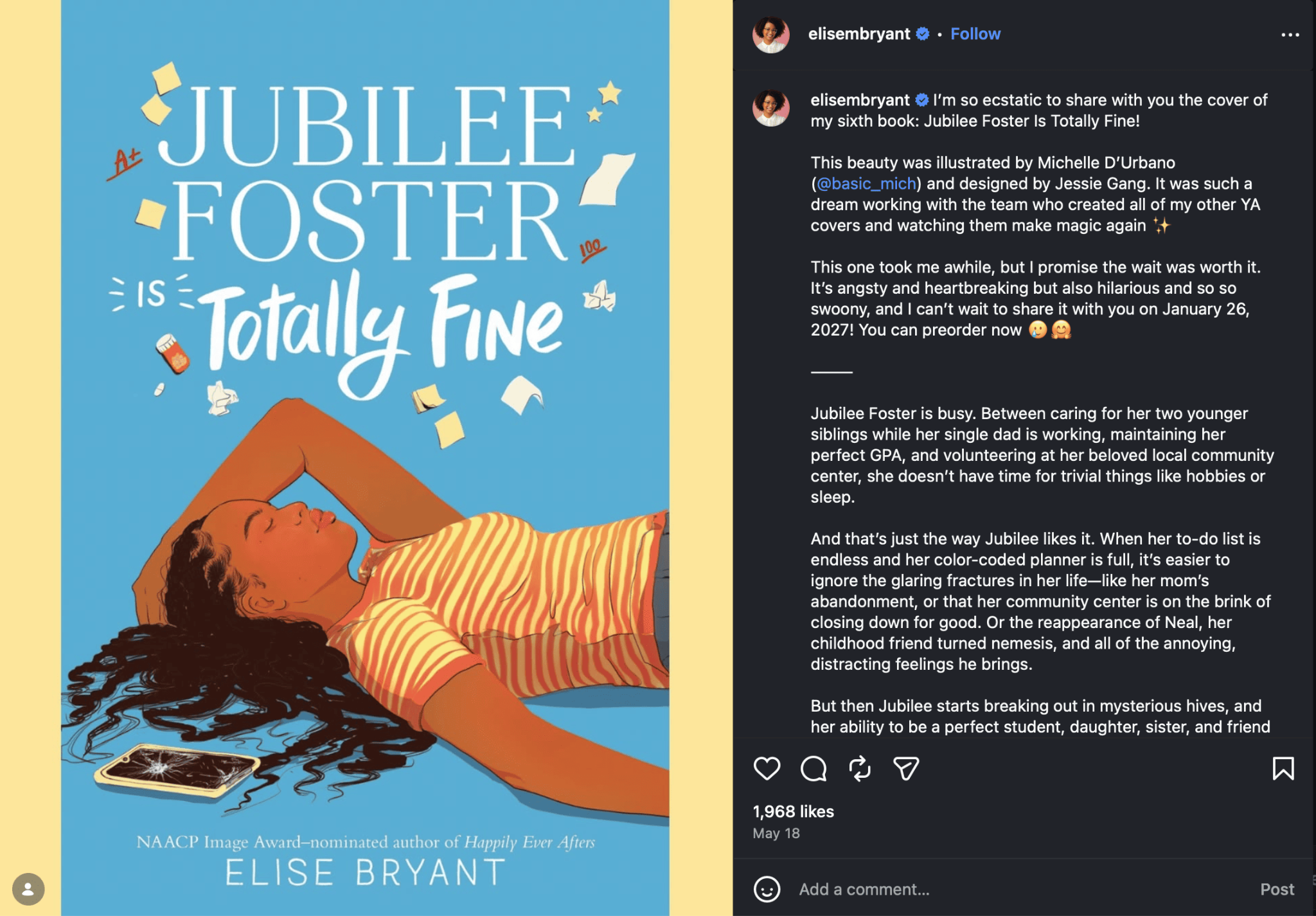
Instagram Ads can be similar to Facebook Ads, but the content should be more visual. Create eye-catching graphics, short videos, or Reels that match the style of the platform.
Remember to adapt your message to Instagram's audience rather than simply reposting the same content.
Source: Elisem Bryant
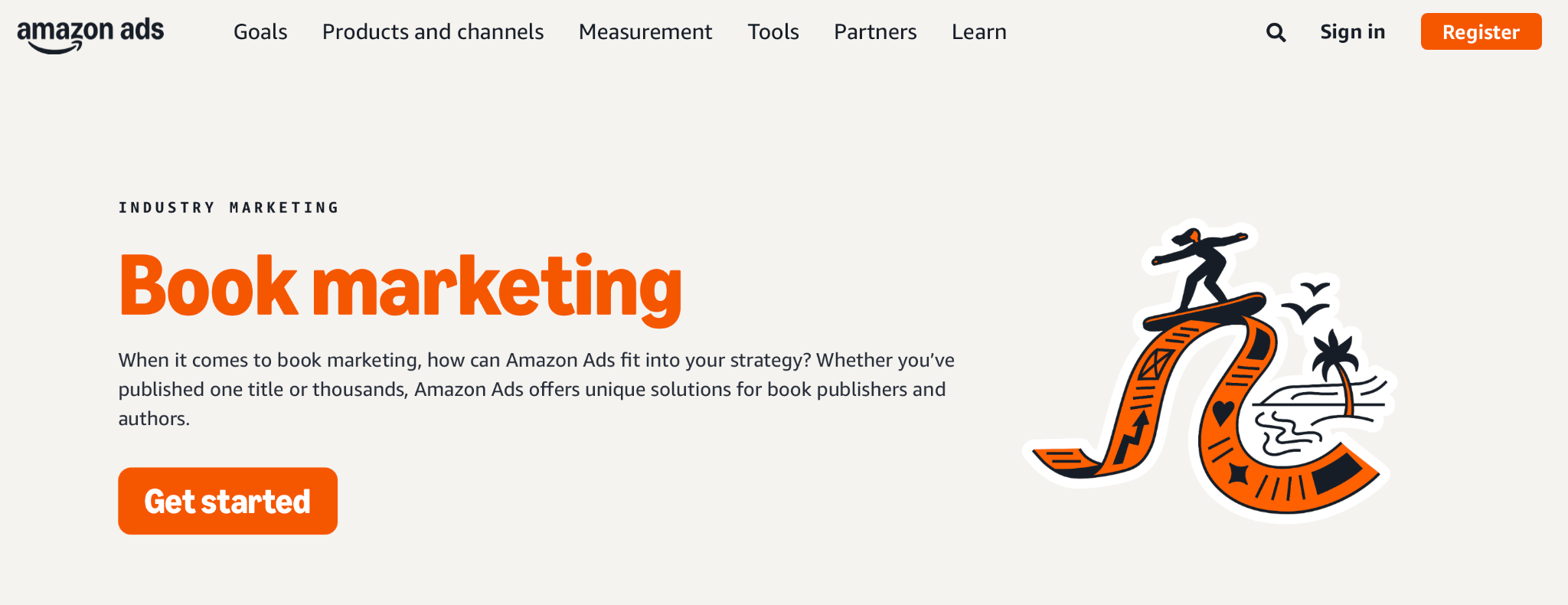
3. Amazon Ads
Source: Amazon Ads
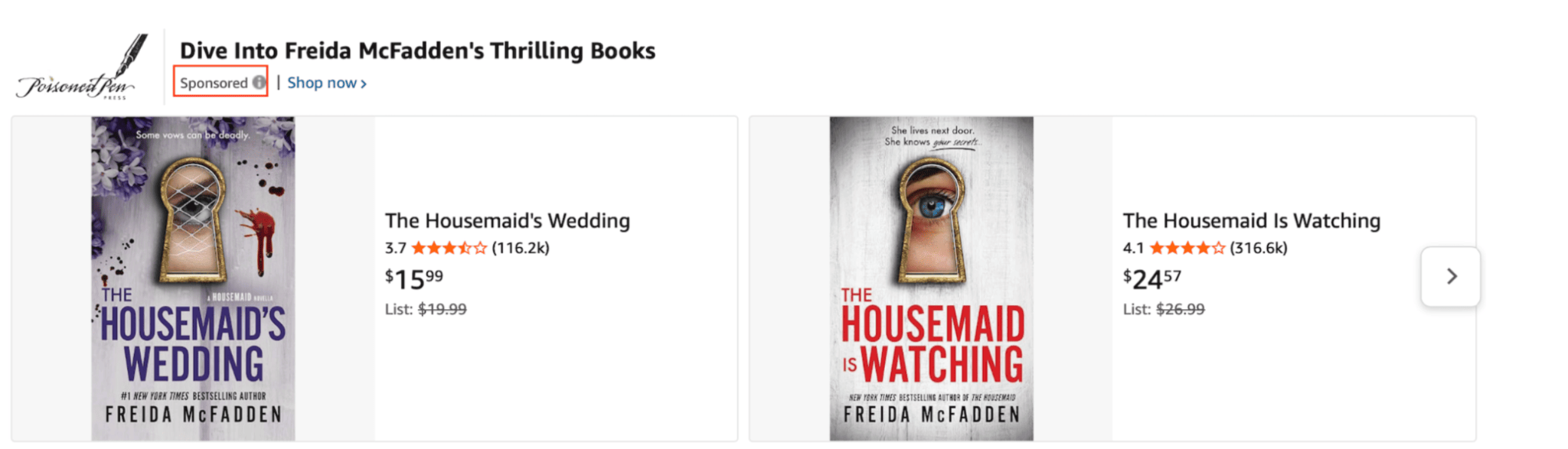
Amazon Ads can appear in Amazon search results or on product pages for similar titles. This makes them a powerful way to reach people who are ready to buy.
Conclusion
All of these strategies require hard work and time. They can sound overwhelming or even impossible at first.
But think about the process of writing your book.
We're sure it wasn't easy. It took lots of work as well. There were ups and downs. You probably edited the same pages again and again before you were happy with the result.
Marketing your book takes the same kind of effort.
Even the best book won't become successful if nobody knows it exists.
You've already done the hardest part. Don't stop now. Put in a little more effort to help your dream become a reality.
And as we've mentioned throughout this guide, don't try to do everything at once. Start by building a foundation, then slowly add new strategies. Experiment. Find what works best for you, your audience, and your book.
FAQ
1. How much does it cost to market a self-published book?
There isn't one fixed budget for book marketing.
Many authors begin with free marketing methods before investing in paid promotion. That can be:
- Social media,
- Blogging,
- Networking,
- Email marketing.
Others invest thousands of dollars in ads, PR, and promotional campaigns.
The right budget depends on your goals and your abilities. If you're just starting, focus on free marketing strategies first. And then gradually increase your budget as your book starts generating sales.
2. When should I start marketing my self-published book?
The earlier, the better.
Ideally, you should start marketing your book a few months before publication. This gives you enough time to build anticipation, grow your audience, and collect email subscribers before launch day.
Even if your book isn't finished yet, you can already share your writing journey and start building your audience.
3. How long does it take to market a self-published book?
Book marketing isn't something you do only during launch week.
It usually takes months, and sometimes even years, to build a loyal audience.
The good news is that every marketing effort can continue bringing results long after you publish it. That's why consistency is usually much more important than trying to go viral overnight.
4. Can I market a self-published book without social media?
Yes. Social media is a powerful marketing channel, but it's not the only one.
You can reach readers through SEO, your website, email marketing, podcasts, etc.
Some authors even build successful careers without being active on social media at all. The most important thing is choosing the channels where your readers already spend their time.
All trademarks, logos, images, and materials are the property of their respective rights holders.
They are used solely for informational, analytical, and review purposes in accordance with applicable copyright law.


 Sign Up
 Sign Up