





How to Write a Press Release in 2026: 6 Real Examples That Worked
Press releases are tricky PR materials. You write a solid text, send it to twenty journalists, refresh your inbox instantly, and finally get no replies.
Many people take it as a personal failure. But it’s how the system usually works. Journalists still rely on pitches and media kits as resources for their articles. At the same time, they reject most of them simply because they don't match their tone of voice or audience. That means the press releases still work, but cold outreach in most cases doesn't.
In this article, we break down what a press release actually is, what the current data says, and how to write a well-structured press release. Also, we analyze 6 real examples showing exactly what worked in each one and what you can take from it for your own campaigns.
What a press release actually is and why it still matters
A press release is a short, factual announcement of company news, sent to journalists or editors, that could be easily turned into an article without asking follow-up questions.
Previously, press releases used to exist for journalists only. Now they're also surfaced by search engines and AI systems and become a good source for AI answers too.
What the data says in 2026
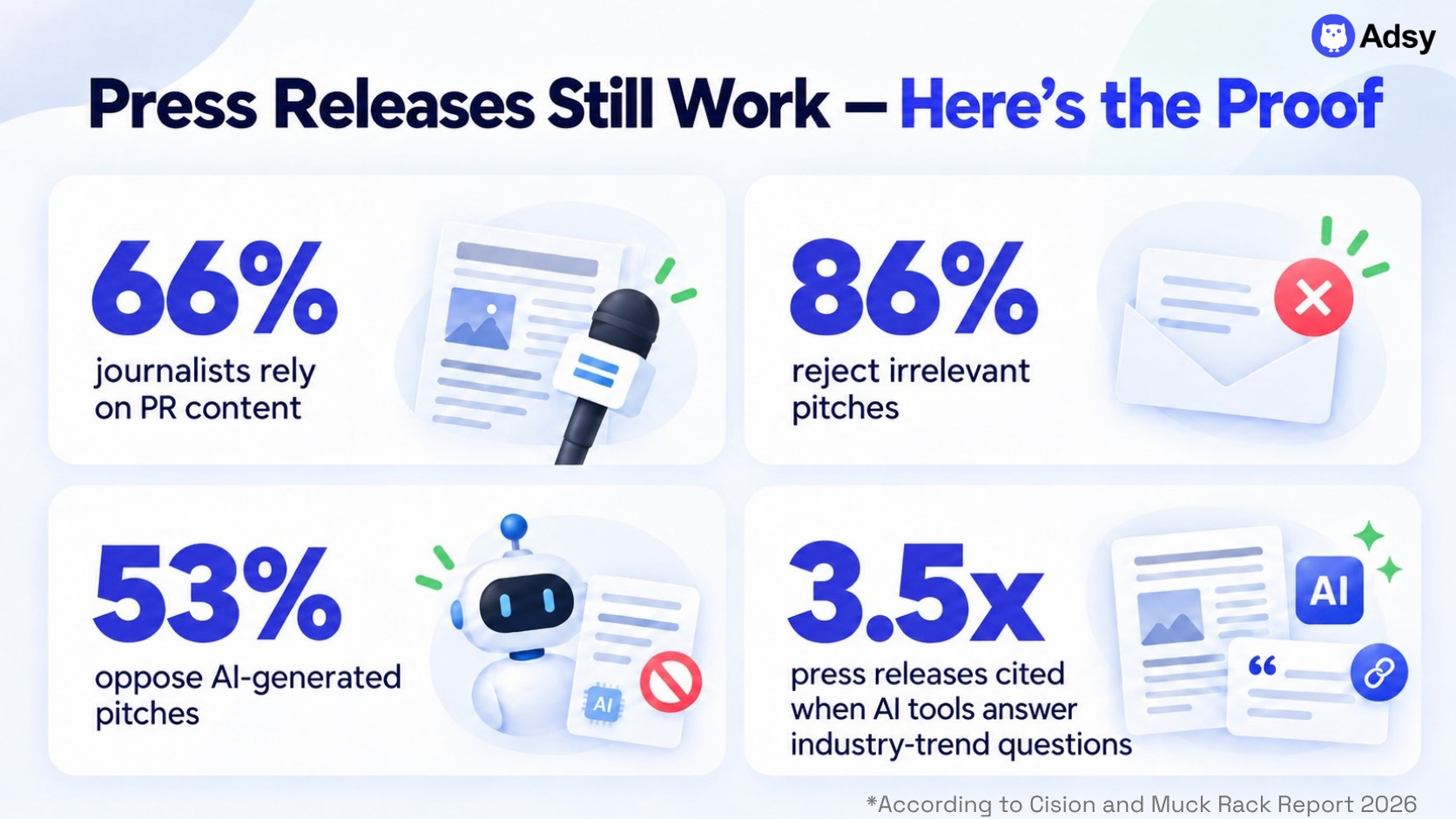
- PR is the leading source of article ideas. 66% of journalists say they rely on press releases, pitches, and media kits to find stories, according to Cision's 2026 report.
- AI-generated press releases are not welcomed. 53% of journalists actively oppose AI-generated pitches because of a lack of personalization and accuracy, according to the same report.
- Relevance is what matters the most. 86% of journalists say they will skip pitches because they don't fit their audience.
- Press releases are specifically cited by AI answers. It shows up almost exclusively when AI tools answer industry-trend questions, approximately 3.5 times higher than in "best-of" style queries.
How to write a well-structured press release
The press release has to be 400–700 words. Moreover, editors may only read to the middle, so the most essential information needs to be written in the first half.
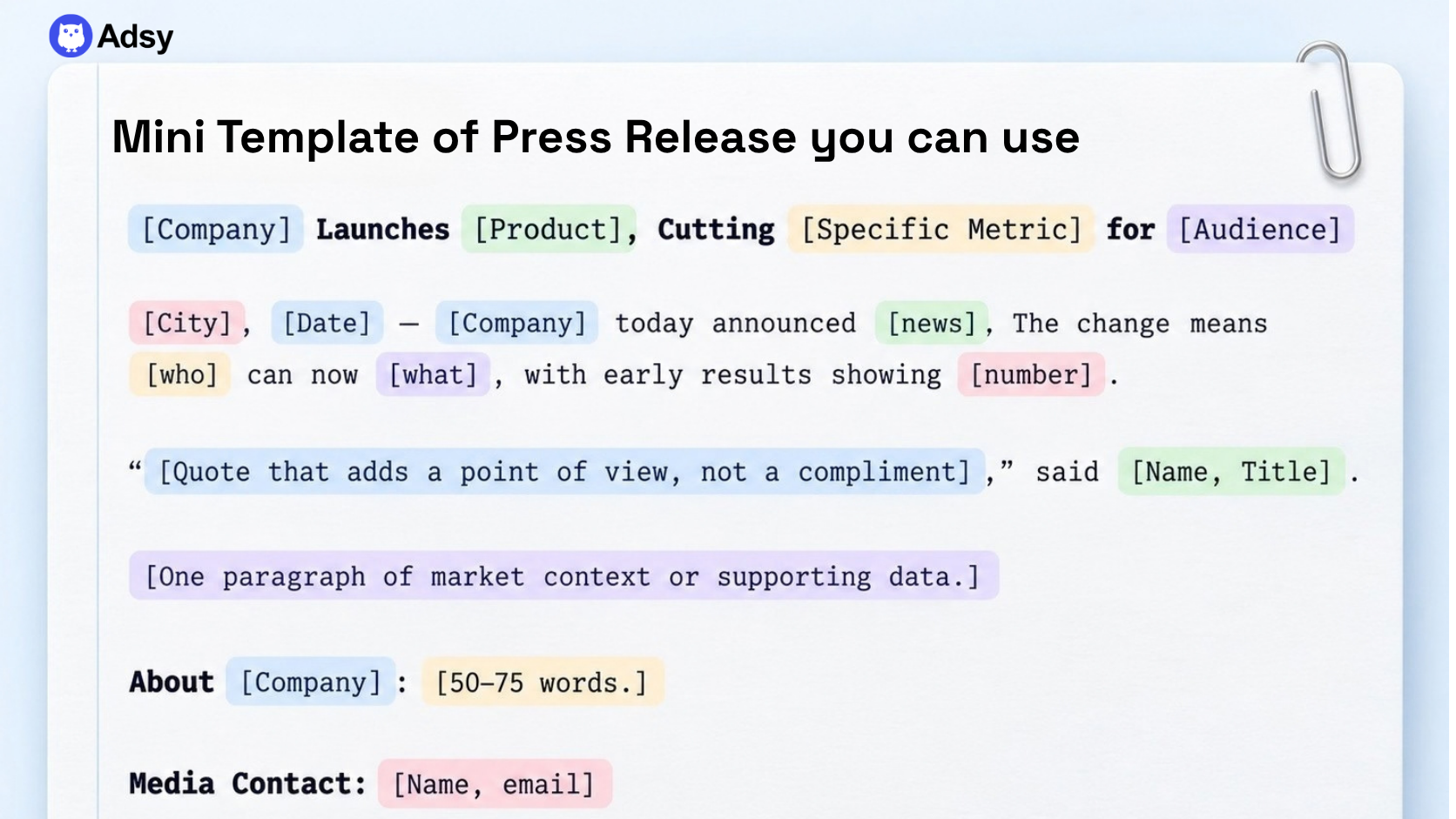
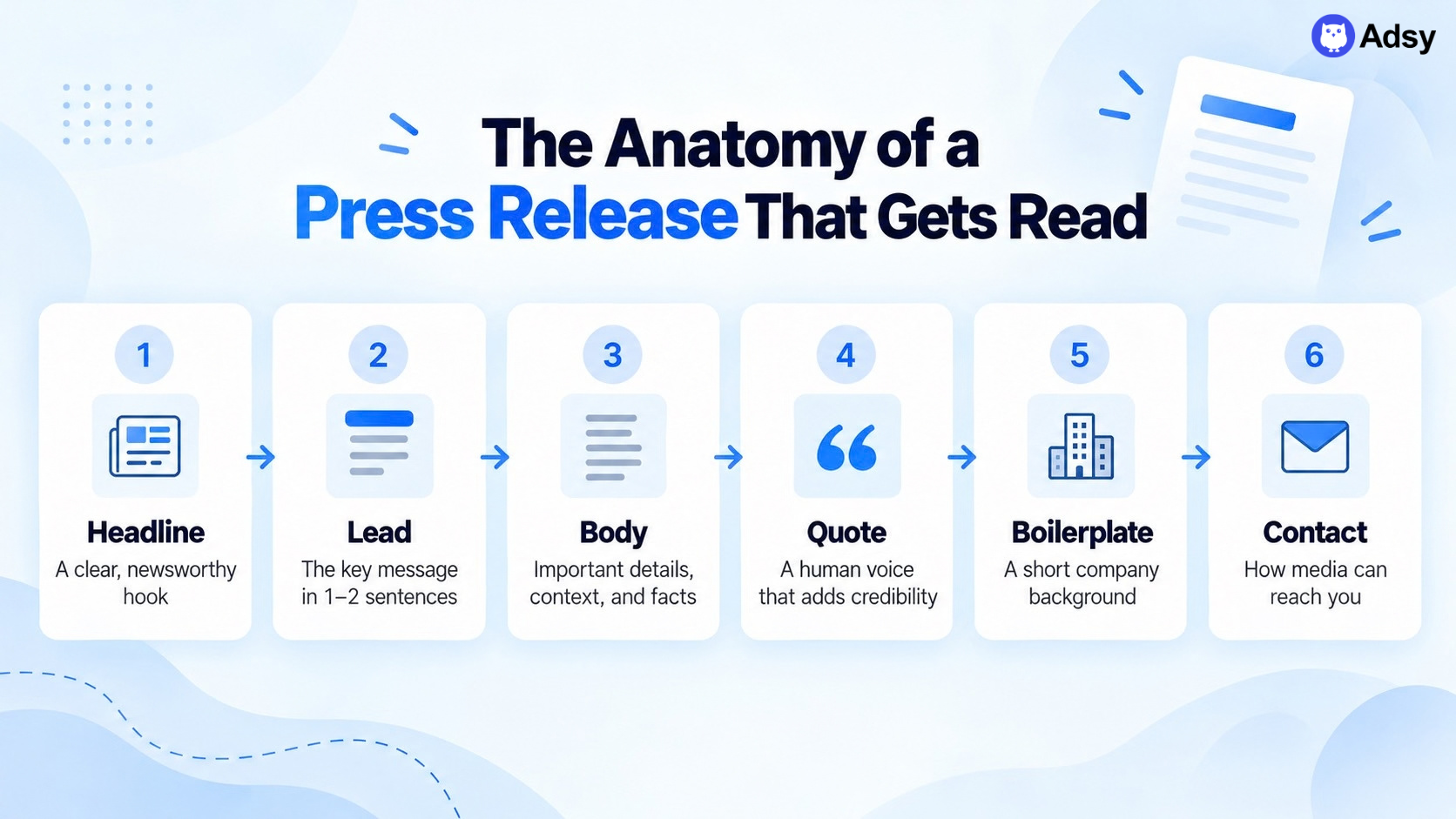
1. Headline. Focus on the outcome and cite facts or authentic data. The headline should demonstrate the most valuable information first. For example:
- "Company announces the new chapter." doesn't show what actually happens and will probably be skipped.
- "Company Raises $15M to Expand Into New Markets" might be more interesting for journalists, and they decide to get more information.
2. Lead paragraph. In the first paragraph: Who, What, When, Where, and Why in the first 30–50 words. The more engaging it is, the more likely your press release will be read.
3. Body. Here, give more details, context, or data.
4. Quote. For example, you can give the CEO's quote for personal engagement or cite facts and numbers with bullet points.
5. Boilerplate. 50–75 words about your company or brand: who you are, who you serve, and where you operate.
6. Media contact. Don’t forget to add contact information with a real name and email. It sounds obvious, but you will be surprised how many people still use "press department" in the signature.
6 Recent press release examples to inspire your next campaign
Press releases are not always about huge announcements. It could be a small update with a clear explanation of why it matters, a meaningful number, a change in the market, a solution to the problem, or a result that can be compared with something that already exists.
The six examples below show different types of press releases: a product launch, a funding round, an award, a сompany acquisition, a rebrand, and a partnership. We analyze each of them and highlight what you can learn from it and borrow for your own press releases.
1. A product upgrade from Apple
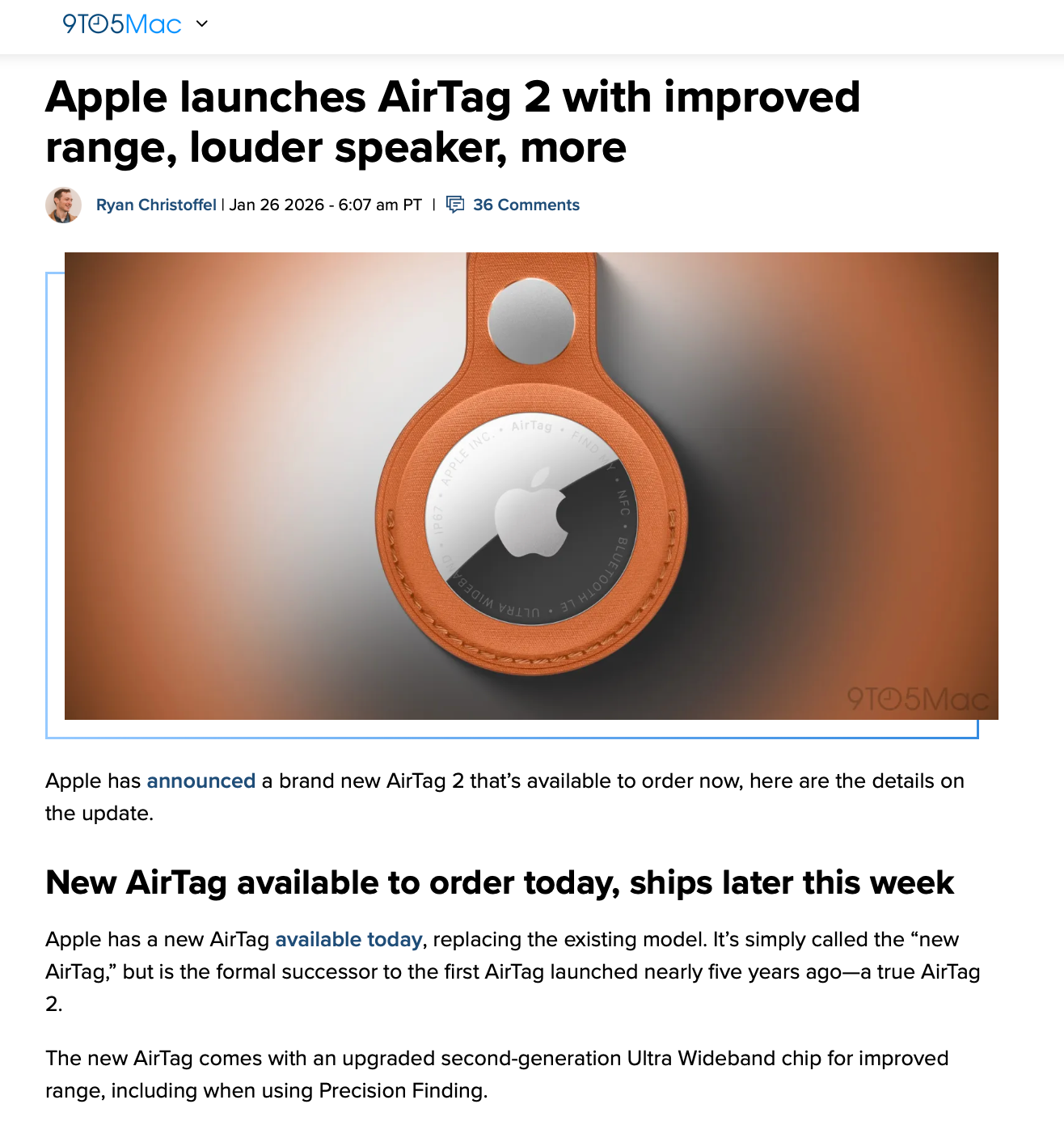
The announcement: Apple introduced a new generation of AirTag.
Where it was covered: 9to5Mac
Apple had a problem that many companies would recognize. Their product update is not automatically a story. The original AirTag was presented in 2021. That is why “Apple updated AirTag” could easily have been missed under bigger Apple announcements.
They gave a very simple answer to the question their readers would probably ask: “What is actually better about the new one?”
Source: 9to5Mac
The headline gives practical improvements using such words as “louder” and “improved range”, while the body paragraphs contain the details about what was changed exactly, cite numbers, give the information on how much it costs and how you can get it.
What you can copy
Use the same structure for any launches or product updates. Just give why it is better than a previous version, how much time it saves, or how it improves the overall usability. For example:
Don't write: “Our platform was redesigned to give you a better experience.”
Write: “The new design saves up to 30 minutes every day.”
2. A funding announcement from Anthropic
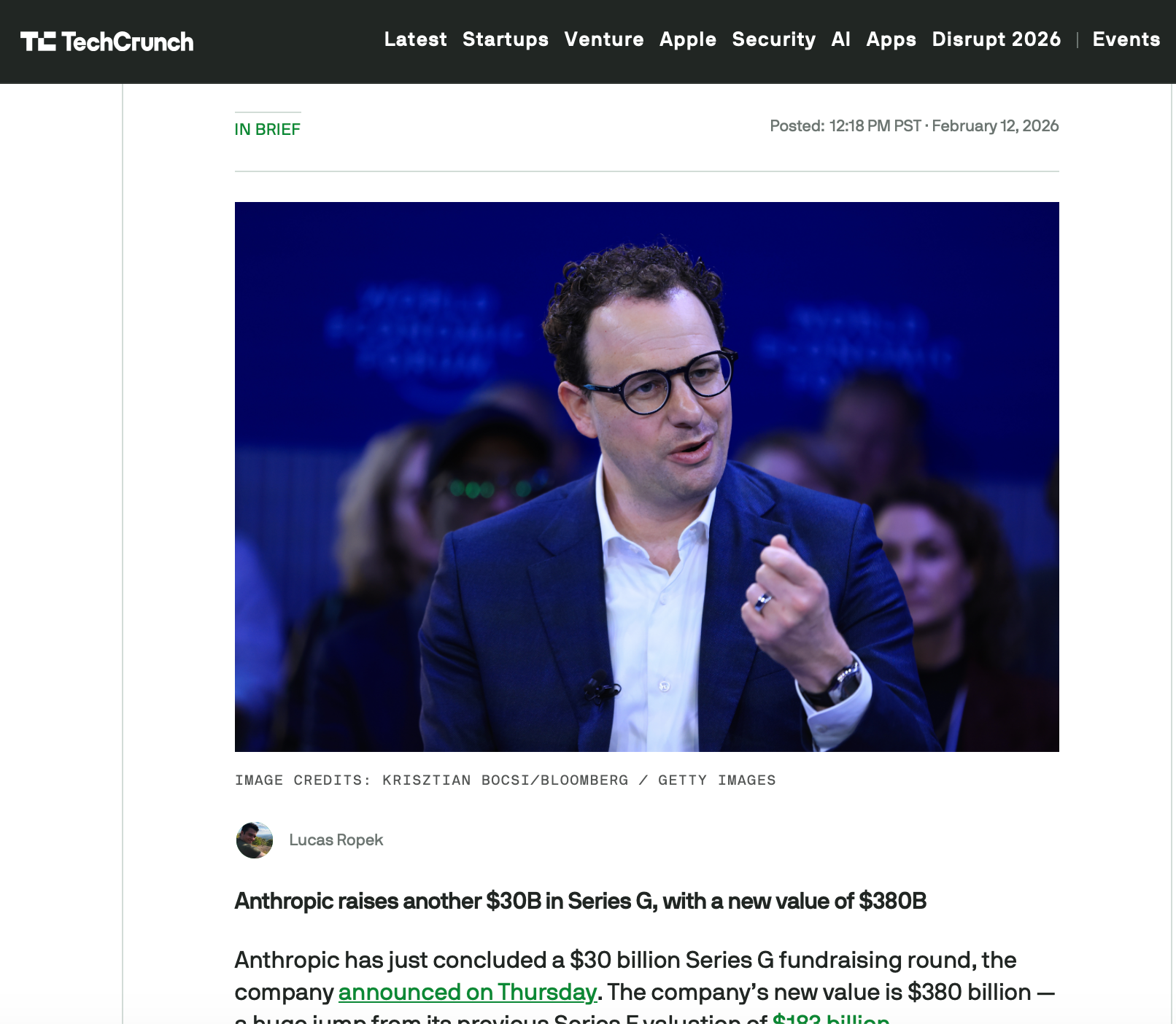
The announcement: Anthropic announced a $30 billion funding round
Where it was covered: TechCrunch
A huge deal with such numbers is already a big headline. But the question is: “Why is this company worth that much?”
Source: TechCrunch
Anthropic's press release includes growth metrics, customer data, and quotes from Anthropic’s CFO and its investors. It helps to give context and explain the impact it would have on the industry.
It was no longer: “Anthropic raised a lot of money.”
It became: “Here is the evidence why investors and customers value the company so much.”
What you can copy
When you’re writing a press release, ask one simple question: “What would a journalist ask me immediately after seeing this number?”
For example:
- Raised $1 million? Explain where it is going.
- Grew revenue 180%? Explain what drove the growth.
- Signed 200 new customers? Explain what changed in the product or market that made that possible.
3. An award announcement from Ogilvy
The announcement: Ogilvy was named Network of the Year at the 2026 Cannes Lions International Festival of Creativity.
Where it was covered: Adweek
Awards are not so easy to announce, because they often sound like an ad or self-promotion.

Source: Adweek
That is why Ogilvy reported the total number of Lions and added the number of offices contributing to the work. They also describe the winning campaigns and explain what those campaigns actually did.
What you can copy
If you have an award, certification, or milestone, don't just tell people that you won. Describe the winning projects, give some numbers, and explain what makes the result unusual. It helps to build a story people want to share and talk about.
4. Company acquisition announcement from Salesforce
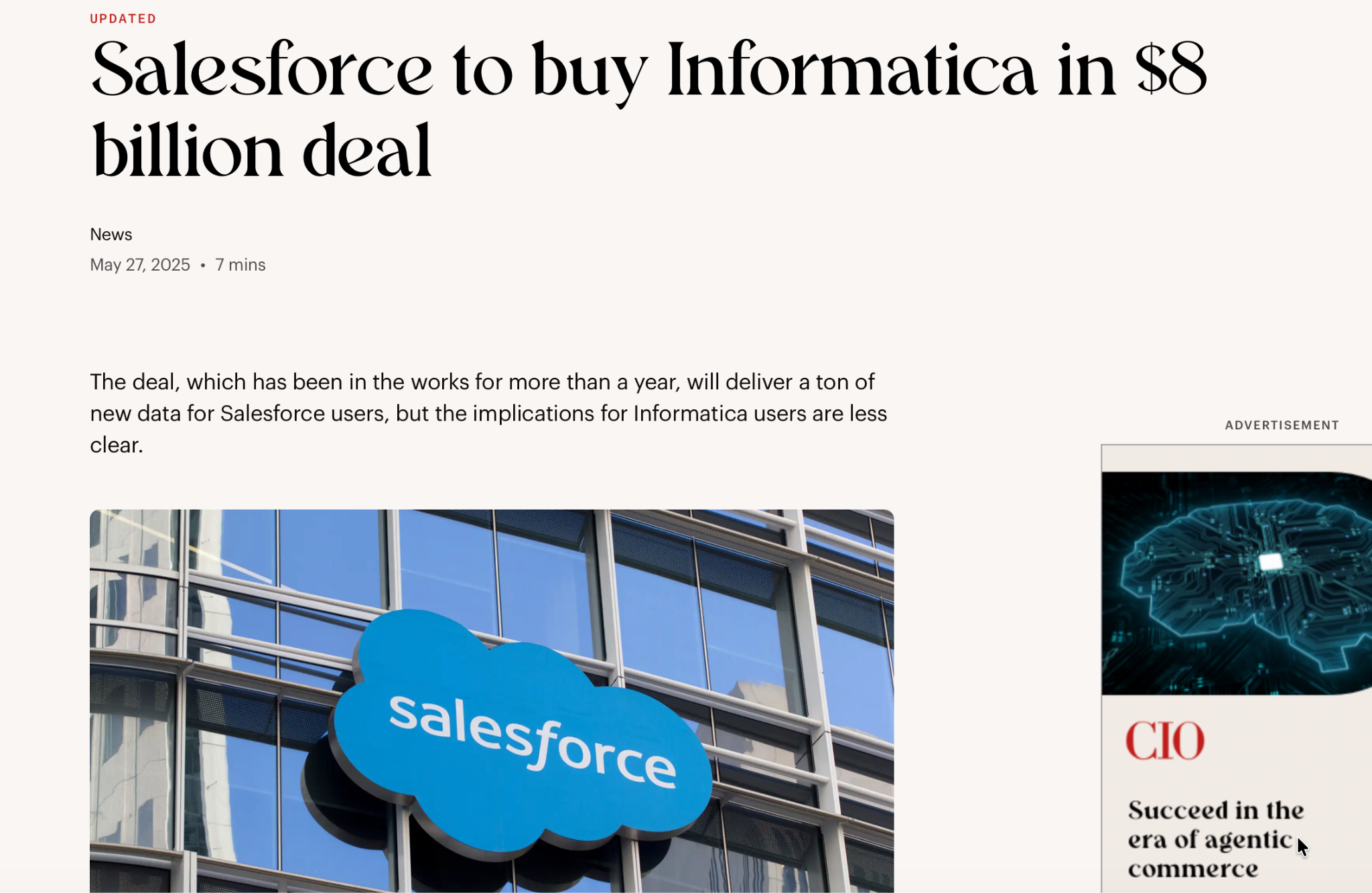
The announcement: Salesforce bought Informatica for approximately $8 billion.
Where it was covered: CIO
These types of announcements usually contain a lot of numbers, legal terms, and corporate language, but it’s hard to understand why the deal matters.
Source: CIO
Salesforce's press release describes the deal value and immediately explains the strategic purpose: the acquisition would strengthen its “trusted data foundation” for agentic AI. It makes the press release a more reader-friendly business story with the logic behind it.
What you can copy
This approach works for small partnerships too. Explain the deal in simple words without industry vocabulary and help readers understand why it matters.
For example, don't write: “Company A and Company B are excited to announce a strategic partnership.”
Explain what it changes: “Company A will use Company B's technology for detecting suspicious payments.”
5. A rebranding from PepsiCo
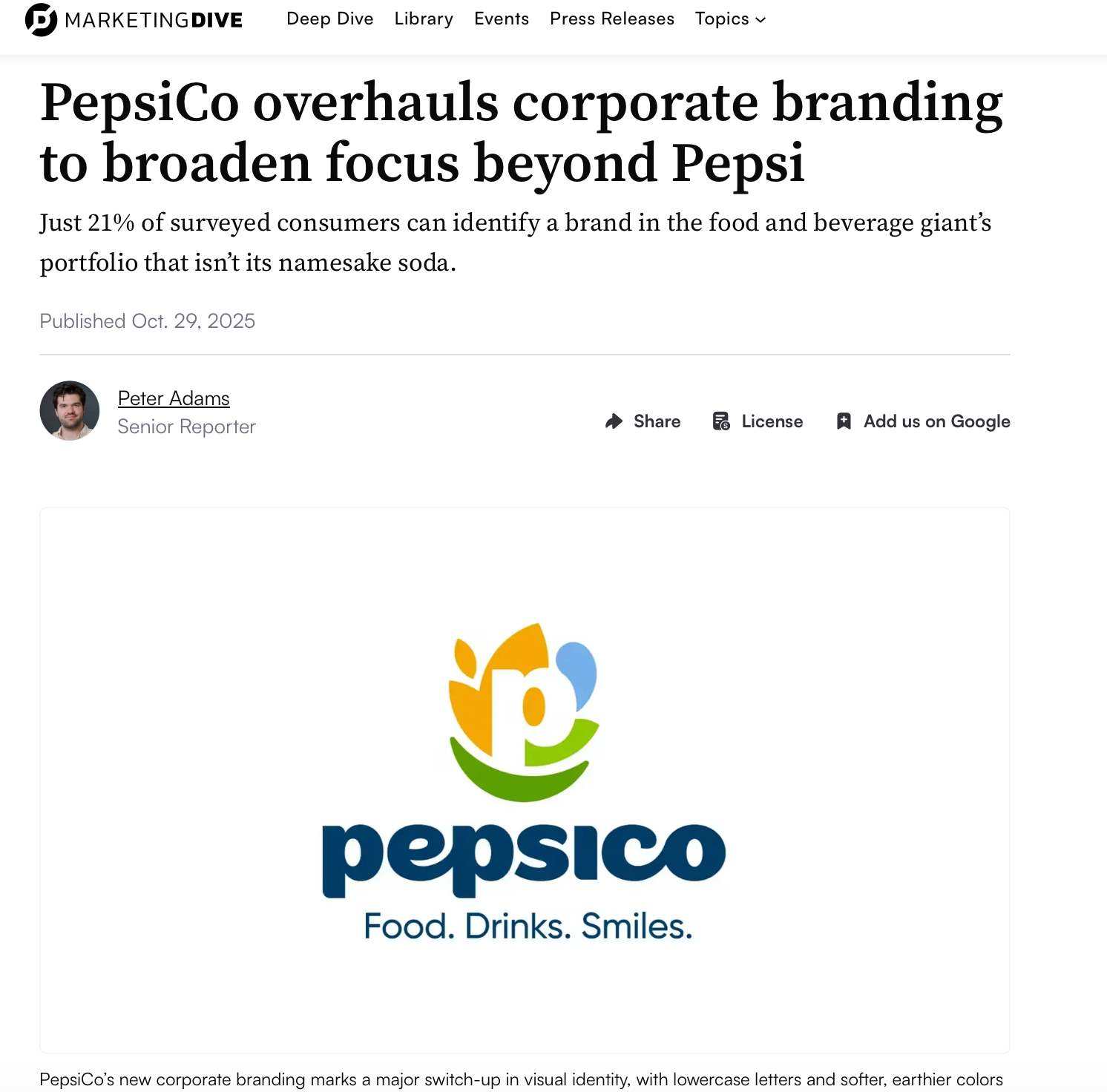
The announcement: PepsiCo introduced a new corporate brand identity.
Where it was covered: Marketing Dive
Such news usually sounds like advertising that is interesting only for the team that created this new logo or new identity.
Source: Marketing Dive
PepsiCo chose a different strategy. The company said that it has more than 500 brands, but only 21% of surveyed consumers could name the other brands except Pepsi. Instead of just describing a new logo, they pointed to the brand problem and explained how they want to solve it.
Many companies have the same problem in miniature. They announce the solution before explaining the problem. While journalists often need the problem first.
What you can copy
If you are announcing a rebrand, website redesign, new positioning, or new product, ask: What problem forced us to make this change?
Instead of: “We have redesigned the website and created a new logo.”
Try: “Customers don’t understand the positioning, so we rebuilt the site around a three-step buying process.”
When the redesign or rebranding has a reason, that is much easier for a journalist to explain to readers.
6. A collaboration from Nike × SKIMS
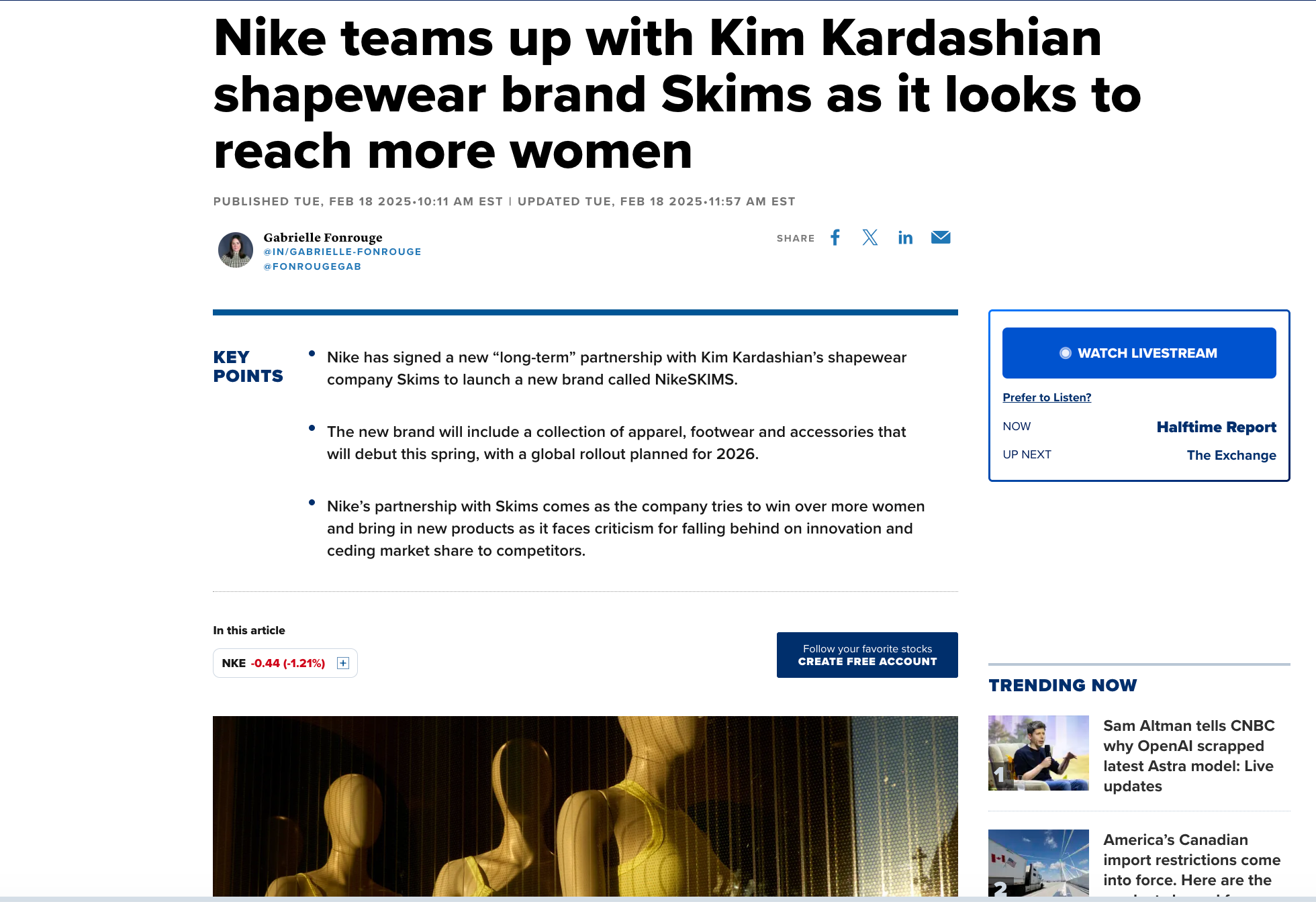
The announcement: Nike and SKIMS announced NikeSKIMS, a new women's activewear brand, in February 2025.
Where it was covered: CNBC, among other business and retail outlets.
This example works differently from the others. The press release did not need to convince the media that Nike or SKIMS was interesting, because both names were already recognizable.
Source: CNBC
But even in this situation, the press release still has to answer three basic questions:
- What are they launching?
- Why are these two companies doing it together?
- When can people actually see or buy it?
Nike described NikeSKIMS as a new brand combining its sports-performance and athlete expertise with SKIMS' focus on fit and the female body. The release also explained what the new brand would sell and when the first collection would launch.
That gave the journalists something useful beyond celebrity names or brand recognition.
What you can copy
The lesson is to explain the reasons for collaboration. For example:
- SaaS company partners with an accounting platform — explain what the customer gets.
- Local restaurant partners with a food producer — explain what is changing.
- A startup partners with a university — explain the reasons and possible outcomes.
Give journalists and readers the reason for this collaboration they could clearly explain to someone else.
Why journalist outreach so often goes nowhere
Outreach is the most annoying part of digital PR. Building a media list, personalizing every email, waiting, following up, explaining relevance. It may take days of work per release with no guarantee of a reply.
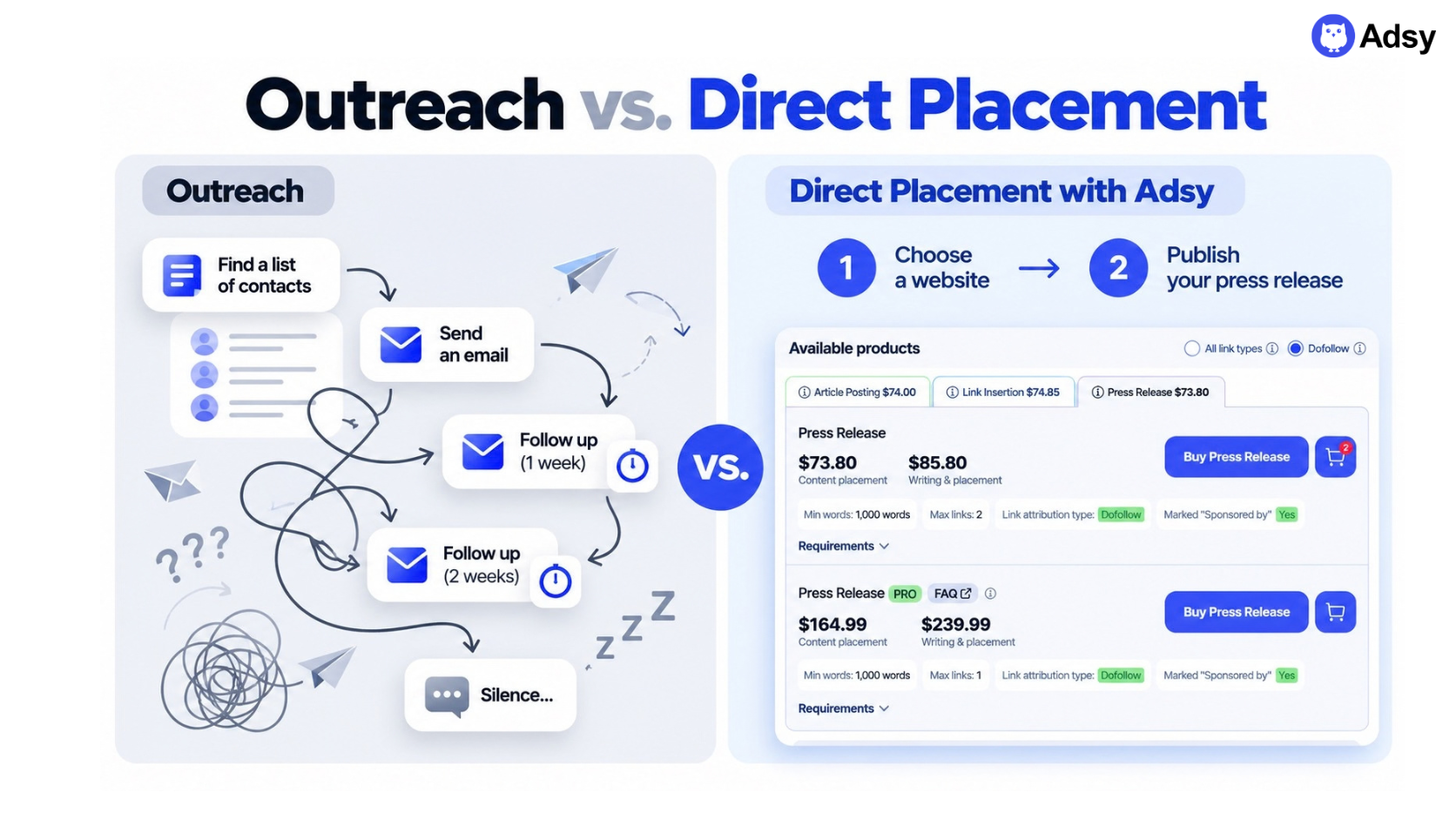
There's a more direct route: instead of pitching journalists one by one, publish your press with Adsy. It allows you to skip the pitching and follow-up emails. All you need to do is choose the right outlet using more than 20 advanced filters, including Category, Country, Language, Organic Traffic, and place your news there directly. We already described how it works in our product update article.
How to place a press release with Adsy
Placing press releases with Adsy is a faster, more controllable way to appear on relevant sites. But note that you still need to have independent, well-sourced news with real numbers. Use our platform to skip compiling media lists, writing outreach pitches, and waiting for responses from editors that may never come.
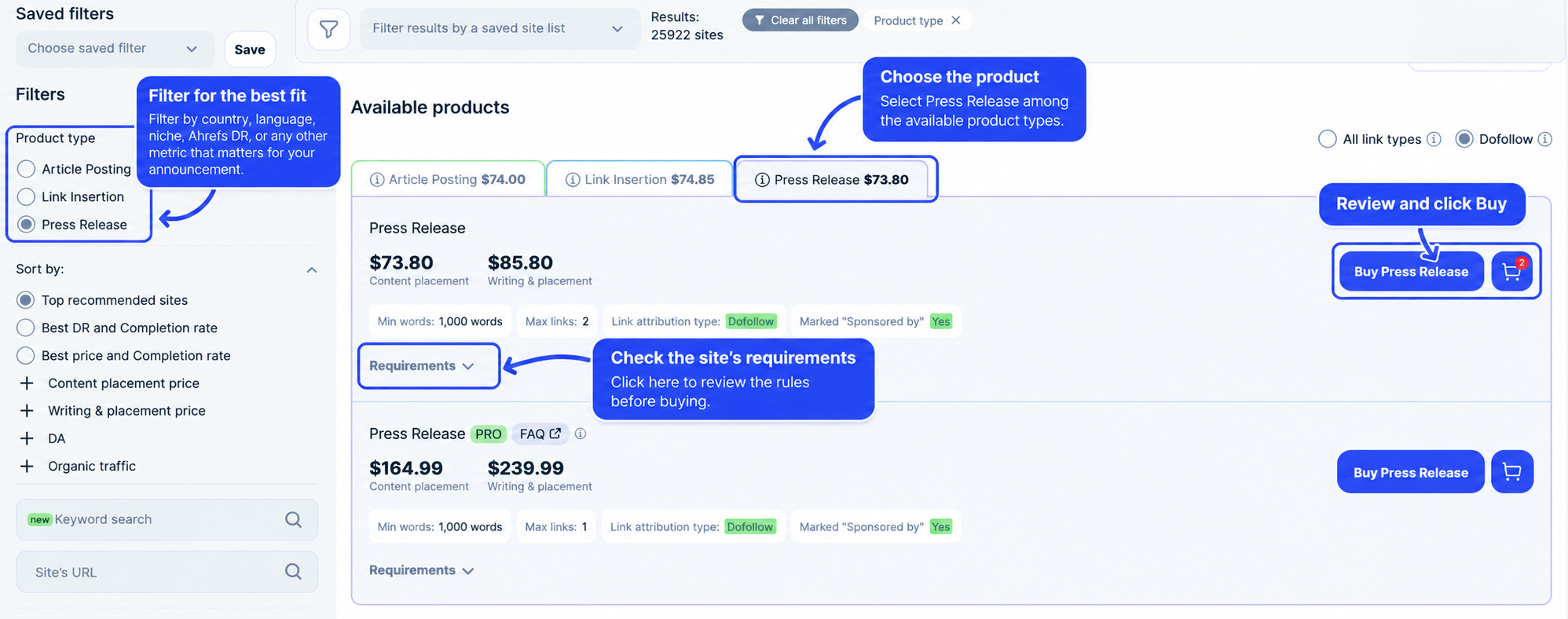
How it works?
- Choose the product. Select Press Release among the available product types.
- Filter for the best fit. Filter by country, language, niche, Ahrefs DR, or any other metric that matters for your announcement.
- Check the site’s requirements. Click the three-dot menu next to a site to review its rules before buying.
- Submit your content. If your press release is already written, choose Content Placement. If not, choose Writing & Placement, and Adsy's copywriters will write it based on the requirements and keywords you provide.
- Add your link. The number of allowed links is shown during the task creation.
- Add a media contact. Putting a real name and email of the company representative adds credibility to your press release.
- Review and click Buy.
Final words
The art of writing press releases is an ability to turn facts into a compelling story that shows a broader picture. Your product update, a funding or M&A announcement, award, or rebranding could engage new audiences and make people talk about you.
All you need is to clearly explain why your news is important for readers and how it changes the market or people's lives. And don’t underestimate the distribution process. Even the most interesting news is worth nothing if nobody sees it. That's where Adsy's Press Release product helps you present yourself loudly and confidently to the media outlets you choose.
All trademarks, logos, images, and materials are the property of their respective rights holders.
They are used solely for informational, analytical, and review purposes in accordance with applicable copyright law.


 Sign Up
 Sign Up