






Inyene Udom: “Focus on Where Engagement Stopped, Not Drop-Offs” & Other Interview Highlights
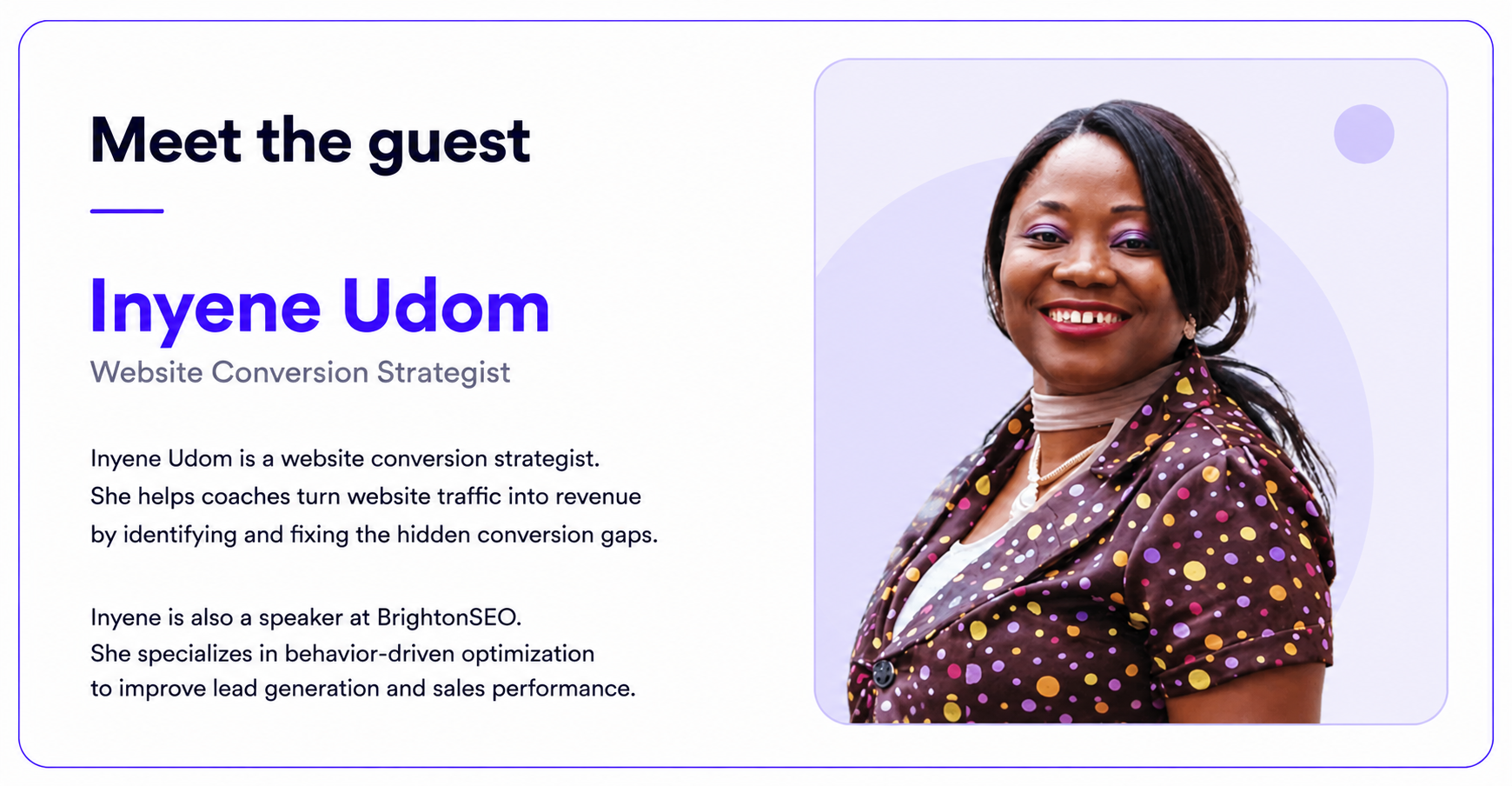
These are highlights from our interview with Inyene Udom. If you have any questions or inquiries, you can connect with her on LinkedIn.
Traffic is up, but leads are flat: What to do? 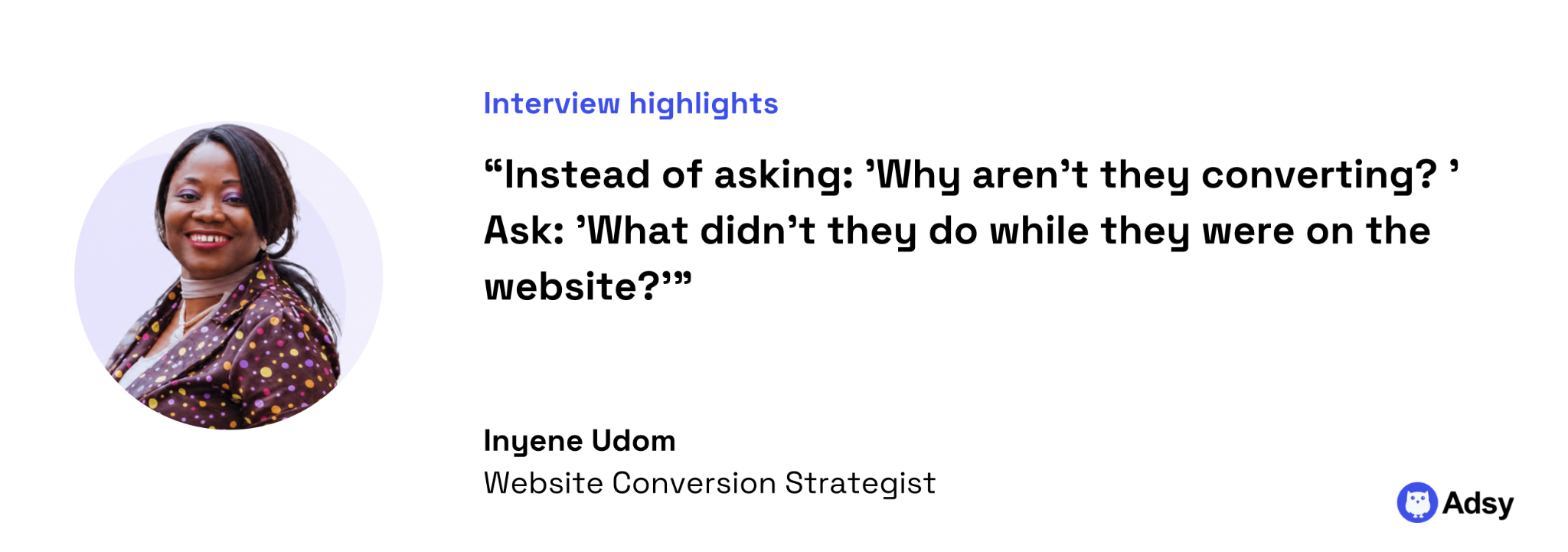
As SEO professionals, we're very good at bringing traffic to websites. But one area that often gets less attention is understanding what people actually do once they get there.
Once you understand what visitors are doing and what they're not doing, you can identify the next opportunity.
Instead of asking: "Why aren't they converting?" Ask: "What didn't they do while they were on the website?" This question reveals where optimization should happen.
Traffic problem vs. a page problem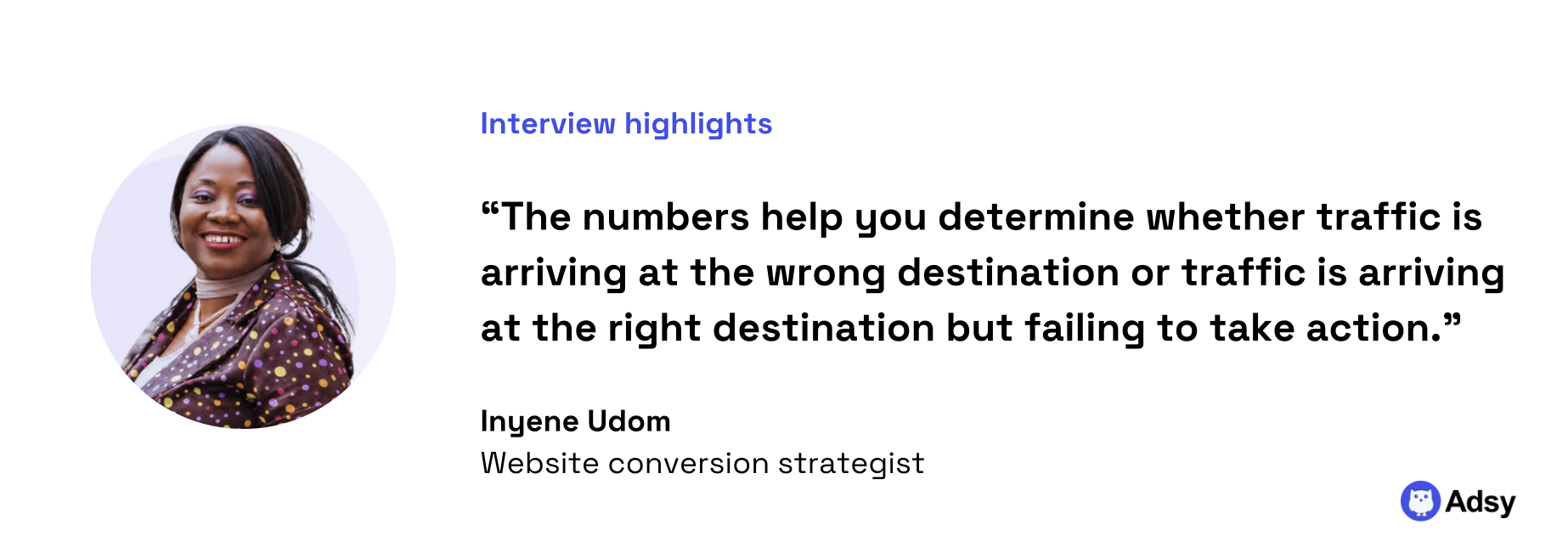
Before you call traffic "wrong," you need to understand what that actually means. Look at where traffic is coming from, which pages are receiving the most traffic, and whether those pages align with your business goals.
Sometimes, the traffic is going to pages that aren't closely related to what you're selling.
Other times, the traffic is reaching the correct pages, but visitors aren't engaging.
The numbers help you determine whether traffic is arriving at the wrong destination or traffic is arriving at the right destination but failing to take action.
Why does the page lose trust in the first 5 seconds?
If visitors can't understand what they want or need from the page in 5 seconds, they'll leave.
Overall, most people leave websites because of alack of clarity or safety.
Users need to see signs that you've thought about them before optimizing the page. When this is missing, the easiest button to click becomes the Back button.
Adapting to AI search
Think of your website's hero section like Google's AI answer. Does it offer an immediate answer? Ask yourself: Can visitors take action before scrolling?
If that’s not the case, your website isn’t doing its job.
The growth strategy now is: Wherever visitors stop, engage them there.
The real story behind drop-offs
Most people focus on the drop-off percentage. I focus on where engagement stopped.
Drop-off doesn't happen first. Engagement stops first. So, instead of asking: Is 25% bad? Ask: Where did engagement stop?
The issue might be:
- Messaging
- Design
- CTA placement
- Speed
- Mobile responsiveness
That's where the real insight lives.
Once you identify the exact point where engagement ended, you can begin improving the experience.
Where should a CTA sit on the page?
Before deciding where the CTA belongs, decide what you're converting. Once you're clear on the conversion goal, CTA placement becomes much easier.
Are you trying to get visitors to:
- Book a call?
- Join a newsletter?
- Buy a product?
The conversion objective should drive the placement strategy.
How to tell if a CTA is too early or too late
Start by looking at visitor behavior. Did they land on the page and leave? Or did they land on the page and scroll down? That's a lot of context.
A generic call to action that is too early doesn't give context or clarity about what happens next when people click it.
People can genuinely feel nervous about clicking buttons. Context provides reassurance.
On the other hand, some websites place CTAs too late. They keep adding information, and more information, until visitors become overwhelmed.
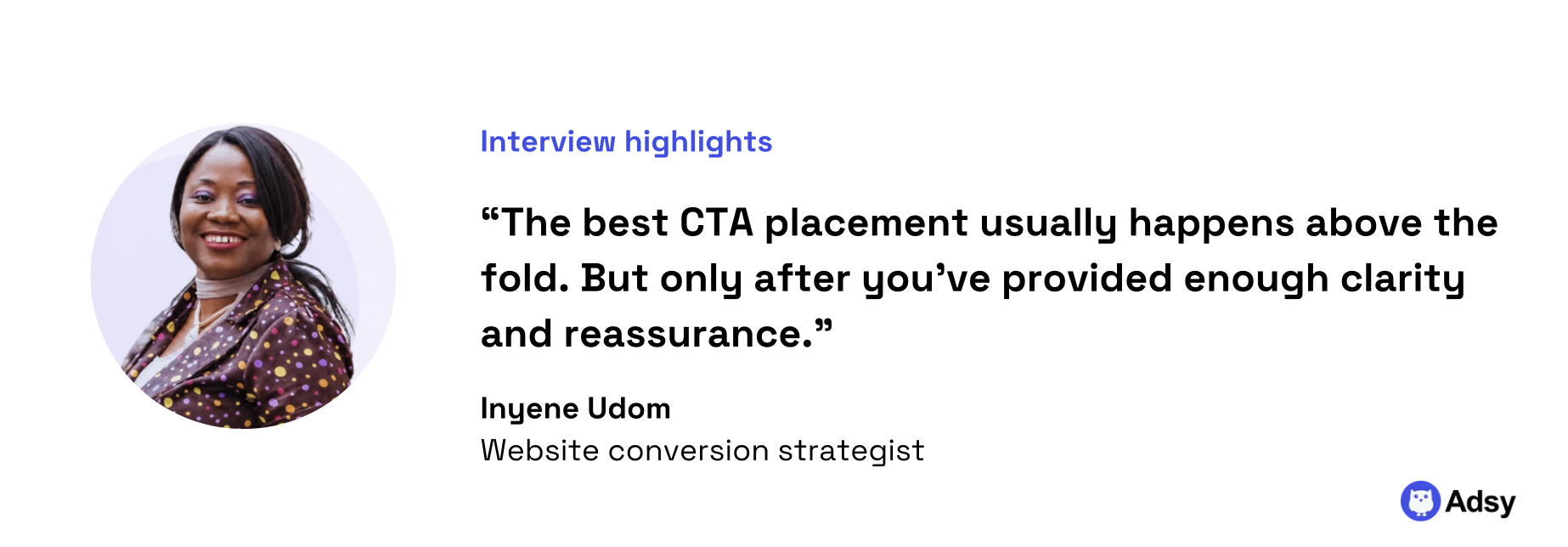
The best CTA placement usually happens above the fold. But only after you've provided enough clarity and reassurance.
Know your audience: mobile or desktop?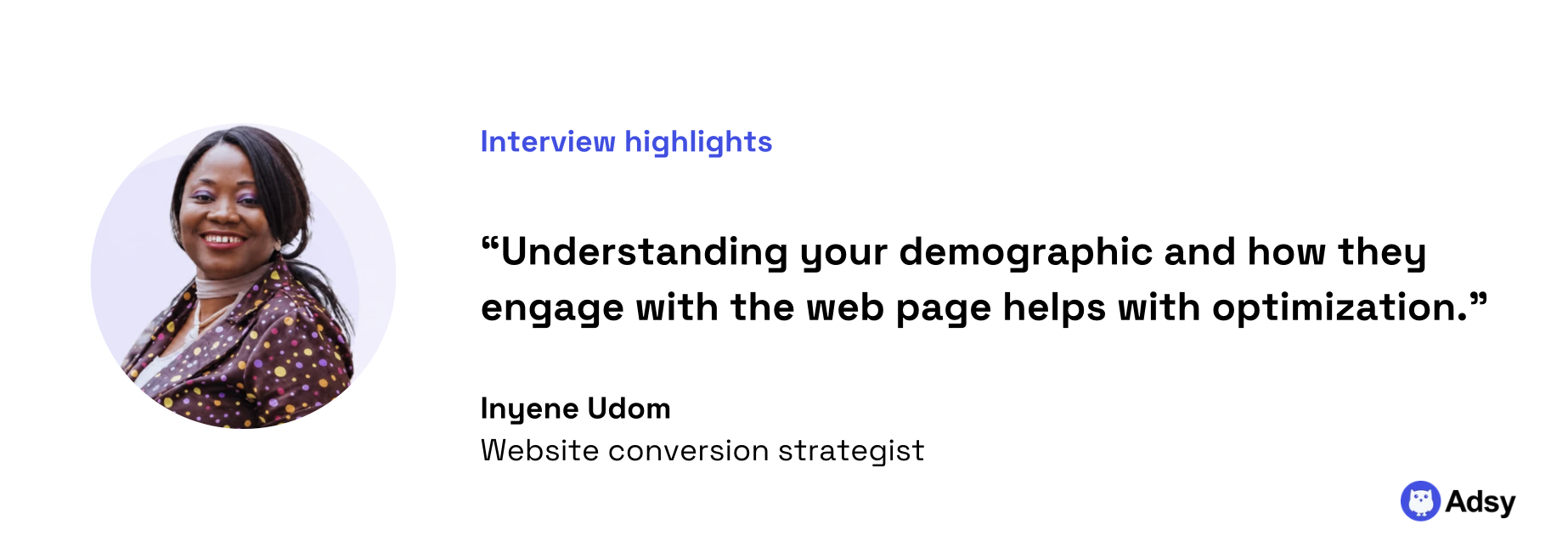
To understand how to approach your target audience, start by asking a simple question: How do they use the internet?
It sounds simple, but it's incredibly important. For example:
- If you're targeting a younger audience, most of their shopping and browsing will likely happen on mobile devices. That tells you what types of features, design choices, and optimizations will appeal to them.
- If you're targeting an older audience, you’ll often see different behavior. They might use their phones to research, browse, or compare options. But when it comes to making a purchase or signing up for something, they often prefer a larger screen.
Understanding your demographic and how they engage with the web page helps with optimization.
Why users don't scroll: intent or first impression?
User intent already brought them to the page. If the page didn't match their intent at all, they probably wouldn't have clicked the link in the first place.
Good SEO aligns search intent and gets the right people onto the page. The problem happens when the page users see doesn't immediately reinforce that intent. When that uncertainty appears, they leave.
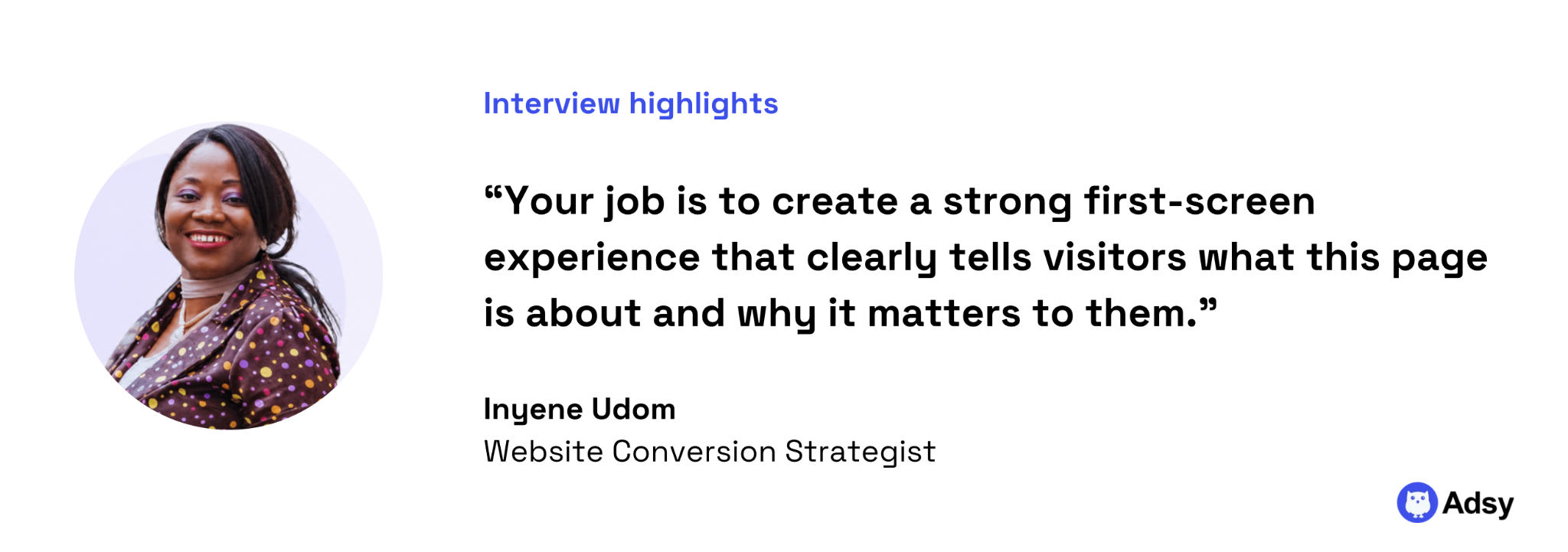
Your job is to create a strong first-screen experience on your website that clearly tells visitors what this page is about and why it matters to them.
Don’t focus on features. Focus on the transformation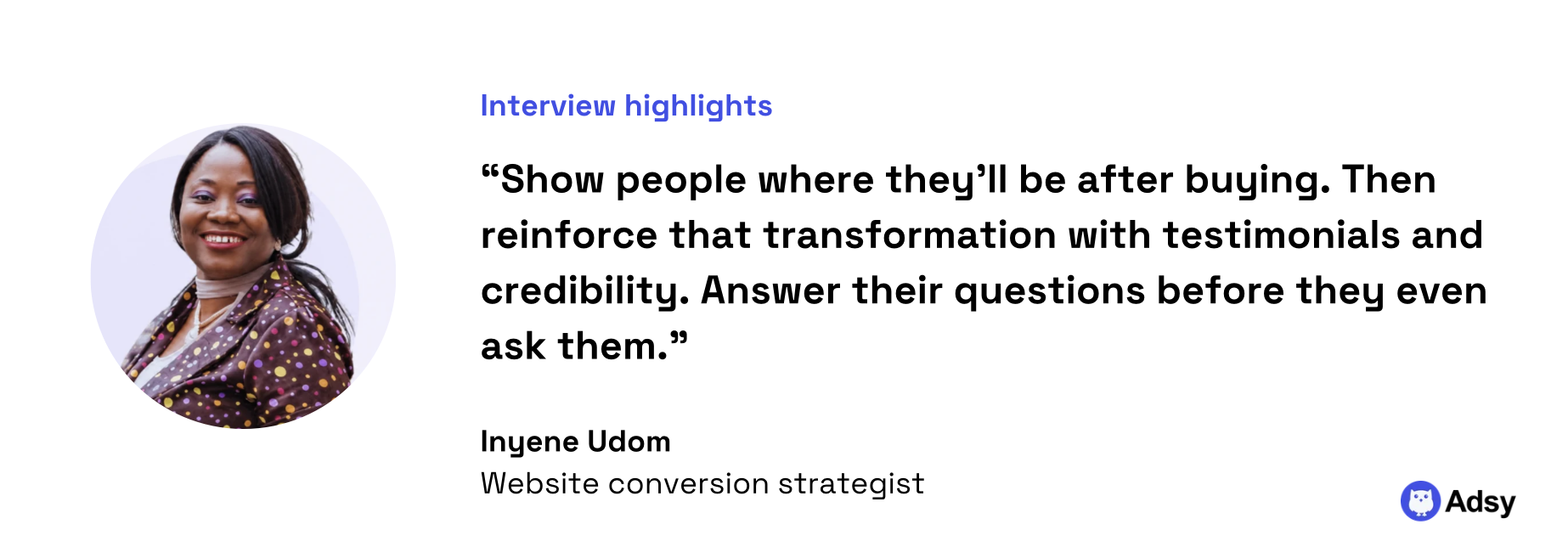
Most businesses focus heavily on features.
But there's usually a missing piece: the transformation.
People don't buy features. They buy what happens after they receive those features. Your offer page shouldn't simply list what's included. It should connect those features to the transformation people will experience.
Take them into the future. When people can clearly picture that future, their confidence increases.
Show people where they'll be after buying. Then reinforce that transformation with testimonials and credibility. Answer their questions before they even ask them.
That's when conversion rates improve.
Common user journey friction points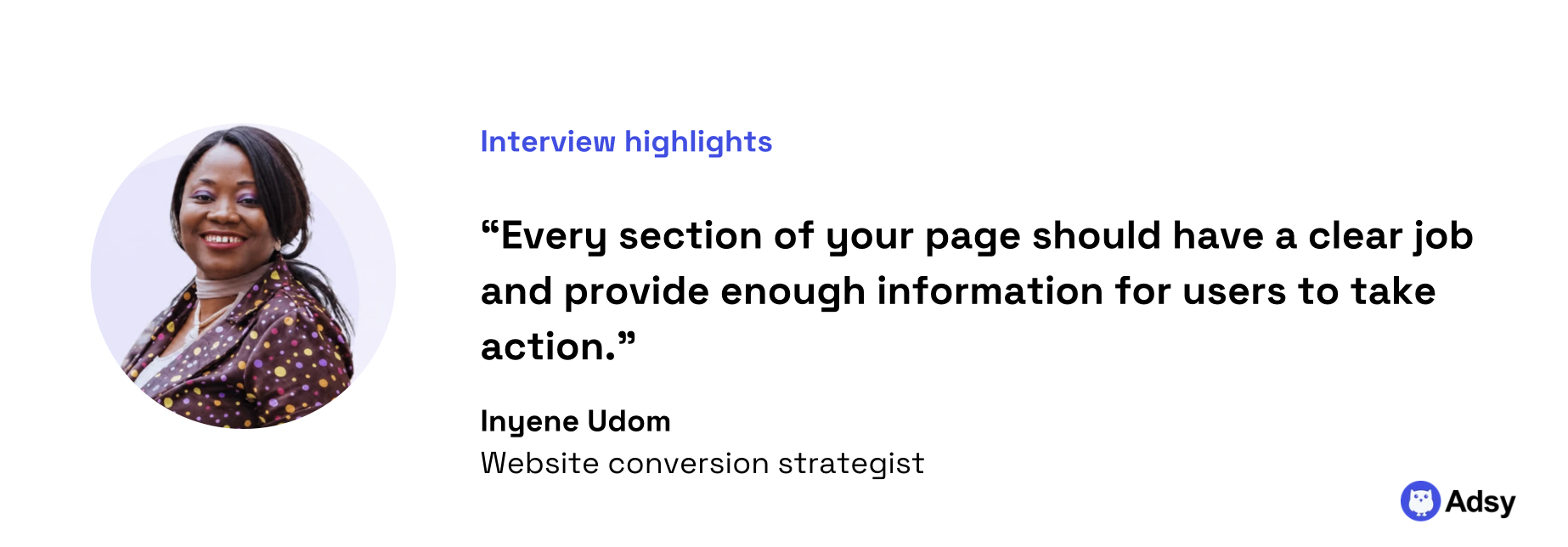
Every section of your page should have a clear job and provide enough information for users to take action.
While the page needs to have one goal from top to bottom, each section has to also work independently without looking incomplete.
Look at every section and ask yourself: do people have enough information here to convert?
Your landing page has to match the promise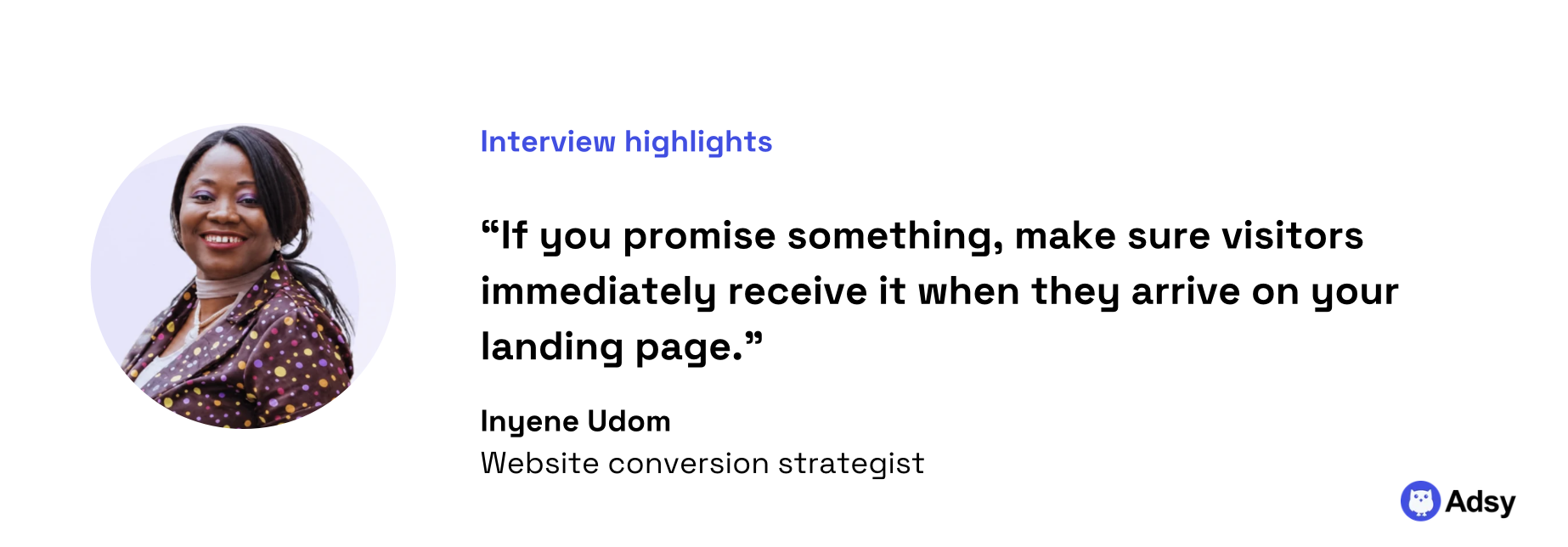
You need to deliver exactly what was promised. One common problem is that the promise made in a referral or placement doesn't match what visitors find on the landing page.
I've seen situations where webinar dates were outdated or offers no longer matched the original promotion.
The solution is simple:
If you promise something, make sure visitors immediately receive it when they arrive on your landing page.
It's surprising how often that alignment breaks.
Which trust signals matter most?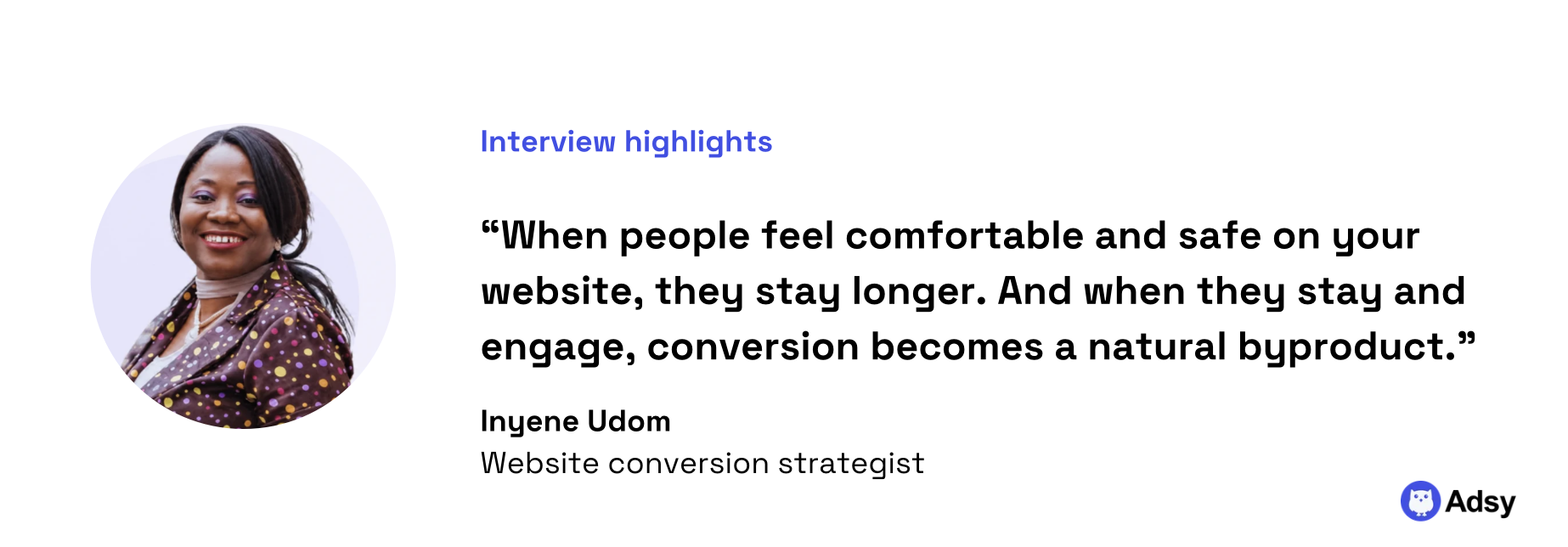
If you want people to convert, you have to make visitors feel safe.
And that goes far beyond SSL certificates or technical trust badges.
Trust comes from:
- Clear messaging
- Reduced distractions
- Consistent design
- Reassuring communication
When people feel comfortable and safe on your website, they stay longer. And when they stay and engage, conversion becomes a natural byproduct.
Looking for more insights? Watch the full interview with Inyene Udom on our YouTube channel:
All trademarks, logos, images, and materials are the property of their respective rights holders.
They are used solely for informational, analytical, and review purposes in accordance with applicable copyright law.


 Sign Up
 Sign Up